A practical daily routine for Maine Coon cats—nutrition, hydration, grooming to prevent mats, litter box tips, play for joints, dental care, and health red...
Article
•
Designer Mixes
Norwegian Forest Cat: Personality, Size, Lifespan, and Care

Shari Shidate
Designer Mixes contributor
The Norwegian Forest Cat, often nicknamed the Wegie, is one of those breeds that feels both rugged and gentle at the same time. They are widely believed to have been shaped by Norway’s cold climate and centuries of living alongside people, which helps explain the powerful build, plush weather-resistant coat, and athletic confidence that still pairs beautifully with an affectionate, family-friendly temperament.
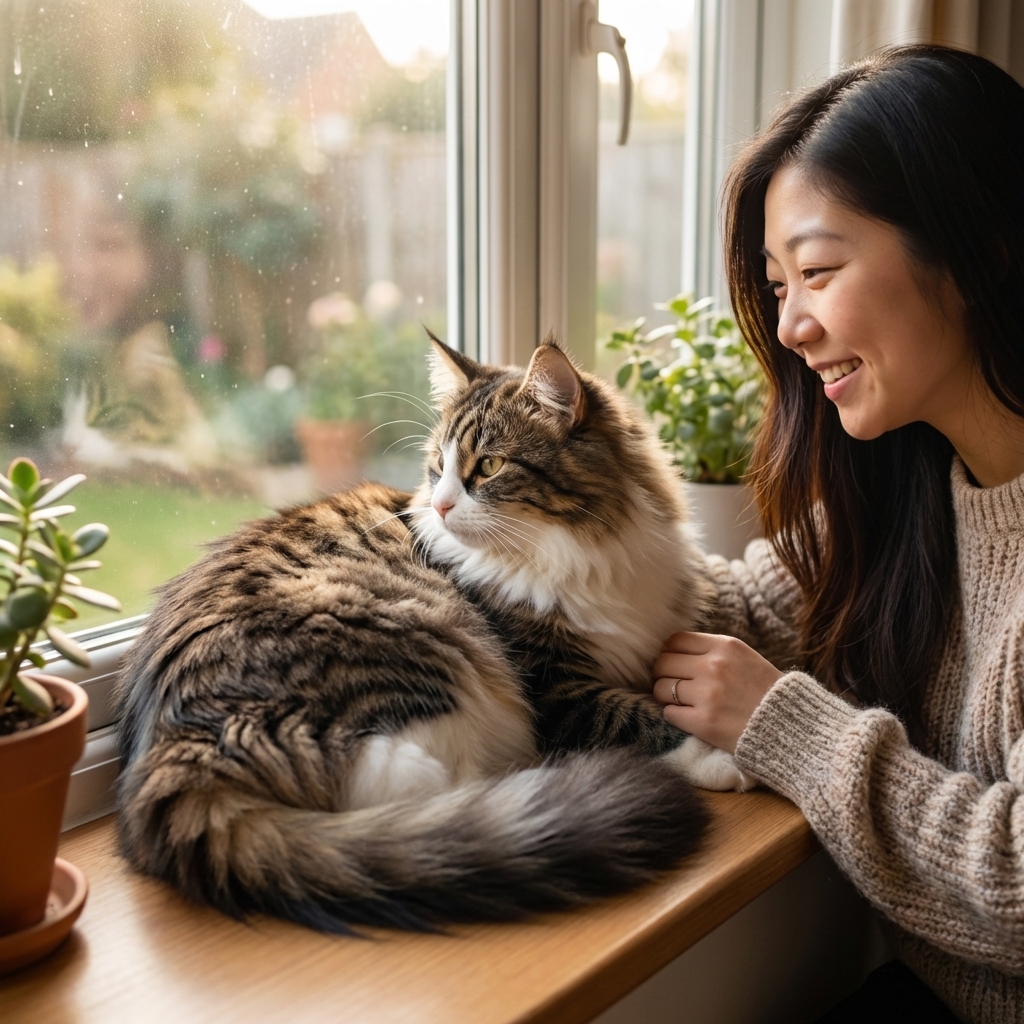
If you are considering bringing one home, this guide walks you through what their personality is really like, how big they get, how long they live, and what daily care looks like in a typical household.
Quick facts
- Personality: Social but not needy, gentle, playful, confident climber
- Size: Medium-large, sturdy and muscular
- Average lifespan: Typically 13 to 16 years (some live longer with excellent care)
- Coat: Dense double coat with seasonal shedding
- Best fit: Homes that enjoy interaction, enrichment, and regular grooming
Personality and temperament
Norwegian Forest Cats are known for being affectionate without being clingy. Many are happiest when they can be near you, follow you from room to room, and join family life, but they are usually not demanding about being held. Think of them as friendly companions who like their independence respected.
What many families love
- Steady, calm presence: They tend to handle normal household activity well when properly socialized.
- Playful and smart: They enjoy interactive toys, puzzle feeders, and games that mimic hunting.
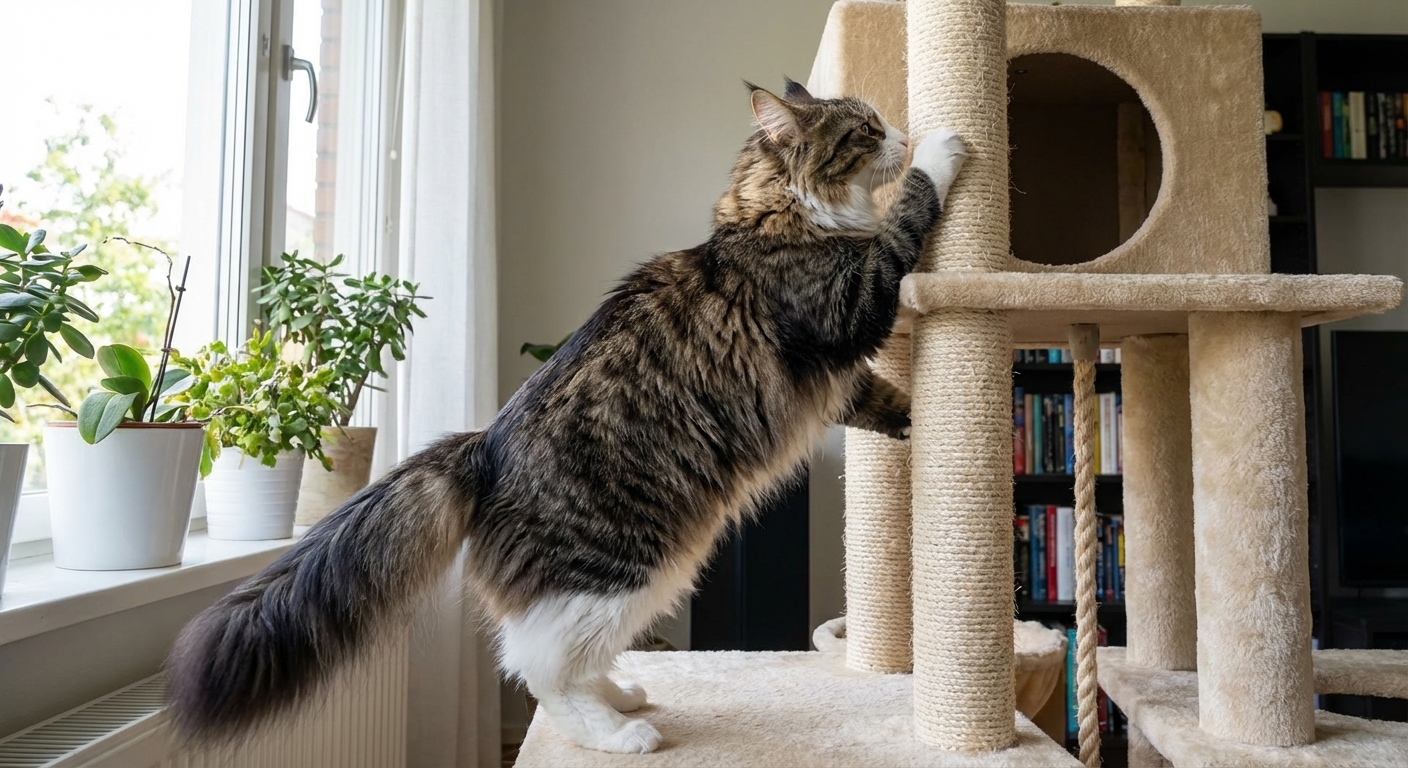
- Great climbers: Their history as outdoor hunters shows up in their love of height.
- Gentle social style: Many do well with respectful children and cat-friendly dogs, given slow introductions.
Veterinary teams often remind owners that individual temperament depends on early socialization, household routine, and health. A sudden change in friendliness, hiding, or irritability should prompt a vet check, especially in adult and senior cats.
Size and physical traits
Norwegian Forest Cats are built for strength. They are not just fluffy, they are genuinely muscular underneath that coat.
Typical size range
- Males: Often about 13 to 20 pounds (healthy adult range)
- Females: Often about 9 to 13 pounds (healthy adult range)
Some large-framed cats can fall outside these ranges. Their overall look is usually sturdy and athletic rather than delicate.
Common breed features
- Coat: Water-resistant guard hairs over a dense undercoat
- Tail: Long and plumed, often as fluffy as the body
- Ears: Medium-large, sometimes with tufting
- Paws: Strong with tufting between toes in many cats
Lifespan and long-term health
With good preventive care, many Norwegian Forest Cats live typically 13 to 16 years. Genetics matter, but lifestyle matters just as much, especially weight management and dental health.
Health concerns to know
No breed is problem-free, and responsible breeders screen for conditions seen more often in this breed line. A few to discuss with your veterinarian and breeder include:
- Hypertrophic cardiomyopathy (HCM): A heart condition seen across many cat breeds. Regular vet exams and, when indicated, echocardiograms help with early detection.
- Hip dysplasia: Reported in the breed and can occur. It may cause stiffness or reluctance to jump.
- Glycogen storage disease type IV (GSD IV): Rare but historically significant in the breed. Ethical breeding programs use DNA testing to reduce risk.
- Dental disease: Very common in cats overall, including Norwegian Forest Cats. Prevention makes a big difference.
Prevention basics
- Annual or twice-yearly wellness exams (twice-yearly is often best for seniors)
- Routine dental care at home plus professional cleanings as recommended
- Weight monitoring with a clear feeding plan
- Vaccines and parasite prevention tailored to your cat’s lifestyle
Questions to ask a breeder or rescue
- What health screening is done on the parents? Ask specifically about HCM screening practices (many programs use veterinary cardiology evaluation and may repeat screening over time).
- Is GSD IV DNA testing performed? Ask to see results and how pairings are chosen.
- What is the kitten’s socialization routine? Calm handling, household exposure, and gentle novelty matter.
- What support do you offer after adoption? A reputable source welcomes questions and provides guidance.
Coat care and grooming
That gorgeous coat is one of the biggest joys of the Norwegian Forest Cat, and it is also where many new owners get surprised. Their coat is designed to protect them from harsh weather, which means it can be dense and it can shed heavily during seasonal changes.
How often to brush
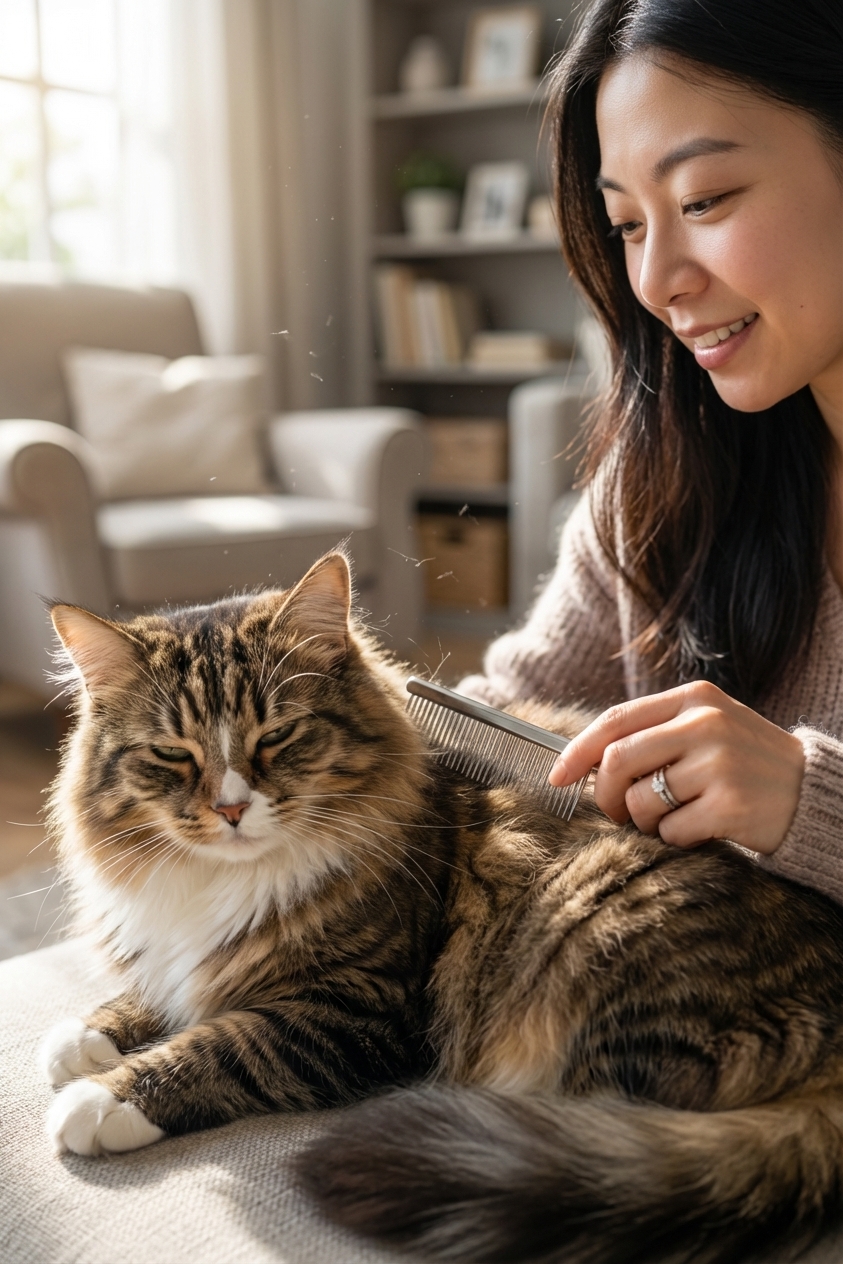
- Most of the year: 1 to 2 times per week is a realistic goal for many homes
- Spring and fall shed: 3 to 4 times per week can help prevent mats and hairballs
Grooming tips
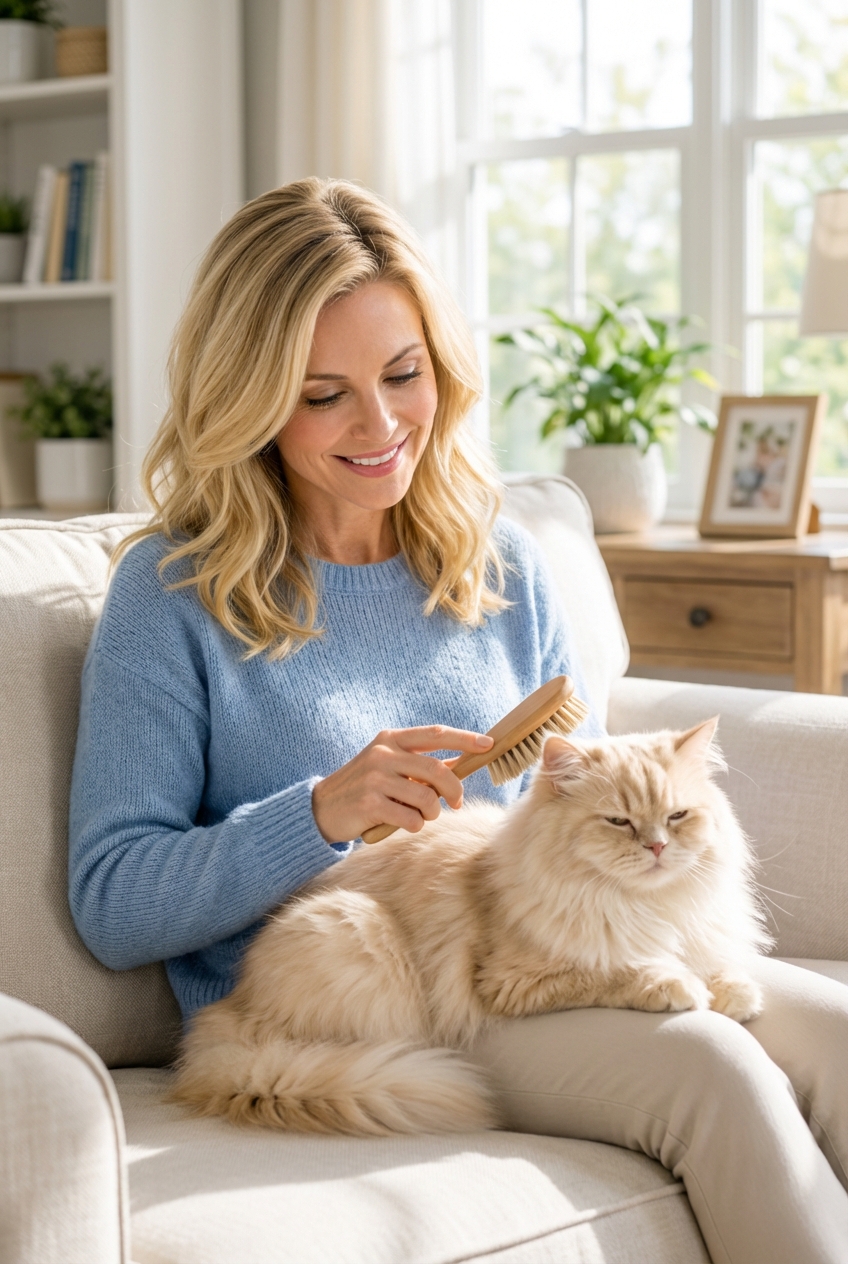
- Use the right tools: A stainless steel comb and a slicker brush often work well. Go gently around friction zones like armpits and behind the ears.
- Watch for mats: Mats can tighten and pull on skin. If you find one, do not yank. Work slowly or ask your groomer or veterinary team for help.
- Hairball support: Regular brushing, hydration, and an appropriate diet can reduce hairballs.
- Nail trims: Every 2 to 4 weeks is typical.
Nutrition and healthy weight
Because Norwegian Forest Cats can be big, it is easy to overlook creeping weight gain. Extra pounds put stress on joints, may reduce activity, and can worsen long-term health risks.
Simple feeding habits
- Measure meals instead of free-feeding, especially after the kitten stage.
- Prioritize protein with a complete and balanced cat food that meets recognized standards (for example AAFCO or FEDIAF), matched to your cat’s life stage.
- Use treats wisely: Keep treats to about 10 percent or less of daily calories.
- Ask your vet for a target weight and a daily calorie goal if your cat is gaining.
If you are interested in fresh or homemade-style feeding, please talk with a veterinarian or a board-certified veterinary nutritionist first. Cats have very specific requirements, including taurine, and close enough can quietly become a problem over time.
Exercise and enrichment
Norwegian Forest Cats tend to be athletic and curious. When they do not have safe outlets for climbing and play, you may see boredom behaviors like furniture scratching, nighttime zoomies, or more intense attention-seeking.
Enrichment ideas
- Vertical space: Tall cat trees, wall shelves, and window perches
- Interactive play: Wand toys, ball-track toys, or short daily hunt sessions
- Puzzle feeding: Slow feeders and treat puzzles to engage their brain
- Scratching variety: Both vertical and horizontal scratchers
Tip: Many Norwegian Forest Cats love to perch up high and observe. If your home is short on vertical space, adding one sturdy cat tree can change everything.
Indoor vs outdoor
Because this breed is confident, athletic, and curious, outdoor access can be tempting. For safety, most veterinarians recommend an indoor lifestyle with enriched spaces to climb and explore. If you want them to enjoy fresh air, consider a secure catio, a fully enclosed yard setup, or harness training with close supervision.
Unsupervised roaming increases risks like traffic injury, parasites, infectious disease exposure, and wildlife conflict. Indoor enrichment is not a downgrade for this breed. It is often the healthiest option.
Family life
With proper introductions, Norwegian Forest Cats often do well in multi-pet homes. They typically appreciate respectful handling and predictable routines.
Set everyone up for success
- Slow introductions: Separate spaces at first, swap scents, then short supervised meetings.
- Safe retreats: Provide high perches and quiet rooms where your cat can decompress.
- Teach gentle petting: Kids should avoid grabbing fur, tail, or paws.
- Support confidence: Plenty of resources for each pet: bowls, beds, litter boxes, scratching posts.
For litter boxes, a helpful baseline is one box per cat plus one extra, placed in calm, accessible locations.
Is this breed right for you?
A Norwegian Forest Cat can be an amazing match if you want a cat with a warm personality, a bold and beautiful look, and a playful spirit that lasts well into adulthood.
You will probably love this breed if you want
- A friendly cat who enjoys company but does not require constant attention
- A breed that thrives with climbing space and interactive play
- A stunning coat and do not mind routine brushing
Consider a different fit if
- You want a very low-shedding, low-grooming cat
- You are away for long periods without enrichment or companionship
- You do not have room for vertical space and activity
A note on maturity
Norwegian Forest Cats are often described as slower to mature than some breeds. Many keep a kitten-like playfulness well into adulthood, and some take longer to fully fill out. Plan for a long runway of enrichment, healthy nutrition, and regular checkups as they grow.
If you decide a Norwegian Forest Cat is your cat, look for a breeder or rescue that prioritizes health screening, temperament, and lifetime support. And once your cat is home, focus on the basics: balanced nutrition, regular grooming, enrichment, and preventive veterinary care. Those small routines add up to a healthier, happier life.