Spot fading kitten syndrome early with clear warning signs. Learn causes, safe warming and sugar support, feeding tips, emergency red flags, vet care, and pr...
Article
•
Designer Mixes
Newborn Kittens Care

Shari Shidate
Designer Mixes contributor
Newborn kittens are tiny, fragile, and completely dependent on their mother (queen) or you for warmth, nutrition, and help with basic bodily functions. The neonatal period (about 0 to 4 weeks) is among the highest-risk stages. If you are caring for orphaned kittens or supporting a stressed mama cat, you can absolutely make a life-saving difference with a few evidence-based basics: keep them warm, feed the right formula the right way, track weight daily, and know the red flags that require a veterinarian right away.
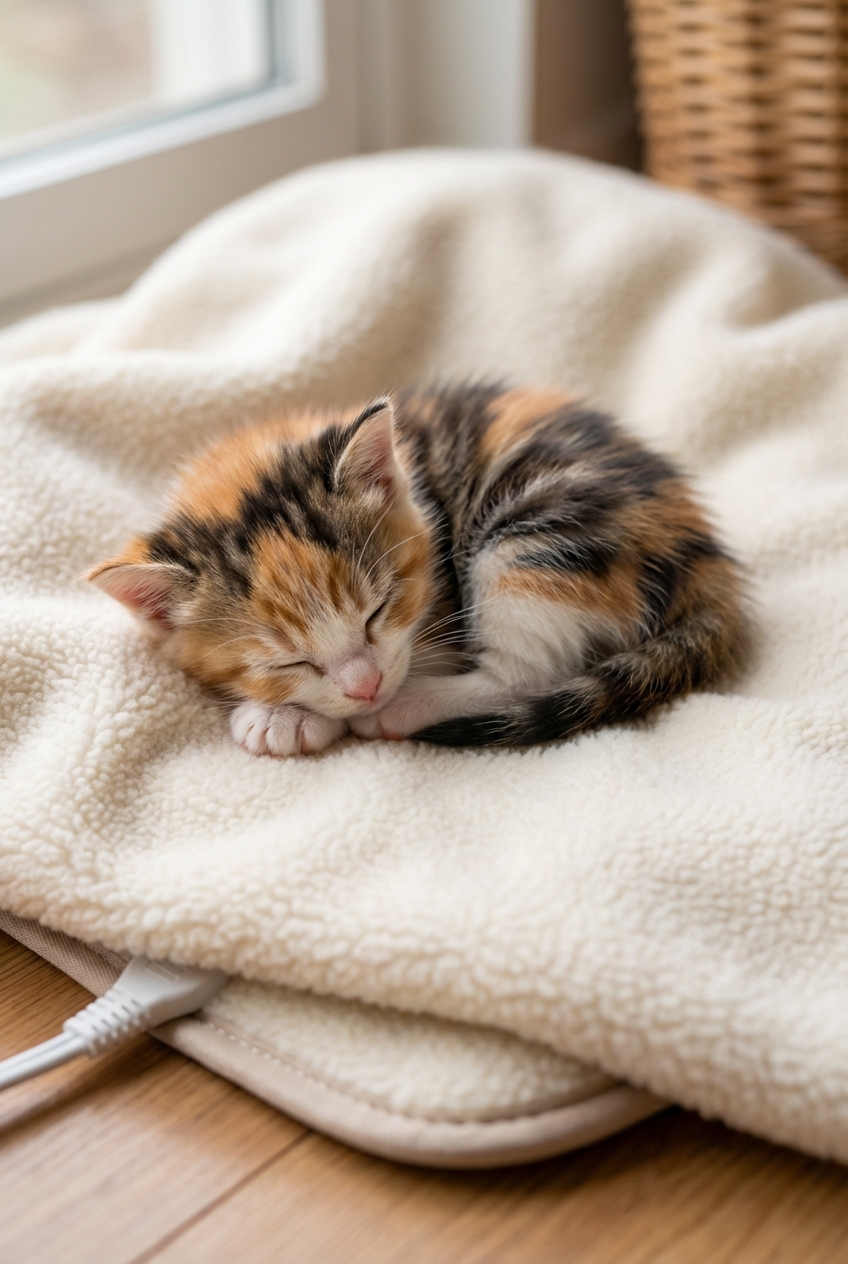
If you remember just one thing: cold kittens cannot safely digest milk. Warmth comes first, then feeding.
Week-by-week: what is normal
Birth to 1 week
- Eyes and ears: Eyes closed. Ears folded close to the head.
- Movement: Wiggling and rooting. They should nurse vigorously when warm and hungry.
- Sleep: Most of the day. That is normal.
- Weight: Expect steady daily gain. Many kittens gain about 10 to 15 grams per day (sometimes more), but trends matter more than any single number.
1 to 2 weeks
- Eyes: Begin opening around 7 to 12 days (often a little cloudy at first).
- Ears: Start to unfold.
- Behavior: Stronger crawling, louder mews, better nursing.
2 to 3 weeks
- Mobility: Attempts to stand and wobble-walk.
- Teeth: Baby teeth begin to appear.
- Elimination: Orphans often still need stimulation, usually until around 3 weeks (sometimes up to 4).
3 to 4 weeks
- Social: More alert and interactive.
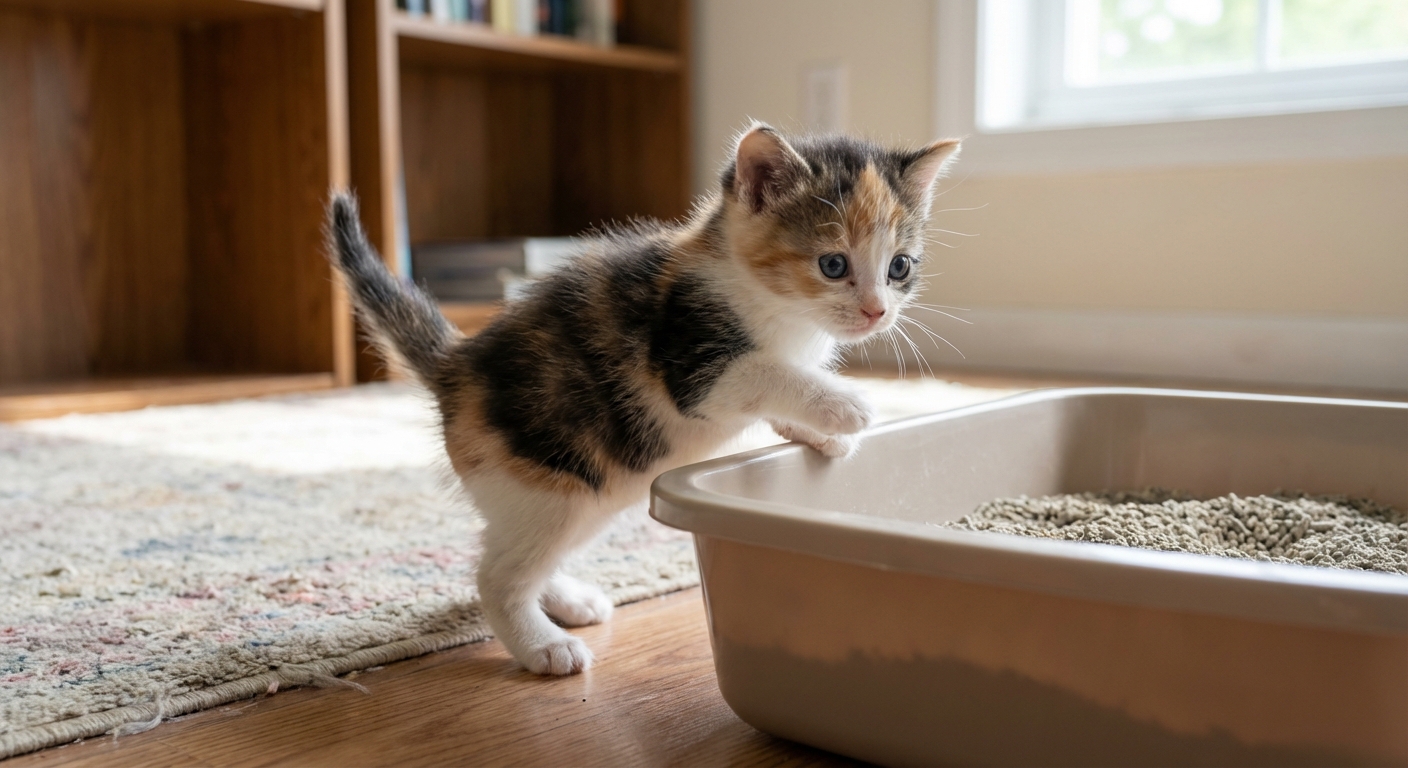
- Food: Many begin the transition to gruel.
- Litter: May start using a low-sided litter box with guidance.
Setting up a safe newborn nest
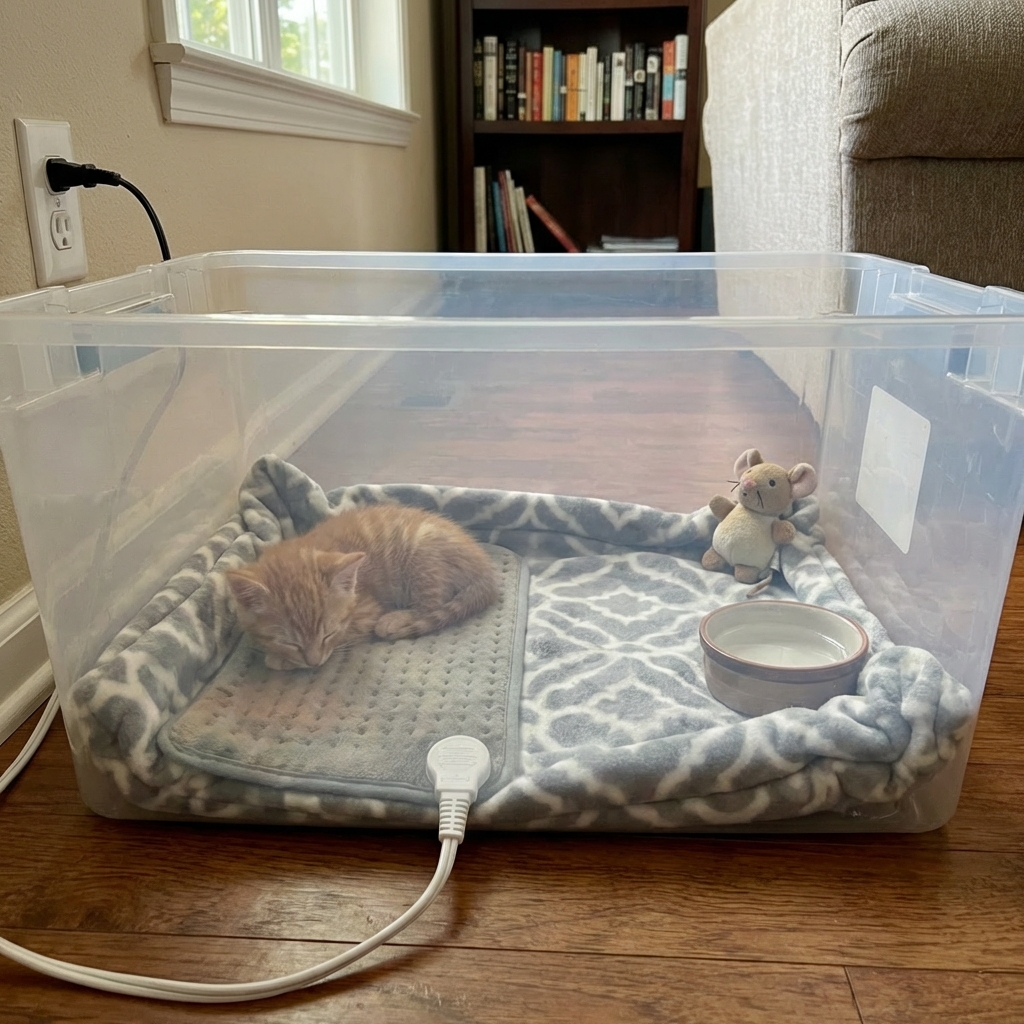
Your goal is a warm, quiet, draft-free space that is easy to clean and hard for kittens to wander out of once they become mobile.
What to use
- A plastic bin or box with tall sides, or a secure playpen
- Soft, washable bedding (fleece is ideal)
- A heating source (heating pad on low under half the nest, or a microwavable heat disk)
- A digital thermometer for the room
Temperature targets
These are general ambient nest targets. Always provide a cooler zone so kittens can crawl off heat.
- Week 1: About 85 to 90°F
- Week 2: About 80 to 85°F
- Week 3: About 75 to 80°F
- Week 4: Gradually closer to normal room temperature
Safety tip: Heat only half the space so kittens can move away if they get too warm. Avoid direct contact with heating pads. Use layers.
Nutrition basics
If the queen is present
A healthy queen is the best caregiver. Your job becomes support and observation.
- Feed mom well: Offer kitten food (higher calories) and fresh water at all times.
- Keep the area calm: Stress can reduce milk letdown and nursing consistency.
- Monitor kittens: Quiet, warm, and steadily gaining weight is the goal.
If you are bottle feeding
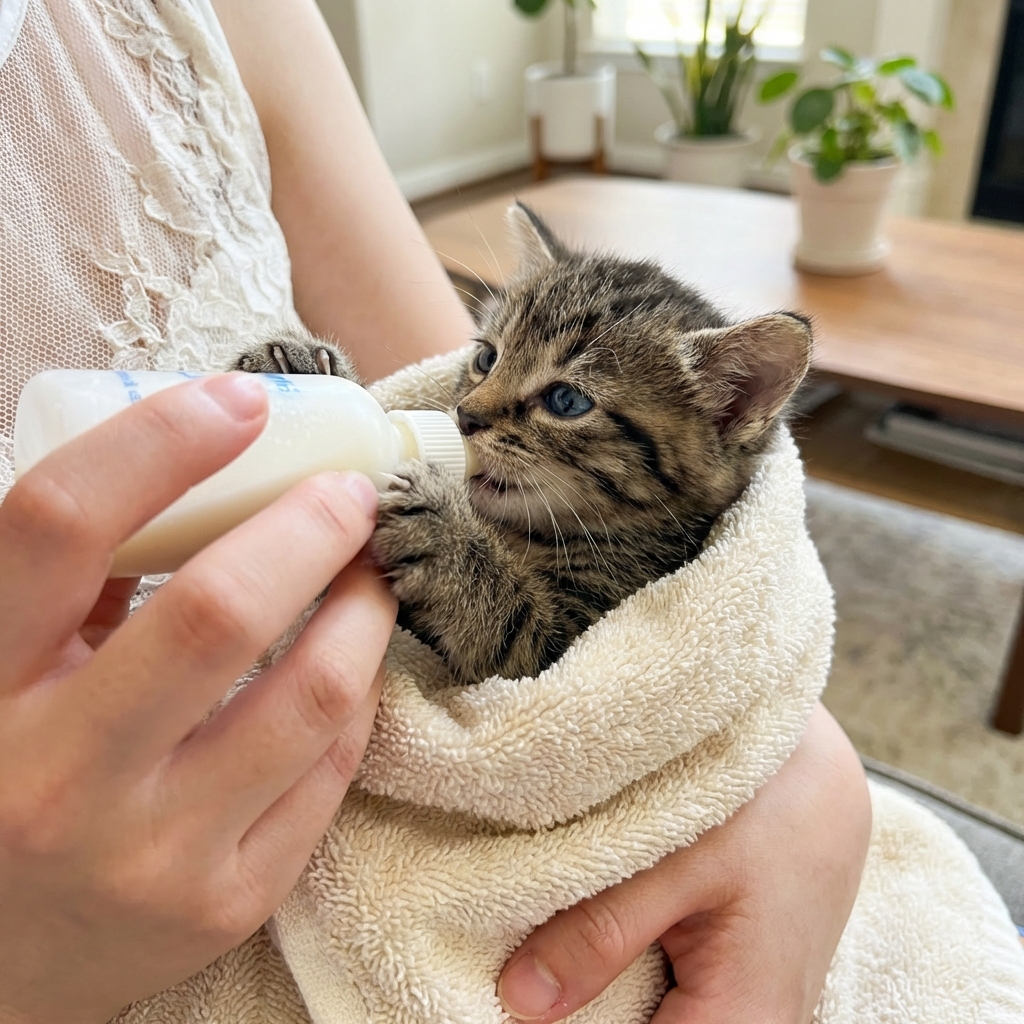
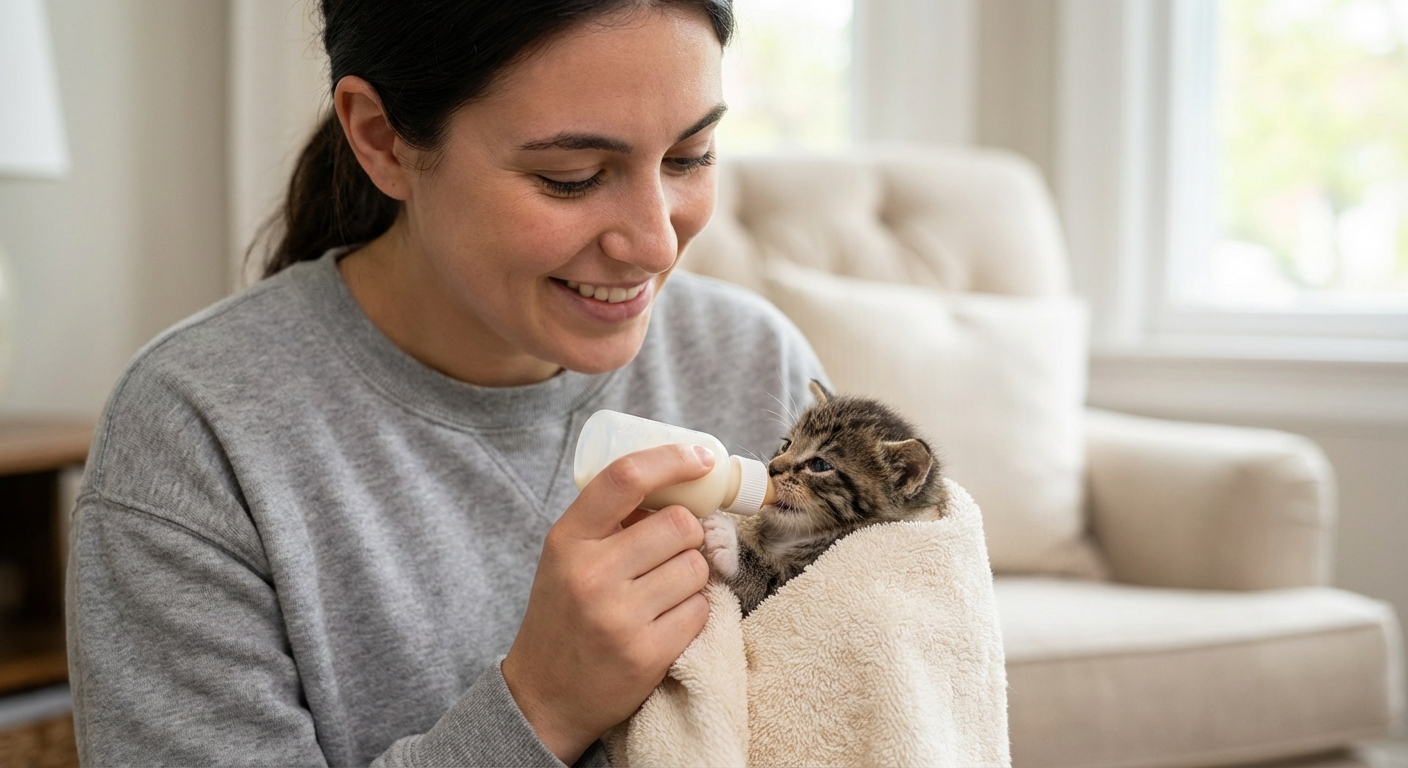
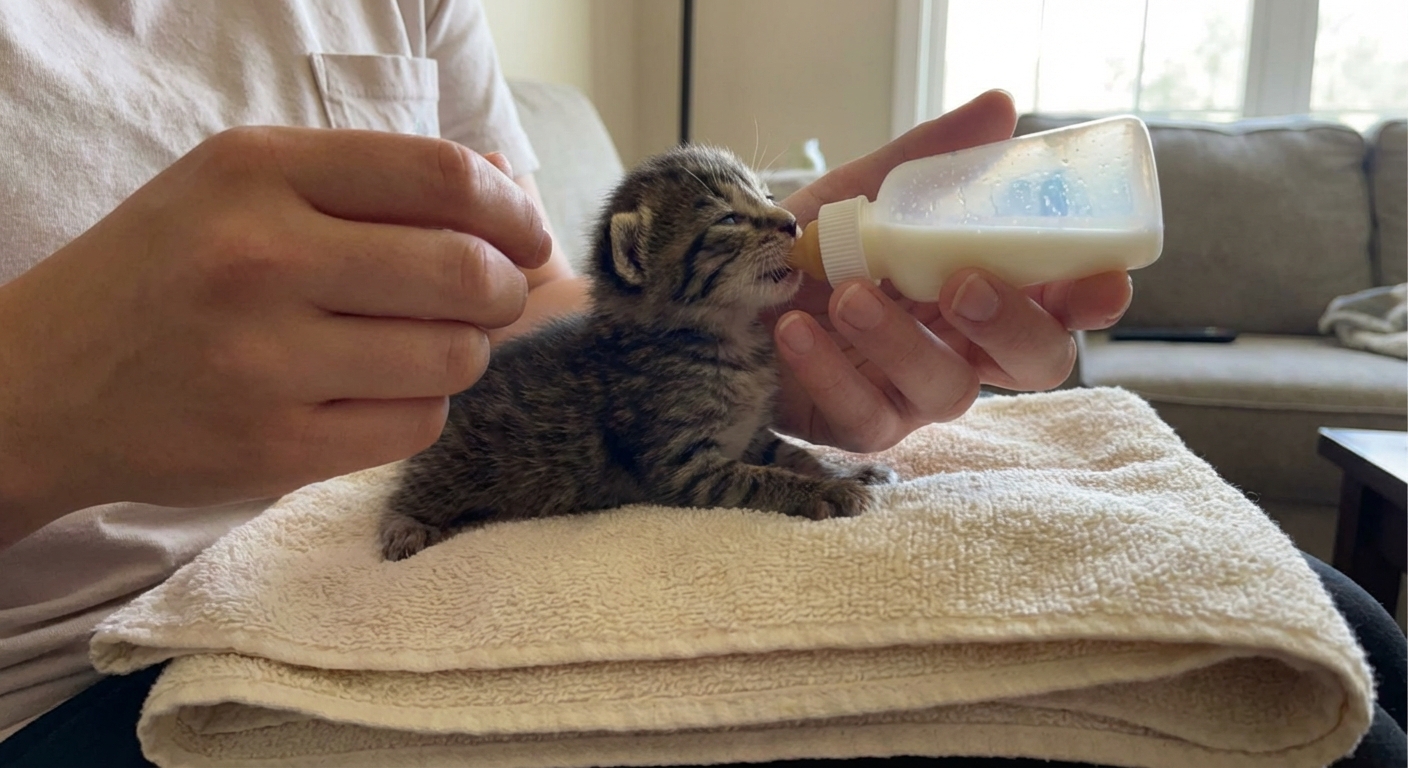
Use a commercial kitten milk replacer (KMR). Do not use cow’s milk. It can cause diarrhea and may lead to dehydration if diarrhea develops.
- Formula: Use kitten-specific milk replacer and follow mixing directions exactly. Too concentrated or too diluted can cause problems.
- Warm it: Feed formula at body temperature, not hot.
- Position: Belly-down, like they would nurse from mom. Never feed a kitten on its back.
- Go slow: Milk coming from the nose is urgent. Stop feeding immediately and contact a veterinarian because aspiration can be life-threatening.
How often to feed
Schedules vary by age and kitten condition, but newborns generally need frequent meals, including overnight. If a kitten is weak, chilled, or not gaining, your veterinarian may recommend a different plan.
- 0 to 1 week: Typically every 2 to 3 hours
- 1 to 2 weeks: Typically every 3 hours
- 2 to 3 weeks: Typically every 4 hours
- 3 to 4 weeks: Typically every 5 to 6 hours, begin weaning as appropriate
How much to feed
The safest approach is to follow the feeding chart on your kitten formula product and adjust based on daily weights and stool quality.
General rule of thumb: many protocols land around 20 to 30 mL of prepared formula per 100 g of body weight per day, divided into multiple feedings. This is only a starting point. Formula brand, age, and medical issues can change the target. If in doubt, ask your veterinarian for a daily mL goal for each kitten.
Common pitfalls: Overfeeding commonly causes diarrhea. Underfeeding can lead to crying, weakness, and poor weight gain.
Formula handling basics
- Mixing: Prepare exactly as directed. Do not add extra water to “help diarrhea.”
- Storage: Refrigerate prepared formula promptly and follow the product’s discard timeline.
- Warming: Warm the bottle by placing it in warm water and test on your wrist. Avoid microwaves because they can create hot spots.
- Clean-up: Discard leftover formula from the bottle after a feeding.
Daily weight tracking
If you are caring for newborn kittens, I cannot emphasize this enough: weigh them every day, ideally at the same time, on a small digital kitchen scale that measures grams.
- Record each kitten’s weight in grams daily
- Healthy kittens should gain weight consistently
- If a kitten does not gain for 24 hours or loses weight, that is a red flag
Quick identification tip: If there are multiple kittens, use a small colored collar made for neonates or a tiny dab of pet-safe marker on a rear paw nail to help you track who is who.
Helping kittens potty
Orphaned kittens often need help urinating and defecating until around 3 weeks of age (sometimes closer to 4). Mom cat normally licks them to stimulate elimination. You will mimic that with gentle, consistent technique.
How to stimulate safely
- After feeding, hold the kitten belly-down on a towel
- Use a warm, damp cotton ball or soft tissue
- Gently rub the genital area in small circles until they urinate
- Continue briefly to encourage a bowel movement
What is normal: Pale yellow urine. Stools can vary from yellow-tan to brown depending on formula and age. Very watery diarrhea, blood, or a swollen belly with no stool are reasons to call your veterinarian quickly.
Constipation and diarrhea basics
- Constipation: A kitten that strains, has a firm swollen belly, or goes a full day without stool (especially if uncomfortable) needs guidance from a veterinarian.
- Diarrhea: Watery stool can dehydrate kittens fast. Call your veterinarian promptly. Do not use human anti-diarrheal medications.
Chilled kitten: what to do
If a kitten feels cool, is limp, or is too weak to nurse, treat this as urgent.
- Warm first: Warm gradually using external heat (wrapped warm water bottle or heating pad under half the nest). Aim for slow, steady warming, not rapid overheating.
- Do not feed until warm: A chilled kitten cannot digest formula safely.
- Get help: Contact a veterinarian or emergency clinic, especially if the kitten is lethargic, not swallowing well, or not responding to warming.
Hygiene and disease prevention
Newborns have immature immune systems. Cleanliness and smart separation from other pets helps prevent preventable illness.
Keep it clean
- Wash hands before and after handling
- Replace bedding daily or whenever soiled
- Clean bottles and nipples thoroughly after each use
- Keep the nest dry to prevent chilling and skin irritation
Limit exposure
- Keep kittens separated from household cats and dogs unless your veterinarian advises otherwise
- Avoid high-traffic areas and lots of visitors
- If any kitten has goopy eyes, sneezing, or diarrhea, isolate and contact a veterinarian
Fleas: safe early steps
Many flea products are not safe for neonates. If you see fleas, contact your veterinarian for age-appropriate options.
- Use a flea comb daily and remove fleas manually
- Keep bedding washed and dry
- Avoid over-the-counter dog flea products entirely
When to seek urgent care
Newborn kittens can decline fast. Trust your instincts and do not wait if something feels off.
Call a veterinarian urgently if you notice
- Chilled kitten: cool to the touch, lethargic, weak cry
- Refusing food: misses multiple feedings, cannot latch, too weak to suck
- Milk from nose: coughing, choking, noisy breathing
- Watery diarrhea: frequent stool, sudden stool changes, or dehydration signs
- Dehydration signs: dry gums, tacky mouth, low energy
- Bloated belly: firm, painful-looking abdomen, no stool
- Pale gums: possible anemia, parasites, or serious illness
- Poor weight trend: flat or decreasing weights over 24 hours
Newborns are not “wait and see” patients. If a kitten is fading, getting help quickly can be the difference between recovery and loss.
Weaning and litter training
Weaning is a gradual process. You are teaching kittens to lap, then chew, then eat independently.
Starting gruel
- Mix kitten wet food with kitten formula to make a thin gruel
- Offer in a shallow dish after a bottle feeding
- Expect mess. Keep them warm and clean afterward
Litter basics
- Use a low-sided box
- Choose a non-clumping litter for young kittens to reduce risk if ingested
- Place kittens in the box after meals and naps
Veterinary care timeline
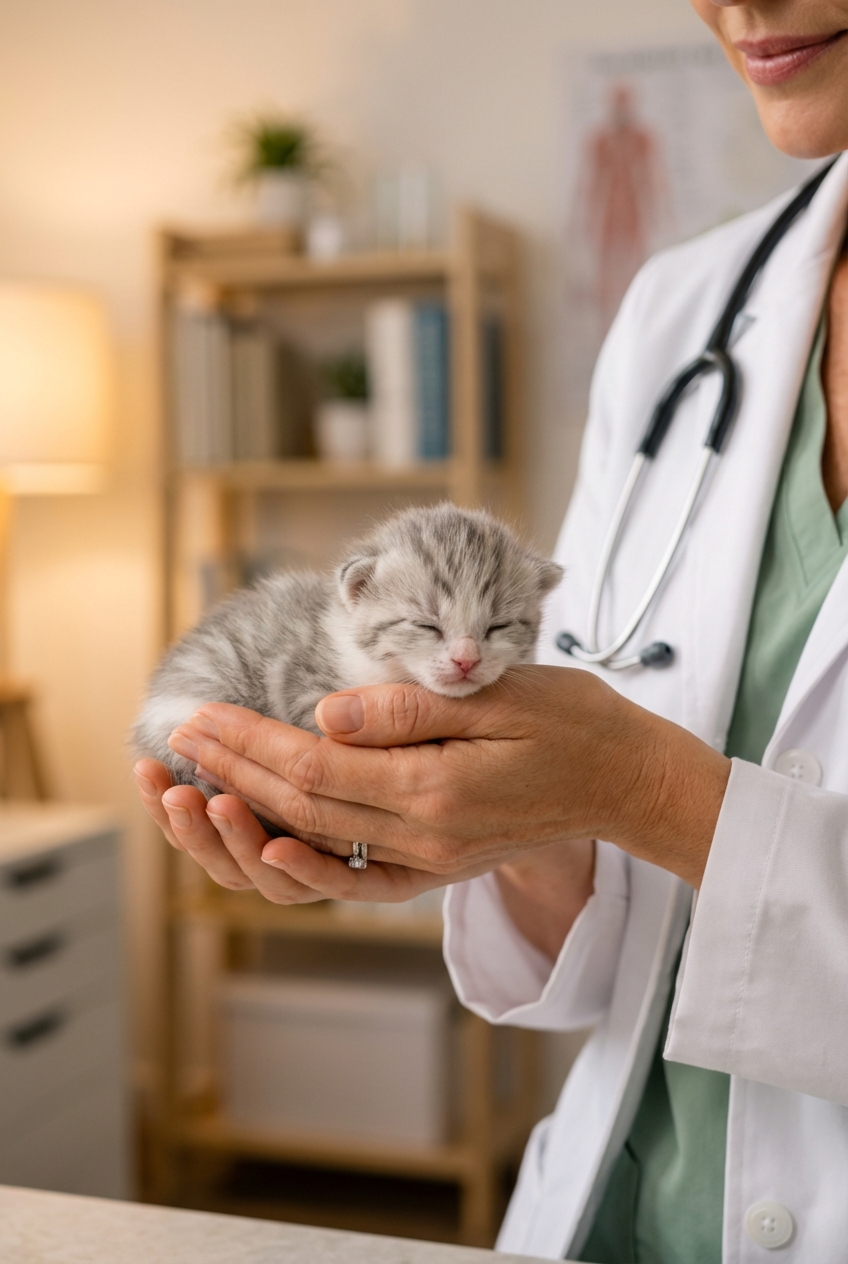
Exact timing varies based on kitten health, region, and veterinarian preference. If you are caring for orphans, an early exam is strongly recommended to check hydration, congenital issues, and parasites.
- First exam: As soon as feasible, especially for orphans or any kitten not thriving
- Parasite control: Your veterinarian will advise on safe deworming schedules and flea control
- Vaccines: Commonly begin around 6 to 8 weeks, then boost as directed
Bring good notes: weights, feeding amounts, stool consistency, and any sneezing or eye discharge. These details help your veterinary team help you faster.
Simple daily checklist
- Warmth maintained and kittens can move away from heat
- Feed on schedule, belly-down position, slow flow nipple
- Stimulate to urinate and defecate after meals if needed
- Weigh daily and record in grams
- Clean bedding and sanitize feeding supplies
- Scan for red flags: low energy, poor appetite, diarrhea, breathing changes
You do not have to do everything perfectly to do something lifesaving. Consistency is what newborn kittens need most. If you are unsure at any point, your local veterinarian or an emergency clinic can guide you through next steps.