A step-by-step puppy crate training guide: choosing the right crate, building positive associations, first-week routines, nighttime potty breaks, and solutio...
Article
•
Designer Mixes
New Puppy Whining in the Crate

Shari Shidate
Designer Mixes contributor
That first week home with a new puppy is a mix of pure joy and, for many families, a lot of late-night noise. If your puppy whines in the crate, it does not automatically mean they “hate” it or that you are doing something wrong. Often, whining is normal communication during a big transition.
As a veterinary assistant in Frisco, Texas, I see crate stress come up all the time, especially with first-time puppy parents. The good news is that with the right setup, a predictable routine, and evidence-based training (think gradual desensitization, counterconditioning, and reinforcing calm), most puppies learn to settle.
Why puppies whine in a crate
Puppies whine for a reason, and the reason matters because the fix depends on the “why.” Here are the most common causes:
- Normal separation distress: Your puppy has just left their litter and mom. Crating can feel like sudden isolation, especially at night.
- Needs a bathroom break: Young puppies have tiny bladders. If the whining ramps up quickly after they were calm, potty is the top suspect.
- Overtired and overstimulated: Like toddlers, puppies can get “wired” when they are exhausted. Crate time can trigger protest whining even though rest is exactly what they need.
- Learned behavior: If whining consistently leads to being released, puppies can learn that noise opens the door.
- Discomfort: Too hot, too cold, collar caught on something, crate pad too slippery, or a crate that is too small to turn around comfortably.
- Fear period sensitivity: Many puppies go through developmental fear periods, and timing varies by dog. Often-cited windows are around 8 to 11 weeks, with another phase that can show up later during adolescence. During these times, normal sounds or shadows can suddenly feel scary, making it harder to self-soothe.
Helpful crate-whining facts
1) Whining is communication, not “spite”
Puppies do not whine to be manipulative in the human sense. They whine because something feels urgent to them: safety, closeness, elimination, or confusion. If you approach it like information rather than defiance, you will make faster progress.
2) Crate training is a skill, not a personality trait
Some puppies settle easily. Others need a gentle, structured plan. Both can become great crate dogs. The difference is usually training history and setup, not stubbornness.
3) Timing matters more than tools
White noise, covers, and calming sprays can help some dogs, but the biggest driver of success is what happens right before crating and what happens when they vocalize. Rewarding calm, using gradual duration, and preventing rehearsals of panic are the foundation.
4) “Cry it out” can backfire
For some puppies, ignoring mild whining for a short time is fine. But if your puppy escalates into frantic screaming, drooling, trying to bite bars, or throwing their body against the crate, that is not a training moment. That is distress. In those cases, you will get better results by making the crate easier and rebuilding positive associations.
5) Aim for calm, not silence
A few peeps while settling can be normal. What you are aiming for is a puppy who can relax, lie down, and sleep safely.
Quick checklist first
If your puppy is whining, run through these basics first. It prevents you from guessing.
- Potty: Did they pee and poop recently? Young puppies may need a nighttime potty trip, especially in the first weeks.
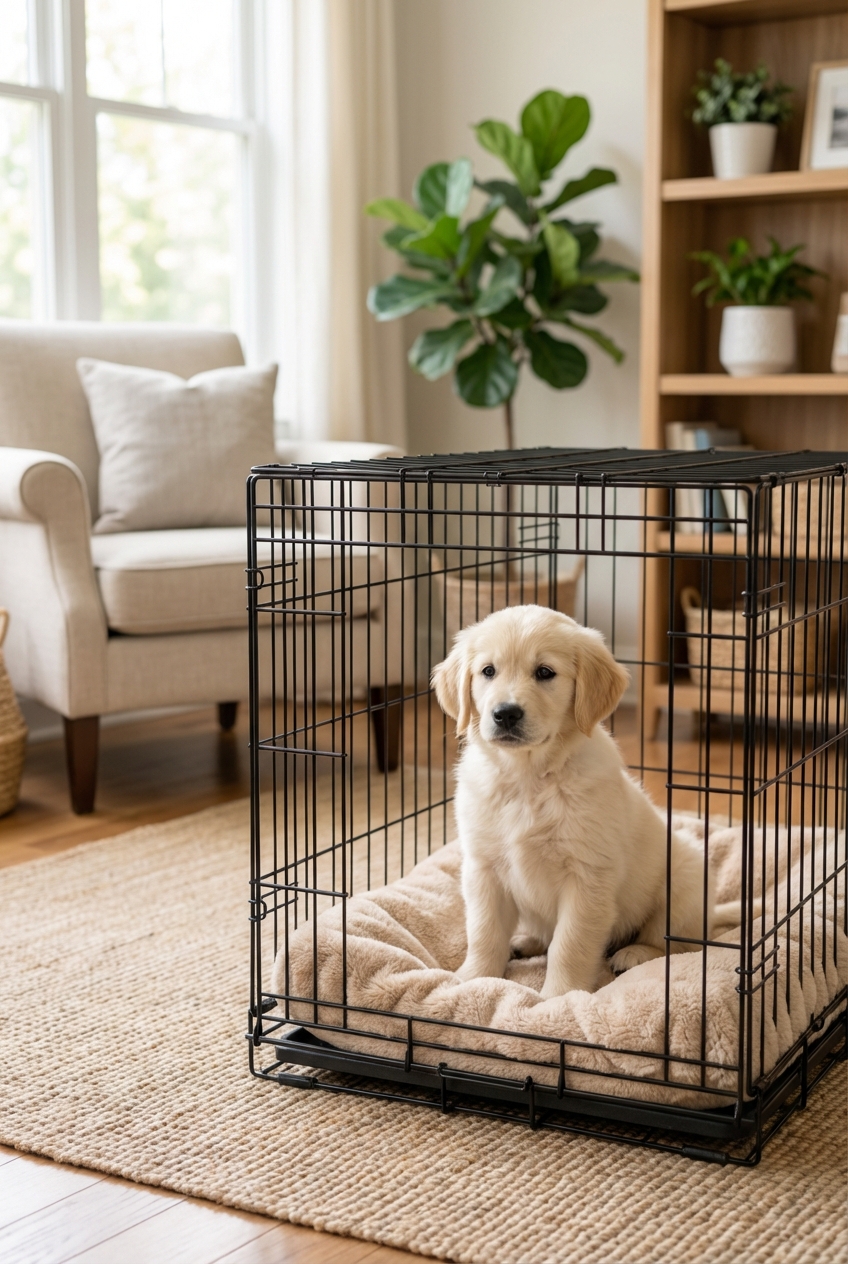
- Comfort: Is the crate the right size (stand up, turn around, stretch out)? Is bedding safe and not overheating them?
- Crate size: Big enough to stand, turn, and lie flat, but not so large they can potty in one corner and sleep in the other.
- Safety: In most cases, remove collars in the crate to reduce snag risk. If you rely on a collar for ID, consider a microchip and use a tag when your puppy is supervised.
- Enrichment: Do they have a safe, long-lasting chew or stuffed food toy if appropriate?
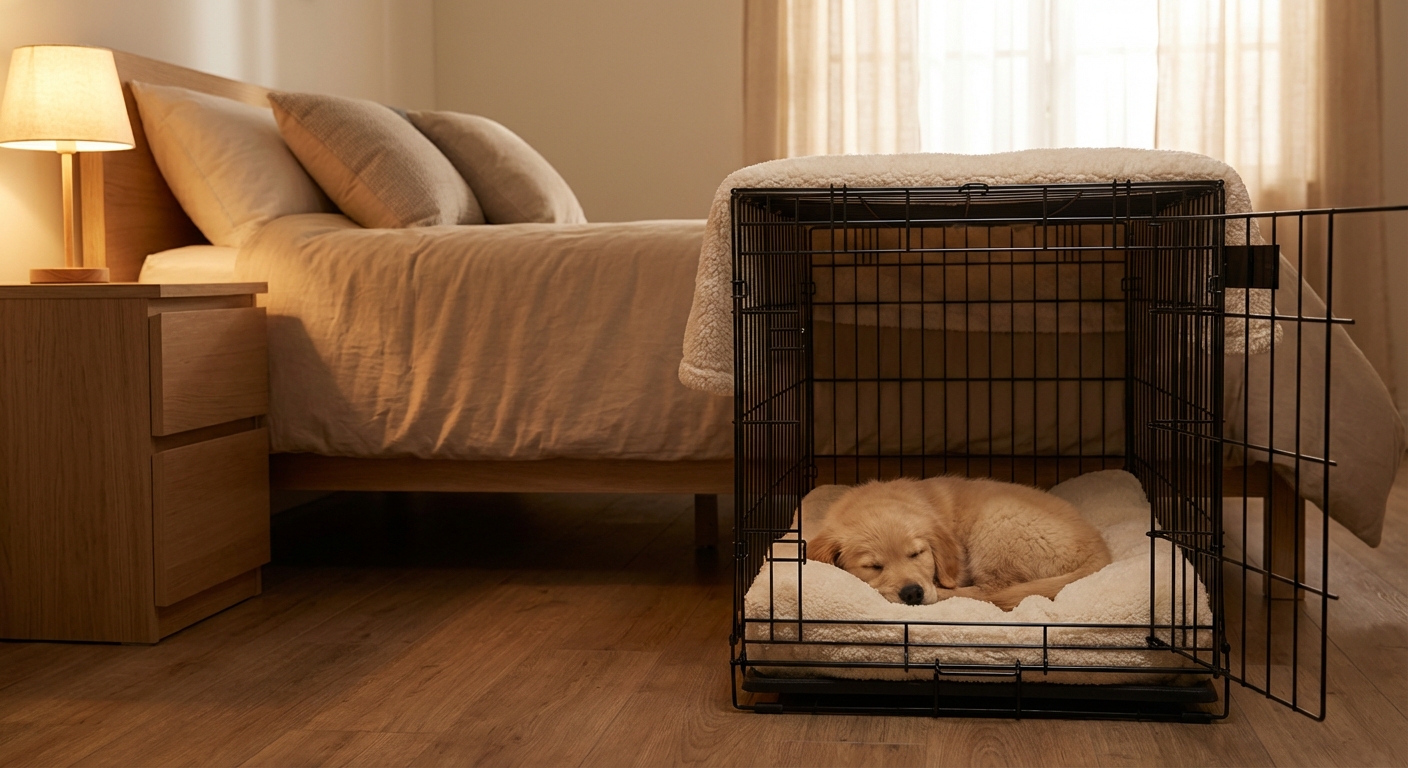
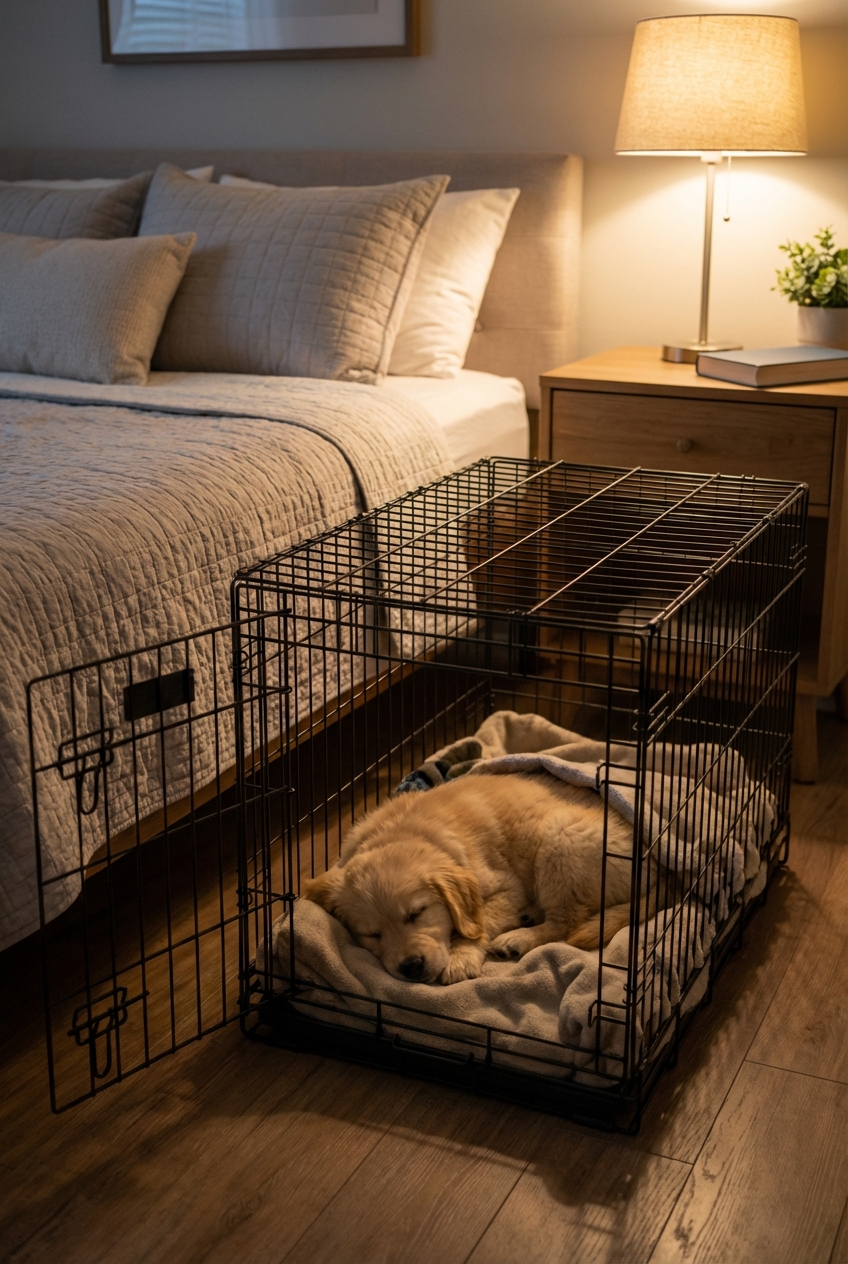
- Location: Early on, many puppies do better if the crate is near you at night.
- Schedule: Are they overtired? Many puppies need more naps than people expect.
What to do in the moment
Step 1: Listen to the “type” of whining
Not all whining is equal. Ask yourself:
- Soft, on-and-off, decreasing: Often normal settling. Give them a chance to work it out.
- Sudden and intense after being quiet: Often bathroom or startle. Take them out on leash for a quick potty break.
- Escalating, frantic, nonstop: Likely distress. Prioritize welfare and lower the difficulty instead of waiting it out.
Step 2: If you take them out, make it boring
If you suspect potty, take your puppy out calmly, on leash, no play, no excited praise party. Let them eliminate, then back into the crate. This teaches: outside is for potty, crate is for rest.
Step 3: Reward calm, not noise
Watch for tiny moments of quiet: a pause to sniff, a sit, a sigh, a head lowering. Mark it with a soft “good” and drop a treat into the crate. You are teaching your puppy what works.
Step 4: Avoid “door opens when I whine” patterns
If you open the crate at peak whining every time, many puppies learn to keep whining. Instead, wait for one second of quiet, then open. That one-second rule is surprisingly powerful.
Important: If your puppy is panicking (thrashing, biting bars, drooling heavily), do not hold out for quiet. Pause the plan, help them settle, and go back to easier training steps during the day.
Step 5: What not to do
- Do not yell, bang on the crate, or use “shush” corrections that scare your puppy. Fear makes crate training harder.
- Do not let kids crowd the crate or poke fingers in while your puppy is stressed.
- Do not force your puppy into the crate if they are truly terrified. Reset and rebuild with easier reps.
Build a crate routine
Nighttime is not the best time to “train” from scratch. Daytime reps, when you are calm and your puppy is not panicking, are where you win this.
Mini sessions that work
- Crate equals snacks: Toss treats in, let puppy walk in and out freely. Repeat for 1 to 2 minutes.
- Door games: Close the door for 1 second, feed, open. Slowly build to 5 seconds, 15 seconds, 30 seconds.
- Short rest breaks: After play and potty, guide puppy into the crate with a chew and let them nap.
Make it feel like a den
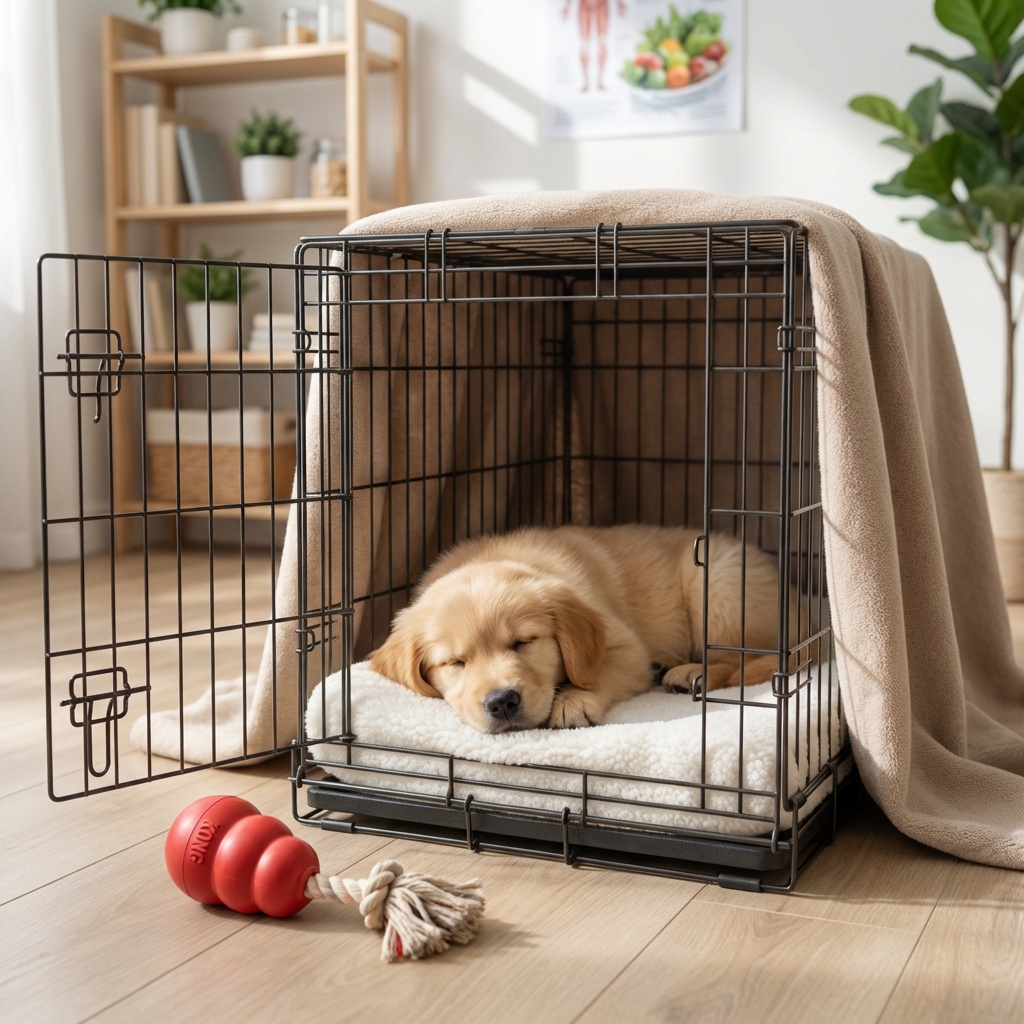
- Cover: Many puppies settle better with a light cover that reduces visual stimulation. Ensure airflow.
- Sound: A fan or white noise can soften household sounds that trigger whining.
- Scent: A worn (clean) T-shirt that smells like you can be comforting for some puppies.
Chew and food toy safety
Chews and stuffed food toys can be amazing for crate time, but safety comes first. Use items sized appropriately for your puppy, avoid anything that can splinter or be swallowed, and test new chews only when you can supervise. For longer-lasting options, many pups do well with a frozen, puppy-safe stuffed toy.

Mistakes that keep whining going
- Crating only when you leave: If the crate predicts isolation, puppies resist it. Use it during normal household life too.
- Too much freedom too soon: Free-roaming can lead to overtired puppies who fight rest. Structured naps help.
- Inconsistent response: Sometimes letting them out when they whine and sometimes not can make whining stronger. Predictable rules are kinder.
- Skipping exercise and enrichment: A puppy who has not had age-appropriate play, training, and sniffing time will struggle to settle.
- Expecting “adult dog” bladder control: Many puppies simply cannot hold it as long as we wish they could.
Age expectations
Every puppy is unique, but here are general patterns many families experience:
- 8 to 10 weeks: Often the toughest. Expect nighttime potty breaks and some vocalizing.
- 10 to 16 weeks: Big improvements with routine. More ability to self-settle if the crate is positive.
- 4 to 6 months: Longer quiet periods, but teething and adolescence can cause setbacks.
Night potty guide
These are rough guidelines, not promises, but they help set expectations:
- 8 to 10 weeks: Many pups need 1 to 2 potty trips overnight.
- 10 to 12 weeks: Often 0 to 1 trip.
- 12+ weeks: Many can make it through the night, but there are plenty of normal exceptions.
If you see progress overall, even with occasional noisy nights, you are on track.
When it could be medical
Sometimes the crate is not the real issue. Contact your veterinarian if you notice:
- Diarrhea, vomiting, or loss of appetite
- Frequent urination accidents or straining to pee
- Coughing, wheezing, or labored breathing
- Pain signals like yelping when picked up, reluctance to lie down, or shaking
- Sudden new vocalization in a puppy who was previously comfortable crating
Medical discomfort can make confinement feel unbearable, and it is important to rule that out early.
Crate whining vs separation anxiety
Many puppies dislike being alone, but true separation anxiety is more intense and persistent. Consider getting professional help if you see:
- Severe panic when you prepare to leave or close a door
- Self-injury risk from trying to escape
- Excessive drooling, panting, or nonstop screaming
- Destruction focused on exits when loose
A certified trainer who uses reward-based methods, or a veterinary behaviorist, can be life-changing here.
A simple nighttime plan
- Evening routine: Play, a short training session, then a calm wind-down.
- Last call potty: Right before bed, on leash, quiet.
- Crate setup: Comfortable bedding, safe chew if appropriate, cover if helpful, white noise.
- Crate location: Near your bed at first if your puppy is struggling.
- Response rule: Pause, listen, and if you open the crate, do it after a brief moment of quiet unless your puppy is in panic.
Many families notice improvement in 1 to 2 weeks with consistent practice. Puppies who are more anxious, or who have had scary crate experiences, may need more time and a slower plan.
Kindness plus consistency is the fastest road to a quiet crate. Your puppy is learning safety, not just rules.
Bottom line
New puppy whining in the crate is common, and it is fixable. Focus on meeting real needs first (potty, comfort, safety), then train calm in small, daytime steps using gradual exposure and rewards. If the whining looks like panic or you suspect illness, loop in your veterinarian and a qualified trainer early. You and your puppy deserve restful sleep, and you can absolutely get there.