Make your puppy’s first night home smoother with a calm bedtime routine, crate setup tips, realistic potty-break timing, feeding guidance, and puppy-proofi...
Article
•
Designer Mixes
New Puppy First Night Guide

Shari Shidate
Designer Mixes contributor
Bringing a new puppy home is exciting, and that first night can also feel like a lot. Your puppy just left their mom, littermates, and everything familiar. It is completely normal for them to whine, pace, or have an accident as they learn your home and your routine.
As a veterinary assistant in Frisco, Texas, I always tell new pet parents this: your goal on night one is not perfection. Your goal is safety, comfort, and consistency. If you do those three things, you are already setting your puppy up for success.
Also, set your expectations kindly. Many puppies need multiple wake-ups the first night (and sometimes for the first week or two). That does not mean you are doing anything wrong.
Before you bring your puppy home
A smoother first night starts with a little prep. Think of it as baby-proofing plus building a calm sleep space.
Set up a safe sleep area
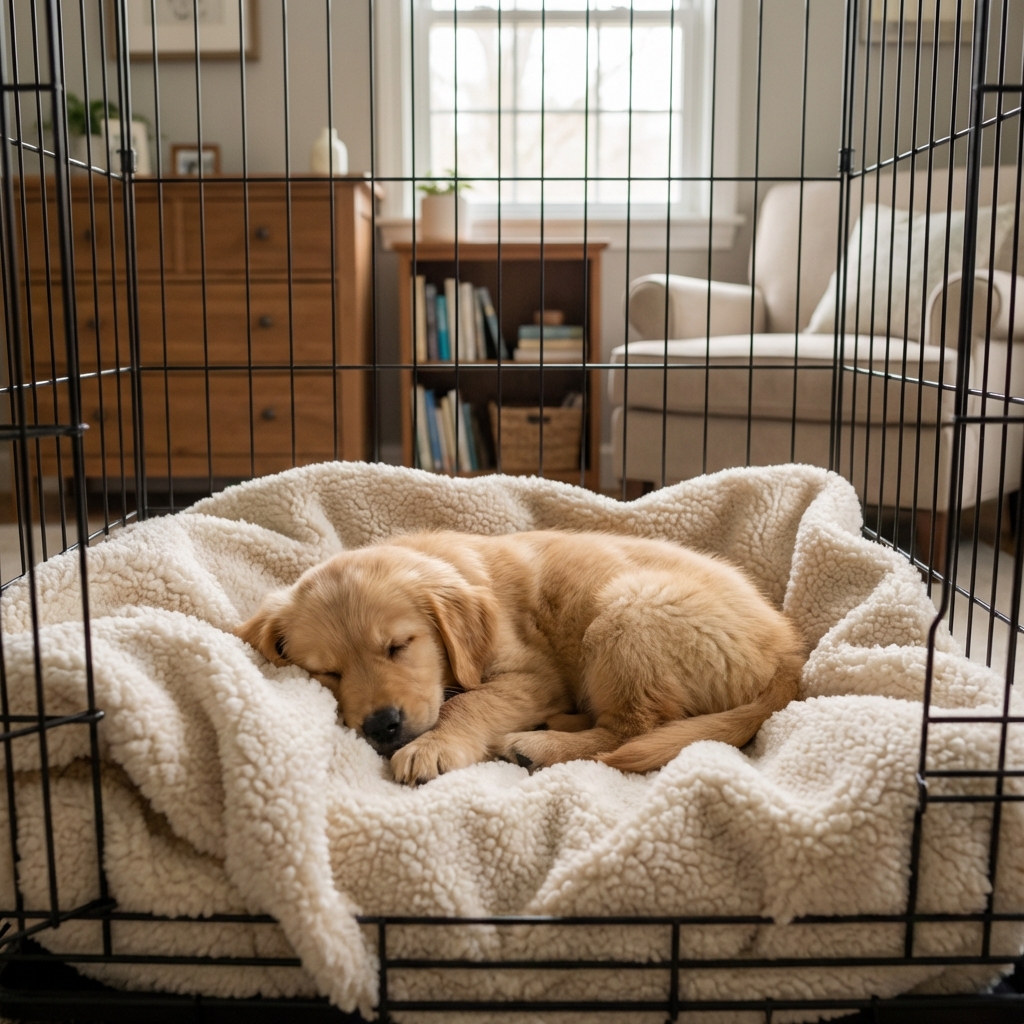
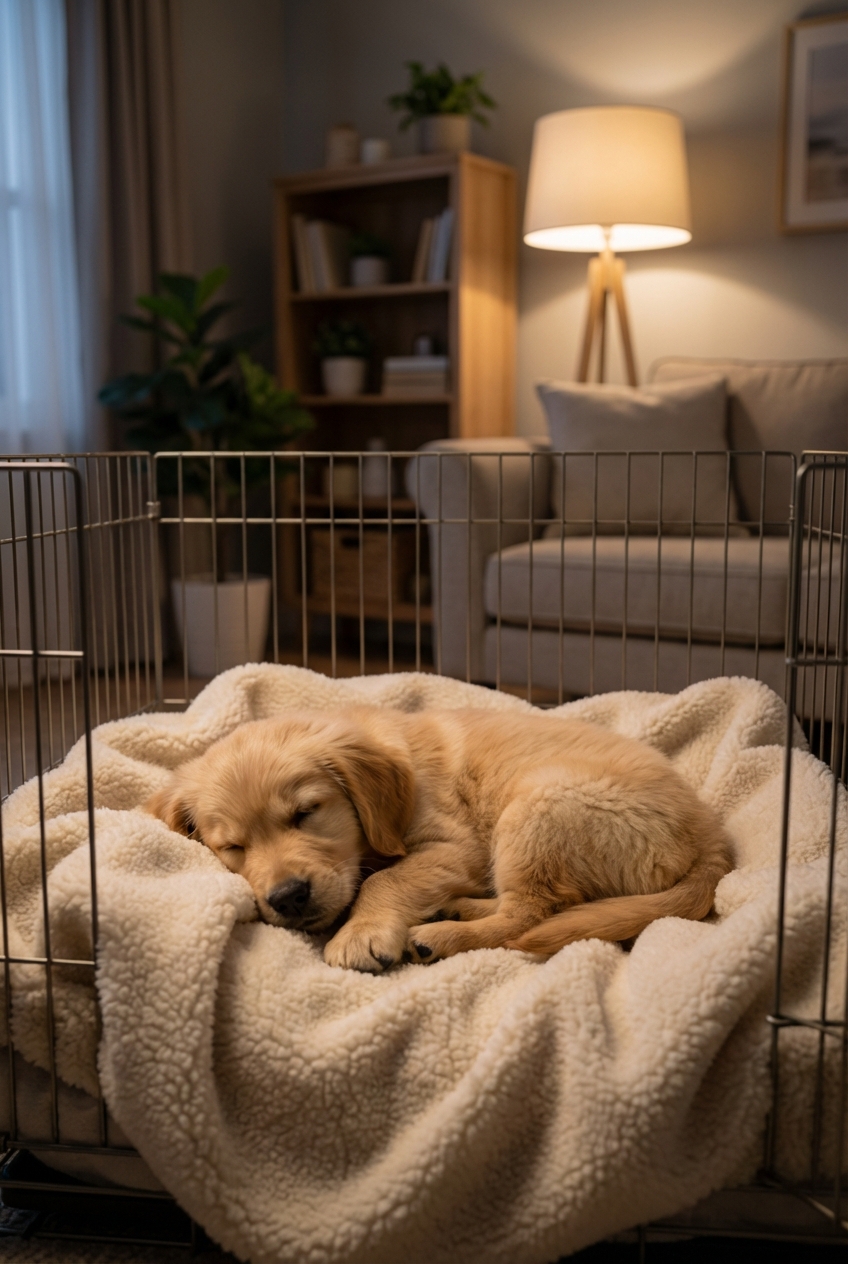
- Crate or playpen: Choose a size that lets your puppy stand up, turn around, and lie down comfortably.
- Bedding: Use something washable. For chewers, skip thick bedding at first and use a flat mat or towel.
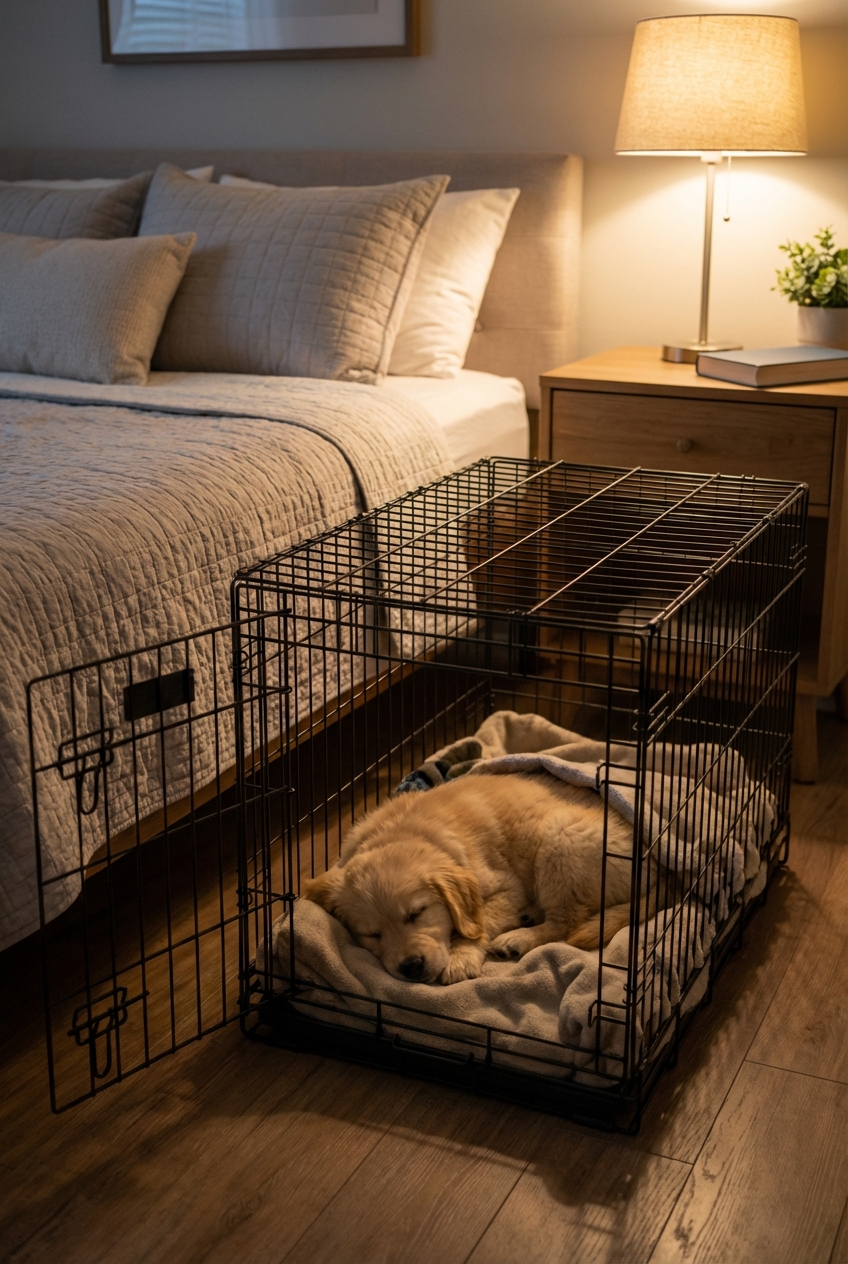
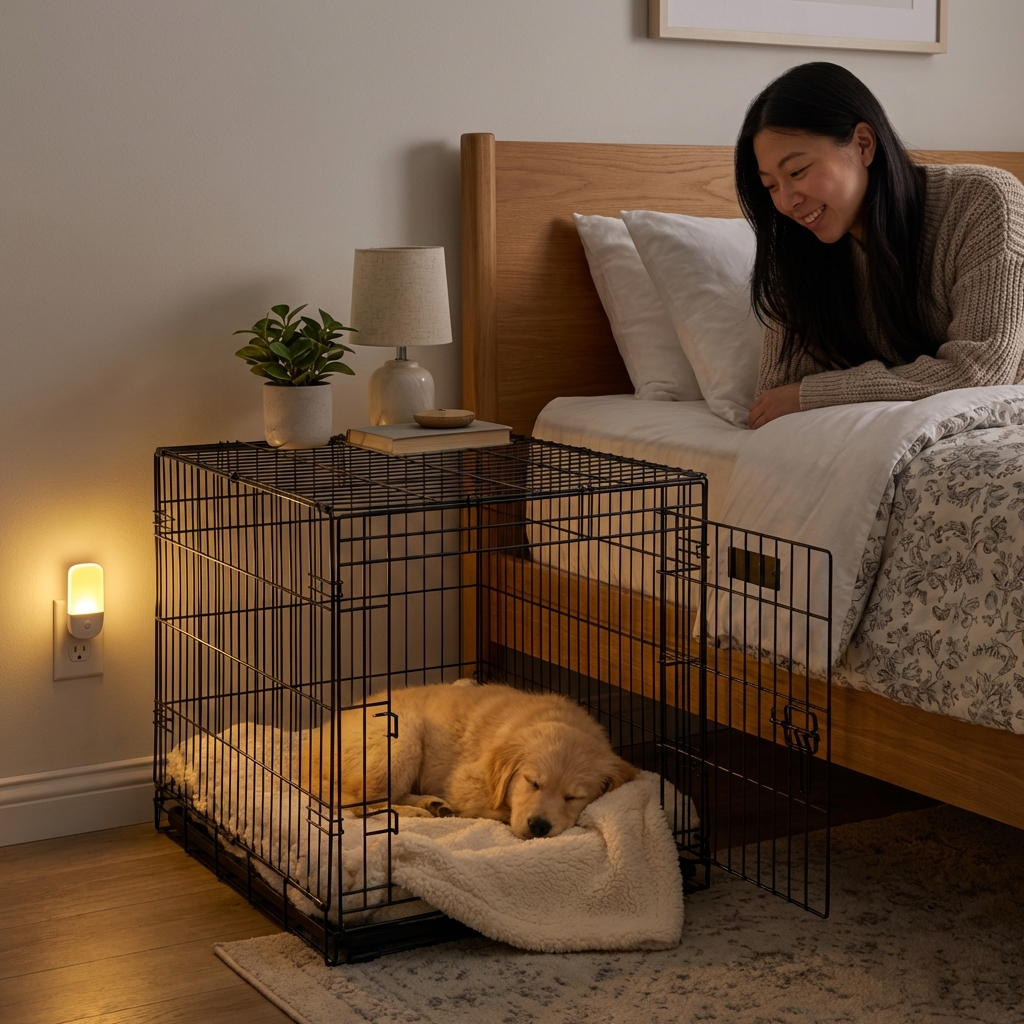
- Location: Plan to keep the crate close to you at night, ideally in your bedroom for the first week or two. This reduces panic and helps with housetraining.
Puppy-proof the space
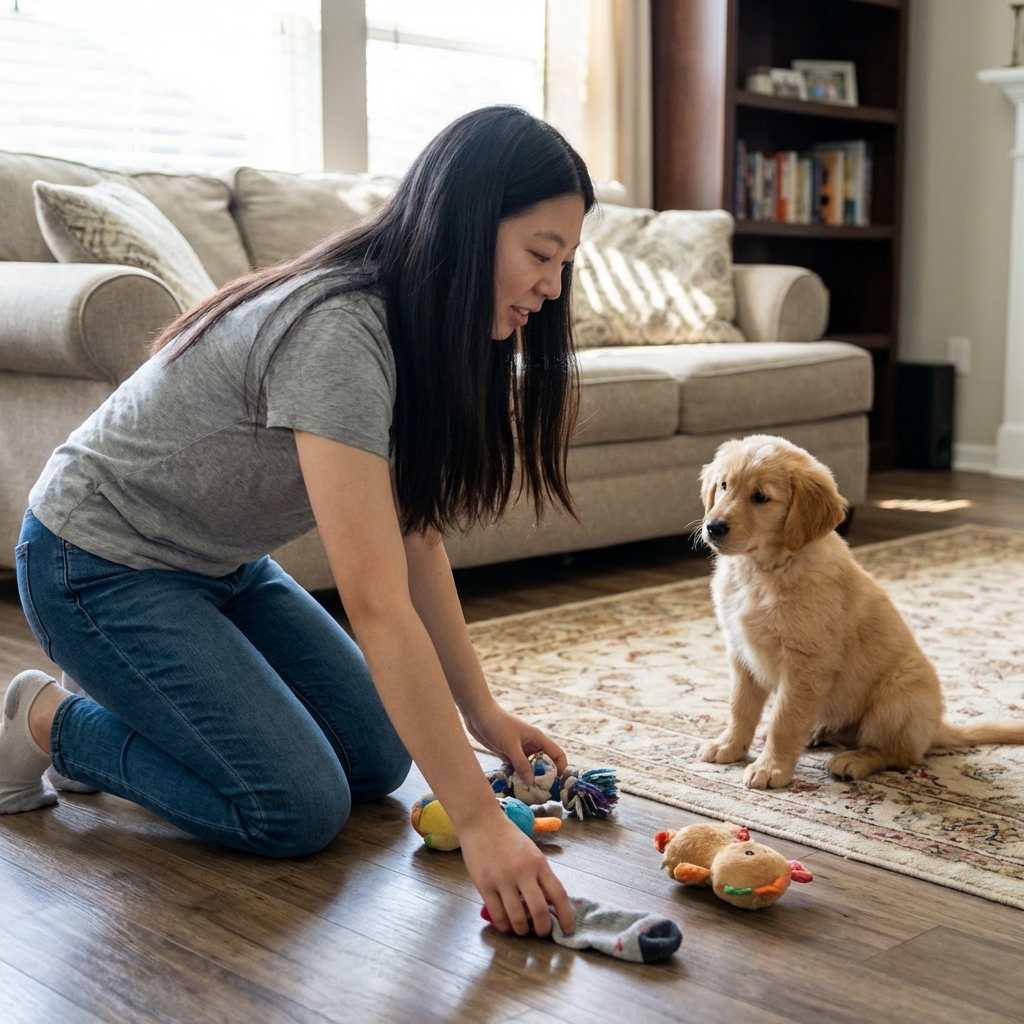
- Pick up cords, shoes, kids’ toys, and anything small enough to swallow.
- Block off stairs and rooms you cannot supervise.
- Put cleaning products, medications, and houseplants out of reach.
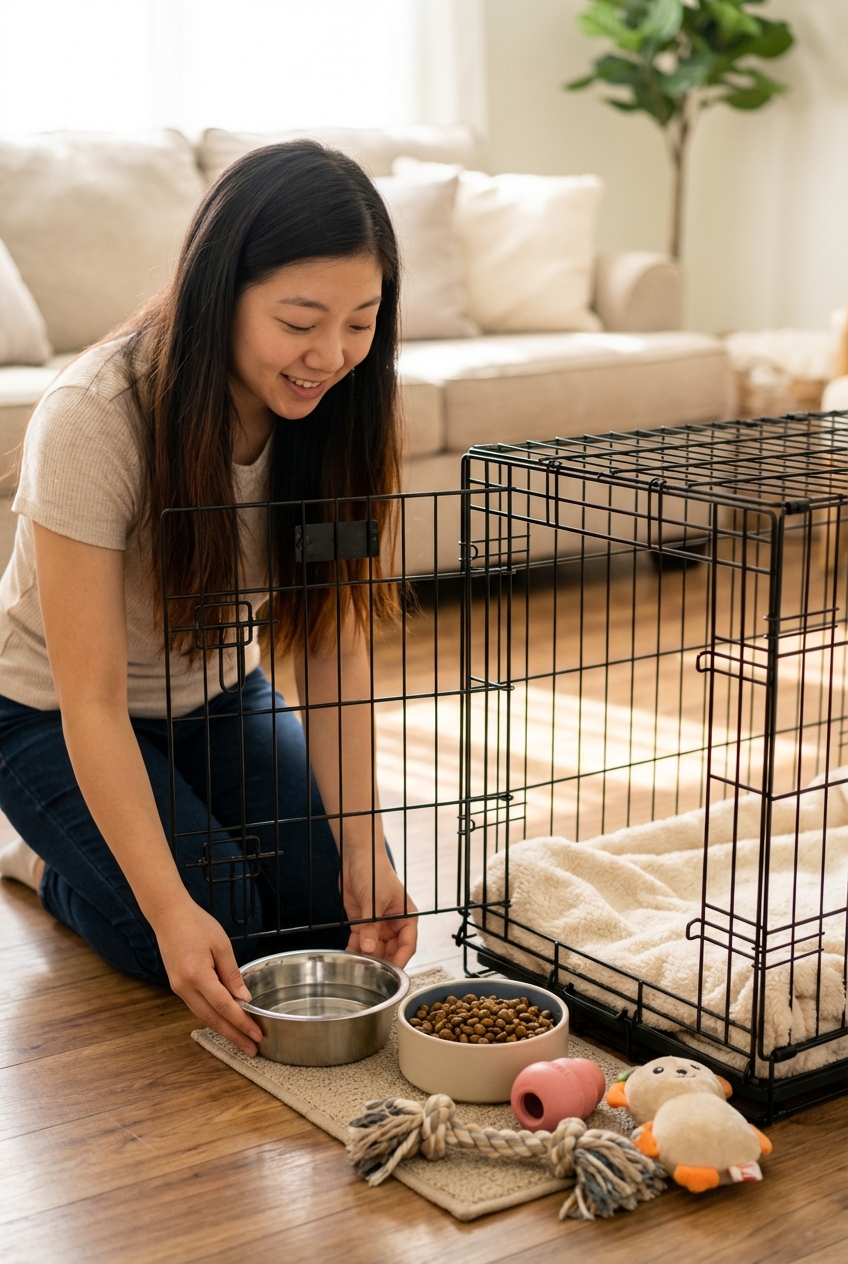
Stock your first-night essentials
- Collar or harness and ID tag (microchip registration too if applicable)
- Leash
- Food the puppy is already eating
- High-value training treats
- Water bowl
- Enzyme cleaner for accidents (regular cleaners leave scent behind)
- Chew items appropriate for puppies
- Paper towels and a laundry plan
- A small nightlight (helps you keep trips calm, quick, and low-stress)
Puppy health note: Until your puppy is appropriately vaccinated, avoid high-dog-traffic potty areas (like busy parks and communal pet relief spots). Ask your veterinarian what is safest in your area. A designated, low-traffic potty spot at home is usually the best plan early on.
The first evening schedule
Puppies do best with a predictable rhythm. Here is a gentle first-night flow you can follow.
1 to 2 hours before bed: calm bonding
- Let your puppy explore one small area on leash or under close supervision.
- Offer a few minutes of play, then shift to calmer activities like petting and simple training (sit, name game).
- Keep voices soft and energy low. Excitement late at night can backfire.
45 to 60 minutes before bed: meal and water plan
If it is close to bedtime, avoid a big meal right before sleep. Many puppies do best with dinner a few hours before bed. Offer water in the evening, but consider picking it up about 1 to 2 hours before bedtime if your veterinarian agrees and your puppy is otherwise well hydrated.
Skip water pick-up if your puppy is vomiting, has diarrhea, seems dehydrated, has a medical condition your vet is monitoring, or if you are in a hot climate and they have been very active. Never restrict water for long periods. If your puppy seems thirsty after a nighttime potty trip, offer water.
15 minutes before bed: final potty trip
Take your puppy out and give them time to fully empty. Stand quietly and stay low-key in one spot so they focus. Then praise warmly when they go.
Night one tip: Pick a potty phrase like “Go potty.” Use the same words every time so your puppy learns faster.
Where should your puppy sleep?
For most families, the best choice on the first night is a crate next to your bed. This supports security and makes nighttime potty trips easier. It also helps prevent unsafe wandering, chewing, and accidents.
Crate in bedroom
- Your puppy can hear and smell you, which reduces distress.
- You can respond quickly before whining escalates.
- You build a strong foundation for crate training.
Playpen setup
A pen can work well if you include a small crate inside it, plus a pee pad area as a temporary backup. Just know that pads can sometimes slow housetraining because they teach “it is okay to potty indoors.”
Sleeping in bed (use caution)
I understand the temptation. But early on, bed sleeping can pose risks like falls, accidental injury, and startle responses. It can also make boundaries and housetraining more confusing for some puppies. If you choose bed sleeping, talk with your vet and be very mindful about safety and supervision.
Crying and whining at night
Whining is common, especially the first few nights (and sometimes longer). Your puppy is not being “bad.” They are stressed and adjusting. The trick is to comfort without accidentally teaching that louder crying brings more attention.
Do this first
- Assume they need to potty. If they wake and cry, take them out on leash, keep it quiet, and return them to the crate.
- Keep lights dim. Nighttime should feel boring.
- Use gentle reassurance. A calm “You’re okay” can help.
What not to do
- Do not turn it into playtime.
- Do not give lots of treats for crying. You can reward calm behavior once they settle.
- Do not scold. Fear makes the problem worse.
Comfort tools that help many puppies
- White noise: A fan or sound machine can mask household sounds.
- Warmth: If your vet approves, a warm water bottle wrapped in a towel can be soothing.
- Snuggle item: A safe plush toy can help, but only if your puppy is not shredding it.
If your puppy is frantic
If your puppy is panicking (screaming nonstop, biting at the crate, trying to escape, or risking injury), do not force a long “cry it out.” That level of distress can make crate training harder. Focus on short, positive crate sessions during the day (treats, meals, crate games), and ask your veterinarian or a qualified trainer for help if the distress continues.
Nighttime potty: what is normal?
Very young puppies have small bladders and limited control. It is normal to have nighttime potty breaks for a while.
General guideline
A common rule of thumb is: puppy age in months + 1 equals the number of hours they might hold it at night. This is a rough estimate, not a guarantee. Breed, size, individual development, and whether your puppy is asleep or awake all matter. Some puppies can go longer, and some need more frequent trips.
When puppies usually need to go
- Right after waking up
- After eating or drinking
- After play or excitement
Signs your puppy needs to go
- Sudden whining or restlessness
- Sniffing, circling
- Waking up and immediately fussing
How to do a nighttime potty trip
- Pick them up or walk them on leash.
- Go to the same spot each time.
- Use your potty phrase.
- Praise quietly, then straight back to bed.
Keep your leash and shoes by the door so you can stay calm and move quickly.
If accidents happen, clean with an enzyme cleaner so your puppy does not keep returning to that spot.
Food and tummy upset
Stress plus new foods can cause loose stool or reduced appetite. Keep the diet steady for the first week if possible.
Feeding tips
- Feed the same food the breeder or rescue used, at least initially.
- Avoid rich treats the first night. Use small, simple training treats.
- If your puppy will not eat dinner but otherwise seems okay, do not panic. Many puppies eat better once they settle.
Call your vet urgently if you see
- Repeated vomiting
- Bloated belly, unproductive retching
- Bloody diarrhea
- Extreme lethargy or weakness
- Concern about toxin or foreign object ingestion
First-night safety checklist
- No collars, harnesses, or dangling tags in the crate unless your veterinarian specifically advises it. These can snag.
- Keep small objects, socks, and kids’ toys off the floor.
- Choose puppy-safe chews sized appropriately.
- Use a baby gate to block hazards.
- Know the nearest 24-hour emergency vet location before you need it.
The morning after
Morning is your chance to reinforce the routine.
- Potty immediately when your puppy wakes up.
- Breakfast, then potty again within 10 to 20 minutes.
- Short training session with rewards for calm focus.
- Schedule your vet visit if it is not already booked, and bring any vaccine or deworming records.
Also, take a moment to celebrate the small wins. If your puppy slept even a short stretch, that is progress. Consistency is what builds peaceful nights.
Quick first-night plan
Evening: calm play + bonding
2 to 3 hours before bed: dinner (if possible)
1 to 2 hours before bed: consider picking up water (vet-approved)
Right before bed: potty trip
Overnight: if crying, potty first, then back to crate
Morning: potty, breakfast, potty, calm training
You do not have to get it perfect. You just have to keep showing your puppy: this home is safe, this routine is predictable, and you are here.