New puppy crying at night? Learn why it happens and how to stop it with a simple bedtime routine, smart crate setup, safe comfort tips, and a no-fuss nightti...
Article
•
Designer Mixes
New Puppy Crying at Night

Shari Shidate
Designer Mixes contributor
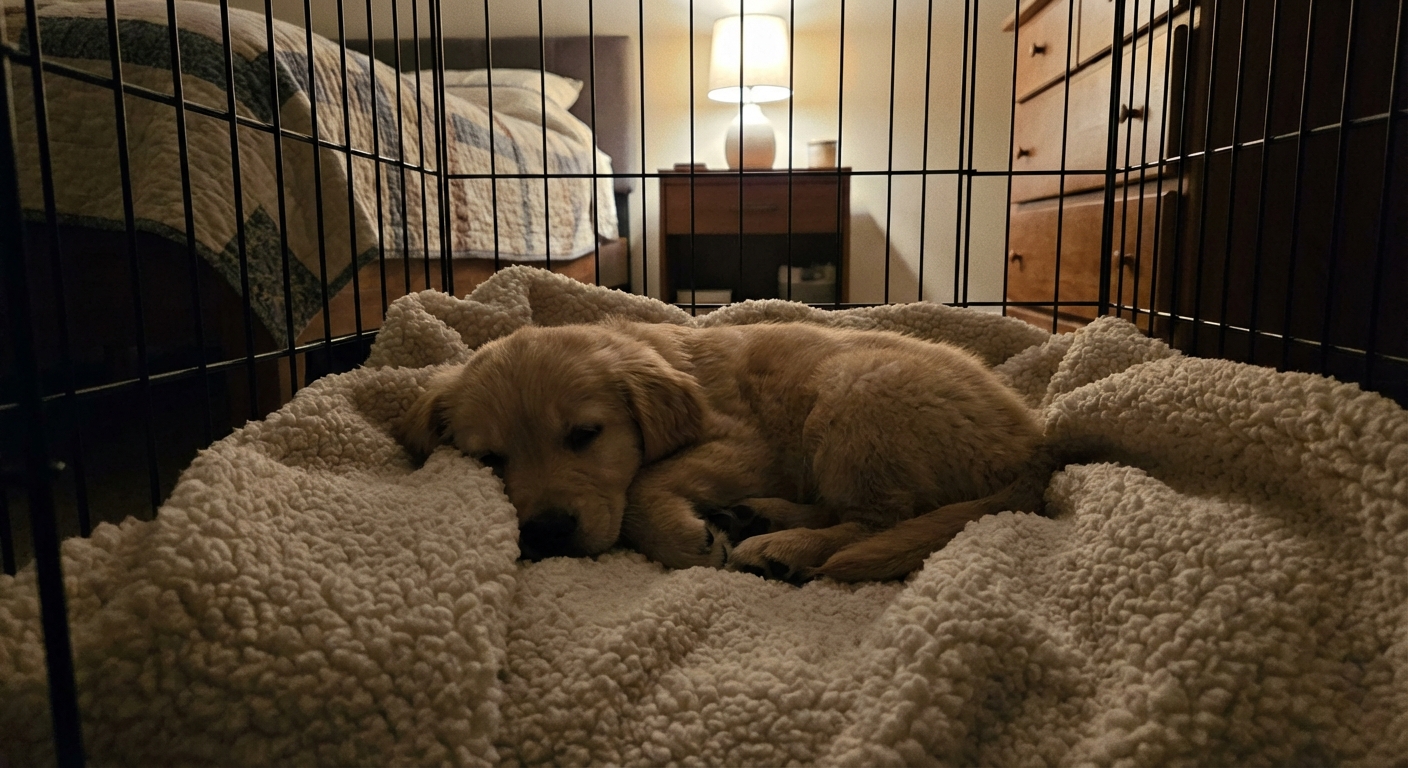
Bringing home a new puppy is exciting, and then night one hits. The crying can feel heartbreaking, especially when you are worried something is wrong. In most cases, nighttime crying is normal adjustment behavior: your puppy just left mom, littermates, familiar smells, and a predictable sleep routine.
The good news is that you can usually improve nights quickly with a setup that supports security, comfort, and consistency. As a veterinary assistant, I always remind families: our goal is to help a puppy feel safe while also teaching healthy sleep habits.
Quick note: This is general guidance and not a substitute for veterinary care. If something feels “off,” trust your instincts and call your veterinarian.
Why puppies cry at night
Puppies cry at night for a few common reasons. Sometimes it is one main reason, and sometimes it is a combo.
- Separation distress: Puppies are wired to stay close to their “family.” Being alone feels unsafe.
- New environment: Different smells, sounds, temperature, and bedding can be unsettling.
- Potty needs: Young puppies have tiny bladders and limited control.
- Hunger or thirst: Especially in younger or smaller breeds, long stretches overnight can be tough.
- Overtired or overstimulated: A busy evening can make it harder to settle.
- Medical discomfort: Parasites, GI upset, pain, or illness can keep a puppy from sleeping well.
If your puppy is otherwise bright, eating, drinking, and playful during the day, nighttime crying is most often about adjustment and routine, not an emergency.
First: rule out the urgent stuff
Before you focus on training, do a quick health and safety check. Call your veterinarian promptly if you notice any of the following:
- Repeated vomiting, diarrhea, or blood in stool
- Straining to urinate, accidents paired with crying, or very frequent urination
- Swollen belly plus repeated unproductive retching or severe lethargy (go to an emergency vet right away)
- Coughing, labored breathing, pale gums, or collapse
- Refusing food for a full day in a young puppy
- High-pitched pain cry when moving or being touched
And if your puppy came from a shelter, breeder, or transport, ask about recent deworming and vaccines. Intestinal parasites are common in puppies and can cause GI discomfort that may disrupt sleep.
The ideal sleep setup
Crate, pen, or bed?
For most puppies, a crate (or a crate inside an exercise pen) is the easiest path to safe nights and faster potty training. The crate should be just large enough for your puppy to stand, turn, and lie down comfortably. Too big can encourage pottying in one corner. A divider panel is helpful as your puppy grows.
An exercise pen can work for some puppies, but many will potty in the far corner and then keep playing, which can slow house training. A loose bed on the floor is not ideal at this stage because it gives your puppy more room to roam, chew, and have accidents without you noticing.
Location matters
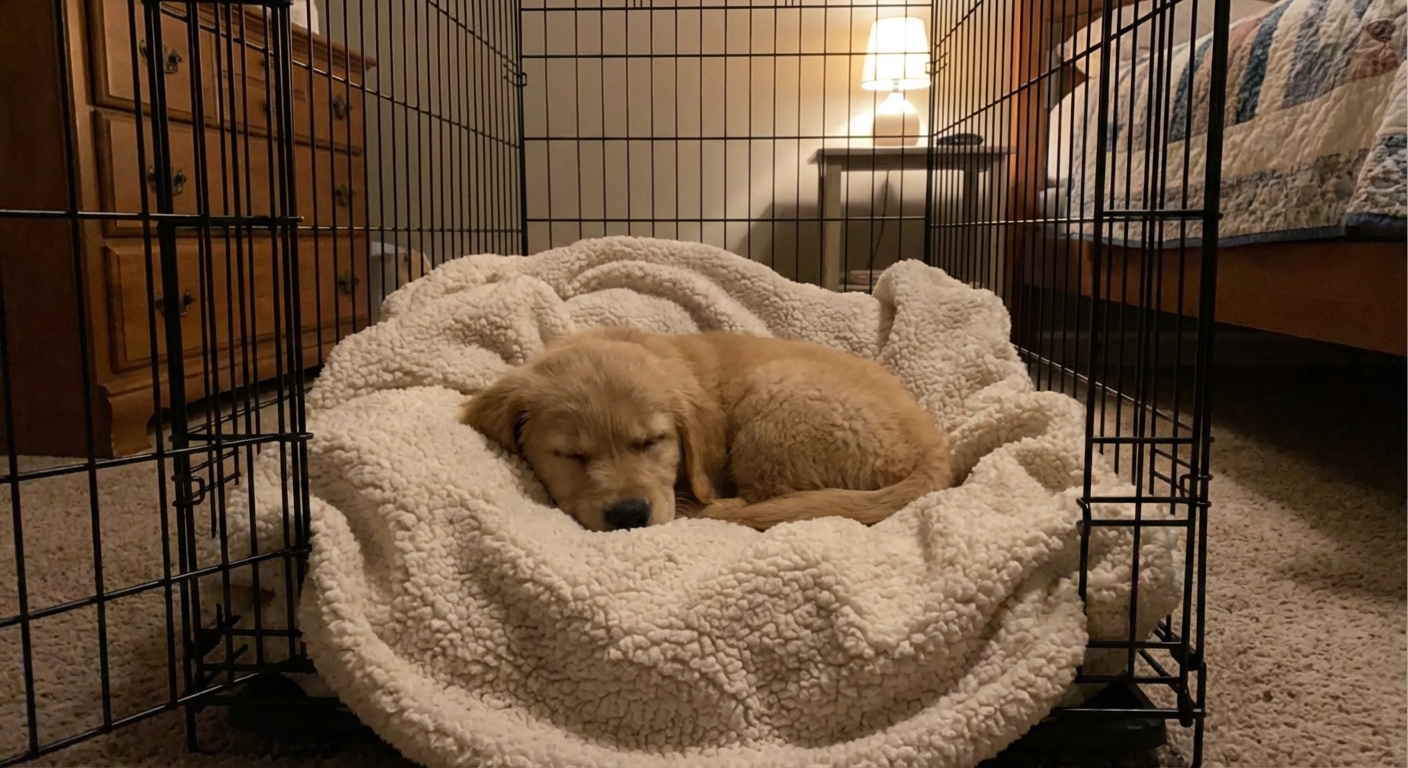
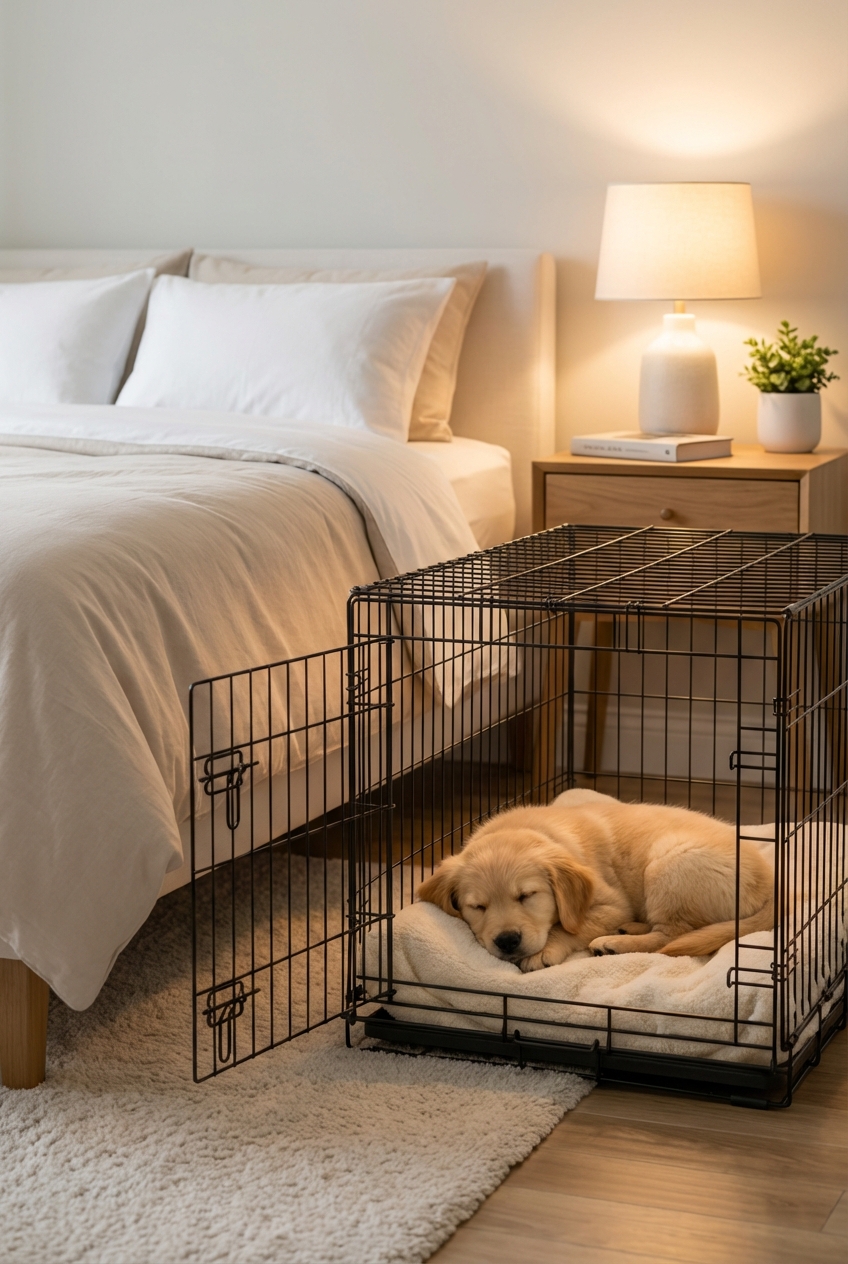
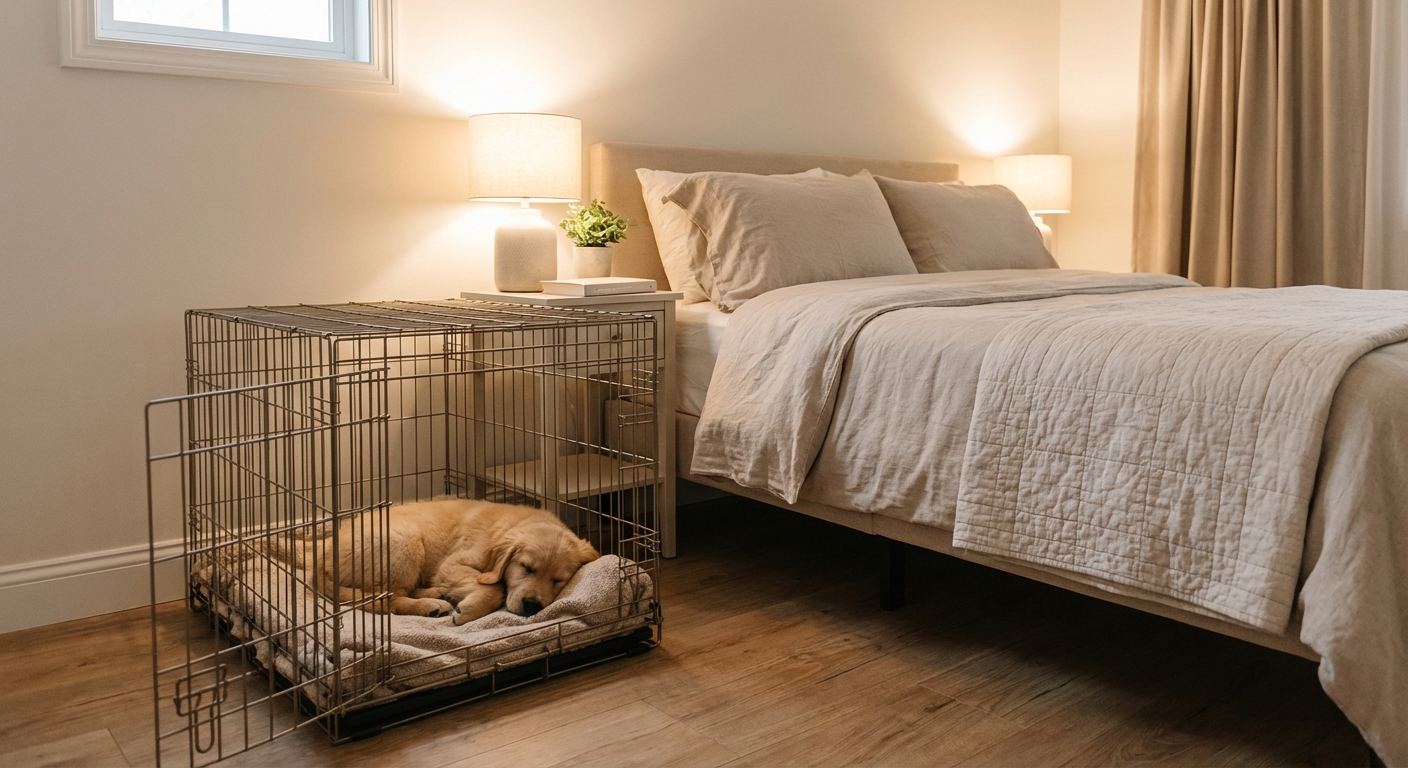
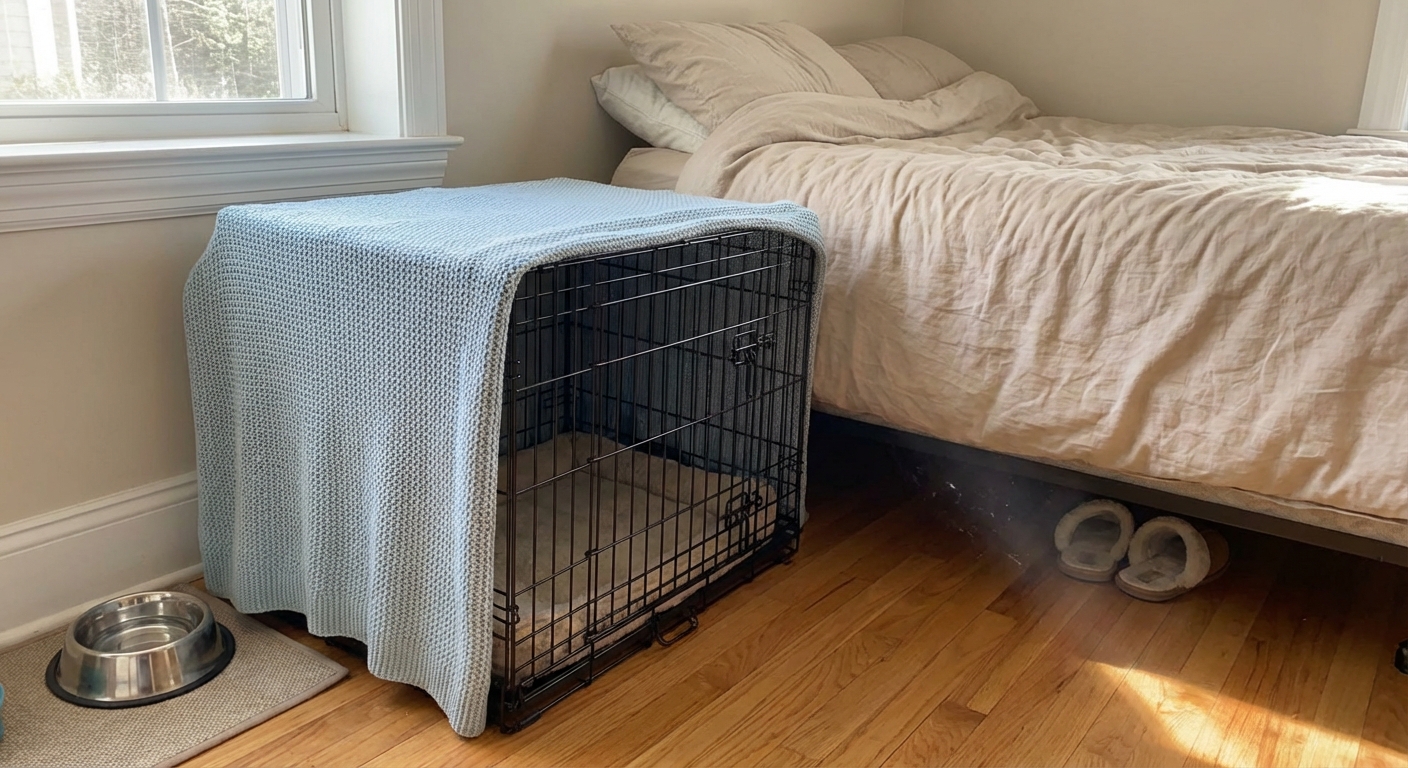
For the first 1 to 2 weeks, place the crate close to you. Many puppies do best when the crate is in your bedroom, at least temporarily. You can gradually move the crate farther away as your puppy settles.
Create a “den” feel
- Cover 2 to 3 sides of the crate with a breathable blanket to reduce visual stimulation.
- Use a firm, washable bed or crate pad.
- Add one safe comfort item (like a puppy-safe plush) if your puppy does not shred and eat fabric.
- Consider a steady sound source like a fan or white noise machine.
Warmth and comfort
Puppies can get chilly. If your home runs cool, add an extra blanket under the pad or use a puppy-safe warming disc designed for pets. Avoid electric heating pads unless your veterinarian specifically recommends one and you can supervise safely.
Also watch for drafts. A crate next to an exterior door, a vent, or a cold window can make it harder for a puppy to settle.
The bedtime routine that works
Puppies thrive on predictable steps. Aim for the same routine each night, in the same order.
60 to 90 minutes before bed
- Potty break
- Calm play (avoid wild chasing games right before bed)
- Short training session (2 to 5 minutes of sit, touch, name game)
- Settle time with a safe, supervised chew earlier in the evening, or a stuffed rubber food toy if you need something in the crate
15 minutes before bed
- Final potty trip
- Dim lights, lower voices, reduce excitement
- Guide them into the crate with a cue like “bedtime”
Food and water timing
Ask your veterinarian what fits your puppy’s age and breed size, but a common approach is:
- Last meal about 3 hours before bedtime
- Offer plenty of water during the day, then consider picking it up about 1 to 2 hours before bedtime to help reduce accidents
Important: Never restrict water if your puppy seems thirsty, is ill, after heavy play, in hot weather, or if your veterinarian tells you not to. If your puppy is very young or toy-sized, do not limit food or water without veterinary guidance. Some small puppies are prone to low blood sugar.
What to do when the crying starts
This is the part that makes people second-guess everything. Here is a practical, puppy-friendly sequence.
Step 1: pause and listen
Give it 30 to 90 seconds. Some puppies fuss briefly, then settle. If the crying escalates or sounds panicked, move to step 2.
Step 2: quick, boring potty trip
Quietly take your puppy out on leash to the same potty spot. No playing, no roaming, no extra attention. If they go, calmly praise, then straight back to the crate.
If they do not go within 2 to 3 minutes, back to the crate. You are not being mean. You are teaching: nighttime is for sleeping, not partying.
Step 3: reassure without rewarding the noise
If your puppy has pottied and is safe, you can offer calm reassurance:
- Place your fingers near the crate (do not open the door)
- Softly say a consistent phrase like “goodnight”
- Avoid excited baby talk or long conversations
Step 4: stick to the plan
If you let your puppy out every time they cry, they learn that crying is the key that opens the door. Instead, give scheduled potty breaks based on age and keep interactions low-key and brief.
Nighttime potty breaks
This varies a lot, but here is a general starting point for overnight breaks:
- 8 to 10 weeks: often every 2 to 3 hours (some puppies need 1 to 2 hours at first)
- 10 to 12 weeks: often every 3 to 4 hours
- 12 to 16 weeks: many puppies can do 4 to 6 hours
Some puppies can go longer, and some cannot. Breed size, individual bladder capacity, stress, and evening water intake all matter. If your puppy repeatedly wakes, cries, and then pees immediately outside, you likely need a more frequent schedule for a short time.
Should you ignore a crying puppy?
It depends on why they are crying. Ignoring a puppy who genuinely needs to potty can slow house training and create anxiety. But running to the crate for every whimper can teach your puppy to cry longer and louder.
A balanced approach is:
- Always meet physical needs (potty, comfort, safety)
- Keep nighttime businesslike (no play, no big attention)
- Reward calm behavior (quiet praise when they settle)
If you are consistent, many puppies improve a lot in the first week, with bigger gains over the first two weeks. If yours takes longer, that is still normal.
Tools that can help (and what to avoid)
Helpful tools
- White noise: masks random sounds that can startle puppies.
- Pheromone support: dog-appeasing pheromone diffusers or collars may help some puppies relax. Ask your veterinarian which options are appropriate.
- Heartbeat-style comfort toys: can be soothing for some puppies, especially in the first week.
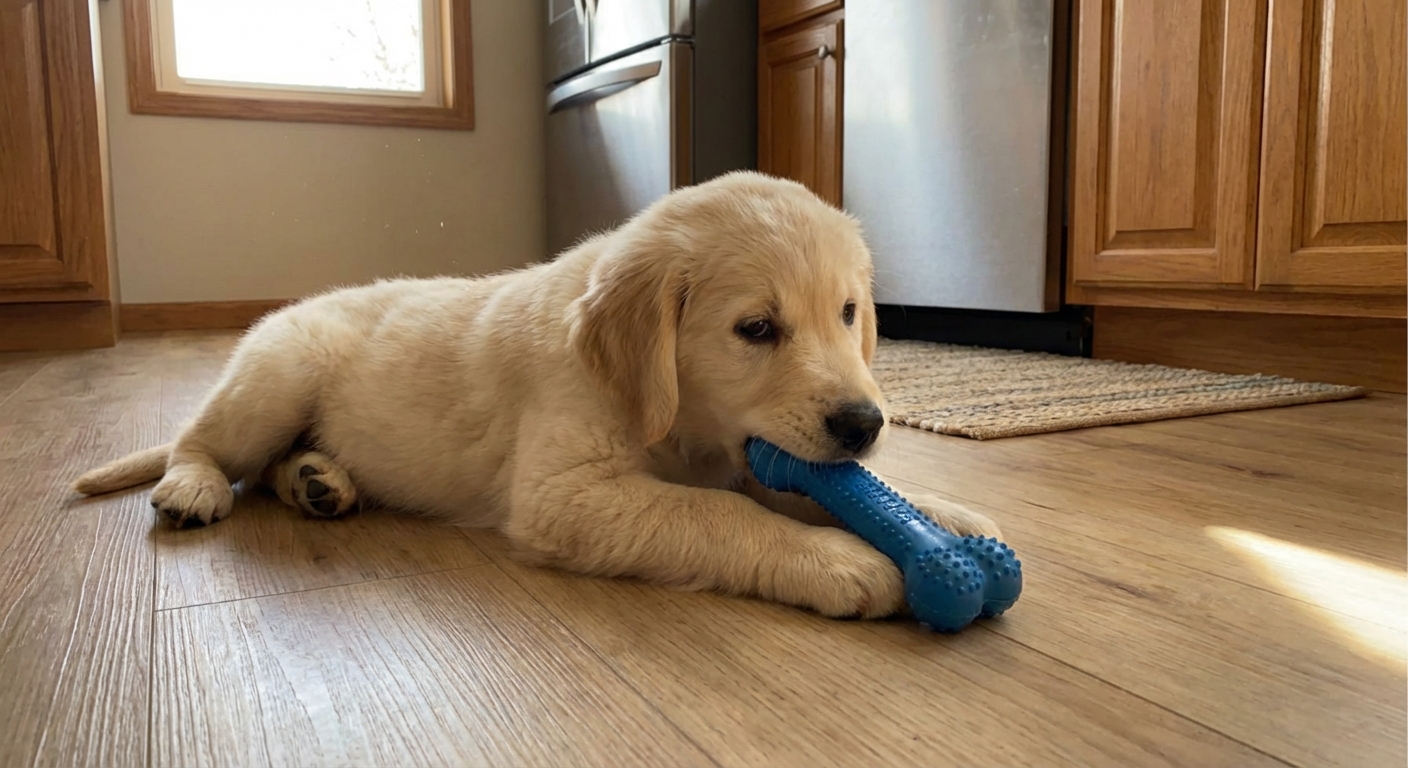
- Stuffed rubber food toys: for many puppies, a stuffed rubber toy (for example, a KONG-style toy) is a safer choice for crate time than a consumable chew, especially while you are asleep.
Use caution
- Overly soft bedding: can be chewed and swallowed by some puppies.
- Loose collars in the crate: remove collars at bedtime to reduce snag risk.
- Too many toys: one safe item is usually plenty at night.
What to avoid
- Crate as punishment: the crate should feel safe, not scary.
- Yelling or banging the crate: this increases stress and can worsen crying.
- Unsupervised edible chews or hard chews: bully sticks, rawhide, bones, and very hard chews can risk choking, tooth fractures, or GI upset. Save these for supervised time, if your veterinarian says they are appropriate for your puppy.
Feeding, digestion, and nighttime comfort
As a vet assistant, I see a lot of “night crying” that is really tummy discomfort. Sudden diet changes, too many treats, rich chews, or parasites can all contribute.
Keep meals consistent during the first week
If you plan to switch foods, do it gradually unless your veterinarian advises otherwise. Many puppies do best with a slow transition over 7 to 10 days.
Watch for GI clues
- Soft stool or diarrhea
- Excess gas
- Frequent licking of lips or swallowing
- Restlessness after eating
If those show up, talk to your veterinarian. Do not add supplements or home remedies without guidance, especially in young puppies.
Common situations
Puppy screams when you close the crate
This can be panic, not mild fussing. Focus on crate training during the day:
- Feed meals in the crate with the door open at first
- Practice short “in and out” sessions with treats
- Close the door for 10 seconds, then 30, then 60, rewarding calm
- Gradually build duration, always ending on a success
Puppy cries at 4 a.m. every day
This is often a learned schedule. Try a slightly later bedtime potty, ensure the room is dark and quiet, and set an alarm for 10 minutes before the usual wake time for a few nights. Take them out before the crying starts, then slowly move the alarm later.
Puppy was sleeping fine, then started crying
Consider:
- Growth spurts and increased hunger
- Teething discomfort
- A new noise in the environment
- GI upset or parasites
- UTI symptoms
If there is any change in appetite, stool, energy, or urination habits, check in with your veterinarian.
Your first 7 nights plan
Nights 1 to 2
- Crate next to your bed
- One or two scheduled potty breaks (more if your puppy is very young, tiny, or having accidents)
- Comfort is okay, but keep it quiet and simple
Nights 3 to 5
- Stick to the routine
- Begin waiting a little longer before intervening if crying is mild
- Reinforce daytime crate training with short sessions
Nights 6 to 7
- Many puppies need fewer breaks now, but some still need the same schedule for a bit longer
- If things are improving, you can consider moving the crate slightly farther away
- Keep rewarding calm, quiet behavior
When to get professional help
If you feel stuck, you are not failing. Some puppies need more tailored support.
- Veterinarian: for any health concerns, parasite checks, GI issues, UTIs, pain, or medication guidance.
- Certified trainer: for structured crate training and separation-related behaviors.
Seek help sooner if your puppy shows intense panic, drools heavily, tries to chew out of the crate, injures gums, cannot settle even after potty and reassurance, or if you are seeing repeated accidents despite frequent breaks.
Quick comfort checklist
- Did they potty right before bed?
- Is the crate close enough that they feel safe?
- Is the room quiet, dim, and draft-free?
- Are they warm enough?
- Are you keeping nighttime consistent and no-frills?
- Any diarrhea, vomiting, frequent urination, or loss of appetite?
Night crying is one of the hardest parts of puppyhood, but it is also one of the most temporary. With consistency and a calm routine, most puppies learn that nighttime is safe, predictable, and made for sleeping.