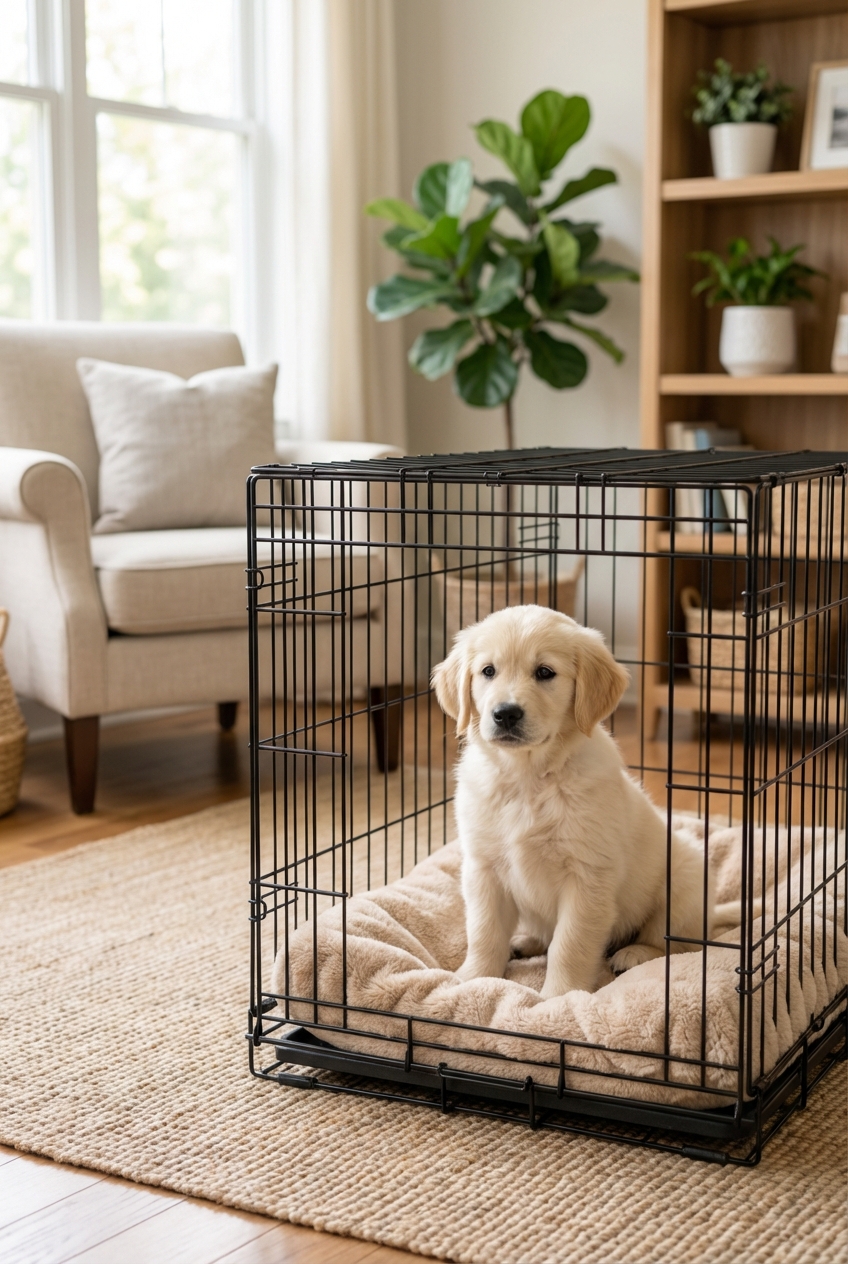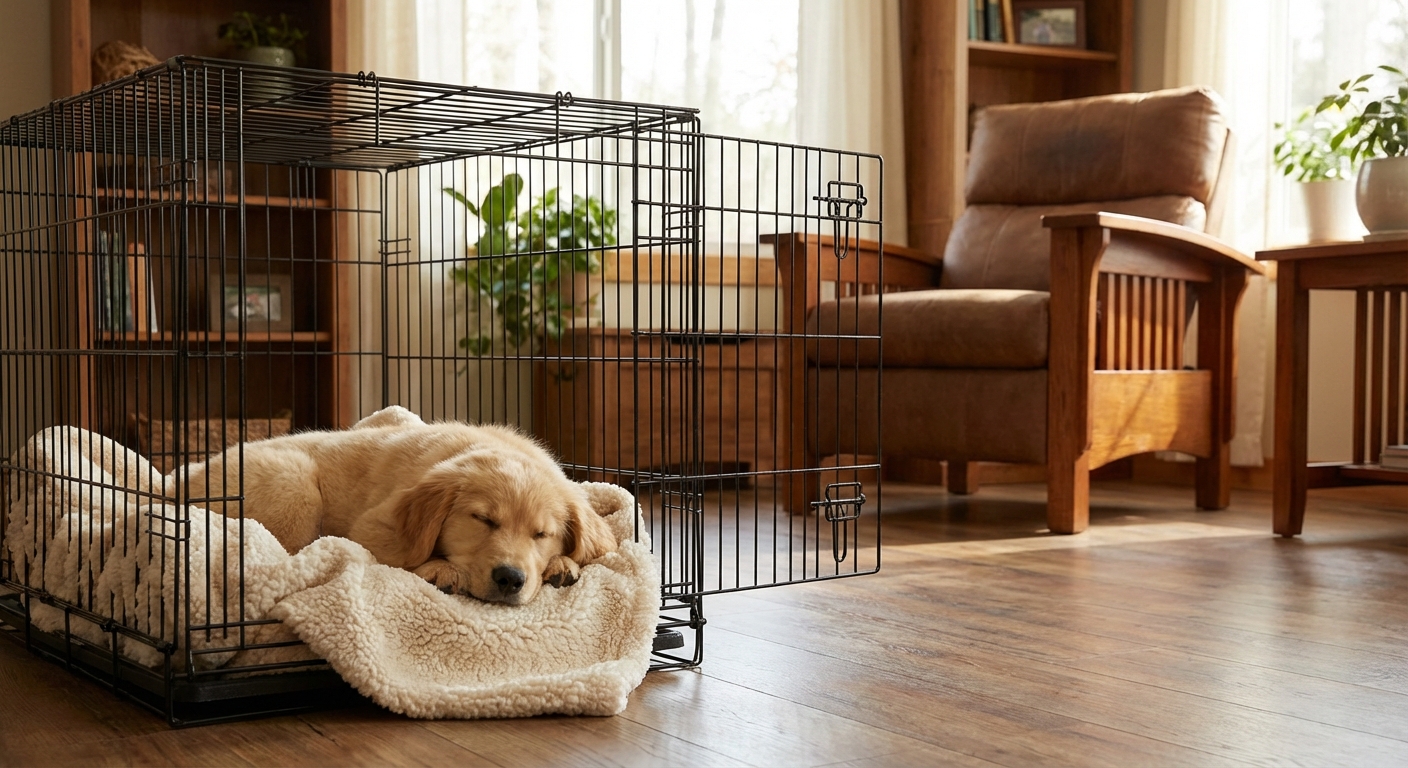
Learn a vet-backed, step-by-step puppy crate training routine for the first 14 days. Includes setup tips, daily schedules, night training, time limits, and t...
Article
•
Designer Mixes
New Puppy Crate Training

Shari Shidate
Designer Mixes contributor
Bringing home a new puppy is pure joy, and also a big adjustment for both of you. Crate training is one of the kindest tools we have because it gives your puppy a safe “den,” supports house training, and helps prevent trouble when you cannot supervise. As a veterinary assistant here in Frisco, Texas, I also love crate training because it can set puppies up for calmer vet visits, safer travel, and easier recovery if they ever need rest after an injury or surgery.
The goal is simple: the crate becomes a cozy, predictable place where your puppy can relax. Not a punishment. Not a jail. Think comfort, safety, and routine.
Quick note: This is general guidance. Your puppy’s age, breed, and medical history matter. If you are unsure, check in with your veterinarian and, if needed, a qualified positive-reinforcement trainer in your area.

What crate training does
Crate training works with a puppy’s natural instinct to keep their sleeping area clean. When done gently, it helps you:
- Speed up house training by reducing accidents and teaching a clear potty routine.
- Prevent unsafe chewing and ingestion of socks, cords, toys, or other hazards.
- Reduce separation stress by making alone time predictable and safe.
- Create an “off switch” for naps, which can prevent overtired puppy chaos.
- Build comfort with confinement that can help for grooming, boarding, travel, and vet care.
Crate training is not about keeping a puppy crated all day. It is about teaching the skill of relaxing in a crate.
Picking the right crate
Size
A crate should be large enough for your puppy to stand up, turn around, and stretch out. If it is too large, many puppies will potty in one corner and sleep in the other. For fast-growing puppies, a crate with a divider panel lets you increase space as they grow.
Wire vs. plastic vs. soft-sided
- Wire crates: Great airflow and visibility. Often easiest for training at home.
- Plastic kennel-style crates: More den-like and often helpful for travel, but can be warmer with less airflow.
- Soft-sided crates: Best for already crate-trained dogs. Many puppies will chew through them.
Comfort setup
- Bed or blanket: Start with something washable. Some puppies shred bedding at first, so you may need towels temporarily.
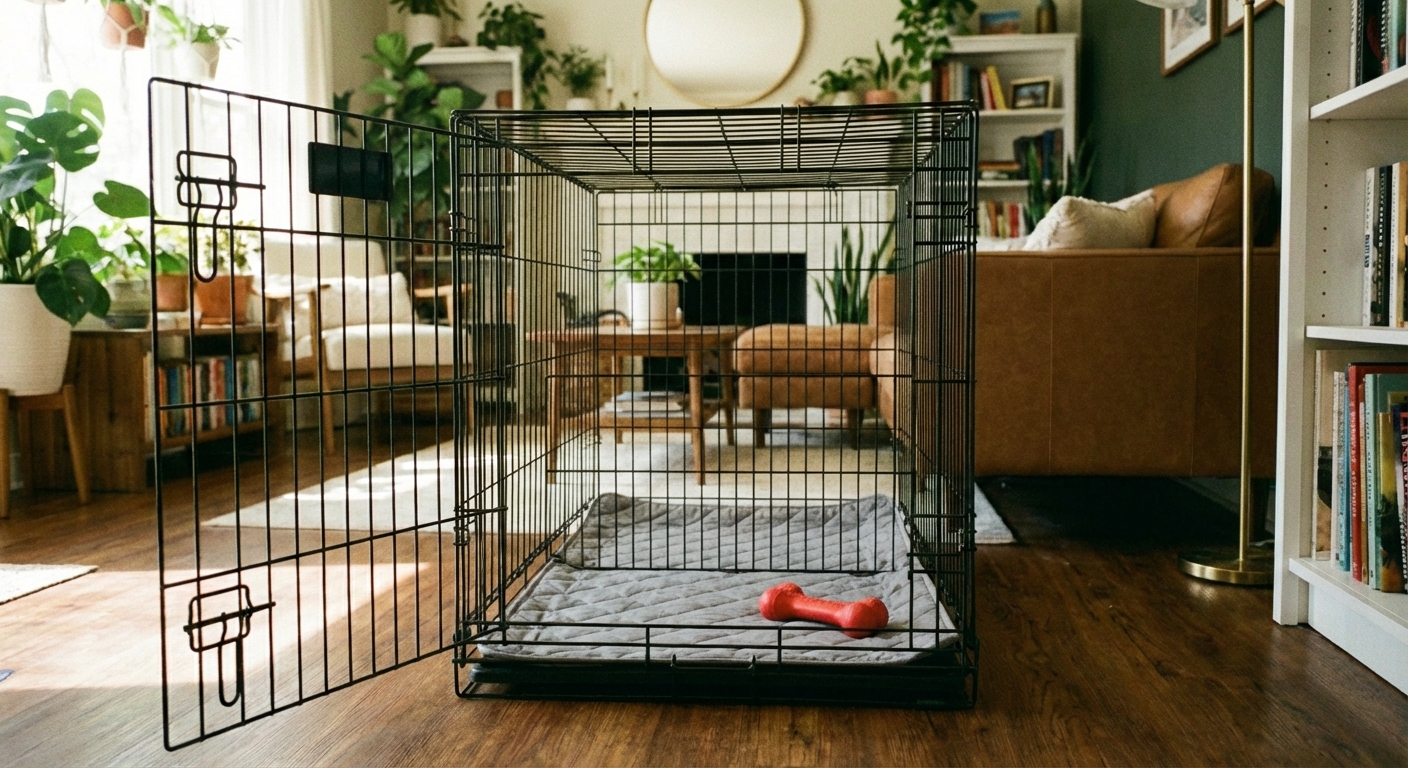
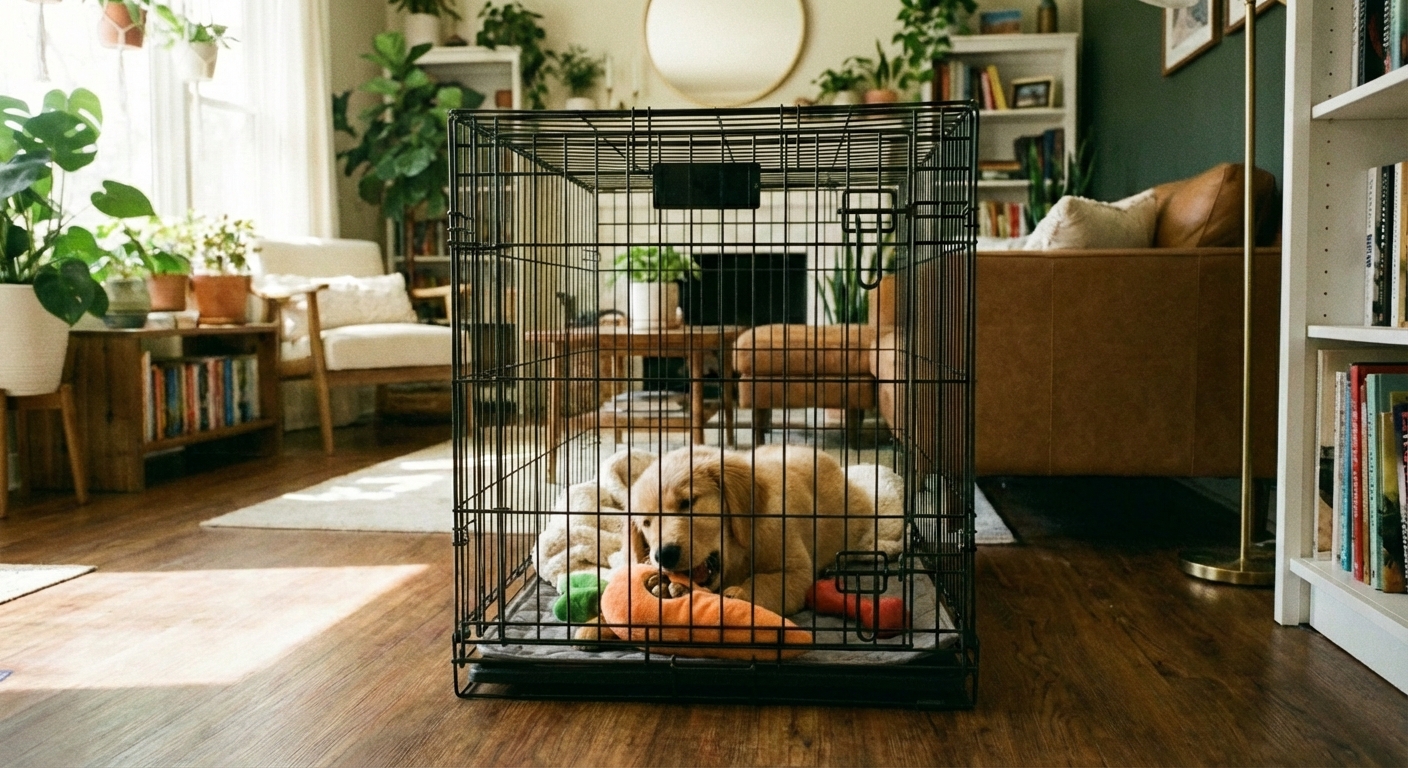
- Safe chew or food toy: A puppy-safe chew or a stuffed food toy can make the crate feel like a reward zone. Supervise until you know your puppy’s chewing style, and skip anything that can splinter or break into swallowable pieces.
- Water: Optional for short crating periods. For longer periods, many families do best with a spill-resistant attachable bowl made for crates.
Before you start
- Never use the crate for punishment. You want your puppy to choose it happily.
- Meet needs first. Potty first, then a little play or training, then crate for a nap.
- Most puppy “crate issues” are potty or overtired issues. A puppy who has to go, or a puppy who is too wound up, will protest.
- Reward calm. Do not reward demand barking, but do respond to true needs (especially potty) while your puppy is learning.
If your puppy has a history of panic, extreme drooling, or self-injury attempts when confined, talk with your veterinarian or a qualified trainer. That can be more than typical puppy fussing.
Step-by-step training
Step 1: Make the crate a good thing
Put the crate in a main living area where your puppy can still feel part of the family. Leave the door open. Sprinkle a few treats just inside the entrance, then a few farther back. Let your puppy explore at their own pace.
- Feed a few meals near the crate at first.
- Then progress to feeding meals just inside the crate.
- Eventually place the bowl at the back of the crate.
Watch-outs: Do not lure your puppy in and then quickly shut the door behind them. And make the crate a calm zone for kids too. No banging on the crate, no reaching in to grab the puppy.
Step 2: Add a cue
When your puppy steps into the crate, say a cue like “Crate” or “Bed”, then reward. Keep it cheerful and quick. You are building a happy habit, not testing obedience.
Step 3: Close the door briefly
Once your puppy is comfortable going in, close the door for 3 to 10 seconds while they chew a treat. Open the door before they feel worried. Gradually increase the time.
A helpful rhythm is: crate cue, puppy goes in, treat delivery, door closes, calm chewing, door opens, puppy comes out.
Step 4: Add short “real life” sessions
After a potty break and a little play, guide your puppy into the crate with something to do, like a stuffed food toy. Stay nearby at first. Then move around the room. Then step out of sight for a moment. Increase distance and time gradually.
When you start leaving the house, keep it short and boring at first. Step outside for 30 to 60 seconds, come back in calmly, and build up slowly. You want lots of easy wins.
Step 5: Practice crate naps
Puppies need a lot of sleep, often 18 to 20 hours per day, although some need a bit less or more. Many behavior problems improve when puppies are getting enough rest. Aim for regular crate naps, especially after active play.
First-week routine
Every puppy is different, but this general structure works well for many homes:
- Morning: Potty immediately after waking, breakfast, short play, short training, potty, crate nap.
- Midday: Potty, lunch (if age-appropriate), play, potty, crate nap.
- Afternoon: Potty, play, chew time, potty, crate nap.
- Evening: Dinner, calm play, potty, family time, potty, short crate session, last potty, bedtime crate.
What matters most is the cycle: potty, play and train, potty, rest. Puppies thrive on predictable patterns.
Daytime placement tip: Many families like the crate in the living area during the day and near the bed at night. If your puppy is distracted by household activity, try a quieter corner. Some puppies settle with a light crate cover, others prefer an open view. If you cover, keep airflow strong and prevent chewing on the fabric.
Nighttime training
Crate location
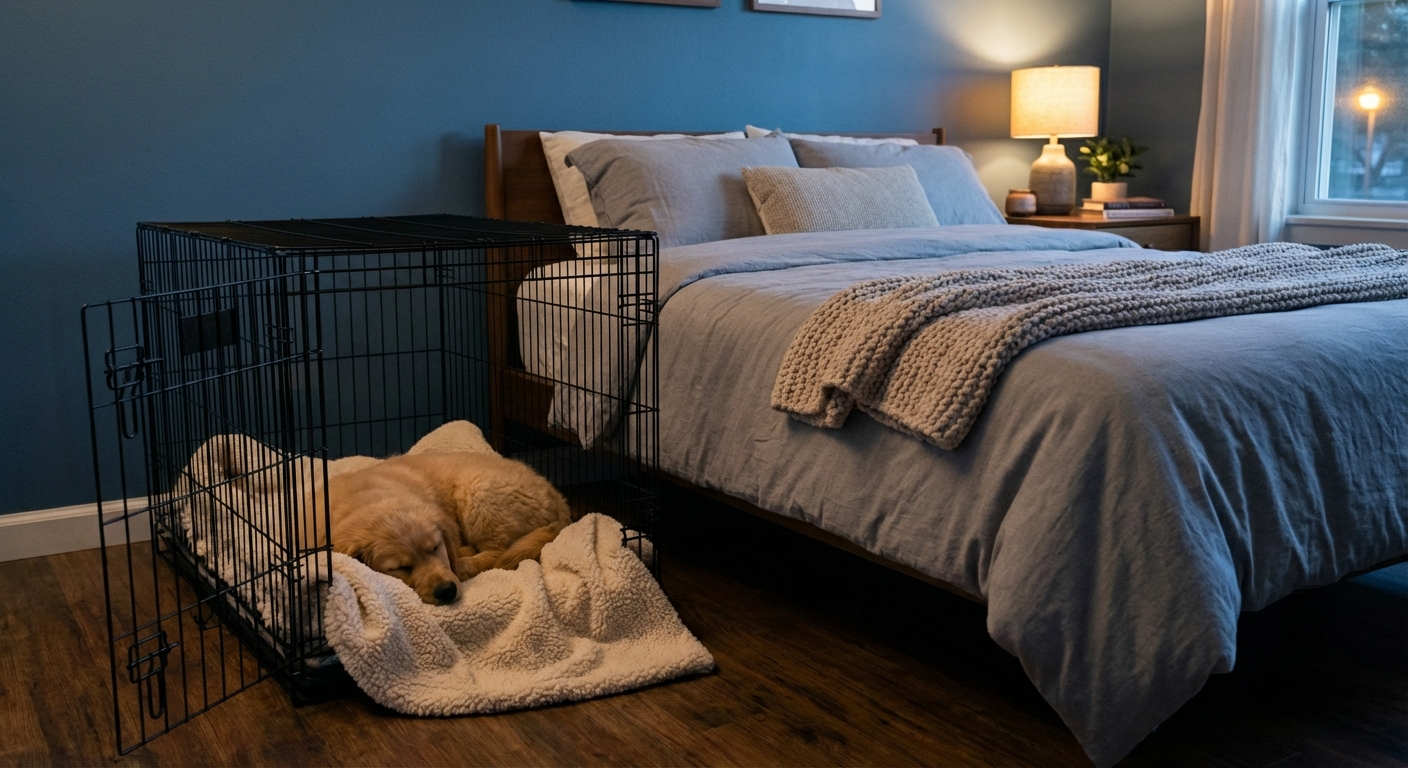
For the first week or two, many puppies do best with the crate in your bedroom or very close by. It reduces distress and helps you hear if your puppy truly needs a potty break. Once nights are smooth, you can gradually move the crate to your preferred location.
Night potty breaks
Young puppies usually cannot hold it all night at first. A common guideline is age in months plus one hours, but it is only a rough estimate under ideal conditions. It is not a goal for crating, and it can vary a lot by individual puppy, small breeds, and stress levels. Overnight is also different than daytime because they are sleeping.
If they cry at night
- Wait a moment to see if it is a brief fuss.
- If crying escalates, take your puppy out calmly and quietly for a potty break.
- No play, no big talking, no fun party.
- Back into the crate with a small treat and lights low.
This teaches: nighttime equals boring potty, then sleep.
How long is too long?
Crate time is limited by bladder capacity and by your puppy’s need for movement and social interaction. As a general guideline:
- 8 to 10 weeks: 30 to 60 minutes at a time when awake, longer for naps.
- 10 to 12 weeks: 1 to 2 hours at a time.
- 3 to 6 months: 2 to 4 hours at a time.
- 6+ months: Many can handle about 4 hours, sometimes longer, but avoid long daily crating as a lifestyle.
Bottom line: Puppies should not be left crated through a full workday. If you must be gone longer than your puppy can comfortably handle, plan for a pet sitter, neighbor, daycare, or a safe exercise pen setup with an appropriate potty area.
Common problems
“My puppy screams when I close the door”
- Go back a step. Reward entering the crate and calm behavior with the door open.
- Close the door for one second, then open before panic.
- Use a high-value chew or stuffed food toy that is only given in the crate.
- Check timing. If you skip the potty break, protest is almost guaranteed.
“My puppy has accidents in the crate”
- The crate may be too big. Use a divider.
- Increase potty frequency and reward outdoor potty heavily.
- Clean with an enzymatic cleaner so the scent does not invite repeat accidents.
- Talk to your veterinarian if stool is loose or there are signs of illness or parasites.
“My puppy chews the crate or bedding”
- Offer appropriate chewing outlets and rotate them.
- Remove fluffy bedding temporarily and use a towel or a tougher mat.
- Make sure your puppy is not crated while over-energized. Add a short sniff walk or gentle play first.
“They only settle if I am right next to the crate”
- Practice tiny separations: one step away, treat; two steps away, treat; briefly out of sight, treat.
- Use calm background noise like a fan or soft music.
- Build independence during the day in small, successful reps.
“Do I always need food toys in the crate?”
- Food toys are a great tool, especially early on.
- As your puppy builds the habit of relaxing, you can occasionally swap to a simple chew, then sometimes to just a cozy nap.
- If your puppy only settles with food, keep using it for now and focus on very short, successful sessions without it later.
Crate training and potty training
Crate training works best when you pair it with a clear potty routine:
- Take your puppy out after waking, after eating, after play, and after training.
- Go to the same spot, on leash, and wait quietly.
- Reward immediately after they potty with a treat and praise.
- Supervise closely when they are out. If you cannot supervise, use the crate or a puppy-proof pen.
Most puppies do not “misbehave” with accidents. They are learning a brand-new skill in a brand-new home.
Safety tips (vet assistant)
- Collars and tags: When your puppy is crated unsupervised, consider removing dangling tags or using a breakaway style to reduce snag risk. If you are unsure, ask your veterinarian what is safest for your setup.
- Heat and airflow: Avoid placing the crate in direct sunlight or near a heater vent.
- Food toys and chews: Choose puppy-safe sizes that cannot be swallowed. When in doubt, go bigger. Supervise until you know how your puppy chews, and consider freezing stuffed toys to extend duration.
- Travel: A crash-tested crate or harness, secured correctly according to manufacturer instructions, is among the safest ways for puppies to ride.
When to get help
Some puppies need more support, and that is okay. Reach out to your veterinarian and a qualified positive-reinforcement trainer if you notice:
- Panic behaviors like nonstop drooling, bloody teeth or gums from biting bars, or trying to escape until injured
- Sudden change in crate tolerance after a medical issue
- Persistent diarrhea, vomiting, or straining that makes crating uncomfortable
There are humane training plans and, when needed, medical support that can make a big difference.
Quick success checklist
- Your puppy willingly enters the crate for treats or a meal.
- They can relax in the crate with the door closed for short periods.
- They can nap in the crate during the day.
- Nighttime includes only brief, calm potty breaks.
- Crate time is balanced with play, training, and connection.
If you remember one thing, let it be this: go slower than you think you need to. Confidence builds fastest when your puppy succeeds in tiny steps.