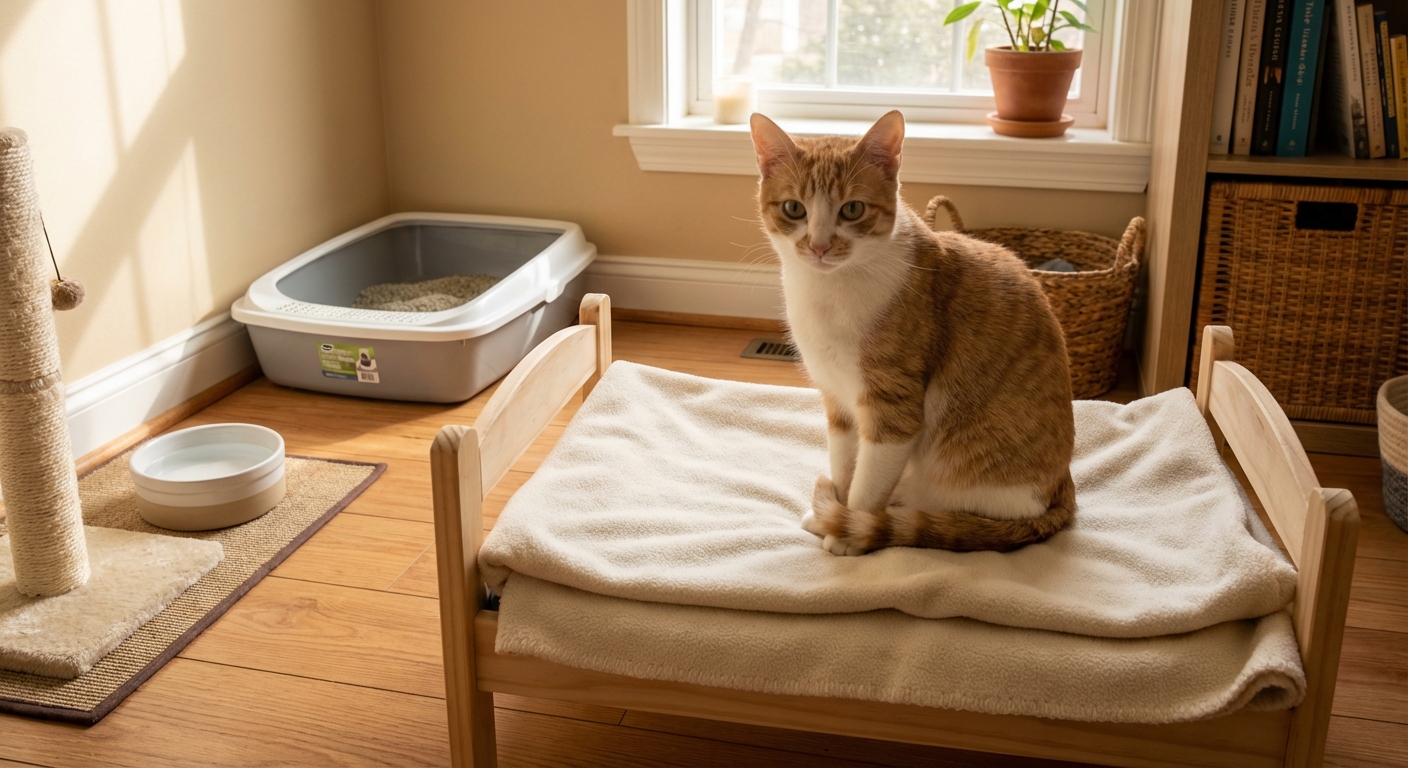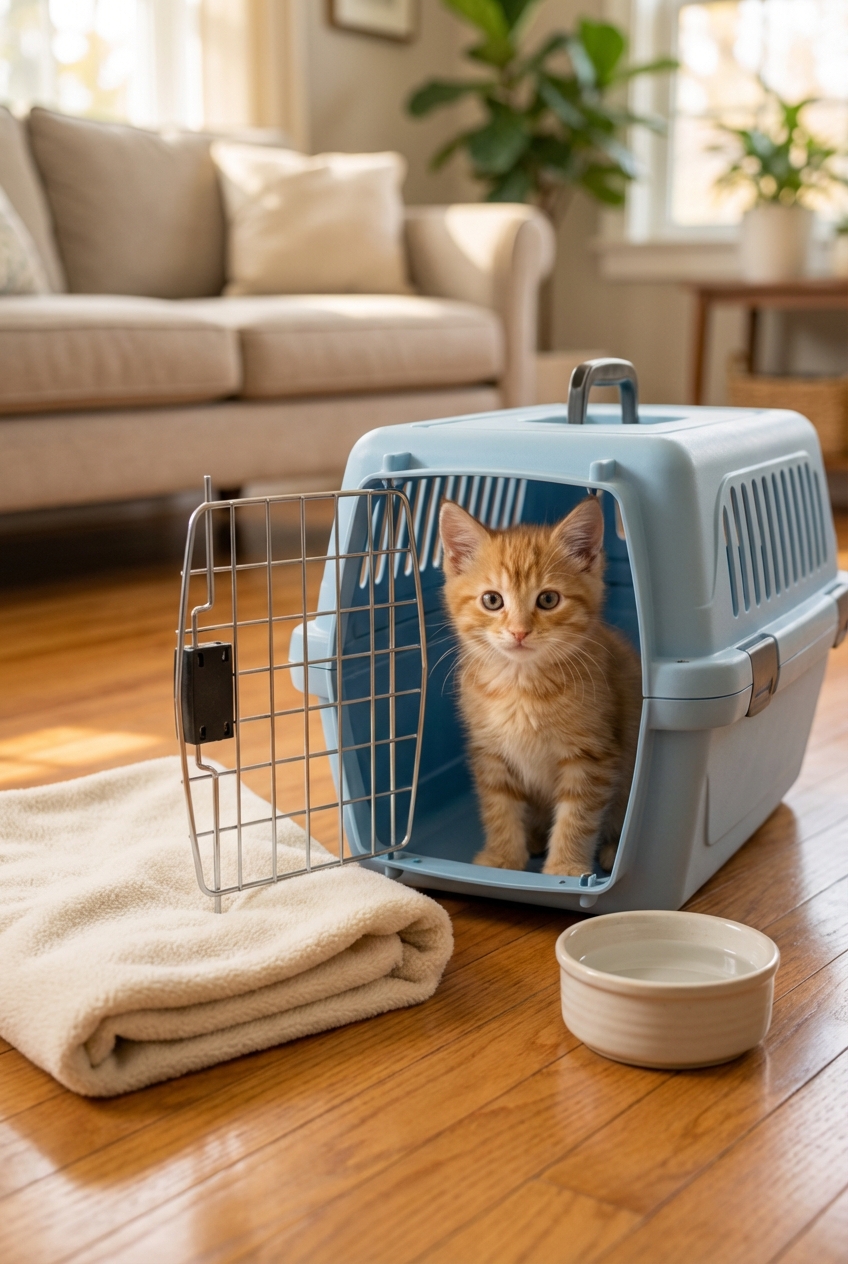
Get ready for your new kitten with a vet assistant’s practical guide: safe room setup, kitten-proofing to prevent emergencies, must-have supplies, feeding ...
Article
•
Designer Mixes
New Kitten Scared and Hiding

Shari Shidate
Designer Mixes contributor
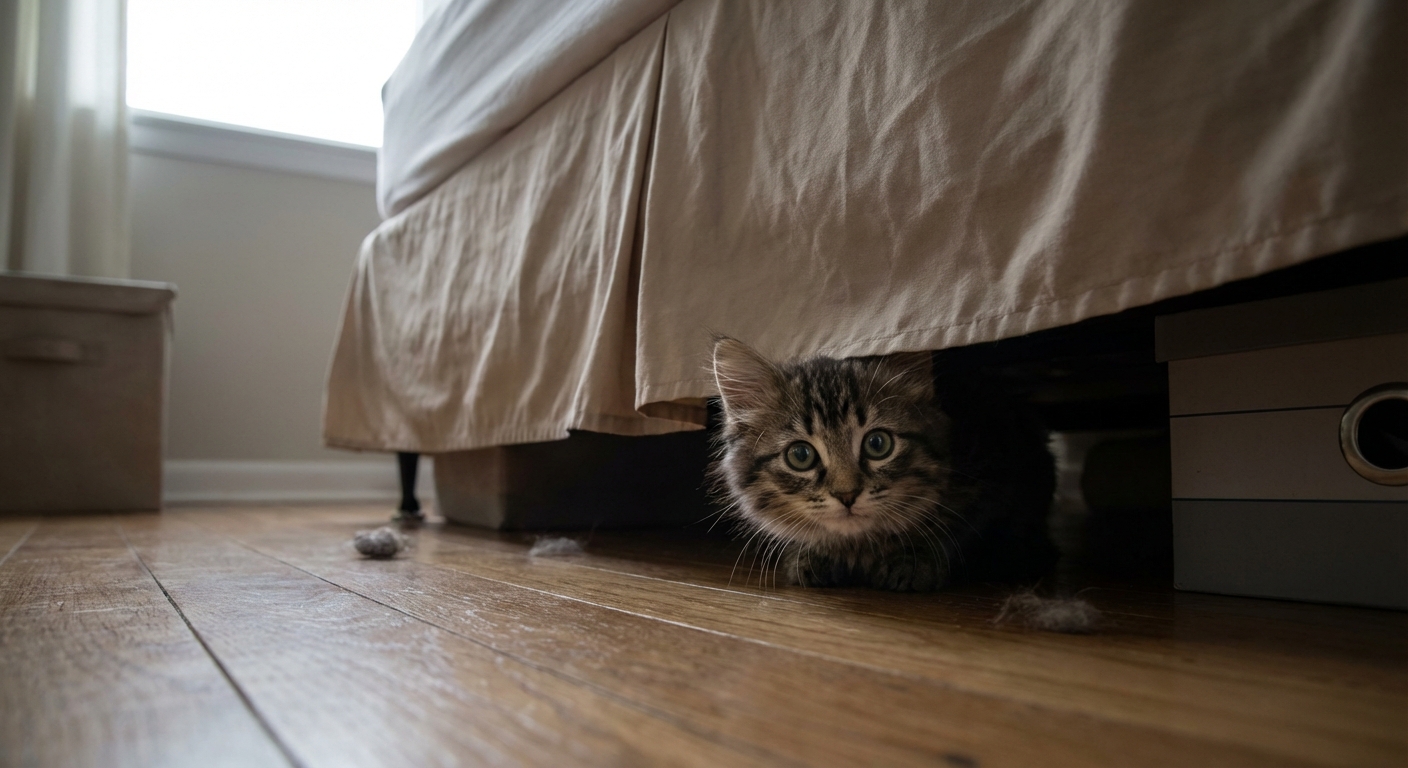
Bringing home a new kitten is exciting, but it can also look a little heartbreaking when your tiny new family member disappears under the bed and refuses to come out. The good news is that hiding is one of the most common, normal stress responses in cats, especially in the first hours to the first few days after a move. Many kittens settle in within a week or two, and very shy kittens can take a bit longer.
As a veterinary assistant, I have seen this pattern again and again: a kitten hides, the family worries, then with the right setup and a little patience, that same kitten becomes curious, playful, and confident. Let’s walk through what is normal, what to do today, and when it is time to call your veterinarian.
Note: This is general guidance and not a substitute for veterinary care. When in doubt, call your vet.
Why kittens hide after coming home
Kittens are wired to stay safe. In a brand-new environment, everything smells different, sounds different, and moves differently. Hiding is a self-protective behavior, not a sign that your kitten dislikes you.
Common triggers
- New territory: unfamiliar smells, floors, furniture, and room layout.
- Too much space too soon: being given the whole house can feel overwhelming.
- Noise and motion: kids running, TVs, barking dogs, vacuum cleaners, and visitors.
- Handling too early: well-meaning cuddles can feel scary before trust is built.
- Other pets: even a calm dog or resident cat changes the kitten’s sense of security.
Some kittens settle within a few hours. Others take several days. Shy kittens and kittens without much early handling may take longer, and that is still okay.
What is normal vs not
Usually normal in the first days
- Hiding most of the day, especially in bright or busy times.
- Coming out mostly at night to explore.
- Eating small amounts at first, then gradually improving.
- Quiet meows, freezing in place, or crouching with ears slightly back.
Red flags to call your vet
Call your veterinarian promptly if you notice any of the following:
- Not eating: If your kitten refuses all food for 24 hours, call. If your kitten is very young (especially under about 8 to 10 weeks), very small, or not eating for 12 hours or skipping multiple meals, call sooner. Young kittens can get dehydrated or hypoglycemic quickly.
- Not drinking or you cannot confirm any intake: If you cannot confirm any drinking and your kitten is not eating wet food, or you see dehydration signs (tacky gums, lethargy), call.
- No urination in 12 to 24 hours or straining/repeated attempts with little or no urine. Straining to urinate is urgent and should be treated as an emergency.
- Diarrhea, vomiting, or bloody stool.
- Labored breathing, open-mouth breathing, or frequent coughing or sneezing with low energy.
- Extreme lethargy or weakness (not just “sleepy”).
- Persistent hiding beyond 10 to 14 days with little improvement.
Kittens can get sick faster than adult cats, so when you are unsure, it is always reasonable to call and ask.
Set up a safe room
If your kitten is scared and hiding, the best first step is to reduce the world to a manageable size. A safe room helps your kitten learn: I am secure here. Confidence grows from that foundation.
Pick the right room
- A quiet bedroom or office is ideal.
- Avoid rooms with heavy foot traffic and loud appliances.
- Keep doors closed and block tight, unsafe gaps (behind washers, inside recliners).
Kitten-proof first
- Cords and strings: tuck away blind cords and charging cables.
- Small swallowable items: hair ties, rubber bands, string, toy parts.
- Toxic plants: especially lilies. If you are not sure, assume a plant may be unsafe until you confirm it.
- Recliners and rocking chairs: check before sitting and block access to the mechanism.
- Windows, balconies, and screens: keep closed or fully secured.
- Open toilets and buckets: close lids and remove standing water sources.
What to include
- Litter box: Many kittens do best with an uncovered box because it is easy to access and see, but preference varies. Place it away from food and water.
- Food and water: shallow dishes, refreshed daily.
- Warm hiding spot: a covered cat bed, a box on its side with a soft towel, or a carrier with the door removed.
- Vertical space: a sturdy chair, low cat tree, or stacked boxes so the kitten can perch.
- Scratch option: cardboard scratcher or small post.
- Comfort scent: a soft blanket, plus a worn T-shirt that smells like you.
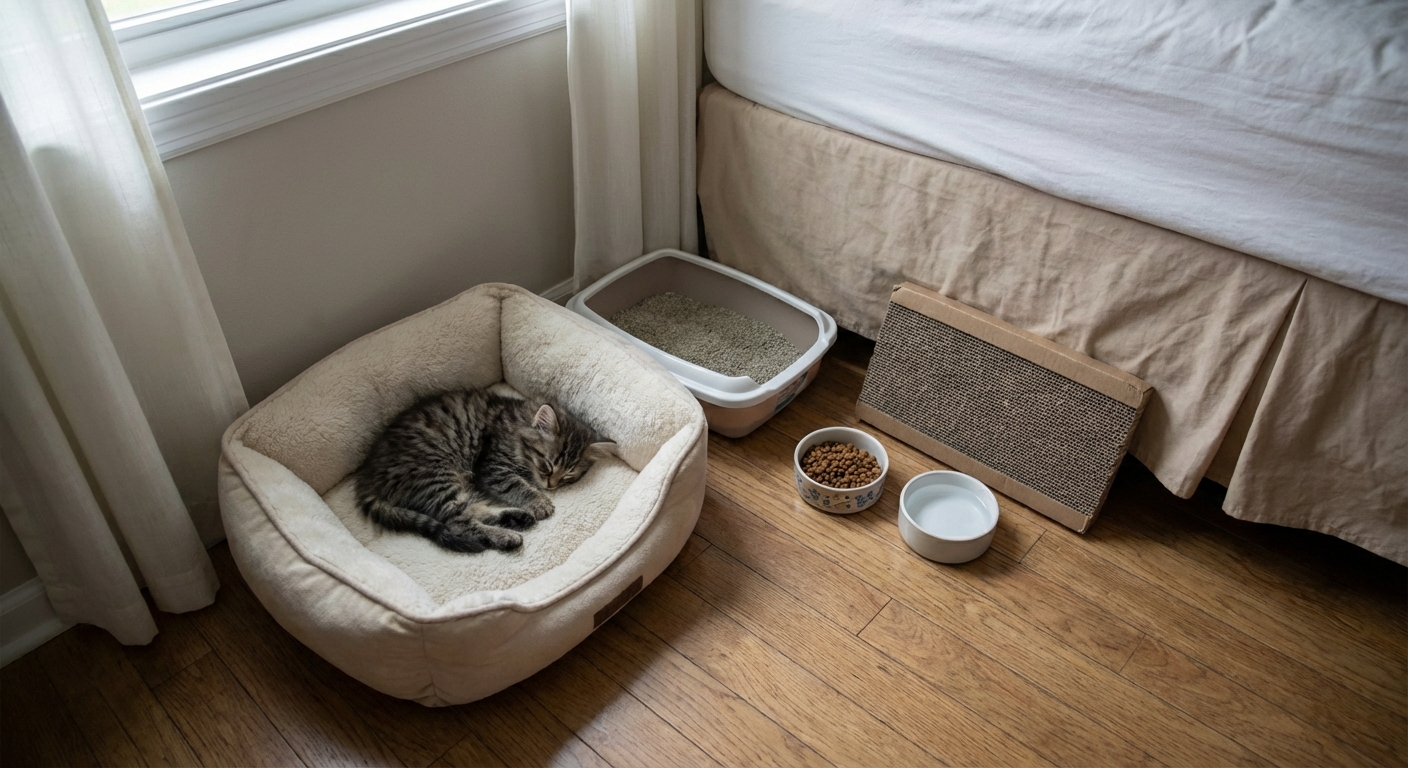
Pro tip: A calm routine is powerful. Feed at the same times each day so your kitten learns to predict good things.
What to do right now
1) Stop the chase
It is completely natural to want to scoop your kitten up and reassure them, but chasing or pulling them out teaches one lesson: hiding works, and humans are scary. Instead, let the hiding place remain their retreat, then make the area outside it feel even more low-pressure.
2) Get low and be quiet
Sit on the floor a few feet away, sideways to the kitten (direct face-to-face can feel intense). Blink slowly, speak softly, and let curiosity do the work.
3) Use food to build trust
Food is not bribery in cat behavior. It is association. Try:
- A small spoon of kitten-safe wet food placed a few feet from the hiding spot.
- Lickable cat treats (for example, puree tubes), offered on a spoon if your kitten will not approach your hand.
- Warm the food slightly so it smells stronger. If you microwave, start with 3 to 5 seconds, stir well, and test the temperature. Avoid hot spots.
4) Add play, but keep it distance friendly
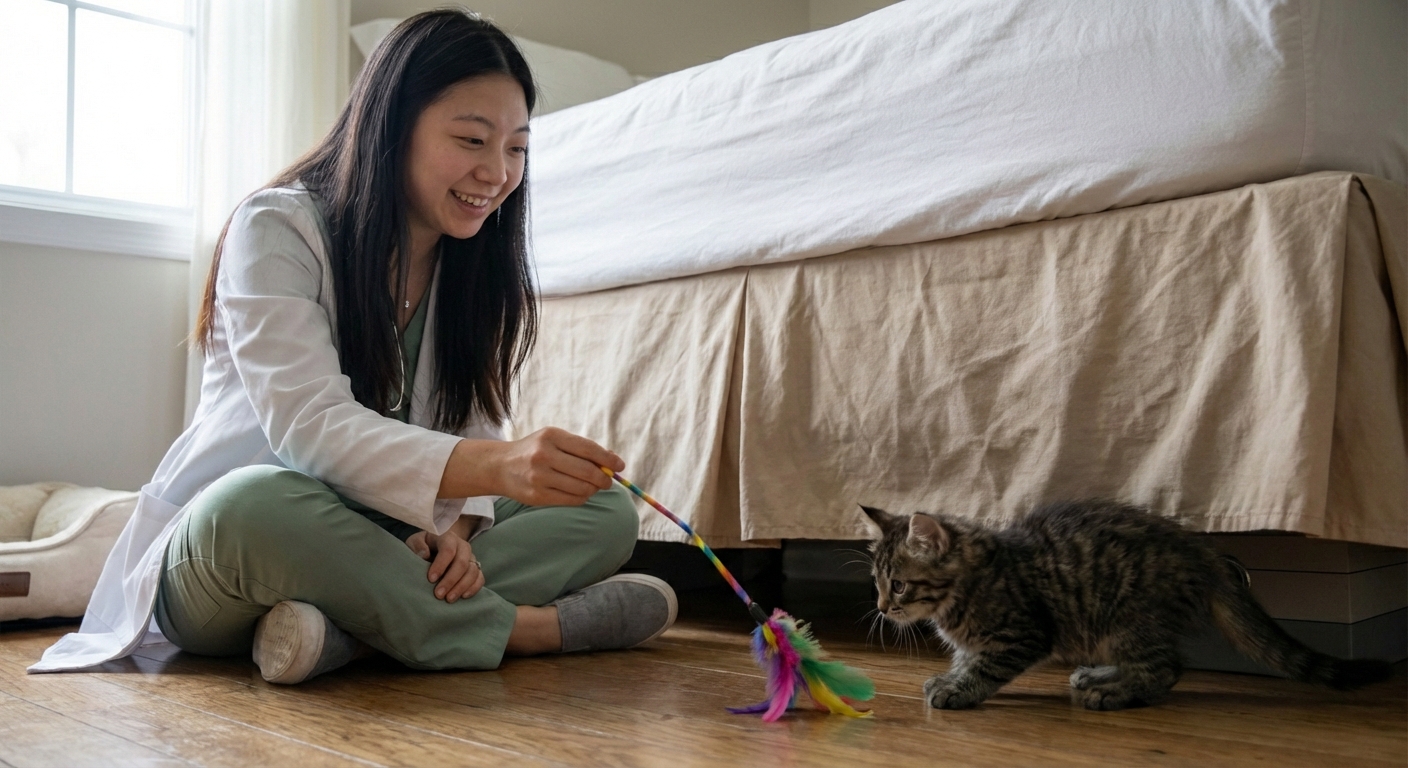
Wand toys are perfect because they let your kitten engage without feeling cornered. Move the toy like prey: slow, stop-and-go, and let the kitten win sometimes.
Safety note: Do not leave wand toys or string toys out unattended. Strings and ribbons can be dangerous if swallowed.
5) Make the hiding option better, not smaller
If your kitten is under a bed, you can gently add a cozy “approved” hideaway nearby (a box, covered bed, or carrier) and gradually encourage that choice with treats and toys. Avoid blocking the kitten in unless it is for safety reasons and you can do it calmly.
How long does it take?
There is a wide range of normal, but here is a practical timeline I share with many new kitten families:
- First 24 hours: lots of hiding is common.
- Days 2 to 3: brief exploring, often at dawn or nighttime.
- Days 4 to 7: increasing play and curiosity, still retreating when startled.
- Week 2: many kittens begin seeking attention and showing personality openly.
If you are seeing small improvements, even tiny ones, that is a very good sign. If your kitten is extremely shy, it can take longer than two weeks to feel fully comfortable. The key is steady progress and good basic health.
Bonding with a scared kitten
Let the kitten set the pace
Trust is built when your kitten feels in control. Offer your hand to sniff. If the kitten stays, you can try a gentle cheek scratch. If the kitten backs up, pause and try again later.
Create predictable good moments
- Meals delivered calmly.
- Two or three short play sessions daily.
- Soft talking, slow blinks, relaxed body language.
- Short petting sessions that end before the kitten gets overwhelmed.
Kids and kittens
If you have children, coach them to be part of the solution: quiet sitting on the floor, gentle voices, no grabbing, and letting the kitten approach first. A wand toy can be a great way for kids to interact without crowding the kitten.
Use confinement thoughtfully
In the early days, your kitten should not have full run of the house. Start with the safe room, then expand access when your kitten is consistently eating, using the litter box, and exploring confidently.
Food, water, and litter checks
When a kitten hides, owners sometimes cannot tell if basic needs are being met. For the first week, keep things simple and trackable.
Easy monitoring tips
- Feed on a schedule and measure portions so you can tell what was eaten.
- Use wet food at least once daily if your veterinarian agrees, since it supports hydration.
- Scoop the litter box twice a day and note urine clumps and stool.
- Consider a second litter box in the safe room if it is large, or if the kitten is very young.
If you have multiple cats, keep the kitten separate initially. It helps health monitoring and reduces stress for everyone.
Introducing other pets
Fear and hiding can get worse if introductions happen too fast. Slow introductions are not “extra,” they are preventive medicine for behavior.
To a resident cat
- Start with scent swapping: exchange bedding and gently rub each cat with a separate cloth.
- Feed on opposite sides of a closed door to build positive association.
- Do short visual sessions using a baby gate or cracked door, then end on a calm note.
To a dog
- Use a leash and keep the dog calm and rewarded for looking away.
- Give the kitten vertical escape routes and no-pressure distance.
- Never allow chasing, even “playful” chasing.
Tools that may help
- Pheromone diffusers: Some homes see improvement with feline pheromone products, and others do not. Place one in the safe room and give it several days to a week.
- Calming routine: lower lights in the evening, keep voices soft, and reduce sudden noises.
- Carrier comfort: leave the carrier out with a soft towel and treats so it becomes a resting spot, not a trap.
Avoid essential oils around cats. Many are irritating or potentially toxic, and cats metabolize certain compounds differently than people and dogs.
Vet visits and extra support
If the hiding is paired with poor appetite, diarrhea, sneezing, eye discharge, or low energy, a quick veterinary visit can be the difference between a simple fix and a bigger problem. Upper respiratory infections, intestinal parasites, and stress-related appetite dips are all common in young kittens.
If this is a new kitten, many veterinarians recommend a first exam soon after adoption (often within a few days) to check weight, hydration, parasites, and set a vaccine and deworming plan. This is especially important for shelter or rescue kittens.
If your kitten is healthy but remains very fearful, consider asking your veterinarian for a referral to a qualified cat behavior professional. Early support can prevent long-term anxiety patterns.
Gentle, consistent progress matters more than speed. Your kitten is not being “difficult.” They are learning that your home is predictable and kind.
A simple 3-day plan
Day 1: Settle in
- Set up the safe room and keep things quiet.
- Offer wet food and water, then give space.
- Sit on the floor for 10 minutes, twice.
Day 2: Add routine
- Two short play sessions with a wand toy.
- Treat trail from hiding spot to a cozy bed or carrier.
- Gentle petting only if the kitten initiates contact.
Day 3: Build confidence
- Encourage exploring with toys and food puzzles.
- Introduce one new sound or experience softly, like a low TV volume, then reward calm.
- If your kitten is doing well, allow supervised exploration just outside the safe room.
If your kitten needs more time, that is perfectly fine. Repeat the day that matches their comfort level.