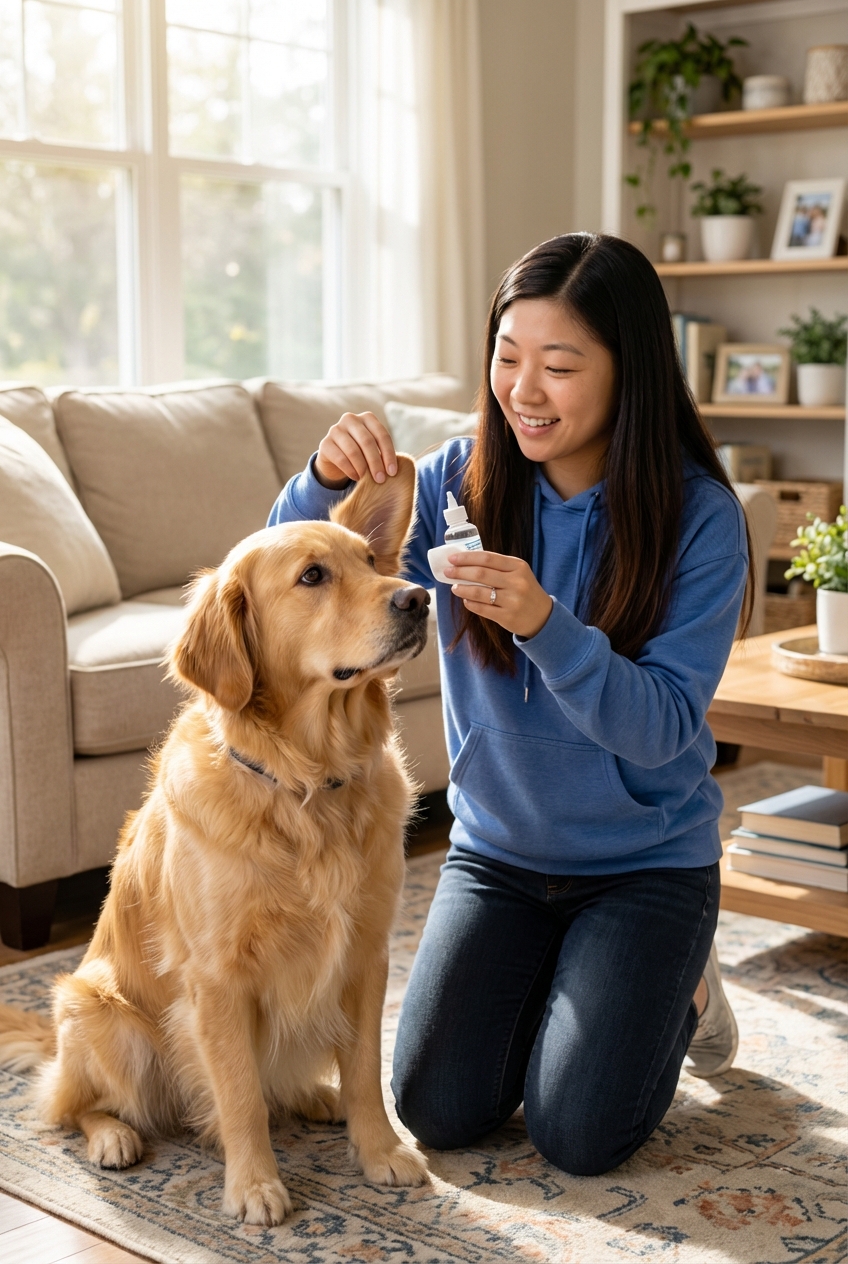
Dog shaking their head or has dark “coffee-ground” ear debris? Learn how vets confirm ear mites, which treatments work, how to clean safely, and what hom...
Article
•
Designer Mixes
Natural Remedies for Dog Ear Mites

Shari Shidate
Designer Mixes contributor
Ear mites are tiny parasites that can make your dog absolutely miserable. If your pup is scratching, shaking their head, or you’re seeing dark, crumbly debris in the ear, you’re right to take it seriously. The good news is that with the right diagnosis and a careful plan, most dogs feel relief quickly.
As a veterinary assistant, I always start with this: ear mites are treatable, but the ear is delicate. Natural supportive care can be helpful, especially for comfort and hygiene, but it should never replace proper veterinary treatment when mites or infection are suspected.
What ear mites look like
Ear mites (most commonly Otodectes cynotis) are highly contagious. They’re spread most often through direct contact with infected animals, especially cats and dogs. Mites can survive for a short time off-host in the environment, so shared bedding and close quarters can contribute, but direct contact is the main route.
Quick note: Cats are a very common source, and some cats can carry mites with mild or even subtle signs. If you have cats at home, that matters for prevention and reinfection.
Common signs
- Intense itching and scratching at the ears
- Head shaking or ear rubbing on the floor
- Redness and inflammation of the ear canal or ear flap
- Dark, dry, coffee ground-like debris
- Hair loss or scabs around the ears from scratching
- Odor or wet discharge (more often a sign of a secondary yeast or bacterial infection)
Important: these same signs can also be caused by yeast, bacteria, allergies, foreign material (like a foxtail), polyps, or ear anatomy issues. That is why guessing can backfire.
When to see a vet first
If you take only one thing from this article, let it be this: get a confident diagnosis before you put anything in the ear canal.
Go in ASAP if you notice
- Bleeding, swelling, or the ear flap looks puffy (hematoma)
- Head tilt, loss of balance, or walking “drunk”
- Severe pain when the ear is touched
- Foul odor, yellow or green discharge, or the ear is hot to the touch
- Your dog has had recurring ear problems
- Your dog is a puppy, senior, or immunocompromised
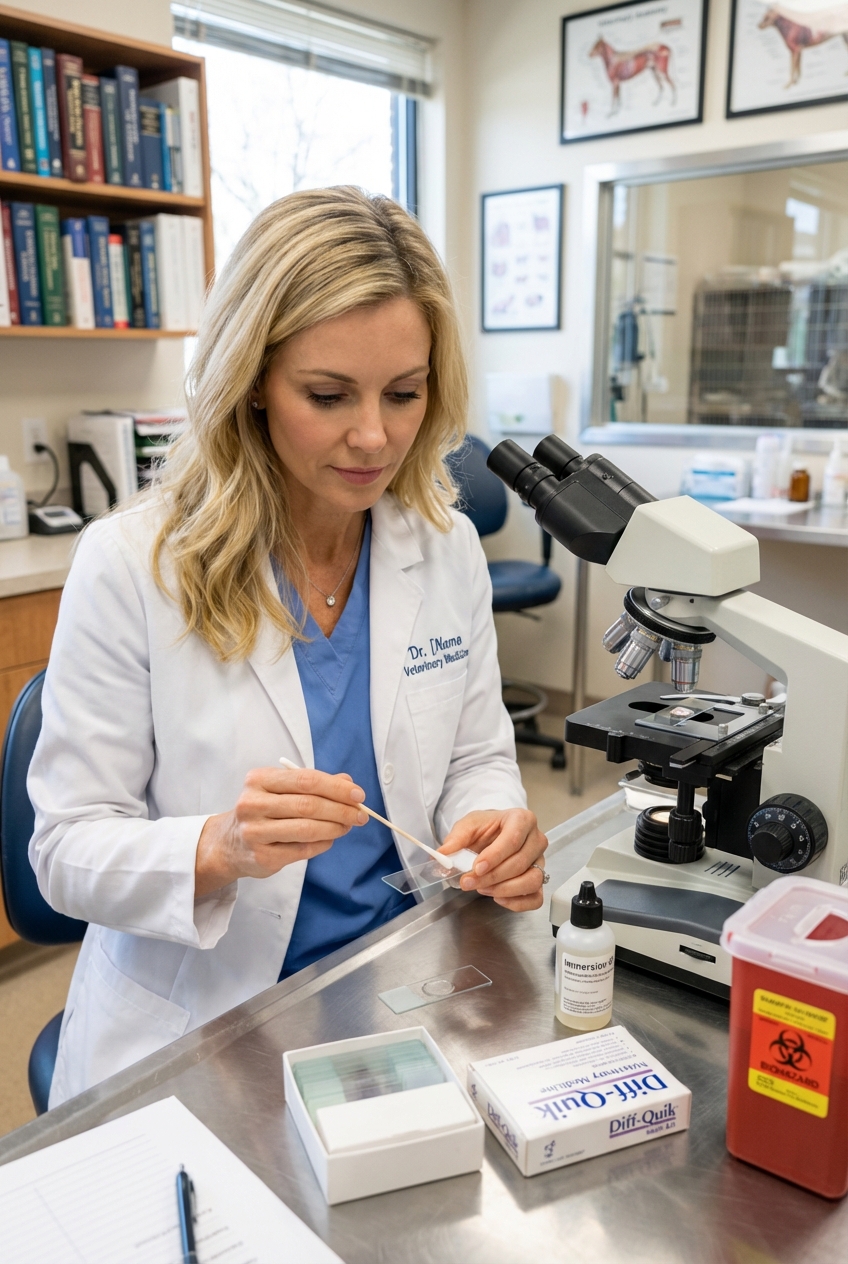
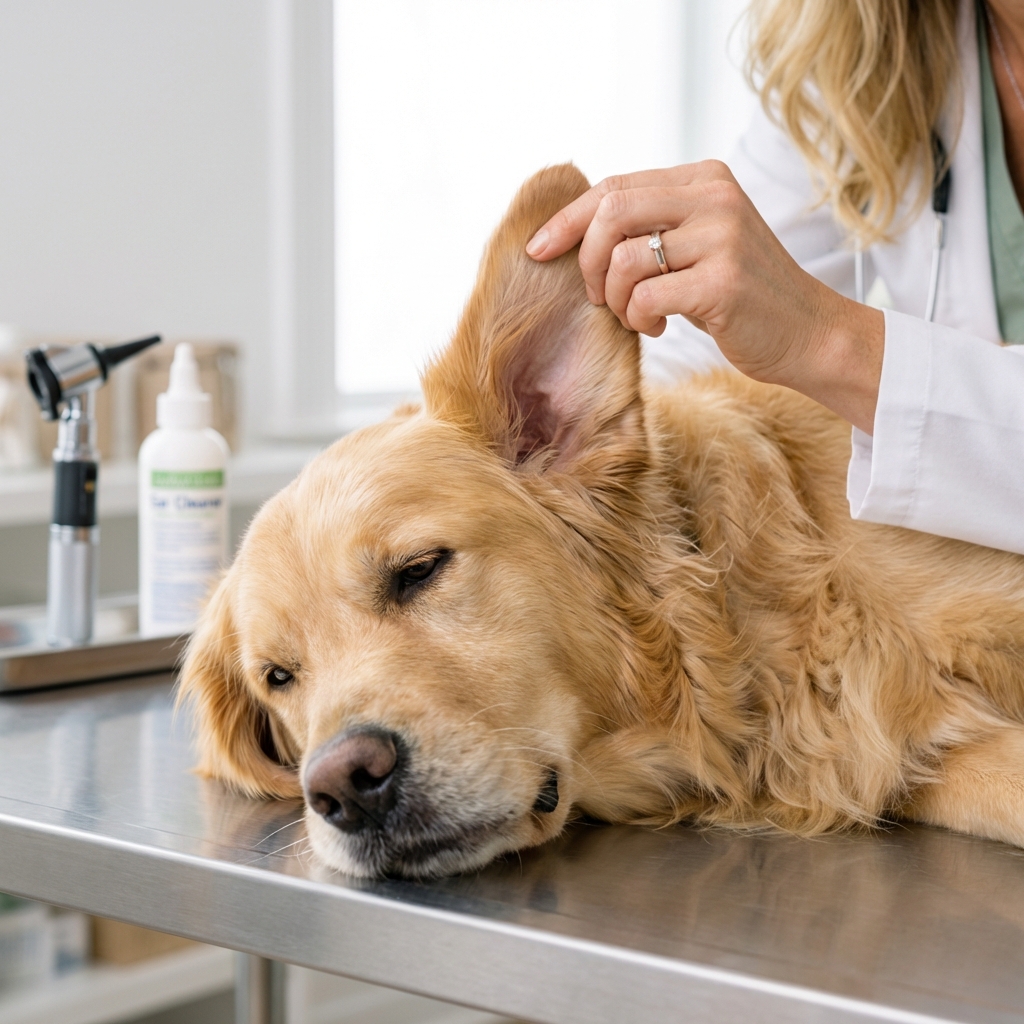
Veterinary teams typically confirm mites with an ear swab and microscope exam. It’s quick, and it tells you whether you’re dealing with mites, yeast, bacteria, or a mix. Your vet may also use an otoscope to look deeper into the canal, check for inflammation and debris, and make sure the eardrum looks intact before recommending any ear drops or cleaning solutions.
Natural support that helps
Natural care is best used as supportive help alongside proven mite treatment from your veterinarian. Think of it as improving comfort, reducing debris, and supporting healthier ear skin so your dog can heal.
1) Gentle outer-ear cleaning
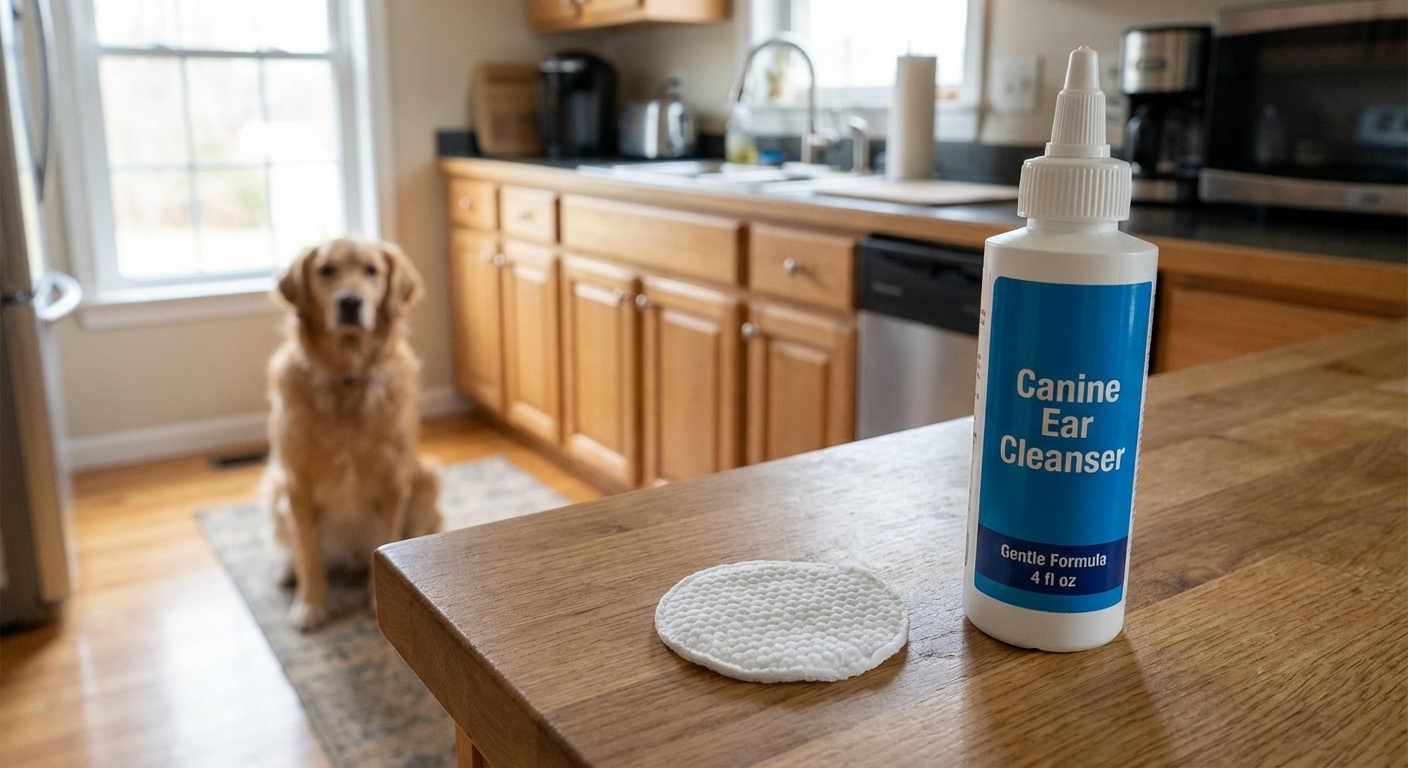
If your dog will allow it, you can gently wipe the outer ear and the visible inner flap with a soft cotton round dampened with a pet-safe ear cleanser.
- Use products made for dogs and labeled for ears.
- Clean only what you can see.
- Stop if your dog shows pain.
Safety note: avoid flushing the ear canal or putting liquid down into the canal unless your veterinarian has shown you how and confirmed it’s safe for your dog’s ear.
Avoid: cotton swabs (they can push debris deeper), hydrogen peroxide, and alcohol-based products which can sting inflamed tissue.
2) Warm compress for comfort
If the ear flap is irritated from scratching, a warm compress on the outside of the ear (not inside the canal) for 2 to 3 minutes can help soothe. Keep it comfortably warm, not hot, and always supervise.
3) Home cleaning to reduce reinfestation
Mites spread easily, especially between pets. Cleaning your home helps reduce the odds of the cycle continuing.
- Wash bedding in hot water.
- Vacuum rugs and upholstered areas where your dog sleeps.
- Clean grooming tools and collars.
- Check and treat other pets in the home if your vet recommends it (this is especially important with cats).
Natural remedies to avoid
I know the internet loves a DIY ear recipe. But the ear canal is not the place for experimentation, especially when you don’t know if the eardrum is intact or if there’s an infection brewing.
Use extreme caution or skip
- Essential oils: many are irritating, and some are toxic to pets. Even diluted oils can inflame ear tissue.
- Olive oil, coconut oil, mineral oil: oils might temporarily reduce mite activity in some cases, but they’re not a reliable treatment and can trap debris and moisture. That can worsen yeast or bacterial infections and delay proper care.
- Apple cider vinegar: can sting badly on inflamed skin and is not appropriate if the ear is raw or infected.
- Homemade peroxide mixes: can damage tissue and delay healing.
If you want a natural-forward approach, ask your veterinarian about a plan that combines a proven parasiticide with gentle, ear-safe cleaning support.
What treatment involves
Ear mites are parasites, so treatment needs a parasiticide that works. Some modern veterinary options treat mites and also cover other common parasites. Depending on what your vet finds, treatment may include:
- A prescription ear medication or topical parasiticide (your vet may choose products like selamectin, moxidectin, or an isoxazoline based on your dog’s needs)
- Anti-inflammatory medication if the ear is very swollen and painful
- Antibiotic or antifungal medication if there is a secondary infection
- A follow-up ear check to confirm resolution
Many dogs improve within days once they’re on effective treatment, but full treatment length depends on the product and the ear’s condition. It can range from a single-dose medication to several weeks of treatment. If an ear infection or deeper inflammation (like otitis media) is present, your dog may need a longer plan and a recheck.
Simple at-home plan
Step-by-step
- Step 1: Book a vet exam to confirm mites and rule out infection.
- Step 2: Treat all pets in the household if directed (don’t forget cats).
- Step 3: Use an ear cleanser recommended by your vet for debris control, and only as instructed.
- Step 4: Wash bedding and vacuum regularly during treatment.
- Step 5: Recheck if itching returns, your dog seems painful, or odor and discharge develop.
Preventing future flare-ups
Some dogs are simply prone to ear issues, especially floppy-eared breeds and allergy-prone mixes. Prevention is about reducing the stressors:
- Dry ears after swimming or baths
- Keep hair around the ear opening tidy if it traps moisture
- Address allergies with your veterinarian if ears flare seasonally
- Feed a nutrient-dense diet to support skin barrier health
Nutrition and skin support
Ear health is closely tied to skin health. While diet does not kill ear mites, supporting the skin barrier can help your dog bounce back and may reduce the frequency of secondary infections.
- Omega-3 fatty acids (EPA and DHA): can support skin and inflammation balance. Ask your vet about dosing.
- High-quality protein: supports tissue repair and immune function.
- Probiotics: may support gut and immune health, especially if your dog needed antibiotics.
If your dog has chronic ear inflammation, talk to your vet about food sensitivities. For many dogs, ears are where allergies show up first.
Quick FAQs
Can humans catch ear mites from dogs?
It’s uncommon for ear mites to live long-term on humans, but they can cause temporary irritation. Focus on treating pets and cleaning the environment.
Do ear mites always cause dark debris?
Often, yes, but not always. And yeast can look similar. A microscope check is the gold standard for confirming mites.
How long until my dog feels better?
Many dogs scratch less within a few days of effective treatment, but complete resolution can take longer depending on the product used and whether there’s a secondary infection. Follow your veterinarian’s full plan and don’t stop early.