A practical guide to helping a constipated cat at home: hydration tips, plain pumpkin, vet-guided Miralax (PEG 3350), fiber, hairball support, red flags, and...
Article
•
Designer Mixes
Natural Cat Laxatives: Loving Care Tips

Shari Shidate
Designer Mixes contributor
If your cat is constipated, it can feel upsetting fast. One day they are their usual curious self, and the next they are making repeated trips to the litter box with little or no stool to show for it. The good news is that many mild cases improve with gentle, natural support and a few smart home habits.
As a veterinary assistant, I always like to start with this reminder: constipation can look simple on the surface. It can also be a sign of pain, dehydration, intestinal blockage, or underlying illness. So we aim for safe, evidence-based steps that help, while knowing exactly when it is time to call your vet.
Quick guide
- Signs: straining, small hard stools, less appetite, hiding, vomiting, poop outside the box
- Try at home (mild cases): boost moisture, keep the box easy and clean, gentle play, small pumpkin trial if your vet says it fits your cat
- Call your vet: no stool for about 48 hours, or sooner with pain, repeated vomiting, belly swelling, or ongoing straining
- Emergency: straining with little or no urine can be a urinary blockage. This is life-threatening. Go to a vet or ER now.
What constipation looks like
Cats are masters at hiding discomfort. These signs often show up before you notice days without a bowel movement:
- Straining in the litter box, crying, or staying in the box longer than usual
- Small, hard, dry stools or no stool produced
- Decreased appetite or acting nauseated
- Hiding, grouchiness, or not wanting to be handled
- Vomiting, especially with repeated attempts to poop
- Pooping outside the litter box due to discomfort or urgency
Important note: Straining to urinate can look like constipation. A urinary blockage is a life-threatening emergency, especially in male cats. If your cat is straining and you are not sure which is happening, treat it as urgent and call a veterinarian right away.
Before home care, do a safety check
Natural does not automatically mean safe for cats. Some human products can cause dehydration, electrolyte problems, or dangerous interactions. Before you start anything at home, pause if any of the following are true:
- Your cat has not passed stool for about 48 hours (or you are unsure)
- There is repeated vomiting, significant lethargy, or refusal to eat
- The belly looks distended or is painful when touched
- There is known ingestion of string, ribbon, bone, toys, or other foreign material
- Your cat is a senior, has kidney disease, heart disease, diabetes, or megacolon
- Your cat recently started a new medication that can constipate (for example, some pain meds). Ask your vet.
- You see blood, or the stool is black and tarry
These situations deserve veterinary guidance before home remedies.
Gentle natural options
For mild constipation, these options are commonly used because they support hydration and stool softness rather than forcing the gut aggressively.
1) Hydration first
Dehydration is a very common driver of constipation. Help your cat take in more fluids with small, realistic changes:
- Switch some or all meals to wet food.
- Add a spoonful or two of warm water to wet food to make a “gravy.”
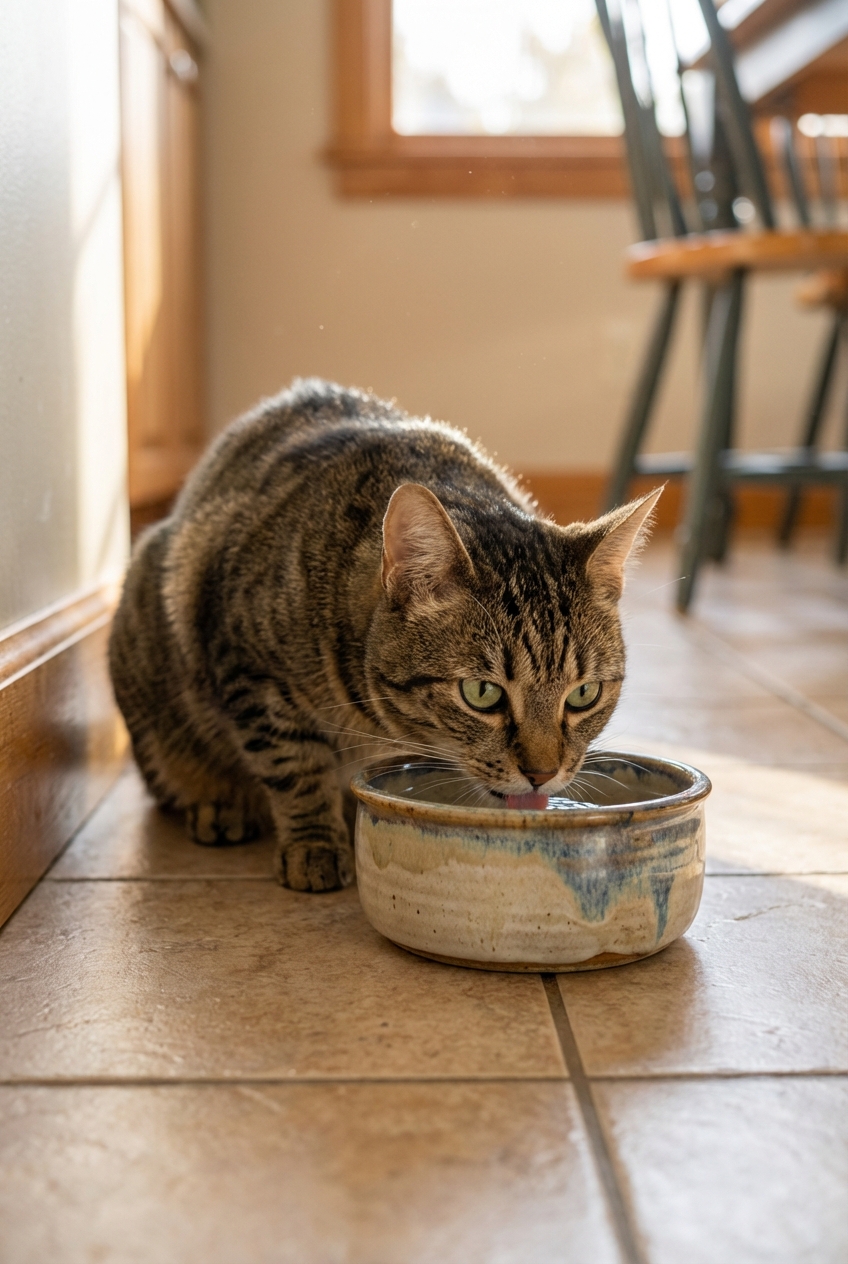
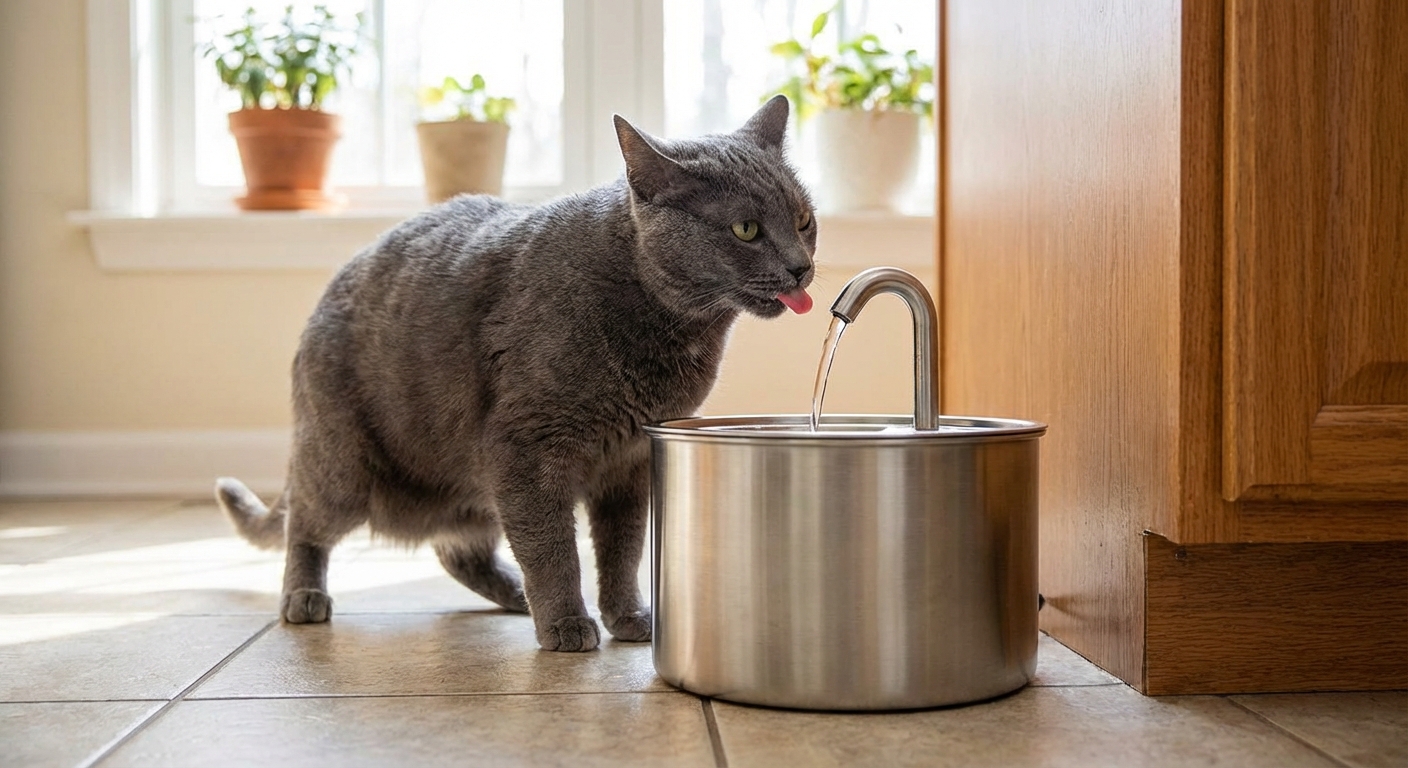
- Offer a water fountain, and keep bowls away from the litter box.
- Try low-sodium broth made for pets, or plain water from cooked chicken. Make sure it is unseasoned (no salt, onion, garlic, or spices) and consider skimming fat if it looks greasy.
2) Litter box setup matters
Sometimes what looks like constipation is actually reluctance to use the box. A few small changes can make a big difference:
- Keep boxes very clean and scoop daily.
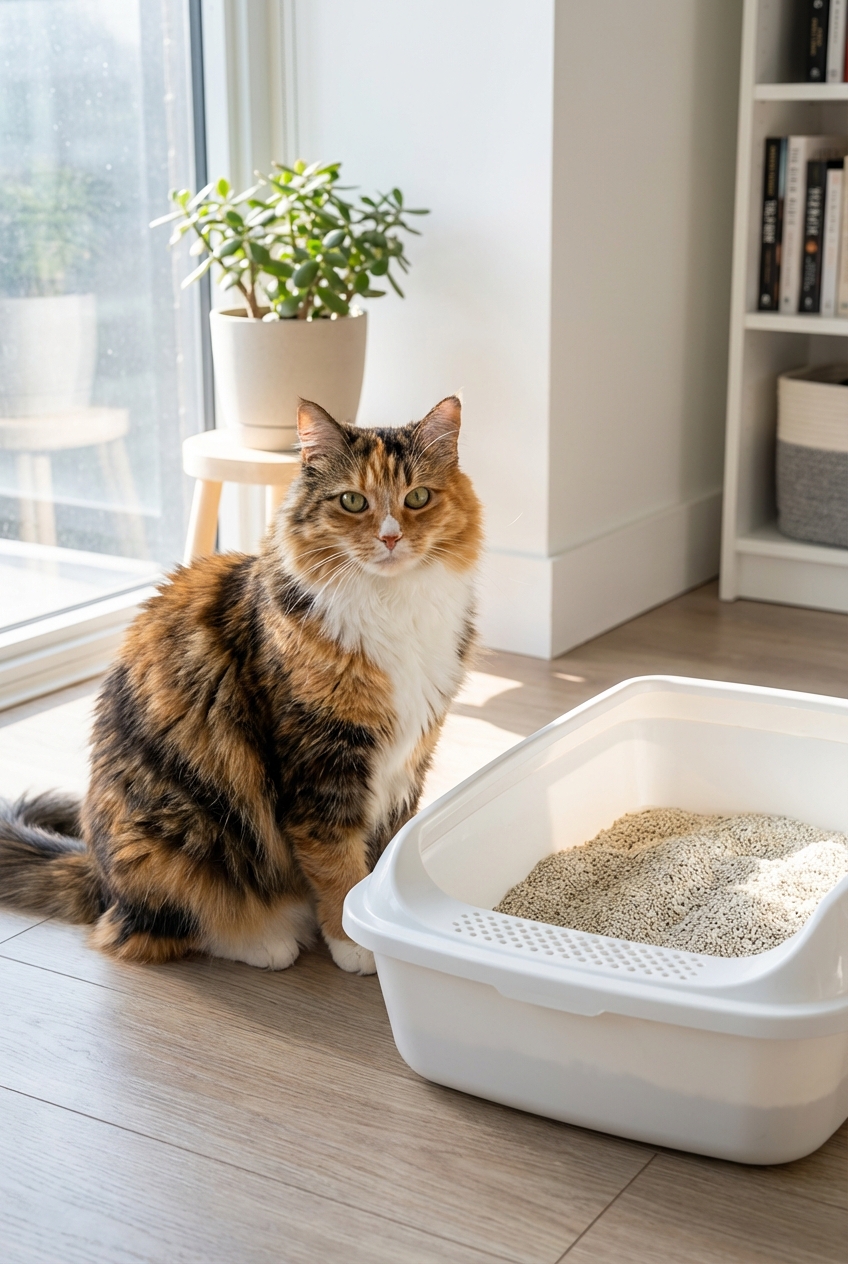
- Make access easy, especially for seniors: consider a low-entry box and a quiet location.
- Avoid sudden litter changes when possible, or switch gradually.
- For multi-cat homes, provide enough boxes: one per cat plus one extra.
3) Pumpkin for fiber support (not for every cat)
Plain canned pumpkin can help some cats because the fiber supports healthier stool consistency. The key is plain pumpkin, not pumpkin pie filling.
- Typical starting amount: 1 to 2 teaspoons mixed into food once daily.
- Go slowly: too much fiber can cause gas, loose stool, or reduced appetite.
- Important: fiber is not universally helpful. Some cats can worsen with added fiber, especially if they are dehydrated or have conditions like megacolon. If your cat seems more uncomfortable, stops eating, or starts vomiting, stop and call your vet.
If your cat refuses pumpkin, ask your vet about a feline fiber supplement designed for cats, or whether a different approach is better.
4) Diet tweaks that support regularity
Some cats do better with higher moisture, moderate fiber, and highly digestible proteins. Depending on the cat, you might try:
- More wet food and fewer dry-only meals
- A veterinary GI diet if constipation is recurrent
- Adding a small amount of psyllium only with veterinary guidance, since dosing matters and it must be paired with adequate water
If constipation is frequent, your vet may discuss long-term strategies like prescription diets, stool softeners, or pro-motility medications.
5) Gentle movement and stress support
Constipation is not only about food. Pain, stress, and low activity also slow gut movement.
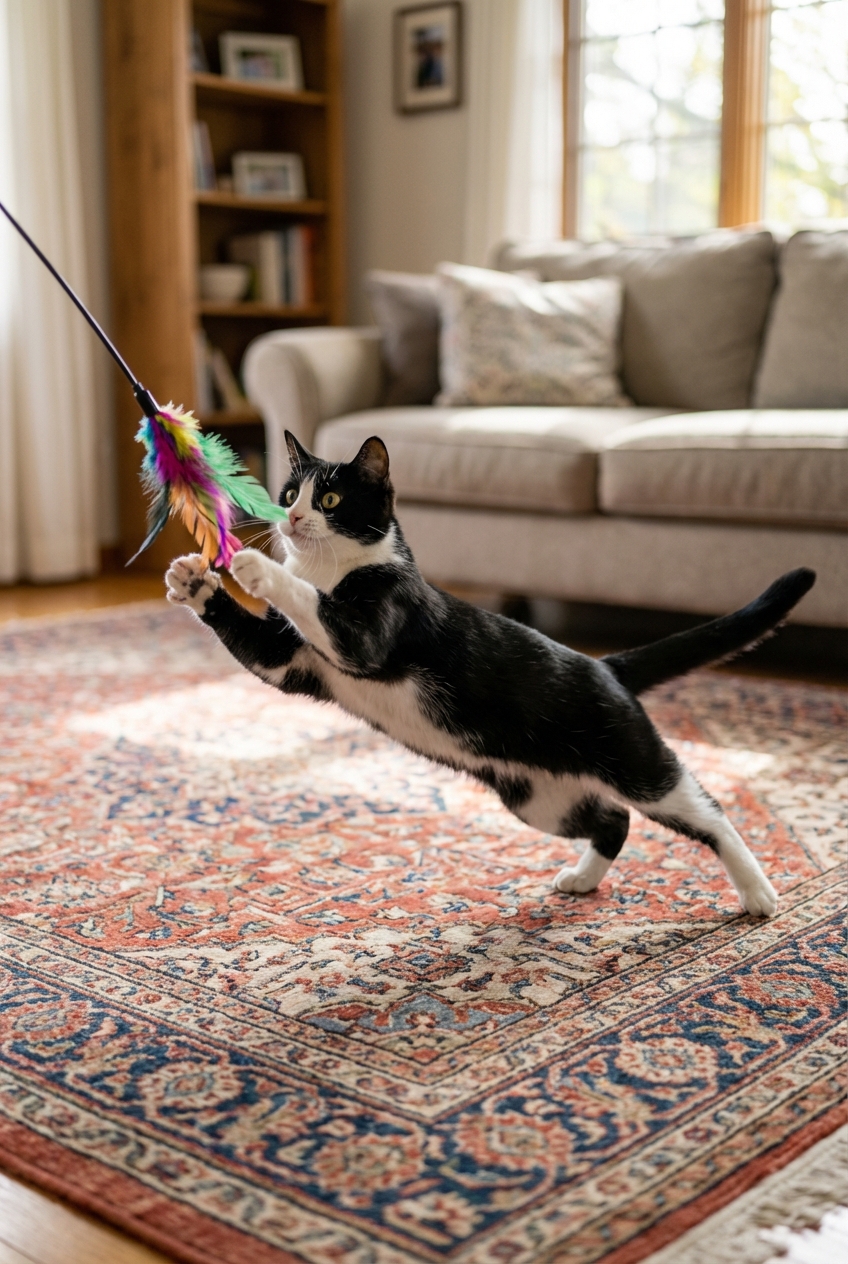
- Encourage play sessions twice daily, even 5 to 10 minutes counts.
- Offer climbing options or a window perch.
- Address pain and mobility issues with your vet, especially if your cat is older or hesitant to jump.
What to avoid at home
These are common internet suggestions that can be risky for cats:
- Mineral oil: aspiration risk if inhaled, which can cause severe pneumonia. If used repeatedly, it can also interfere with absorption of fat-soluble vitamins.
- Castor oil or “detox” oils: can cause harsh cramping and dehydration.
- Human laxatives: some are used in cats, but dosing and safety depend on the product and the cat. Do not give them unless your veterinarian tells you exactly what to use and how much.
- Enemas made for people: do not use these at home. In particular, enemas containing sodium phosphate are toxic to cats and can be fatal.
- Essential oils: many are toxic to cats, especially with licking and inhalation exposure.
- High-dose dairy: milk can worsen diarrhea and stomach upset in many cats.
If you feel tempted to try one of these, call your vet and ask for safer options tailored to your cat.
When to call the vet
Home care can be helpful when it is truly mild, but constipation is one area where waiting too long can make treatment harder. Call your veterinarian promptly if:
- No stool for about 48 hours (even sooner if your cat is straining)
- Repeated vomiting
- Visible pain, crying, or collapse
- Straining with no urine output or only tiny drops
- Constipation keeps returning
In the clinic, your veterinarian may check hydration, run bloodwork, take x-rays, give fluids, prescribe a stool softener like lactulose, or recommend other medications (for example, PEG 3350) with a specific dose. For some cats, enemas or manual removal are needed, and these should be done by professionals to prevent injury.
Prevention tips
Once your cat is back to normal, prevention is where you win:
- Prioritize moisture: a wet-food routine often makes the biggest difference.
- Grooming support: brush regularly to reduce hair ingestion, especially for long-haired cats. Hair buildup can contribute to constipation in some cats.
- Weight and movement: healthy weight supports healthy motility.
- Joint pain check: cats with arthritis may avoid the box or strain. Low-entry boxes can help.
- Routine monitoring: glance at the litter box daily so changes are caught early.
Gentle care works best when you go slowly, keep your cat comfortable, and stay alert for red flags. When in doubt, your vet can help you choose the safest option for your cat’s age, health, and history.