
Natural Calming Supplements for Dogs

As a veterinary assistant, I completely understand the urge to reach for something “natural” when your dog is anxious. Many dogs do benefit from certain supplements, especially when you match the supplement to the type of anxiety and pair it with simple training and routine changes.
Here is the honest truth: some natural options have decent evidence behind them, some are hit or miss, and a few can interact with medications or make underlying health issues worse. This guide walks you through what tends to actually work, how to use it safely, and when it is time to talk to your veterinarian about prescription support.

First, match the tool to the anxiety
Not all anxiety is the same. A supplement that helps with fireworks panic might not do much for separation distress.
- Noise phobia (fireworks, thunder): fast-acting options can help, but severe cases often need prescription medication plus training.
- Travel stress (car rides, vet visits): situational supplements given 30 to 90 minutes before a trigger are often useful.
- Separation anxiety: supplements alone rarely fix it. They can support training, but behavior modification is the core. “Cry-it-out” and flooding can make it worse.
- Generalized anxiety (always on edge): daily supplements may help, but your vet should screen for pain, thyroid issues, and other medical drivers first.
What has evidence behind it
Quick safety note on dosing: supplement dosing is not universally standardized across brands. Use the product label when available, and confirm doses with your veterinarian, especially for small dogs, seniors, puppies, and dogs on other medications.
L-theanine
What it is: An amino acid from green tea that supports calm behavior without heavy sedation in many dogs.
Best for: Mild to moderate situational anxiety (travel, vet visits), and some dogs with generalized anxiety.
What the evidence says: Veterinary calming diets and products using L-theanine have shown improvements in stress-related behaviors in some studies. Results vary, but it is one of the better supported natural options.
Typical label-style dosing by size (general ranges):
- Small dogs (under 15 lb): 50 to 100 mg
- Medium dogs (15 to 40 lb): 100 to 200 mg
- Large dogs (40 to 80 lb): 200 to 300 mg
- Giant dogs (over 80 lb): 300 to 400 mg
Timing: Often 30 to 60 minutes before a trigger, or daily for baseline support.
Watch-outs: Choose dog-specific products when possible. Avoid formulas loaded with sweeteners or unnecessary herbs if your dog has a sensitive stomach.
Alpha-casozepine (milk protein)
What it is: A milk-derived protein (often sold as alpha-casozepine, for example Zylkene) that is used as a veterinary nutraceutical for stress support.
Best for: Ongoing mild to moderate stress, transitions (new home, schedule changes), and as a support tool while you work on training.
What the evidence says: This is one of the more researched “natural” veterinary options, with studies suggesting it may help reduce stress-related behaviors in some dogs.
Timing: Typically used daily, and it may take several days to see steadier results.
Watch-outs: Check with your vet if your dog is on a prescription behavior medication plan, or if your dog has a history of food sensitivities.
Calming probiotics
What it is: Specific probiotic strains studied for behavioral stress support, most notably Bifidobacterium longum in some veterinary products (for example Purina Pro Plan Calming Care).
Best for: Dogs with generalized anxiety, stress-related GI signs (loose stool, appetite changes), and households dealing with chronic stressors.
What the evidence says: Certain strains have clinical research supporting effects on stress behaviors in dogs. This is not the same as a random “gut health” probiotic.
Timing: Daily use, usually for several weeks, is a fair trial since microbiome changes are not instant.
Watch-outs: Use a product with an identified strain and clear dosing. If your dog is immunocompromised or seriously ill, ask your veterinarian before starting probiotics.
Melatonin
What it is: A hormone that helps regulate sleep-wake cycles. In dogs, it may reduce certain anxiety behaviors and can be helpful for noise sensitivity and sleep disruption.
Best for: Noise events (thunderstorms, fireworks), nighttime restlessness, travel days when your dog cannot settle.
What the evidence says: There is some supportive clinical experience and limited research. It is commonly used in veterinary practice, but dosing and response vary by dog and formulation.
Typical starting ranges by size (general starting points):
- Under 10 lb: 1 mg
- 10 to 25 lb: 1 to 3 mg
- 26 to 100 lb: 3 to 6 mg
- Over 100 lb: 6 to 9 mg
Timing: 30 to 60 minutes before the trigger. For fireworks, give it early, not once panic has fully set in.
Watch-outs: Avoid sweetened or “sugar-free” gummies unless you have confirmed they are xylitol-free. Xylitol is highly toxic to dogs, and it can show up unexpectedly in human products. Talk to your vet first if your dog has diabetes, is on seizure medication, is pregnant, or has hormone-related conditions.
Chamomile
What it is: A gentle herb traditionally used for mild calming and digestive upset.
Best for: Mild nervous stomach, mild stress.
What the evidence says: Limited canine-specific research. It may help some dogs, especially when stress causes tummy upset.
Typical use: Often included in calming chews rather than used alone. If using tea, it must be plain and cooled, and dosing should be guided by your vet.
Watch-outs: Can trigger reactions in pets with ragweed family sensitivities. Do not use essential oils on or around dogs.
Valerian root
What it is: An herbal sedative used in humans. In dogs, it may help some individuals relax, but it can also cause paradoxical excitement.
Best for: Occasional use for mild stress if your veterinarian approves.
What the evidence says: Limited and inconsistent in pets. Product quality varies widely.
Watch-outs: Do not combine with other sedatives (including some prescription meds) unless your vet says it is safe. Avoid in pregnant pets. Stop if you see agitation, panting, or increased restlessness.
CBD (cannabidiol)
What it is: A hemp-derived compound. Some owners report benefits for anxiety, and there is growing veterinary interest, but research is still developing.
Best for: Some dogs with generalized anxiety, and sometimes situational stress. Also commonly used when anxiety overlaps with discomfort, but pain should be evaluated medically.
What the evidence says: Early studies suggest potential benefits for certain conditions in dogs, but anxiety data is not as robust as many marketing claims. Quality control is the biggest issue.
Typical dosing: CBD is usually dosed by body weight in mg per kg, and products vary dramatically. Because of variability and potential interactions, the safest advice is to ask your veterinarian for a starting dose and product guidance.
Watch-outs: CBD can interact with other medications. Avoid products with unclear lab testing. Look for third-party testing that confirms CBD content and checks for contaminants. THC should be minimal to none for dogs. Also note that legality and veterinary guidance rules vary by region, and your veterinarian may be limited in what they can recommend depending on local regulations.

Calming chews: read the label
Calming chews can be a helpful delivery method because they combine ingredients like L-theanine, chamomile, tryptophan, alpha-casozepine, colostrum derivatives, or milk proteins. The downside is that labels can be vague, and some products are underdosed.
How to choose a better chew:
- Clear active ingredients with exact milligrams listed per chew
- A reputable brand that provides batch-level testing or quality assurance
- Simple formulas if your dog has allergies or GI sensitivity
- Avoid “proprietary blends” that do not tell you the dose of each ingredient
When they work best: Mild travel stress, mild noise worry, or as a daily support while you are actively training new coping skills.
Dosage and a safe starter plan
If you are not sure where to start, pick one supplement and try it for 3 to 7 days before adding anything else. That way, you can clearly tell what is helping and what is not.
For travel or vet visits
- Option A: L-theanine 30 to 60 minutes before leaving (use the product label and confirm with your vet if unsure)
- Option B: A reputable calming chew with L-theanine, given per label directions
For fireworks and thunderstorms
- Option A: Melatonin 30 to 60 minutes before the event, and earlier if you can predict timing
- Option B: Ask your vet about adding prescription medication for true panic. Supplements are often not enough for noise phobia.
For separation anxiety
- Daily support: Alpha-casozepine, a calming probiotic, L-theanine, or a well-formulated chew may take the edge off
- Core plan: desensitization training, predictable departure routines, enrichment, and sometimes prescription medication
- Important: avoid “flooding” (leaving them to panic) since it can intensify the fear response
Important: Do not stack multiple sedating supplements together without veterinary guidance. More is not always better, and it can increase the risk of side effects and drug interactions.
What to avoid
- Xylitol in melatonin gummies or flavored supplements. Even small amounts can be dangerous.
- Essential oils applied to your dog or used in a diffuser. Some oils are irritating or toxic to pets, and concentrated oils are not “gentle.” Tea tree (melaleuca) is a common example of a higher-risk oil. If you use any scent product at home, keep it very mild, ensure good ventilation, and make sure your dog can leave the area.
- Human sleep aids that contain multiple active ingredients. Always check the label.
- High-sugar chews for dogs prone to pancreatitis or weight gain.
- Unverified CBD products without third-party testing.
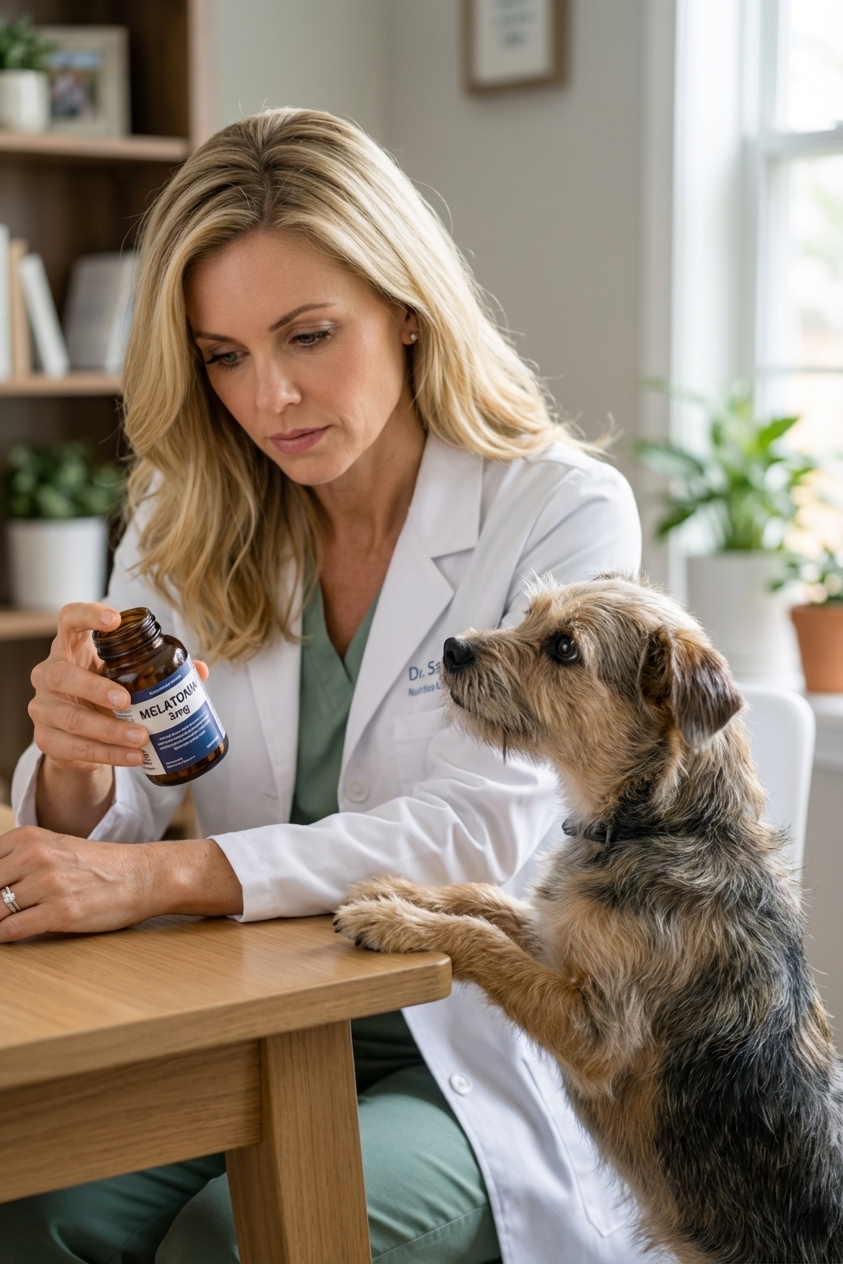
Side effects to watch for
Even “natural” products can cause side effects. Stop the supplement and call your veterinarian if you notice:
- Vomiting or diarrhea that lasts more than 24 hours
- Extreme sleepiness, weakness, or wobbliness
- Agitation or increased pacing
- Rapid heart rate, tremors, or collapse
- Any new behavior change that feels out of character
When not to self-treat
Check with your veterinarian first (instead of guessing at home) if your dog is:
- A very young puppy, a senior, or has kidney, liver, heart, or seizure conditions
- Pregnant or nursing
- On prescription anxiety meds or sedatives (examples include SSRIs, trazodone, benzodiazepines, and certain pain medications)
- On any complex medication plan where interactions are a concern
When supplements are not enough
If your dog is having true panic, the kind where they cannot eat, cannot settle, try to escape, or injure themselves, supplements are not the right tool by themselves.
Please talk to your veterinarian soon if you see:
- Destructive behavior focused on exits during alone time
- Self-injury, bloody paws, or broken teeth from escape attempts
- Severe noise phobia with shaking, drooling, and frantic behavior
- Frequent episodes that are worsening over time
Prescription anti-anxiety medications can be life changing when used thoughtfully. Many dogs do best with a combination of behavior modification, environmental changes (white noise, safe room, predictable routine), and medication that helps their brain learn calm patterns again.
Basics that boost any supplement
Supplements work better when the rest of your dog’s world feels predictable and safe.
- Daily exercise that fits your dog’s body and age
- Sniffing and enrichment (snuffle mats, food puzzles)
- Consistent sleep schedule and a quiet resting spot
- For noise: close curtains, play steady white noise, and offer a covered crate or cozy den if your dog likes it
- For travel: practice calm car time with tiny steps and high-value treats
- Pheromones: dog-appeasing pheromone products (for example Adaptil) can be a helpful, low-risk add-on for some dogs, especially when paired with training
Quick FAQs
Can you give dogs melatonin?
Often yes, but only if the product is plain and xylitol-free, and the dose is appropriate for your dog’s size and health. If your dog is on other medications or has underlying conditions, check with your vet first.
How long do calming supplements take to work?
Situational tools like L-theanine and melatonin are typically given 30 to 90 minutes before a trigger. Daily supplements may take several days to several weeks to show consistent benefits, depending on the ingredient.
Will CBD calm my dog down?
Some dogs seem to benefit, but results vary, and product quality matters a lot. If you want to try CBD, involve your veterinarian so you can choose a tested product and avoid interactions.
How do I know if it is working?
Track 2 to 3 specific behaviors for a week (for example: trembling, pacing, hiding, barking, appetite). Rate them from 0 to 5 each day. If there is no improvement after a reasonable trial for that product, or side effects show up, stop and talk with your veterinarian about the next step.