Understand the most common reasons puppies vomit, what different colors and textures can mean, safe at-home steps for mild cases, and clear red flags to call...
Article
•
Designer Mixes
My Puppy Threw Up: Facts Every Owner Should Know

Shari Shidate
Designer Mixes contributor
Seeing your puppy throw up can feel scary, especially when they are so small and still figuring out the world. The good news is that vomiting is common in puppies, and many causes are mild and short-lived. The tricky part is knowing when it is a mild, short-lived upset stomach and when it is an emergency.
As a veterinary assistant in Frisco, Texas, I always come back to two goals: keep your puppy safe right now, and collect the right clues so your veterinarian can help fast.
Vomiting vs. regurgitation
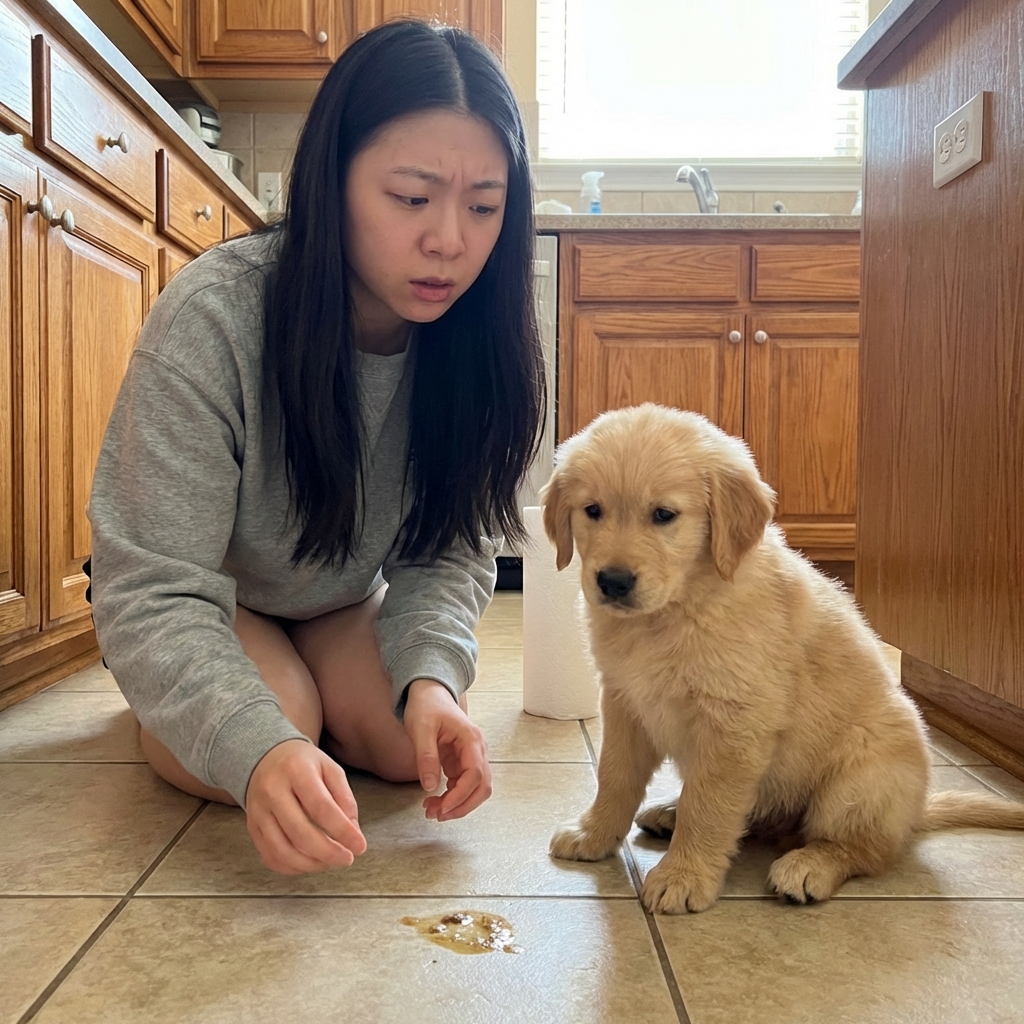
Pet parents often say “vomiting,” but some puppies are actually regurgitating. This matters because the causes and urgency can be different.
- Vomiting: comes from the stomach or upper intestines. You’ll often see retching or heaving, drooling, belly contractions, and the material may be partially digested. Puppies may look nauseated beforehand.
- Regurgitation: passive “spitting up” from the esophagus. Food or water comes up without heaving, and it often looks undigested, tubular, or like it just went down.
If you are unsure, take a quick video. That one clip can save a lot of guessing in the exam room.
If regurgitation keeps happening, especially in a young puppy, call your veterinarian. Repeated regurgitation can raise concerns about esophageal problems and can increase the risk of aspiration (breathing food or fluid into the lungs).
What puppy vomit can look like
Color and texture are not a diagnosis on their own, but they are helpful clues. If you can safely do so, note what you see and when it happened.
Clear or foamy
- Common with an empty stomach, mild nausea, fast eating, stress, or swallowing water too quickly.
- Can also occur early in illness, so watch for repeat episodes.
Yellow liquid
- Often bile, which can show up when a puppy’s stomach is empty for too long.
- This is one reason consistent, age-appropriate meal schedules matter. Very young puppies may need more frequent meals.
- Also seen with GI upset, parasites, diet change, or eating something that did not agree with them.
Undigested food
- Could be vomiting soon after a meal, eating too fast, or regurgitation.
- Repeated undigested food can be a red flag for esophageal issues or obstruction.
Brown material
- Can be digested food, swallowed dirt, or something they ate.
- If it looks like coffee grounds, that can suggest digested blood and needs urgent care.
- Brown vomit that is foul-smelling or looks like feces is an emergency and can be seen with obstruction or severe GI disease.
Blood (red streaks or clots)
- Small streaks can occur from irritation after multiple vomits.
- More than a small streak, repeated blood, weakness, or pale gums is an emergency.
Common reasons puppies throw up
Puppies explore with their mouths, their immune systems are still developing, and their digestive tracts can be sensitive. These are some of the most common culprits.
1) Eating too fast
Fast eating can stretch the stomach and trigger vomiting, especially if your puppy gulps air. This is very common in multi-pet homes or with rescues who learned to compete for food.
2) Sudden diet changes
Switching foods quickly, new treats, rich chews, or table scraps can cause vomiting and diarrhea. Puppies do best with slow transitions over 7 to 10 days when possible.
3) Parasites
Roundworms, hookworms, whipworms, Giardia, and other intestinal parasites are common in puppies. Vomiting may come with diarrhea, poor weight gain, a pot-bellied look, or a dull coat. Bring a fresh stool sample to your vet when you can.
4) Viruses and infections
Puppies are more vulnerable to infectious disease if they are not fully vaccinated. Parvovirus, in particular, can start with vomiting and quickly become life-threatening due to dehydration and severe intestinal injury.
5) Dietary indiscretion
This includes trash, sticks, socks, toys, cat litter, compost, and even “natural” chews that break into chunks. Obstructions are a major concern in puppies.
6) Toxins
Common household dangers include xylitol (found in many sugar-free gums and mints, some peanut butters, baked goods, oral-care products like toothpaste or mouthwash, and other sugar-free items), medications, nicotine, cleaning products, certain plants, and chocolate. Vomiting can be the first sign, but toxins can also affect the liver, kidneys, brain, or blood sugar.
7) Motion sickness
Car rides can trigger drooling, vomiting, and anxiety. Many puppies outgrow this, and your veterinarian can recommend safe options if it is frequent.
8) Less common (but important)
Some causes are less common in young puppies but still possible, like pancreatitis, congenital issues, or intussusception. The main takeaway is simple: if vomiting is persistent, your puppy should be evaluated.
When vomiting is an emergency
Trust your instincts. If your puppy seems “off,” it is always okay to call your veterinarian or an emergency clinic. In general, seek urgent care if you notice any of the following:
- Repeated or ongoing vomiting, especially if your puppy cannot keep water down
- Any vomiting in a very young puppy (especially under 12 to 16 weeks) because dehydration and low blood sugar can happen fast
- Blood (more than a small streak) or vomit that looks like coffee grounds
- Brown, foul-smelling vomit or vomit that looks like feces
- Severe lethargy, collapse, trembling, or weakness
- Signs of dehydration: tacky or dry gums, sunken eyes, skin that “tents,” decreased urination
- Swollen, painful belly or repeated unproductive retching
- Diarrhea with vomiting, especially if watery, frequent, or bloody
- Known toxin exposure or you suspect your puppy ate a foreign object (toy, sock, corn cob, bones)
- Not vaccinated or recently exposed to unknown dogs or high-traffic areas and now vomiting
If you suspect a foreign object or toxin, do not try home care. Call your veterinarian or an emergency clinic right away.
If you are worried about parvo, do not wait. Early treatment makes a huge difference.
What you can do at home
If your puppy vomited once, is acting mostly normal, and you do not suspect toxins or a foreign object, these steps can help while you monitor closely. If your puppy is very young, very small, or has vomited more than once, call your veterinarian before trying home care.
Step 1: Pause and gather details
- What time did it happen?
- How many times?
- What did it look like (color, food, foam, blood)?
- Any new foods, treats, chews, or access to trash?
- Any diarrhea, coughing, or lethargy?
Step 2: Protect against dehydration
Offer small amounts of water. If your puppy gulps and vomits again, stop and call your veterinarian. Some vets may recommend an oral electrolyte solution, but always confirm first because puppies have specific needs and some products are not appropriate.
Step 3: Food reintroduction
Many veterinarians recommend a short break from food followed by a bland diet, but puppies are different from adult dogs. Young puppies can be more prone to low blood sugar, so the “withhold food” approach may not be safe for every puppy.
Your safest move is to call your vet for age-appropriate instructions. If you have already been advised to feed bland, common options are boiled chicken and white rice, or a veterinary GI diet. Feed small, frequent meals and transition back slowly.
Step 4: Quiet rest and close monitoring
Skip vigorous play, training treats, and new chews for the rest of the day. If vomiting returns, or your puppy’s energy drops, get help.

What not to do
- Do not give human medications like Pepto-Bismol, ibuprofen, naproxen, or cold medicines unless your veterinarian specifically instructs you to. Some are dangerous for dogs.
- Do not force water if your puppy keeps vomiting after drinking.
- Do not assume it is “just a sensitive stomach” if your puppy is unvaccinated, very young, or could have eaten something.
- Do not delay care when red flags are present. Puppies can go from okay to critical quickly.
If you are headed to the vet
- Bring a video of the episode if you can catch one.
- Bring a stool sample if available (fresh is best).
- Bring packaging or labels for anything your puppy could have eaten (medications, gum, toothpaste, plants, cleaners, chews).
- Prevent more access: remove toys, trash, chews, and anything else your puppy might swallow.
- Keep your puppy warm and calm on the ride.
- Do not offer food unless your veterinarian instructs you to, especially if an obstruction is possible.
How vets find the cause
If you bring your puppy in, your vet team will typically combine your history with an exam and may recommend:
- Fecal testing for parasites and Giardia
- Parvo testing in at-risk puppies
- X-rays to check for foreign bodies or obstruction
- Ultrasound if obstruction or organ concerns are suspected
- Bloodwork to assess hydration, infection, blood sugar, electrolytes, and organ function
- Fluids and anti-nausea medication to stop the vomiting cycle and prevent dehydration
One of the most helpful things you can do is bring a photo of the vomit, a stool sample if available, and a list of any treats, chews, supplements, and preventatives your puppy is on.
Prevention tips
Slow down meals
- Use a slow feeder bowl, treat ball, or scatter feeding in a safe area.
- Feed separate from other pets if competition triggers gulping.
Make diet changes slowly
Transition over at least a week when possible. Puppies thrive on consistency.
Puppy-proof like a toddler lives there
- Pick up socks, toys, hair ties, kids’ items, and trash access.
- Choose chews sized appropriately and supervise.
Stay current on vaccines and parasite prevention
Vaccines and routine deworming are not just checkboxes. They are some of the best tools we have to prevent serious, expensive, scary illness.
Quick checklist before you call
If you are calling your veterinarian or an emergency clinic, having these details ready can speed up next steps:
- Your puppy’s age, breed mix, weight, and vaccine status
- How many vomiting episodes and over what time period
- What the vomit looked like (color, foam, food, blood)
- Any diarrhea, coughing, fever, lethargy, or belly pain
- Potential foreign body or toxin access
- Whether your puppy can keep water down
If your puppy vomits and seems tired, weak, or “not themselves,” don’t wait it out. You are not overreacting by getting help early.