Potty training a kitten made simple: when to start, how to set up a low-entry litter box, pick safe unscented litter, prevent accidents, and troubleshoot com...
Article
•
Designer Mixes
My Kitten Won’t Use the Litter Box

Shari Shidate
Designer Mixes contributor
If your kitten suddenly refuses the litter box, you are not dealing with a “bad kitten.” You are dealing with a clue. In my work as a veterinary assistant, I have seen this issue improve quickly once we figure out the why: a medical problem, a litter setup problem, stress, or a location issue.
This handbook walks you through what to do step by step, starting with the most important rule: rule out pain or illness first. Then we will fix the box, the litter, the placement, and the routine so your kitten feels safe and successful again. This guide does not replace veterinary advice, especially if your kitten seems unwell.
First things first: medical red flags
Kittens can avoid the litter box when it hurts to pee or poop. If they associate the box with pain, they may choose another spot. This is common and it is also treatable, but it needs timely care.
Call your vet urgently if you notice:
- Frequent trips to the box with little or no urine
- Crying, straining, or posturing without producing much
- Blood in urine, or a sudden change in urine smell, especially with other symptoms
- Lethargy, vomiting, not eating, hiding more than usual
- Diarrhea lasting more than 24 hours, especially in young or small kittens, or if there is blood, vomiting, or lethargy
- No poop for over 48 hours, especially with straining, pain, decreased appetite, or vomiting
Important: A male kitten that cannot pass urine is an emergency. Even partial obstruction can worsen quickly and become life-threatening fast.

Common non-medical reasons
Once your veterinarian has ruled out illness, most litter box problems come down to one of these:
- The box is hard to access (too tall, too far, blocked by a door, down stairs)
- The litter feels wrong (scented, scratchy, dusty, too deep)
- The box is not clean enough (kittens are tiny, and strong smells are a big deal)
- The location feels unsafe (noisy laundry room, corner where they can be startled, next to appliances)
- Stress or change (new home, new pet, kids visiting, construction noise)
- Negative association (the kitten was startled while using it, or punished afterward)
Set up a “yes” litter box
If you do nothing else, do this. A kitten-friendly setup can solve many accidents quickly, but some cases take longer or need medical or behavior help.
Choose the right box
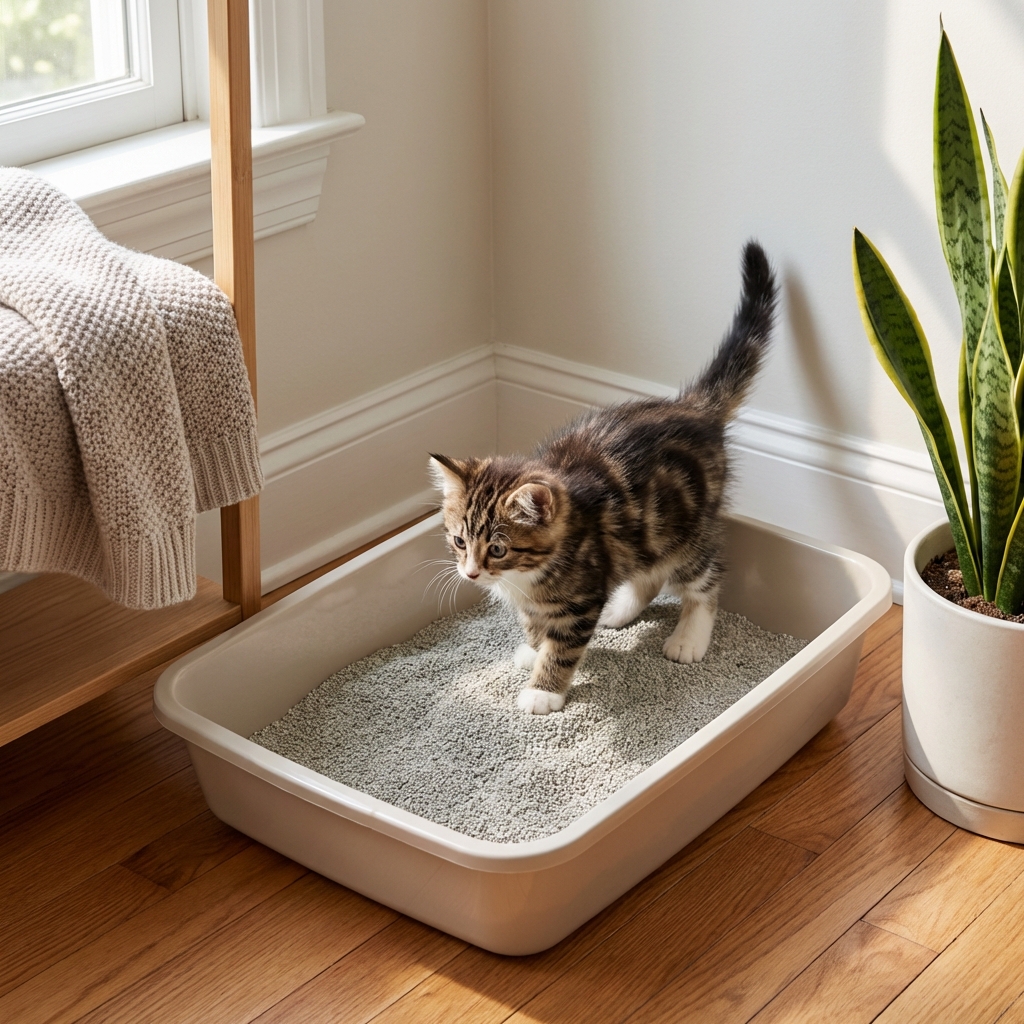
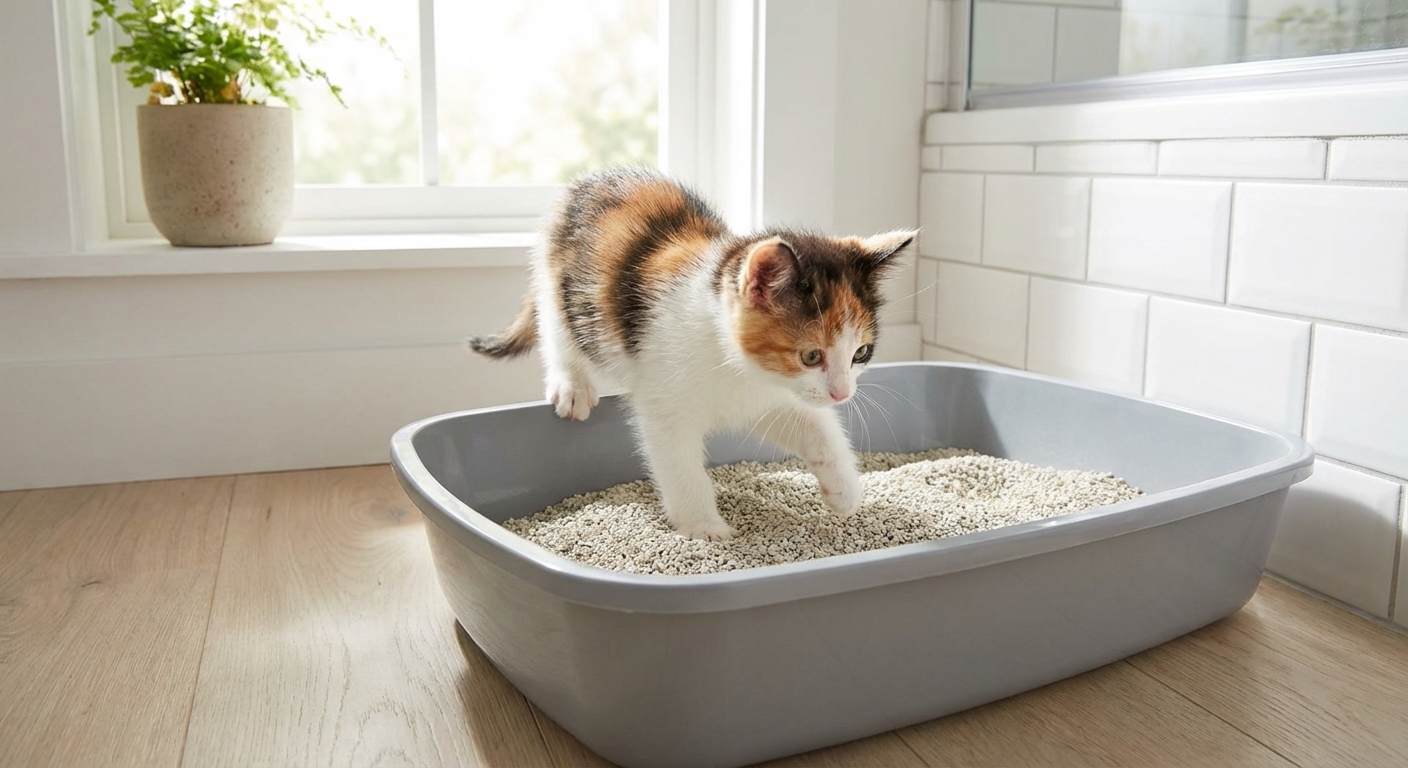
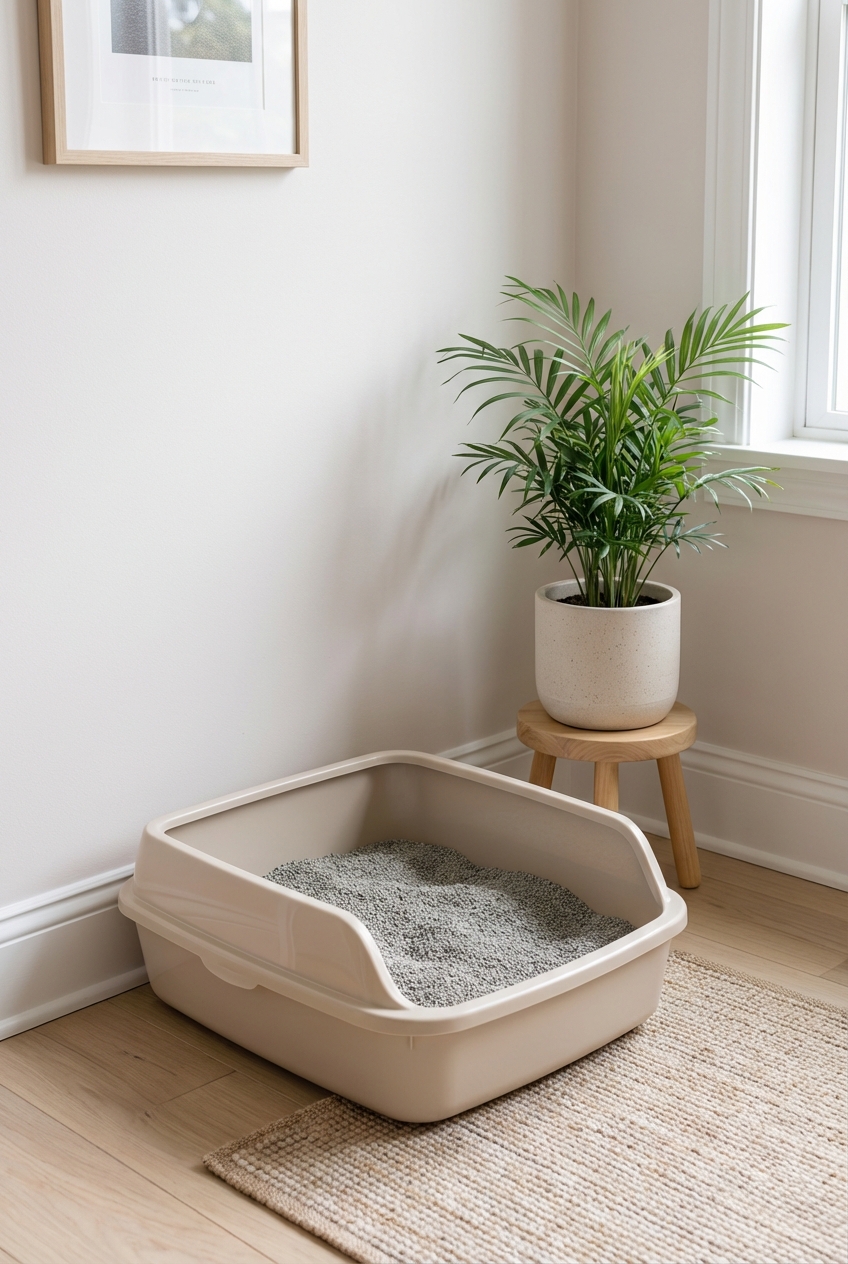
- Low entry (2 to 3 inches) so a small kitten can step in easily
- Uncovered to start (many kittens do better this way because it is airy, easy to enter, and less likely to hold odors)
- Big enough to turn around comfortably (bigger is usually better, even if your kitten is small now)
- Stable: if the box slides on tile, place a non-slip mat underneath so it feels secure
Pick the right litter
- Start with unscented, fine-grain litter with a “sand-like” texture (many kittens prefer this)
- Safety note: for very young kittens (especially under 8 weeks, or any kitten that tries to eat litter), avoid clumping litter. It can form a blockage if swallowed. Use a non-clumping paper litter or pellet litter temporarily, and ask your vet what is best for your kitten’s age and habits.
- Avoid strong perfumes, deodorizing crystals, and heavy dust if your kitten sneezes
- Keep litter depth around 1.5 to 2 inches to start, then adjust if your kitten clearly prefers more or less
Place the box where your kitten will use it
- Quiet, low-traffic area with a clear line of sight
- Not next to the food and water bowls
- Not beside loud machines (washer, dryer, furnace)
- In multi-level homes, put a box on each level
How many boxes?
A simple rule that works well in real homes: number of cats + 1 litter boxes. For one kitten, that usually means two boxes, especially during training.
Why it helps: kittens are fast, but their “I have to go” signal can be even faster. A second box reduces accidents caused by distance, a dirty box, or a moment of insecurity.
Cleaning: do and avoid
When a kitten has an accident, cleaning correctly matters because cats navigate by scent. If any odor remains, the spot can become a repeat toilet.
Do this
- Blot urine immediately with paper towels
- Use an enzymatic cleaner made for pet urine (follow label contact time)
- Wash bedding with enzymatic laundry additive if needed
- For the litter box, scoop at least once daily (twice is even better for kittens)
- Fully change litter and wash the box regularly (often weekly for many litters, but adjust based on box count, litter type, and odor)
- If accidents are happening on soft items (beds, laundry), block access for now and enzyme-wash everything. Soft surfaces can become a strong habit if any scent remains.
Avoid this
- Ammonia-based cleaners (they can smell like urine to cats)
- Strong citrus or heavily perfumed cleaners near the box
- Steam cleaning urine spots without enzymes first (heat can set odor)
The 7-day reset plan
If you are seeing daily accidents, cannot supervise closely, or your kitten seems confused about where to go, a short “reset” gives a fresh start and helps you identify what is working.
Days 1 to 3: simplify
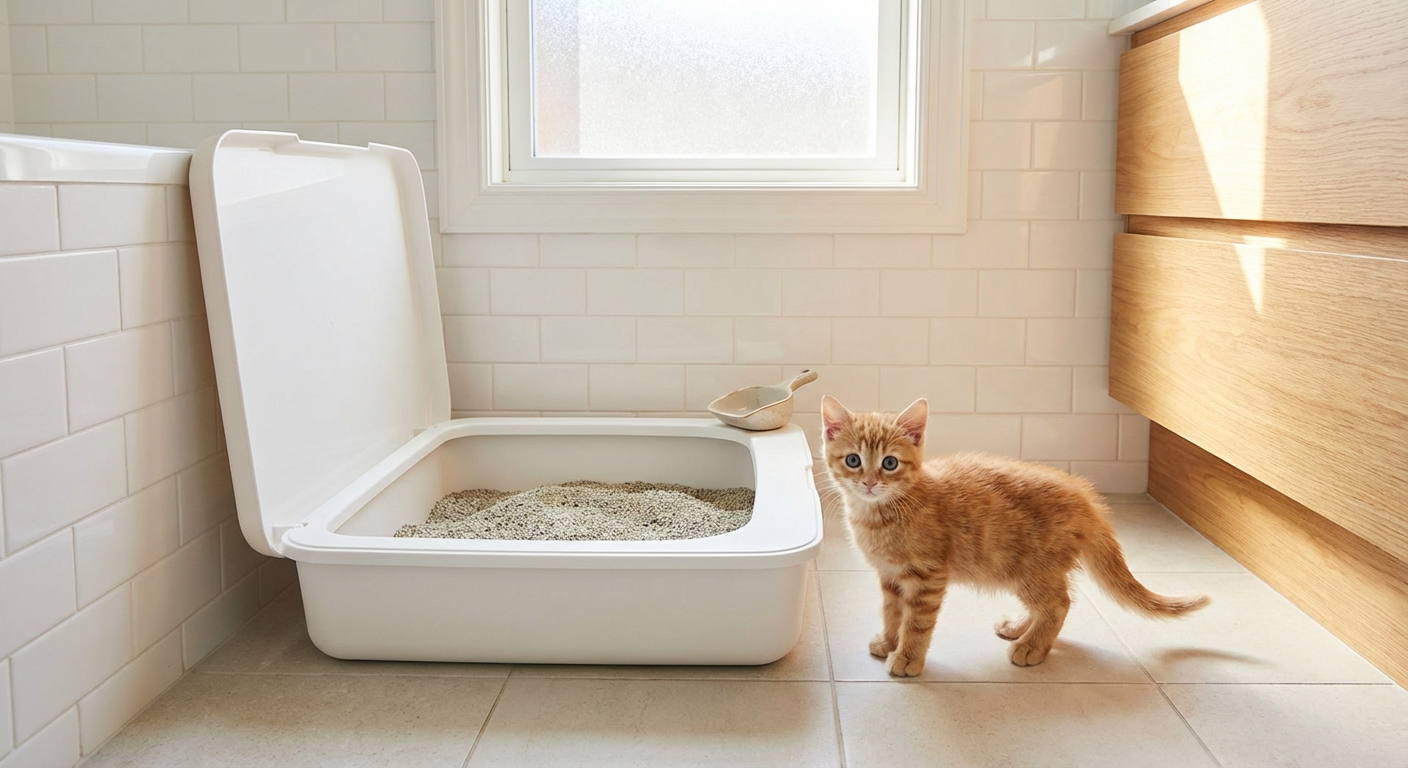
- Confine your kitten to a small, calm area (like a bathroom or large playpen)
- Set up the litter box so it is easy to reach within the confinement area, but not immediately next to food, water, or bedding
- If space allows, offer a second box so there is always a convenient option
- Use your “gold standard basics” (open, low-entry box and kitten-appropriate, unscented litter)
- Scoop twice daily during reset week
Days 4 to 7: expand slowly
- Let them explore one extra room at a time
- Add a box on the new “territory edge” if you notice accidents
- Keep the best-performing box style and litter consistent while you expand
If your kitten uses the box perfectly during confinement but not after expanding, that is a big sign the issue is location, access, stress, or too much freedom too soon.
Behavior tips that help
Kittens learn fast when they feel safe. The goal is to make the litter box the easiest, most comfortable option.
- Never punish accidents. It can create fear and hiding, which worsens the problem.
- After meals and naps, gently place your kitten in the box and let them step out if they choose.
- When you see litter box use, offer calm praise or a tiny treat afterward.
- Trim long fur around the rear if stool sticks (ask your vet or groomer for a safe sanitary trim).
Special situations
Peeing right next to the box
This often means, “I want to use it, but something about it is uncomfortable.” Try a lower-entry box, switch to unscented litter, reduce litter depth, and move the box to a quieter spot.
Pooping outside but peeing inside
This can point to constipation, stool discomfort, or litter texture aversion. Check stool consistency and talk with your vet if stools are hard, dry, very large, or your kitten strains.
Stopped after a change
Common triggers include a new litter brand, new box type, switching to a covered box, moving the box, a new pet, or a loud event. Go back to the last successful setup and reintroduce changes gradually.
Multi-cat homes
Even if you only have one kitten, adult cats can block access without you noticing. Provide multiple boxes in different locations so a timid kitten is not “guarded out” of the bathroom. Try not to keep all boxes in one tight cluster, because that can still feel like one “guardable” area.
When to bring a sample
If accidents continue for more than a few days despite a great setup, schedule a vet visit and ask if they want samples.
- Stool sample: bring a fresh sample (ideally within 12 hours). Kittens commonly have parasites that can cause urgency or diarrhea.
- Urine concerns: your vet may collect a sterile sample in clinic. Do not stress if you cannot collect it at home.
Quick checklist
- Is your kitten eating, drinking, and acting normal?
- Any straining, crying, blood, vomiting, or lethargy?
- Open, low-entry box that feels stable?
- Unscented, kitten-appropriate litter (non-clumping if very young or litter-eating)?
- Quiet location, not near food or bedding?
- Two boxes available?
- Scooped daily and cleaned with enzymes?
- Any recent changes in home, routine, box, or litter?
Most kittens want to do the right thing. When you make the litter box feel safe, easy, and consistent, the “training” often takes care of itself.