If your dog whines constantly, start by ruling out pain and illness. Learn common causes, urgent red flags, and practical training, enrichment, routine, and ...
Article
•
Designer Mixes
My Dog Whines All the Time: Secrets Revealed

Shari Shidate
Designer Mixes contributor
When a dog whines constantly, it can feel like a mystery you cannot solve. But whining is not random. It is communication. As a veterinary assistant, I like to treat whining the same way we treat symptoms in a clinic: we look for patterns, we consider pain and illness early, then we address behavior and environment.
This article will help you decode what your dog is trying to say and give you realistic steps you can start today.
What whining means
Whining is a normal canine vocalization. Dogs whine to seek connection, request something, express discomfort, or cope with stress. The key is that most chronic whining falls into a few repeatable patterns, and the best fix depends on which pattern fits your dog.
Start by asking two questions:
- Is this new or suddenly worse? New whining raises the urgency to rule out pain or illness.
- When does it happen most? Time of day, location, and what you are doing are major clues.
Also remember: more than one thing can be true. A dog can have mild discomfort and a learned attention habit. You can address both, but you always want to rule out the medical piece first.
Rule out medical causes first
In veterinary medicine, we typically consider discomfort early because pain can show up as restlessness, clinginess, pacing, panting, and yes, whining.
Common health reasons dogs whine
- Pain: arthritis, hip or back pain, dental pain, ear infections, injuries, post-surgery discomfort.
- GI upset: nausea, acid reflux, constipation, intestinal cramping.
- Urinary issues: urinary tract infection, bladder stones, difficulty urinating.
- Senior changes: canine cognitive dysfunction can cause night restlessness and vocalizing.
- Systemic illness: some conditions increase thirst, hunger, or overall discomfort and can contribute to vocalization.
Red flags: see a vet ASAP
- Whining paired with limping, stiffness, or reluctance to jump or climb stairs
- Loss of appetite, vomiting, diarrhea, or repeated swallowing or lip licking
- Accidents in the house, straining to pee or poop, or frequent urination
- Sudden behavior change, confusion, hiding, or not wanting to be touched
- Bloating, unproductive retching, or a hard belly (emergency)
- Sudden yelping, weakness, collapse, tremors, head pressing, or acting disoriented (urgent)
If your dog is medically cleared, you can move forward confidently knowing you are not ignoring a health issue. If the whining persists or keeps changing, it is still worth checking back in with your veterinarian. Some problems are subtle at first.
The whining decoder
Here are common scenarios I see, plus what to do next.
1) Attention whining
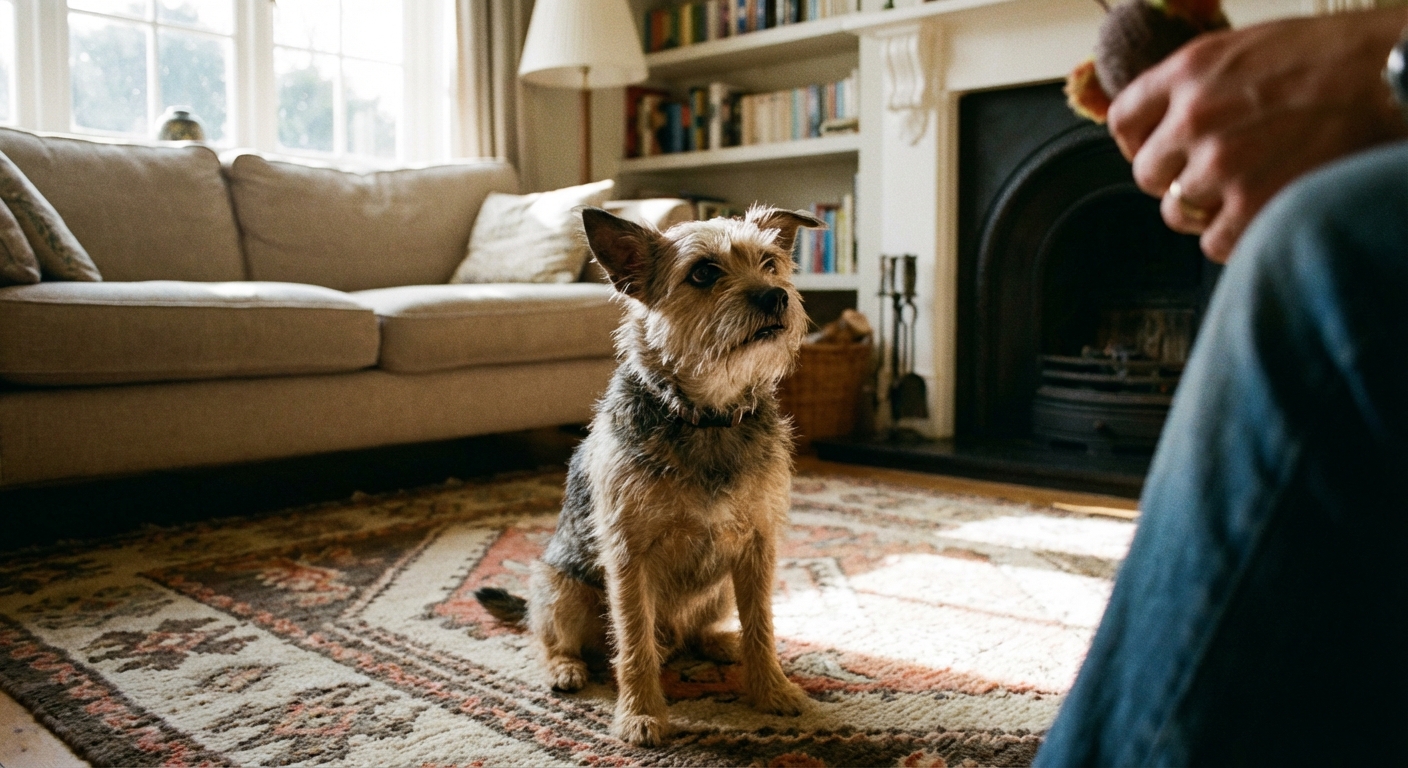
Clue: Your dog whines while staring at you, pawing you, or escalating when you respond (even negatively).
What is happening: Whining has been rewarded, even accidentally. Eye contact, talking, petting, or giving a treat can reinforce it.
- Do: Reward quiet behavior on purpose. Catch your dog being calm and then calmly offer attention or a treat.
- Do: Teach a clear alternative such as “go to mat” or “place.”
- Avoid: Scolding. Many dogs interpret it as attention and get louder.
2) Demand whining for food
Clue: Whining happens in the kitchen, near the pantry, or right after you eat.
What is happening: Your dog has learned that persistence sometimes works.
- Do: Create a predictable feeding routine and use measured meals.
- Do: Offer enrichment feeders so meals take longer and feel more satisfying.
- Avoid: Feeding from your plate or responding to whining with snacks.
3) Anxiety whining
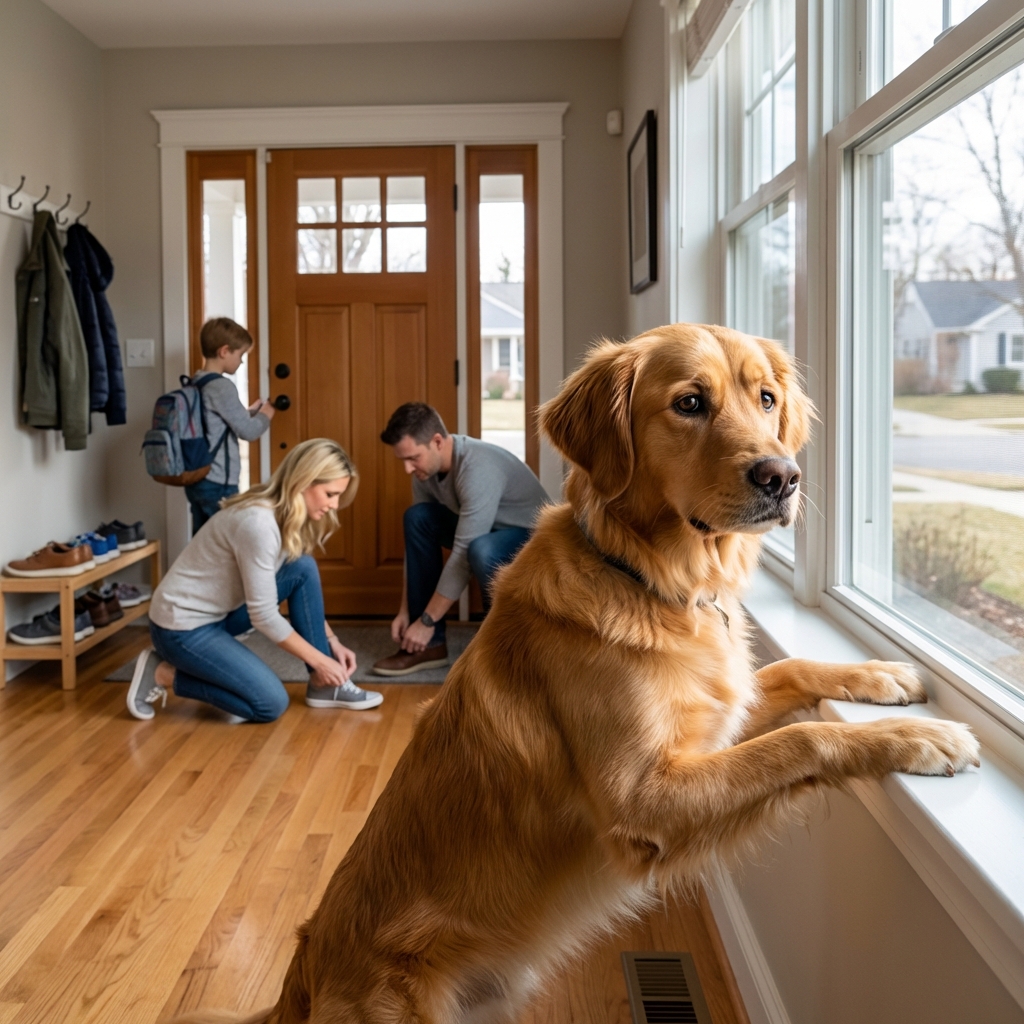
Clue: Whining increases when you pick up keys, move toward the door, or when your dog cannot follow you.
What is happening: Your dog is not being “needy.” Their nervous system is stressed.
- Do: Practice tiny departures and returns that do not trigger panic.
- Do: Pair alone-time with a high-value, long-lasting activity like a stuffed food toy.
- Do: Use management to prevent escape and injury. A camera can help you see what is really happening when you are gone.
- Avoid: “Cry it out.” In true separation anxiety, it often worsens panic.
- Consider: A certified positive reinforcement trainer, your veterinarian, or a veterinary behaviorist. Severe cases may benefit from medication alongside training.
4) Bored or under-stimulated whining
Clue: Whining ramps up in the evening or when you are busy, and your dog also paces or repeatedly seeks your attention.
What is happening: The body has energy, the brain has unmet needs, or both.
- Do: Add short, frequent activity instead of one huge session. Many dogs thrive on 2 to 4 mini-sessions daily.
- Do: Use sniff walks, training games, puzzle feeders, and toy rotation.
- Tip: For many dogs, 10 minutes of scent work can be surprisingly tiring, sometimes more than a longer fetch session.
5) Whining to go outside
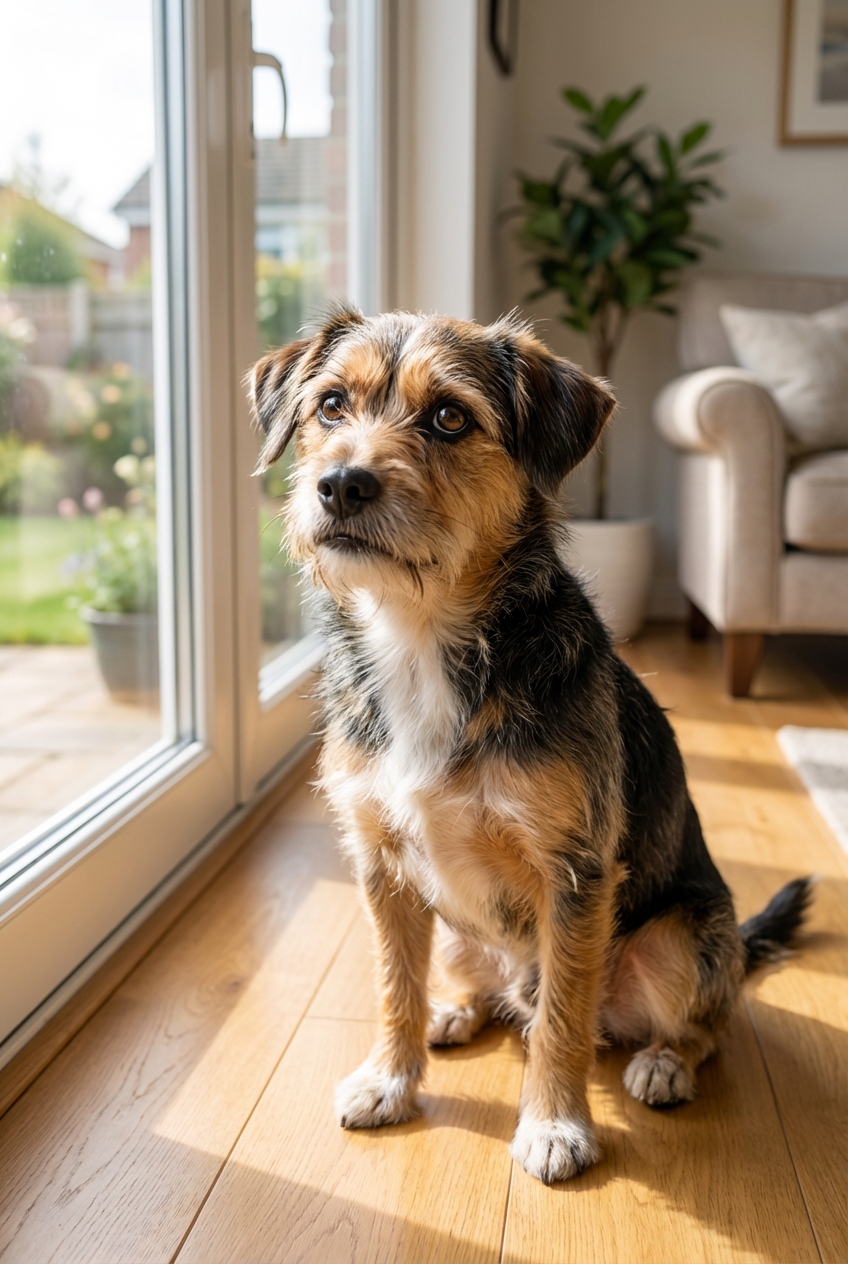
Clue: Your dog whines at the door, especially after drinking, waking up, or meals.
What is happening: Sometimes it is simply potty communication. Other times it is boredom or a pattern of “door equals fun.”
- Do: Take a quick potty break on leash, boring and brief, then come inside.
- Do: If accidents or urgency appear, rule out urinary or GI issues.
6) Whining at night
Clue: Your dog whines after bedtime, wakes up vocalizing, or seems restless.
What is happening: Pain, needing to potty, anxiety, or age-related changes are common. A simple schedule mismatch can also play a role.
- Do: Add a last potty break and a calm wind-down routine.
- Do: Consider orthopedic bedding for seniors and discuss pain management with your vet.
- Do: Keep lights low and the environment consistent.
7) Context whining
Clue: Whining is tied to a specific event like car rides, vet visits, grooming, thunderstorms, fireworks, or greetings at the door.
What is happening: This is often stress, excitement, or frustration. The pattern matters. A dog may whine because they are scared, or because they cannot reach something they want.
- Do: Create distance from the trigger when possible, and pair the trigger with something your dog loves in tiny, manageable steps.
- Do: For noise fears, ask your veterinarian about true panic support and safe options for storm season.
8) Puppies and adolescence
Clue: A young puppy whines in the crate, at bedtime, or during new routines.
What is happening: Some whining is normal early on. Puppies are learning how to settle, self-soothe, and handle brief separation.
- Do: Keep training sessions short, reward calm, and build alone-time gradually.
- Do: Make sure potty needs are met. Young puppies may need a nighttime break.
High-impact steps
Step 1: Start a 3-day whining log
This sounds simple, but it is powerful. Write down:
- Time and location
- What happened right before the whining
- What you did in response
- How long it lasted
- Anything notable: exercise, visitors, new food, storms, schedule changes
Patterns show up fast, and that tells you whether you need training, more enrichment, or a medical check.
Step 2: Reinforce what you want
If your dog is whining for attention, you can teach a new communication method. For example, reward “sit quietly” or “go to mat.” Then your dog learns, “Calm gets results.”
Step 3: Improve comfort
Sleep, gut comfort, and joint comfort all affect behavior. If your dog has frequent soft stool, itchy skin, seems stiff, or is slowing down, talk with your veterinarian about diet quality and a full wellness plan. When dogs feel better, they cope better.
Step 4: Meet needs, then train
A dog who is hungry, anxious, or full of energy will struggle to “behave.” A quick checklist before you start training:
- Potty break?
- Fresh water?
- Appropriate exercise for age and breed mix?
- Chew or food enrichment available?
- A quiet place to rest?
Step 5: Ignore correctly
If you decide to ignore attention whining, do it consistently. Many dogs try harder before they get better. That temporary spike is called an extinction burst. Stay calm, wait for even a brief pause, then reward quiet immediately so your dog learns what works.
A 7-day plan
Days 1 to 2: Observe and check comfort
- Start the whining log.
- Check ears, paws, and body for tenderness.
- If anything seems off, schedule a vet appointment.
Days 3 to 5: Add structure
- Two short sniff walks daily.
- One meal served in a puzzle feeder or snuffle mat.
- Practice “place” for 3 minutes at a time, reward calm.
Days 6 to 7: Remove accidental rewards
- Do not talk, touch, or feed in response to attention whining.
- Do reward quiet, relaxed behavior frequently.
- Keep departures and arrivals calm if separation anxiety is suspected.
You may notice improvement within 1 to 2 weeks for mild, habit-based whining. Anxiety cases and pain-related cases often take longer, sometimes weeks to months. If you are not seeing progress, it is a sign to get a more targeted plan from your veterinarian or a qualified trainer.
What not to do
- Do not punish whining. It can increase anxiety and make the problem worse.
- Do not ignore medical possibilities. Especially if the whining is new, worsening, or your dog is older.
- Do not reward whining accidentally. Even “just this once” can keep the behavior alive.
When to get help
Reach out for help if:
- The whining is intense, daily, or escalating.
- Your dog cannot settle, paces, or panics when alone.
- You suspect pain, GI distress, urinary problems, or anything neurological.
A veterinarian can check for physical causes, and a force-free trainer can help you build calm habits without fear-based methods.