Understand why dog-on-dog aggression happens, how to read early stress signals, and how to improve behavior with safety-first management and evidence-based t...
Article
•
Designer Mixes
My Dog Was Bitten by Another Dog

Shari Shidate
Designer Mixes contributor
Take a breath, then act fast
Seeing your dog get bitten is scary. The good news is that many bite wounds heal very well when you respond quickly and thoughtfully. As a veterinary assistant, I have seen the best outcomes happen when owners do three things right away: separate the dogs safely, check for injuries you cannot see at first glance, and get veterinary care early when it is needed.
This guide walks you through what to do in the first 5 minutes, what to watch for over the next 48 hours, when it is an emergency, and how to prevent it from happening again.
First 5 minutes: safety and a quick check
1) Separate safely
If the other dog is still present, prioritize human safety. Do not put your hands near the dogs’ mouths. If you can, create distance using a barrier (a door, baby gate, board, large object) or call for help. Once separated, leash your dog and move to a quiet area.
2) Look for hidden injuries
Bite wounds can look small on the surface but have deeper damage underneath. Dogs’ skin is stretchy, so a tiny puncture can hide a larger pocket of trauma below the skin. Do a calm head-to-tail check:
- Bleeding: steady oozing vs. active spurting
- Punctures: tiny holes, especially around the neck, chest, belly, and legs
- Swelling: a rapidly growing lump can mean bleeding under the skin
- Pain: flinching, yelping, guarding, or not wanting to be touched
- Limping: could be a sprain, puncture, or fracture
- Breathing: rapid, shallow, or labored breathing is a red flag
3) If bleeding, apply gentle pressure
Use a clean towel or gauze and apply steady pressure for 5 to 10 minutes without constantly checking. If blood soaks through, layer more on top rather than removing the first layer.
When it is an emergency
Go to an emergency vet now if you notice any of the following:
- Bleeding that will not slow with firm pressure
- Wounds on the neck, chest, belly, groin, or near the eyes
- Collapse, weakness, pale gums, or extreme lethargy
- Labored breathing, coughing, or noisy breathing
- Large swelling, rapidly expanding bruising, or a “crackling” feeling under the skin
- Multiple punctures or any deep puncture (especially from a large dog)
- Your dog is very small, very young, a senior, or has chronic illness
If you are unsure, treat it as urgent. Bite infections can set in quickly, and internal injuries do not always show up immediately.
Should I clean the wound at home?
You can do basic first aid while you arrange veterinary care, but avoid anything that delays treatment for a serious bite.
What you can do
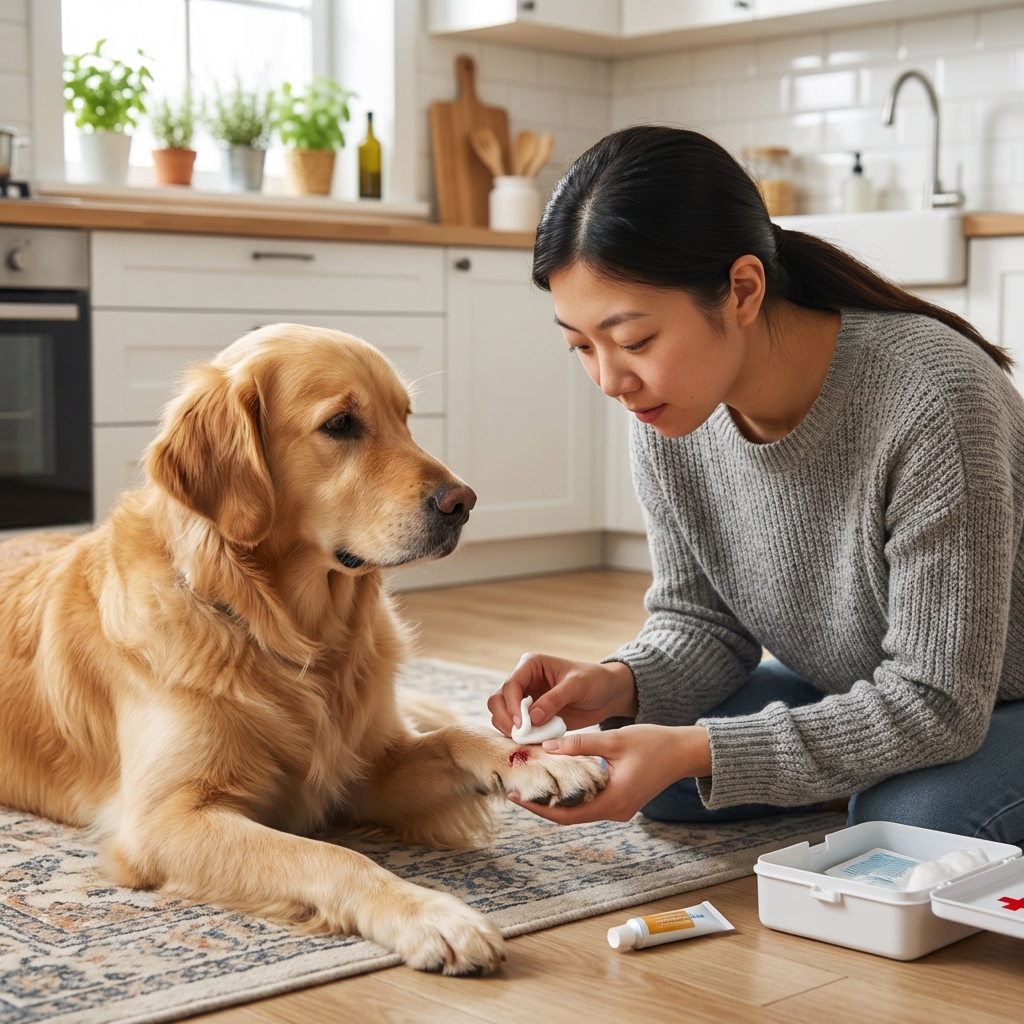
- Rinse gently with clean, lukewarm water or sterile saline if you have it.
- Trim nothing and do not dig into punctures.
- Prevent licking with an e-collar if your dog will tolerate it.
What to avoid
- Hydrogen peroxide (can damage healthy tissue and slow healing)
- Alcohol (painful and irritating)
- Human pain meds like ibuprofen, naproxen, or acetaminophen unless a veterinarian specifically instructs you
- Closing the wound with glue or bandages that trap bacteria inside punctures
Why dog bites get infected so easily
Dog mouths carry bacteria, and punctures push bacteria deep under the skin where oxygen is low. That environment is perfect for infection and abscess formation. In the clinic, we commonly see bite wounds that looked “fine” on day one but became hot, swollen, and painful by day two or three.
Your vet may recommend:
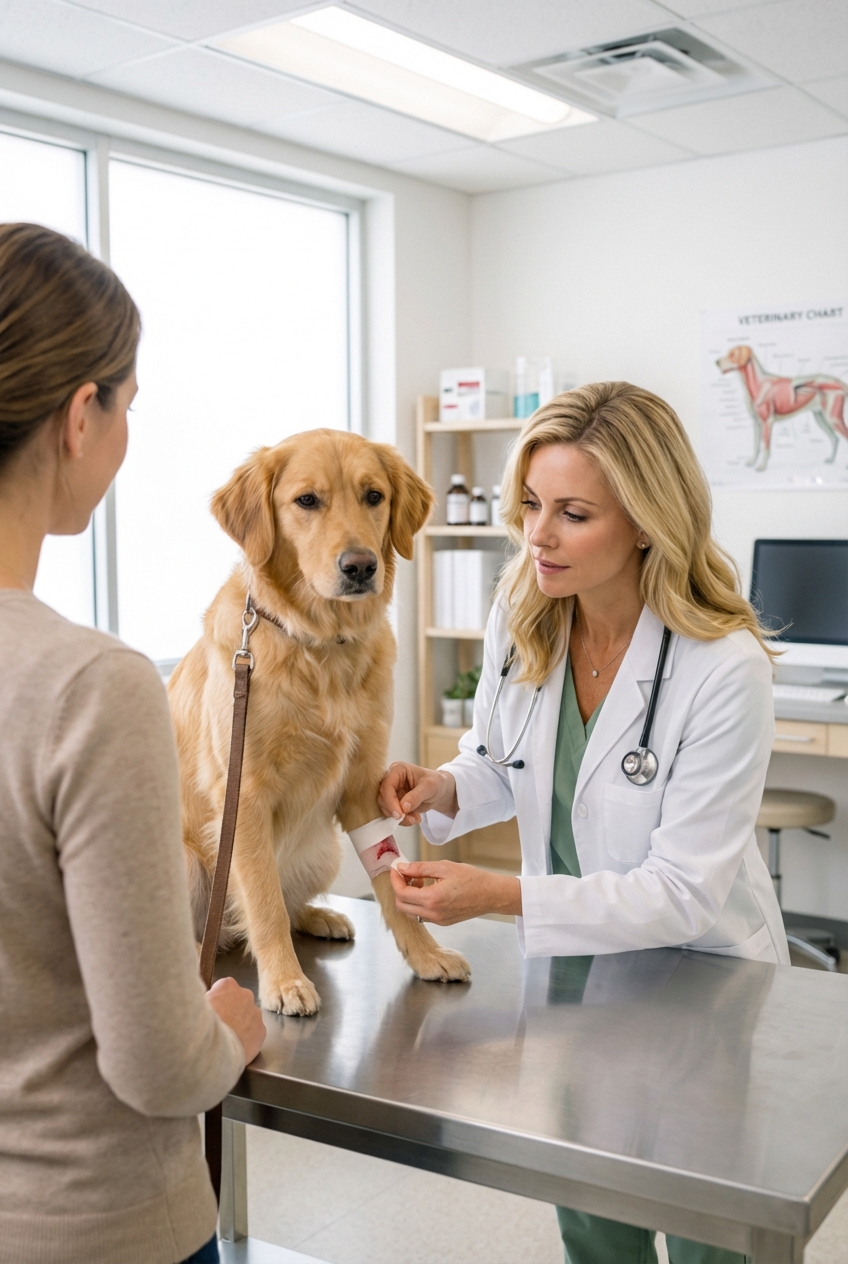
- Clipping and flushing the wound (this is a big deal for preventing infection)
- Antibiotics, especially for punctures and crush injuries
- Pain relief that is safe for dogs
- Drain placement if there is a pocket of infection or dead space
- X-rays if there is lameness, deep tissue injury, or concern for chest involvement
What to watch for in the next 48 hours
Even after a vet visit, careful home monitoring matters. Call your vet promptly if you notice:
- Increasing swelling, heat, redness, or a bad odor
- Oozing pus or cloudy fluid
- Fever (your dog feels unusually hot, is trembling, or is very tired)
- Decreased appetite, vomiting, or “not acting like themselves”
- Sudden pain when the area is touched, or your dog becomes protective of the spot
- New limping or reluctance to move
Keep activity calm and controlled. Short leash walks only until your veterinarian clears normal play.
What to ask the other owner (and what to document)
This part can feel awkward in the moment, but it protects your dog and helps your veterinarian treat correctly.
Questions to ask
- Is your dog currently vaccinated for rabies? What is the date of the last rabies vaccine?
- What is your contact information and your veterinarian’s name?
- Has your dog been sick recently or had any known contagious conditions?
What to document
- Photos of your dog’s wounds as soon as possible and again over the next few days
- The location, date, and approximate time
- Description of the other dog (breed, size, color) and owner information
- Witness names if available
Local laws vary, but many areas require reporting bites, especially if rabies status is unknown. When in doubt, ask your veterinarian or local animal services what steps are appropriate in your city.
Helping your dog emotionally after a bite
Physical wounds are only part of the story. Some dogs become fearful on walks, reactive to certain dogs, or anxious in busy areas after an attack.
- Keep routines predictable for a few days: same walk times, quieter routes, lots of decompression.
- Reward calm behavior when your dog notices other dogs at a distance.
- Avoid forced greetings while your dog heals and regains confidence.
- Consider a certified trainer if you see barking, lunging, or freezing on walks in the weeks following.
Prevention: lowering the chance of another bite
Not every incident is preventable, but you can reduce risk a lot with a few habits:
- Use a secure harness or well-fitted collar and a sturdy leash.
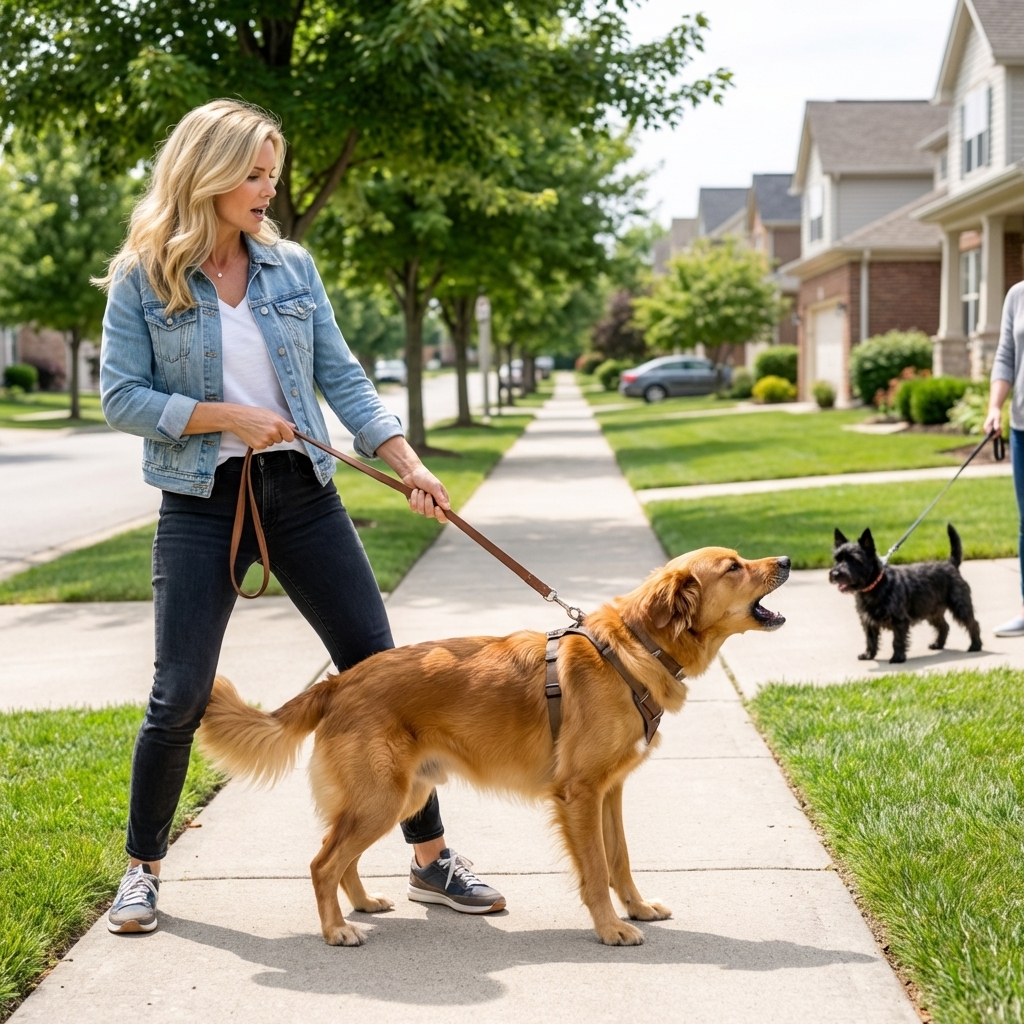
- Give space to dogs on tight leashes, behind fences, or showing stiff posture.
- Skip on-leash greetings if either dog is pulling, staring, or tense.
- Practice a U-turn cue so you can calmly change direction when a situation feels off.
- Consider basket muzzle training for dogs with a bite history or significant fear, guided by a trainer.
Most importantly, trust your gut. If a dog or situation feels unsafe, it is okay to create distance without explaining yourself to anyone.
Quick checklist
- Separate dogs safely and move to a quiet area
- Check for punctures, swelling, pain, limping, and breathing changes
- Apply steady pressure to bleeding wounds
- Rinse gently with water or saline, avoid peroxide and alcohol
- Call your vet and describe the bite location and depth
- Document photos and obtain rabies vaccine information
- Monitor closely for 48 hours for infection or worsening pain
When it comes to dog bites, “small” does not always mean “minor.” If you are unsure, have your vet take a look sooner rather than later.