Yellow foam vomit is often bile from an empty or irritated stomach. Learn common causes, safe step-by-step home care, red-flag emergencies, and prevention tips.
Article
•
Designer Mixes
My Dog Threw Up Yellow Stuff

Shari Shidate
Designer Mixes contributor
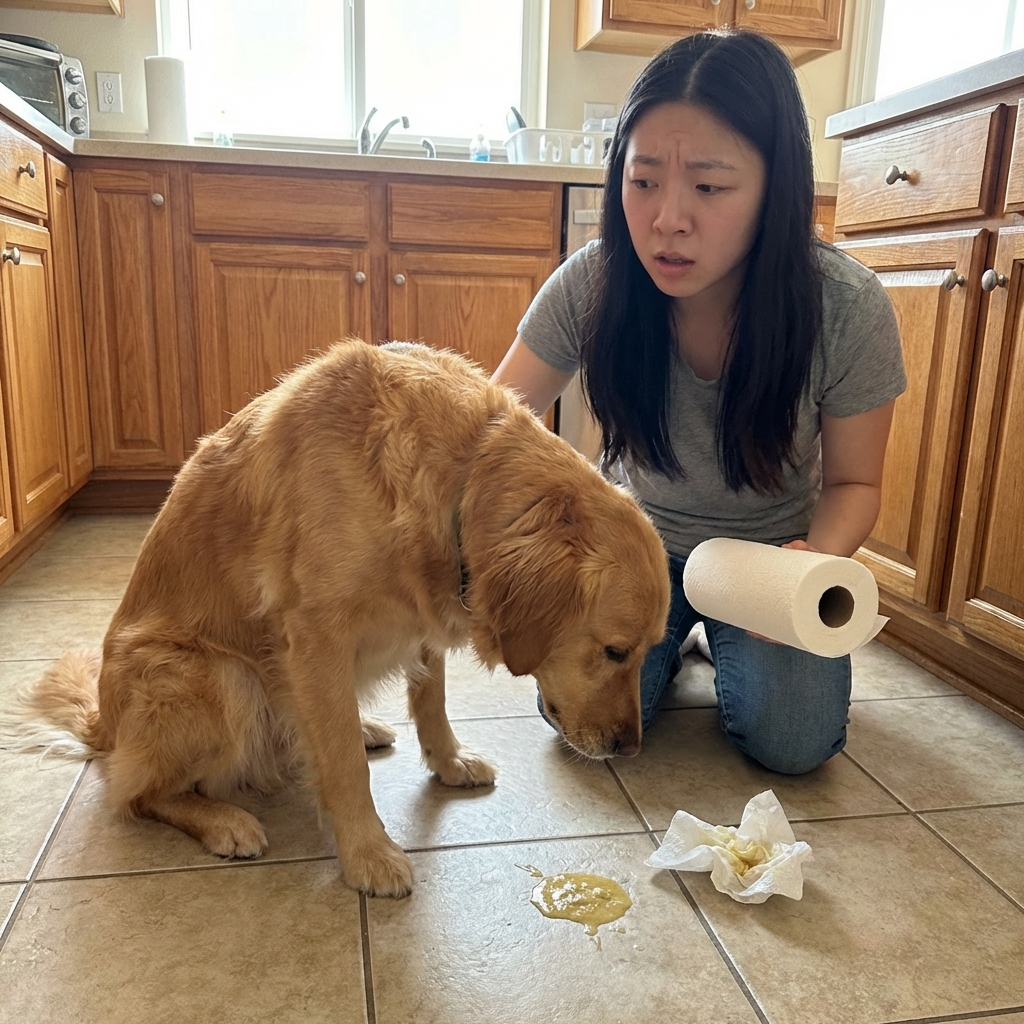
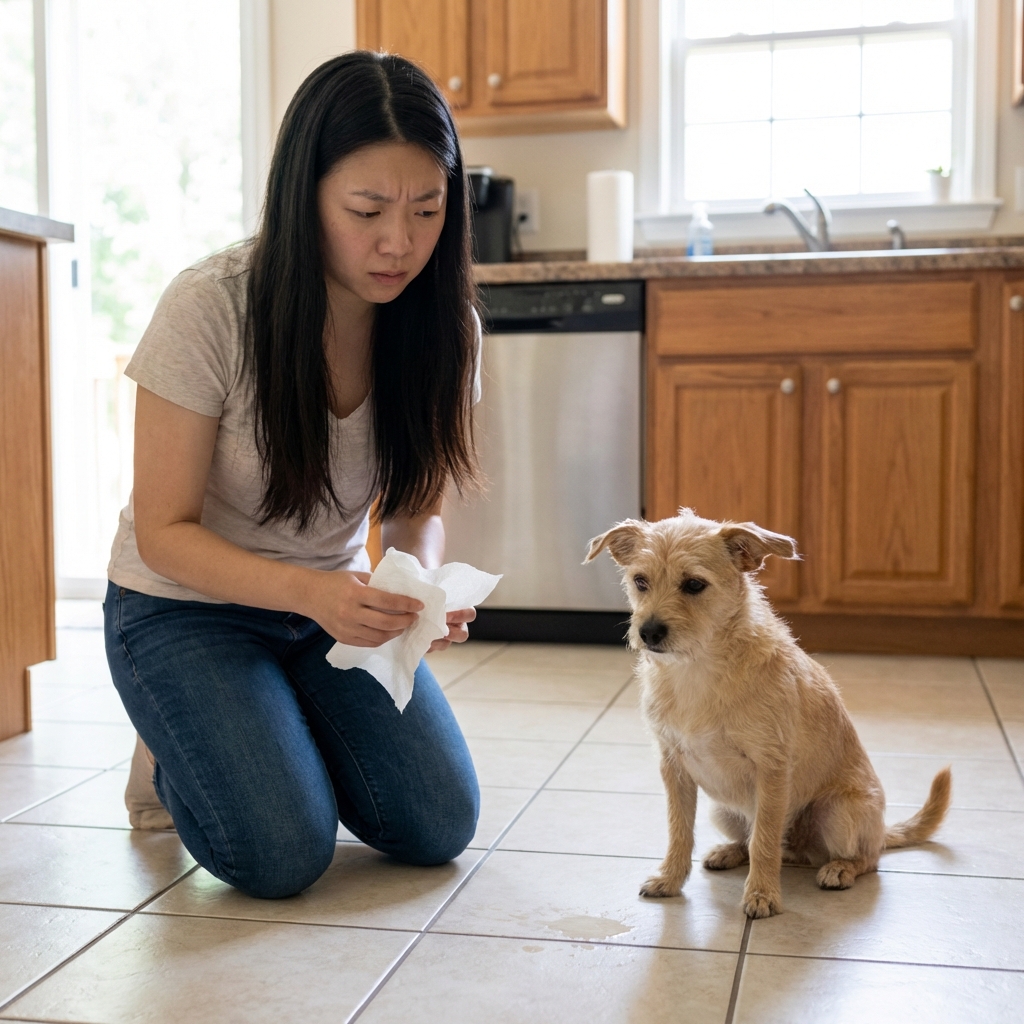
If your dog threw up yellow stuff, you are not alone. As a veterinary assistant here in Frisco, Texas, I hear this question all the time, and it is understandably alarming. The good news is that yellow vomit is often bile. The important part is figuring out when it is something you can monitor at home and when it is time to call your vet.
Quick note: This article is general information and not a diagnosis. If you are worried, it is always okay to call your veterinarian.

What the yellow stuff usually is
Most of the time, the yellow or yellow-green liquid is bile. Bile is a digestive fluid made by the liver and stored in the gallbladder. It flows into the small intestine to help digest fats.
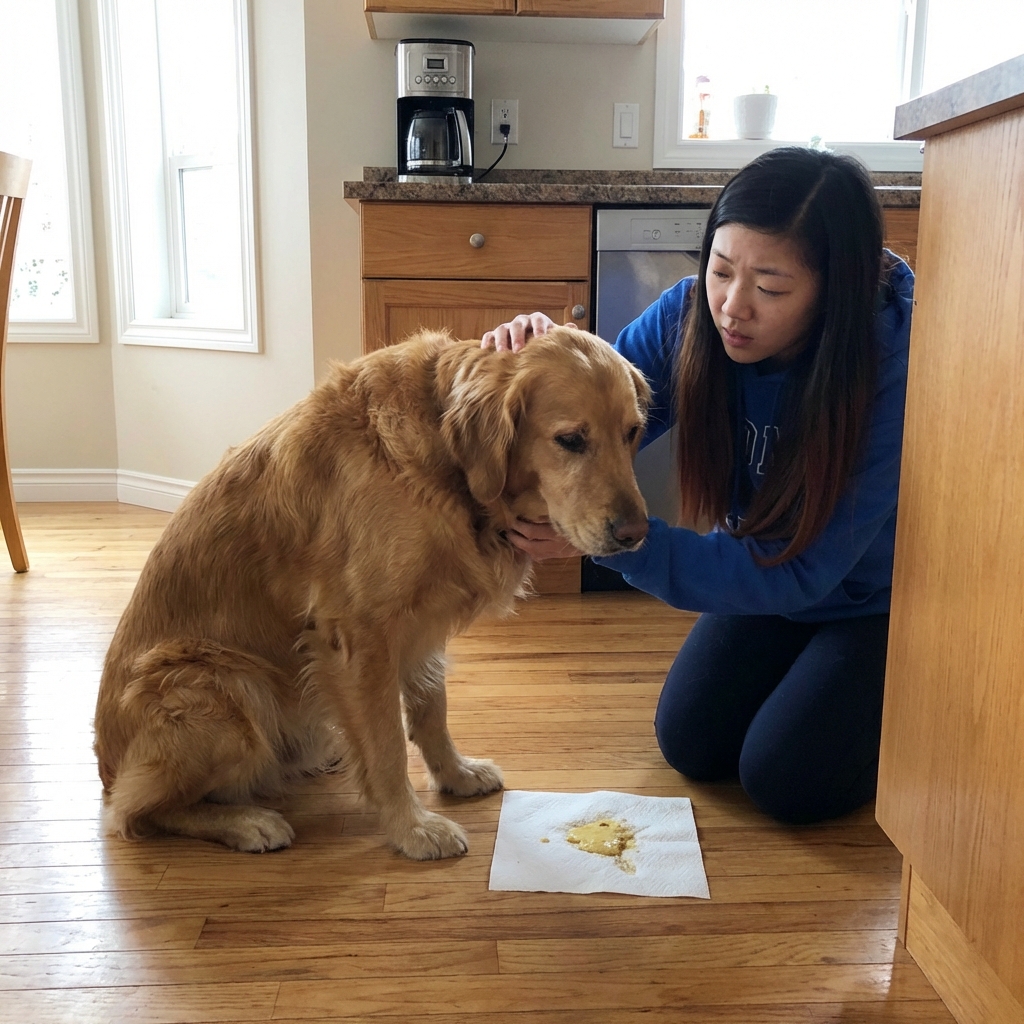
Bile vomit is often yellow to yellow-green and can be foamy or watery, especially if the stomach is empty.
Yellow vomit can look:
- Foamy and yellow (common with bile on an empty stomach)
- Watery yellow (can happen with stomach irritation or mild nausea)
- Yellow with bits of food (vomiting shortly after eating or eating too fast)
Common causes
1) Empty stomach
If your dog vomits yellow foam early in the morning or late at night, an empty stomach is a very common cause. Some dogs have stomachs that get irritated when bile sits without food for too long. Many vets refer to this pattern as bilious vomiting syndrome.
2) Something irritating
Grass, rich treats, greasy table scraps, sudden diet changes, and even gulping down a new chew can irritate the stomach and trigger bile vomiting.
3) Mild gastroenteritis
A “stomach bug” can lead to nausea and vomiting. Dogs may start with food vomit and then progress to yellow bile once the stomach is empty.
4) Stress or motion sickness
Car rides, boarding, fireworks, moving, or big routine changes can cause nausea. Some dogs vomit bile when stressed, especially if they are not eating normally.
5) Parasites or diet intolerance
Intestinal parasites, food sensitivities, and chronic stomach irritation can all show up as recurring vomiting. If you are seeing a pattern, it is worth a vet visit and a stool test.
6) More serious causes
While many cases are mild, yellow vomit can also be seen with:
- Pancreatitis (often painful, can include repeated vomiting and lethargy)
- Intestinal blockage (foreign body, toy pieces, socks, corn cobs)
- Bloat or gastric dilatation-volvulus (emergency, especially in large deep-chested dogs)
- Liver or gallbladder disease
- Addison’s disease (can cause intermittent vomiting and weakness)
Vomiting or regurgitation?
This is a small detail that matters.
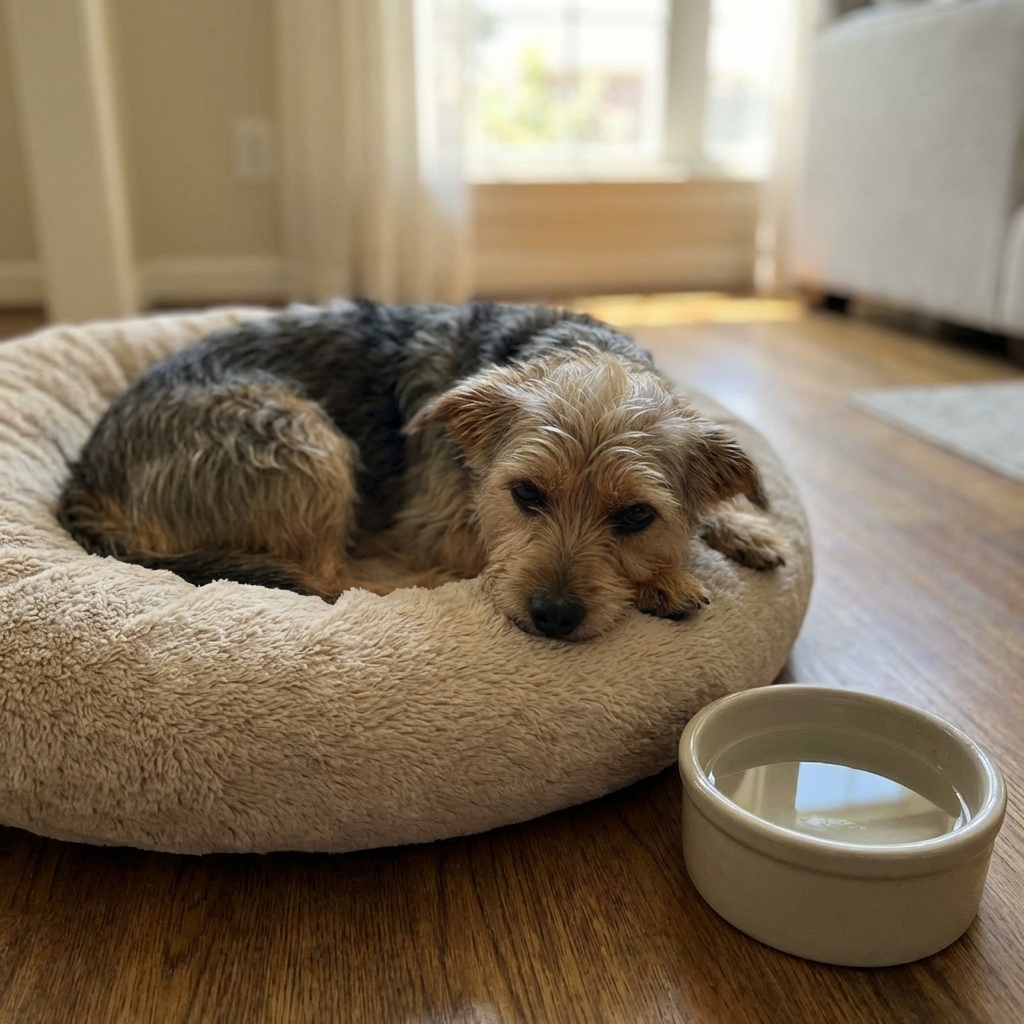
- Vomiting usually includes nausea, drooling, retching, and an abdominal “heave.” The vomit may be liquid, food, foam, or bile.
- Regurgitation is more passive. Food often comes up without retching and may look tube-shaped. This can point to an esophagus issue and should be discussed with your vet, especially if it happens more than once.
When it is an emergency
Please call your vet or an emergency clinic right away if you notice any of the following:
- Unproductive retching (trying to vomit but nothing comes up), especially in large deep-chested dogs
- Swollen or painful abdomen, pacing, “praying position,” or whining
- Collapse, severe weakness, or extreme lethargy
- Known toxin exposure (xylitol, grapes/raisins, chocolate, medications, rodent bait)
- Repeated vomiting, vomiting that is worsening, or cannot keep water down
- Blood in vomit (red or coffee-ground appearance)
- Vomiting plus diarrhea that is severe, watery, or bloody
- Signs of dehydration (dry gums, sunken eyes, sticky saliva)
- Puppies, seniors, or dogs with chronic illness (they can decline faster)
- Possible foreign body (missing toy, chewed sock, string, corn cob, bones, trash access)
What to do at home
If your dog vomited yellow bile once, is acting mostly normal, and has no red flags, you can often start with gentle supportive care. If you are unsure, call your vet first. When in doubt, trust your gut.
Step 1: Fluids in small amounts
- Offer small amounts of water frequently. Large gulps can trigger more vomiting.
- If your dog vomits after drinking, offer a tablespoon or two every 15 to 30 minutes and slowly increase if it stays down.
Step 2: A short food break (with exceptions)
- For a healthy adult dog who vomited once, many vets recommend a short break from food (often 6 to 12 hours).
- Do not fast without veterinary guidance if your dog is a puppy, a toy breed, diabetic, has a history of GI disease, or takes medications that must be given with food. These dogs can get into trouble faster, including low blood sugar.
Step 3: Reintroduce a bland diet
Once vomiting has stopped and your dog is interested in food, feed small, frequent meals for 24 to 48 hours. Common bland options include:
- Boiled chicken breast (no skin, no seasoning) with plain white rice
- Boiled turkey with rice
- Veterinary gastrointestinal diet if you have it at home
Start with a small portion. If it stays down, you can gradually increase the amount and slowly transition back to the regular diet over 3 to 5 days. Home-prepared bland diets are not balanced long term, so if your dog is not improving within 24 to 48 hours, check in with your vet.
Step 4: Adjust meal timing if it is a morning pattern
If the pattern is early morning yellow foam, talk with your vet about changes that often help:
- Feed smaller meals more often
- Add a small bedtime snack to prevent an empty stomach overnight
- Avoid long gaps between meals
If morning bile vomiting happens repeatedly over several days, or your dog is not eating normally for more than 24 hours, that is a good reason to schedule a vet visit. Ongoing bile vomiting can be linked to reflux, gastritis, parasites, diet issues, and more.
Step 5: Track symptoms
These details help your veterinarian make faster, better decisions:
- How many times did your dog vomit?
- When was the last meal and what did they eat?
- What does the vomit look like (foam, liquid, food, blood)?
- Energy level, appetite, stool changes, and any possible scavenging
- Take a photo of the vomit, and if your vet asks, bring a small sample in a sealed bag or container

What not to do
- Do not give human medications like Pepto-Bismol, aspirin, ibuprofen, or acetaminophen unless your veterinarian instructs you to. Some are dangerous to dogs. Pepto-Bismol (bismuth subsalicylate) can also cause black stools and may interfere with evaluating possible GI bleeding.
- Do not force food right after vomiting. A calm reset for the stomach often helps.
- Do not ignore ongoing vomiting, especially if your dog cannot keep water down or seems worse over time.
How vets check this
If you go to the clinic, your veterinarian may recommend some combination of:
- Physical exam (hydration, abdominal pain, temperature)
- Fecal test for parasites
- Bloodwork to assess liver values, pancreas, electrolytes, infection, and hydration
- X-rays or ultrasound if there is concern for blockage, pancreatitis, or organ disease
- Anti-nausea medication and stomach protectants when appropriate
- Fluids if dehydration is present
The goal is simple: rule out dangerous causes and get your dog comfortable fast.
Prevention tips
- Keep a consistent feeding schedule and avoid long fasting periods.
- Transition foods slowly over 7 to 10 days.
- Limit rich treats and fatty leftovers, especially for dogs prone to pancreatitis.
- Slow down fast eaters with a slow feeder bowl.
- Prevent scavenging on walks and secure trash cans at home.
- Stay current on parasite prevention and do regular fecal checks.
If your dog tends to vomit yellow bile in the morning, a simple bedtime snack is often one of the easiest, most effective changes.
Quick decision guide
Usually okay to monitor
- One episode of yellow foam
- Dog is bright, alert, and wants to drink
- No belly pain, no bloating, no ongoing vomiting
Call your vet today
- Vomiting returns, becomes a pattern, or happens daily
- Appetite is low, energy is off, or diarrhea develops
- Your dog has a history of pancreatitis, GI disease, or food sensitivities
- Not eating normally for more than 24 hours
Emergency now
- Unproductive retching, swollen belly, or severe belly pain
- Collapse, severe weakness, or extreme lethargy
- Repeated vomiting, worsening vomiting, or cannot keep water down
- Blood in vomit
- Suspected toxin or foreign object
A gentle note from me
Yellow vomit can be as simple as an empty stomach, and it can also be your dog’s way of saying, “Something is not right.” If your instincts say this is more than a one-off, you are allowed to call your vet even if it feels minor. You know your dog best, and early help is always easier than catching up later.