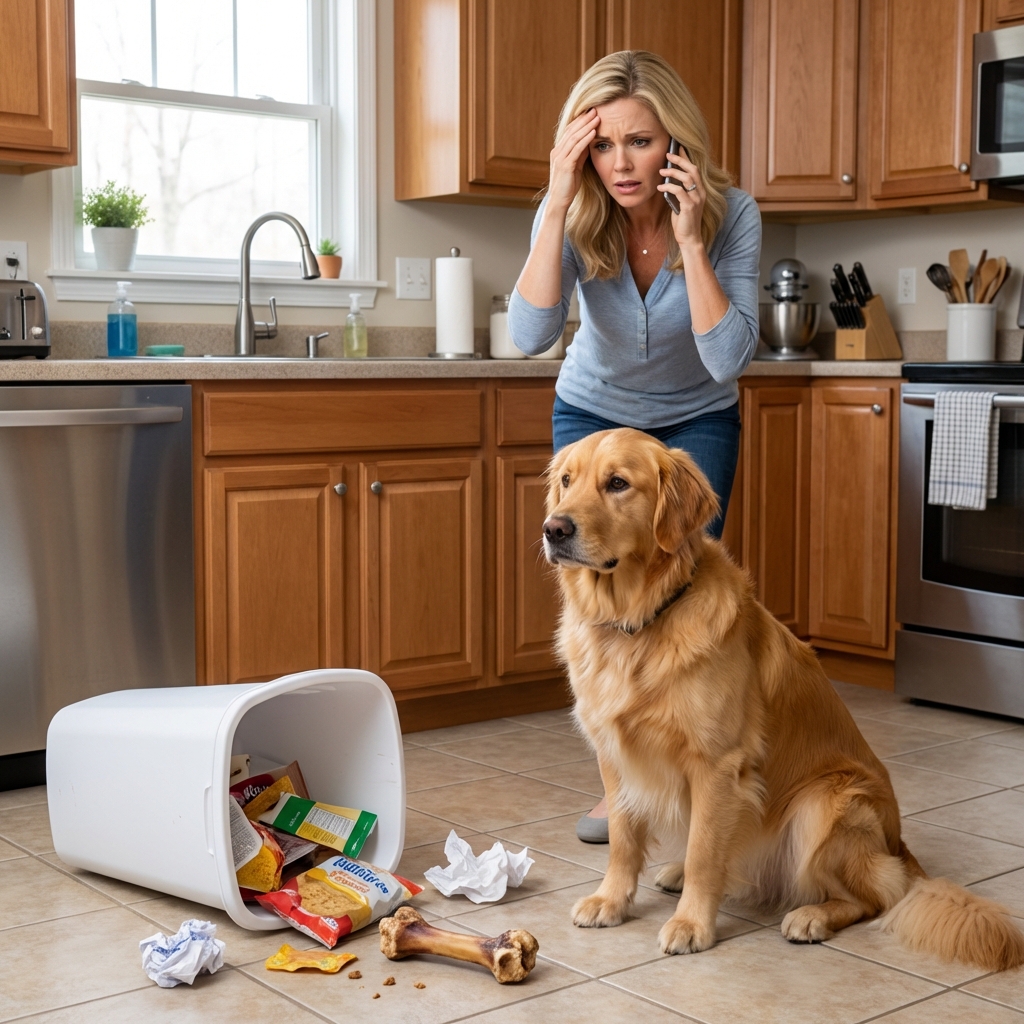
Step-by-step guidance if your dog ate chicken bones: cooked vs. raw risks, what to do immediately, what to avoid, ER red flags, monitoring timeline, and vet ...
Article
•
Designer Mixes
My Dog Just Ate Chicken Bones

Shari Shidate
Designer Mixes contributor
If you are reading this with your heart pounding, take a breath. I am Shari Shidate, a veterinary assistant in Frisco, Texas, and I have helped many pet parents through this exact moment. Dogs are fast, chicken bones are tempting, and it happens in a blink.
Many dogs pass small amounts uneventfully, but risk varies a lot based on the type of bone, your dog’s size, and whether the bone was cooked. The risk is that chicken bones can splinter, irritate the stomach, or in worst cases cause a blockage or a tear. Your next steps matter, and you do not have to guess.
Quick note: This article is educational and not a substitute for veterinary care. If your dog has urgent symptoms, it is safest to be seen right away.
First, figure out what kind of bone it was
Not all “chicken bones” create the same risk. A few details help you and your veterinarian decide what to do next.
Cooked vs. raw
- Cooked bones (roasted, fried, grilled, baked) are more likely to splinter into sharp pieces. This is the classic higher-risk scenario.
- Raw bones may be softer and sometimes less splintery, but they are still risky and can cause choking, vomiting, constipation, or blockage. Raw poultry can also carry bacteria that may affect both pets and people. When in doubt, call your vet.
Size and shape
- Small, sharp bones like wings, ribs, and splintered fragments tend to be riskier for irritation and puncture.
- Long bones can lodge and cause obstruction or painful constipation.
How much and how fast
A single swallowed piece is different from a dog who crunched an entire wing pile. If you can estimate quantity and timing, write it down.
What not to do at home
When you are scared, the internet will suggest all kinds of hacks. Some can make things worse.
- Do not induce vomiting unless a veterinarian specifically tells you to. Bringing sharp fragments back up can injure the throat and esophagus.
- Do not give laxatives, oils, or human medications unless directed. They can cause dehydration, electrolyte problems, or interact with other conditions.
- Do not “wait it out” if your dog is showing symptoms like repeated vomiting, abdominal pain, or lethargy.
- Do not offer more bones to “push it through.”
If your dog is choking, struggling to breathe, turning blue, or collapsing, treat it as an emergency and go in immediately.
What you can do right now
Step 1: Remove access and stay calm
If you can do so safely, pick up any remaining bones and move the trash, plate, or pan out of reach. This prevents a second grab while you are figuring out next steps.
Step 2: Check for immediate danger
Look for signs of choking or airway distress: gagging without producing anything, pawing at the mouth, wheezing, or trouble breathing. If you see these, go to an emergency clinic now.
Step 3: Check the mouth only if it is safe
Some dogs get a shard stuck between teeth or injure their gums. If your dog is calm and allows it, you can take a quick look for obvious bleeding. Do not put your hands in your dog’s mouth if they are painful, panicking, or snapping. Call a veterinary professional instead.
Step 4: Call your vet or an emergency clinic (ER)
Have this information ready:
- Your dog’s breed, age, and current weight
- Any health history (especially GI disease, prior obstruction, pancreatitis, or prior GI surgery)
- Cooked or raw bone
- What part (wing, drumstick, ribs)
- How much you think was eaten
- When it happened
- Current symptoms, and tell them if symptoms are absent too
If you cannot reach a clinic quickly, you can also contact ASPCA Animal Poison Control or Pet Poison Helpline for urgent guidance (fees may apply, and availability can vary by region). Even if it is not a toxin, they can often help you triage and decide how urgent the situation is.
Step 5: Monitor for at least 72 hours
Some problems show up quickly, others develop over a day or two as fragments move through the GI tract. Your vet may advise monitoring at home if your dog is stable. Watch meals, water intake, energy level, and stools. Continue monitoring beyond 72 hours if appetite, energy, or stool are not back to normal, or if your veterinarian advises longer.
Symptoms that mean “go in now”
Contact your veterinarian or an emergency clinic immediately if you notice any of the following:
- Repeated vomiting or trying to vomit without producing anything
- Loss of appetite or refusing water
- Lethargy, weakness, or restlessness that is unusual for your dog
- Abdominal pain (tucked belly, trembling, yelping, guarding the abdomen)
- Bloated or tense abdomen
- Diarrhea, especially with blood or dark, tarry stool
- Constipation, straining to poop, crying while pooping, or passing small hard stools
- Blood in stool or around the anus
- Excessive drooling, lip smacking, or signs of mouth pain
These signs can indicate obstruction, perforation, or significant GI irritation, and those are not “watch and wait” situations.
Lower your threshold to seek care if your dog is very small, senior, brachycephalic (short-nosed), or has a history of GI issues or prior obstruction.
What a vet may recommend
Your veterinarian’s plan depends on your dog’s size, symptoms, the bone type, and how long it has been.
Exam and imaging
- A physical exam to check pain, dehydration, and overall stability
- X-rays to look for bone fragments, obstruction, or gas patterns
- In some cases, ultrasound for a clearer picture of soft tissue and movement
X-rays are helpful, but not perfect. Small fragments or certain positions can be hard to see, so your vet may recommend repeat imaging or a different imaging method based on how your dog is doing.
Supportive care
- Anti-nausea medication
- GI protectants
- Fluids if dehydrated
Endoscopy or surgery
If the bone is stuck in the esophagus or stomach and can be retrieved safely, a vet may recommend endoscopy. If there is a suspected obstruction or perforation, surgery may be needed. I know that is scary to read, but fast action can be lifesaving.
Food advice: bread to cushion it?
You may hear advice to feed bread, rice, or pumpkin to “wrap” the bones. Sometimes veterinarians do recommend a specific short-term diet plan, but it is not one-size-fits-all.
- If your dog is symptom-free and your veterinarian agrees, they may suggest a bland, soft diet for a day or two.
- If your dog is vomiting, painful, bloated, or not eating, do not keep feeding at home. Call your vet.
Evidence-based bottom line: the safest plan is the one your vet tailors to your dog’s risk factors and symptoms.
Poop patrol: what to watch for
I tell pet parents this all the time: your dog’s stool is useful information. Over the next few days, check every bowel movement.
- Small white crumbly pieces can be bone fragments passing.
- Hard, chalky stool can suggest too much bone material and constipation risk.
- Blood or black tarry stool is a red flag.
If your dog is straining, crying, or producing only tiny hard pellets, call your vet. Constipation from bone can become painful quickly, and it can sometimes show up later than you expect.
Prevention that works
Once the scare passes, it is worth putting a few “bone-proofing” habits in place.
- Trash security: use a lidded, heavy can or keep it behind a closed door.
- No unsupervised access to plates, counters, or the coffee table during meals.
- Teach “leave it” and “drop it”: these cues save lives. Practice with safe items, then work up gradually.
- Choose safer chews: ask your veterinarian what is appropriate for your dog’s chewing style and dental health.
If you have a “vacuum cleaner” dog, you are not alone. The goal is not perfection. The goal is building systems that make accidents less likely.
Quick checklist
- Cooked chicken bones are higher risk because they splinter.
- Do not induce vomiting unless a veterinarian tells you to.
- Call your veterinarian with details: size of dog, type of bone, amount, and time.
- Watch for at least 72 hours, and longer if stools, appetite, or energy are not normal.
- If vomiting, pain, lethargy, blood, constipation, or breathing trouble shows up, go to a vet or ER immediately.
If you want, tell me your dog’s weight, what kind of bone it was (wing, drumstick, etc.), whether it was cooked or raw, and when it happened. I can help you think through what questions to ask your vet and what to monitor.