Worried about a vomiting dog? Learn when vomiting is an emergency, how to offer small sips safely, and the best bland foods (chicken/rice, turkey, pumpkin, e...
Article
•
Designer Mixes
My Dog Is Throwing Up: Step-by-Step Guide

Shari Shidate
Designer Mixes contributor
Seeing your dog throw up can be scary, and I get it. As a veterinary assistant, I have talked with many worried pet parents who are asking the same question: Is this an emergency, or can I safely monitor at home? The answer depends on the details. This step-by-step guide will help you quickly sort out what to do next, what to watch for, and when to call your veterinarian right away.
Important: This guide does not replace veterinary advice. If you are unsure, it is always okay to call your clinic for triage.
Step 1: Stay calm and do a quick safety check
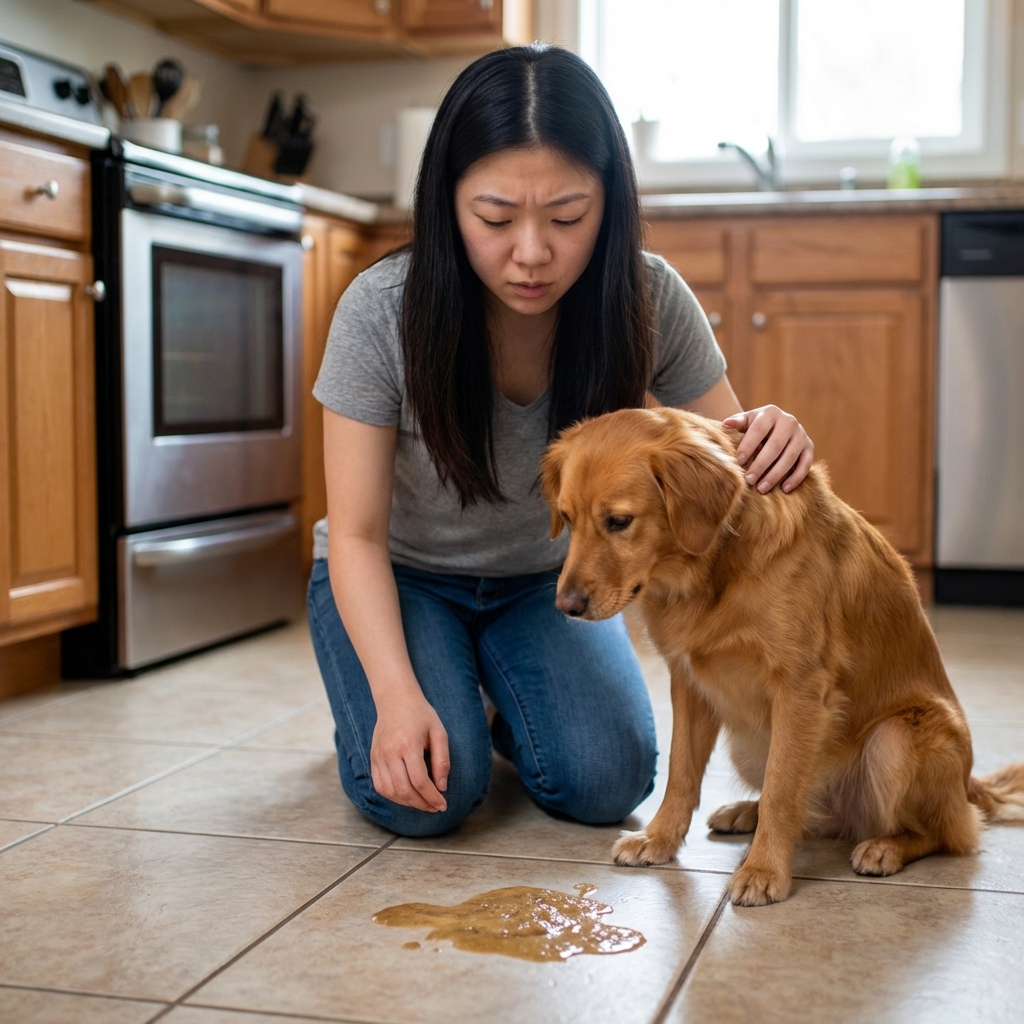
First, move your dog away from the vomit and any hazards (like cleaning products, plants, toys, bones, string, or trash). If you suspect your dog ate something dangerous, do not wait for symptoms to worsen.
- Check breathing: Is your dog coughing, choking, gagging repeatedly, or struggling to breathe?
- Check gums: Gums should be pink and moist, not pale, blue, gray, or tacky.
- Check your dog’s energy: Bright and alert is reassuring. Weakness, collapse, or extreme restlessness is not.
Step 2: Decide if it is an emergency
If any of the items below apply, treat it as urgent and call your vet or an emergency clinic now. Smaller dogs, puppies, seniors, and dogs with chronic illness can become dehydrated faster and may need care sooner.
Go to the vet urgently if you see:
- Repeated vomiting in a short period (especially multiple episodes over a few hours), or ongoing vomiting that does not settle
- Blood in vomit (bright red or coffee-ground appearance)
- Severe lethargy, collapse, disorientation, or your dog seems “not themselves”
- Bloated or painful abdomen, pacing, sudden distress, heavy drooling, or unproductive retching (trying to vomit but nothing comes up). This can be bloat, which is time-critical. Do not wait.
- Vomiting plus diarrhea that is severe, watery, or bloody
- Dehydration signs: sunken eyes, sticky gums, skin that does not spring back quickly when gently lifted
- Possible toxin exposure (grapes/raisins, xylitol, chocolate, rodent bait, medications, cannabis, antifreeze, certain mushrooms). Bright green vomit can sometimes be dye from rodenticide or other toxins, so call right away if you are not sure.
- Possible foreign body: swallowed socks, toys, corn cobs, bones, strings, rocks
- Sharp object or caustic exposure: cooked bones, needles, hooks, shards of plastic, cleaners, batteries
- Neurologic signs: tremors, seizures, wobbliness, extreme agitation (often toxin-related)
- Puppies, seniors, pregnant dogs, or dogs with chronic illness (kidney disease, diabetes, Addison’s, pancreatitis, heart disease)
If you are unsure, call your veterinary clinic. A quick phone triage can save you hours of worry and potentially save your dog’s life.
Step 3: Look closely at the vomit
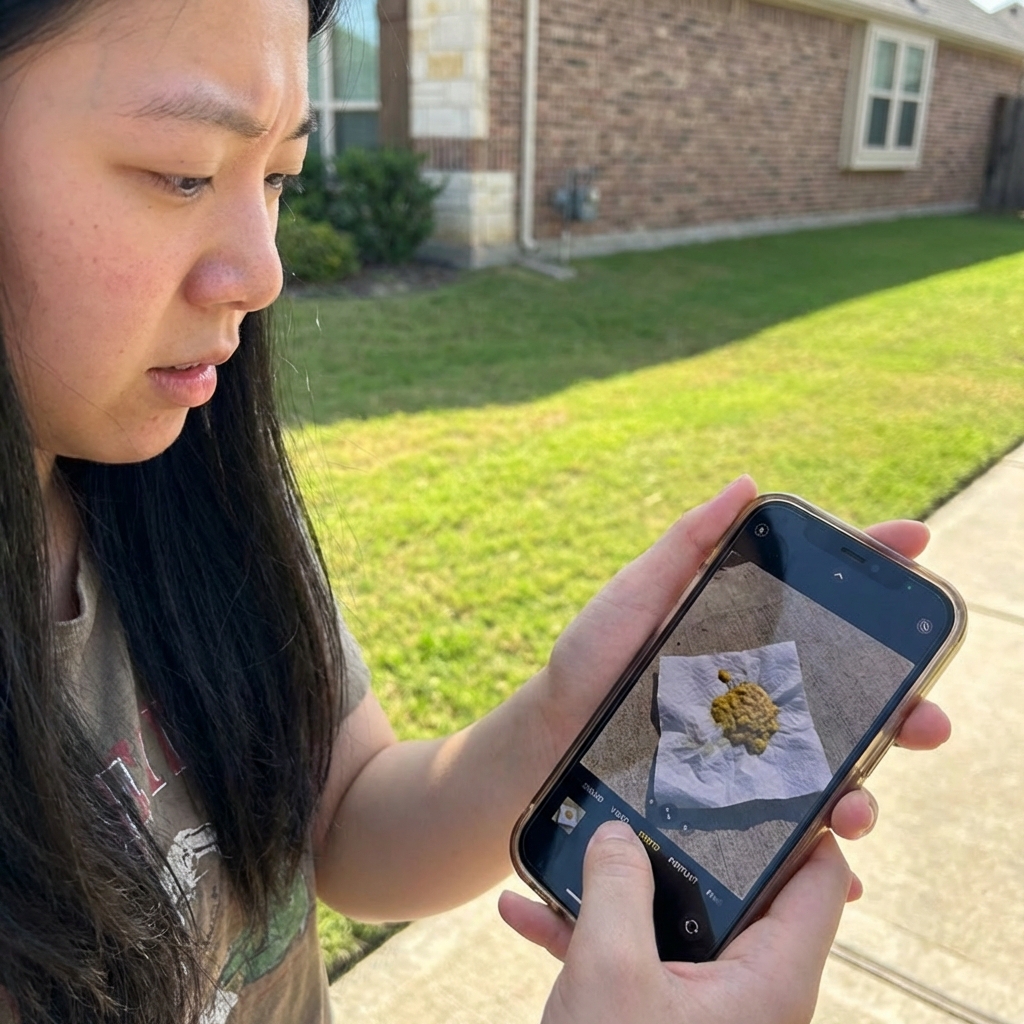
Vomit details give your vet valuable clues. If it is safe, take a photo and note the time and frequency.
One quick note: color alone cannot diagnose the cause, and lighting or what your dog ate can change how it looks. Use this as a guide, not a verdict.
- Yellow foam or liquid: Often bile. Can happen on an empty stomach, with reflux, or mild gastritis. Also seen with pancreatitis or intestinal issues, so context matters.
- Undigested food: If it happens soon after eating, your dog may have eaten too fast. If it is hours later, it can suggest delayed stomach emptying or an obstruction.
- White foam: Can be nausea, reflux, or irritation. If paired with coughing, consider respiratory causes too.
- Green: Could be grass or plant material, but it can also be toxin-related. If it is bright green, repeated, or you suspect exposure to rodent bait or chemicals, call right away.
- Coffee-ground material: Often suggests digested blood and needs urgent veterinary attention.
- Brown and foul-smelling: If it smells like feces or looks like intestinal contents, this can be a serious sign of blockage or intestinal backup. This needs urgent care.
- Worms: Sometimes roundworms are visible and require veterinary treatment and deworming guidance.
Step 4: Vomiting vs regurgitation
This is one of the most helpful distinctions you can make.
- Vomiting: Usually includes abdominal heaving, nausea signs (drooling, lip licking), and digested food or bile.
- Regurgitation: More passive. Food or water “falls out” without heaving. Often looks tubular, undigested, and may happen soon after eating or drinking.
Why this matters: regurgitation can point toward esophagus problems (like megaesophagus) or obstruction and should be discussed with your veterinarian promptly, especially if it is recurring.
Step 5: Safe at-home care
If your dog vomited once or twice, is otherwise acting normal, and you do not suspect toxins or obstruction, it can be reasonable to monitor closely at home. When in doubt, call your vet first.
For adult dogs with mild vomiting:
- Pause food briefly: Many vets recommend a short rest for the stomach (often 6 to 12 hours), but some dogs should not be fasted. Do not fast puppies, toy breeds, or dogs with diabetes without veterinary guidance due to low blood sugar risk.
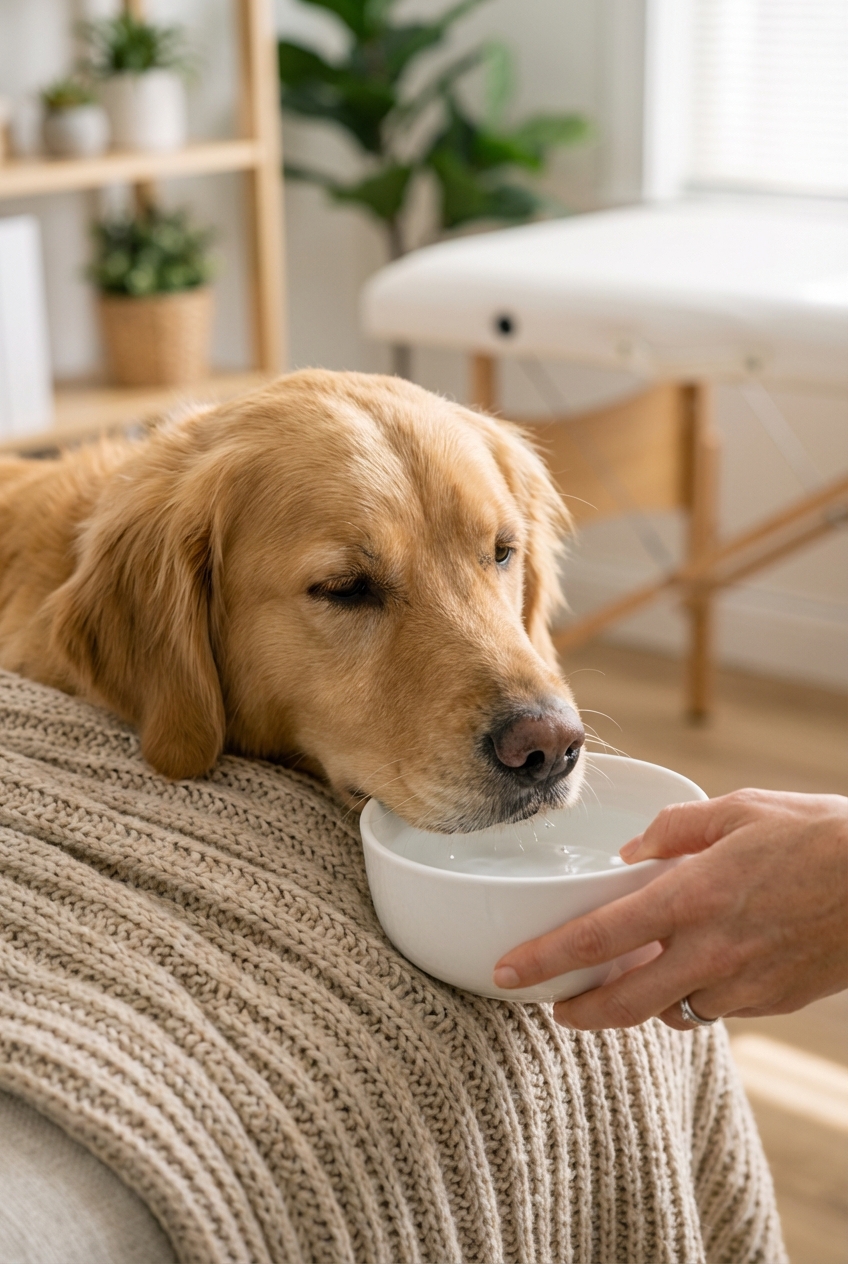
- Offer small amounts of water: If your dog gulps and vomits, try ice chips or 1 to 2 teaspoons every 10 to 15 minutes, gradually increasing if tolerated.
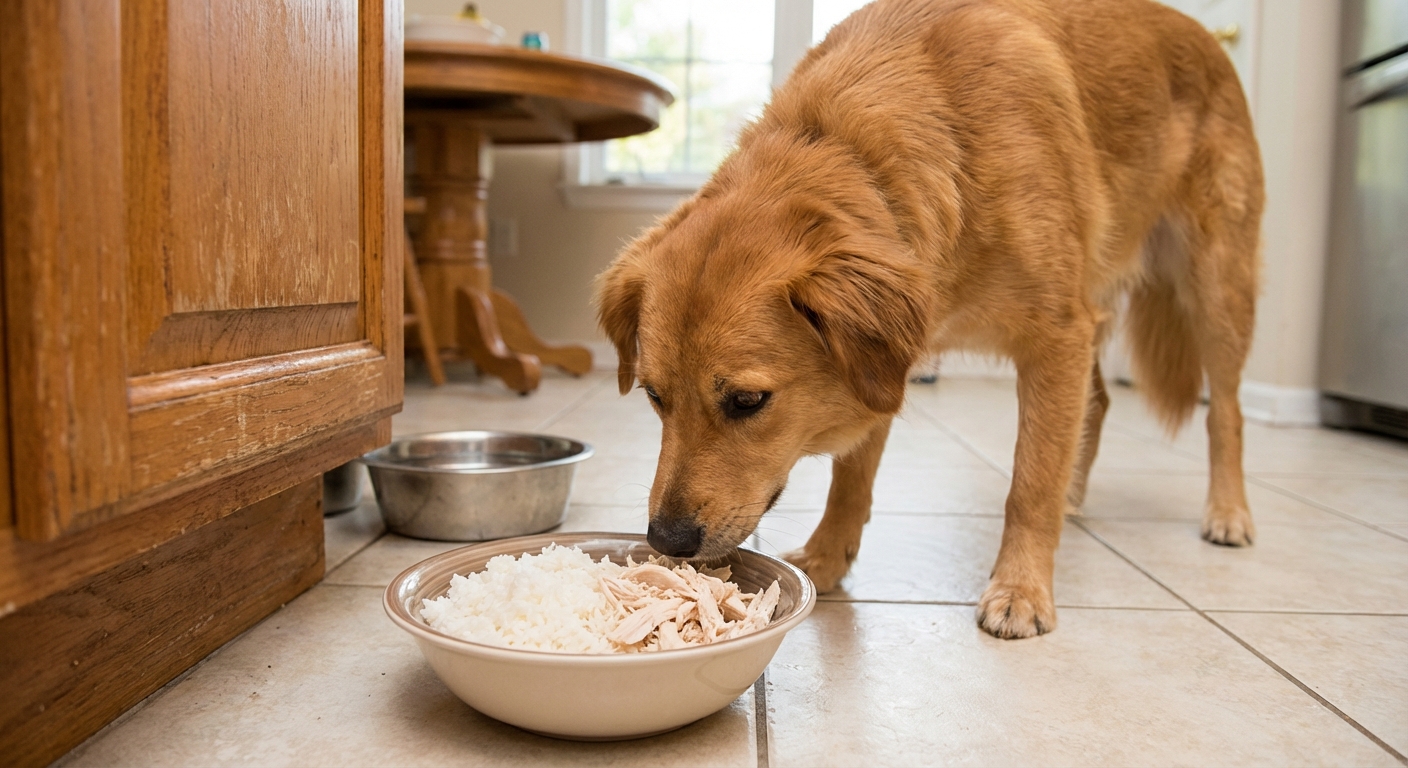
- Restart with bland, small meals: After your dog holds water down for a few hours, offer a small bland meal.
Simple bland options (ask your vet if your dog has medical conditions):
- Boiled, skinless chicken breast with white rice
- Boiled turkey with white rice
- Plain canned pumpkin (not pie filling) in small amounts for fiber support
Feed small meals every 4 to 6 hours for 24 to 48 hours, then transition slowly back to your regular diet over 2 to 3 days.
Helpful rule of thumb: If your dog cannot keep water down, that is no longer “wait and see.” Call your vet.
Step 6: Avoid common mistakes
- Do not give human medications like Pepto-Bismol, ibuprofen, aspirin, or acetaminophen unless your veterinarian specifically told you to. Some can be dangerous for dogs. Pepto-Bismol can also darken stool and vomit and make it harder to assess bleeding.
- Do not force large bowls of water after vomiting. Small and steady is safer.
- Do not assume grass eating is “normal” if vomiting is frequent. Dogs may eat grass because they feel nauseated, not the other way around.
- Do not delay care if your dog has a history of pancreatitis, Addison’s disease, or has eaten fatty foods.
Step 7: Watch for dehydration
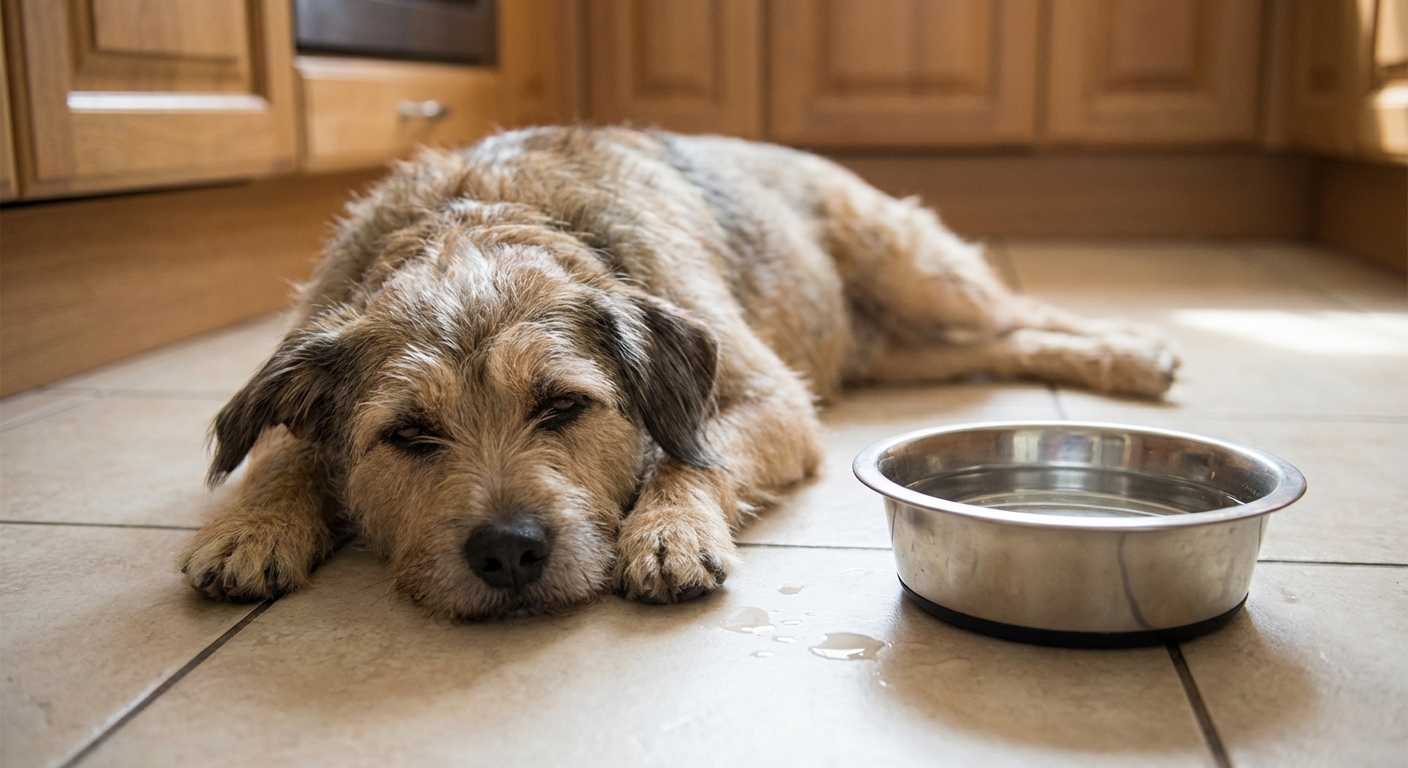
Vomiting can dehydrate dogs faster than many people realize, especially small dogs.
Signs your dog may be dehydrated:
- Tacky or dry gums
- Less elastic skin (skin tenting)
- Sunken eyes
- Reduced urination
- Weakness, faster heart rate
If you see these, contact your veterinarian. Dehydration often requires fluids, and early support can prevent a bigger crisis.
Step 8: Common causes
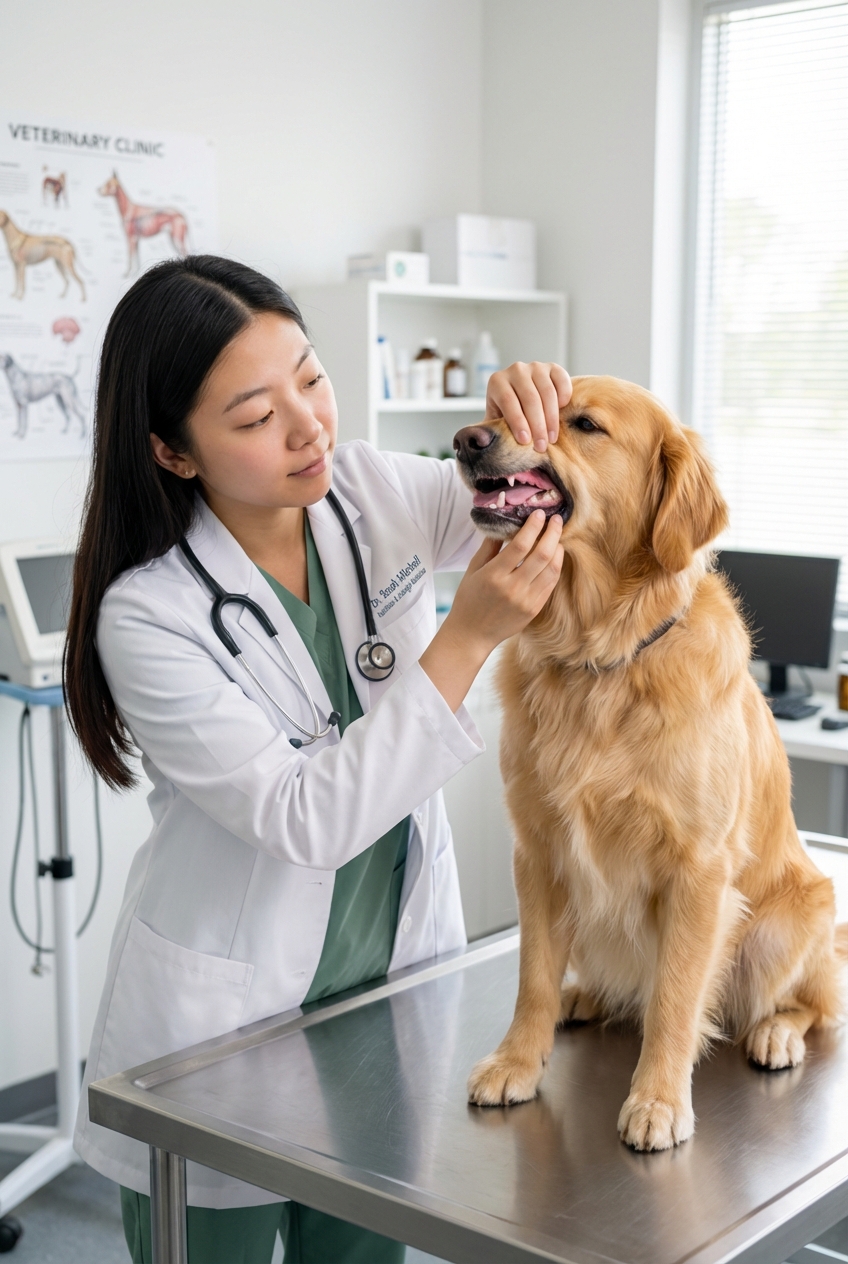
Vomiting is a symptom, not a diagnosis. Here are some of the most common reasons dogs throw up:
- Dietary indiscretion: Trash, table scraps, new treats, greasy foods
- Eating too fast or drinking too much water quickly
- Sudden diet change
- Parasites (especially in puppies)
- Gastroenteritis from viruses or bacteria
- Pancreatitis (often after fatty meals, can be very painful)
- Food intolerance or allergy
- Foreign body (socks, toys, corn cobs)
- Toxins (medications, plants, chemicals)
- Systemic illness (kidney or liver disease, endocrine disorders)
Your job is not to diagnose at home. Your job is to notice patterns and act early when red flags appear.
Step 9: What to tell your vet
When you call, having these details ready can speed up care:
- Your dog’s age, breed, weight, and medical history
- When vomiting started and how many times
- What it looks like (photo is helpful)
- Any diarrhea, appetite changes, water intake changes
- Possible diet change or access to trash, toys, bones, compost
- Any known toxin exposure or medication ingestion
- Whether your dog can keep water down
Step 10: Prevention tips
Some vomiting episodes happen despite perfect care, but you can reduce the risk.
- Slow down fast eaters with a slow feeder bowl or puzzle feeder.
- Keep trash and laundry secured. Socks and food wrappers are frequent obstruction culprits.
- Transition foods slowly over 7 to 10 days when changing diets.
- Limit fatty treats and table scraps, especially for dogs prone to pancreatitis.
- Stay current on parasite prevention and regular fecal checks.
- Choose high-quality, digestible diets and introduce new foods gradually.
If you are exploring homemade food, go slow and talk with your veterinarian or a qualified canine nutrition professional. A thoughtfully balanced diet can support gut health, but sudden changes can backfire.
When in doubt, call
You know your dog best. If your gut says something is off, trust that. A quick call to your veterinary team can help you decide whether to monitor, schedule an appointment, or head to urgent care. It is always better to ask early than to wish you had later.
If vomiting resolves but keeps returning over days or weeks, or if regurgitation is happening repeatedly, schedule a non-urgent visit. Patterns matter, even when your dog seems fine in between.
Note on lilies: lilies are highly toxic to cats. Dogs are less likely to have the same severe kidney toxicity, but lily ingestion can still cause stomach upset and should be discussed with your veterinarian.