Vet-assistant guide to supportive “caring food” for dog diarrhea: bland chicken and rice, pumpkin for fiber, probiotics, hydration, safe portions, and re...
Article
•
Designer Mixes
My Dog Is Pooping Blood

Shari Shidate
Designer Mixes contributor
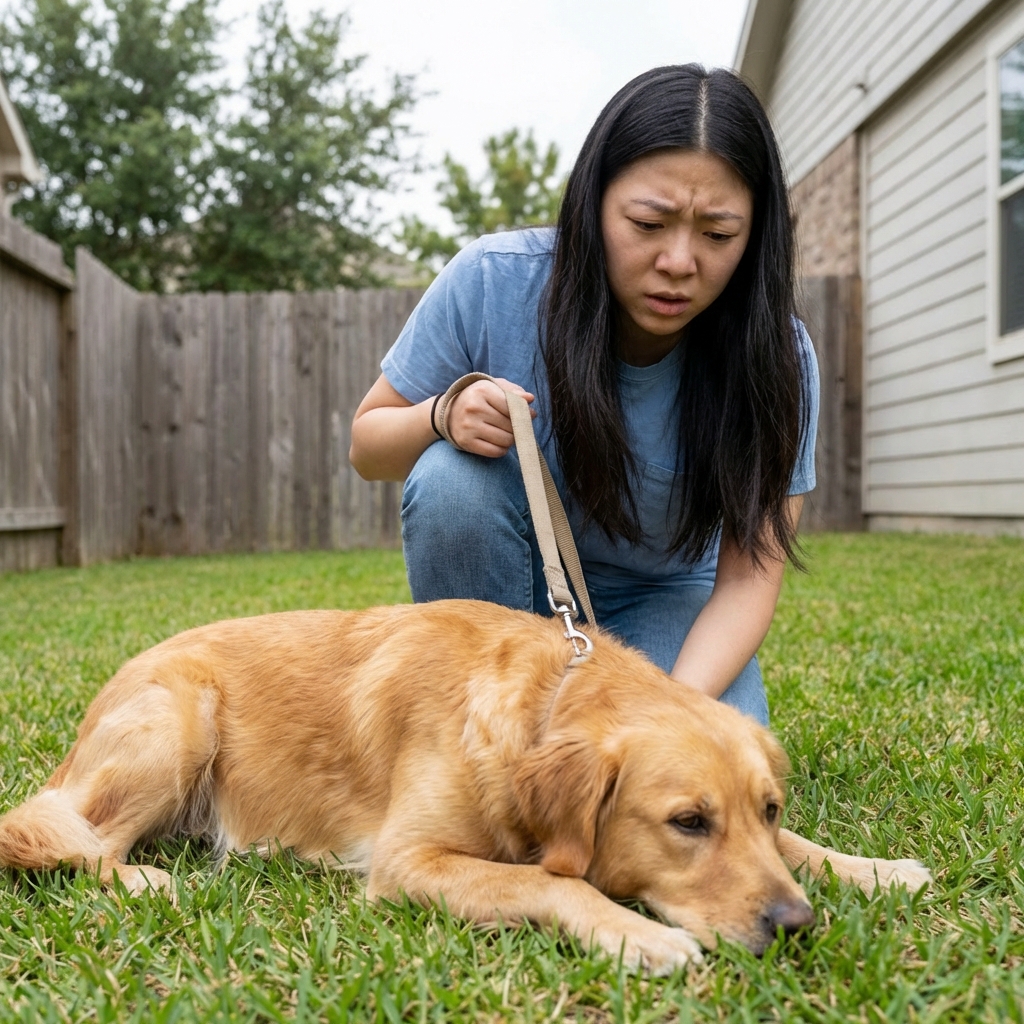
Seeing blood in your dog’s poop can be scary, and as a veterinary assistant here in Frisco, Texas, I want you to know two things: you’re not alone, and there are clear next steps you can take right now. Some causes are mild and self-limiting. Others are true emergencies.
This guide will help you figure out what you are seeing, what it might mean, and when you should call your veterinarian or head to an emergency clinic.
Quick note: This article is for education and triage support, not a diagnosis. When in doubt, call your vet.
First, what does the blood look like?
Color and texture give useful clues about where the bleeding may be coming from, but they do not diagnose the cause on their own.
Bright red blood (fresh blood)
Bright red streaks or drops on the stool often suggest bleeding in the lower intestinal tract (colon or rectum), or from the anus itself (like an anal gland issue or a small tear). You might see this with diarrhea, straining, or frequent small bowel movements.
Dark, tarry, black stool
Black, sticky stool (often described as “tarry”) can indicate digested blood (melena), which may mean bleeding higher up in the digestive tract (stomach or small intestine). This deserves prompt veterinary attention, especially if your dog is weak, pale, or vomiting.
Important caveat: Some substances can also darken stool and mimic melena, including bismuth-containing products (like Pepto-Bismol), activated charcoal, and some foods. Even if you suspect that is the reason, check in with your veterinarian for guidance.
Blood and mucus (jelly-like stool)
Blood plus mucus commonly points to colitis (inflammation of the colon). Many dogs also act like they urgently need to go, then produce small amounts repeatedly.
When blood in poop is an emergency
Please seek urgent care if you notice any of the following. These are “do not wait and see” situations.
- Large amounts of blood or passing large volumes of blood
- Black, tarry stool (especially with weakness or pale gums)
- Bloody diarrhea with repeated episodes in a short time
- Vomiting, especially if it contains blood or looks like coffee grounds
- Lethargy, collapse, weakness, or your dog seems “not themselves”
- Pale gums or rapid breathing
- Swollen or painful belly
- Puppies, seniors, or dogs with chronic illness (they can decompensate quickly)
- Possible toxin exposure (rat poison, certain human medications, unknown trash ingestion)
Also, if your dog is straining repeatedly with little or no stool, or you are not sure whether they are trying to poop or trying to urinate, that can be urgent and should be assessed promptly.
If you are unsure, it is always appropriate to call your vet or emergency hospital and describe exactly what you are seeing.
Common causes of blood in dog poop
There are many possibilities. Here are the most common ones we see in general practice and ER settings.
Dietary indiscretion (trash eating) or sudden diet change
New treats, fatty leftovers, raiding the trash, or switching foods too fast can irritate the gut and trigger diarrhea with streaks of blood. Some dogs are especially sensitive.
Colitis
Inflammation of the colon often causes bright red blood, mucus, urgency, and straining. Stress can contribute, as can parasites, infection, food intolerance, or an abrupt diet change.
Parasites
Hookworms, whipworms, roundworms, and protozoa like Giardia can contribute to intestinal irritation, diarrhea, and sometimes blood in the stool. Puppies and dogs with inconsistent preventives are at higher risk.
Infectious causes
Bacterial and viral infections can inflame the intestines. In some regions, illnesses like parvovirus remain a serious concern, especially for unvaccinated puppies. Parvo can cause severe bloody diarrhea and rapid dehydration.
Acute hemorrhagic diarrhea syndrome (AHDS)
This condition (also known by the older term “hemorrhagic gastroenteritis” or HGE) can look like sudden, profuse, watery bloody diarrhea, sometimes described as “raspberry jam” in appearance. Dogs can become dangerously dehydrated quickly and may need IV fluids and medications.
Anal gland problems or rectal irritation
Anal gland inflammation, infection, or a small tear can cause bright red blood on the outside of the stool, scooting, licking, or discomfort sitting.
Foreign body or intestinal obstruction
If your dog swallowed a toy, sock, bone fragments, corn cob, or similar item, you may see vomiting, reduced appetite, abdominal pain, and sometimes blood in stool. Obstructions are emergencies.
Medication side effects
Non-steroidal anti-inflammatory drugs (NSAIDs) and some other medications can irritate the GI tract and may contribute to ulcers or bleeding. Never give human pain meds unless your veterinarian specifically instructs you to.
Pancreatitis
Often tied to fatty foods and dietary indiscretion. Signs include vomiting, abdominal pain, decreased appetite, and sometimes diarrhea that may contain blood.
Bleeding disorders or toxin exposure
Rat poison (anticoagulants), certain medical conditions, or severe liver disease can impair clotting and lead to bleeding. This is urgent.
Chronic conditions
Inflammatory bowel disease (IBD), food allergies, polyps, and some cancers can cause recurring blood in stool. These need a veterinary workup, especially if weight loss or appetite changes are present.
What you can do at home right now
Home care depends on the severity and your dog’s overall condition. If your dog is bright, eating, drinking, and you see a small amount of bright red blood one time, you may be able to do some supportive care while you contact your vet for guidance.
1) Take a clear photo and note details
- Color: bright red vs black/tarry
- Amount: streaks, spots, or more than a smear
- Stool quality: normal, soft, watery, mucus
- Frequency: once, a few times, constant urgency
- Other symptoms: vomiting, appetite, energy, pain
2) Check hydration and gum color
Gums should be moist and bubblegum-pink. If they are pale, tacky, or white, that is urgent. Dehydration plus diarrhea can become serious fast.
3) Avoid “kitchen medicine” that can backfire
- No human medications like ibuprofen, naproxen, aspirin, or Pepto-Bismol without veterinary guidance
- Pepto-Bismol note: even when a vet does recommend it in select cases, it can darken stool and complicate assessment
- No bones or fatty foods “to firm things up”
- Do not delay care if your dog is worsening
4) Feed a gentle, vet-approved bland diet if your vet agrees
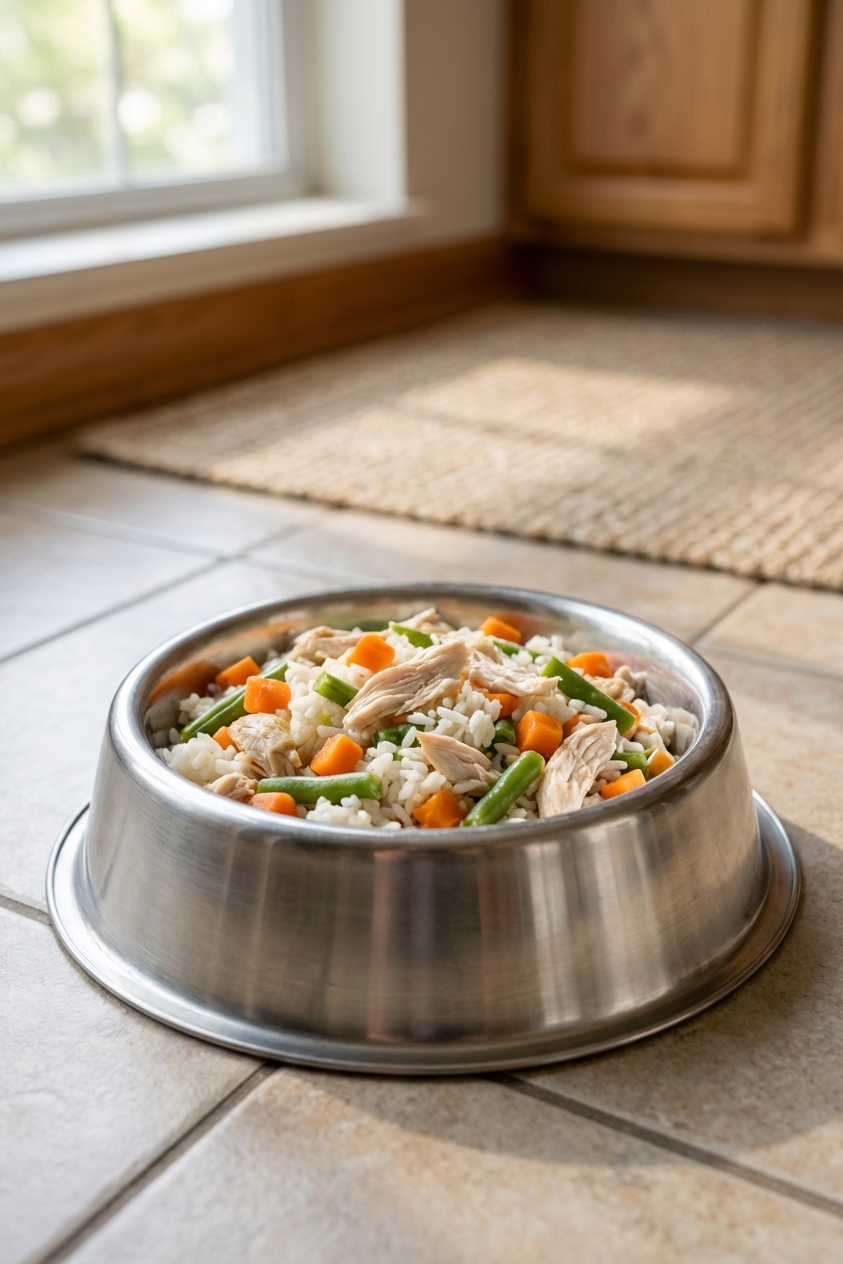
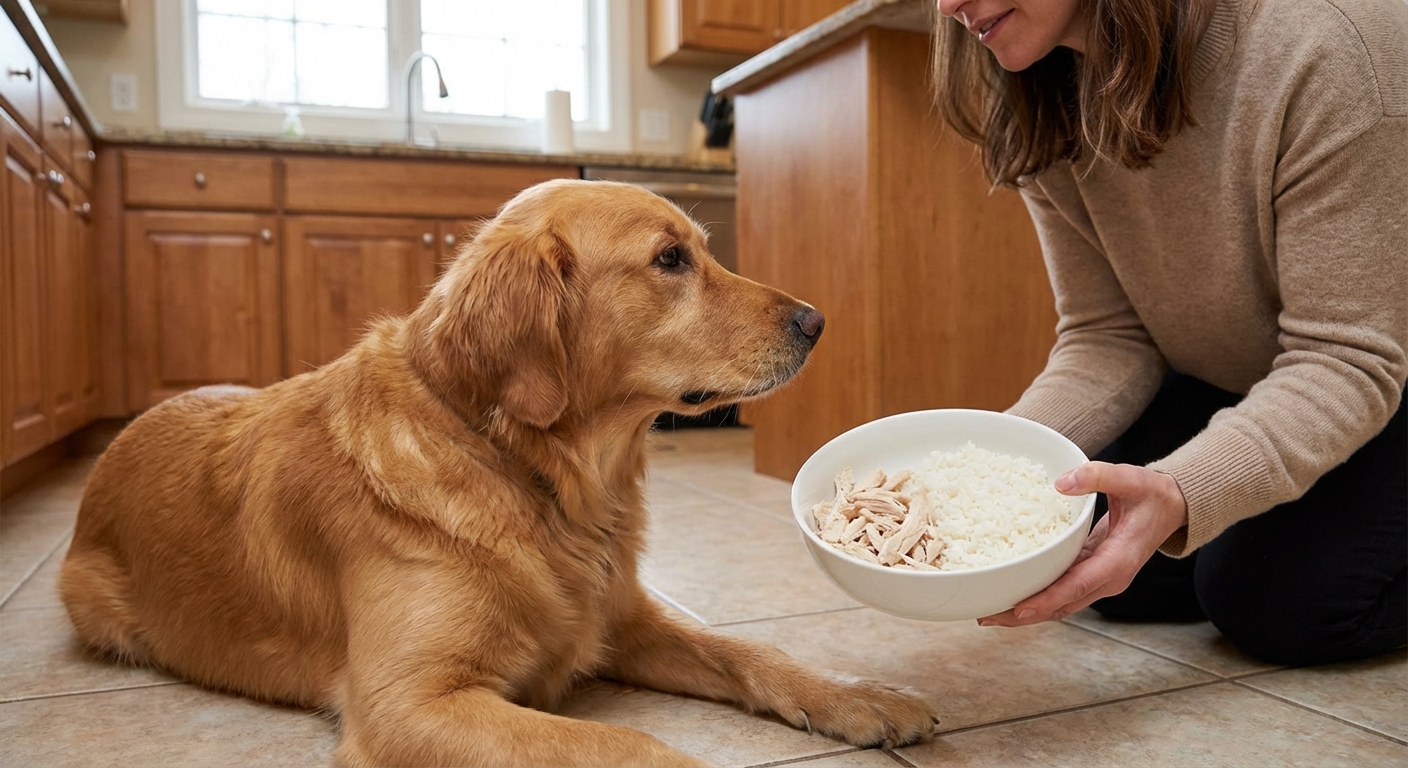
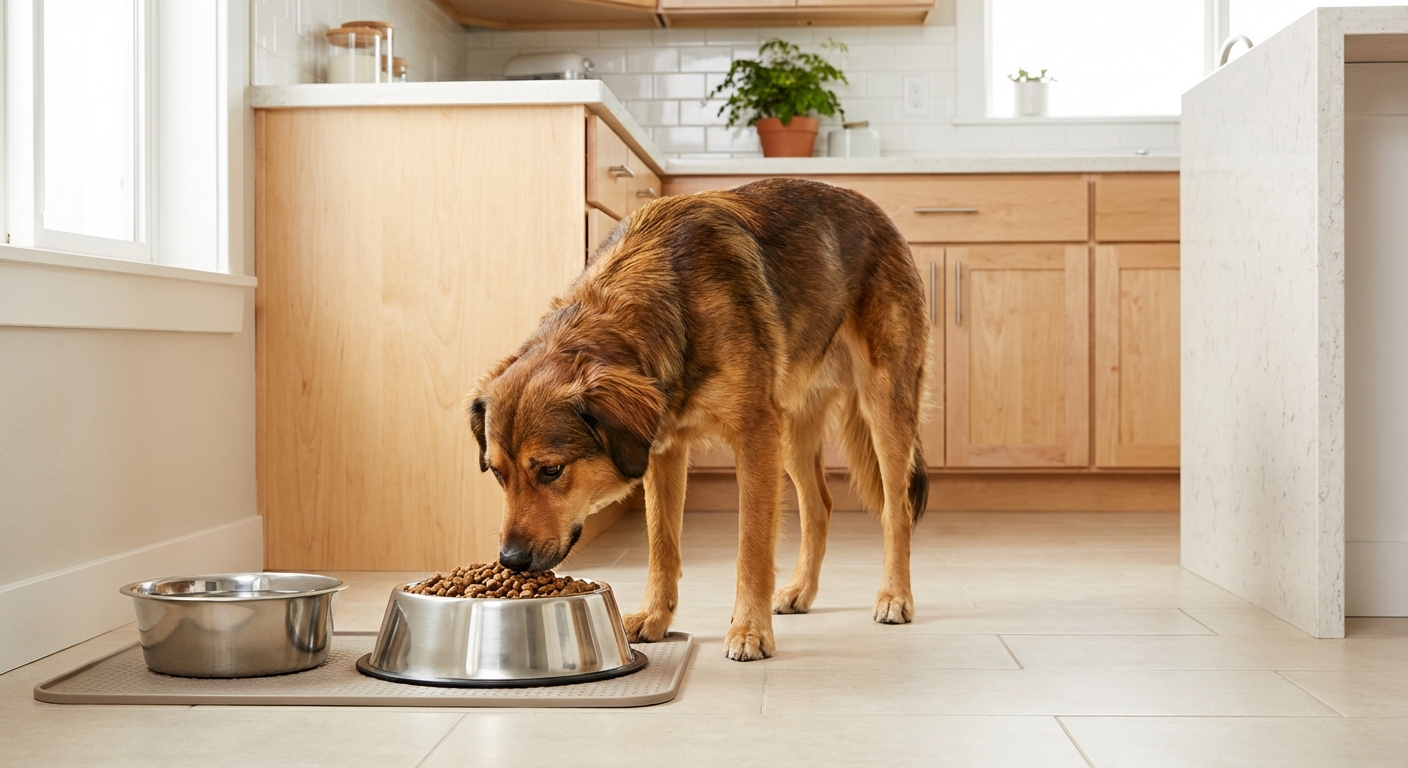
Many veterinarians recommend a short course of bland food for mild GI upset. Common options include plain boiled chicken breast and white rice, or a prescription gastrointestinal diet. Some dogs do better with turkey, but stick with boiled turkey breast or extra-lean ground turkey (drained well). Fatty meats can make pancreatitis worse.
5) Do not restrict water without guidance
Diarrhea can dehydrate dogs quickly, so keep fresh water available. If your dog is vomiting and cannot keep water down, or if you have a puppy or toy breed, call your veterinarian right away for specific instructions. Do not fast puppies without veterinary advice.
6) Consider stool testing
Even indoor dogs can get parasites. If possible, bring a fresh stool sample (or a photo if you cannot collect it). Your vet may run a fecal test and sometimes a Giardia test.
7) Know when “watching” becomes “book an exam”
If the blood happens again, lasts more than 24 to 48 hours, or you see any new symptoms (vomiting, reduced appetite, low energy), schedule a veterinary visit sooner rather than later.
What your veterinarian may recommend
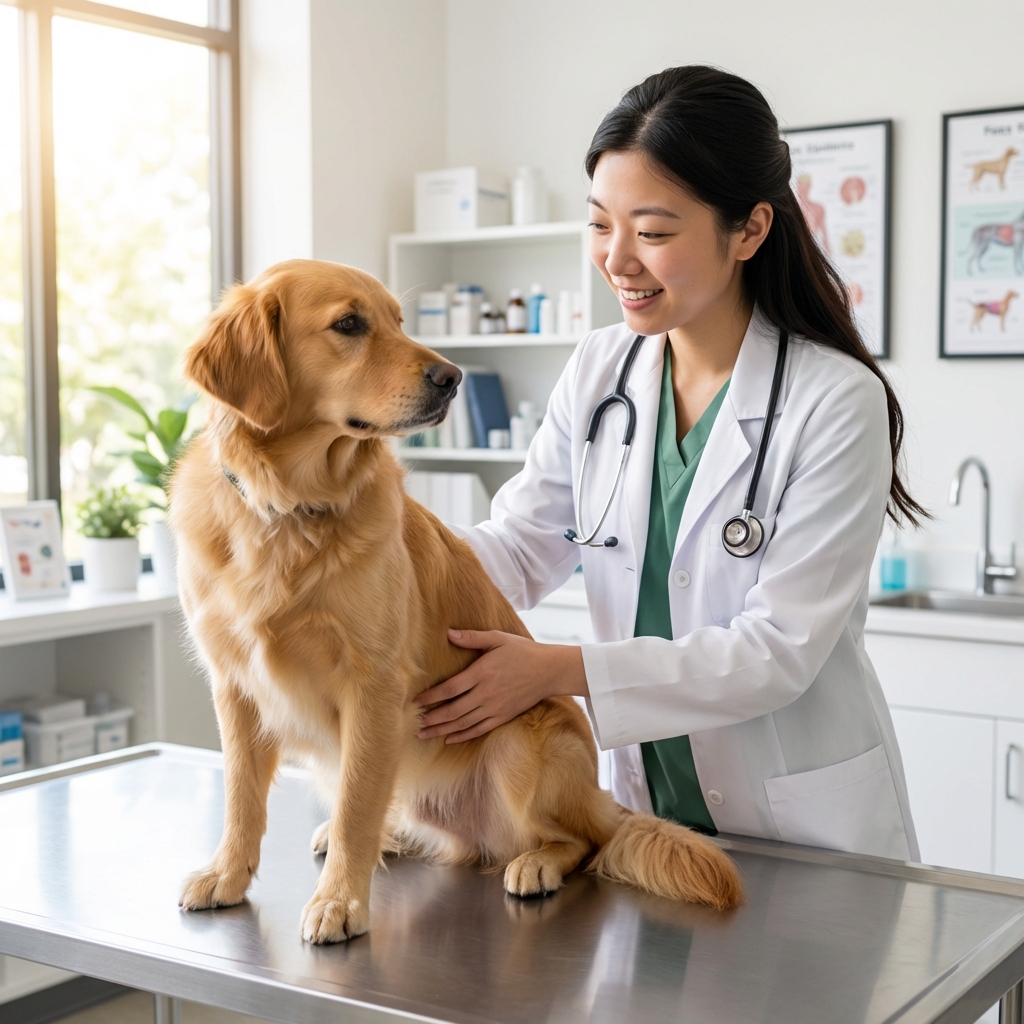
Depending on your dog’s symptoms, your vet may suggest a stepwise approach. This is common and it helps avoid unnecessary testing while still keeping your pet safe.
- Physical exam and questions about diet, stress, exposure risks, and medications
- Fecal testing for parasites and protozoa
- Bloodwork to check hydration status, anemia, infection markers, organ function
- Parvo testing in puppies or unvaccinated dogs with severe diarrhea
- X-rays or ultrasound if obstruction, foreign body, pancreatitis, or abdominal disease is suspected
- Treatment may include fluids, anti-nausea meds, GI protectants, probiotics, deworming, diet therapy, or antibiotics when appropriate
Tip from the clinic: If your dog has bloody diarrhea and seems tired or can’t keep water down, do not wait for it to “pass.” Dehydration and blood loss can become the real emergency.
How to prevent future episodes
Not all cases are preventable, but these steps can reduce risk.
- Keep diet changes slow: transition foods over 7 to 10 days
- Stay consistent with parasite prevention recommended by your veterinarian
- Trash control: secure bins, avoid fatty leftovers, watch for dropped food at gatherings
- Chew safety: choose size-appropriate chews and supervise
- Routine wellness care: fecal checks and vaccination guidance based on lifestyle
- Support gut health: ask your vet about a proven canine probiotic for recurrent soft stool
Quick checklist before you call the vet
- How long has it been happening and how many times?
- Is the blood bright red or black/tarry?
- Normal stool, soft stool, or watery diarrhea?
- Any vomiting, appetite loss, lethargy, or belly pain?
- Any straining with little or no stool, or concern for urinary straining?
- Any diet changes, new treats, bones, or trash access?
- Any chance of toxin exposure?
- Is your dog a puppy, senior, or immunocompromised?
Bring a stool sample if you can, and a photo is genuinely helpful too.
Bottom line
A small streak of bright red blood can sometimes come from minor irritation, but blood in stool should always be taken seriously. If your dog seems sick, the blood is heavy, or the stool is black and tarry, get veterinary care right away.
You know your dog best. If your gut says something is off, trust that instinct and call your veterinarian.