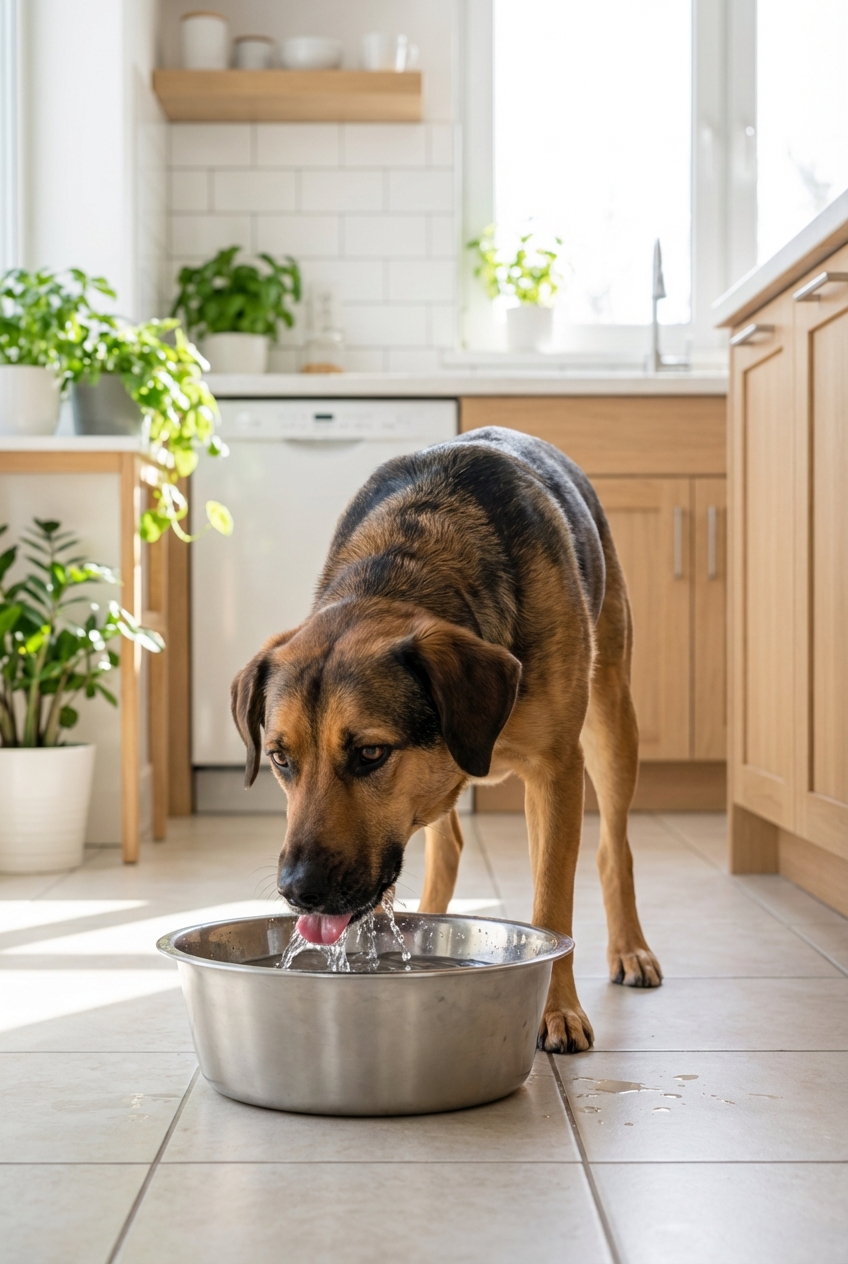
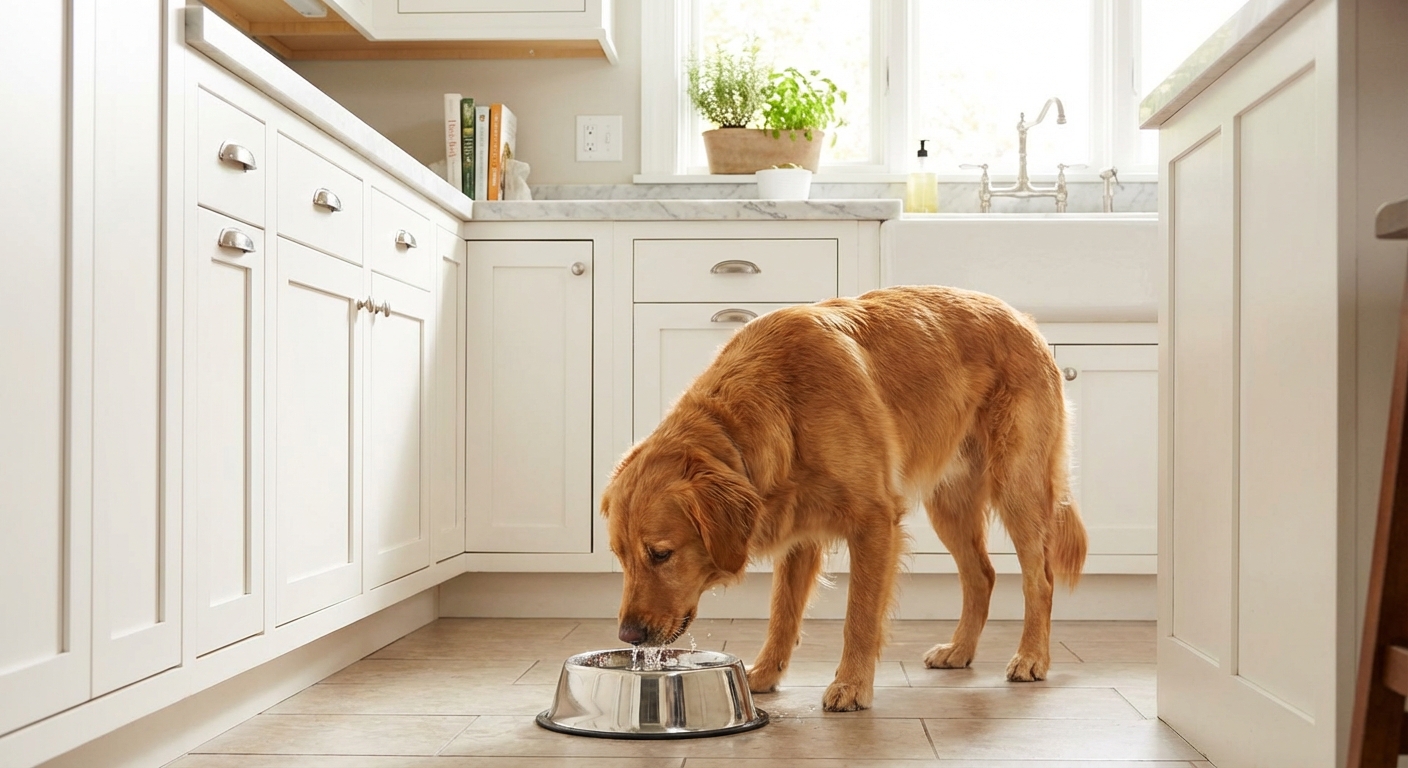
Noticing your dog drinking more water? See what’s normal, how much is too much, common medical causes, red flags that need same-day vet care, and how to lo...
Article
•
Designer Mixes
My Dog Is Drinking Too Much Water

Shari Shidate
Designer Mixes contributor
If you have found yourself thinking, “My dog is drinking too much water, help,” take a deep breath. Sometimes extra thirst is harmless, like after a hot Texas afternoon or a salty treat. Other times, it is an early clue that something in the body needs attention.
As a veterinary assistant, I always tell pet parents this: increased thirst is a symptom, not a diagnosis. The goal is to figure out what is driving it and whether your dog needs urgent care.
What counts as “too much” water?
Dogs vary, but veterinarians often consider water intake concerning when it consistently rises above about 100 mL per kilogram per day. That equals roughly 3.4 fl oz per kilogram per day, or about 1.5 fl oz per pound per day. Many healthy dogs drink closer to 50 to 60 mL per kilogram per day depending on diet, activity, and weather.
Because estimating by “bowl refills” is tricky, a quick home check can help.
Easy at-home measuring method
- Measure the amount of water you put down in the morning (use a measuring cup or marked bottle).
- Over 24 hours, track how much you add, minus any spilled water.
- If you have multiple pets, try a separate water station for the dog you are monitoring, if possible.
Note: Dogs eating canned or fresh diets often drink less because their food contains more moisture. Dogs eating dry kibble usually drink more.
When increased thirst is normal
Sometimes your dog is simply meeting a real need. Common normal reasons include:
- Heat and humidity, especially after outdoor play.
- Exercise or long walks.
- Switching to dry food from canned, fresh, or homemade.
- High-salt treats or table foods (deli meat, cheese, chips).
- Stress, travel, boarding, or a new home routine.
- Lactation in nursing dogs.
If the thirst settles down within a day or two and your dog is acting totally normal, it may be a temporary blip. If it continues, it is worth investigating.
Red flags that mean “call a vet today”
Please seek same-day veterinary guidance if your dog’s increased drinking comes with any of the following:
- Vomiting or repeated nausea
- Diarrhea or black, tarry stool
- Loss of appetite or refusing meals
- Lethargy, weakness, or collapse
- Accidents in the house or suddenly needing to urinate much more often
- Weight loss despite normal eating
- Pot-bellied appearance or panting more than usual
- Bad breath that smells sweet or like chemicals
- Signs of pain or restlessness
- Dehydration signs like tacky gums or sunken eyes
If your dog is not able to keep water down, is very weak, or you suspect toxin exposure, treat it as urgent.
Common medical causes
Veterinarians use the term polydipsia for excessive drinking. Here are some of the more common underlying causes.
1) Urinary tract infection (UTI)
A simple lower UTI usually causes frequent urination, urgency, accidents, straining, or licking at the genital area. True “drinking a ton of water” is less common with an uncomplicated UTI than with issues like diabetes or Cushing’s.
That said, if infection travels up to the kidneys (pyelonephritis) or your dog feels generally unwell, you may see increased thirst along with fever, low energy, or appetite changes. UTIs are diagnosed with a urine test and sometimes a culture.
2) Kidney disease
The kidneys help concentrate urine. When they are not working well, dogs often drink more and urinate more. Early kidney issues can be subtle, which is why bloodwork and urinalysis are so important.
3) Diabetes mellitus
With diabetes, glucose spills into the urine and pulls extra water with it. Classic signs include increased thirst, increased urination, and weight loss. Many dogs also seem extra hungry at first.
4) Cushing’s disease
This hormone condition can cause increased drinking and urination, panting, a pot-bellied look, muscle loss, and skin or coat changes. Diagnosis usually involves bloodwork and specific hormone testing.
5) Liver disease
Liver issues may increase drinking and can also cause vomiting, appetite changes, or jaundice (yellowing of gums or eyes).
6) Medications and supplements
Some commonly used medications can increase thirst, including:
- Steroids (prednisone)
- Diuretics
- Some anti-seizure medications
If your dog recently started a new medication and thirst spikes, call your vet before stopping anything.
7) Electrolyte and hormone problems
Conditions like high calcium (hypercalcemia) or Addison’s disease can change thirst and urination patterns. These require lab testing to identify.
8) Pyometra (uterine infection)
This is a serious emergency in unspayed females, often within weeks after a heat cycle. Increased thirst may be paired with lethargy, poor appetite, vomiting, and sometimes vaginal discharge. If your unspayed dog is drinking more and acting “off,” please get seen urgently.
What your vet will do
For many dogs, the best first step is a basic diagnostic “foundation.” It gives answers quickly and can rule out big concerns.
History and exam
Expect questions about diet, treats, medications, appetite, urination, weight changes, and activity level.
Core tests
- Urinalysis to check concentration, infection signs, glucose, protein, crystals
- Bloodwork (CBC and chemistry) to evaluate kidney values, liver enzymes, glucose, electrolytes
- Urine culture if infection is suspected or recurring
Additional tests if needed
- Fructosamine or glucose curve for diabetes monitoring
- Cushing’s testing (ACTH stimulation or low-dose dexamethasone suppression)
- Abdominal ultrasound if organ disease is suspected
- X-rays or imaging if other causes are possible
What you can do at home
When a dog is drinking too much, the instinct is to limit water. In most cases, please do not restrict water unless your veterinarian specifically instructs you to. If the body is demanding extra water, blocking it can create dangerous dehydration or electrolyte imbalances.
1) Measure and write it down
Track daily water intake, appetite, and bathroom habits for 2 to 3 days. Bring that log to your appointment. It saves time and improves accuracy.
2) Look for urine clues
- Is your dog urinating larger volumes?
- Are there accidents when there were none before?
- Any straining, blood, or frequent squatting?
3) Review food and treats
Check for sudden increases in salty snacks, new chews, or a switch to dry kibble only. Also consider if you added broths or “flavor enhancers” to meals.
4) Keep water clean and accessible
Fresh water matters, especially if your dog is drinking a lot. Wash bowls daily and refill with clean water. If you use a fountain, clean and replace filters on schedule.
5) Plan a vet visit if thirst lasts more than 24 to 48 hours
If your dog’s increased drinking persists, or you see any red flags, schedule an exam. Earlier testing often means simpler treatment and better outcomes.
Frequently asked questions
Should I take the water bowl away at night?
Usually no. If your dog is truly excessively thirsty, removing water can make them uncomfortable and potentially unsafe. If nighttime accidents are happening, talk to your vet about scheduling, bladder health, and medical causes.
My dog drinks a lot after switching to kibble. Is that okay?
It can be normal because kibble has far less moisture than canned or fresh food. Still, if the thirst is extreme or paired with increased urination and weight loss, get it checked.
Can anxiety cause increased drinking?
Yes, stress and anxiety can increase drinking in some dogs. The key is to rule out medical causes first, especially if the change is sudden.
What about puppies?
Puppies can drink frequently, but they can also become dehydrated quickly with vomiting or diarrhea. If a puppy’s thirst is extreme or they seem unwell, do not wait it out.
Supportive care
If your dog is stable and you are waiting for an appointment, focus on gentle, supportive routines.
- Keep a consistent schedule for meals, potty breaks, and sleep.
- Offer hydration-friendly meals like adding a little warm water to kibble, if your vet has not restricted fluids.
- Avoid high-salt foods and heavily processed treats.
- Watch weight weekly. Unexpected weight loss is a major clue.
And remember, the goal is not to guess. It is to partner with your veterinarian and let the tests tell the story.
The bottom line
When you notice “my dog is drinking too much water,” you are right to pay attention. Sometimes it is a normal response to heat or diet. But persistent increased thirst can also be an early sign of conditions like kidney disease, diabetes, Cushing’s disease, or infection.
Keep water available, measure intake, watch for red flags, and schedule a veterinary visit if the change lasts more than a day or two or your dog seems unwell. You are not overreacting. You are being a good advocate for your dog.