Chicken and rice can soothe mild stomach upset and help dogs transition back to normal food. Learn safe recipes, portions, how long to feed it, and when to c...
Article
•
Designer Mixes
My Dog Has Bloodshot Eyes: Trusted Insights and Help

Shari Shidate
Designer Mixes contributor
Seeing bloodshot eyes on your dog can be scary, especially if it seems to come out of nowhere. The good news is that many causes are treatable, but the most important step is figuring out whether this is a minor irritation or something that needs urgent veterinary care.
As a veterinary assistant, I have learned that red eyes are not a diagnosis. They are a symptom. This article walks you through the most common reasons dogs get bloodshot eyes, what you can safely do at home, and the red flags that mean it is time to call your veterinarian right away.
What “bloodshot” usually means
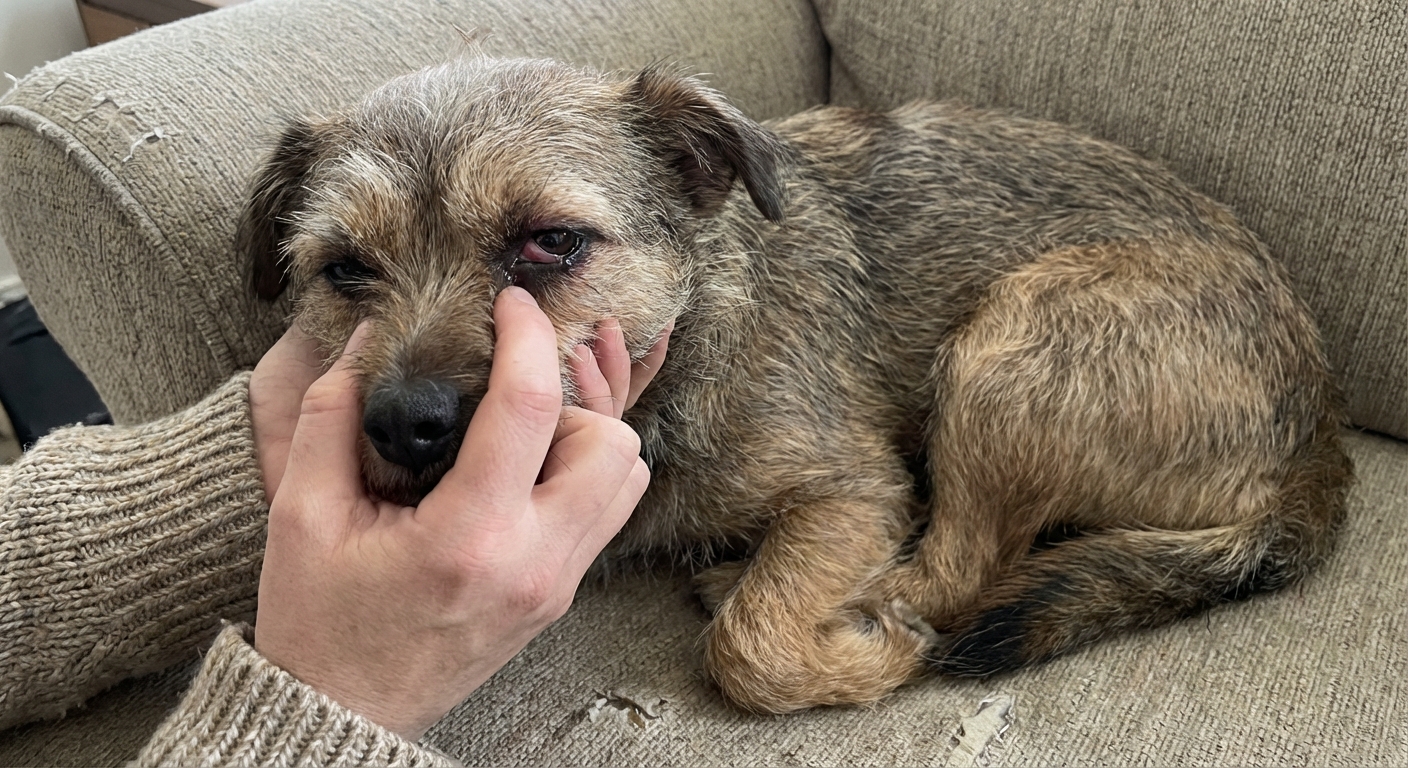
When people say a dog has bloodshot eyes, they are usually noticing one of these:
- Redness of the whites of the eye from enlarged surface blood vessels.
- Redness of the eyelids or inner tissues, especially if the eye is also watery.
- Redness plus cloudiness, which can signal deeper inflammation and is more concerning.
In plain terms, redness can come from irritation, infection, allergies, injury, dry eye, or pressure changes inside the eye. Some of those are mild. Some can threaten vision if treatment is delayed.
Quick anatomy note: the cornea is the clear front “window” of the eye. When it looks cloudy, blue, or dull, that often means the surface is inflamed or injured.
When bloodshot eyes are urgent
If you only take one thing from this page, make it this: certain eye issues worsen fast. Call an emergency vet or your regular clinic same-day if you notice:
- Squinting, keeping the eye closed, or obvious pain
- Pawing at the eye or rubbing face on carpet or furniture
- Cloudy or blue-looking cornea
- Swollen eye or eye that looks like it is bulging
- A cut, puncture, or known trauma (dog fight, cat scratch, stick to the face)
- Unequal pupils or a pupil that stays very large
- Sudden vision changes like bumping into things
- Thick yellow or green discharge
- Redness in one eye that is getting worse over hours, especially if there is pain, discharge, cloudiness, or pupil changes
- Blood in the front of the eye (it can look like a red pool)
Eye pain is real pain. If your dog is uncomfortable, they deserve prompt relief and a proper exam.
Common causes of bloodshot eyes
1) Allergies and irritation
Just like people, dogs can react to pollen, dust, smoke, fragrances, lawn products, and seasonal allergens. You might see redness in both eyes, watery tearing, mild swelling, and pawing at the face.
Clues that point to allergies: sneezing, itchy skin, licking paws, red ears, symptoms that come and go.
2) Conjunctivitis
Conjunctivitis means inflammation of the tissues lining the eyelids and the surface around the eye. It can be caused by allergies, irritants, bacteria, viruses, or an underlying eye problem like dry eye.
Discharge matters, but color alone does not give a diagnosis. Clear, watery discharge can happen with irritation or allergies. Yellow or green discharge often means significant inflammation and sometimes infection, but it can also show up with dry eye (KCS) or severe irritation. Either way, your dog should be examined.
3) Dry eye (KCS)
Dry eye happens when your dog does not make enough tears or the tear film quality is poor. This is a big deal because tears protect the cornea. Dogs with dry eye often have chronic redness, thick stringy or tacky discharge, and may blink a lot.
Dry eye is diagnosed with a simple in-clinic tear test. It is often manageable with consistent, long-term care. In many dogs it is lifelong, so it is not something you want to guess at.
4) Corneal scratch or ulcer
Scratches happen from rough play, bushes, grooming accidents, or a cat swat. Ulcers can be extremely painful and can worsen quickly, especially in short-nosed breeds.
Signs: squinting, tearing, redness, pawing at the eye, sensitivity to light.
Corneal ulcers require vet-prescribed medication. Using the wrong drops, especially anything containing steroids, can make an ulcer much worse.
5) Foreign body
Grass awns, sand, hair, and tiny debris can get trapped under the eyelid. Your dog may suddenly squint or blink hard, with tearing and redness.
Sometimes the object is visible, but often it is not. A veterinarian can safely look under the eyelids and stain the eye to check for a scratch.
6) Glaucoma
Glaucoma is one of the conditions we worry about most because it can lead to permanent vision loss. It often causes a very red eye, pain, and sometimes a cloudy cornea and a dilated pupil.
If you suspect glaucoma, treat it as an emergency.
7) Uveitis
Uveitis can be triggered by infections, trauma, immune-mediated disease, or other internal issues. It may cause redness, pain, squinting, cloudiness, and light sensitivity.
This also needs same-day veterinary care.
8) Cherry eye
Cherry eye is when the gland of the third eyelid protrudes, creating a pink or red “bubble” at the inner corner. It can cause irritation and redness.
It is not usually life-threatening, but it should be evaluated. Medications may reduce irritation, but the definitive fix is often a surgical gland replacement to protect tear production long-term.
9) Eyelid problems
Inflamed eyelids from allergies, infection, mites, or skin disease can make the whole eye area look red. Sometimes eyelashes grow inward or the eyelid rolls in (entropion), constantly rubbing the surface of the eye.
If your dog has recurrent redness, ask your vet to check eyelid structure and tear production.
10) Less common but important causes
Some red-eye cases are linked to problems outside the eye. These are not the most common, but they matter because they can be high-stakes:
- Subconjunctival hemorrhage: a bright red patch on the white of the eye. It can look dramatic and may be less painful than an ulcer, but it still deserves an exam to rule out trauma and underlying disease.
- Hyphema (blood inside the front of the eye): can be caused by trauma, clotting disorders, high blood pressure, certain infections (including some tick-borne diseases), or other systemic illness. This is an urgent situation.
- Systemic hypertension (high blood pressure): can contribute to eye bleeding and even retinal problems. Your vet may recommend a blood pressure check, especially in older dogs.
Can dogs “catch” pink eye?
Owners often worry about contagious “pink eye” like in humans. In dogs, conjunctivitis is usually tied to irritation, allergies, dry eye, or another underlying eye issue. Some infections can be contagious, but many cases are not. A proper exam is the best way to know what you are dealing with.
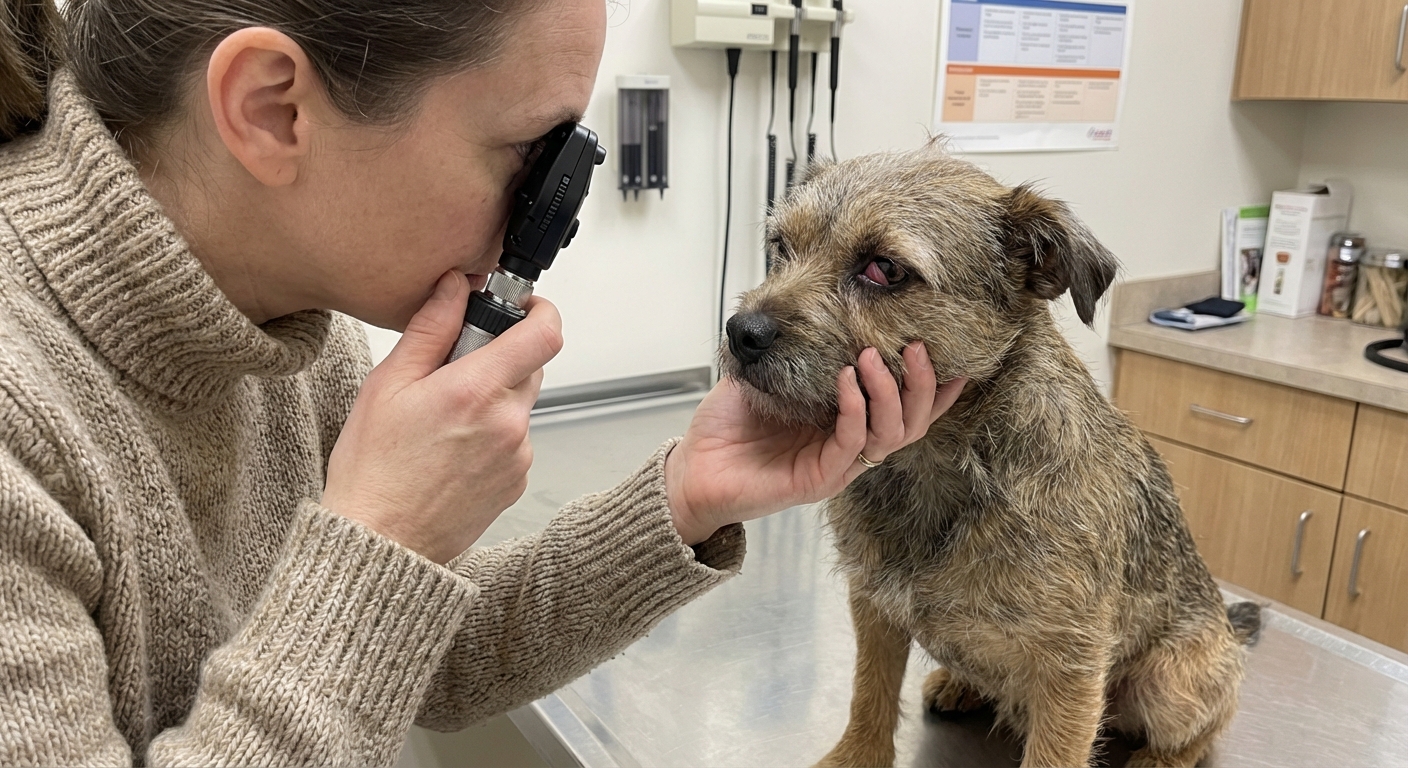
What you can do at home
Safe first steps
- Prevent rubbing: Use an e-collar if your dog is pawing at the eye.
- Rinse with sterile saline: Plain sterile saline can help flush out mild irritants. Use gentle flow, not pressure.
- Use lubricating drops only with guidance: Preservative-free artificial tears are sometimes used in dogs, but ask your vet first, especially if there is squinting or possible injury.
- Take clear photos in good light: one straight-on, one from the side. This helps you track changes and helps your vet.
Warm compresses: when to skip them
A warm compress on closed eyelids for 3 to 5 minutes can help with mild crusting or eyelid irritation. Do not use a warm compress if your dog is squinting, acting painful, the eye looks injured, the eye seems to be bulging, or the cornea looks cloudy. In those situations, go straight to the vet.
Avoid these common mistakes
- Do not use human medicated eye drops (especially “redness relievers”) unless a veterinarian tells you to. Some ingredients can be unsafe or make the problem worse.
- Do not use leftover pet eye medications. If the problem is different, the treatment can be wrong.
- Never use steroid eye drops unless your vet has ruled out a corneal ulcer.
- Do not wait it out if your dog is squinting. Squinting often means pain.
If redness is mild, both eyes are affected, your dog is comfortable, and there is no squinting or cloudiness, it is reasonable to monitor for 12 to 24 hours while you arrange a vet visit. If anything worsens, or any red flags appear, go in sooner.
What your vet may do
Most eye visits include a few fast tests that give huge answers:
- Fluorescein stain to check for corneal scratches or ulcers
- Schirmer tear test to evaluate tear production for dry eye
- Tonometer reading to measure pressure and screen for glaucoma
- Eyelid and under-eyelid exam to look for foreign material
Treatment depends on the cause. It may include antibiotic drops, anti-inflammatory medication, lubricating drops, allergy management, blood pressure testing when indicated, or referral to a veterinary ophthalmologist.
Support and prevention
Simple habits
- Trim hair around the eyes for fluffy mixes so hair does not poke the surface.
- Avoid smoky or heavily fragranced environments when possible.
- Rinse after dusty adventures using sterile saline if your dog tends to flare up.
- Address underlying allergies with your veterinarian, especially if eye redness keeps returning.
Nutrition note
Food will not cure glaucoma or an ulcer, but overall health does matter. A balanced diet and good hydration support tear film quality and immune function. If your dog has chronic allergies, talk with your vet about whether an elimination diet trial or omega-3s may help some dogs as an add-on. Use vet-directed products and dosing, since supplements are not one-size-fits-all.
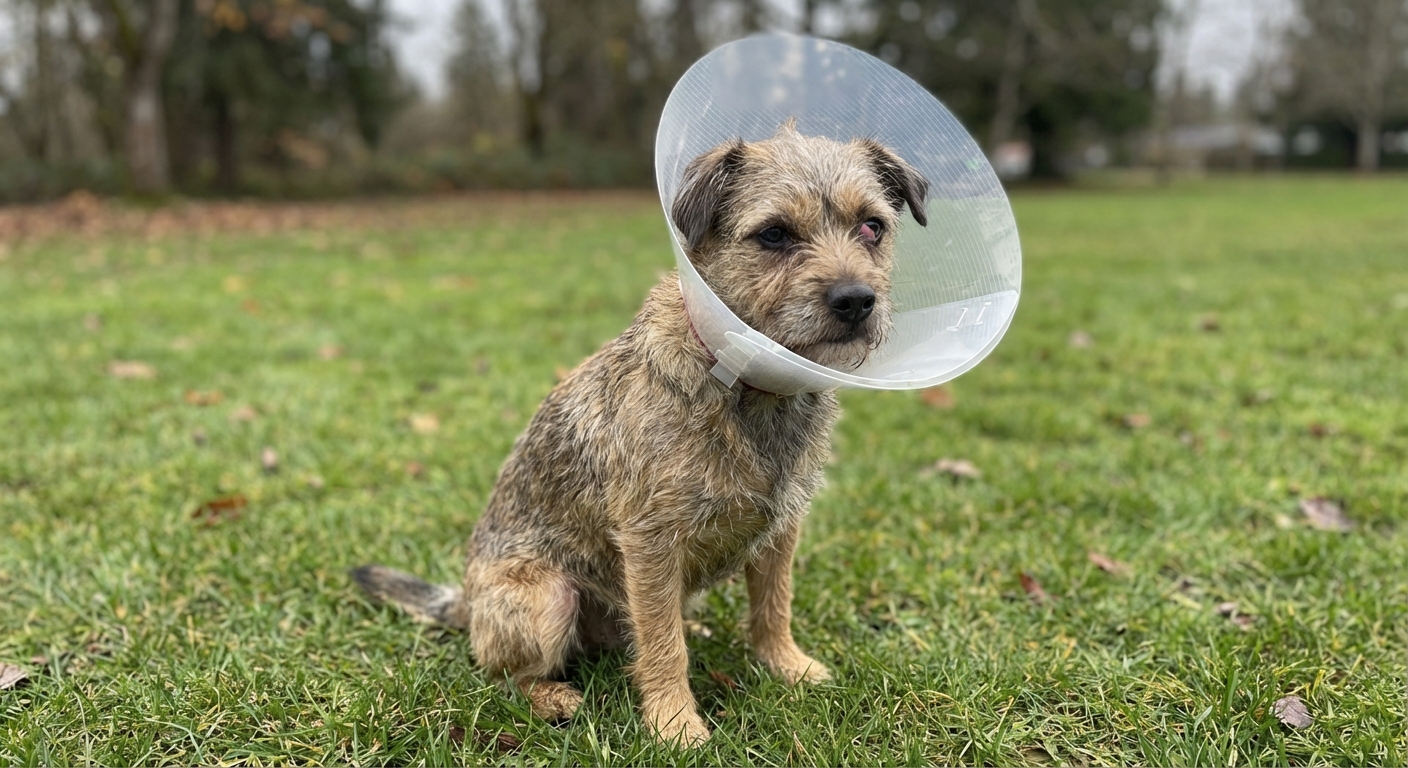
Quick checklist
- Is my dog squinting or acting painful? If yes, same-day vet.
- Is the eye cloudy or blue? Same-day vet.
- Is there thick yellow or green discharge? Vet visit soon, often same-day.
- Did this start suddenly after play, grooming, or a walk? Think scratch or foreign body, get checked.
- Is it mild redness in both eyes with itching and sneezing? Allergies are possible, but still monitor closely.
- Is there blood inside the eye or a sudden red pool? Treat as urgent and seek care right away.
If you are ever unsure, it is always okay to call your veterinary clinic and describe what you are seeing. A quick phone triage can save your dog a lot of discomfort and protect their vision.