Learn veterinarian-aligned steps for treating an open wound on your dog: stop bleeding, prevent licking, clean and flush safely, bandage correctly, and recog...
Article
•
Designer Mixes
My Dog Cut Her Paw Pad

Shari Shidate
Designer Mixes contributor
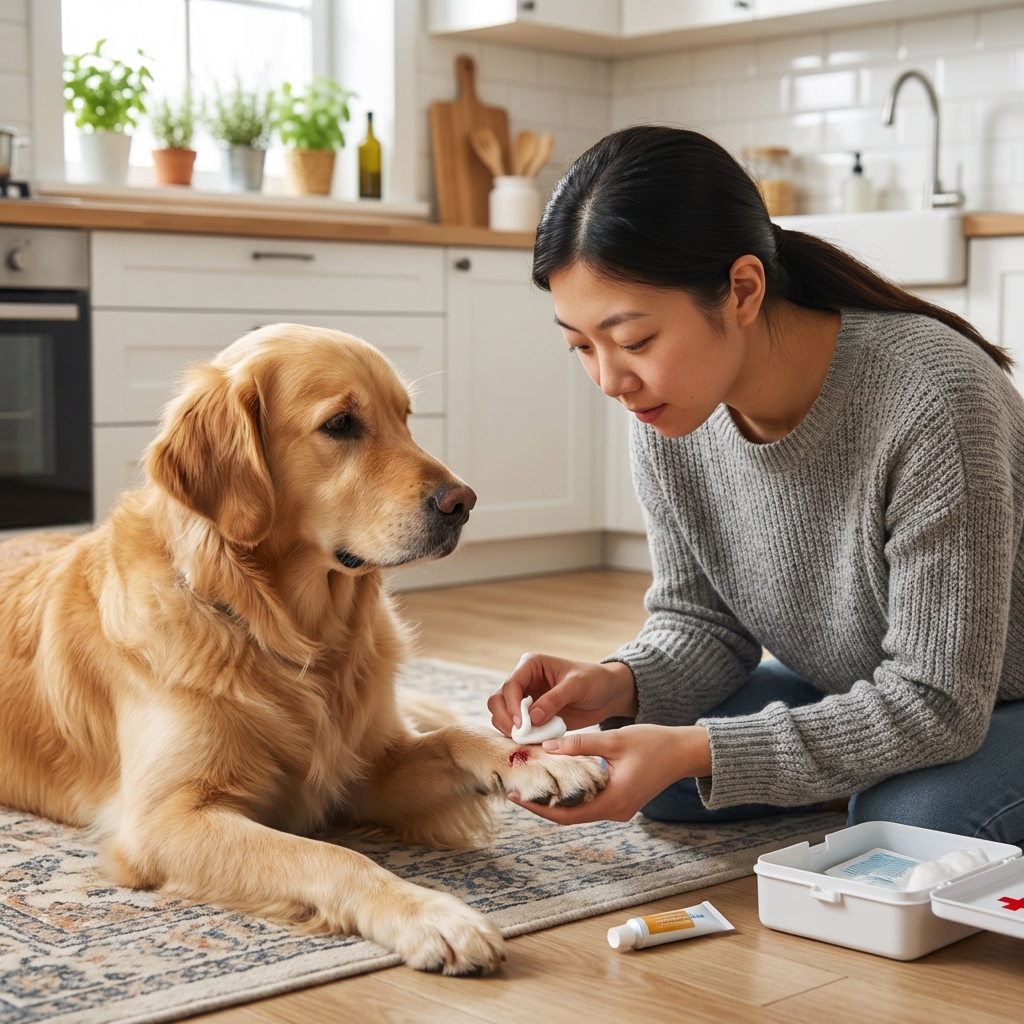
Paw pad cuts are one of those injuries that can look scary fast because feet bleed easily and dogs do not love holding still for first aid. The good news is that many small pad cuts can be managed at home with calm, clean care and a watchful eye. This quick guide will walk you through what to do right away, what to avoid, and when it is time to call your vet.
First: stay calm and get control
Before you look closely, help your dog feel safe. A stressed dog may pull away, and even sweet dogs can snap when they are hurting.
- Move to a bright, clean area like a bathroom or kitchen.
- Use a leash if your dog wants to bolt.
- Consider a soft muzzle if your dog is in significant pain and might bite. A long strip of gauze or a leash can work in a pinch, but avoid restricting breathing.
- Have treats ready and use a calm voice.
If you have a helper, have them gently hold your dog’s head and offer tiny treats while you work on the paw.
Quick check: how bad is it?
Look at the paw pad and also between the toes. Sometimes a cut is actually a torn nail, a foxtail, or a piece of glass tucked between toes.
Likely minor (home care may be reasonable)
- Small surface cut or scrape
- Bleeding slows quickly with pressure
- Dog is willing to bear some weight
More serious (call your vet now or go to urgent care)
- Bleeding that does not slow after 10 minutes of steady pressure, or bleeding that is heavy or pulsing
- A flap of pad tissue, a deep gash, or you can see deeper layers
- Something embedded (glass, thorn, metal)
- The pad is split widely or looks “punched out”
- Severe limping, crying, or refusal to walk
- The paw is very swollen, cold, or the toes look oddly positioned
- Your dog has diabetes, immune disease, is on steroids, or has poor healing history
Stop the bleeding safely
Pad cuts can bleed a lot. What matters most is steady pressure.
- If bleeding is heavy, go straight to pressure. Once bleeding slows, you can rinse away debris.
- Apply firm pressure with clean gauze or a clean towel for 5 to 10 minutes without peeking. Peeking restarts the clock.
- If blood soaks through, add more layers on top. Do not remove the first layer.
If you have it, styptic powder is best reserved for a bleeding nail. Many styptic powders can sting and irritate a soft paw pad cut. For a small oozing pad cut that is not responding to pressure, a little cornstarch can sometimes help, but pressure is still the safest main tool.
Clean the wound (simple and gentle)
Once bleeding is controlled, clean the area to lower infection risk.
- Flush with sterile saline if you have it (wound wash from a first-aid kit is great).
- If you do not have saline, use a mild saltwater rinse made with clean, boiled then cooled water. Keep it gentle and do not scrub.
- Mild soap on surrounding fur is okay, then rinse well.
- Pat dry with clean gauze.
What to avoid
- Hydrogen peroxide and rubbing alcohol can damage healthy tissue and slow healing.
- Essential oils can irritate and some are toxic to pets.
- Do not give human pain meds unless your veterinarian specifically instructs you to. Many, especially ibuprofen and naproxen, can be toxic to dogs.
Bandage basics
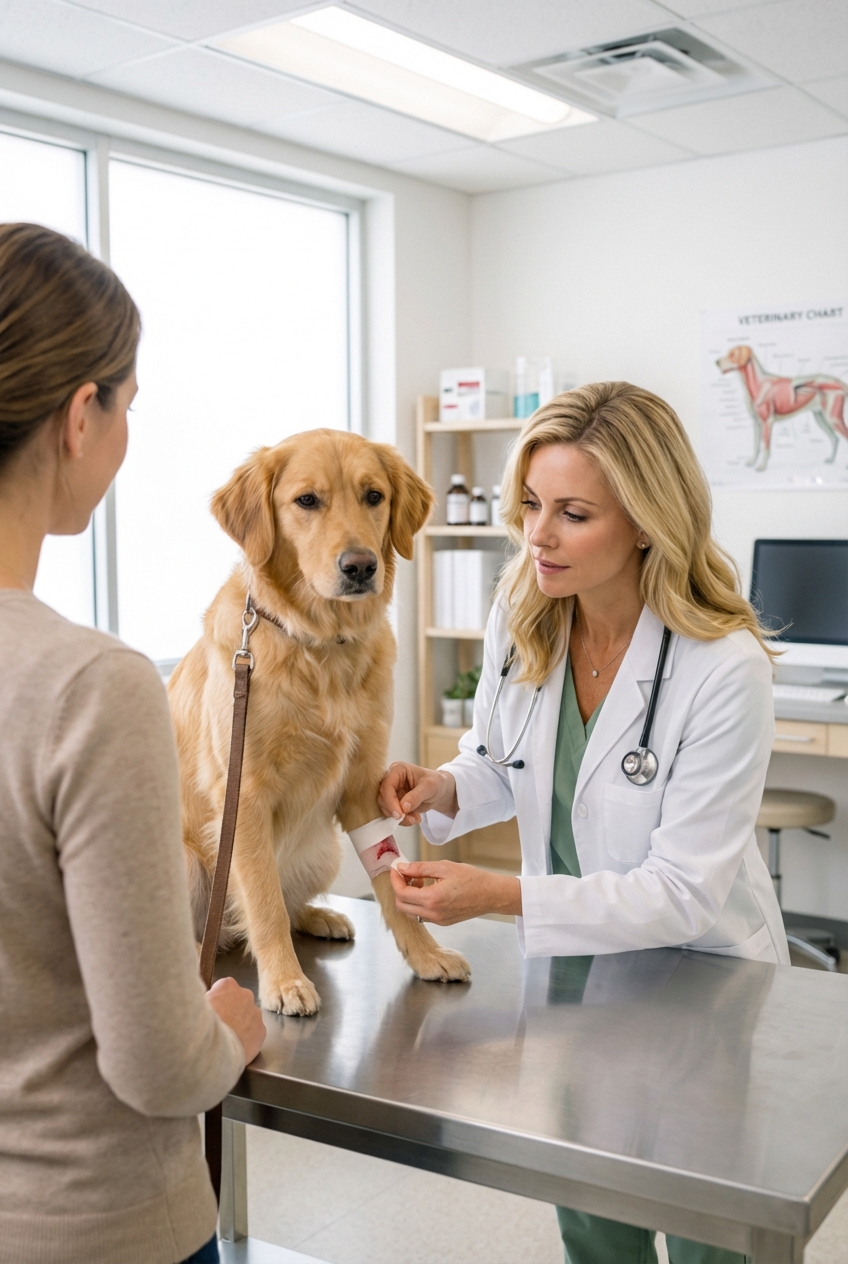
A light bandage protects the cut from dirt and licking, but it must not be too tight. Tight wraps can reduce circulation and create a much bigger emergency.
How to bandage a paw pad cut
- Place a non-stick pad over the cut.
- Add a layer of gauze wrap to hold it.
- Cover with a light layer of self-adhesive wrap (like Vet Wrap), stretching it as little as possible.
- Make sure you can easily slip one finger under the wrap at the top.
- If the cut is on the bottom of the foot, add a clean sock or bootie for outdoor trips only.
Check the toes at least twice daily for swelling, coolness, or color changes. If the toes look puffy, feel cold, seem painful, or the wrap slips and bunches, remove it and rewrap more loosely (or get help from your vet).
Change the bandage at least once daily, or sooner if it gets wet or dirty. Moisture trapped in a bandage is a common reason paw wounds get infected.
If the injury is a very superficial scrape and your dog will not lick it, your vet may prefer leaving it clean and dry with no wrap. When in doubt, protect it and call your vet for guidance.
Keep it kid-friendly
Healing goes faster when the paw stays clean, dry, and protected from extra trauma.
- Use an e-collar (cone) if your dog keeps licking. Licking can reopen the cut and introduce bacteria.
- Limit running and rough play for several days, especially on tile and concrete.
- Keep outdoor trips short and stick to clean surfaces.
- Teach kids “no touch” for the bandaged paw. Even gentle handling can hurt and trigger defensiveness.
- Use rugs or yoga mats for traction if your dog slips on smooth floors.
What healing looks like
Most small, superficial cuts start looking better in 48 to 72 hours, but full pad healing can take longer because it is a high-use area.
Normal, improving signs
- Less limping day by day
- Wound looks cleaner and less red
- Little to no oozing
Warning signs
- Increasing redness, heat, swelling, or pain
- Yellow, green, or foul-smelling discharge
- Limping that worsens or does not improve
- Bandage keeps getting soaked with blood or fluid
- Fever, lethargy, poor appetite
If you see warning signs, call your vet. Paw infections can travel deeper than you think, especially if a foreign body is involved.
When to see a vet right away
Trust your gut. If your dog seems very painful or the wound looks deep, it is always okay to get help. This guide is general first-aid information, not a substitute for veterinary care.
- Bleeding will not stop after 10 minutes of steady pressure, or bleeding is heavy or pulsing
- Deep cut, torn flap, or the pad is split wide
- A foreign object is stuck in the paw (do not pull out large or deeply embedded objects, stabilize the area and go in)
- Severe limping or cannot bear weight
- Cut happened in dirty water, mud, or near chemicals
- You are not sure the wound is clean, or your dog is due for a checkup and you want guidance on infection prevention
Vet tip from the clinic: pad injuries often need pain control, thorough flushing, and sometimes a protective bandage done just right. A same-day visit can prevent days of setbacks.
Home first-aid kit
If you have an active dog or a backyard full of stickers and rough surfaces, a small kit can save a lot of stress.
- Sterile saline or wound wash
- Non-stick pads
- Rolled gauze
- Cohesive wrap (Vet Wrap style)
- Blunt-tip scissors
- Disposable gloves
- E-collar (proper size)
- Dog booties or a clean sock and tape for quick outdoor protection
Preventing future cuts
Some cuts are just bad luck, but you can lower the odds.
- Check yards and walking paths for glass, sharp rocks, and metal bits.
- Avoid hot pavement in hot weather. As a quick test, if it is too hot to hold your hand on it comfortably, it is too hot for paws.
- Trim fur between paw pads so debris is easier to spot.
- Condition pads gradually for hikes and longer walks instead of jumping from couch life to a five-mile trail.
- Use booties for rocky trails or extreme heat if your dog tolerates them.