Broken dog nail? Learn why it hurts, how to stop bleeding, rinse and wrap safely, prevent licking, and recognize emergency signs. Plus vet treatment, afterca...
Article
•
Designer Mixes
My Dog Broke His Nail

Shari Shidate
Designer Mixes contributor
Few things make a dog parent’s stomach drop like hearing a sudden yelp and then seeing blood spots on the floor. A broken nail can look dramatic, and it can be truly painful. The good news is that most broken nails are very treatable, and knowing what to do in the first few minutes can prevent infection and speed healing.

As a veterinary assistant in Frisco, Texas, I’ve seen everything from small nail chips to fully torn nails with an exposed quick. Below is a calm, step-by-step way to think through what you’re seeing and what to do next. (This article is for general education and is not a substitute for veterinary care.)
What counts as a broken nail?
Dog nails can break in a few different ways, and the type of break matters because it changes what your dog needs.
- Minor chip: The very tip breaks off, usually with little or no bleeding.
- Split nail: A crack runs up the nail, sometimes catching on carpet or grass.
- Partially torn nail: A portion of the nail is still attached but unstable and painful.
- Torn nail with exposed quick: The quick (the living tissue inside the nail) is exposed, often with significant bleeding and pain.
- Dewclaw injuries: Dewclaws are more likely to catch and tear because they do not always wear down naturally.
Two quick notes that help set expectations:
- Black nails can be hard to read. It may be difficult to see where the quick starts, and bleeding can look worse than it is. Focus on steady pressure and your dog’s comfort.
- Some dogs will not tolerate paw handling when they are scared or in pain. If you think you might get bitten, stop and call your veterinarian for guidance or an urgent visit.
If you are unsure which one you’re dealing with, that is completely normal. When in doubt, treat it like a more serious injury and contact your veterinarian.
First aid at home
If your dog just broke a nail, aim for two goals: slow or stop the bleeding and protect the nail from further trauma.
1) Keep your dog still and safe
Dogs often pull away and can jerk the paw, making the tear worse. If possible, have a helper offer a favorite treat while you look. If your dog is panicking, growling, or snapping, do not push it. A painful dog can bite even when they are normally gentle, and your vet can help safely (sometimes with calming medication or sedation if needed).
2) Control bleeding
- Apply gentle pressure with clean gauze or a paper towel for several minutes without checking constantly.
- Styptic powder is ideal for nail bleeding.
- Cornstarch or flour can help in a pinch, but think of them as temporary. Re-bleeding is common once your dog walks, licks, or the powder falls off.
Some oozing can happen when the quick is involved. Sustained, steady pressure usually works, but if blood keeps soaking through multiple pads or you cannot get control with continuous pressure, seek veterinary care.
3) Rinse and protect
If the nail is dirty, you can rinse the paw with clean lukewarm water or saline. Avoid hydrogen peroxide on open nail injuries because it can irritate tissue and delay healing. Then keep the paw clean and dry.
A note on bandaging at home: Many well-meaning pet parents try to wrap the paw. If you do, keep it very light and temporary. A wrap that is too tight, too thick, or that gets wet can reduce circulation and cause serious problems quickly. When in doubt, skip the wrap and head to the clinic.
4) Prevent licking
Licking is a big reason nail injuries get infected or refuse to heal. If your dog is focused on the paw, use an e-collar or inflatable collar until your veterinarian says it is safe to stop.
Tip: If your dog is limping and the nail looks unstable, do not try to “finish the trim” at home. A painful, partially torn nail often needs veterinary care, and doing it yourself can cause a bigger tear.
When it is urgent
Some nail breaks can wait for a same-day appointment, but others should be treated as urgent.
- Bleeding that will not stop after sustained, steady pressure.
- A nail hanging off or twisting, especially if your dog cries when it moves.
- Severe limping or refusing to put weight on the leg, especially beyond the first short period after the injury.
- Swelling, heat, or pus around the nail bed.
- A bad odor from the paw or nail.
- Your dog has a medical condition that affects healing or clotting (for example: blood thinners, immune suppression, liver disease).
Also call your veterinarian promptly if the nail break happened during a high-impact accident (fall, getting caught in a door, hit by a bike). Sometimes there is more going on than the nail. Persistent non weight bearing lameness can also mean a toe sprain, fracture, or another injury that needs an exam.
What your vet may do
Veterinary treatment is typically quick, focused, and very effective for pain relief.
- Pain control: Nail injuries hurt. Your veterinarian may prescribe a safe anti-inflammatory or pain medication. Avoid giving human pain medications unless your veterinarian specifically instructs you to. Common dangerous options include ibuprofen, naproxen, and acetaminophen.
- Trim back the damaged nail: If a nail is split or hanging, the goal is to remove the unstable portion cleanly so it cannot keep tearing.
- Clean and flush: Especially if the break is near the nail base or contaminated with dirt.
- Bandage: Some dogs benefit from a light bandage to protect the quick for the first day or two.
- Antibiotics: Not always needed, but may be prescribed if there is infection risk, swelling, discharge, or a deep tear.
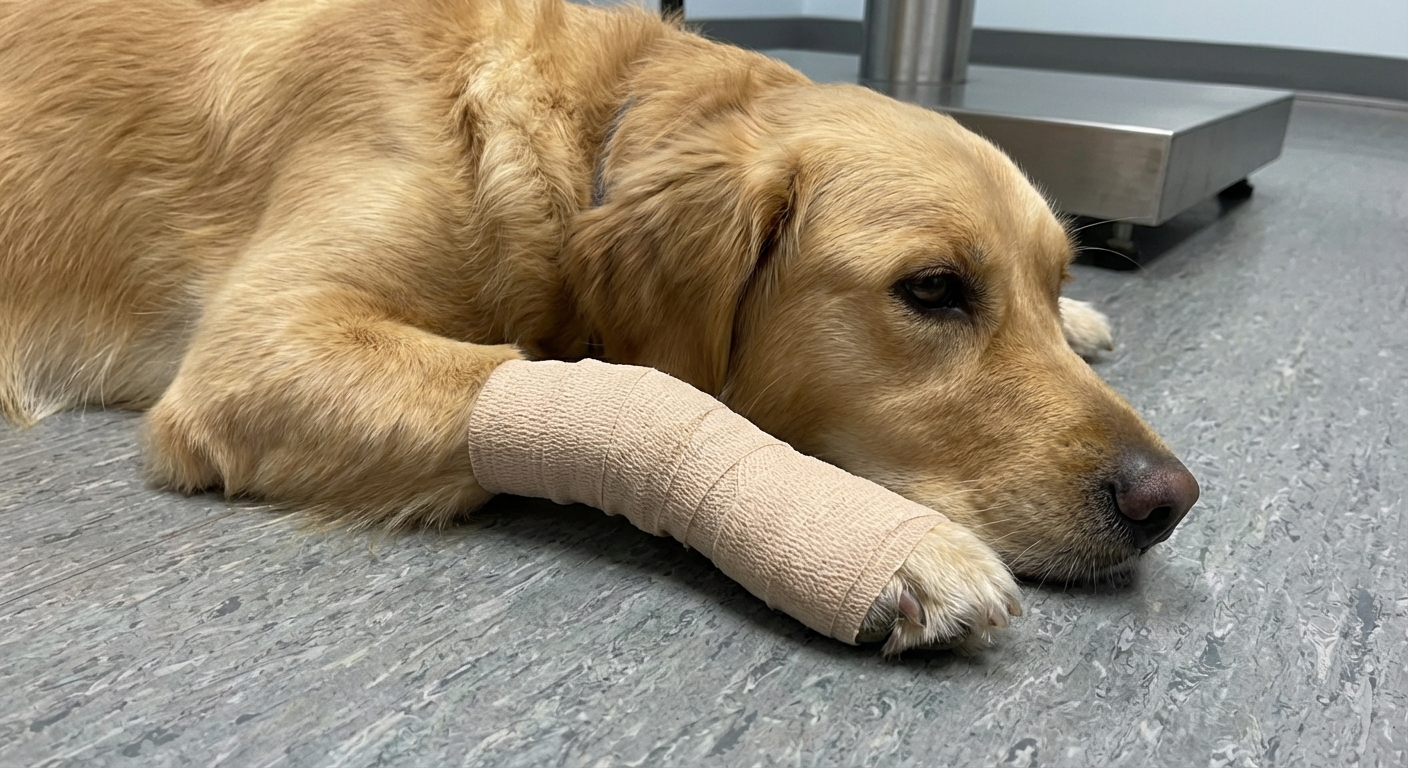
Many dogs feel noticeably better once the unstable nail portion is removed and the quick is protected.
At-home care after
Comfort can improve in several days to about 2 weeks, depending on how severe the break was and whether the damaged nail had to be removed. The nail itself usually takes weeks to months to look “normal” again.
Keep it clean and dry
- Short, controlled potty breaks.
- Skip muddy parks and rough play until your dog is walking normally.
- If your vet bandaged the paw, follow bandage instructions carefully. A wet or tight bandage can cause problems quickly.
Manage licking
If your dog keeps licking, use the e-collar. Licking introduces bacteria and keeps tissue inflamed.
Watch for infection
Call your veterinarian if you notice:
- Increasing redness or swelling
- Discharge (yellow, green, or bloody fluid)
- Worsening pain after initial improvement
- Fever, lethargy, or loss of appetite
Why nails break
Most broken nails come down to one of three things: nail length, nail quality, or a snag.
1) Nails are too long
Long nails are more likely to catch on carpet, roots, and sidewalk cracks. Keeping nails at a healthy length reduces leverage and reduces the chance of a tear.
2) Slippery floors and sharp turns
Dogs scrambling for traction on tile or hardwood can split nails, especially when they launch into a zoomie turn.
3) Brittle nails from health issues
Some dogs have more fragile nails due to allergies, endocrine disease, age, nutrition gaps, recurrent skin or yeast infections, or less commonly immune mediated and nail bed disorders. If nails break repeatedly, it is worth a veterinary check and a conversation about diet and supplements.
Nutrition support
Nails are made largely of keratin, and nail quality can be influenced by overall health. Nutrition will not fix an acute break overnight, but a balanced diet can support better nail strength over time.
- Quality protein supports keratin and tissue repair.
- Omega-3 fatty acids (such as fish oil) can support skin and nail health for some dogs.
- Biotin is sometimes recommended for brittle nails, but evidence is mixed and any benefit is usually seen after several weeks. Discuss it with your veterinarian to ensure proper dosing and fit for your dog.
If you feed homemade or partially homemade meals, aim for balanced, vet-guided nutrition. Strong nails are just one of the quiet signs that the whole body is getting what it needs.
Quick FAQ
Should I pull off the broken part?
No. If the nail is attached, pulling can tear living tissue and increase bleeding and pain. A veterinarian can safely remove unstable nail sections.
Can I walk my dog?
Short bathroom walks are usually fine once bleeding is controlled. Avoid long walks, running, and rough ground until your dog is comfortable and the nail is protected.
How long until the nail grows back?
It varies by dog and by which nail was injured, but nails often take weeks to months to fully regrow. Comfort often improves much sooner, especially after proper trimming and protection.
Final note
A broken nail can look scary, but most dogs recover very well with quick first aid and the right follow-up care. If you are seeing ongoing bleeding, a dangling nail, significant limping, or signs of infection, trust your instincts and call your veterinarian. Your dog will feel your calm confidence, and that alone helps the whole situation go smoother.