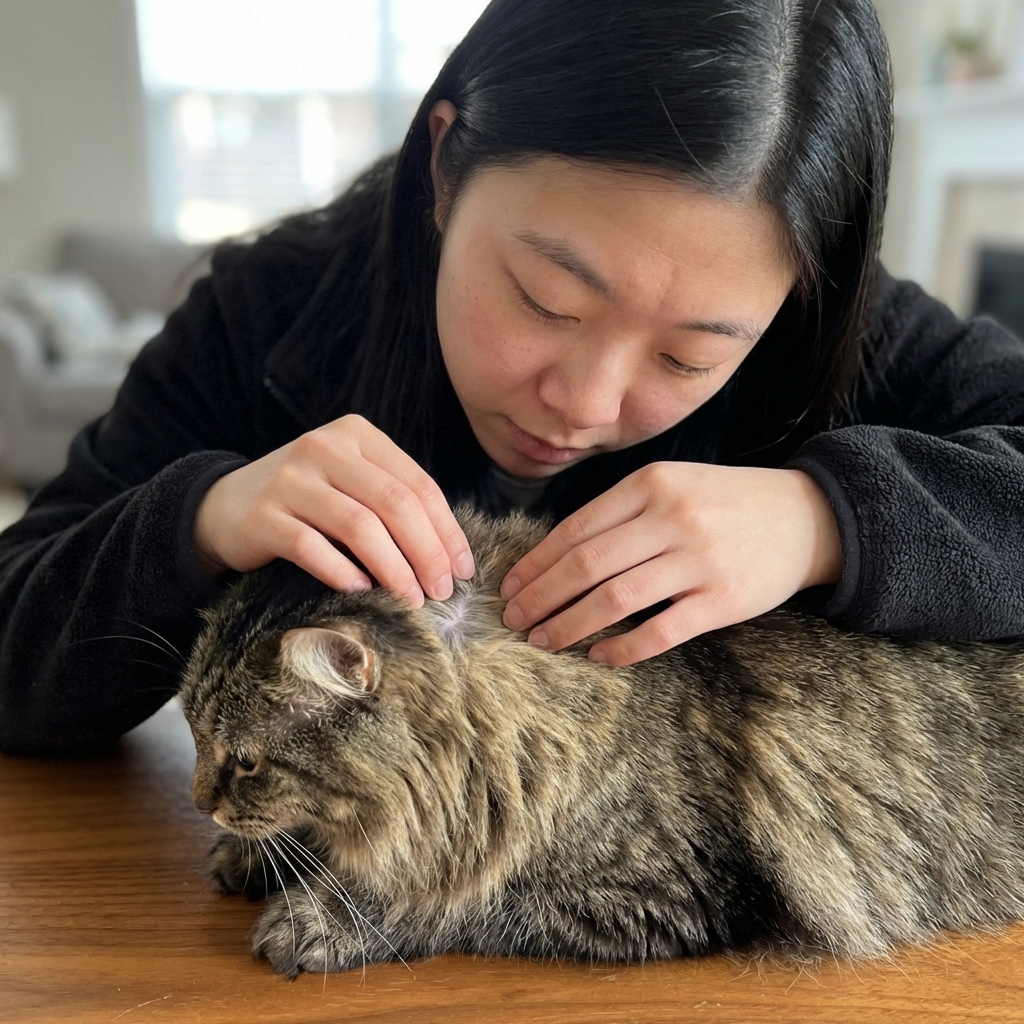
Stop fleas fast with a proven plan: confirm fleas, use vet-approved cat treatments, treat every pet, deep-clean your home, avoid toxic dog products, and prev...
Article
•
Designer Mixes
My Cats Have Fleas

Shari Shidate
Designer Mixes contributor
Seeing your cat scratch can make your whole household feel itchy. If you are thinking, "My cats have fleas", take a breath. Fleas are common, treatable, and you can handle them with a simple plan that works for adults, kids, and multi-pet homes.
As a veterinary assistant in Frisco, Texas, I want you to know two things: fleas are not a reflection of how clean your home is, and the fastest relief comes from treating the pet, the home, and the timeline all at once. One more reassurance up front: it is normal to still see a few fleas after you start treatment, because new adults can emerge from the environment for weeks.
What fleas are and why they spread fast
Fleas are tiny, wingless insects that feed on blood. The most common one on cats is Ctenocephalides felis, the cat flea. Even indoor-only cats can get them because fleas can hitchhike on people, dogs, or other animals, and they can also come from wildlife that spends time around your home (like stray cats, raccoons, or squirrels).
Here is the part most families do not realize: the fleas you see are only a small portion of the problem. Adult fleas live on pets, but eggs, larvae, and pupae develop in the environment. That is why you can treat your cat and still see fleas for a while.
The life cycle
- Adult fleas live on your cat and lay eggs.
- Eggs fall off into carpets, bedding, couch cushions, cat trees, and cracks in floors.
- Larvae hatch and hide in dark areas, feeding on debris.
- Pupae form a protective cocoon and can wait days to weeks to emerge. This stage is why infestations can feel stubborn.
Actionable takeaway: plan on 8 to 12 weeks of consistent prevention to break the cycle in many homes, and sometimes longer with heavy infestations or missed doses.
How to tell if your cat has fleas
Some cats scratch a lot. Others barely react, especially early on. Look for a mix of clues instead of relying on itchiness alone.

Common signs
- Frequent scratching around the neck, ears, lower back, or tail base
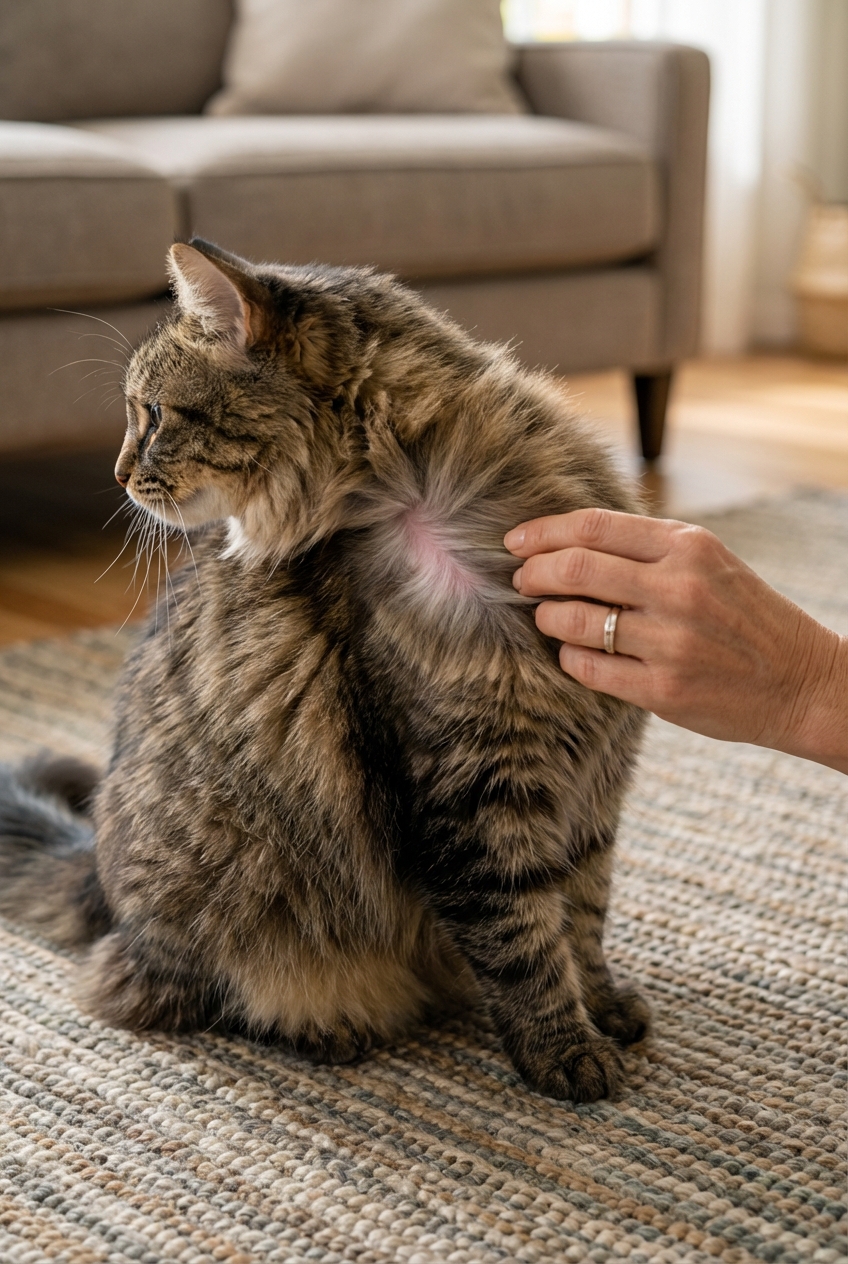
- Over-grooming or hair thinning, especially along the back or belly
- Small scabs, crusts, or "peppery" specks in the coat
- Restlessness, twitchy skin, or sudden bursts of grooming
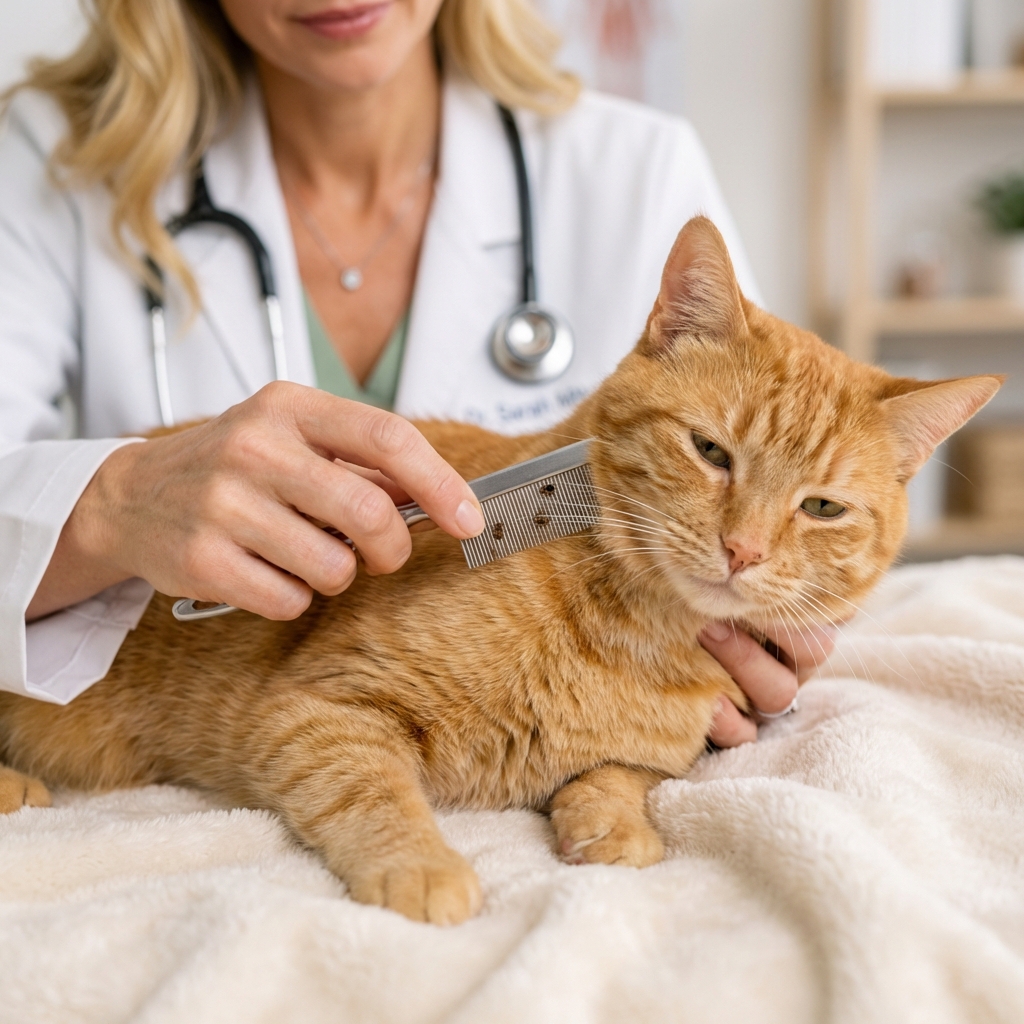
Check for flea dirt
Use a flea comb and comb along the back and near the tail base. If you see black specks, place them on a damp white paper towel. If they smear reddish-brown, that is often flea dirt (digested blood).
If you are not sure, your vet team can confirm quickly with a comb check and skin exam.
Family safety first
Families often want a natural quick fix. I understand, but flea control is one area where using the wrong product can hurt a pet. Cats are uniquely sensitive to certain ingredients, and some dog-only flea medications can be dangerous to cats.
Ground rules
- Never use dog flea products on cats. Some contain permethrins that can cause severe neurologic signs in cats.
- Use species-specific, weight-appropriate products. Check the label and ask your vet if unsure.
- Keep kids away during application and drying time. Wash hands after handling pets.
- Avoid essential oils on cats. Many essential oils can be harmful or irritating when licked or absorbed.
- If your cat is a kitten, senior, pregnant, or sick, get veterinary guidance before treating.
If a product is marketed as "all natural" but does not list clear active ingredients and cat-specific directions, treat that as a red flag. The same goes for unregulated or mystery products sold online.
The 3-part plan that works
To get control fast, think of fleas like a leaky faucet. You need to turn off the water (treat the pet), mop the floor (treat the home), and keep checking for drips (stick with prevention long enough).
1) Treat every pet
If you have multiple cats, or a cat and a dog, treat all of them with an effective flea preventive. Otherwise fleas just hop between hosts.
Veterinarians often recommend modern monthly preventives (topical or oral) because they are consistent and evidence-based. Your best choice depends on your cat's age, health history, lifestyle, and what else you need coverage for (like ticks, and heartworm prevention if recommended for your area. Indoor cats can be at risk too, since mosquitoes get inside).
2) Clean the home

- Vacuum daily if possible for 1 to 2 weeks in high-traffic pet areas, then a few times per week. Focus on carpets, rugs, baseboards, under furniture, along couch edges, and around pet hangouts like cat trees and window perches.
- Empty the vacuum outside right after. If you can, seal the contents in a bag before tossing them to reduce the chance of anything crawling back out. (This varies by vacuum type.)
- Wash bedding weekly in hot water, including pet beds and favorite blankets.
- Dry on high heat when safe for the fabric. Heat helps kill eggs and larvae.
If you choose to use a home spray, look for products labeled for indoor flea control and follow directions carefully. More is not better. Target pet resting areas rather than fogging the whole home, and always protect aquariums and keep pets away until everything is fully dry.
3) Stay consistent
Even after treatment starts, pupae can still emerge over time. That can look like "the product is not working" when it is actually the life cycle finishing up. Consistent prevention prevents new adults from laying more eggs and ends the cycle.
What to do today
If your household needs a simple starting point, here is a same-day plan you can follow.
- Confirm fleas with a flea comb check, especially near the tail base.
- Start a cat-safe flea preventive for each pet (ask your vet for the best match).
- Vacuum carpets, rugs, and furniture edges.
- Wash and dry pet bedding and your cat's favorite blankets.
- Set reminders for the next doses and cleaning days. Flea control fails most often due to missed timing.
Flea bites on people
Fleas can bite humans, especially around ankles and lower legs. They do not usually live on people long-term, but bites can be itchy.
Comfort steps
- Wash bites with soap and water.
- Use a cool compress for itching.
- Consider an over-the-counter anti-itch option if your healthcare provider says it is appropriate.
If anyone has hives, facial swelling, trouble breathing, or signs of infection at bite sites, seek medical care.
When fleas are urgent
Most flea problems are not emergencies, but some situations need quick veterinary help.
- Kittens with fleas can become anemic faster than adults.
- Pale gums, weakness, or rapid breathing can be signs of anemia.
- Tapeworm segments (small rice-like pieces near the rear end or in bedding) often show up with fleas and may require treatment.
- Severe skin inflammation can occur with flea allergy dermatitis, where even a few bites trigger intense itching.
If your cat is lethargic, not eating, or has pale gums, contact your veterinarian right away.
Mistakes that keep fleas coming back
- Treating only the cat and skipping the home. Eggs and larvae are usually in the environment.
- Stopping too soon. You may still see emerging fleas for weeks.
- Using the wrong product or wrong dose. Especially dangerous when dog products are used on cats.
- Only treating one pet. Fleas move between pets.
- Relying on baths alone. Baths can remove some adults but do not provide ongoing control.
Keeping fleas away long-term
Once you are flea-free, maintenance is much easier than starting over.
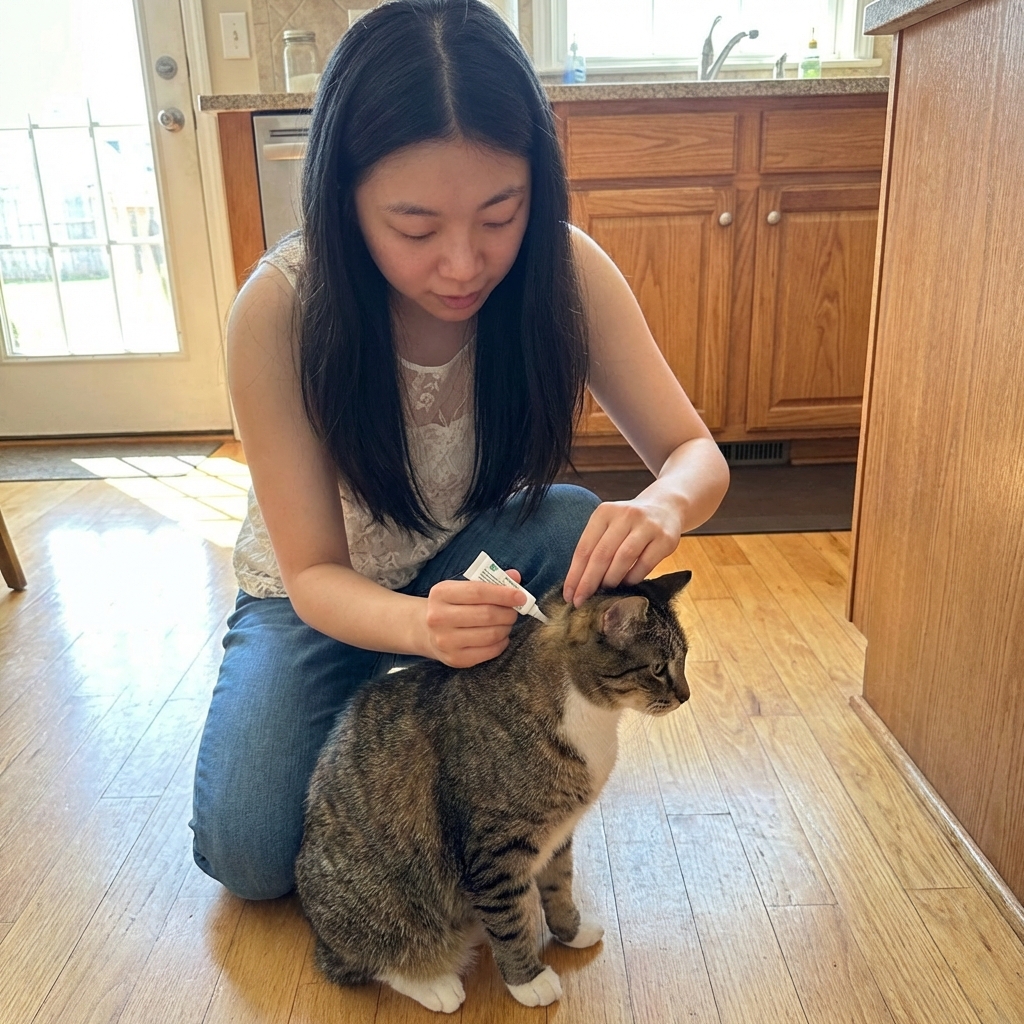
- Continue veterinarian-recommended flea prevention on schedule, especially in warm months.
- Vacuum routinely, particularly if you have carpet or multiple pets.
- If your pets go outdoors, check them weekly with a flea comb.
- Consider year-round prevention in regions where fleas are active most of the year.
Your goal is simple: protect your cat from bites, protect your home from eggs, and keep the life cycle from restarting.