Cats don’t pee on the bed out of spite. Learn how to tell urine vs spraying, rule out FLUTD/UTIs, improve litter box setup, reduce stress, and clean properly.
Article
•
Designer Mixes
My Cat Keeps Peeing on My Bed

Shari Shidate
Designer Mixes contributor
If your cat keeps peeing on your bed, I know how upsetting and confusing it can feel. You are dealing with the mess, the smell, and often a worried feeling in your gut that something is “wrong” with your cat or with your bond.
Here is the most important truth up front: peeing on the bed is almost never spite. In most cases it is either a medical problem, a litter box setup problem, or stress and anxiety. The good news is that when you work the problem step by step, many cats improve, and even ongoing conditions can usually be managed.
First, rule out a medical issue
Any time a cat urinates outside the litter box, especially on soft surfaces like bedding, it deserves a medical check. Cats are masters at hiding discomfort, and urination changes are one of the clearest signals that something may be going on.
Call your veterinarian promptly if you notice any of these
- Straining to urinate, crying, or only passing tiny drops
- Blood in the urine
- Frequent trips to the litter box with little output
- Urinating in unusual places plus hiding, reduced appetite, or lethargy
- Male cat with any urinary difficulty (this can become an emergency)
Strong odor can happen with concentrated urine or diet changes, so it is not diagnostic on its own. Still, if the smell is suddenly very different along with other symptoms, it is worth mentioning to your vet.
Common medical causes your vet may check for
- Urinary tract infection (more common in older cats and cats with underlying disease)
- Feline idiopathic cystitis (inflammation often triggered by stress, and it can be chronic or relapsing)
- Urinary crystals or stones
- Kidney disease
- Diabetes (often larger urine clumps and increased thirst)
- Arthritis or pain that makes climbing into a box harder
Ask your vet about a urinalysis and, when indicated, urine culture, bloodwork, and imaging. Treating the underlying problem is often the fastest path to stopping the bed peeing.
If your vet suspects feline idiopathic cystitis or stress-related urinary issues, the plan may include stress reduction, increasing water intake (often with wet food or a fountain), and sometimes a prescription urinary diet or medication. Your veterinarian can guide what fits your cat best.
Make sure it is pee, not spraying
Urinating on the bed usually involves a squat and a larger wet spot. Spraying is different: a cat stands, tail may quiver, and a small amount is directed at a surface, often vertical. Cats can spray on bedding too, and sometimes you do not actually witness the posture, so do not worry if you are not sure.
Why this matters
- Urinating (squatting) often points to litter box avoidance, discomfort, or stress.
- Spraying often points to territorial stress, conflict with other pets, or changes in the home.
If you are unsure, a quick phone video (when possible) can help your veterinarian or a cat behavior professional guide you accurately.
Spay and neuter note
If spraying is part of the picture and your cat is not spayed or neutered, talk with your veterinarian. Spay and neuter can reduce spraying in many cats, although it is not a cure-all if stress or conflict is also present.
Fix the litter box setup (this solves a lot)
Many cats choose the bed because it is soft, absorbent, and feels safe. Sometimes the litter box is too dirty, too small, in the wrong spot, or simply not appealing to that particular cat.
Use the “gold standard” litter box checklist
- Number of boxes: one per cat, plus one extra.
- Size: large enough for your cat to turn around comfortably. Many cats do better with big storage-tote style boxes.
- Location: quiet, easy to access, not trapped by a barking dog, not next to the washer, and not in a dead-end where the cat can be ambushed.
- Litter type: many cats prefer unscented, fine-grain clumping litter.
- Depth: usually 2 to 3 inches, but some cats prefer less. Try adjusting.
- Cleanliness: scoop at least once daily, more often for multi-cat homes. Wash the box with mild soap regularly and replace old boxes as they hold odor.
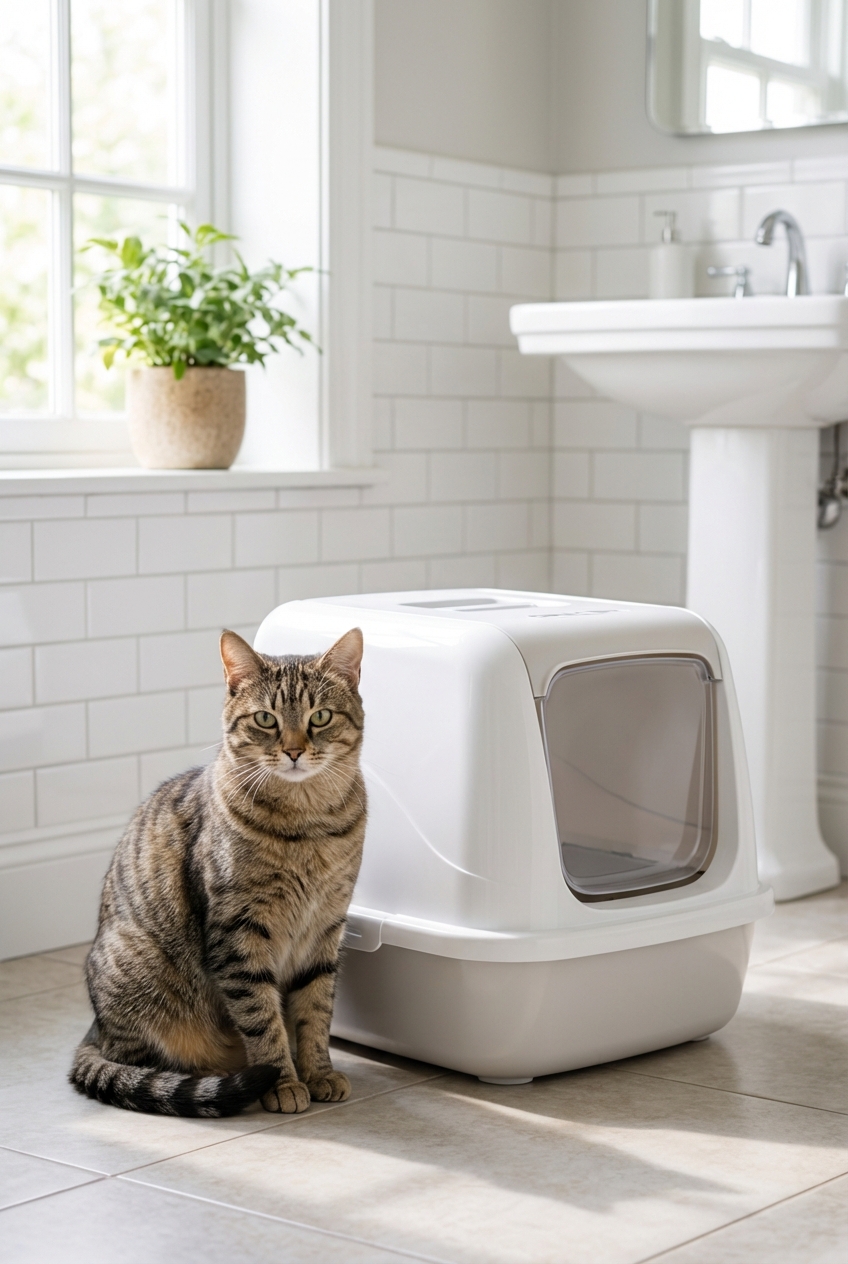
- Covered vs uncovered: many cats prefer uncovered for airflow and visibility.
Try a simple two-box test
Place two boxes side by side for 7 to 10 days with different options:
- Box A: your current litter
- Box B: unscented clumping litter (fine grain)
Let your cat vote. The “right” litter is the one your cat consistently uses.
Reduce stress and conflict at home
Stress is a big driver of peeing outside the box, especially with feline idiopathic cystitis. Common triggers include moving, visitors, remodeling, a new baby, new pets, outdoor cats visible through windows, or tension between cats.
Practical ways to lower stress
- Create safe zones: a quiet room or vertical cat shelves where your cat can rest undisturbed.
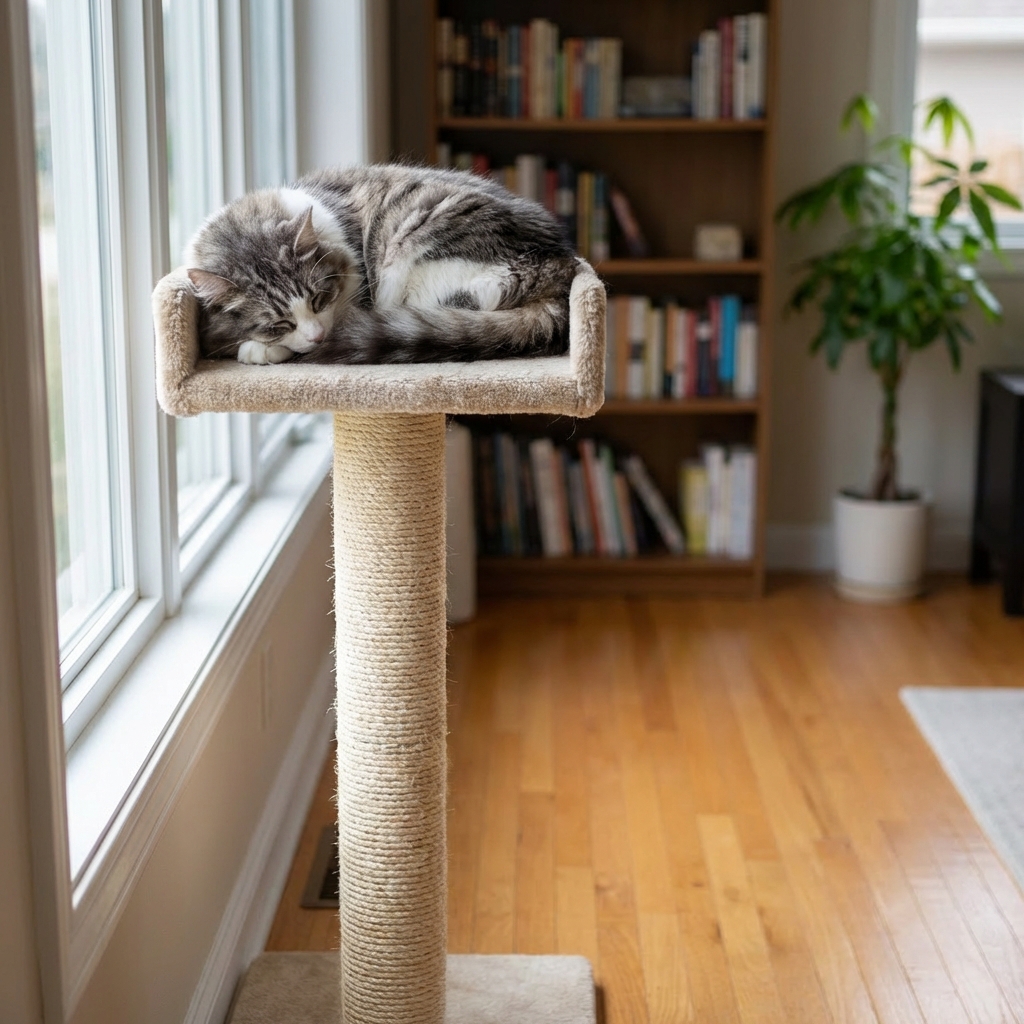
- Add vertical territory: cat trees, window perches, shelves. Height helps cats feel secure.
- Keep routines steady: feed and play around the same times daily.
- Daily interactive play: 10 to 15 minutes with a wand toy can ease anxiety and reduce conflict.
- Consider pheromone support: many families find diffusers helpful during transitions.
- Multiple resource stations: in multi-cat homes, spread out food, water, scratching posts, and litter boxes so one cat cannot guard everything.
If you have multiple cats, look for subtle bullying
Not all cat conflict is loud. Watch for blocking doorways, staring, chasing, or one cat always leaving the litter box area quickly. If you suspect tension, talk with your vet and consider a feline behavior consult. The plan may include resource separation, reintroduction steps, and stress reduction.
Protect the bed while you work
Behavior change takes time, and you deserve a break from daily laundry. Your goal is to make the bed less available and make the litter box easier and more rewarding to use.
Bed protection steps that actually help
- Close the bedroom door when you cannot supervise.
- Use a waterproof mattress protector plus a washable cover.
- Add a litter box nearby temporarily if the bedroom is where your cat is choosing to go. This is not “giving in.” It is information and a bridge back to success.
Clean correctly so the scent does not call them back
Use an enzymatic cleaner made for pet urine. Regular soap, vinegar, or standard carpet cleaners often leave behind scent markers that cats can still detect. Follow label directions, soak thoroughly, and allow full dry time.
Do not use ammonia-based cleaners on urine spots. Ammonia can smell like urine and may encourage repeat marking.
Laundry tips
Wash bedding promptly. Many people have good results with an enzymatic laundry additive or an oxygen bleach product that is fabric-safe. Try to avoid strongly scented detergents or additives if your cat seems sensitive to them.
When the issue is access
Senior cats and cats with pain may choose the bed because it is easy, soft, and close. If your cat is older, overweight, or hesitant to jump, think accessibility first.
Easy accessibility upgrades
- Low-entry litter box or a box with a cut-out doorway
- Non-slip rugs leading to the box
- More boxes on each floor of the home
- Pain management plan through your veterinarian if arthritis is suspected
A simple 7-day reset plan
If your cat is medically cleared, this is a gentle, practical way to start seeing progress.
Day 1
- Add at least one extra litter box in a quiet area.
- Switch to unscented litter in at least one box.
- Start closing the bedroom door when you are not watching.
Days 2 to 3
- Scoop boxes at least daily, twice daily if possible.
- Do two short play sessions and keep feeding times consistent.
- Thoroughly clean any accidents with an enzymatic cleaner.
Days 4 to 7
- Adjust box location if your cat seems hesitant to enter.
- Increase resources for multi-cat homes: more water bowls, more resting spots, more scratching posts.
- If accidents continue, place a temporary box closer to the problem area and note patterns: time of day, who was home, noises, visitor pets, outdoor cats at the window.
Progress is often measured in fewer incidents, smaller incidents, or a cat choosing the box more often. Celebrate those small wins. They matter.
What not to do
- Do not punish your cat for peeing on the bed. Punishment increases anxiety and usually makes the problem worse.
- Do not rub their nose in it or yell. Cats do not connect that with the behavior the way we hope they will.
- Do not abruptly change everything at once unless your cat is clearly avoiding the current setup. Controlled changes help you learn what is working.
- Do not use essential oils or strong deterrent sprays on bedding or around litter boxes. Many can be irritating or unsafe for cats, and strong odors can backfire.
When to get extra help
If you have tried the basics for 2 to 4 weeks after a veterinary visit and the problem continues, ask for a deeper plan. Many cats need a combination of medical management, environment changes, and behavior support. Some issues, especially stress-related bladder problems, can flare up again and may need long-term management.
- Your veterinarian can reassess, run additional tests, or discuss anxiety support when appropriate.
- A board-certified veterinary behaviorist or a qualified cat behavior consultant can help you identify triggers and create a step-by-step plan.
You are not failing your cat. Peeing outside the box is a common wellness problem, and it is often solvable or manageable when we treat it like a health and environment puzzle instead of a discipline issue.