Spot cat dehydration early with gum, skin-tent and litter box checks. Learn common signs, causes, safe home hydration tips, and when it’s an emergency vet ...
Article
•
Designer Mixes
My Cat Is Dehydrated: Help & Care

Shari Shidate
Designer Mixes contributor
If you are thinking, “my cat is dehydrated, help”, you are not overreacting. Cats are masters at hiding discomfort, and dehydration can sneak up quickly, especially in kittens, seniors, and cats with kidney disease, diabetes, or hyperthyroidism. The good news is that there are clear signs you can watch for, safe steps you can take at home, and specific situations where you should call your veterinarian right away.
Also important: dehydration is usually a sign, not a diagnosis. The goal is not only to get fluids in, but to figure out why your cat is losing fluids or not taking in enough.
What dehydration looks like in cats
Dehydration means your cat’s body does not have enough water to support normal circulation, digestion, temperature regulation, and organ function. Even mild dehydration can contribute to constipation, nausea, and lethargy. More significant dehydration can become an emergency.
Common signs
- Low energy, hiding more than usual, or seeming “off”
- Dry or tacky gums (instead of slick and moist)
- Reduced appetite or acting nauseated (lip-smacking, drooling)
- Changes in urination (very small clumps, fewer clumps, or suddenly much larger clumps)
- Constipation or straining in the box
- Sunken-looking eyes in more advanced cases
Note: Dehydration does not always mean less urine. Some cats with kidney disease, diabetes, or hyperthyroidism may drink and urinate more, yet still become dehydrated.
A quick at-home check (helpful, not perfect)
Skin tent test: Gently lift the skin over the shoulder blades and release. In well-hydrated cats it snaps back quickly. If it lingers or returns slowly, dehydration is more likely. This test is less reliable in older cats (skin elasticity changes) and overweight cats, so use it along with other signs.
Most common causes
It helps to think in three buckets: not enough water going in, too much water going out, or fluid shifting due to illness.
- Not drinking enough: Cats often have a low thirst drive, and some may take in less water if they eat only dry food. Individual needs vary, and illness can also change drinking habits.
- Vomiting or diarrhea: GI upset can dehydrate a cat surprisingly fast.
- Heat stress: Warm homes, poor ventilation, being stuck in a hot room, or not having easy access to water can contribute.
- Kidney disease: Cats with chronic kidney disease often lose more water in urine.
- Diabetes: Excess glucose pulls water into urine, increasing fluid loss.
- Hyperthyroidism: Often causes increased thirst and urination (and higher overall fluid turnover).
- Pain or stress: Dental pain, arthritis, or stress can reduce drinking and eating.
When dehydration is an emergency
Please contact your veterinarian or an emergency clinic the same day if you notice any of the following:
- Your cat is very lethargic, weak, or hard to wake
- Repeated vomiting or vomiting plus not keeping water down
- Diarrhea that is frequent, watery, bloody, or paired with weakness
- Open-mouth breathing, panting, or collapse
- No urination (or straining with little to no urine), especially in male cats
- Gums are pale, sticky, or dry and your cat seems unwell
- Kittens that stop eating or drinking for more than 12 hours
- Senior cats that stop eating or drinking for more than 12 to 24 hours (sooner if they seem weak, nauseated, or are not urinating normally)
Tip: Complete water refusal is more urgent than “drinking a little less,” especially if vomiting, diarrhea, or low energy is also present.
If you are unsure, it is always safer to call. Dehydration is often treatable, but the underlying cause may need prompt care.
What you can do at home right now
For a cat who is alert, able to walk, and not actively vomiting, these steps can help support hydration while you monitor closely.
1) Make water easier and more tempting
- Refresh water bowls at least once daily and wash bowls regularly to reduce odors.
- Offer multiple water stations, especially if you have a multi-level home.
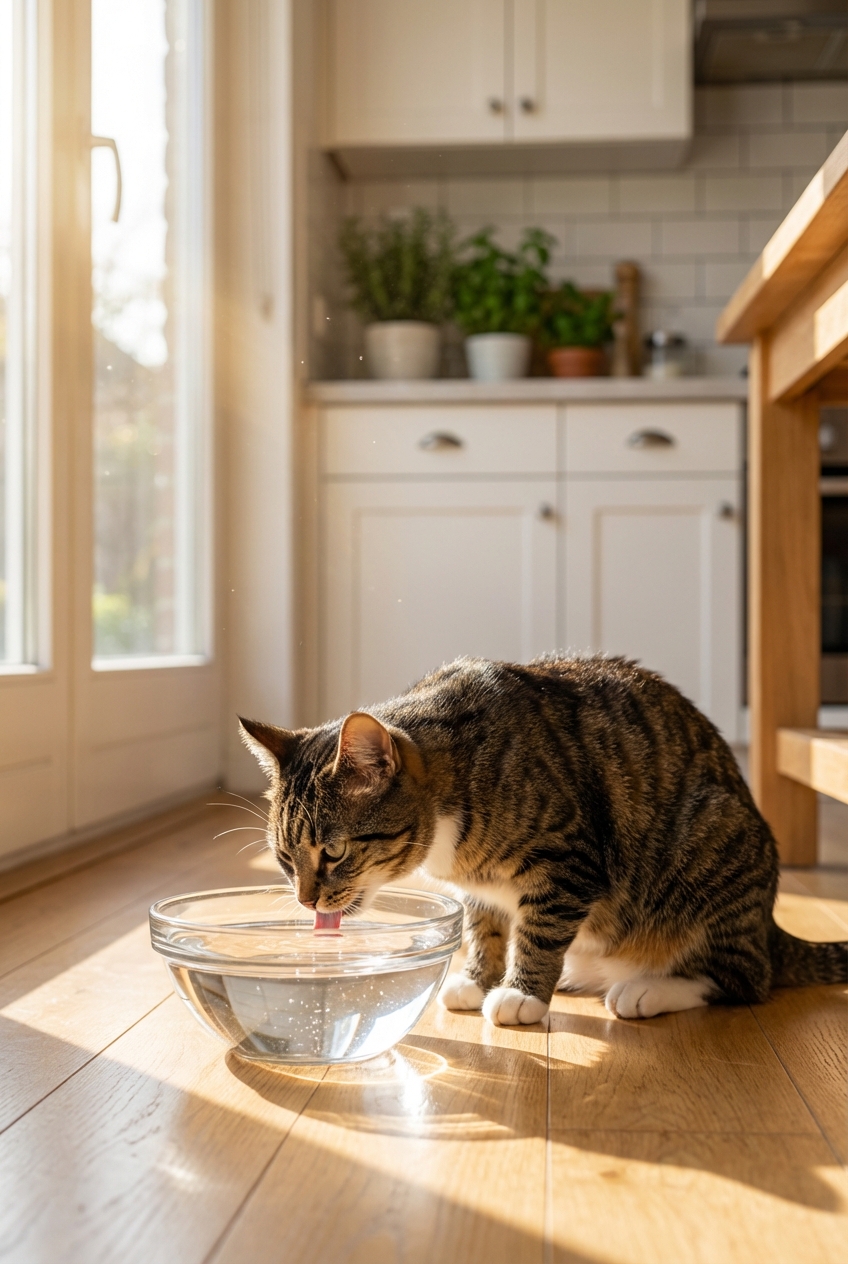
- Try a pet water fountain. Many cats prefer moving water.
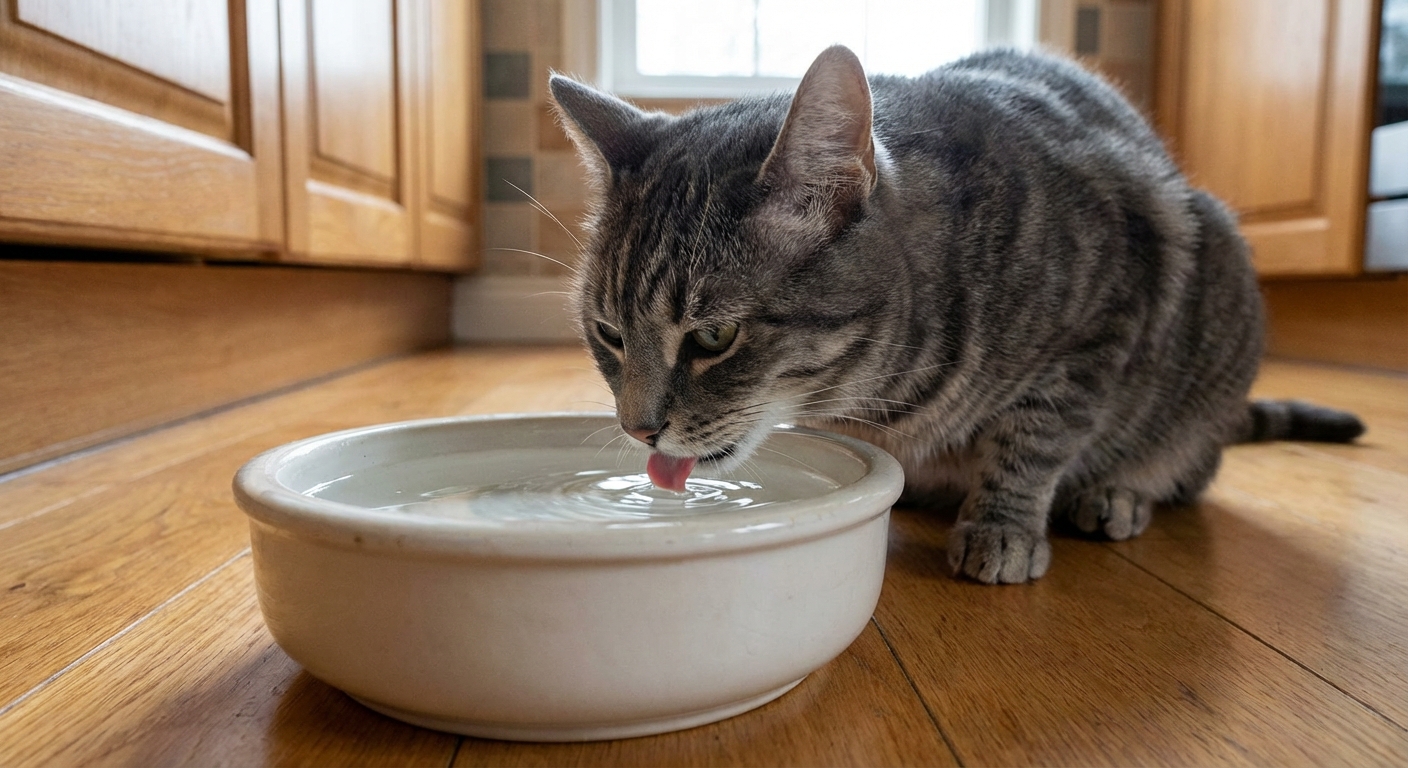
- Use wide, shallow bowls so whiskers are not pressed against the sides.
- Place water away from food bowls and litter boxes. Many cats avoid water near potential contamination sources.
2) Add moisture through food
One of the easiest, evidence-supported ways to increase water intake is increasing dietary moisture.
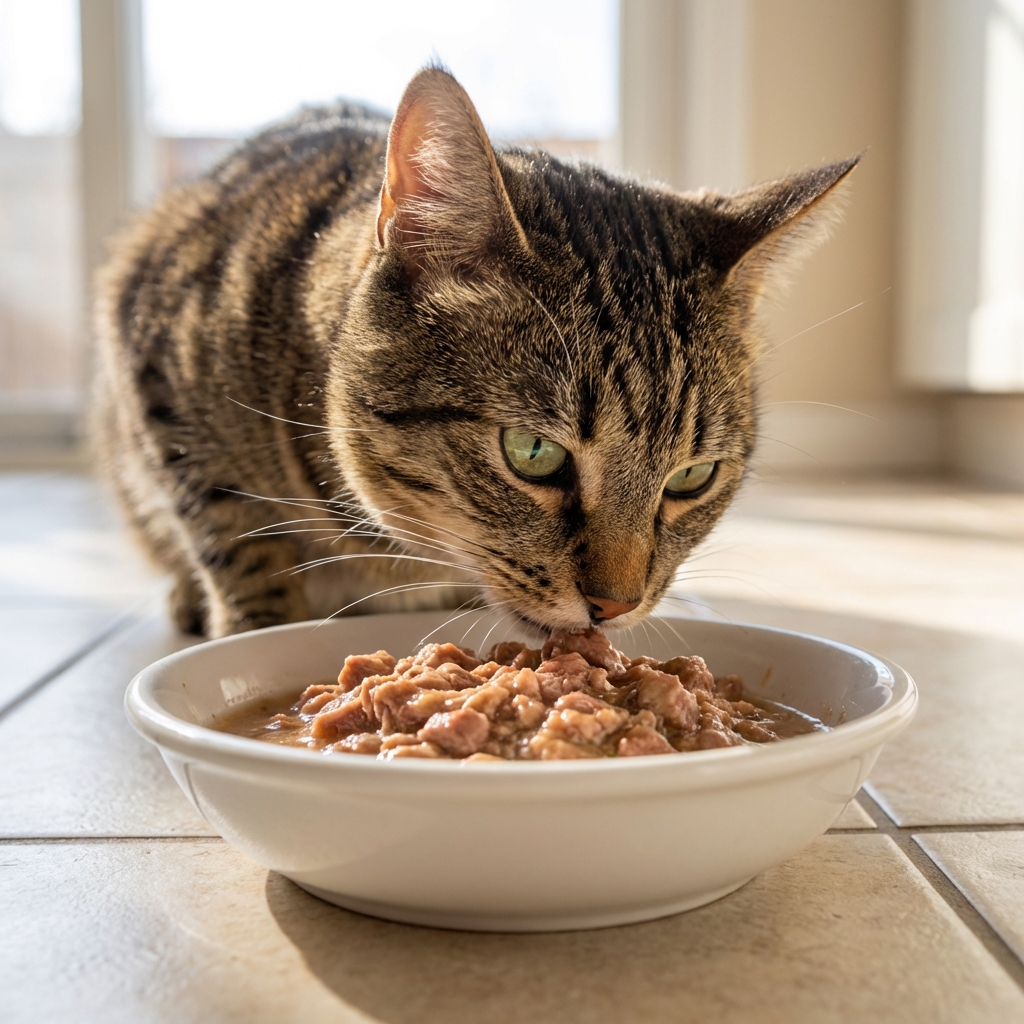
- If your cat eats only dry food, consider transitioning to wet food (slowly, over days).
- Mix 1 to 2 teaspoons of warm water into wet food to make a “gravy” consistency.
- Use unseasoned broth made for pets, or plain meat broth with no onion, no garlic, and low sodium.
3) Offer safe, hydrating extras
- Cat-safe electrolyte solution can be useful when recommended by your vet. Avoid human sports drinks.
- Tuna water from a can of tuna packed in water (in small amounts) can entice some cats. Do not rely on it as the main fluid long term.
4) Encourage sipping, not forcing
If your cat will drink, let them drink. If they will not drink, do not force water into the mouth, which can lead to aspiration. If your cat is not drinking and seems unwell, that is a reason to call your veterinarian.
What not to do
- Do not give IV or subcutaneous fluids at home unless your veterinarian has trained you and prescribed the exact plan.
- Do not syringe water or fluids into your cat’s mouth if they are weak, struggling, or at risk of inhaling it.
- Do not give broth with onion or garlic. These can damage red blood cells in cats.
- Do not offer milk as a “hydration fix.” Many cats are lactose intolerant and it can worsen diarrhea.
- Do not use human electrolyte products unless your veterinarian specifically directs you. Sugar and sodium levels may be inappropriate for cats.
- Do not delay care if vomiting, diarrhea, or lethargy are present. Dehydration is often a symptom of something bigger.
How the vet treats dehydration
Veterinary treatment depends on severity and cause. Your veterinarian may:
- Assess hydration status and vital signs (including gum moisture, capillary refill time, skin turgor, heart rate)
- Run bloodwork and urinalysis to check kidneys, glucose, electrolytes, and infection
- Provide subcutaneous fluids for mild to moderate dehydration (common in stable cases)
- Provide IV fluids for more serious dehydration or when electrolyte correction is needed
- Treat the underlying issue (anti-nausea meds, parasite treatment, diet therapy, diabetes or thyroid management, etc.)
If your cat has a chronic condition like kidney disease, your vet may also teach you a long-term hydration plan.
Prevention: simple habits that make a big difference
- Prioritize moisture: Wet food, added water, and hydration-friendly toppers are often game-changers.
- Track litter box output: Smaller clumps, straining, or sudden changes (including much larger clumps) are early clues.
- Keep water appealing: Clean bowls, multiple stations, and fountains help. Placement matters too.
- Schedule wellness checks: Especially for cats over age 7, routine labs can catch kidney disease or diabetes earlier.
Most importantly, trust your instincts. You know your cat’s normal. If something feels wrong, a quick call to your veterinary team can prevent a small dehydration problem from becoming a big one.