A practical guide to helping a constipated cat at home: hydration tips, plain pumpkin, vet-guided Miralax (PEG 3350), fiber, hairball support, red flags, and...
Article
•
Designer Mixes
My Cat Is Constipated: What Can I Do?

Shari Shidate
Designer Mixes contributor
If your cat is straining in the litter box, passing tiny dry stools, or going longer than usual without a bowel movement, it can be stressful for both of you. Constipation is common, and many cases can be helped at home, but it can also signal pain, dehydration, an intestinal blockage, or another medical issue that needs veterinary care.
As a veterinary assistant, I always tell families to focus on two things first: how your cat is acting overall, and whether there are red flags that make this an urgent problem.
Quick note: This article is general guidance and not a substitute for an exam. If you are unsure, it is always okay to call your vet for advice.
Is it constipation or something else?
Constipation means stool is difficult to pass or is passing less often than normal. Cats are masters at hiding discomfort, so subtle clues matter.
Common signs of constipation
- Straining in the litter box with little or no stool produced
- Small, hard, dry stools
- Going less often than usual (many cats go about once daily, but some healthy cats go every 36 to 48 hours)
- Vocalizing in the litter box, restlessness, or repeated trips
- Decreased appetite or mild nausea
- Hiding, reduced activity, or seeming uncomfortable when picked up
Watch out: constipation can look like a urinary emergency
Cats that strain and produce little output may actually be blocked and unable to urinate, especially male cats. A urinary blockage can be life-threatening.
- If your cat is straining and you do not see urine, or you notice frequent attempts with only a few drops, treat it as an emergency and go to an ER immediately.
When to call a vet now
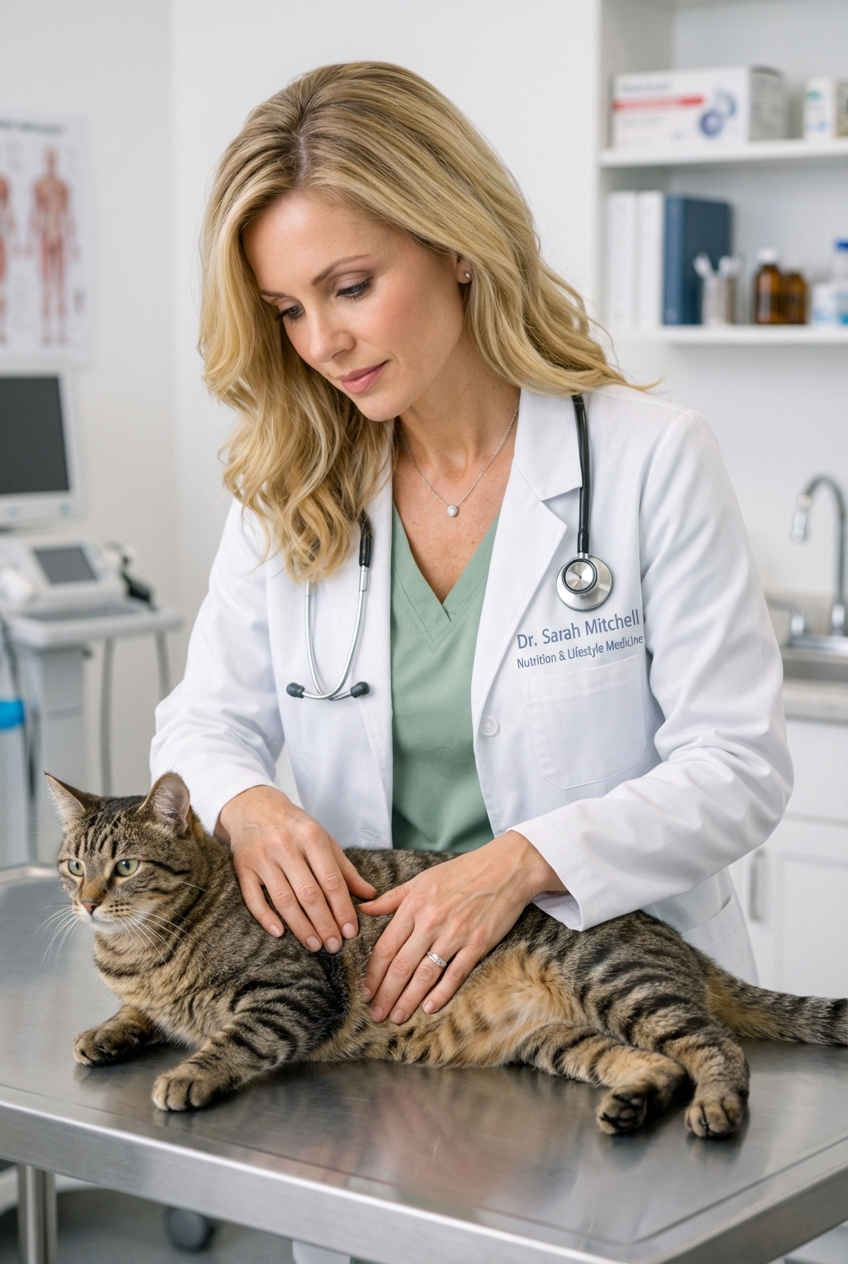
Home care is only appropriate if your cat is otherwise acting normal (bright and alert), not vomiting, and not painful in the belly, and is still passing at least a little stool. Seek veterinary help urgently if you notice any of the following.
- No stool for around 48 hours, or sooner if your cat is straining, uncomfortable, vomiting, or eating poorly
- Repeated vomiting, refusing food, or lethargy
- Bloated or painful belly
- Known ingestion of string, ribbon, bones, toys, hair ties, or other foreign material
- Blood in the stool
- Weight loss, worsening appetite, or constipation that keeps coming back
- Senior cats, cats with kidney disease, diabetes, megacolon history, or dehydration risk
- Any concern your cat is not urinating normally
What you can do at home (safe first steps)
If your cat is doing well overall and you are not seeing red flags, these are the gentlest evidence-based steps I recommend. Go slowly and make one change at a time so you can tell what helps.
1) Boost hydration
Dehydration is one of the biggest drivers of hard, dry stool. Many cats simply do not drink enough water.
- Switch to wet food if possible, even partially. Adding one wet meal daily can make a noticeable difference.
- Add water or low-sodium broth to canned food to make a stew-like texture. Make sure broth is onion and garlic-free (alliums are toxic to cats) and avoid sweeteners like xylitol.
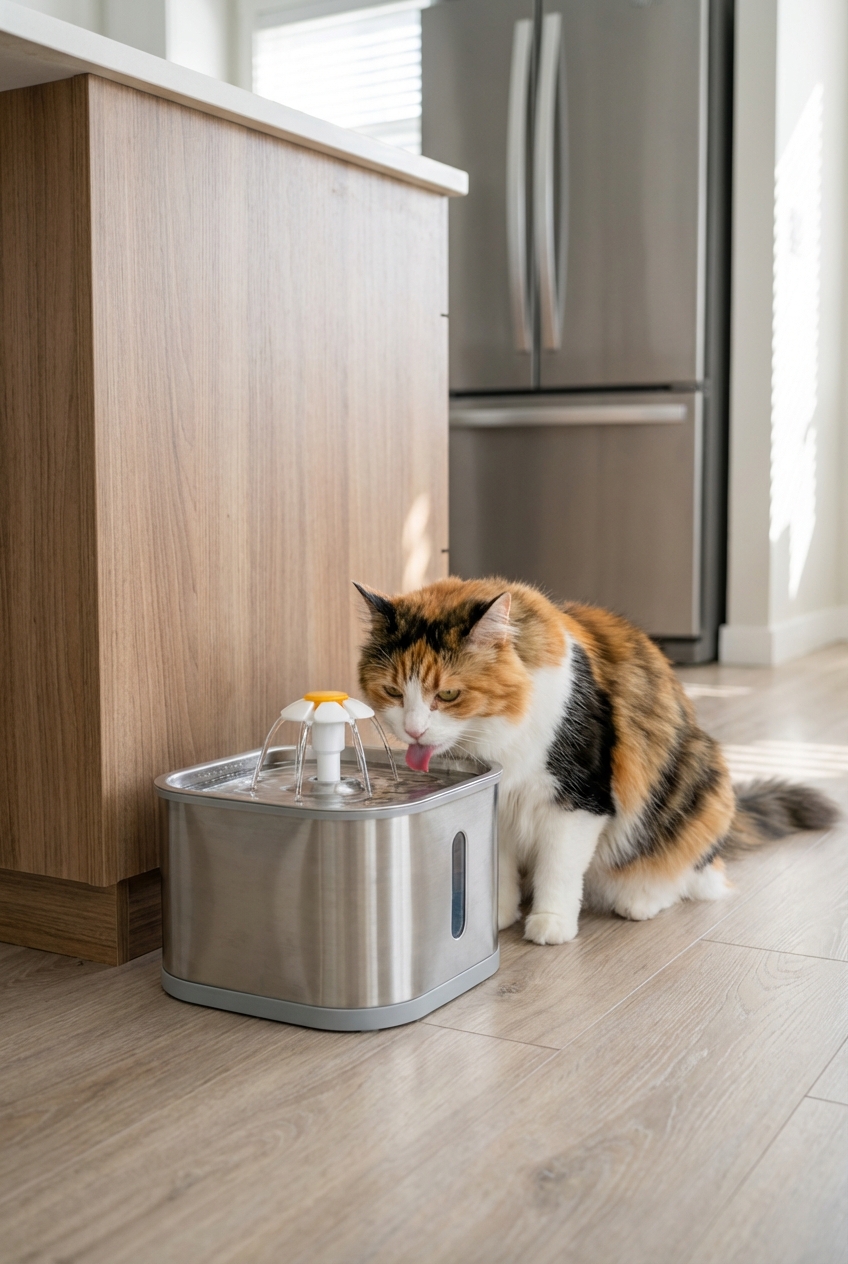
- Use a pet water fountain. Many cats drink more with moving water.
- Offer multiple water stations in quiet areas away from the litter box.
2) Add fiber carefully
Fiber can help some constipated cats, but in others it can worsen things if the underlying issue is dehydration or slow colon movement. Start small.
- Plain canned pumpkin (not pie filling): start with about 1 teaspoon once daily for an average cat, mixed into food. If helpful, some cats do well with up to 1 to 2 teaspoons twice daily. If you see diarrhea, gas, or worsening appetite, stop and check in with your vet. For cats with diabetes or on a weight plan, ask your vet first.
- Psyllium husk can be effective, but dosing varies widely and it must be paired with water intake. Ask your vet before using it.
3) Encourage movement and reduce stress
Activity helps gut motility. Stress can absolutely slow bathroom habits.
- Two short play sessions daily with a wand toy
- Maintain a predictable routine
- Provide safe hiding spaces, especially in multi-pet homes
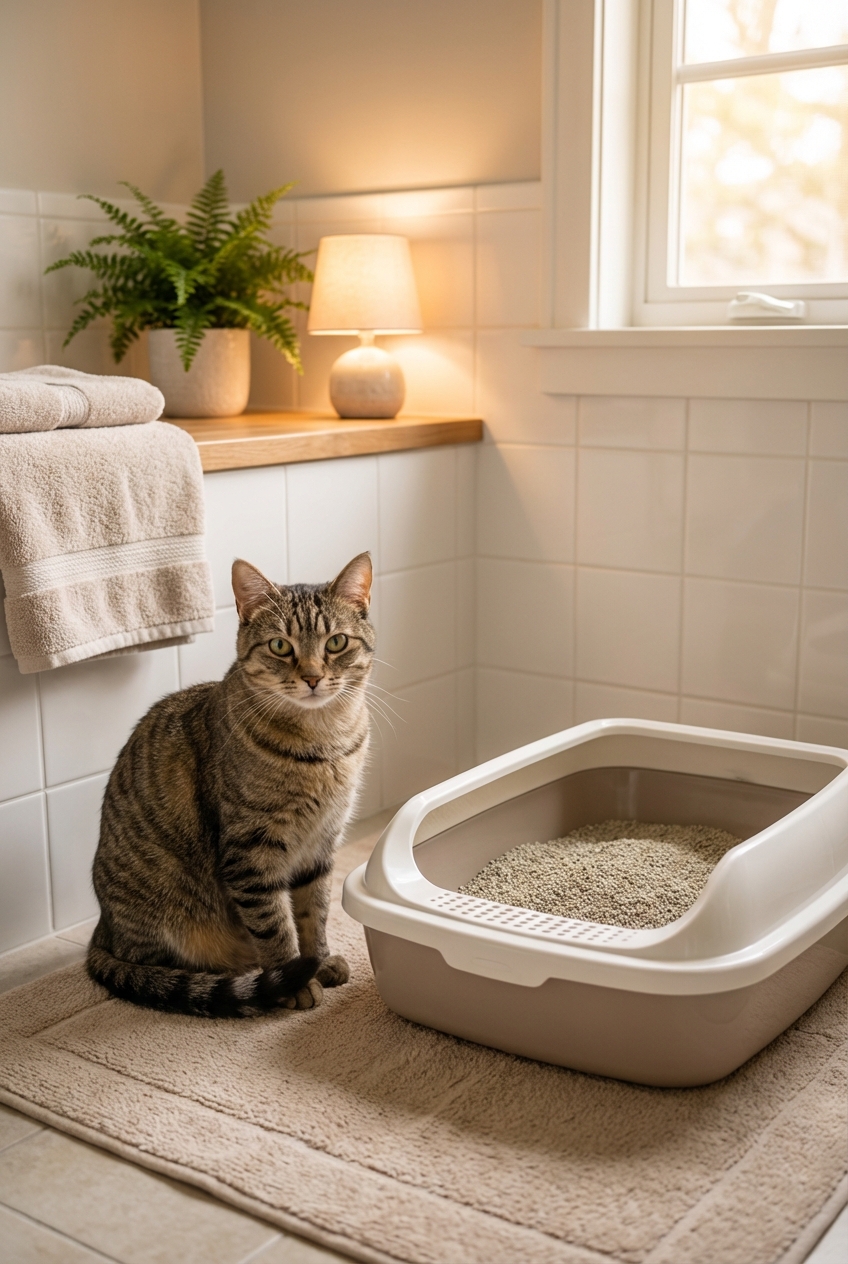
4) Improve litter box setup
If the litter box is uncomfortable or too dirty, some cats will hold it, which dries stool further.
- Scoop at least once daily
- Use a box with low sides if your cat is senior or arthritic
- Try a larger box and the litter your cat prefers, and avoid placing boxes where other pets can corner them
- Some cats do not like covered boxes, so an open box can help
- Follow the general rule: number of cats + 1 boxes, placed in quiet locations
What not to do
These are common mistakes I see that can delay proper treatment or cause harm.
- Do not give human laxatives unless your veterinarian specifically instructs you. Many are unsafe for cats or the dosing is risky.
- Do not use mineral oil by mouth. It can be inhaled and cause serious pneumonia.
- Do not give enemas at home. Some enema products are toxic to cats, and improper use can injure the rectum.
- Do not force-feed if your cat is nauseated or vomiting.
Common causes of constipation in cats
Understanding the “why” helps prevent the next episode. Your veterinarian may recommend tests if constipation is frequent or severe.
- Dehydration from low water intake, heat, illness, or kidney disease
- Hair ingestion, especially in long-haired cats or heavy groomers (this can contribute to firm stool in some cats, even though true hairball obstruction is less common than many people think)
- Obesity and low activity, which can slow gut movement
- Diet that does not fit the cat, including too little moisture or the wrong fiber balance
- Pain from arthritis or spinal issues making the posture difficult
- Megacolon, where the colon becomes enlarged and less effective at pushing stool
- Obstruction from foreign material, tumors, strictures, or severe constipation
- Pelvic injuries that narrow the passageway
What a vet may do (and why it helps)
If your cat needs medical care, the goal is to relieve discomfort safely and prevent recurrence.
- Physical exam and abdominal palpation to assess stool burden and pain
- X-rays to check stool load, colon size, and rule out blockage
- Fluids (under the skin or IV) to correct dehydration
- Cat-safe stool softeners or laxatives as appropriate (common options include polyethylene glycol and lactulose, but dosing should come from your vet)
- Prescription GI diets that balance moisture and fiber
- Enema given safely in-clinic when needed
- Manual removal under sedation in severe cases
If constipation is recurring, your vet may also recommend screening for kidney disease, dehydration, pain, and other common senior conditions. Hyperthyroidism is a frequent part of senior cat screening, even though constipation is not the classic sign. For chronic cases like megacolon, long-term medications such as motility drugs may be discussed.
Prevention plan you can start today
Once your cat is feeling better, prevention is where you win long-term.
- Prioritize moisture: canned food, water added to meals, and a fountain
- Weekly coat care: brushing reduces hair ingestion
- Healthy weight: gentle weight loss, if needed, improves motility
- Daily play: even 5 to 10 minutes twice a day helps
- Litter box comfort: easy access, clean boxes, low stress locations
- Talk to your vet about a stool-softening plan if constipation is recurrent
If you remember just one thing: straining in the litter box is never something to ignore. If you are not 100% sure your cat is passing urine normally, treat it as urgent and get help.
Quick checklist
- If no urine or only a few drops with straining, go to an emergency vet now
- If vomiting, severe lethargy, painful belly, or no stool for around 48 hours (or sooner with discomfort), call your vet
- If mild constipation only, focus on moisture first, then gentle fiber like plain pumpkin (stop if diarrhea or gas)
- Avoid human laxatives unless your vet directs you, and never use mineral oil or home enemas