Stop the flea cycle with a proven plan: confirm fleas, use cat-safe vet-recommended treatments, treat every pet, and clean your home with vacuuming, laundry,...
Article
•
Designer Mixes
My Cat Has Fleas: Expert Advice You Need

Shari Shidate
Designer Mixes contributor
If your first thought is, My cat has fleas and I need them gone now, you are in the right place. Fleas are tiny, fast, and frustrating, but the good news is that with the right plan, you can break their life cycle and get your cat comfortable again.
As a veterinary assistant in Frisco, Texas, I have seen how quickly a small flea problem can become a whole-house problem. Let’s walk through what actually works, what to avoid, and how to keep fleas from coming back.
First, confirm it is fleas
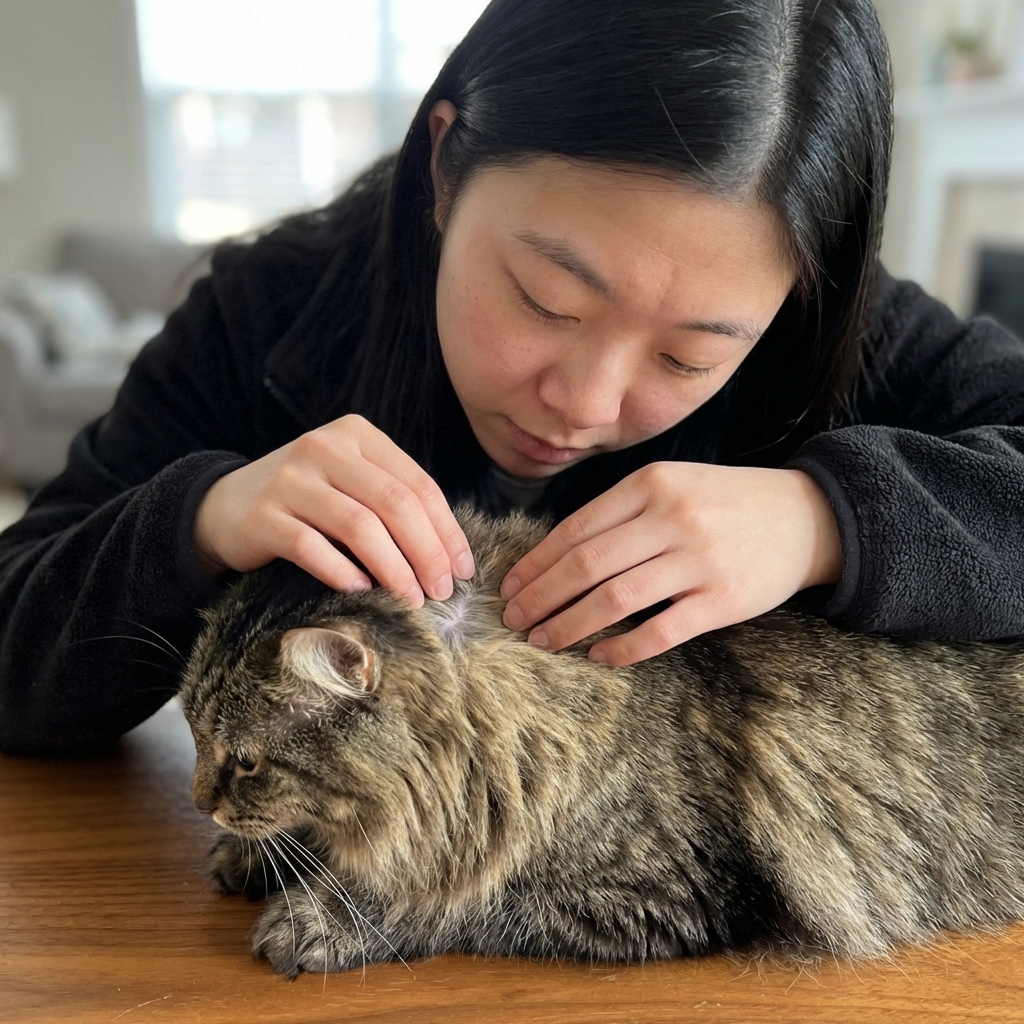
Many itchy cats do have fleas, but not all itching is fleas. Confirming the cause helps you pick the right treatment and avoid wasting time.
Common signs of fleas on cats
- Intense itching, especially around the neck, tail base, and back.
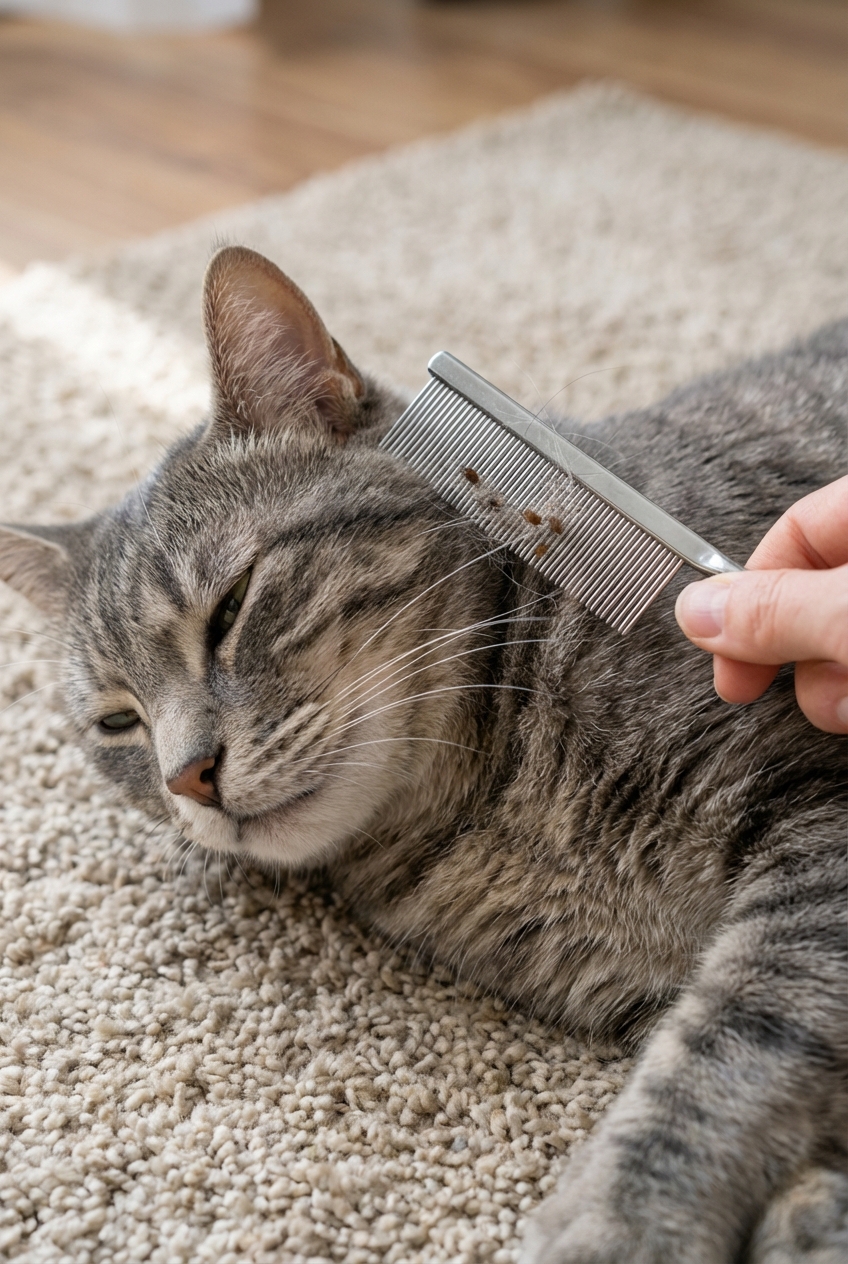
- Flea dirt (looks like black pepper specks) in the fur, often near the tail.
- Overgrooming or hair loss along the back end.
- Small scabs or crusty bumps, sometimes called miliary dermatitis.
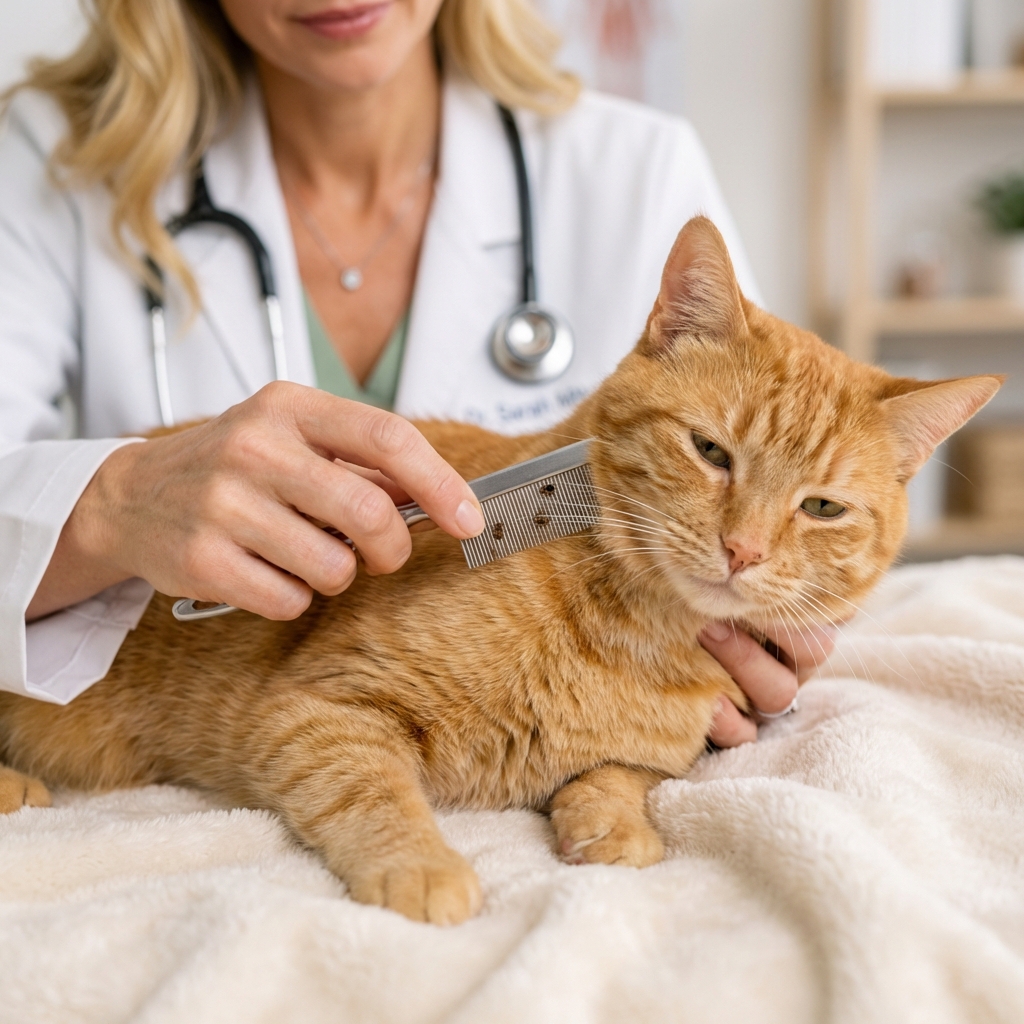
Quick at-home flea dirt test
Comb your cat over a white paper towel with a flea comb. Wet the specks with a little water. If they smear reddish-brown, that is digested blood, which strongly suggests fleas.
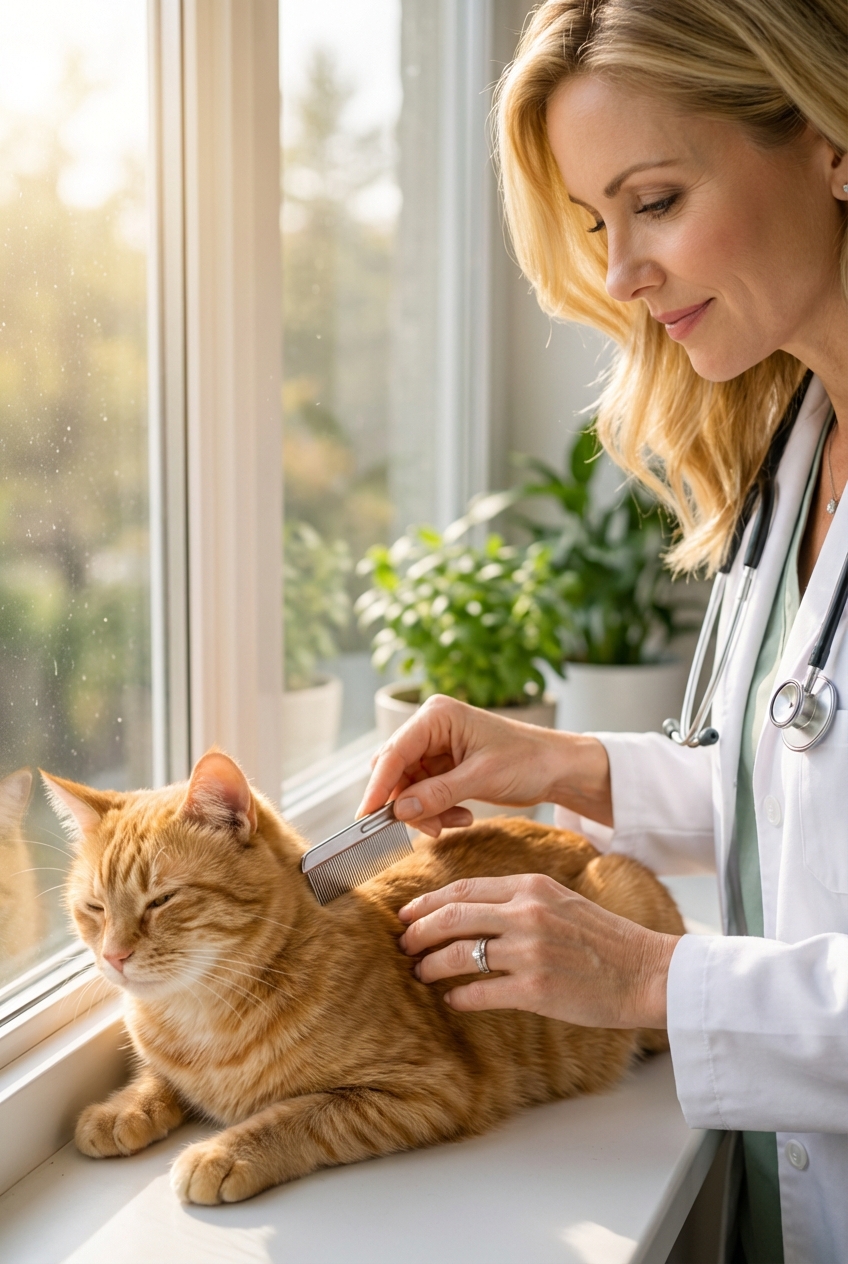
How to use a flea comb
Comb slowly from head to tail, focusing on the neck and the tail base. After each pass, wipe the comb on a damp paper towel or dip it into a cup of warm, soapy water to trap and kill any fleas you catch.
Why one flea turns into many
Here is the part most people do not realize: much of the flea problem is not on your cat. Adult fleas live on the pet, but eggs, larvae, and pupae live in your home.
A female flea can lay dozens of eggs a day. Eggs fall off into carpets, couch cushions, bedding, and cracks in flooring. That is why treating the cat alone often leads to repeat infestations.
What to do today
1) Treat every pet in the home
If you have multiple pets, all of them must be treated, even if only one is showing fleas. Dogs and cats can share fleas. Leaving one pet untreated is one of the fastest ways to stay stuck in the cycle.
2) Use a vet-approved flea product for cats
The most reliable flea control is a veterinarian-recommended topical or oral product. These are designed to kill adult fleas quickly and keep working long enough to disrupt the flea life cycle.
Important: Only use products labeled specifically for cats. Some dog flea products, especially those containing permethrin, can be dangerous for cats.
Also important: Check age and weight minimums. Many flea medications have a minimum age or weight, and kittens, pregnant cats, and cats with chronic illness may need a specific option chosen by a veterinarian.
3) Clean the environment like you mean it
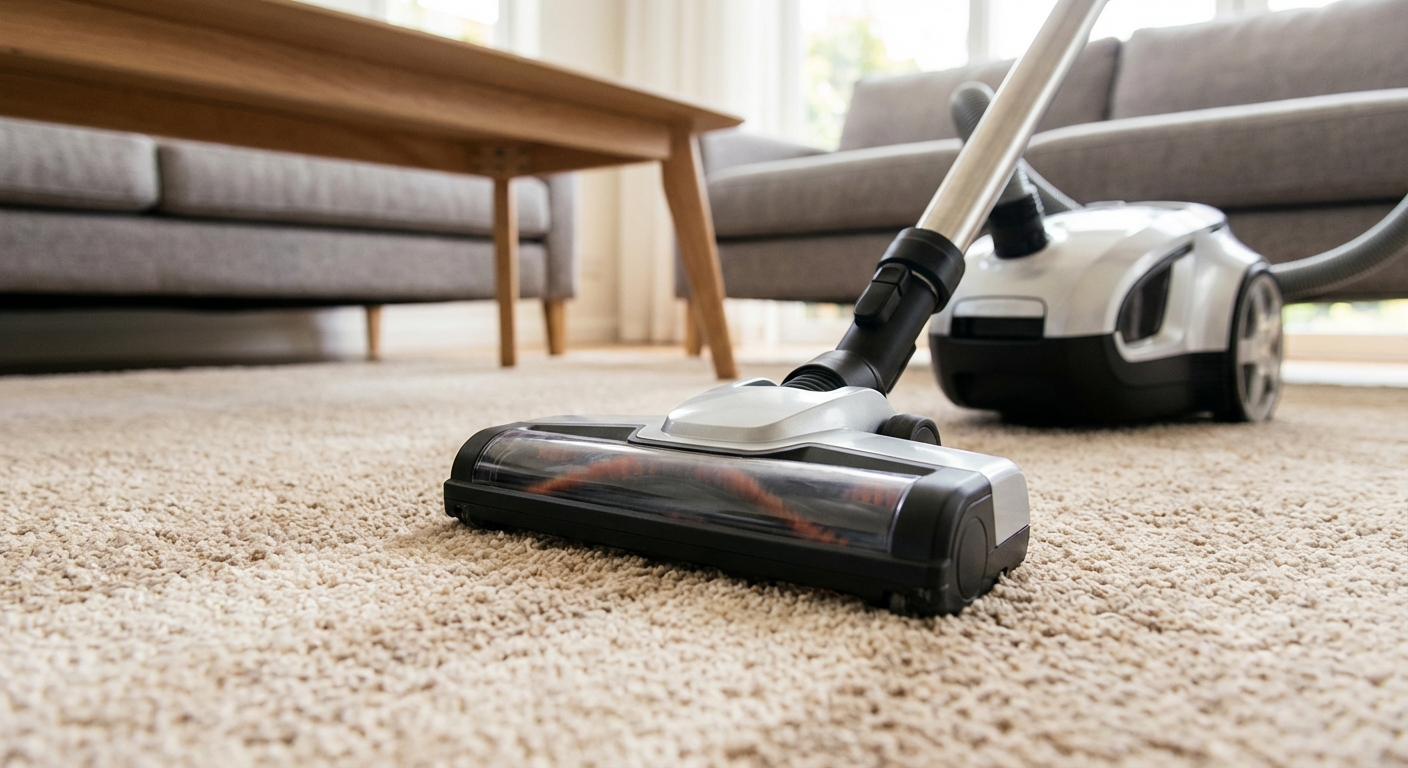
- Vacuum daily for 1 to 2 weeks, especially carpets, rugs, baseboards, and under furniture, then vacuum several times per week for another 4 to 6 weeks (or until you are flea-free).
- Wash bedding (pet beds, blankets, your bedding if your cat sleeps with you) in hot water and dry on high heat.
- Empty the vacuum right away. Seal debris in a bag and take it outside.
If your infestation is heavy, ask your vet about an insect growth regulator option for the home. These help prevent eggs and larvae from becoming biting adults.
If you use any home spray or hire pest control, follow the label exactly. Pets typically need to be out of the area during application, and the space should be ventilated before they return.
Common mistakes to stop
Do not use dog-only flea products
This is a frequent emergency. Some ingredients used for dogs can cause drooling, tremors, seizures, and worse in cats. If you are unsure what was applied, call your veterinarian or a pet poison helpline right away.
Be careful with essential oils
Many essential oils are unsafe for cats, especially when applied to the skin, used in sprays, or diffused continuously in closed spaces. Cats groom themselves and can ingest what is on their coat.
Do not rely on home remedies alone
Bathing and flea combing can remove some fleas, but they rarely solve an active infestation without a proven flea control medication and environmental cleanup.
When fleas are more than itchy
Flea allergy dermatitis
Some cats are allergic to flea saliva. For these cats, one bite can trigger days of itching, scabs, and inflammation. These cases often need both flea control and anti-itch or anti-inflammatory support from your veterinarian.
Anemia risk in kittens
Kittens can become weak and anemic from fleas much faster than adult cats. If your kitten is lethargic, pale in the gums, or not eating well, treat this as urgent and contact your veterinarian.
Tapeworms
Cats can pick up tapeworms (often Dipylidium caninum) from swallowing infected fleas while grooming. If you see small rice-like segments in the litter box or around the tail, ask your vet about deworming in addition to flea control. Flea medication helps prevent future infections, but it does not treat tapeworms your cat already has.
How long until fleas are gone?
With the right medication and consistent cleaning, many households see big improvement within days to 1 to 2 weeks. Full control can take several weeks because flea pupae can wait in the environment and emerge later.
Stay consistent. The goal is not just to kill what you see today, but to stop the next wave from maturing.
Keep fleas away
- Use year-round flea prevention, especially in warmer climates where fleas can thrive for long stretches.
- Keep prevention consistent and on schedule. Late doses create openings for reinfestation.
- Check exposure. Even indoor cats can catch fleas from pets that go outside, rodents in crawl spaces, or visiting animals.
- Schedule a vet visit if itching continues after treatment, since allergies, mites, and skin infections can mimic fleas.
Warm reminder: You do not need a dozen products to win this battle. You need the right product for your cat, used consistently, plus a focused home cleanup plan.
Quick note: This is general guidance. Your veterinarian is the best source for product selection for your cat’s age, weight, and health status.
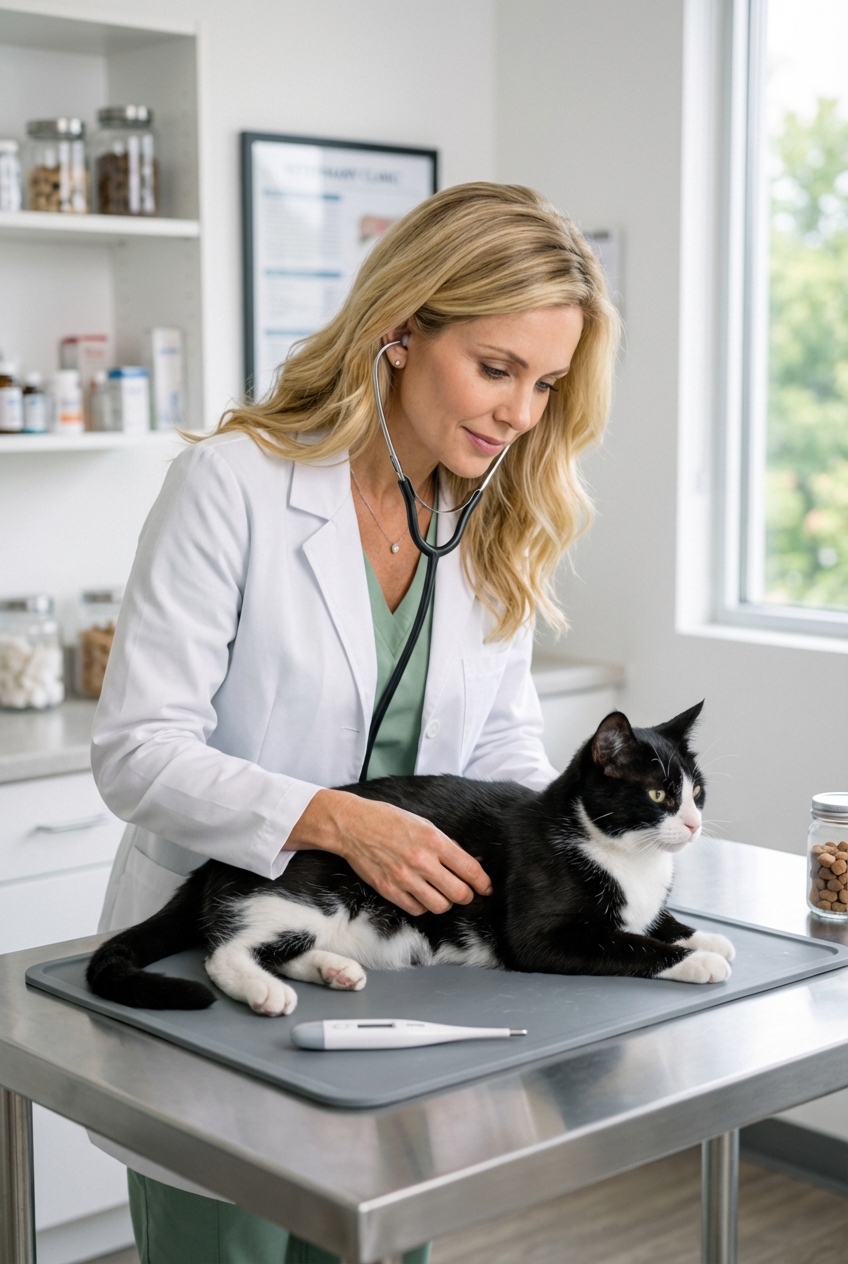
When to call the vet
- Your cat is a kitten, elderly, pregnant, or has chronic illness.
- You see pale gums, weakness, or rapid breathing.
- Your cat has open sores, significant hair loss, or signs of skin infection (odor, oozing, swelling).
- You accidentally used a dog flea product or an unknown product on your cat.
- Fleas persist after 4 weeks of consistent, labeled treatment and cleaning.