If you are staring at a piece of string hanging out of your cat’s mouth (or, just as alarming, from the rear end), your instinct is totally human: pull it out and fix the problem.
But as a veterinary assistant here in Frisco, Texas, I have to tell you as clearly as I can: do not pull the string. With cats, string, yarn, ribbon, dental floss, thread, tinsel, and similar items can cause a specific and very dangerous problem called a linear foreign body. Pulling can turn a scary situation into an emergency surgery situation in seconds.
Instead, take a breath. Below I will walk you through what linear foreign bodies are, what you can safely check at home (including under the tongue), and the symptoms that mean your cat needs same-day veterinary care.
Quick answer: should you pull it out?
No. If you can see string, thread, yarn, ribbon, tinsel, or floss sticking out of your cat’s mouth or anus, do not pull it.
Why? Because the string may be anchored somewhere inside the digestive tract, often wrapped under the tongue or caught farther down. Pulling can:
- Saw through tissue as the intestines tighten and bunch.
- Cause tearing or perforation of the stomach or intestines.
- Worsen an obstruction and speed up shock, infection, or sepsis.
The safer move is to prevent more chewing, keep your cat calm, and call a veterinarian right away for guidance based on your cat’s symptoms.
What is a linear foreign body in cats?
A linear foreign body is exactly what it sounds like: a long, string-like object that a cat swallows. The danger is not just blockage like a “plug.” String can behave more like a tight line running through the GI tract.
Here is the scary part in plain language.
How string “bunches” the intestines
Cats’ intestines move in gentle waves (peristalsis) to push food along. If a string is anchored at one end, those intestinal waves can pull the intestines along the string, making them pucker and gather like fabric on a drawstring.
That bunching can:
- Cut off blood flow to sections of intestine
- Cause severe inflammation and pain
- Lead to tearing and leakage of intestinal contents into the abdomen
This is why a cat that “seems okay” right after swallowing string can get very sick later. The damage can build over hours, not just minutes.

What to do right now (safe steps at home)
You do not need fancy tools. You just need a calm plan.
1) Stop the game immediately
If your cat is actively chewing string or has it in their mouth, gently remove any loose pieces only if they are not attached and you can do it without pulling. If it is already swallowed or you feel resistance, stop.
If you have another pet, separate them. If your cat is frantic, place them in a quiet room to prevent running and stress.
2) Do a quick mouth check (especially under the tongue)
This one surprises many cat owners: cats commonly get string looped around the base of the tongue. It can act like an anchor while the rest of the string slides into the stomach and intestines.
If your cat will allow it safely:
- Turn on a bright light.
- Gently lift the tongue if possible.
- Look for a string or thread wrapped around the tongue or stuck between teeth.
If you see string under the tongue, do not pull it out. This is still an urgent vet situation. Your veterinarian may need to sedate your cat to remove it safely and check for internal damage.
If your cat will not let you look, do not force it. A stressed cat can bite, and a bite needs medical care for you, too.
3) If string is hanging from the rear end, prevent chewing and call your vet
Some cats will try to turn around and chew at it. If you can, use an e-collar (cone) if you have one, or keep your cat in a small calm space while you call the vet.
Do not cut the string at the skin if it is taut. Do not tug. Both actions can increase injury risk.
4) Call your veterinarian the same day if you suspect ingestion
Even if your cat seems normal, string ingestion is one of those problems that can flip quickly. Describe:
- What your cat swallowed (string, yarn, floss, ribbon, tinsel, etc.)
- Approximately how much
- When it happened
- Any symptoms (vomiting, drooling, hiding, not eating)
Symptoms that mean same-day care (and why)
With linear foreign bodies, I take these signs seriously because they can point to obstruction, intestinal injury, dehydration, and pain.
Seek same-day veterinary care if you notice any of the following:
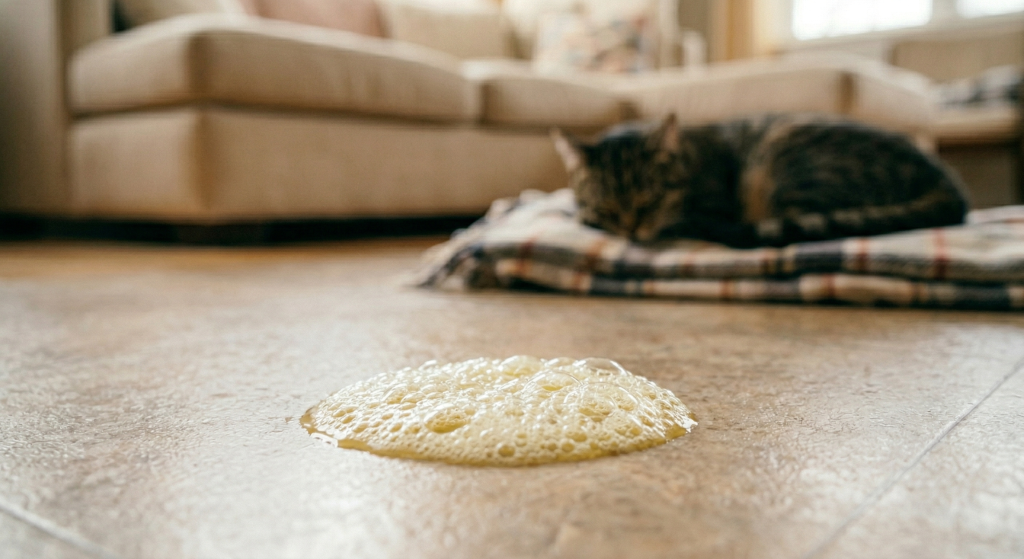
- Vomiting (even once, especially if repeated or projectile)
- Retching or gagging, especially with little coming up
- Loss of appetite or refusing treats
- Lethargy, hiding, or acting “off”
- Drooling or pawing at the mouth
- Abdominal pain (tense belly, growling, unwilling to be picked up)
- Diarrhea or no stool (straining, frequent trips to the litter box)
- Dehydration (dry gums, sunken eyes, weakness)
If your cat is actively vomiting, very painful, collapsing, or has pale gums, that is an emergency. Go to an ER vet.
Why pulling a visible end is dangerous
It feels logical to remove what you can see. But linear foreign bodies do not behave like a simple swallowed toy.
Here are the main reasons pulling is risky:
- The string may be anchored under the tongue or wrapped around a structure inside the stomach or intestines.
- Intestines can be “telescoped” and bunched along the string. Pulling increases tension and injury.
- The string can slice into delicate tissue when tension changes, similar to a cheese cutter wire.
Many of the worst cases I have seen started with a well-meaning attempt to pull. Owners were trying to help. They just did not know how this particular type of foreign body works.
How vets diagnose and treat swallowed string
Treatment depends on where the string is and whether it is causing obstruction or damage.
At the clinic, your vet may:
- Do a physical exam and check hydration, pain, and abdominal tension
- Look under the tongue and sedate if needed for a safe oral exam
- Recommend X-rays, ultrasound, or both
- Run bloodwork to assess dehydration, infection risk, and organ function
Possible treatments
- Endoscopic removal (sometimes possible if the string is in the stomach and accessible)
- Surgery (often needed if the string has traveled into the intestines, is anchored, or has caused bunching or tearing)
- Hospital support such as IV fluids, pain control, anti-nausea meds, and antibiotics when appropriate
I know the word “surgery” is terrifying. But if your vet recommends it, it is because leaving a linear foreign body in place can be far more dangerous.
Common string-like items cats swallow
Cats are brilliant little hunters, and anything that wiggles can look like prey. The most common culprits I hear about include:
- Yarn and knitting supplies
- Thread and needles (extra dangerous due to puncture risk)
- Dental floss
- Gift ribbon and bows
- Tinsel
- Hair ties, rubber bands, and elastic (not “string” but similar risk)
- Shoelaces

FAQ
What if my cat already swallowed the string and seems fine?
Call your vet the same day for advice. Some cats show symptoms later, after the string has moved and started bunching the intestines. Early guidance can prevent a crisis.
What if the string is coming out in poop?
Do not pull it. If it is loose and completely passed, you might see it in stool without tension. But if any part is still inside and anchored, pulling can injure the intestines. Call your vet for next steps and watch for vomiting, appetite changes, pain, or lethargy.
Can I feed bread, pumpkin, or oil to help it pass?
I do not recommend home “remedies” for string ingestion. With linear foreign bodies, the risk is not just constipation. It is internal injury. Adding food or oils can complicate vomiting and anesthesia decisions if your cat needs urgent care.
Should I make my cat vomit?
No. Do not try to induce vomiting at home in cats unless a veterinarian specifically instructs you to do so. It can be unsafe and may worsen injury depending on the item swallowed.
How long does it take for symptoms to show?
It varies. Some cats vomit quickly. Others seem okay for a while and then suddenly develop vomiting, pain, and refusal to eat as the string advances and causes more damage. When it comes to string, earlier evaluation is safer.
How to prevent it (real-life, doable steps)
You do not have to make your home “cat-proof” overnight, but a few changes go a long way.
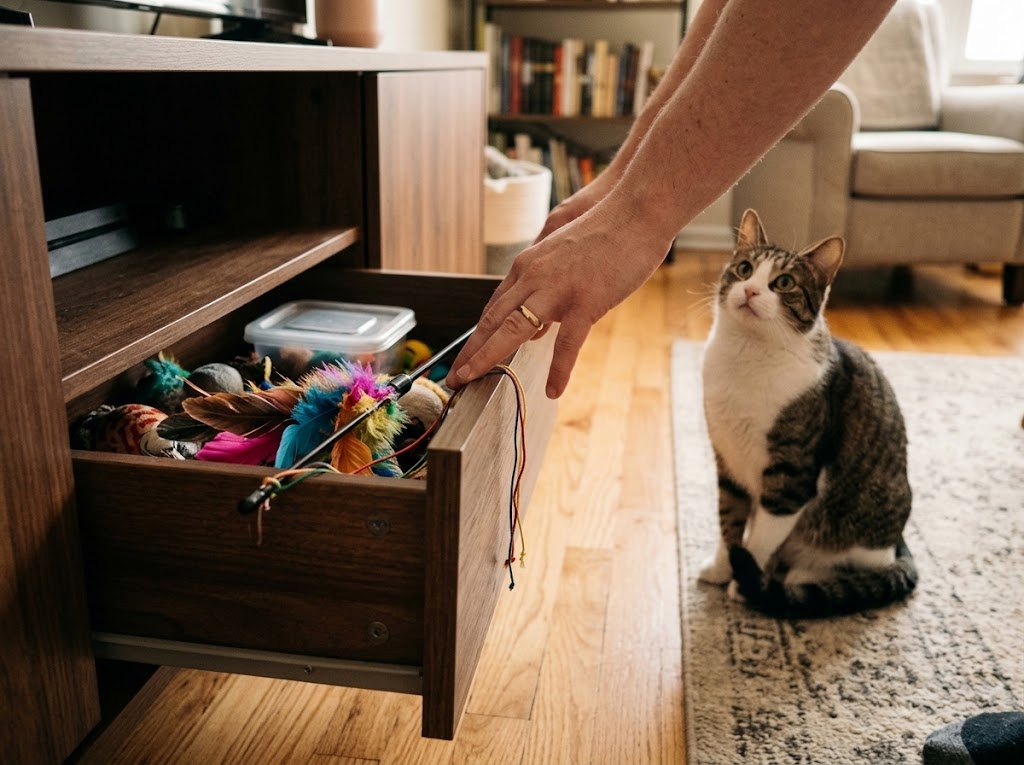
- Put string toys away after playtime. Wand toys are wonderful, but they should be supervised only.
- Store yarn, thread, and ribbons in closed bins or drawers.
- Skip tinsel if you have cats. It is not worth the risk.
- Secure trash cans where floss, food string, and wrappers can be tempting.
- Offer safer enrichment like puzzle feeders, sturdy kicker toys, and supervised interactive play.
My bottom line
If your cat ate string, yarn, thread, tinsel, or anything similar, the safest rule is simple: do not pull it out, even if you can see an end.
Check under the tongue if you can do it safely, watch closely for vomiting and appetite changes, and contact your veterinarian right away. Acting quickly can be the difference between a simple removal and a much more serious emergency.
If you are unsure how urgent your situation is, call your vet or an emergency clinic and describe exactly what you are seeing. With linear foreign bodies, it is always better to be “too careful” than too late.