
Skip pricey processed treats with 5 easy homemade dog treat ideas—from frozen pumpkin yogurt bites to sweet potato chews. Includes vet safety tips, portion...
Article
•
Designer Mixes
Must-Know Hot Spots On Dogs

Shari Shidate
Designer Mixes contributor
Hot spots can show up fast and look scary, especially on fluffy mixed breeds. One minute your dog is fine, and the next you notice a wet, red patch that seems to spread by the hour. As a veterinary assistant here in Frisco, Texas, I have seen how miserable these can make dogs, and how quickly they can improve once you address the real trigger.

In vet medicine, hot spots are usually called acute moist dermatitis (also called pyotraumatic dermatitis). They are not a specific disease by themselves. They can become urgent quickly and usually need prompt attention because itching, licking, chewing, moisture, and bacteria team up to create a painful skin infection that is often superficial at first but can worsen fast if the cycle continues.
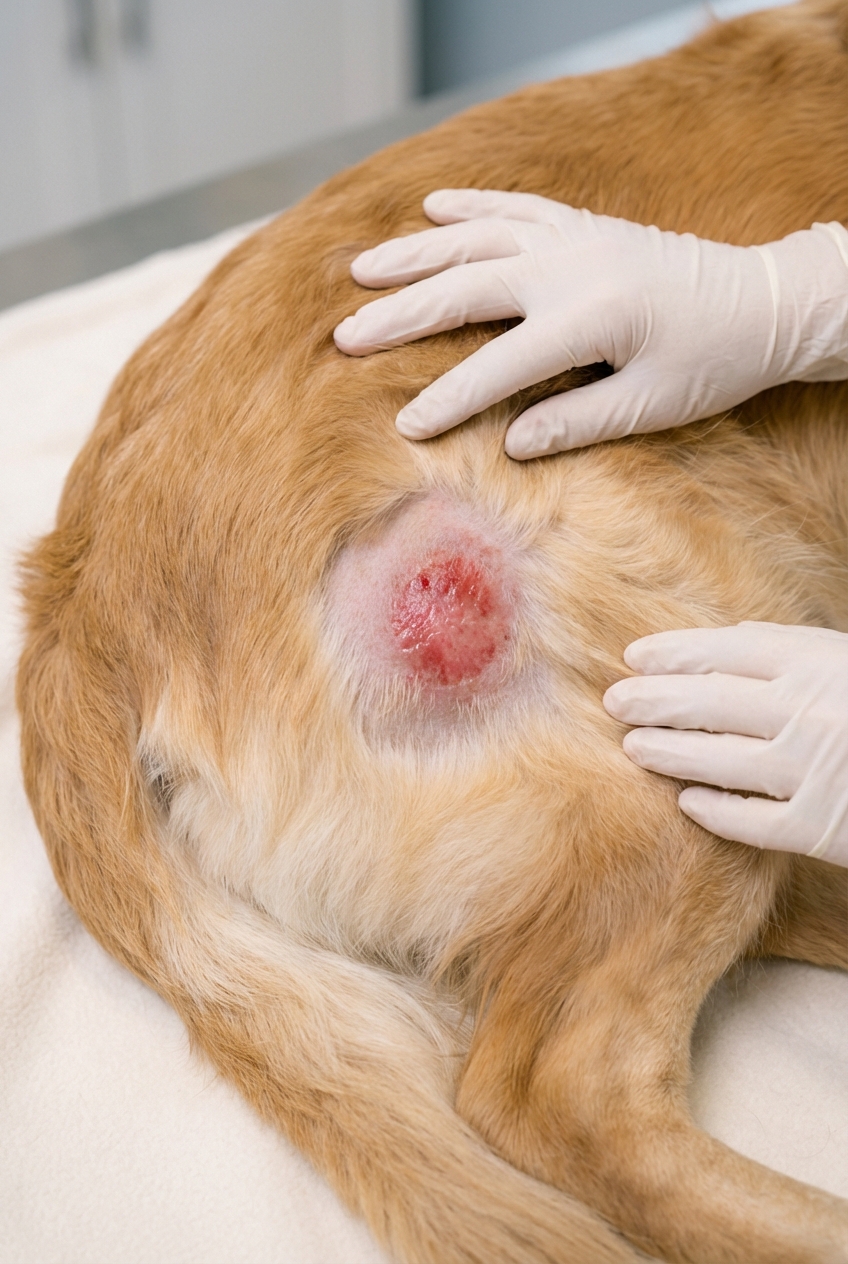
What a hot spot looks like
Most hot spots share a few classic features:
- Sudden onset: you might not notice anything in the morning, but by evening it is obvious.
- Moist, oozing, or sticky fur: sometimes the hair clumps into a wet mat.
- Red, inflamed skin that can look raw.
- Strong itch or pain: many dogs cannot stop licking or scratching.
- Hair loss around the area, especially once it is clipped at the clinic.
Common locations include the cheeks, neck, behind the ears, hips, tail base, and anywhere that stays damp under thick fur.
Why hot spots happen
A hot spot is usually the end result of itch + moisture + self-trauma. The important part is identifying what started the itch in the first place.
Allergies
Allergies are one of the biggest drivers of hot spots, especially in dogs who also get ear infections, paw licking, face rubbing, or recurrent skin issues.
- Environmental allergies: pollen, grasses, dust mites, mold.
- Food sensitivities: can contribute to chronic itch, even if symptoms come and go.
- Flea allergy dermatitis: one bite can trigger intense itching in sensitive dogs.
Moisture trapped in the coat
Think swimming, baths, rain, or even humid weather. When moisture stays down at the skin level, bacteria can bloom quickly.
- Dense coats and undercoats
- Hair mats that trap dampness
- Not fully drying after bathing or lake days
Parasites and infections
Fleas and skin infections can create the itch that sets the cycle in motion. Sometimes a small wound, scratch, or insect bite becomes the starting point.
Grooming and friction
Hot spots can appear under collars, harness straps, or in areas that get rubbed repeatedly, especially if the skin is already irritated or damp.
Stress licking
Some dogs lick compulsively. If they focus on one area long enough, the skin barrier breaks and infection follows.
Why they spread fast
Hot spots are a perfect storm:
- The skin is inflamed and leaking fluid.
- The fur holds moisture against the skin.
- Dogs keep licking because it itches and stings.
- Bacteria love warm, wet environments.
That is why a spot can expand dramatically within hours to a day. Prompt treatment matters.
What to do at home
If your dog has a small, early hot spot and is otherwise acting normal, these steps can help you slow the lick-and-spread cycle while you decide if a vet visit is needed. This is general guidance and does not replace an exam. If you are unsure, or your dog is very uncomfortable, skip home treatment and call your vet.
1) Stop the licking
This is the most important step. If your dog keeps licking, nothing you apply will work.
- Use an E-collar (cone) or inflatable collar.
- Use a recovery suit or T-shirt only if it keeps the area dry and your dog cannot reach under it.
2) Trim fur if you can do it safely
Veterinary teams usually clip widely around hot spots. This helps air reach the skin and lets you clean the area properly. If you try this at home, avoid scissors because hot spot skin can be fragile and easy to cut. Clippers are safer if you are experienced. If your dog is painful, wiggly, or the hot spot is near the face or genitals, skip this and let a professional handle it.
3) Gently clean and dry
- Rinse with saline or clean lukewarm water.
- Pat dry with clean gauze or a soft towel.
- If you have it, a chlorhexidine pet-safe cleanser can be helpful for mild cases.
Avoid hydrogen peroxide and alcohol. They can damage healing tissue and make the area more painful.
4) Keep it dry
Moisture fuels hot spots. After cleaning, make sure the area stays as dry as possible.
What not to use
- Essential oils (including tea tree oil), which can be toxic if licked.
- Tight bandages or wraps that trap moisture.
- Human creams or combination steroid and antibiotic products unless your veterinarian tells you to use them.
- Multiple medicated topicals at once unless your veterinarian instructs you to.
When to call the vet
Some hot spots are too advanced for home care, and many need prescription help to truly calm the itch and infection. Contact your veterinarian promptly if you notice any of the following:
- The area is rapidly expanding or larger than a couple of inches.
- Your dog seems very painful or cannot settle.
- The hot spot is on the face, near the eyes, ears, or genitals.
- There is pus, heavy odor, thick discharge, or crusting.
- Your dog has a fever, lethargy, poor appetite, or is not themselves.
- The hot spot keeps coming back (this often means an underlying allergy problem).
In the clinic, treatment may include clipping, deep cleaning, topical therapy, pain control, and medications to control itch and inflammation. Your vet may also do a quick skin test (often cytology) to help decide whether antibiotics are truly needed. In many cases, getting the itch under control is what finally breaks the cycle.
Clues from location
Where the hot spot shows up can hint at the trigger. It is not a diagnosis, but these patterns can help you and your vet connect the dots:
- Behind the ears or on the neck: can be related to ear infections, moisture after bathing, or collar friction.
- Tail base and rump: often points toward fleas or flea allergy.
- Near the rear end: sometimes tied to anal gland irritation, diarrhea, or licking from discomfort.
Preventing hot spots
The good news is that many hot spots are preventable, especially once you understand your dog’s personal triggers.
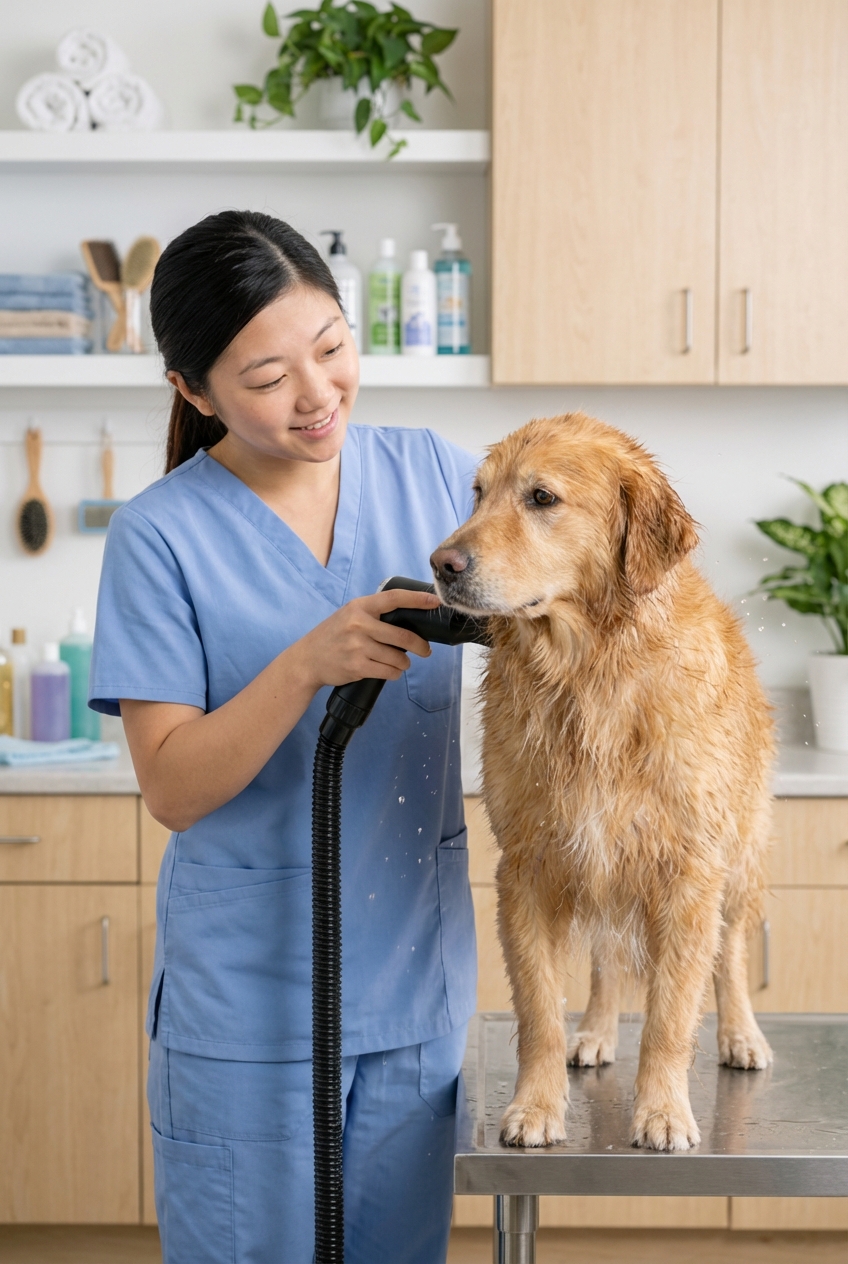
Dry the coat all the way
- After swimming or bathing, towel dry and use a pet-safe dryer if needed.
- Pay attention to thick areas like the neck, chest, hips, and behind the ears.
Stay consistent with parasite prevention
If fleas are part of the problem, you will not win the hot spot battle without reliable flea control. In multi-pet homes, ask your vet about treating all pets and addressing the home environment so the cycle does not restart.
Keep up with grooming
Mats trap moisture and bacteria. Regular brushing and appropriate haircuts can make a big difference, especially for coats that mat easily.
Address allergies early
If your dog gets seasonal itching, talk with your veterinarian before it becomes a full skin infection. Options can include medicated baths, wipes, prescription itch control, and diet trials when appropriate.
Support skin health with nutrition
Healthy skin starts from the inside. Many dogs benefit from:
- Balanced, high-quality diets with appropriate protein.
- Omega-3 fatty acids (EPA and DHA), when your vet says they are a fit.
- Maintaining a healthy weight, since obesity can worsen inflammation and skin issues.
If you are interested in adding fresh whole foods to support skin and coat, start slowly and keep meals balanced. Even a small upgrade can help, but it should never replace necessary medical treatment for an active hot spot.
Hot spots in popular mixes
Many mixed breeds are wonderful, but some have coats and skin tendencies that require a little extra strategy.
Poodle mixes
Curly or wavy coats can mat close to the skin, trapping moisture after baths and playtime. A consistent brushing routine and regular professional grooming are key.
Double-coated mixes
Dogs with thick undercoats can stay damp at the skin even when the top layer feels dry. Focus on fully drying the undercoat after water activities.
Dogs prone to allergies
Many popular mixes inherit allergy tendencies from one or both parent breeds. If you see repeated hot spots, recurrent ear infections, or constant paw licking, ask your vet about an allergy workup and a year-round plan.
Quick FAQ
Are hot spots contagious?
No, hot spots themselves are not contagious. But if the underlying cause is fleas or certain mites (like sarcoptic mange), those parasites can spread between animals.
Do I need antibiotics?
Not always. Some mild cases respond to clipping, cleaning, and topical care. More severe cases, deeper infection, or spreading lesions may need oral antibiotics and itch control prescribed by your veterinarian. Your vet may use skin cytology to guide that decision.
Can I use human creams?
Many human products are unsafe if licked, and some can trap moisture. If you are unsure, it is best to avoid them and ask your veterinarian for a dog-safe option.
The bottom line
Hot spots are common, painful, and fast-moving, but they are also very treatable. The winning formula is simple: stop the licking, dry and clean the area, and address what caused the itch in the first place. If your dog is uncomfortable or the spot is spreading, it is worth a prompt vet visit. Your dog will feel relief much faster, and you will prevent a small patch from becoming a major skin infection.