Fleas can quickly make kittens sick. Learn safe, age-appropriate flea control: combing, when to bathe, vet-approved meds by weight, and home cleaning to brea...
Article
•
Designer Mixes
Must-Know Flea Removal for Kittens

Shari Shidate
Designer Mixes contributor
As a veterinary assistant here in Frisco, Texas, I can tell you one thing with total confidence: fleas move fast, especially on tiny kittens. The good news is that flea removal is absolutely doable at home when you know what to use, what to avoid, and when it is time to call your veterinarian.
This guide covers the must-know basics, a step-by-step flea removal routine, helpful facts to keep you engaged, and practical tips that protect your kitten and your home.
First, the big safety rule
Do not use random flea products on kittens. Age and weight matter, and some dog products can seriously harm cats. When in doubt, pause and ask your vet. This article is educational, not a substitute for veterinary care.
Three quick safety notes that save lives:
- Avoid essential oils around kittens unless your veterinarian specifically says otherwise. Many essential oils (like tea tree, peppermint, clove, eucalyptus) can be toxic to cats. Kittens are even higher risk, and problems can happen fast from skin contact, licking, or diffusion in a small space.
- Never use a dog-only flea medication on a kitten. Some dog spot-ons contain permethrin, which is dangerous to cats.
- Skip powders, sprays, and OTC “flea dips” unless they are clearly labeled for kittens and your vet confirms they are appropriate. Many contain insecticides that are too harsh for small bodies.
How to tell if your kitten has fleas
Sometimes you see adult fleas darting through the coat, but often the clues are subtler.
Common signs
- Frequent scratching, chewing, or twitchy skin
- Small dark specks in the fur (often called “flea dirt”)
- Scabs around the neck or tail base
- Pale gums, low energy, or poor appetite in very small kittens (possible anemia)
- Intense itching from just a few fleas (possible flea allergy dermatitis)
Quick flea dirt test
Put the specks on a damp white paper towel. If they smear reddish-brown, that is digested blood, which strongly suggests fleas.
Flea facts that help you win
- Most of the flea problem is not on your pet. Adult fleas are just a small slice. Eggs, larvae, and pupae live in carpets, bedding, and cracks in flooring.
- Fleas can make kittens anemic. Tiny bodies have less blood to spare, so heavy infestations are more dangerous than many people realize.
- Pupae are tough. Flea pupae can “wait” and then hatch when they sense warmth and movement. This is why you can treat and still see fleas pop up for weeks.
- One flea can turn into many. An adult female flea can lay roughly 20 to 50 eggs per day, which is why early action matters.
- Fleas can lead to tapeworms. If a kitten swallows an infected flea while grooming, tapeworm infection can follow. If you find fleas, ask your vet whether deworming is needed.
Step-by-step: flea removal for kittens
The safest approach depends on your kitten’s age, weight, and overall health. If your kitten is very young, tiny, or not eating well, call your veterinarian promptly before trying multiple treatments.
Step 1: Isolate and prep
- Keep the kitten in a small, easy-to-clean room (a bathroom works well).
- Gather supplies: flea comb, a bowl of warm water with a drop of dish soap, clean towels, and a washable blanket. If bathing is appropriate, use a gentle kitten-safe shampoo.
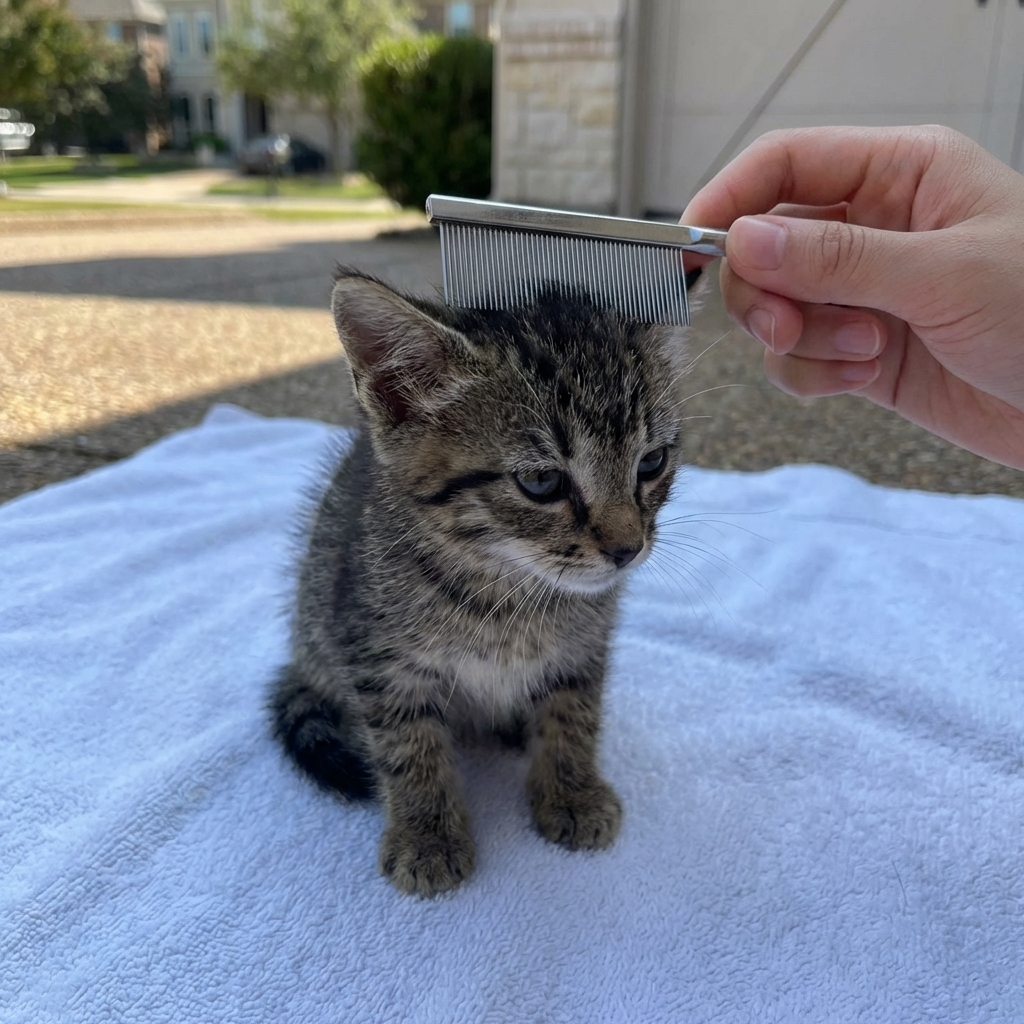
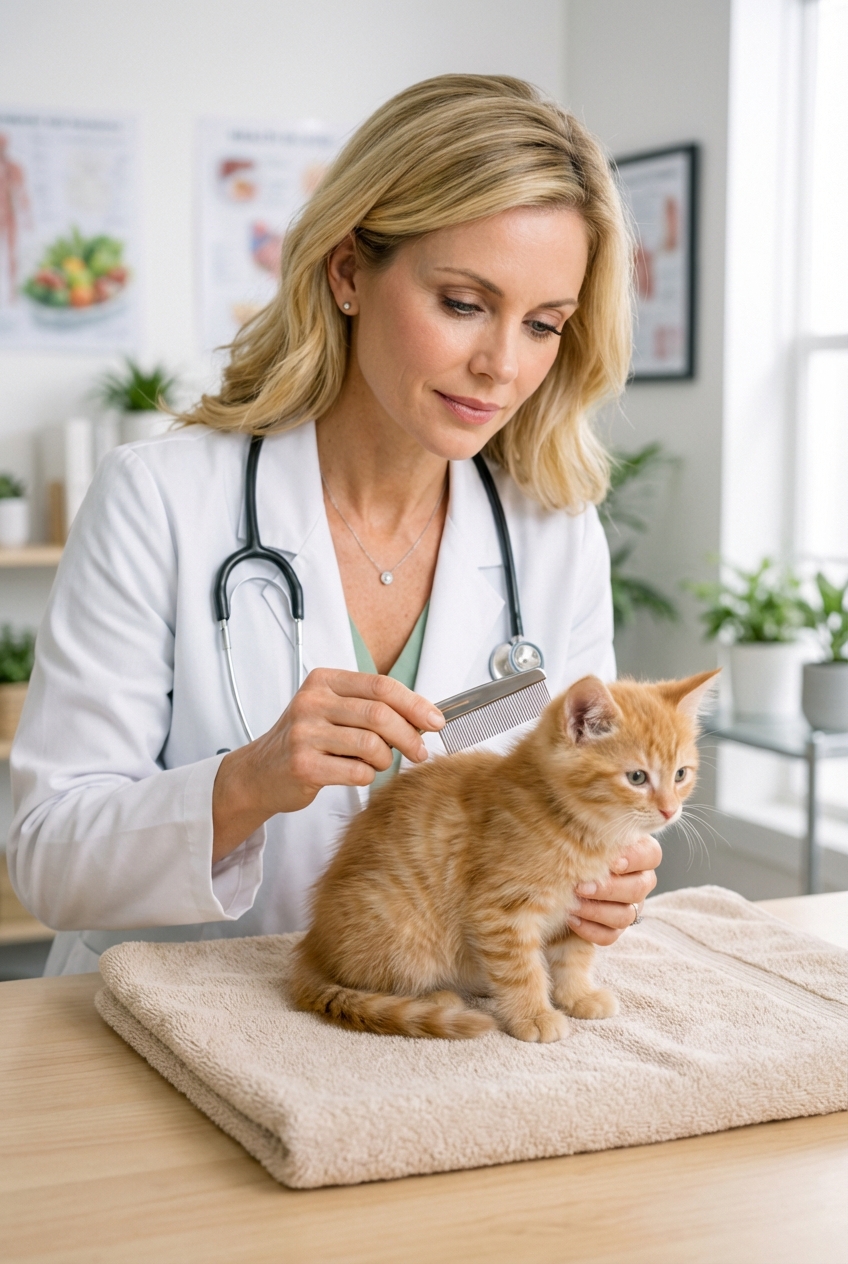
Step 2: Flea comb like a pro
Combing is low-risk and very effective for reducing adult fleas quickly.
- Comb slowly from head to tail, focusing on the neck, behind ears, armpits, and base of tail.
- Use extra care on the face. Comb the forehead, chin, and cheeks gently, and avoid dragging the comb over the eyes or whisker pads.
- Dip the comb into the soapy water after each pass to trap and kill fleas.
- Repeat 1 to 2 times daily during the first few days if needed.
Step 3: Consider a bath only if your kitten can handle it
A bath can help, but it is not always the best first step for very young kittens because chilling is a real risk.
- Extra caution under about 8 weeks. Young kittens chill easily. Neonates (very tiny kittens) should generally not be bathed unless your veterinarian directs you.
- Use warm water in a draft-free room.
- Keep the bath quick.
- Dry immediately and thoroughly with towels, then keep the kitten warm.
Safer face approach: During a bath, keep the head mostly dry. Afterward, use a slightly damp cloth and a flea comb to carefully catch fleas around the face and chin.
Step 4: Ask your vet about kitten-safe medications
Many families want a “one-and-done” product. For kittens, it has to be the right medication at the right dose. Your vet will base this on:
- Age (in weeks)
- Weight (in pounds or kilograms)
- Health status and any dehydration, diarrhea, or poor appetite
- Flea burden and whether other pets are affected
Important: Many flea preventives have minimum age and weight cutoffs. Some are not used under certain ages (often around 8 weeks), and some require a minimum weight. Do not apply anything you already have at home until a veterinary professional confirms it is safe for your kitten’s exact age and weight.
Home cleanup that works
To stop the cycle, you have to treat the environment too. Think of it as teamwork: you are removing adult fleas from the kitten while you remove the “next generation” from your home.
Vacuum plan
- Vacuum carpets, rugs, baseboards, and couch cushions daily for 1 to 2 weeks.
- Then vacuum several times weekly for a month, since new fleas can keep emerging from pupae.
- Immediately empty the canister or discard the vacuum bag outside.
Laundry plan
- Wash bedding, blankets, and soft toys in hot water if fabric allows.
- Dry on high heat to help kill eggs and larvae.
Keep it contained
Give your kitten a dedicated, washable blanket. Swap it daily at first, then every few days as things improve.
Sprays and foggers
Be careful with household flea sprays and foggers. Misuse can be hazardous for pets, especially kittens. If your home needs more than vacuuming and laundry, talk to your vet about pet-safe environmental options (often IGR-based products) or consider professional pest control that is experienced with pet households.
When to call a vet now
Please do not wait and see if you notice any of the following:
- Pale or white gums (possible anemia)
- Weakness, wobbliness, or collapse
- Not eating or poor nursing
- Labored breathing
- Severe scabbing, swelling, or signs of infection
- Tiny kittens with a heavy flea load
Kittens can decline quickly. Getting prompt help can be life-saving.
Multi-pet homes
If you have other cats or dogs, they are often the flea “reservoir” even if the kitten shows the worst symptoms.
- Treat all pets in the household with vet-approved flea prevention appropriate for each species and each pet’s age and weight.
- Keep the kitten separated until the flea burden is under control.
- Do not let treated dogs cuddle untreated cats if the dog product is not cat-safe.
Quick checklist
- Use a flea comb daily and dip it in soapy water
- Keep kittens warm, especially if bathing
- Avoid essential oils, dog flea products, and harsh powders or sprays
- Clean the environment with vacuuming plus hot laundry
- Ask your vet about tapeworms and kitten-safe flea prevention
- Call your vet if your kitten seems weak, pale, or not eating
Be gentle with yourself and your kitten. Fleas are common, and with safe steps and consistent cleanup, most families get control quickly.