Vet-assistant guide to supportive “caring food” for dog diarrhea: bland chicken and rice, pumpkin for fiber, probiotics, hydration, safe portions, and re...
Article
•
Designer Mixes
Must-Know Dog Poop Blood Care Tips

Shari Shidate
Designer Mixes contributor
Seeing blood in your dog’s poop: how worried should you be?
As a veterinary assistant, I can tell you this is one of the most common panic moments for pet parents. And I get it. Blood in stool looks alarming. The good news is that some causes are mild and treatable, but blood can also be a sign of something that needs quick veterinary care.
Your job is not to diagnose it at home. Your job is to observe the details, keep your dog safe, and know when to go in.
Quick note: Online info cannot diagnose your dog. If you are worried, call your veterinarian or an emergency clinic for guidance.
First, identify what you’re seeing
Bright red blood (hematochezia)
Bright red streaks, drops, or mucus with blood often suggests bleeding from the lower digestive tract (colon or rectum). Common causes include colitis, straining from constipation, anal gland irritation, parasites, diet changes, stress, or dietary indiscretion (getting into trash).
Black, tarry stool (melena)
Black, sticky, tar-like poop can indicate digested blood from the upper GI tract (stomach or small intestine). This can be more urgent because it can be associated with ulcers, toxins, certain medications, bleeding disorders, or internal bleeding.
Also worth knowing: Some things can darken stool without true bleeding, including iron supplements and bismuth products (like Pepto-Bismol). If you are seeing black stool, it is still smart to call your vet promptly so you can sort out what it is.
Blood with diarrhea
Blood plus diarrhea can happen with infections, parasites, sudden food changes, pancreatitis, acute hemorrhagic diarrhea syndrome (AHDS) (sometimes called hemorrhagic gastroenteritis or HGE), or inflammatory bowel disease. Dehydration can happen fast, especially in small dogs and puppies.
Red flags that mean “go now”
If any of the signs below are present, do not wait it out. Call your veterinarian, an urgent care clinic, or an emergency hospital.
- Black, tarry stool (melena)
- Large amounts of blood or bleeding that continues beyond one or two bowel movements
- Pale gums, weakness, collapse, or extreme lethargy
- Repeated vomiting, vomiting blood, or a swollen painful belly
- Signs of dehydration (sticky gums, sunken eyes, not peeing much)
- Possible toxin exposure, especially bleeding risk toxins (rat poison, human NSAIDs like ibuprofen or naproxen)
- Puppies, seniors, or dogs with chronic disease (kidney, liver, diabetes, cancer)
- Straining and not producing stool (could be severe constipation, a GI obstruction, or even a urinary blockage, and all can be urgent)
- Puppy with bloody diarrhea and low energy, especially if unvaccinated or not fully vaccinated (parvovirus is a major concern)
What you can do at home (safe steps)
1) Take a quick “poop history”
These details help your vet narrow the cause faster:
- Color: bright red vs black/tarry
- Amount: a streak vs more than a few drops vs all stool is dark
- Consistency: normal, soft, diarrhea, mucus
- Frequency: once vs repeated urgent trips
- Straining: yes or no
- Any vomiting, appetite change, or behavior change
- Any recent diet change, new treats, chews, bones, trash access
- Any meds or supplements (especially aspirin, ibuprofen, naproxen, steroids, iron, or bismuth products)
- For puppies: vaccine status and any known exposure to sick dogs
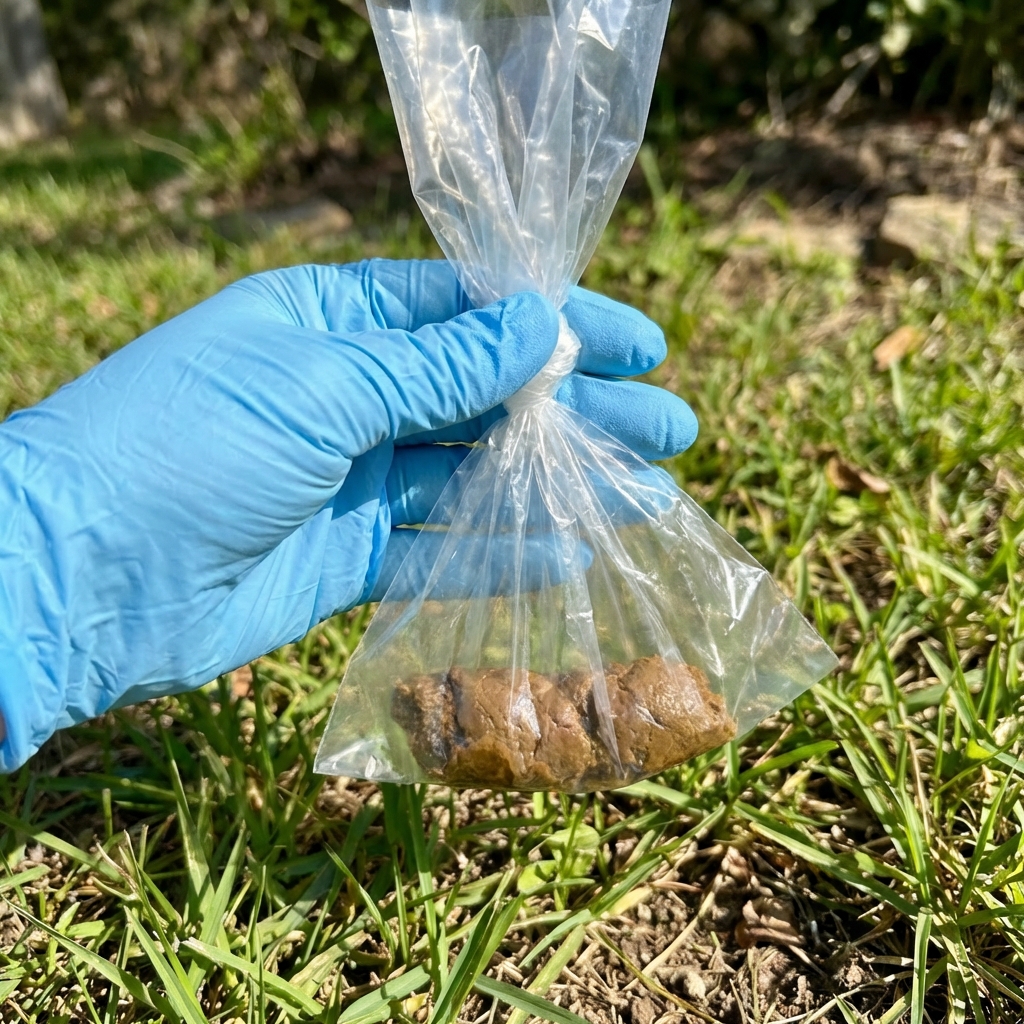
2) Save a fresh stool sample
If you can, collect a small sample as fresh as possible in a clean bag or container. If you cannot bring it in right away, refrigerate it and follow your clinic’s instructions. Parasite and giardia testing often starts here.
3) Keep water available, but do not force it
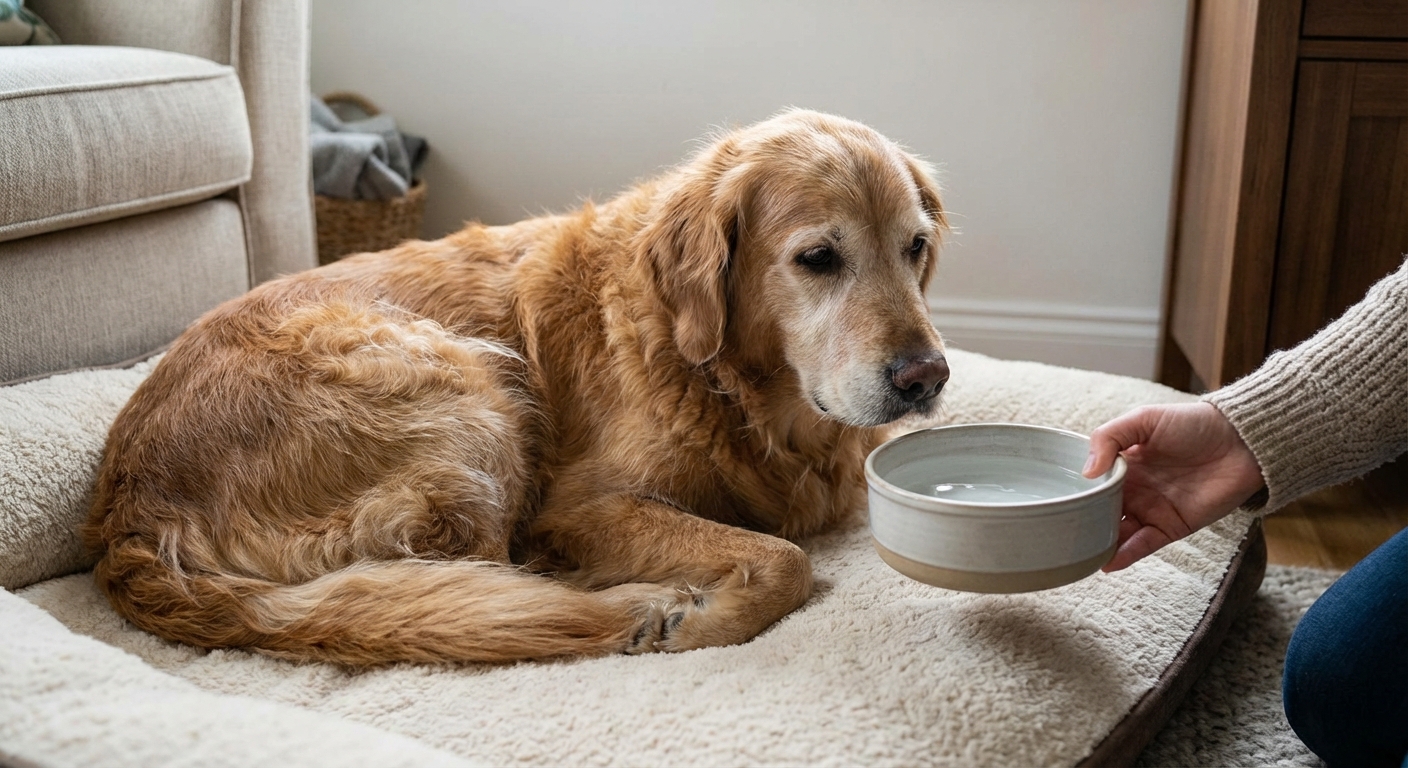
Hydration matters, especially with diarrhea. Offer fresh water and keep things calm. If your dog is vomiting or cannot keep water down, contact a veterinary clinic promptly.
4) Pause rich treats and table scraps
Until you speak with your veterinarian, avoid fatty foods, new treats, rawhides, bully sticks, bones, and anything that could irritate the gut further.
5) Do not give human medications
Human pain relievers like ibuprofen or naproxen can cause serious GI bleeding in dogs. Even “safe-sounding” meds can complicate what your vet needs to evaluate.
When it might be okay to monitor
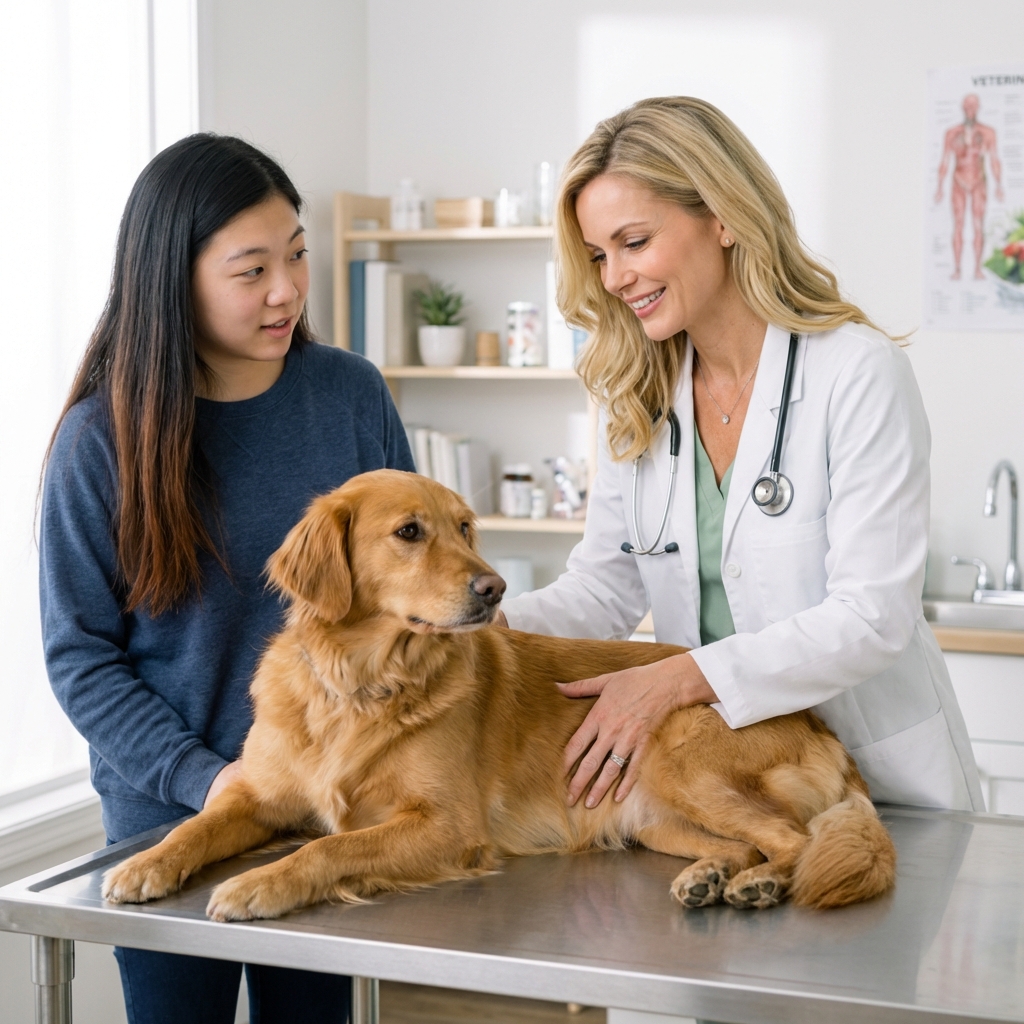
For an otherwise healthy adult dog who is acting normal, eating, drinking, and has only a small streak of bright red blood one time after a hard stool or mild straining, some veterinarians may recommend monitoring for 12 to 24 hours.
That said, call your vet for guidance. If the blood returns, diarrhea starts, or your dog seems off, it is time to be seen.
Common causes (and what vets check)
- Parasites (hookworms, whipworms, roundworms): often diagnosed with a fecal test and treated with dewormers.
- Dietary indiscretion: trash, greasy food, sudden diet change can inflame the colon.
- Stress colitis: boarding, storms, travel, new pets, schedule changes can trigger bloody mucus and frequent urges.
- Anal gland irritation: may show as blood spots, scooting, licking, or straining.
- Infections: bacterial or viral causes. In puppies, parvovirus is a top concern with bloody diarrhea and can become life-threatening quickly without treatment.
- Foreign body: toys, socks, bones can scrape or obstruct.
- Pancreatitis: more likely with vomiting, belly pain, and appetite loss.
- AHDS (acute hemorrhagic diarrhea syndrome, sometimes called HGE): sudden onset of very bloody diarrhea, often with vomiting, and typically needs prompt veterinary assessment and supportive care.
- Bleeding disorders or toxin exposure: can cause more significant bleeding and systemic illness. Bleeding risk toxins include anticoagulant rodenticides and human NSAIDs.
What your vet may do
Not every dog needs every test, but here is what is commonly considered depending on symptoms and risk factors:
- Physical exam and gum color check, hydration assessment, belly palpation
- Fecal testing (parasites, giardia), sometimes repeat testing if initial results are negative
- Parvo test for puppies or any at-risk dog with vomiting and bloody diarrhea
- Bloodwork (CBC, chemistry) to check hydration, infection, anemia, organ function
- Coagulation testing if a bleeding disorder or rodenticide exposure is suspected
- X-rays or ultrasound if a foreign body, obstruction, or other internal issue is a concern
- Treatment may include fluids, gut-protectant meds, probiotics, parasite treatment, diet changes, and targeted therapy depending on the cause
How to help prevent it
Keep the diet steady
Dogs love variety, but their guts often do not. Make diet changes gradually over 7 to 10 days. If you feed homemade or mix-ins, aim for consistency and balanced nutrition, and check in with a veterinarian or a qualified canine nutrition professional.
Parasite prevention and fecal testing
Use vet-recommended parasite prevention and keep up with routine fecal exams, especially if your dog visits dog parks, daycare, or shared yards.
Trash-proof your home
A locked trash can and a quick countertop sweep prevent a huge portion of “mystery diarrhea with blood” cases.
Know your dog’s normal
Pay attention to stool frequency, firmness, and color. The faster you notice a change, the faster you can act before it becomes a bigger issue.
What to tell your vet
My dog has blood in the stool. It is (bright red or black/tarry). It started (when). Stool is (normal/soft/diarrhea) with (mucus/straining). Appetite is (normal/decreased). Vomiting is (yes/no). Energy level is (normal/low). Any recent diet change, new treats, trash access, boarding, stress, or medications/supplements are (details). Vaccine status (if a puppy) is (details). I can bring a fresh stool sample (yes/no).
That information helps your clinic triage correctly and decide whether your dog needs same-day care, diagnostics, or supportive treatment.
Bottom line
Blood in your dog’s poop is a sign to slow down and pay attention. Sometimes it is a mild lower-GI irritation. Sometimes it is a true emergency. If you are unsure, trust that instinct and contact your veterinary team. You are never “overreacting” when you are protecting your dog.