A practical guide to caring for hairless cats: skin checks, warming and bedding, wipe-downs, bathing routines, ear/nail/teeth care, sun safety, and when to c...
Article
•
Designer Mixes
Minskin Cats: Origin, Personality, Health, and Care Guide

Shari Shidate
Designer Mixes contributor
Meet the Minskin: a small cat with a big presence
The Minskin is one of the newer and rarer cat breeds, known for its short legs, sparse coat, and surprisingly athletic spirit. If you have ever wanted a cat that combines the affectionate “shadow” tendencies of a lap cat with the curiosity of an explorer, the Minskin often fits that description beautifully.
Because this breed is uncommon, it is especially important to learn what makes Minskins unique before bringing one home. Their skin and coat needs are different from most cats, and their body shape means you will want to support healthy movement and good weight management from day one.
Origin and breed history
The Minskin was developed in the United States in the late 1990s, with early breeding efforts focused on creating a small, friendly cat with short legs and a coat pattern that can look “furred” in certain areas and more sparse in others. The foundation breeds most commonly associated with the Minskin include the Munchkin (for the short-legged trait) and the Sphynx (for the reduced coat), with Devon Rex and Burmese also appearing in some breeding lines to support type and temperament.
Since Minskins are still relatively rare, standards and recognition can vary by cat association, and responsible breeders tend to be very selective about health screening, temperament, and ethical pairing.
What a Minskin looks like
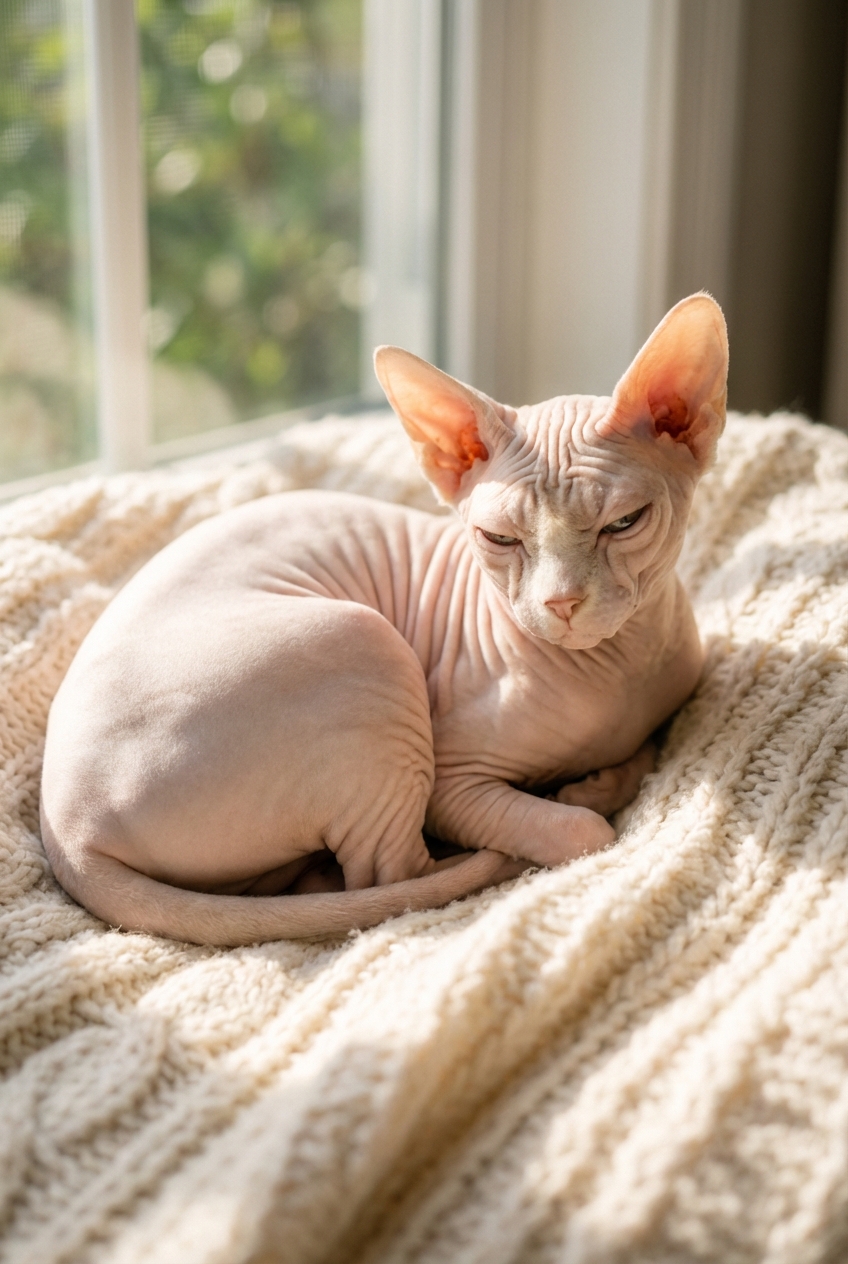
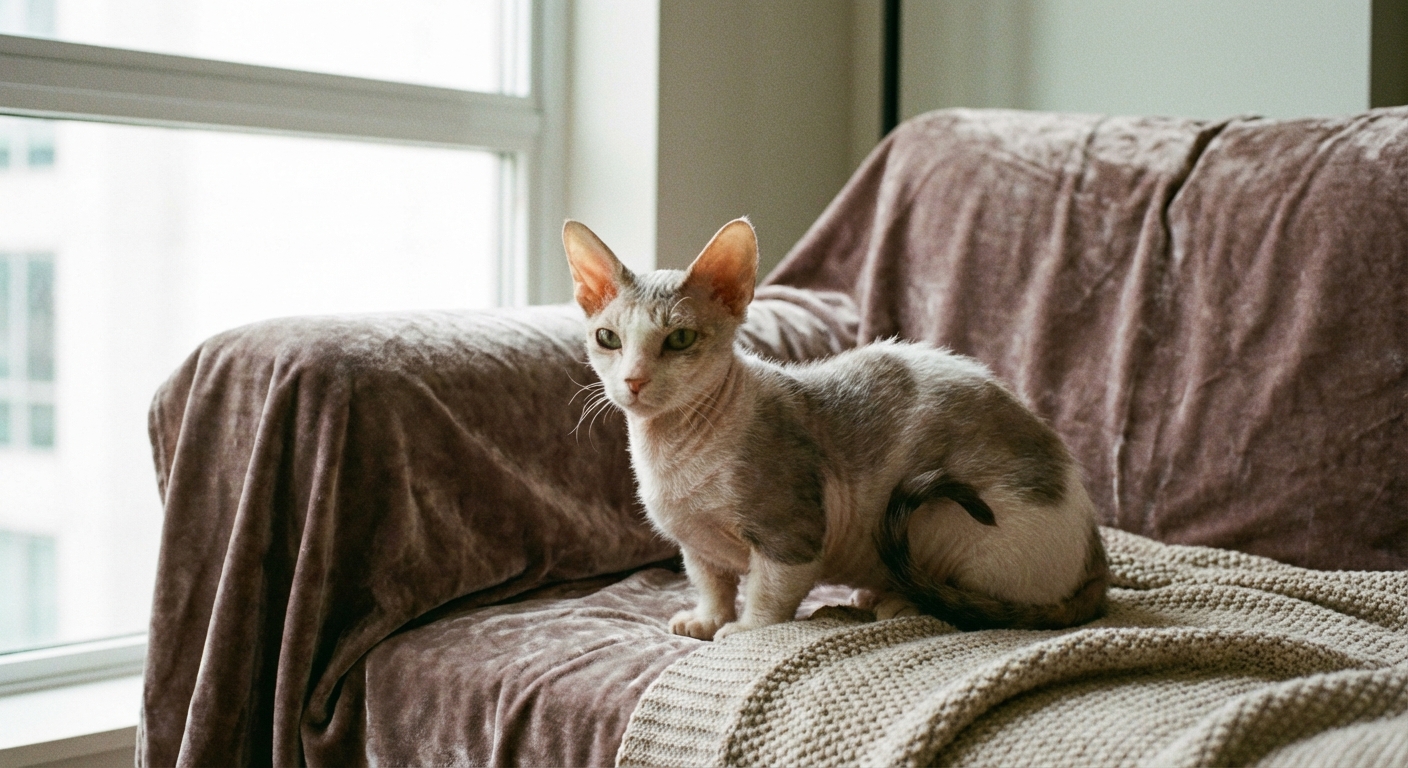
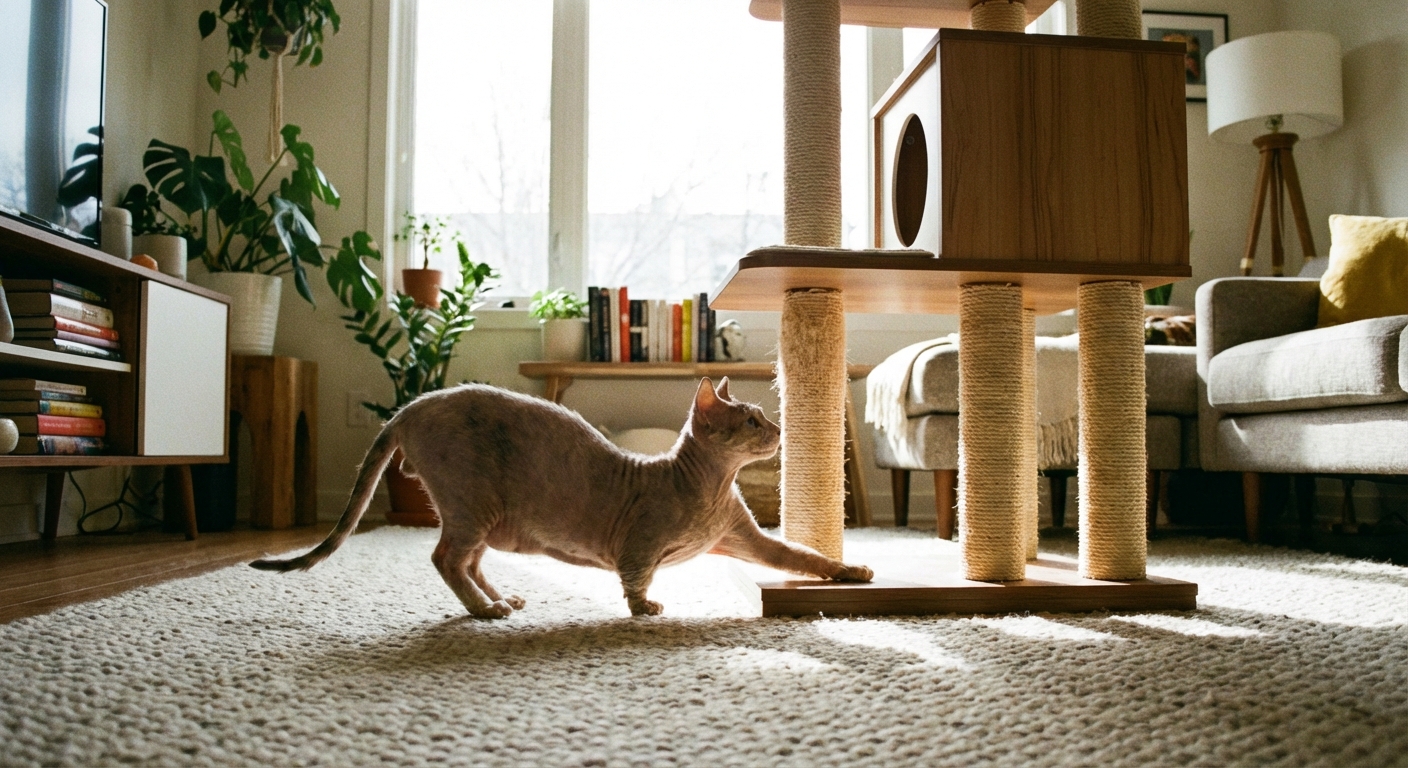
Minskins are typically small to medium in size with noticeably short legs, a compact build, and a rounded head and eyes that give them a perpetually attentive expression. Their coat can be sparse or very short, sometimes with slightly fuller “fur points” on the face, ears, paws, and tail. Whiskers can be short or even absent in some individuals.
Many people assume a short-legged cat cannot climb or play, but Minskins often surprise families with how nimble they are. They may not leap as high as a long-legged cat, yet they frequently compensate with determination, clever route planning, and plenty of energy.
Temperament and personality
In general, Minskins are affectionate, social, and people-oriented. Many thrive when they can stay close to their humans, whether that means following you from room to room or curling up under a blanket at bedtime. They also tend to be playful and curious, especially when offered interactive toys and gentle games.
Common personality traits
- Friendly and outgoing: Many warm up quickly to visitors compared with more reserved breeds.
- Lap-seeking: They often enjoy body warmth and cozy spots.
- Playful: Wand toys, puzzle feeders, and short training sessions can be a great fit.
- Social needs: They frequently do best with daily attention and may enjoy a compatible pet companion.
As with any breed, temperament varies by individual and early socialization. A well-raised Minskin should feel confident being handled, which is helpful because they benefit from regular skin, ear, and nail care.
Is a Minskin a good pet for your home?
Many feline professionals recommend choosing a pet the way you would choose a health routine: it should match your real life, not your wishful schedule. Minskins can be wonderful companions, but they are not “low effort” cats. Their grooming and skin care can be more hands-on, and they do best with consistent warmth, indoor safety, and attentive monitoring of body condition.
Great fit for
- Homes where someone is around often, or where the cat has plenty of enrichment
- People who enjoy gentle, routine care tasks like wiping skin folds and checking ears
- Apartment living, as long as there is play space and climbing options
- Families who want an affectionate, interactive cat
May be challenging for
- Households where the cat will be alone for long stretches without stimulation
- People who prefer a completely hands-off grooming routine
- Outdoor or indoor-outdoor lifestyles, since sun and temperature extremes can be risky
Health considerations
No cat breed comes with guarantees, but understanding the Minskin’s body type and coat can help you plan preventive care. Because they are a short-legged breed, joint and spinal health deserves attention. Their reduced coat also means their skin can be more exposed to oils, irritation, and temperature swings.
Potential health concerns to discuss with your veterinarian
- Musculoskeletal health: Short-legged cats can be more vulnerable to joint stress, especially if they gain excess weight. Ask your vet about ideal body condition scoring and safe activity.
- Spinal or chest conformation concerns: Ask your veterinarian what to watch for regarding lordosis (abnormal spinal curvature) and pectus excavatum (a sunken or “hollow” chest). While not every cat is affected, early awareness helps owners respond quickly to breathing changes, exercise intolerance, or posture issues.
- Skin issues: Some Minskins can experience acne, clogged pores, or irritation if oils build up. Gentle bathing or wipe-down routines can help.
- Dental health: Like many small breeds, dental crowding or tartar can be an issue. Routine dental exams and at-home care make a difference.
- Ear wax buildup: Reduced coat can sometimes correlate with more noticeable wax. Regular checks are helpful.
If you are adopting from a breeder, ask for transparent health screening practices, veterinary records, and a clear plan for lifelong support. If you are adopting from a rescue, schedule a wellness visit early and discuss skin care, nutrition, and mobility.
Nutrition and healthy weight: the best “joint support” you can provide
Because extra weight can put real strain on a short-legged frame, nutrition is one of the kindest things you can get right early. Small, consistent habits compound into remarkable results over time, and that is just as true for pets as it is for people.
Practical feeding tips
- Choose a high-quality, complete diet: Look for foods labeled complete and balanced for your cat’s life stage.
- Measure meals: Free-feeding can lead to unnoticed weight gain. Timed meals make it easier to track intake.
- Use treats strategically: Keep treats to a small portion of daily calories and use them for training or gentle handling practice.
- Support hydration: Many cats drink more with a water fountain. Wet food can also help increase moisture intake.
Ask your veterinarian to show you how to assess body condition. For Minskins, staying lean is not about aesthetics. It is about comfort, mobility, and long-term joint health.
Grooming and skin care
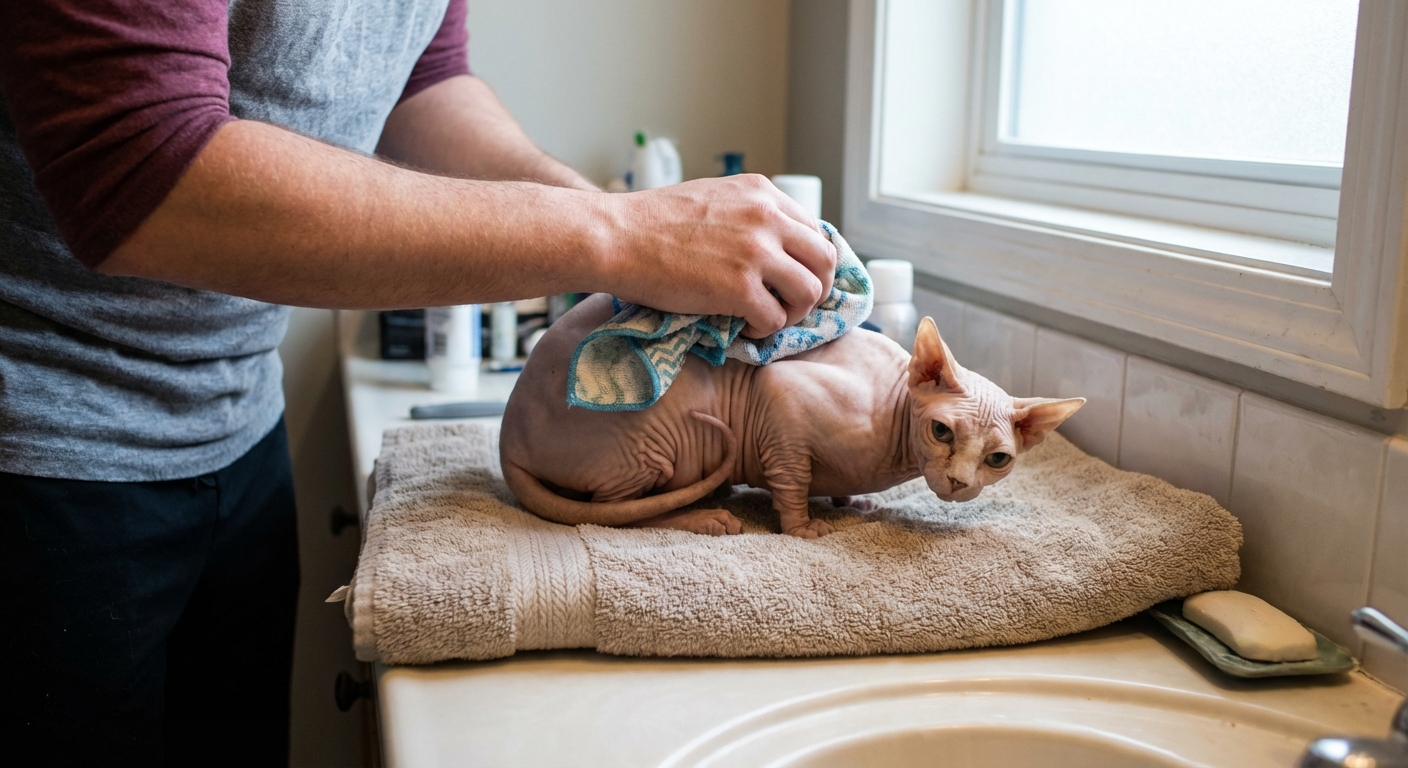
Minskins often need less traditional brushing, but more skin-focused care. Their skin can collect oils and debris, and some cats benefit from regular bathing. The ideal routine depends on the individual cat’s coat density, skin sensitivity, and lifestyle.
At-home care routine
- Bathing: Some Minskins do well with occasional baths using a cat-safe, gentle cleanser. Your vet can help you choose frequency and products.
- Wipe-downs: In between baths, a soft damp cloth can remove oils, especially in skin folds.
- Nails: Trim regularly. Short-legged cats still scratch and climb, and long nails can snag or cause discomfort.
- Ears: Check weekly for wax buildup or redness. Clean only with vet-approved solutions.
- Teeth: Brush when possible, or use dental-support strategies recommended by your veterinarian.
Exercise, enrichment, and a safe home setup
Minskins are often energetic and intelligent, and boredom can show up as overeating, excessive vocalizing, or mischief. The good news is that enrichment does not have to be complicated. A few well-chosen activities repeated consistently make a big difference.
Enrichment ideas that work well
- Low to moderate climbing options: Steps, ramps, and cat trees with shorter gaps help them move confidently.
- Interactive play: Wand toys and short daily sessions support fitness without overloading joints.
- Puzzle feeders: Encourage hunting behavior and slow down eating.
- Warm resting spots: Cozy beds, blankets, and safe heated pads can be especially appreciated.
Because of their reduced coat, keep your Minskin indoors. Temperature extremes and sun exposure can be risky. If they like sunbathing, choose filtered light and supervise to prevent overheating or skin irritation.
Climate and sun sensitivity
A sparse coat changes how a cat experiences the environment. Many Minskins seek warmth and may be less tolerant of cold rooms. On the other hand, direct hot sun can irritate skin or contribute to sunburn in lightly pigmented areas.
- Keep indoor temperatures comfortable: Provide blankets and draft-free nap zones.
- Be cautious with sun: Limit prolonged direct exposure. Talk to your veterinarian before using any topical products on your cat’s skin.
- Watch for irritation: Redness, flaking, or pimples are signs to adjust grooming and consult your vet.
Living with children and other pets
Minskins are often gentle and people-focused, which can make them nice family pets when children are taught respectful handling. Because the breed is small, supervising interactions is important. Teach kids to support the cat’s body, avoid rough play, and let the cat choose when to engage.
With other pets, early introductions and positive experiences are key. Many Minskins enjoy a friendly cat companion. If you have a dog, aim for calm, cat-savvy temperaments and use slow, structured introductions.
How to choose a healthy Minskin
With rare breeds, the quality of breeding practices matters even more. Look for a breeder or rescue that prioritizes health, temperament, and ethical care over novelty.
Green flags to look for
- Transparent veterinary records and willingness to answer detailed questions
- Clear explanation of health screening, including musculoskeletal and general wellness checks
- Kittens raised in a home environment with handling and socialization
- A contract that supports the cat’s welfare and includes a return policy
If possible, meet the kitten’s parents or see adult cats from the program. A calm, friendly, well-handled adult often predicts a better companion experience.
Quick FAQs
Do Minskin cats shed?
Many shed very little due to sparse coat, but skin oils can build up more noticeably than with fully coated cats. Less shedding does not always mean less maintenance.
Are Minskins hypoallergenic?
No cat is truly hypoallergenic. Allergies are often triggered by proteins in saliva and skin secretions, not just fur. Some people find they react less to certain cats, but it varies widely.
Do short legs cause pain?
Many short-legged cats live happy lives, but body structure can change how joints bear weight. Keeping your cat lean, active, and regularly monitored by a veterinarian is your best strategy.
The bottom line
The Minskin is a loving, engaging companion with unique care needs. If you enjoy an interactive cat who wants to be part of your day, and you are willing to stay consistent with skin care, enrichment, and healthy weight habits, this breed can be a wonderful match.
Before you commit, speak with a veterinarian, ask thoughtful questions of breeders or rescues, and set up your home with warmth, ramps, and routines that support long-term mobility. When you meet a well-socialized Minskin, it is easy to see why so many people fall in love with their confident, cuddly nature.