Thinking about a Double Doodle? Get realistic expectations on size and weight, coat types and shedding, temperament, exercise needs, grooming, health tests, ...
Article
•
Designer Mixes
Mini Labradoodle: Size, Temperament, and Shedding

Shari Shidate
Designer Mixes contributor
If you love the idea of a Labradoodle but want a smaller dog that fits apartment life, travel, or simply a lighter lap weight, the Mini Labradoodle is one of the most searched doodle mixes for a reason. As a veterinary assistant in Frisco, Texas, I hear the same questions again and again: How big will they actually get? Do they really not shed? Are they truly hypoallergenic? And what health tests should a breeder be doing?
Let’s walk through what owners genuinely need to know, with practical expectations and evidence-based tips.

What is a Mini Labradoodle?
A Mini Labradoodle is generally a smaller-size Labradoodle, most often produced by breeding a Labrador Retriever with a Miniature Poodle, or by breeding smaller Labradoodles together. Because Labradoodles are a mix and not a standardized purebred, there can be significant variation in adult size, coat, and temperament, even within the same litter.
Takeaway: “Mini” is a size goal, not a guarantee. Your puppy’s parents, their weights, and their genetic background matter a lot.
Adult size (and why it varies)
Most Mini Labradoodles land in a “small to medium” range, but breeder definitions and genetics vary a lot. Some breeders call anything under roughly 35 pounds “mini,” while others aim smaller.
Common adult size
- Height: commonly about 14 to 20 inches at the shoulder
- Weight: commonly about 15 to 35 pounds
Some dogs will end up outside that range, especially if a breeder is using a smaller Standard Poodle instead of a Miniature Poodle, or if there is multi-generational mixing with inconsistent sizing.
How to estimate adult size
- Ask for both parents’ adult weights and heights, and if possible, meet them in person.
- Look at bone structure. Bigger paws and thicker legs often predict a larger adult size.
- Request past litter outcomes. Ethical breeders track adult sizes from previous puppies.
Temperament
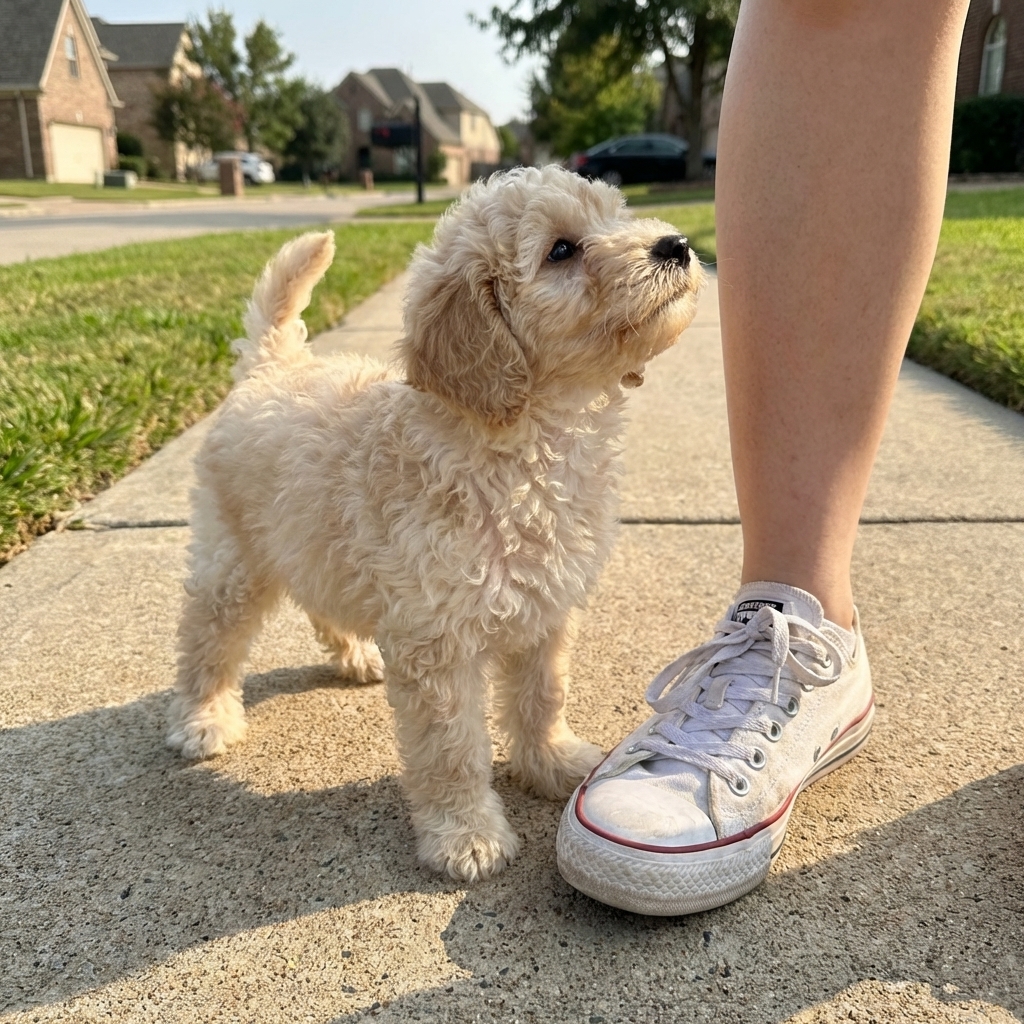
Mini Labradoodles are often friendly, social, and people-focused. Many are wonderful family dogs, especially when they are given consistent training and enough daily activity.
Common traits
- Affectionate and bonded: many prefer being near their people and may follow you from room to room.
- Smart and quick to learn: Poodle intelligence plus Lab eagerness can be a great combination.
- Playful and energetic: they are not typically couch potatoes, especially in the first few years.
- Social: many love kids, visitors, and other dogs, but socialization still matters.
Challenges to plan for
- Jumping and mouthy play if training is inconsistent.
- Separation stress in dogs that are never taught to settle alone.
- Overstimulation in busy households without a calm routine.
My best advice: Plan for a sweet dog with a working-dog brain. When that brain gets bored, it will invent a job, and you might not like the job it chooses.
Energy and exercise
Most Mini Labradoodles need daily movement plus mental engagement. A short potty walk usually isn’t enough for this mix.
A realistic routine
- Exercise: about 45 to 90 minutes total per day, split into multiple outings
- Mental work: 10 to 20 minutes (training, food puzzles, scent games)
- Off switch practice: calm settle time (teaching relaxed behavior on cue) on a mat, chew time, or crate rest after activity
Great activities
- Fetch, tug, and structured play
- Loose-leash walking with sniff breaks
- Beginner agility or rally obedience
- Scent work games at home
- Swimming, if they enjoy water and safety is managed

Training
This mix usually responds beautifully to reward-based training. Harsh corrections tend to backfire, especially with sensitive Poodle-leaning personalities.
What to focus on (first 6 months)
- Socialization: gentle exposure to people, surfaces, sounds, and handling
- House training: frequent potty trips and consistent rewards
- Crate training: for safety, travel, and preventing separation issues
- Bite inhibition: teach appropriate play and provide chew outlets
- Basic cues: sit, down, come, leave it, and leash manners
Action step: Enroll in a positive-reinforcement puppy class, and practice 5 minutes at a time. Short sessions done daily beat long sessions done occasionally.
Shedding and coat types
Shedding is where expectations can get messy. Many people are told, “They do not shed.” The truth is more nuanced. Coat genetics vary, and shedding depends on coat type, generation, and even how the coat is maintained.
Quick note: You will hear terms like wool, fleece, and hair. These are common doodle community descriptors, not formal scientific categories, and many dogs have a mix. Coat texture can also shift as the adult coat comes in.
Wool coat
What it looks like: tight curls, Poodle-like texture.
- Shedding: typically low
- Allergy-friendliness: often better for allergy sufferers, but never guaranteed
- Grooming: high maintenance, matting risk if brushing is inconsistent
Fleece coat
What it looks like: soft, wavy, “teddy bear” texture.
- Shedding: often low to moderate
- Allergy-friendliness: variable
- Grooming: still high maintenance, especially behind ears, armpits, and collar areas
Hair coat
What it looks like: straighter, more Lab-like coat that moves and “blows” with the seasons.
- Shedding: typically moderate to high
- Allergy-friendliness: often more challenging for allergy sufferers
- Grooming: easier to brush, but more hair around the home
Puppy coat change
Many doodles go through a coat transition as they mature, often somewhere around 6 to 18 months. Texture can get curlier or looser, and shedding can change with it. This is one reason a “low-shed puppy” is not a promise of a low-shed adult.

Hypoallergenic?
The word “hypoallergenic” is popular, but in real life it can be misleading. Most pet allergies are triggered by proteins in dander, saliva, and urine, not just the hair you see on the floor. A low-shedding dog may spread fewer allergens in the environment, but the relationship is imperfect. Allergen levels vary by individual dog, bathing frequency, and household cleaning routines.
If allergies are a concern
- Meet adult dogs from the same breeder line, not just puppies.
- Do a real-life trial: spend time indoors with the dog, not just outdoors.
- Consider allergy testing and discuss options with your physician.
- Manage the home: HEPA vacuum, air purifier, washable bedding, and consistent grooming.
- Grooming matters: regular bathing and brushing can reduce dander buildup.
Kind, honest truth: many allergy sufferers do great with certain Mini Labradoodles, but you want to test your individual sensitivity before committing.
Grooming
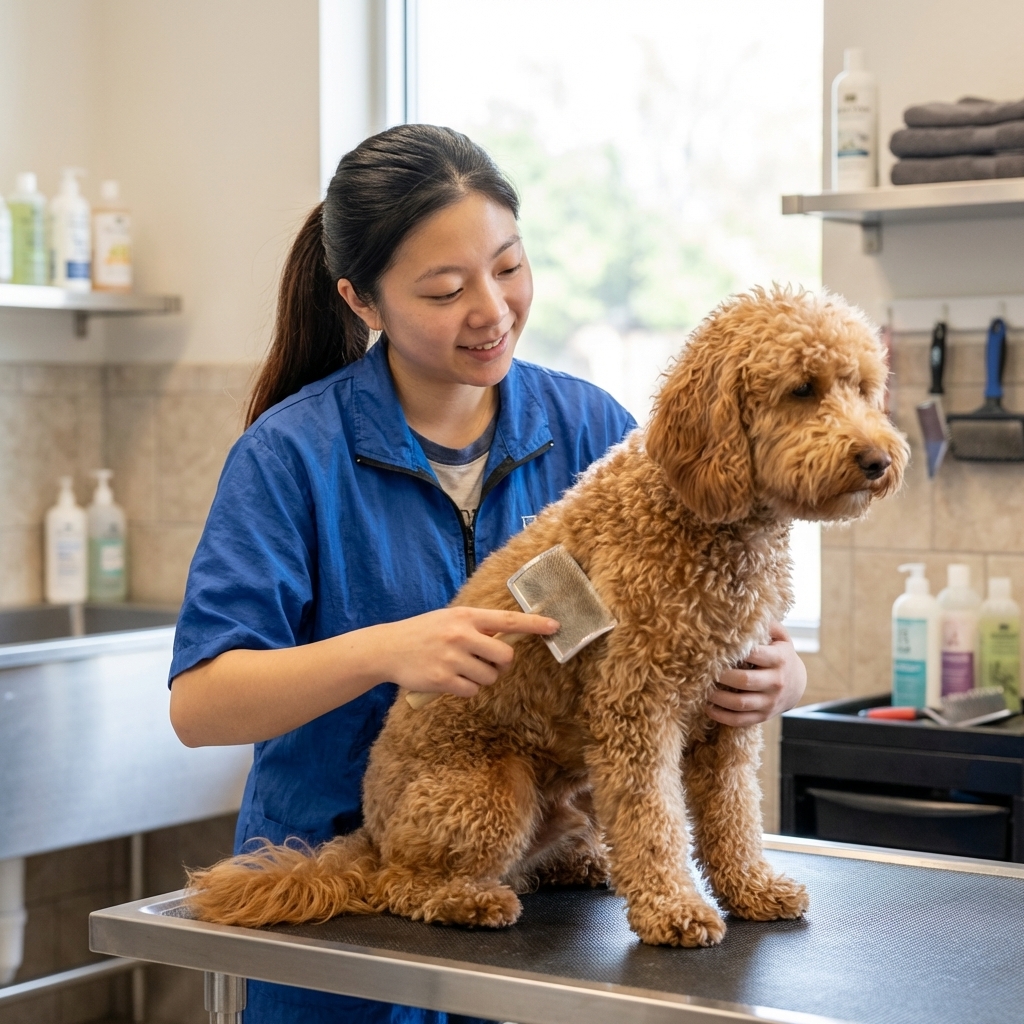
If you are choosing a Mini Labradoodle for low shedding, you are usually also choosing a coat that requires regular grooming. Matting can lead to skin irritation, hot spots, and painful shave-downs.
Typical schedule
- Brushing: 3 to 5 times per week (daily for curlier coats)
- Professional grooming: every 6 to 8 weeks for most coats
- Bathing: every 3 to 6 weeks, depending on lifestyle and skin tolerance
- Ear care: check weekly, especially if ears are floppy and hairy
- Nails: trim every 2 to 4 weeks
Feeding and healthy weight
If I could pick one “boring” habit that protects joints, heart health, and lifespan, it would be keeping your doodle lean. Labrador lines, in particular, can be very food-motivated, and extra weight adds stress to hips and elbows.
- Use a measured scoop (not free-feeding) and adjust every few weeks based on body condition.
- Limit high-calorie extras. Treats add up fast in a small dog.
- Aim for a visible waist when viewed from above, and a tuck-up from the side.
Action step: At your first vet visit, ask your clinic to show you a body condition score chart and where your puppy falls on it. It is a simple way to stay honest as they grow.
Health screening
Because this is a mixed breed, it is tempting to assume they are automatically healthier. Mixed dogs can be robust, but they can still inherit genetic conditions from both parent breeds. The best protection is choosing a breeder who does appropriate health testing and can show proof.
Common concerns in Lab and Poodle lines
- Hip dysplasia and other orthopedic issues
- Elbow dysplasia
- Eye disease (various inherited conditions)
- Progressive retinal atrophy (PRA)
- Exercise-induced collapse (EIC) in Lab lines
- Centronuclear myopathy (CNM) in Lab lines
- Patellar luxation (more common in smaller dogs)
- Addison’s disease (seen in Poodles and reported in doodle lines)
- Allergies and chronic ear infections, especially in dogs with heavy ear hair and moisture
Tests to ask a breeder about
Exact testing should match the parent breeds used and the specific lines. Many reputable breeders use OFA, PennHIP, and current eye registry exams, and they share results.
- Hips and elbows: OFA evaluation or PennHIP (ask which was done)
- Eyes: a current exam by a veterinary ophthalmologist (often recorded through CAER, and typically updated annually)
- DNA testing: PRA variants, EIC, CNM, plus any Poodle-related panels used in the breeder’s lines
- Patellas: especially important in smaller, mini-sized dogs
- Line-dependent add-ons: cardiac screening, thyroid screening, and (more commonly in Standard Poodle lines) sebaceous adenitis screening, if those issues exist in the pedigree
Action step: Ask for links or documentation, not just verbal assurances. A caring breeder will respect that question.
Choosing a breeder
The doodle world is full of wonderful dogs and also a lot of marketing. Your best bet is to look for transparency, health testing, and thoughtful early puppy raising.
Good signs
- Provides proof of health testing for both parents
- Raises puppies in the home with structured socialization
- Matches puppies to families by temperament, not just coat color
- Uses a contract with a return policy and lifetime take-back
- Does not promise “guaranteed hypoallergenic”
Red flags
- No health testing documentation
- Always-available puppies, many litters at once, or vague parent information
- High-pressure sales tactics
- Promises that shedding will be zero for every puppy
Adoption and rescue
If buying from a breeder does not feel like the right fit, you can also look into doodle-specific rescues and local shelters. Mini Labradoodles and Labradoodles do show up, especially when grooming and energy needs surprise a family.
Tip: If allergies matter, try to spend indoor time with the specific dog you are considering before you commit.
Time and cost (first year)
Mini Labradoodles are not “low maintenance” dogs. They can be an amazing fit, but it helps to go in with eyes open.
- Grooming: recurring professional grooms plus home brushing tools
- Training: puppy class and possibly a few private sessions for leash manners or separation training
- Preventive care: vaccines, parasite prevention, spay or neuter, and dental habits
- Insurance: worth considering early, especially for orthopedic surprises
Quick FAQ
Do Mini Labradoodles bark a lot?
Many will alert-bark, especially if under-exercised or anxious. Early training, enrichment, and teaching a quiet cue can help.
Are they good with kids?
Often yes, especially when both dog and kids are taught respectful interactions. Like any dog, supervision matters.
Do they do well in apartments?
They can, if their daily exercise and training needs are met and barking is managed proactively.
How long do Mini Labradoodles live?
Many live around 12 to 15 years, but there is real variation. Genetics, preventive care, weight management, and dental health play big roles.
Bottom line
A Mini Labradoodle can be a joyful, affectionate companion with the brains to learn quickly and the heart to stay close. The biggest surprises for new owners are usually these three: adult size can vary, low shedding is not guaranteed, and grooming is a real commitment.
If you plan for those realities, choose a breeder who screens for health issues, and commit to training and enrichment, you are setting yourself and your dog up for a long, happy life together.
Sources to know
- OFA (Orthopedic Foundation for Animals) health testing database and recommendations
- PennHIP hip evaluation program
- CAER (Companion Animal Eye Registry) eye exam registry