Choosing between a Bernedoodle and a Goldendoodle? Compare size ranges (mini to standard), temperament, exercise needs, grooming, health concerns, lifespan, ...
Article
•
Designer Mixes
Mini Bernedoodle Size, Coat, and Health

Shari Shidate
Designer Mixes contributor
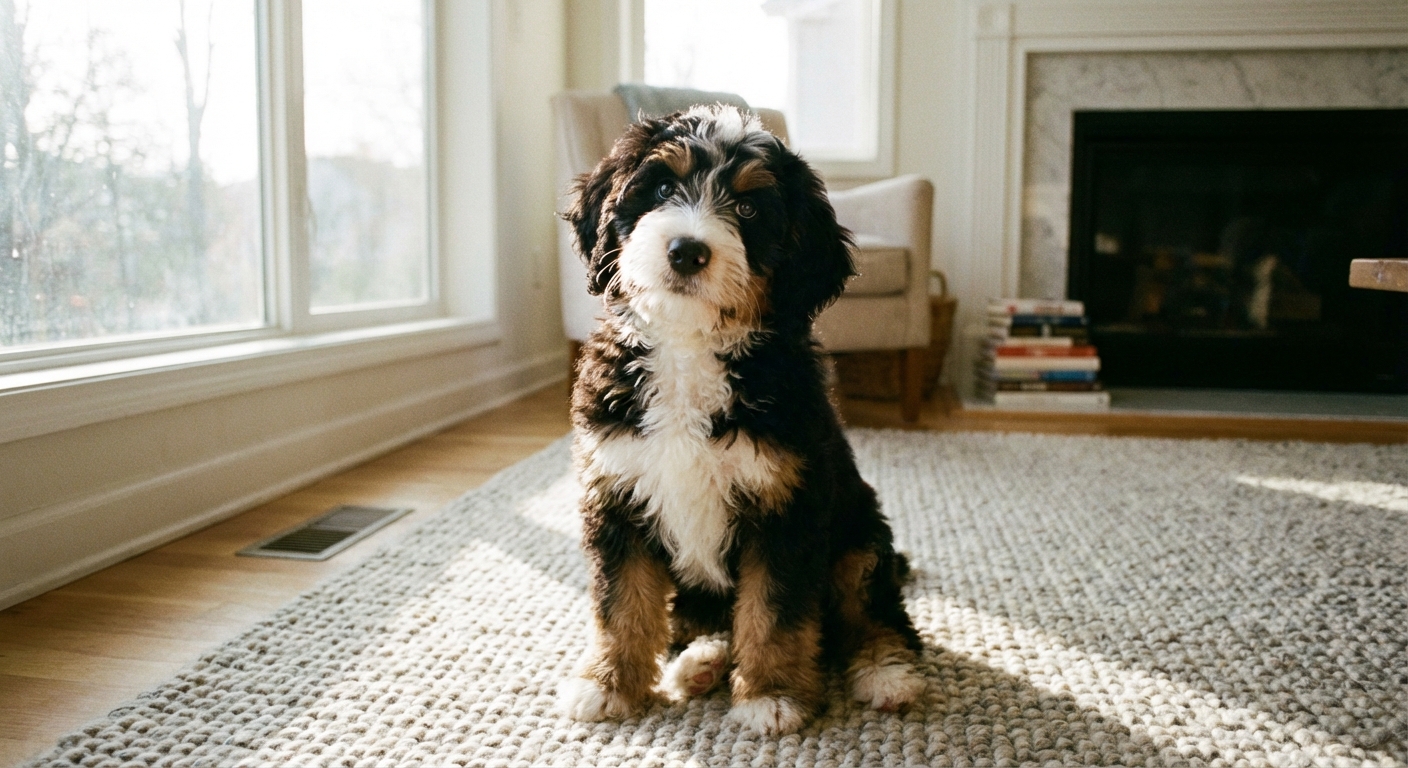
The Mini Bernedoodle is the smaller, city-friendly version of the beloved Bernedoodle: a mix of Bernese Mountain Dog and Miniature Poodle. Families often choose this cross because they love the classic Bernese look and gentle vibe, but want a dog that is easier to lift, easier to travel with, and generally a better fit for smaller homes.
Quick note from a veterinary assistant: “Mini” is a size goal, not a guarantee. Because this is a mixed breed, puppies can vary quite a bit depending on parent size, generation, and genetics.
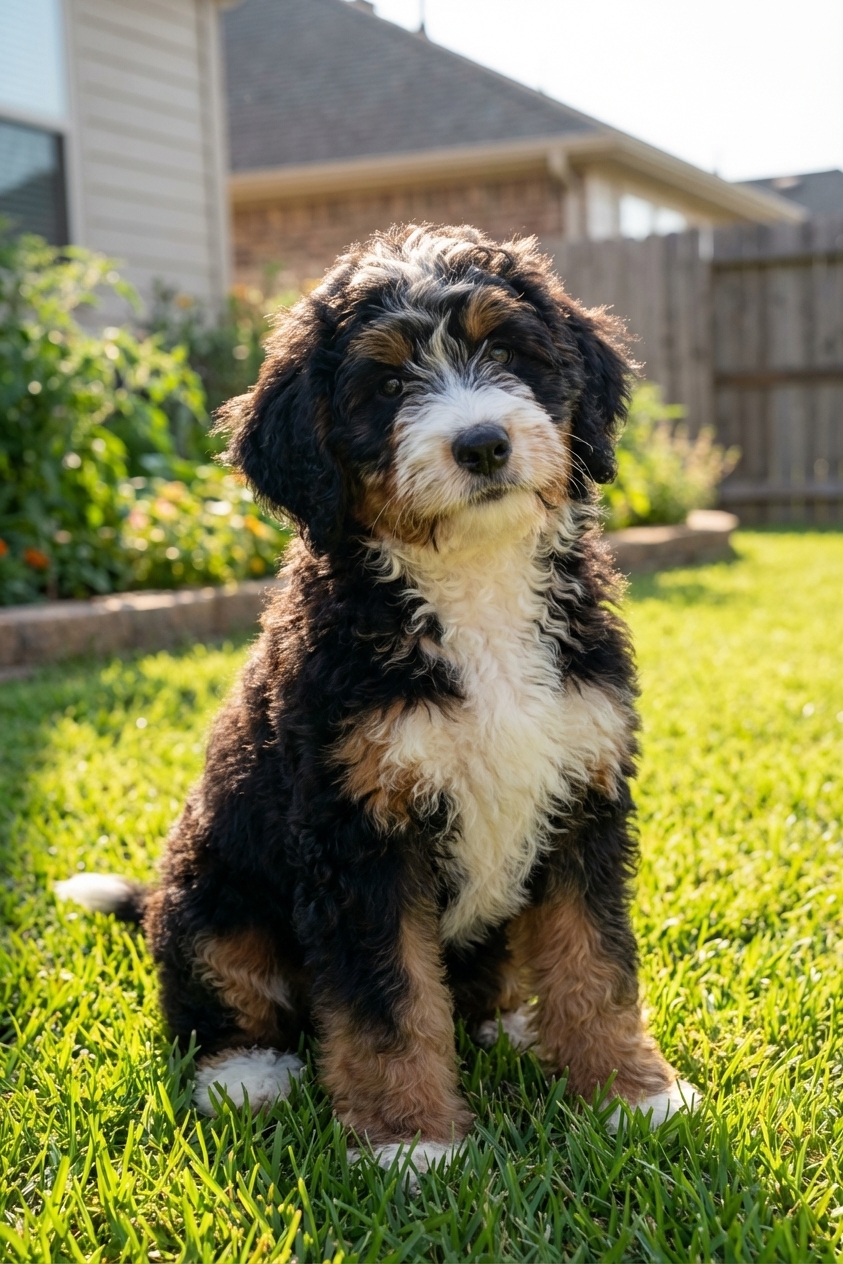
Mini Bernedoodle size and what to expect
Most Mini Bernedoodles fall into a moderate, manageable size range, making them popular with families who want a sturdy dog without the extra-large footprint of a Standard Bernedoodle.
- Typical weight: about 25 to 50 pounds (common, but not absolute)
- Typical height: often 16 to 22 inches at the shoulder (common, but not absolute)
- Important nuance: some “mini” litters run larger if a small Standard Poodle is used or if the Bernese side is especially big
- Growth timeline: many minis do most of their growing by 10 to 12 months, but some continue noticeable growth closer to 12 to 14 months, with muscle and coat filling out through the second year
Why size varies
Breeders may use different pairings such as F1 (Bernese x Mini Poodle), F1b (Bernedoodle x Mini Poodle), or multigenerational lines. Since Bernese Mountain Dogs are large and Poodles come in more than one size category, it is normal to see a wider spread in adult size than you might expect.
Actionable tip: Ask to see the actual weights of the parents and, if possible, adult siblings from previous litters. That is more helpful than a single estimate.
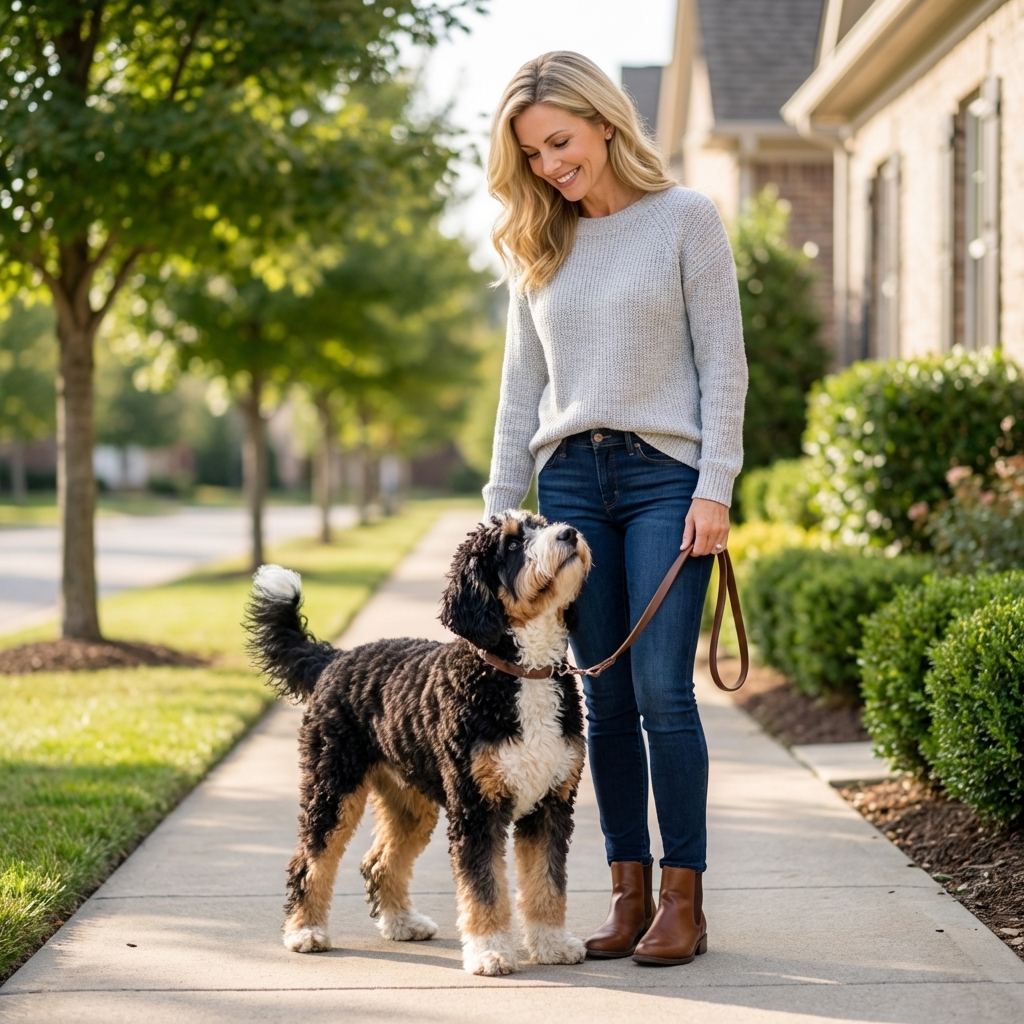
Coat types, colors, and grooming
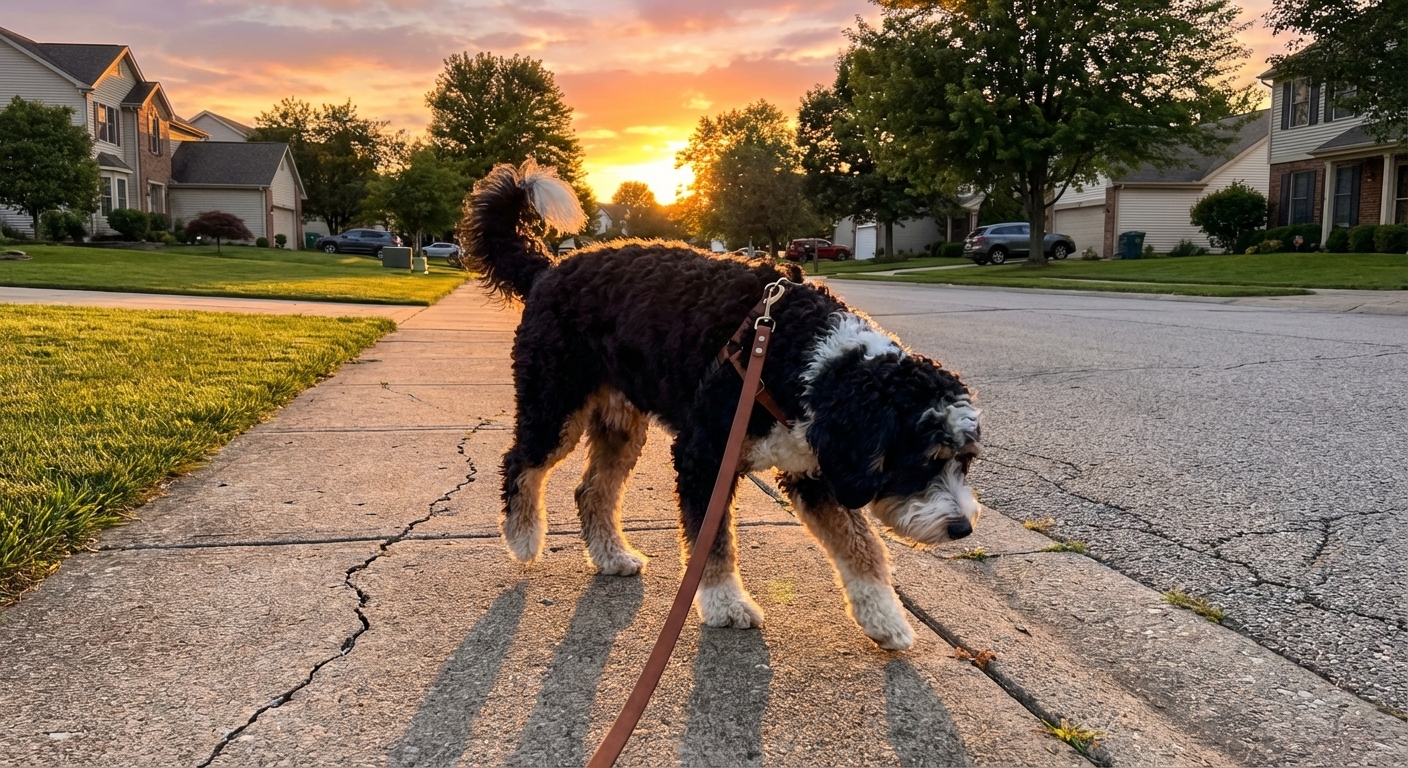
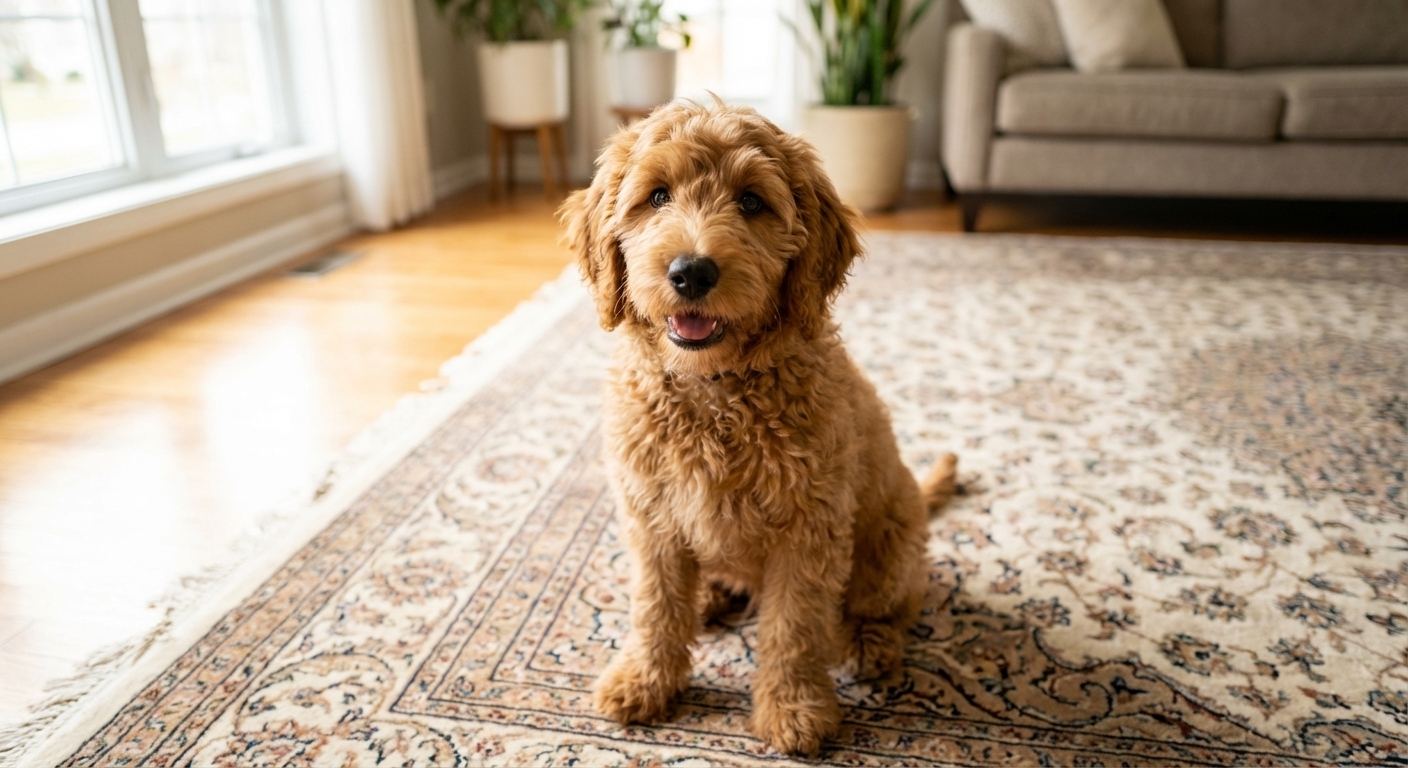
Mini Bernedoodles can inherit coats that range from wavy and teddy bear-like to tightly curly. Coat genetics also influence shedding, matting, and how often you will need professional grooming.
Common coat types
- Wavy coat: a popular middle ground, often lower-shedding than a straight coat, but still prone to mats if brushing is skipped.
- Curly coat: more Poodle-like, often the lowest shedding, but usually the highest maintenance for brushing and trims.
- Straight coat: can look more Bernese-like and may shed more. Some straight-coated mixes still mat, so “straight” does not mean “no grooming.”
Hypoallergenic reality check
Many Mini Bernedoodles are lower-shedding, but no dog is truly hypoallergenic. Most allergies are triggered by dander and saliva proteins, not just loose hair. If allergies are a concern, spend time with adult dogs from the same lines and talk with your allergist.
Colors and patterns
The classic look many people want is tri-color (black, white, and rust). You may also see:
- Bi-color: black and white, or black and rust
- Phantom: Poodle-style points (often rust markings above eyes, chest, legs)
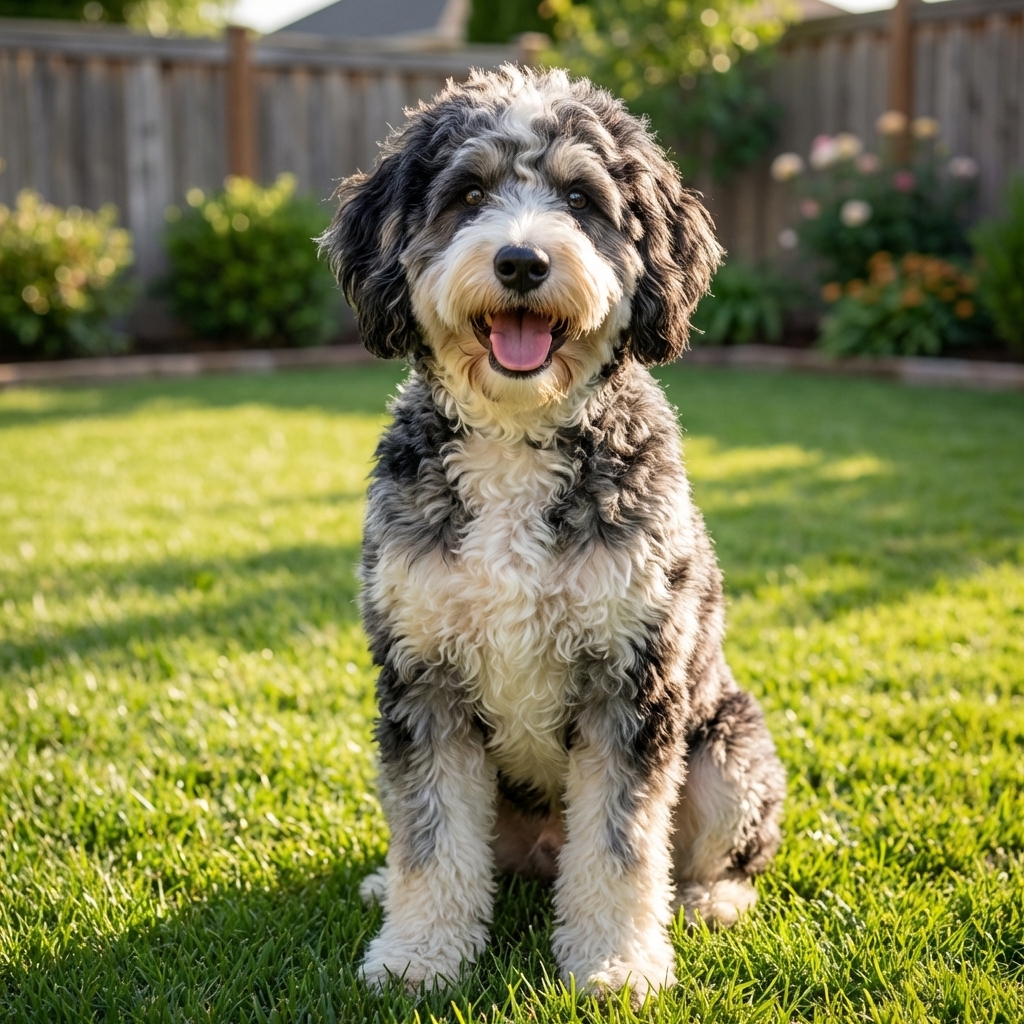
- Sable or merle: depending on breeding lines
Merle note: Merle is not a naturally occurring Bernese Mountain Dog trait. It is introduced through other lines. If a breeder is producing merle puppies, ask direct questions about responsible pairings and health screening. Avoid any “double merle” pairing. Prioritize appropriate hearing and eye screening and work with breeders who can clearly explain their genetics.
Color tip: Coats can lighten or shift as the puppy matures, especially if the Poodle side carries fading genes. Choose based on temperament and health first, and color second.
How often grooming is needed
Plan your routine around coat type, lifestyle, and your local climate.
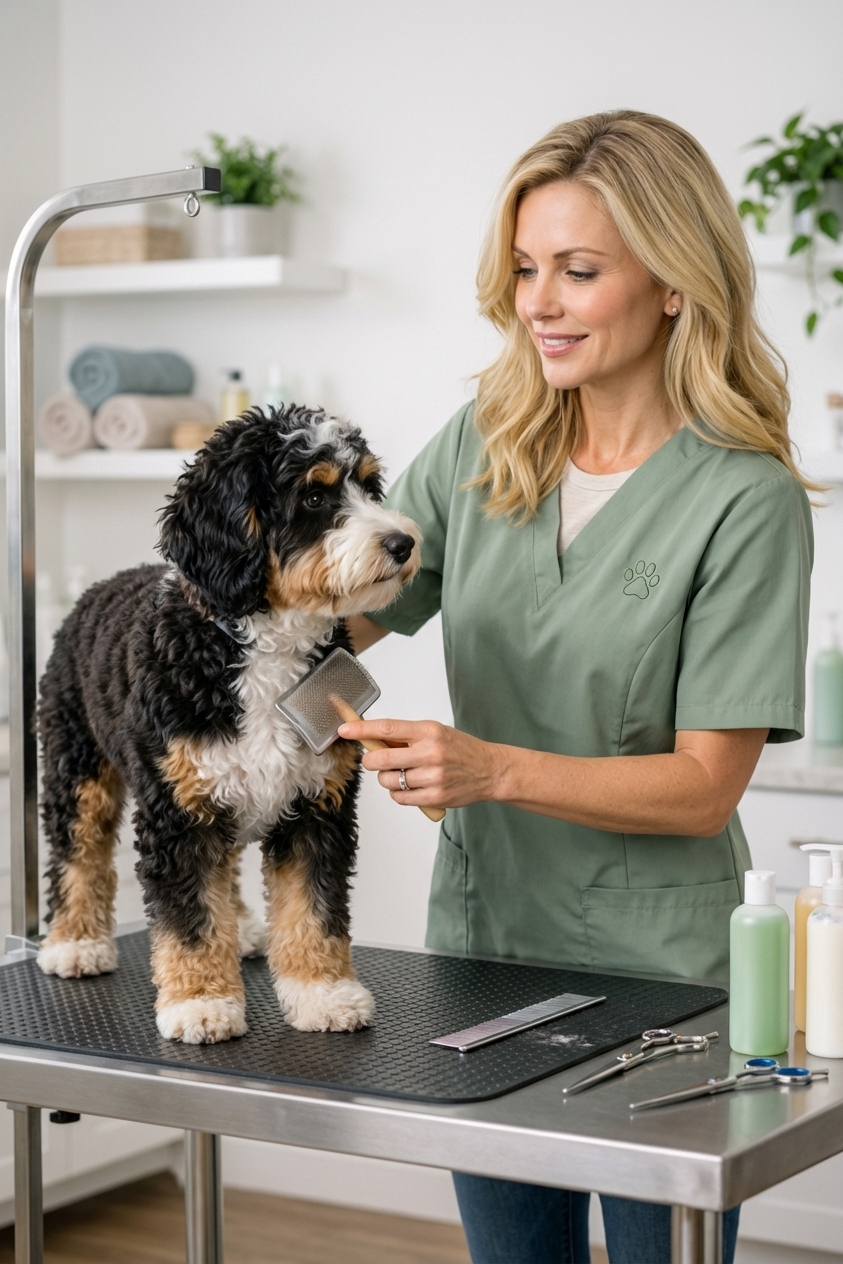
- At-home brushing: ideally 3 to 5 times per week for wavy and curly coats. Daily brushing is best during coat changes or if your dog mats easily.
- Professional grooming: typically every 6 to 8 weeks for trims, hygiene areas, and coat maintenance.
- Bathing: often every 4 to 8 weeks or as needed. Use a dog-specific shampoo. Many coats do better with a conditioner or a coat-specific product recommended by your groomer.
Mat warning: Mats can pull painfully on the skin and trap moisture, which can lead to hot spots or infections. If you cannot get a comb through the coat down to the skin, it is time to schedule grooming.
Temperament: Mini vs Standard
In general, Mini Bernedoodles share the affectionate, people-oriented personality Bernedoodles are known for. The Miniature Poodle influence can add a bit more quickness and intensity in some dogs, though individuals vary.
Common traits
- Friendly and social: often bonds closely with family and wants to be included in daily life.
- Smart and trainable: usually picks up routines fast, especially with positive reinforcement.
- Playful: many minis have a slightly more energetic feel than standards, though individuals vary.
- Sensitive: can be emotionally tuned-in. Harsh corrections often backfire.
Energy and exercise
Most Mini Bernedoodles do best with a combination of physical exercise and brain work.
- Daily exercise: often 45 to 90 minutes total, split into walks, play, and training.
- Mental enrichment: puzzle feeders, scent games, short training sessions, and basic agility foundations.
Actionable tip: If your mini is mouthy, jumpy, or “wild” in the evenings, it is often a sign of under-stimulation, not a “bad dog.” Add 10 minutes of training plus a sniff walk and see what changes.
Training and socialization
- Puppy class: a well-run puppy kindergarten is one of the fastest ways to build focus, confidence, and polite greetings.
- Grooming desensitization: practice paws, ears, brushing, and the sound of clippers at home. Reward calm behavior so grooming is not a wrestling match later.
- Separation training: this is a people-oriented mix, and some individuals are prone to separation anxiety. Start early with short, calm departures and returns, and build up slowly.
Alert barking
Some minis are more vocal or alert, especially if they lean Poodle in temperament. Teach a “quiet” cue, reward calm observation, and give them a job (like a brief training session) instead of letting barking become the routine.

Health guide: common issues
Mini Bernedoodles can be healthy, long-lived companions, but they may inherit medical risks from both the Bernese Mountain Dog and the Poodle side. The best approach is prevention: reputable breeding, early screening, and steady wellness care.
Common health concerns
- Hip dysplasia and elbow dysplasia: orthopedic issues that can cause pain and arthritis over time.
- Patellar luxation: a kneecap problem seen in many small and medium dogs.
- Eye conditions: including progressive retinal atrophy (PRA) and other inherited eye diseases.
- Allergies and skin issues: environmental allergies, food sensitivities, ear infections, and itching are fairly common in curly-coated mixes.
- Gastrointestinal sensitivity: some have sensitive stomachs and do best on consistent, high-quality diets and slow diet transitions.
- Bloat (GDV): risk is generally higher in deep-chested dogs. Some Bernedoodles can be deep-chested, so it is still worth discussing bloat prevention with your veterinarian.
- Cancer risk: Bernese Mountain Dogs have a notably high cancer prevalence. Crossing breeds may or may not reduce that risk in an individual dog, so it is important to focus on screening and overall health habits.
What to ask a breeder
Good breeders welcome questions, and they can show you documentation. Look for proof of health testing, not just verbal assurances.
- Orthopedic testing: OFA or PennHIP for hips, and often elbows
- Eye testing: CAER eye exam, plus relevant genetic panels
- Cardiac evaluation: ask whether a cardiac exam or echocardiogram is recommended for their lines
- Breed-specific genetic panels: may include PRA variants and, depending on lines, tests such as degenerative myelopathy or von Willebrand’s disease
- Clear plan for socialization: exposure to handling, grooming tools, noises, and new environments
Important nuance: A genetic panel is helpful, but it does not replace orthopedic imaging (OFA or PennHIP) or a formal eye exam (CAER).
Actionable tip: Ask what the breeder does when a puppy develops a significant genetic issue. The answer tells you a lot about ethics and accountability.
Everyday prevention
- Keep a lean body condition: extra weight increases joint strain and can worsen orthopedic issues.
- Protect the ears: floppy, hairy ears can trap moisture. Dry ears after bathing and swimming, and ask your vet about routine ear cleaning if infections are recurring.
- Dental care: start toothbrushing early. Small and medium dogs can develop dental disease quickly.
- Parasite prevention: in many climates, fleas and ticks are not just seasonal. Discuss a year-round plan with your veterinarian based on where you live.
- Spay and neuter timing: talk with your veterinarian about timing based on growth, behavior, and orthopedic risk.

Lifespan and longevity
Many Mini Bernedoodles live about 10 to 15 years, with plenty landing in the 12 to 14 range. Genetics, adult size, and overall health care matter a lot, and individual lifespan varies widely.
Longevity checklist
- Annual wellness exams (twice yearly for seniors)
- Routine bloodwork starting in midlife to catch issues early
- Joint support for active dogs, with your veterinarian’s guidance
- Consistent grooming to prevent skin problems and find lumps or hot spots early
- Daily movement plus brain games to keep the body and mind strong
When you stack small habits like smart nutrition, steady exercise, and preventive vet care, you give your Mini Bernedoodle the best odds at a long, comfortable life.
Is a Mini Bernedoodle right for you?
A Mini Bernedoodle can be a wonderful fit if you want a friendly, family-centered dog and you are ready for consistent grooming and ongoing training. They are often at their best when they have a predictable routine, gentle leadership, and plenty of connection with their people.
A great match if you are:
- Looking for a 25 to 50 pound companion (with the understanding that “mini” can run smaller or larger)
- Willing to commit to regular grooming and brushing
- Interested in a dog that enjoys learning and staying mentally engaged
Consider a different mix if you want:
- A truly low-maintenance coat
- A dog that is content with minimal daily interaction
- Very predictable size and shedding levels (mixed breeds vary)
Ethical sourcing basics
- Green flags: health testing you can verify, a written contract, clear socialization plan, and willingness to show adult dogs from their lines.
- Red flags: no test results, always-available puppies, multiple trendy mixes at once, refusal to answer questions, or pressure tactics.
If you are deciding between mini and standard: spend time with adult dogs from the breeder’s lines whenever possible. Seeing the real-life coat, energy, and size helps you choose with confidence.