A clear, practical guide to feline thyroid disease—especially hyperthyroidism. Learn symptoms, tests, methimazole vs I-131 vs diet, and how to monitor at h...
Article
•
Designer Mixes
Methimazole for Cats

Shari Shidate
Designer Mixes contributor
If your cat has been diagnosed with hyperthyroidism, you are not alone. I see this condition often as a veterinary assistant here in Frisco, Texas, especially in older and senior cats. The good news is that most cats feel noticeably better once their thyroid hormone levels are brought back into a healthier range.
Methimazole is one of the most commonly prescribed medications for feline hyperthyroidism. Below, I will walk you through what it does, typical dosing schedules, side effects to watch for, how monitoring works, and practical tips for giving it to your cat.
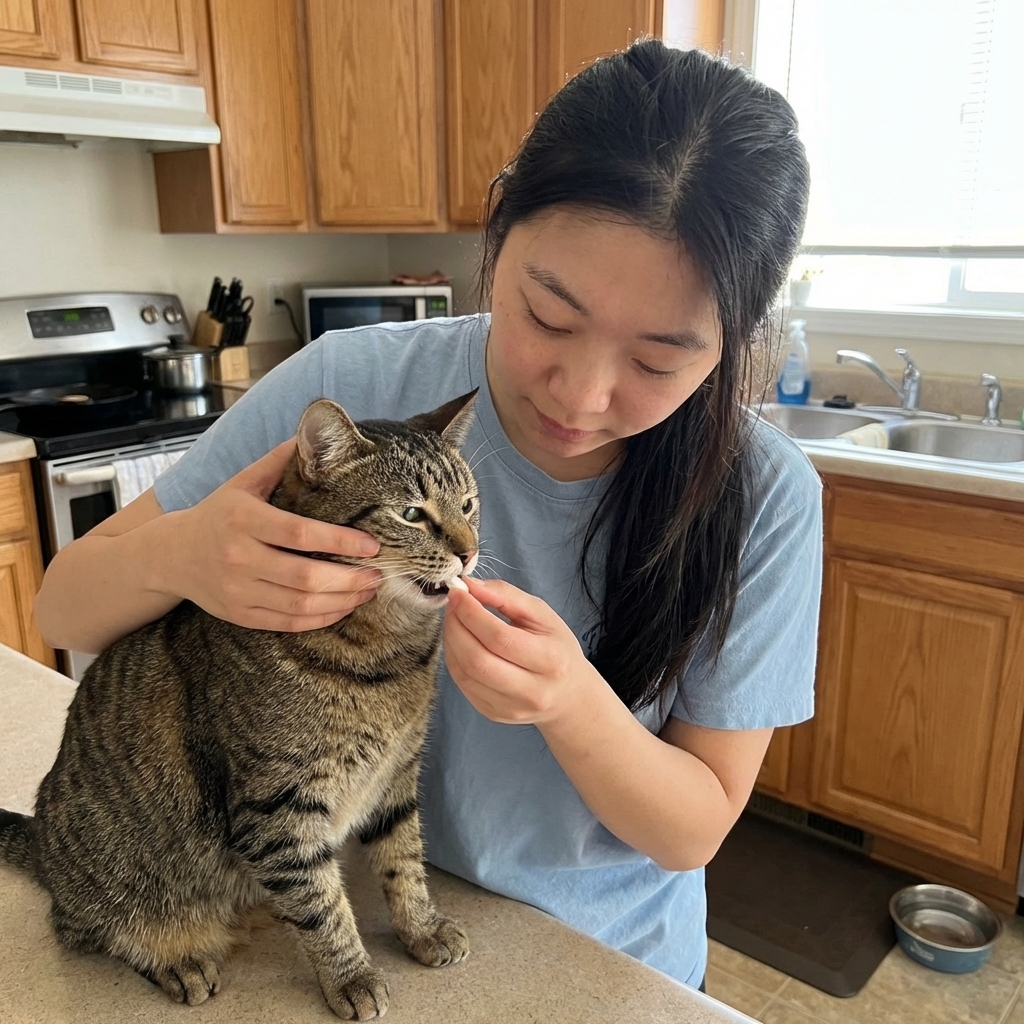
What methimazole treats
Feline hyperthyroidism happens when a cat’s thyroid gland produces too much thyroid hormone (mostly T4). That “too much” speeds up the whole body. Many owners notice:
- Weight loss even though appetite is strong (sometimes ravenous)
- Vomiting or diarrhea
- Restlessness, yowling, or hyperactivity
- Drinking and urinating more
- Fast heart rate or heart murmur
- Unkempt coat
Methimazole does not cure the thyroid change that usually causes hyperthyroidism (most often a benign thyroid enlargement or adenoma). But it can control hormone production very effectively when the dose is right.
How methimazole works
Methimazole is an antithyroid medication. It reduces the thyroid gland’s ability to make thyroid hormone. As thyroid levels come down, many cats regain weight, settle down behaviorally, and have less vomiting and diarrhea.
One important point: because methimazole is controlling hormone production rather than curing the underlying thyroid problem, it is typically a long-term medication unless you choose a definitive treatment like radioactive iodine (I-131) or surgical thyroidectomy.
Typical methimazole dosage for cats
Your veterinarian will choose a starting dose based on your cat’s T4 level, body weight, heart status, kidney values, and how intense the clinical signs are. Dosing is individualized, so always follow your vet’s label instructions.
Common starting schedules
- Oral tablets: Often started at a low dose given twice daily.
- Transdermal gel (applied to the ear): Often used as an alternative for cats that cannot tolerate pills, typically dosed twice daily as well.
In many cases, the dose is adjusted after follow-up lab work. The goal is to bring T4 into a target range while keeping your cat feeling well and protecting organ function, especially the kidneys.
Why “starting low” matters
Dropping thyroid hormone too quickly can unmask underlying kidney disease in some cats. Hyperthyroidism can increase blood flow to the kidneys (and raise GFR), so once the thyroid is controlled, kidney numbers may look worse in cats that already had early kidney changes. That is one reason monitoring is so important and why you should not adjust the dose at home without guidance.
When you will see results
Some cats show improvement in appetite, activity, and vomiting within a couple of weeks, but full stabilization can take longer because dose adjustments are common early on. Also, some cats look better before the lab work is perfect, and others need lab normalization before you see big changes at home.
- First 1 to 3 weeks: Many cats act less restless and start to gain a little weight.
- First 3 to 8 weeks: This is a common window for rechecks and fine-tuning the dose based on T4 and other labs.
- Ongoing: Once stable, cats can do very well long-term, but they still need regular monitoring.
Common side effects
Most cats tolerate methimazole, but side effects can happen, especially during the first weeks. Contact your veterinarian promptly if you notice anything concerning.
More common side effects
- Vomiting
- Decreased appetite
- Lethargy
- Facial itching or scratching (some cats rub their face or get scabs around the head and neck)
These can sometimes improve with dose adjustments, anti-nausea support, switching formulations (pill to transdermal or vice versa), or giving the medication with food when appropriate.
Less common but serious reactions
Call your vet right away if you notice:
- Severe lethargy or weakness
- Yellowing of gums, eyes, or skin (possible liver issue)
- Bruising, bleeding, or tiny red-purple spots on the skin (possible platelet issues)
- Fever, not acting like themselves, or suspected infection (rare blood cell changes can occur)
Rarely, methimazole can affect the liver or bone marrow. This is why periodic blood work is part of safe use of the medication.
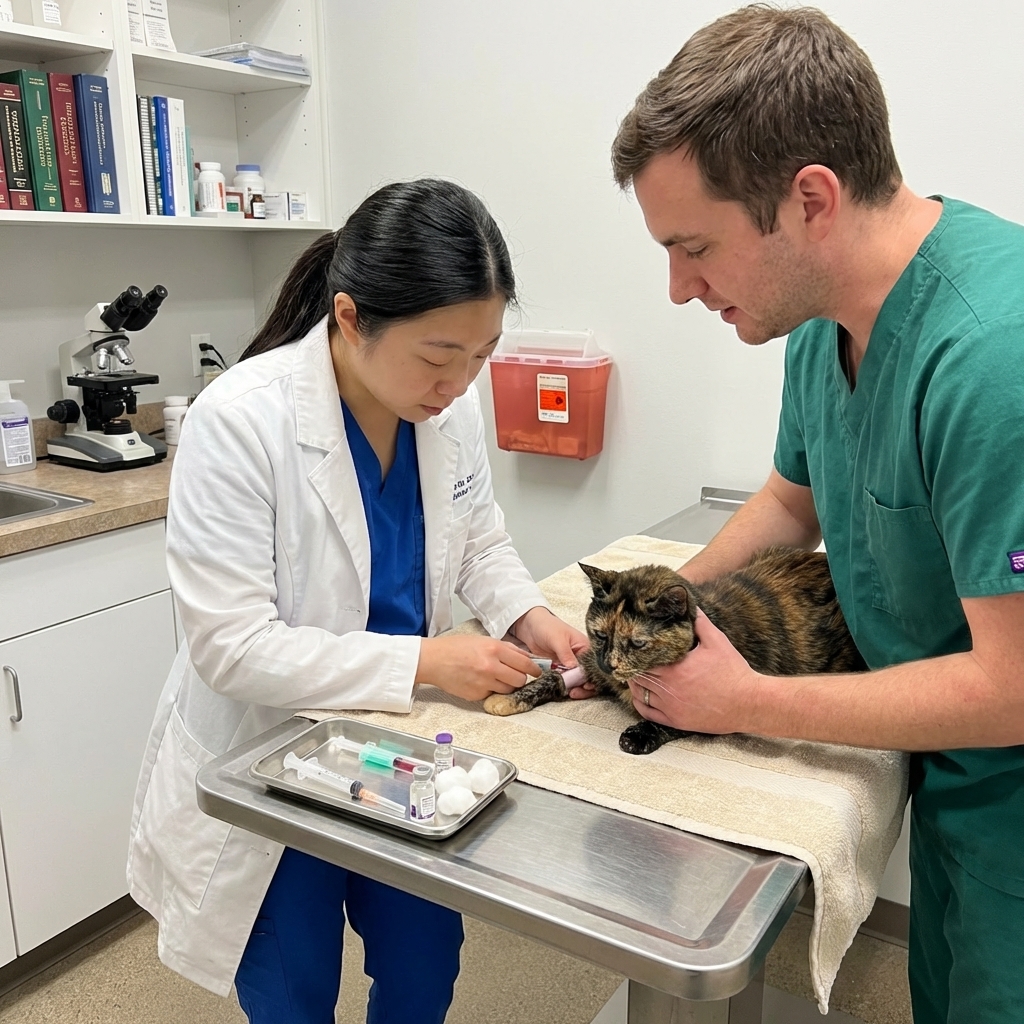
Monitoring and blood work
Monitoring is part of responsible methimazole therapy. Your vet is balancing thyroid control with overall health, especially kidney and liver function, and avoiding iatrogenic hypothyroidism (thyroid levels going too low).
Common monitoring schedule
Every clinic has its own protocol, but many follow a pattern similar to this (think of it as an example schedule):
- Baseline labs before starting: Total T4, CBC (red and white blood cells, platelets), chemistry panel (organ function tests, including kidneys and liver), and often a urinalysis. Blood pressure is also commonly checked for hyperthyroid cats.
- First recheck: Often around 2 to 3 weeks after starting.
- After a dose change: Often rechecked again about 2 to 3 weeks later.
- Once stable: Many cats are rechecked every 3 months, and some clinics extend to 3 to 6 months depending on the cat.
Your veterinarian may also recommend checking a free T4, kidney values (BUN, creatinine, SDMA), liver enzymes, electrolytes, and blood pressure based on your cat’s history.
Pills vs ear gel
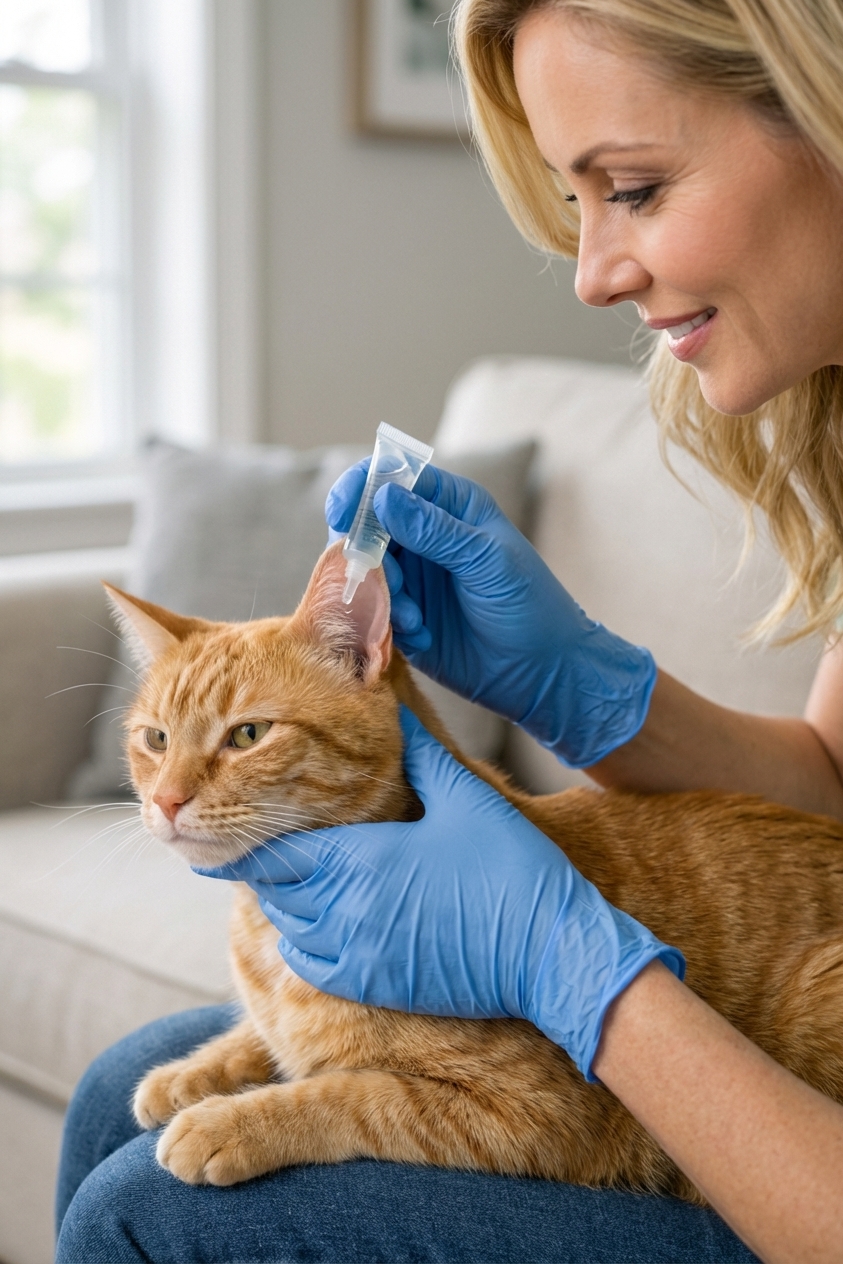
Methimazole is commonly given as an oral tablet or as a transdermal gel applied to the inside of the ear flap. Each option has pros and cons, and your cat’s personality and medical needs matter here.
Oral tablets
- Pros: Often less expensive, widely available, predictable dosing when given successfully.
- Cons: Some cats fight pills or become stressed, which can make daily treatment hard.
Handling note: Methimazole tablets are often film-coated. Do not split, crush, or compound tablets at home unless your veterinarian specifically instructs you to, since that can increase human exposure and may affect how the medication works.
Transdermal methimazole (ear gel)
- Pros: Helpful for cats that refuse pills or have vomiting with oral medication. Easier for many households to give consistently.
- Cons: Often requires a compounding pharmacy. Because it is compounded, product consistency and absorption can be more variable than tablets. The transdermal dose is not always a 1:1 match to oral dosing, so lab monitoring is essential. Some cats develop ear irritation.
Safety note for people: Humans can absorb methimazole through skin. Wear gloves or use an applicator, and wash hands after. If someone in the home is pregnant, trying to conceive, or breastfeeding, it is safest for them to avoid handling methimazole at all and ask your veterinarian about extra precautions.
Tips for giving methimazole
If you are giving pills
- Ask about timing with food: Some cats do better when the medication is given with a small meal or treat. Follow your vet’s guidance.
- Use a pill pocket or a small bite of food: A tiny meatball of canned food can work for many cats.
- Try a pill gun if needed: It can be safer than fingers for some cats.
- Follow with water or a small treat: This can help the pill go down and reduce irritation.
- Stay consistent: Try to give it at the same times each day.
If you are using transdermal gel
- Wear gloves: This protects you from absorbing the medication.
- Alternate ears: This helps reduce irritation.
- Apply to clean, dry inner ear skin: If the ear is dirty or waxy, absorption can be less reliable.
- Rub in gently: Apply the measured dose to the inner pinna and rub in as directed by your vet or pharmacist.
- Avoid contact afterward: Try not to touch the ear where medication was applied, and do not let other pets lick it. Separate pets briefly if needed.
- Clean residue only if instructed: Some cats need gentle cleaning of the ear before the next dose. Follow your vet’s instructions so you do not irritate the skin.
- Wash hands even if you wore gloves: A quick soap-and-water wash is a good habit.
What if you miss a dose?
In most cases, if you realize you missed a dose and it is within a few hours of the next scheduled dose, you will skip the missed dose and return to your normal schedule. If it is not close, you may give it when you remember.
Because dosing details vary, the safest approach is to call your veterinarian for clinic-specific guidance, especially if your cat has heart disease, kidney disease, or has had side effects before. Do not double up unless your veterinarian explicitly instructs you to.
When to call the vet urgently
Hyperthyroid cats can have other issues going on at the same time, so trust your instincts. Contact your veterinarian or an emergency clinic right away if your cat has:
- Repeated vomiting or cannot keep food or water down
- Not eating for 24 hours (or even sooner for senior cats)
- Severe facial itching with sores or swelling
- Sudden weakness, collapse, open-mouth breathing, or very fast breathing
- Signs of bleeding or unusual bruising
- Yellow gums or eyes
Other treatment options
Methimazole is a very common first-line choice because it is effective and non-invasive, and it also helps us learn how your cat’s kidneys and heart respond once thyroid levels are controlled. That said, it is not the only path.
- Radioactive iodine (I-131): A definitive treatment that often cures hyperthyroidism, with no daily medication afterward. It does require a specialty facility and specific safety rules.
- Surgery (thyroidectomy): Can be curative in the right patient, but it involves anesthesia and surgical risks.
- Iodine-restricted prescription diet: Can lower T4 in some cats, but it must be fed exclusively and it is not ideal for every household or every cat.
Your veterinarian can help you weigh cost, your cat’s other health conditions, and what daily life looks like in your home.
Long-term outlook
With the right dose and regular monitoring, many cats on methimazole go back to enjoying life with more comfortable energy levels and healthier weight. Some cats stay on it for years. Others use methimazole as a “trial” to stabilize them before choosing a definitive treatment like radioactive iodine.
Also keep in mind that many hyperthyroid cats have high blood pressure or heart changes at diagnosis. Controlling the thyroid can improve these, but some cats still need separate treatment or monitoring for blood pressure and the heart.
If I could give you one encouraging takeaway, it is this: you do not have to get everything perfect on day one. Start with the plan your veterinarian gives you, go to your rechecks, and let the lab work guide the next step.
Quick reminder: This article is for general education and is not a substitute for veterinary care. Always follow your veterinarian’s dosing instructions for your specific cat.