
Megaesophagus in Dogs: Regurgitation vs. Vomiting

As a veterinary assistant, I can tell you this is one of the most stressful GI problems to live with because it is not just about messes on the floor. With megaesophagus, one of the biggest concerns is what can happen after regurgitation: food or water can slip into the airway and lungs, leading to aspiration pneumonia.
The good news is that many dogs do better when families learn two things: how to recognize regurgitation vs. vomiting, and how to set up safe feeding routines that use gravity to help food reach the stomach.
What it means
The esophagus is the tube that carries food from the mouth to the stomach. In megaesophagus, that tube becomes stretched out and less able to push food down. Instead of moving smoothly into the stomach, food and water can pool and then come back up.
Megaesophagus is not a single disease by itself. It is often a sign of something else going on, or it can be idiopathic (meaning we never find a clear underlying cause).
Regurgitation vs. vomiting
This is the most important first step because regurgitation points us toward the esophagus, while vomiting more often points us toward the stomach or intestines.
Regurgitation (common with megaesophagus)
- Looks effortless. Food or water may just “fall out” (a passive expulsion) with little warning.
- No heaving or abdominal contractions.
- Often happens shortly after eating or drinking, but it can also occur hours later if food is sitting in the esophagus.
- Material may look undigested, sometimes in a tube shape.
- Some dogs swallow repeatedly, extend the neck, drool, or seem uncomfortable right before it happens.
Vomiting (more stomach-based)
- More active effort with nausea signs first.
- Heaving, retching, belly contractions.
- Often includes bile or foamy fluid, especially if the stomach is empty.
- Food may appear partially digested.
Why this matters: Dogs with megaesophagus can regurgitate and then inhale that material. If your dog is “vomiting” but there is no heaving, I want you to think “regurgitation” and talk to your veterinarian promptly.
Also, repeated regurgitation deserves a veterinary evaluation even if your dog still seems bright and hungry. Early changes can prevent bigger problems later.
Aspiration risk
Aspiration means food, water, saliva, or stomach contents enter the airway. This can inflame the lungs and cause aspiration pneumonia, which can become life-threatening quickly.
Emergency warning signs
- Coughing, especially after eating or drinking
- Fast or labored breathing, belly working hard to breathe
- Fever, lethargy, refusing food
- Nasal discharge (possible, especially if cloudy or yellow), or “wet” sounding breathing
- Blue or gray gums (emergency)
If you see breathing distress, blue gums, collapse, or extreme weakness, treat it as an emergency and seek veterinary care right away.
Feeding setups
Because the esophagus is not moving food down effectively, the core idea is simple: let gravity do the work. The details, though, are very individualized, and it often takes a little trial and error with your vet’s guidance.
Upright feeding basics
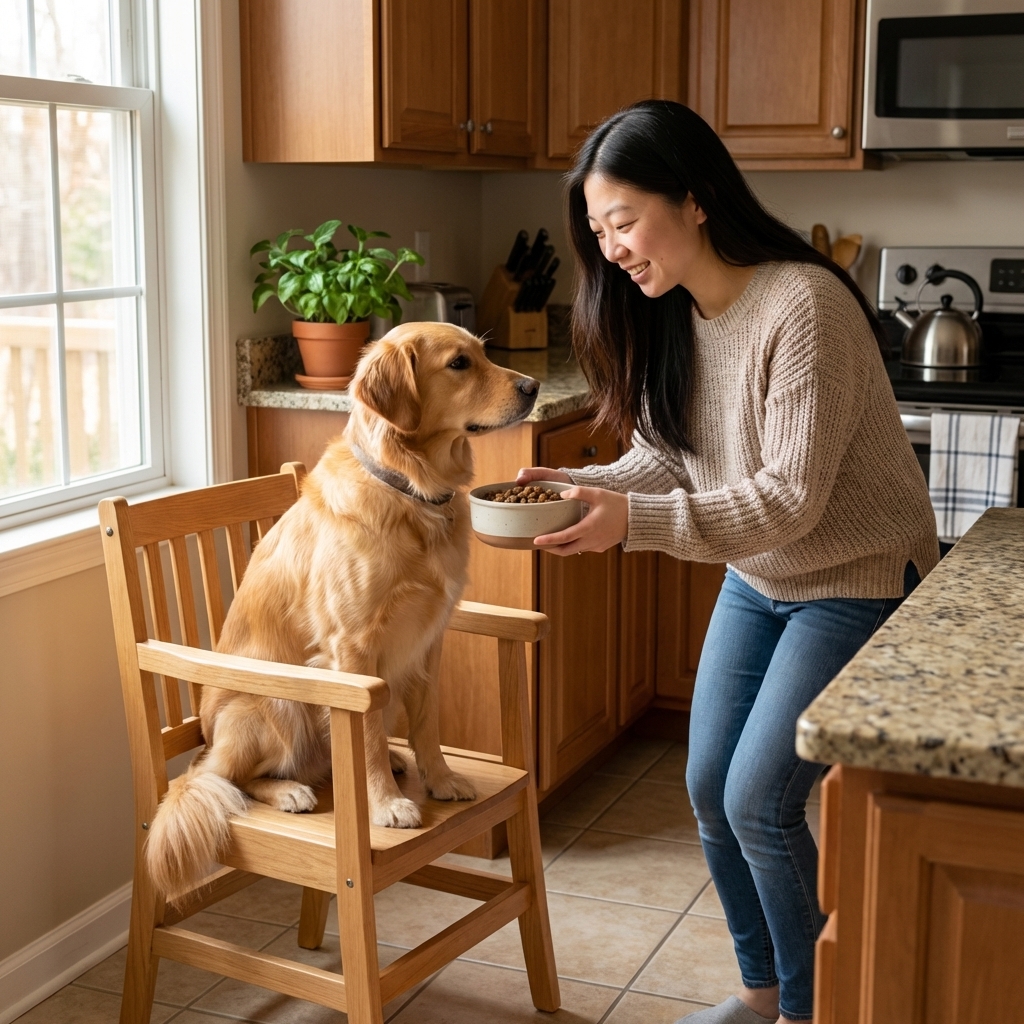
- Feed with your dog sitting upright, chest vertical.
- Keep them upright for 15 to 30 minutes after meals. Some dogs need more or less, and your vet can help you decide.
- Offer small, frequent meals instead of one or two large meals.
What is a Bailey chair?
A Bailey chair is a supportive chair (often custom-fit) that holds a dog in an upright seated posture during and after meals. Think of it like a high chair designed for dogs. It is especially helpful for dogs who cannot comfortably stay upright on their own.
Some families use a DIY setup, others buy one, and many use a mix of tools: a corner of a couch, firm pillows, a laundry basket lined with towels, or a purpose-built chair. Safety and stability come first.
Food texture matters
For megaesophagus, there is no one “best” texture. Dogs vary. Under veterinary guidance, families commonly try:
- Meatball-style portions (firm enough to swallow, sized for your dog)
- Thick slurry or gruel
- Canned food consistency or soaked kibble made into a paste
- Prescription diets if recommended for other GI needs
What you are watching for is the option that produces the least regurgitation and the best comfort and weight maintenance.
Water is often the trickiest part
Some dogs regurgitate water more than food. Ask your veterinarian about strategies such as:
- Offering water only while upright
- Trying small, frequent sips instead of free-choice gulps
- Discussing whether gelled water is appropriate for your dog
Do not restrict water without veterinary direction. Hydration is critical.
What your vet may test
If megaesophagus is suspected, your veterinarian will often start with chest radiographs (x-rays). These can show an enlarged esophagus and also check for signs of aspiration pneumonia. Many dogs also need basic bloodwork to look for clues to an underlying cause and to assess hydration and overall health.
Depending on your dog’s age and symptoms, your vet may recommend targeted tests such as an acetylcholine receptor antibody test for myasthenia gravis, and endocrine testing when indicated (for example, Addison’s testing if the history fits). The goal is to identify treatable contributors when possible.
Possible related conditions
Megaesophagus can be congenital (present early in life) or acquired (develops later). Your veterinarian may recommend diagnostics to look for underlying causes, because addressing an underlying problem can improve comfort and, in some cases, esophageal function. Many cases still end up being idiopathic even after a solid workup.
What veterinarians often consider
- Myasthenia gravis (a neuromuscular condition that can cause weakness and megaesophagus)
- Addison’s disease (hypoadrenocorticism)
- Hypothyroidism (sometimes considered, although the strength of the link varies and not every specialist agrees it is a primary cause)
- Esophagitis (inflammation), strictures, or motility disorders
- Hiatal hernia and significant reflux issues
- History of esophageal injury or severe reflux (including reflux events that can happen around anesthesia in some dogs)
Not every dog will need every test. Your veterinarian will base the plan on age, symptoms, exam findings, and x-rays.
Medications and treatment
Management is very case-dependent. Some dogs do well mostly with feeding changes, while others need medication support.
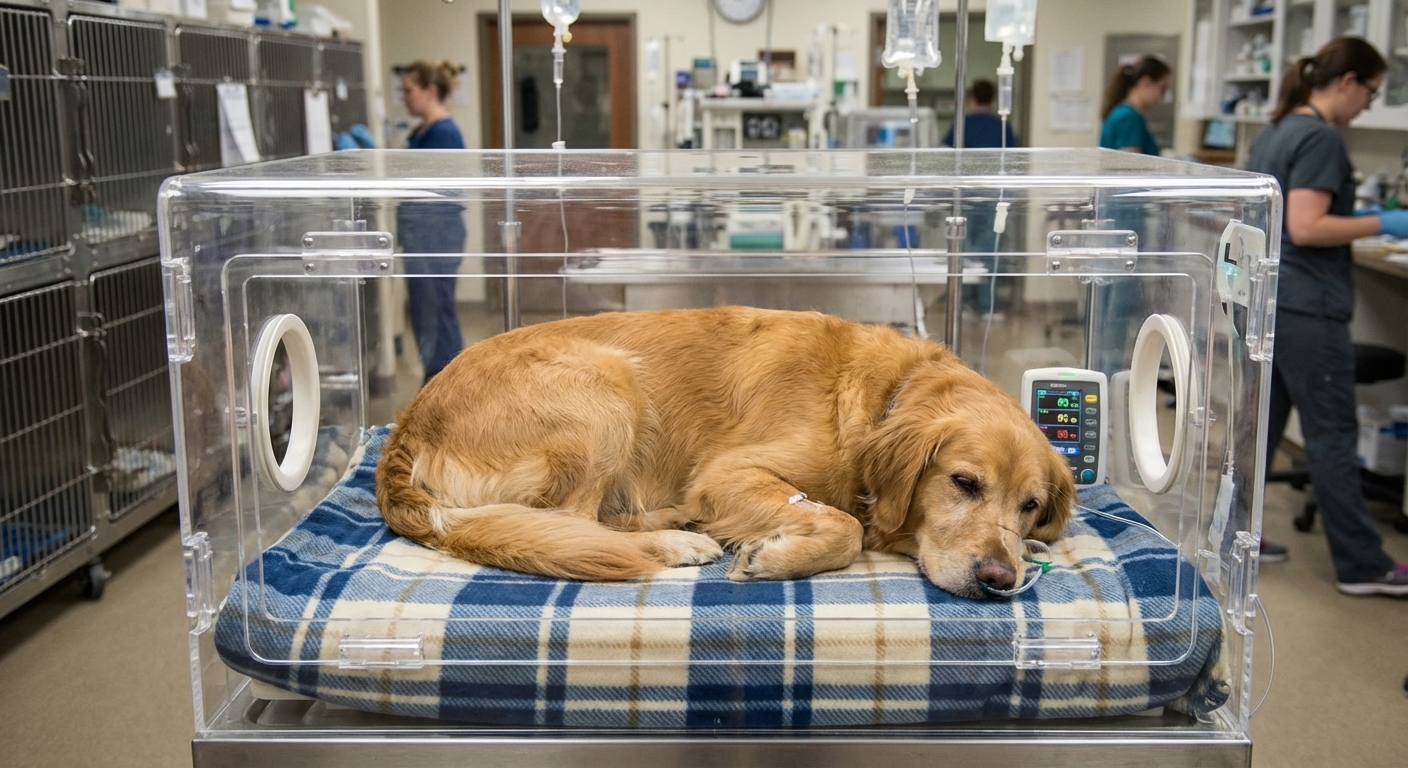
- If aspiration pneumonia is suspected, treatment may include antibiotics and supportive care (sometimes oxygen and hospitalization).
- Many dogs benefit from anti-reflux or esophagitis-support medications as recommended by your vet.
- Motility drugs are sometimes tried, but results can be mixed because megaesophagus is not always a simple “slow movement” problem.
- There are also emerging, more targeted options your veterinarian may discuss for certain cases. One example you might hear about is sildenafil in select patients, based on your dog’s specific findings.
Important safety note: Never force-feed. Also ask your vet how to give medications safely. Pills can sometimes lodge in the esophagus, so your team may recommend a liquid form, a specific treat technique, and upright time after dosing.
What to track
When you are sleep-deprived and worried, it is hard to remember details. A simple log can speed up diagnosis and help fine-tune feeding routines.
Bring this information if you can
- Timing of episodes: minutes after eating, hours after, overnight
- What came up: food, water, foam, bile, mucus
- Effort level: passive drop-out vs heaving
- Body position: lying down, playing, after drinking, after excitement
- Meal details: brand or recipe, texture, amount, number of meals per day
- Upright routine: how long upright after meals, and whether regurgitation happens during that period
- Coughing or breathing changes and when they occur
- Weight and appetite: weekly weigh-ins if possible
- Medications and supplements: include flea and tick products
If you can safely do so, a short phone video of an episode is incredibly helpful for your vet team.

When to call urgently
- Any signs of aspiration pneumonia (cough, fever, lethargy, rapid breathing)
- Repeated regurgitation with inability to keep water down
- Weight loss, weakness, or dehydration
- Choking, gagging, or distress during meals
Megaesophagus is manageable for many dogs, but it is not a “wait and see” situation when breathing is involved. Trust your instincts. If something feels off, call.
Day-to-day tips
These are caregiver-friendly ideas that commonly make life smoother, especially while you and your veterinarian are dialing in the plan.
- Make mealtimes calm. Excitement can increase gulping and air swallowing.
- Use slow feeding strategies if your dog tends to inhale food, while still keeping them upright.
- Stick to small, frequent meals to reduce esophageal load.
- Keep the head and chest elevated for post-meal time. Consistency matters.
- Nighttime positioning helps. Some caregivers have success with a soft inflatable neck collar (like a gentle recovery collar) during sleep to keep the head slightly elevated and reduce overnight regurgitation risk. Ask your vet if this is appropriate for your dog and make sure breathing and comfort are never compromised.
- Protect bedding with washable covers if nighttime regurgitation occurs.
- Ask about medication options that may be appropriate for reflux, esophagitis, or your dog’s specific diagnosis.
If you remember one thing: regurgitation is often quiet and effortless, and the danger is what your dog might inhale afterward. Upright feeding is not a gimmick. It is physics helping your dog eat more safely.
Prognosis and quality of life
Outcomes vary a lot. Dogs who avoid aspiration pneumonia and maintain weight can do well long-term with consistent routines. Dogs who have frequent aspiration events, significant weight loss, or a hard-to-control underlying condition may need closer monitoring and more intensive support. The earlier you get a clear plan with your veterinarian, the better your chances of finding a routine that works.
A note for mixed-breed families
At Designer Mixes, we love our mixed-breed dogs, and we also know that health issues can show up in any breed mix. Megaesophagus is seen more commonly in some pure breeds, so if your dog is mixed with breeds like German Shepherd Dogs, Great Danes, or Irish Setters, it is worth being extra vigilant about “quiet” regurgitation and cough after meals. That said, any dog can be affected. If your dog is regurgitating, do not assume it is just “a sensitive stomach.” Getting the right diagnosis early can truly change the outcome.
References
- Merck Veterinary Manual: Esophageal Disorders and Megaesophagus (veterinary reference, accessed 2026)
- American College of Veterinary Internal Medicine (ACVIM) resources on esophageal disease and aspiration pneumonia (accessed 2026)
- WSAVA guidance on working with your veterinarian for nutrition and chronic GI management (accessed 2026)