
Understand what causes dog mange, the difference between sarcoptic scabies and demodectic mange, common symptoms, diagnosis, treatment, and safe at-home steps.
Article
•
Designer Mixes
Mange in Dogs: Sarcoptic vs. Demodectic Mites

Shari Shidate
Designer Mixes contributor
Mange is one of those words that can make any dog parent’s stomach drop. I get it. As a veterinary assistant, I have seen how quickly itchy skin can turn into sleepless nights for everyone. The good news is that mange is treatable, and many dogs recover beautifully once you identify the cause and start the right plan.
The two most common mite causes of mange in dogs are sarcoptic mites (often called scabies) and demodectic mites (Demodex). They can look similar at first glance, but they behave very differently, and the treatment approach is not always the same. (Other mites can cause itchy skin too, but these two are the big ones when people say “mange.”)

What mange is
Mange is a skin condition caused by microscopic mites. Sarcoptes is a true parasite. Demodex is usually present in low numbers in hair follicles, and it becomes a problem when it overgrows.
Most of what you see at home comes from your dog’s body reacting to the mites, plus scratching and chewing that damages the skin barrier. Once that barrier is compromised, bacteria and yeast can overgrow , making symptoms worse.
Sarcoptic mange: very itchy and contagious
Sarcoptic mange is caused by Sarcoptes scabiei (sometimes listed as Sarcoptes scabiei var. canis). These mites burrow into the skin and trigger an intense allergic-type reaction. Many dogs are unbelievably itchy even when there are only a few mites present.
Common signs
- Severe itching that seems out of proportion to what you see on the skin
- Redness, bumps, crusts, scabs
- Hair loss, often from chewing and scratching
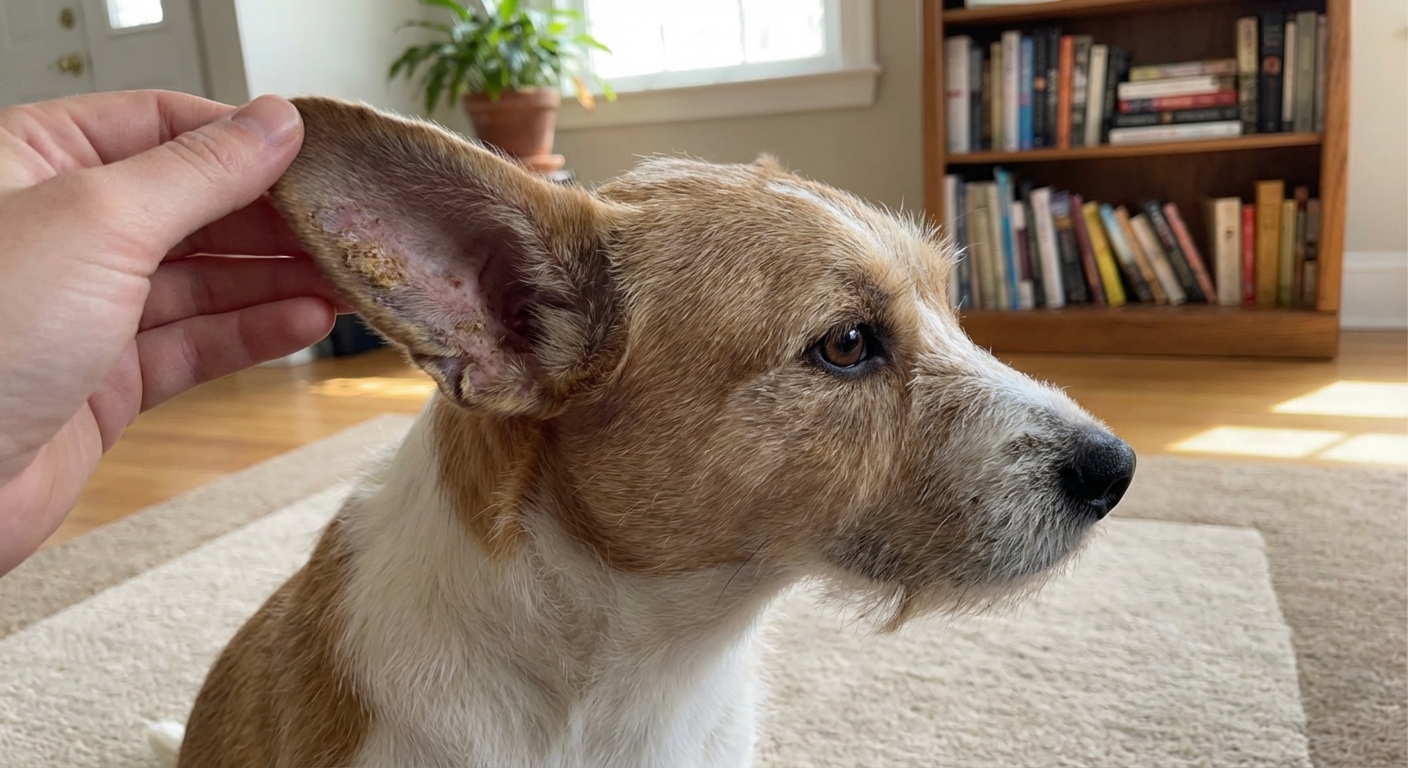
- Typical locations: ear edges , elbows, hocks (rear leg joint), belly, chest
- Symptoms may spread quickly over days to weeks
Contagious risk
This is the big difference. Sarcoptic mange is contagious to other dogs and can cause itchy bumps in people too. Human symptoms are often temporary once the pet is treated, but they can still be miserable. If anyone in the home develops a new itchy rash, especially children or immunocompromised people, it is smart to check in with a human healthcare provider.
If one dog in a household has sarcoptic mange, your veterinarian will often recommend treating all in-contact dogs.
Simple handling precautions
- Limit close snuggling until treatment is underway, if your vet suspects sarcoptic mange
- Wash hands after handling your dog or bedding
- Wash bedding and soft items regularly during treatment
Demodectic mange: often localized
Demodectic mange is caused by Demodex mites. Here’s the surprising part: Demodex mites commonly live in hair follicles of healthy dogs. Problems happen when a dog’s immune system is not controlling mite populations well, allowing them to multiply and inflame the skin.
Common signs
- Hair loss that may start as small patches
- Mild itch or sometimes no itch at first (itching often increases if infection develops)
- Scaling, dull coat, blackheads (comedones)
- Typical locations: face around the eyes and muzzle, forelegs, paws
Is it contagious?
Demodex is not usually contagious in the household the way sarcoptic mange is. Puppies typically acquire Demodex from their mother very early in life, and most dogs live with small numbers without any issue.
Localized vs. generalized
Localized demodicosis means a few small patches, often in young dogs, and it may resolve with appropriate veterinary guidance and time. Generalized demodicosis involves larger areas of the body and can be more serious, sometimes requiring longer treatment and investigation into underlying causes of immunosuppression (for example, certain medications like steroids , hormonal disease, or other systemic illness). Life stressors can play a role, but they are usually not the whole story.

Quick differences
- Itch level: Sarcoptic is usually extremely itchy. Demodectic is often mild at first.
- Contagious: Sarcoptic is contagious to dogs and can affect people. Demodectic is not typically spread between household pets like sarcoptic mange.
- Common areas: Sarcoptic often hits ear edges, elbows, hocks, belly. Demodectic often starts on face and legs.
- Why it happens: Sarcoptic is an infestation from exposure. Demodectic is usually an overgrowth related to immune control.
How vets diagnose mange
Because the treatments and household recommendations can differ, diagnosis matters. Your veterinarian may use one or more of these tools:
- Skin scrapings: A small scraping examined under a microscope. Demodex is often easier to find than sarcoptic mites.
- Tape prep and cytology: Helps identify secondary bacterial or yeast infections .
- Response to treatment: Sometimes sarcoptic mange is suspected even if mites aren’t seen, and your vet may treat based on classic signs and exposure history.
- Fungal culture or other testing: Ringworm and allergies can mimic mange, so your vet may rule out look-alikes.
Tip from the clinic: negative skin scrapings do not always rule out sarcoptic mange because mites can be difficult to catch on a scrape.
Treatment basics
Your veterinarian will tailor treatment to your dog’s age, health status, severity, and whether there is infection.
For sarcoptic mange
- Prescription anti-parasitic medication is the cornerstone. Some prescription flea and tick preventives, especially the isoxazoline class, also treat sarcoptic mange when used correctly.
- Treat in-contact dogs if your veterinarian recommends it.
- Address itch and inflammation as needed so your dog can rest and the skin can heal.
- Treat secondary infection (antibiotics or antifungals) if present.
For demodectic mange
- Localized cases may require monitoring, topical therapy, and treating any infection.
- Generalized cases often need longer courses of prescription anti-mite medication and recheck scrapings.
- Look for underlying causes if the case is recurrent or severe, especially in adult dogs (this often means investigating immunosuppression).
How long until improvement?
With effective treatment, many dogs start to seem less itchy within days, but skin healing and hair regrowth usually take weeks. More severe or generalized cases can take longer and need rechecks.
Please skip the DIY mite-killing experiments at home. Some online remedies can burn skin, worsen inflammation, or delay real treatment. If you want to support the skin barrier safely, ask your veterinarian about medicated shampoos, soothing rinses, and nutrition support that fits your dog.
Home care
Medication targets the mites, but your day-to-day care helps your dog heal faster and stay comfortable.
- Prevent self-trauma: Use an e-collar or recovery collar if your dog is chewing or scratching until bleeding.
- Follow bathing instructions exactly: If your vet prescribes a medicated shampoo, frequency and contact time matter.
- Wash bedding regularly: Especially important when sarcoptic mange is suspected. Sarcoptic mites can survive off-host for a short time, often around 24 to 72 hours depending on conditions.
- Keep nails trimmed: Shorter nails do less damage during scratching.
- Support skin health through nutrition: Ask your vet about omega-3 fatty acids (EPA and DHA) and whether your dog’s diet is balanced for skin recovery.
When to call the vet urgently
- Your dog is so itchy they cannot sleep or settle
- You see oozing, a strong odor, swelling, or widespread crusting (possible infection)
- There are signs of pain, fever, lethargy, or loss of appetite
- Puppies, seniors, or immune-compromised dogs have rapid spreading skin lesions
- Humans in the household develop itchy bumps and your dog has suspected sarcoptic mange
FAQ
Can mange look like allergies?
Yes. Mange can mimic environmental allergies, food sensitivities, and even ringworm. That’s why a veterinary exam and skin testing are so helpful.
Will my dog’s hair grow back?
In most cases, yes. Once mites and secondary infections are controlled, hair regrowth usually follows. It can take several weeks to a few months depending on severity.
Is my house infested?
With sarcoptic mange, mites can survive off-host briefly, so washing bedding and following your vet’s household recommendations is wise. With demodectic mange, environmental control is usually not the focus because the mites primarily live in hair follicles and are not typically spread through the home the same way.
Bottom line
If your dog has sudden intense itch, ear-edge crusting , or rapidly spreading hair loss, don’t wait. Sarcoptic mange is uncomfortable and contagious, and demodectic mange can worsen if infection sets in. The sooner your veterinarian identifies the mite type and starts treatment, the sooner your dog can get back to feeling like themselves.
Action step: Take clear photos of the affected areas and write down when the itching started, where it began, and whether your dog has had recent contact with other dogs. This helps your vet narrow things down faster.