Learn how often to feed clownfish, how much to give in 30–60 seconds, the best pellets and frozen foods, plus a simple weekly schedule and water-quality tips.
Article
•
Designer Mixes
Mandarin Fish Care and Behavior

Shari Shidate
Designer Mixes contributor
Mandarin fish are some of the most stunning saltwater fish you can keep, and they are also some of the most misunderstood. Their easygoing look can trick new hobbyists into thinking they are beginner-friendly, but their feeding needs and daily behavior are truly unique.
In this guide, I will walk you through what mandarin fish (often called mandarin dragonets) actually do all day, what that behavior can tell you about their health, and how to set up a home where they can thrive long-term.
Meet the Mandarin Fish
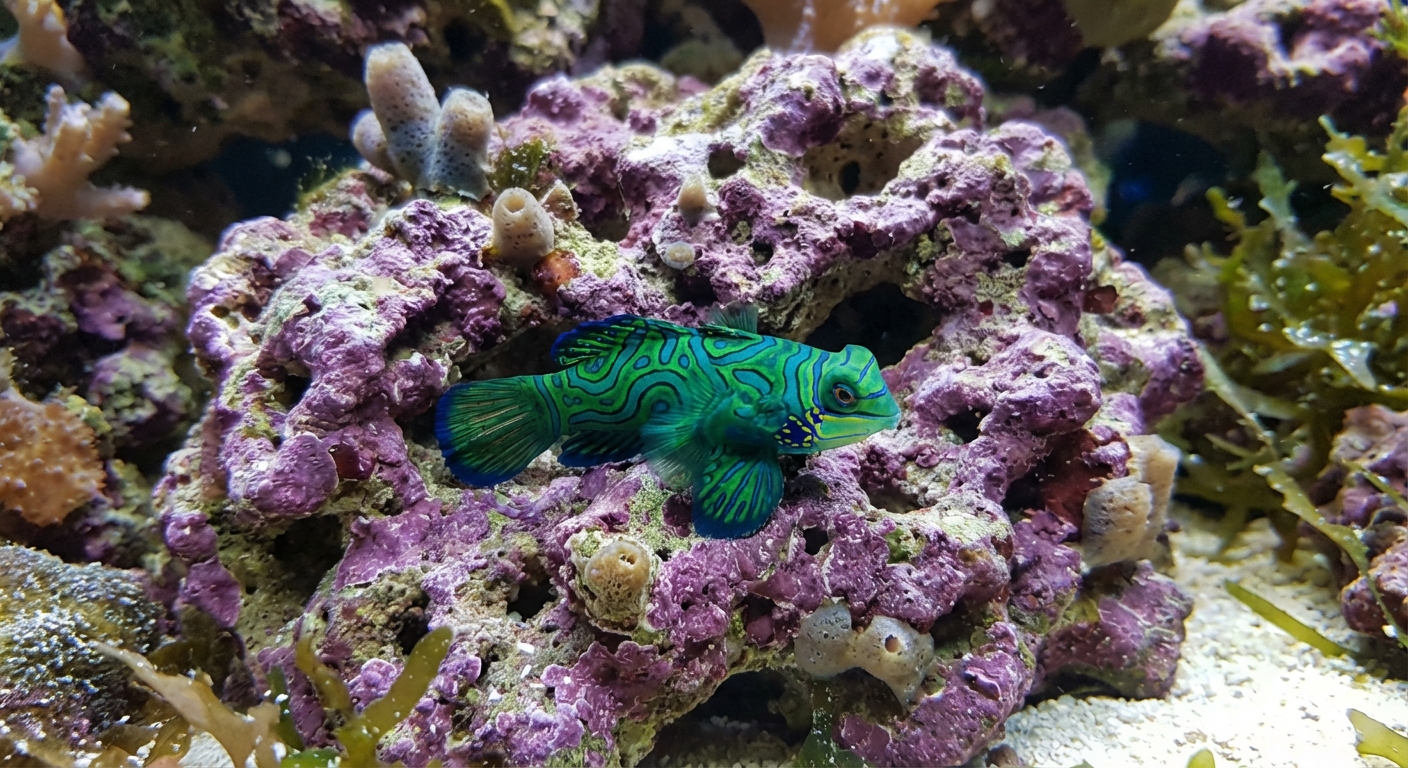
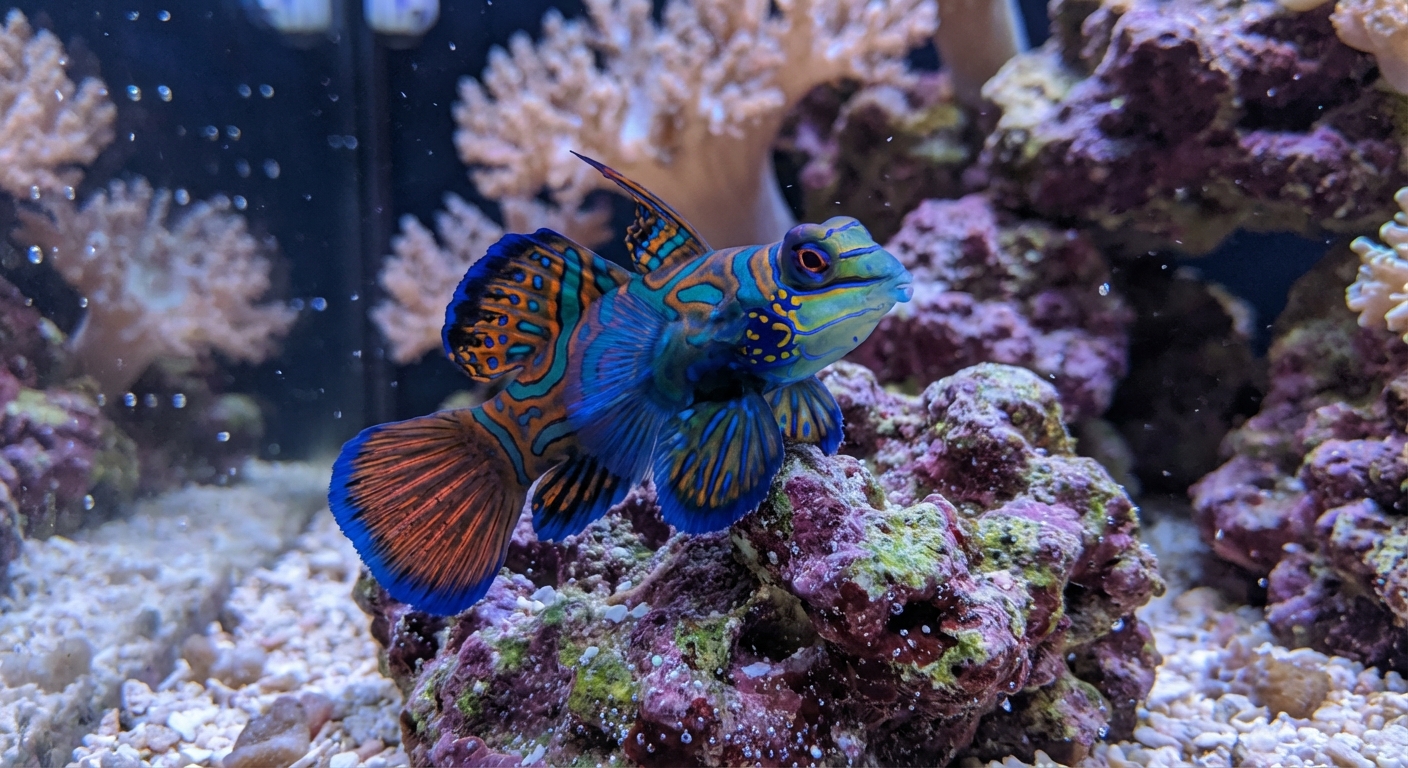
Most aquarists are referring to Synchiropus species when they say “mandarin fish,” especially the green mandarin (Synchiropus splendidus) and the spotted mandarin (Synchiropus picturatus). They are small, bottom-oriented fish that “walk” and hover over rockwork while hunting tiny prey.
Why they act differently
- Built for micro-hunting: Mandarins pick at tiny prey all day, especially copepods and amphipods (often called “pods”). They are not designed to rush to the surface for flakes.
- A heavy mucus coat: Mandarins have thick, funky-smelling skin mucus that may reduce susceptibility to some external parasites, but it is not immunity. It can also make them look “fine” even when they are slowly losing weight.
- Low aggression, high persistence: They are not usually bullies, but they are constant grazers. That constant feeding behavior is the central care challenge.
Normal Behavior
If you learn mandarin body language, you can catch problems early. Here are the most common behaviors you will see in a healthy mandarin.
1) All-day grazing
A healthy mandarin spends much of the day moving from rock to rock, making quick, precise pecks. This is not “begging.” It is how they eat.
Healthy sign: steady picking, a rounded belly, and smooth movement across the rockwork.
Concerning sign: the fish stops hunting, rests excessively, or looks thin behind the head and along the back.
2) Hovering and perching
Mandarins often perch on rock ledges or sandy spots, then hop forward. This is normal. It is part of how they stalk prey and conserve energy.
3) Shy is common
Many mandarins avoid bright open water and prefer caves and overhangs. They should not be crashing into glass or breathing rapidly at rest.
4) Dawn and dusk activity
Many keepers notice extra activity around lights-on and lights-off. That is common for micro-predators that cue into changing light levels.
Tank Setup
The best mandarin care is behavior-based care. If you support their natural hunting pattern, they usually reward you with calm, confident behavior and better body condition.
Tank size and maturity
- Tank size: Many hobbyists aim for 30 gallons as a floor for a single mandarin, but success depends less on a number and more on pod production, tank maturity, competition, and whether the fish eats prepared foods. In practice, 50+ gallons (or a smaller tank with a productive refugium and a prepared-food eater) is often easier.
- Tank maturity: A mandarin typically does best in a well-established tank where pods are already thriving. A brand-new aquarium is rarely able to feed them naturally.
Rockwork and habitat
- Live rock with surface area supports pods and gives the fish hunting lanes.
- Overhangs and caves reduce stress and encourage natural foraging routes.
- Gentle to moderate flow is usually ideal. Strong flow can make it harder for them to hunt efficiently.
Lids and overflow safety
- Cover gaps: Even though mandarins are not famous jumpers, fish can spook. A lid or screen top is smart insurance.
- Protect overflows: Use mesh guards or foam covers where appropriate so a slow, curious bottom-dweller does not end up taking an unwanted ride.
Water stability
Mandarins do best in stable reef-like conditions. Aim for consistency more than perfection. Sudden swings in salinity, temperature, or alkalinity can suppress appetite and weaken immune defenses.
- Temperature: 75 to 79°F (24 to 26°C)
- Specific gravity: 1.024 to 1.026
- Ammonia and nitrite: 0
- Nitrate: low to moderate (many reef keepers target under 20 ppm, often lower for sensitive systems)
Feeding
Many mandarin losses in home aquariums are linked to gradual underfeeding and starvation that can be easy to miss at first.
Natural diet basics
Mandarins primarily eat:
- Copepods (a huge part of success)
- Amphipods (larger pods found in rock and refugiums)
- Other tiny invertebrates that live on and within live rock
How to tell if your mandarin is eating enough
- Body shape: Look for a gently rounded belly and no sunken area behind the head.
- Daily behavior: A healthy fish hunts steadily and does not look frantic or weak.
- Weight trend: Thinness often shows along the dorsal area and at the base of the head first.
Pods and refugiums
If you want long-term success, think like a pod farmer.
- Refugium helps: A refugium with macroalgae (like chaeto) and rubble can produce pods with less predation pressure.
- Seed, then sustain: Seeding pods can jump-start a system, but you still need habitat, time, and reduced competition for pods to keep reproducing.
- Watch pod predators: Some wrasses and other micro-hunters can drain your pod population quickly, even in larger tanks.
Training to prepared foods
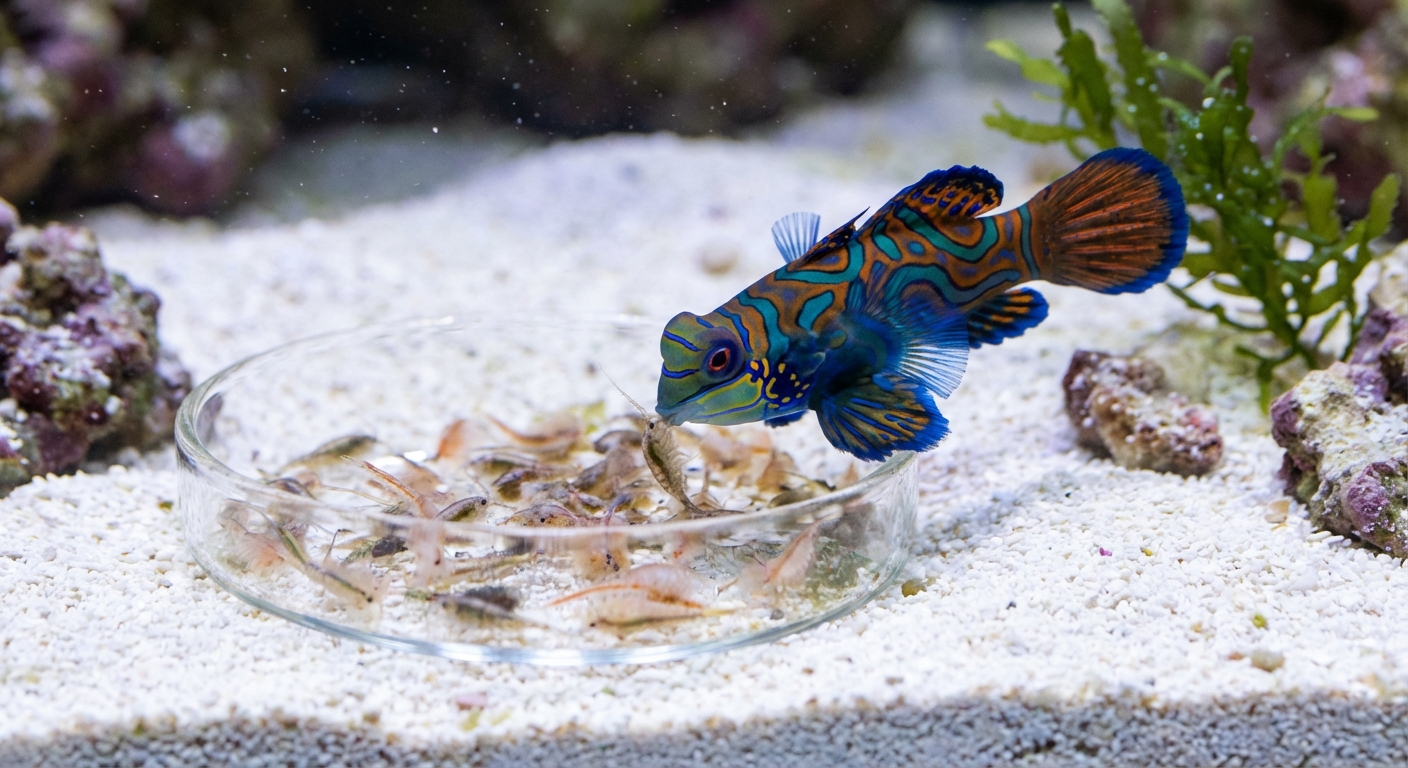
Some mandarins can be trained onto frozen foods like mysis, fish roe, and specialty small-particle blends. It is not guaranteed and it can take time. Enriched brine shrimp can be useful as a transition, but it is usually not ideal as a long-term staple on its own.
A few practical tips that often help:
- Use a feeding station: A small dish on the sand or a low-flow corner can keep food from blowing away.
- Offer tiny foods frequently: Several small offerings match their natural grazing pattern.
- Enrich frozen foods: Use a reputable omega-3 and vitamin enrichment to improve nutrition.
- Reduce competition: Fast, aggressive eaters can outcompete a mandarin even if food is present.
If you want one key takeaway, it is this: buy a mandarin only when you have a realistic plan for daily nutrition, not just a hope that it will “find enough pods.”
Best sourcing tip
When possible, look for captive-bred or conditioned mandarins that are already taking prepared foods. It does not remove the need for pods, but it can dramatically improve your margin of safety.
Tankmates
Mandarins are usually peaceful, but their feeding style makes tankmate selection very important.
Good tankmate traits
- Peaceful and not prone to fin nipping
- Not a heavy pod hunter
- Not so fast at feeding that the mandarin never gets access to prepared foods
Use caution with
- Other dragonets in smaller tanks, since they can compete for pods
- Wrasses and other micro-predators that hunt pods heavily
- Aggressive fish that may harass a slow-moving bottom-dweller
Keeping two mandarins
Pairs can work, especially in larger tanks with strong pod production. Two males often fight. If you are hoping for a pair, plan for a larger, mature system and be ready with a backup plan if aggression appears.
Courtship
One of the most beautiful behaviors you might see is the mandarin’s evening courtship dance. Near lights-out, a male and female may rise together in the water column and release eggs and sperm.
What it often suggests: the fish feel safe and settled. Spawning is a great sign, but it is not a guarantee that nutrition is perfect, so keep monitoring body condition and feeding response.
Health Clues
Because mandarins can look “okay” while losing weight, behavior monitoring is essential.
Red flags
- Rapid breathing while resting
- Hiding constantly and no longer hunting
- Sudden refusal of all foods in a fish that previously ate
- Visible weight loss or a pinched look behind the head
- Clamped fins and sluggish movement
Quarantine and meds
Quarantine can be tricky for mandarins because a bare tank often has little natural food. If you quarantine, you will need a pod plan or a prepared-food plan.
Also keep in mind that mandarins lack typical scales (they have reduced scales and thick skin and mucus) and can be sensitive to some medications. Copper sensitivity is commonly reported by hobbyists, and dosing mistakes can be unforgiving. Some keepers use alternatives like praziquantel for specific issues, but you should always verify treatment and dosing with a trusted fish health reference or an aquatic veterinarian before medicating.
Weekly Checklist
Here is a simple routine that helps you catch issues early.
- Daily: Watch your mandarin hunt for a few minutes. Check belly fullness and general energy.
- 2 to 3 times per week: Confirm pod activity with a flashlight after lights-out. You should see some movement on the glass or rock.
- Weekly: Test salinity and temperature stability, then address anything drifting.
- Monthly: Take a quick photo from the side. Comparing photos helps you notice slow weight changes.
Bottom Line
Mandarin fish are not hard because they are “delicate.” They are hard because they are specialized. When you build a mature, pod-rich environment and respect their constant grazing behavior, they can be hardy, peaceful, and genuinely joyful to watch.
If you are still in the planning stage, take your time. A mandarin will not reward a rushed setup, but they absolutely thrive in a patient, well-prepared home.