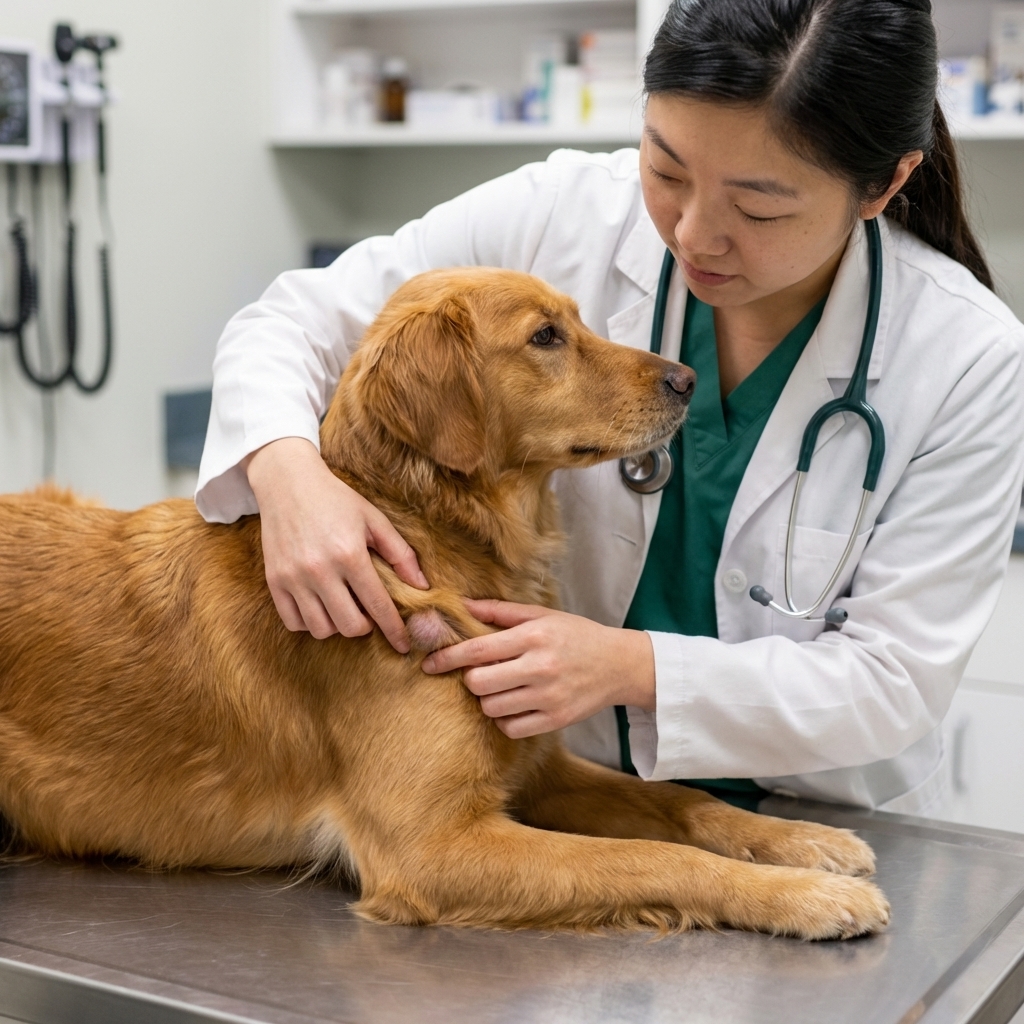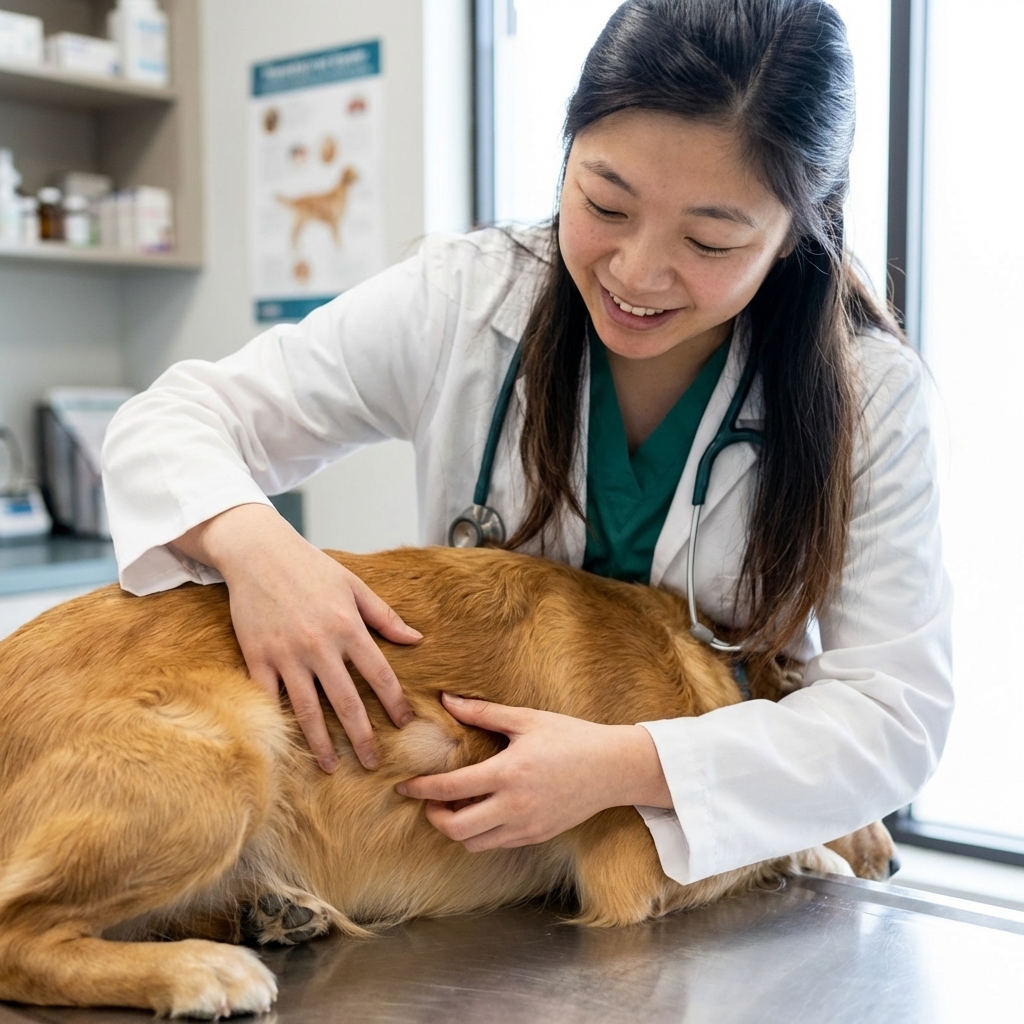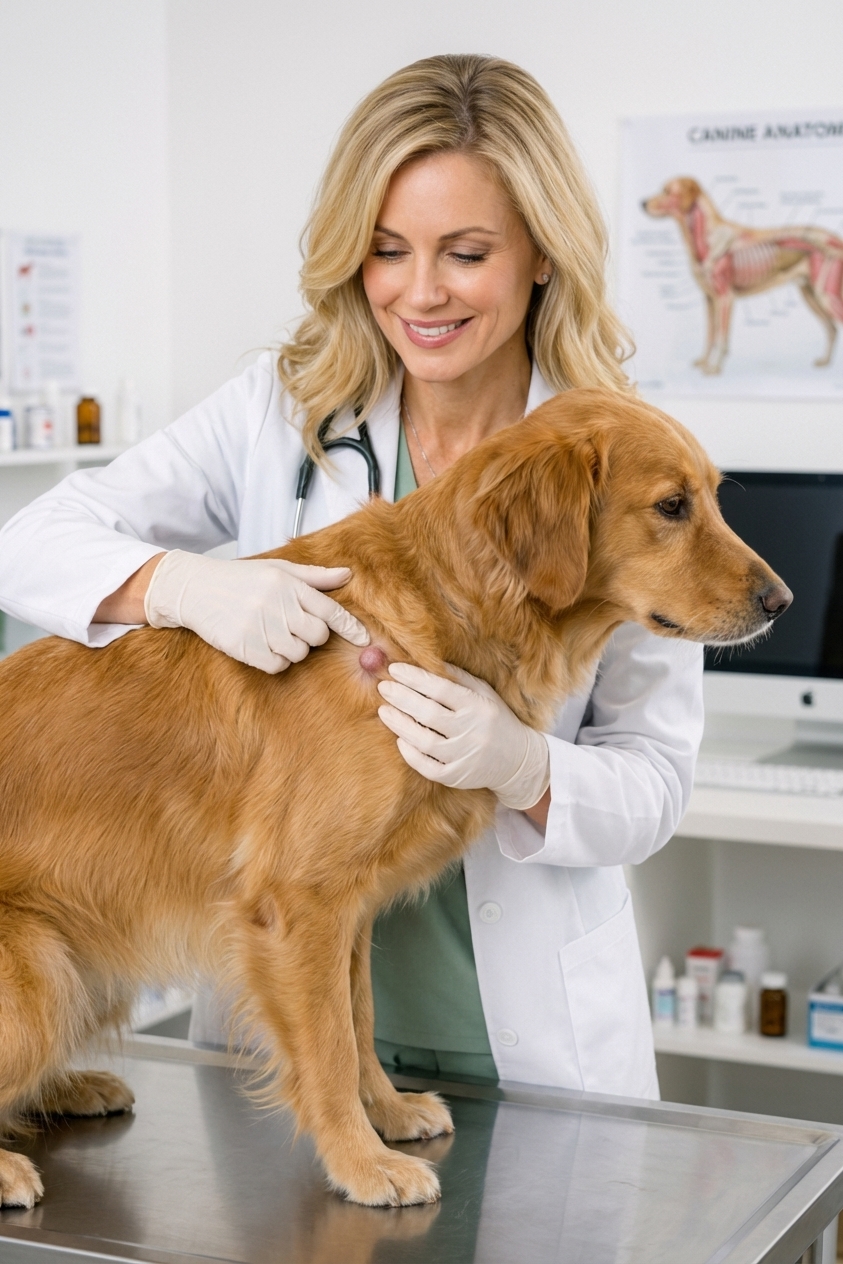
As a veterinary assistant here in Frisco, Texas, one of the hardest conversations I have with dog parents starts with the same sentence: “I just found a little lump by her nipple.” Sometimes it is nothing dangerous. Sometimes it is. The tricky part is that you cannot tell which one it is just by looking or feeling at home.
The good news is that there is one powerful, evidence-based way to lower a female dog’s risk of developing mammary tumors: spaying, especially when it is done early. Let’s walk through what we know about how mammary tumor risk changes depending on when a dog is spayed, and what a new mammary lump should prompt you to do next.
What are mammary tumors in dogs?
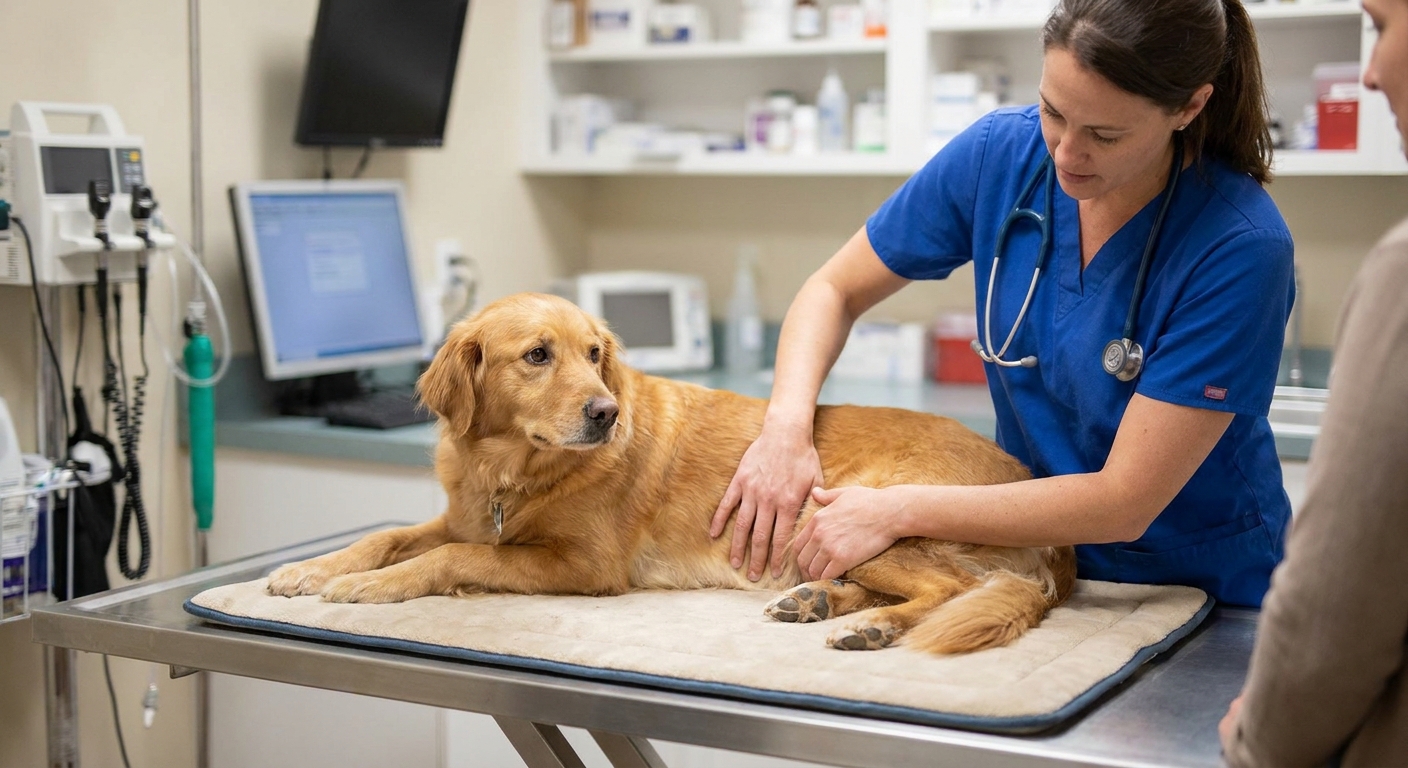
Mammary tumors form in the mammary tissue along a dog’s underside, from the chest to the groin. Dogs have multiple mammary glands (you can think of them like a chain on each side), so lumps can pop up anywhere along that line.
A few key points I want every owner to know:
- Mammary tumors are common in unspayed female dogs.
- They can be benign or malignant. Roughly speaking, studies often report something like 40% to 60% of canine mammary tumors as malignant, depending on the population and how tumors are classified.
- Size or “feel” does not tell you benign vs malignant. I have seen small, innocent-feeling lumps come back as malignant on lab testing, and big lumpy masses come back benign.
- Male dogs can develop mammary tumors too. It is uncommon, but it does happen, especially in older males or those with hormone-related conditions.
- Early action matters. Smaller tumors are often easier to remove surgically, and earlier diagnosis usually means more options.
Why spay timing affects risk
Mammary tissue is hormone-responsive. Estrogen and progesterone influence mammary gland development and can contribute to tumor formation over time. Spaying means removing the ovaries (and sometimes the uterus too, depending on the technique and region), which sharply reduces exposure to those reproductive hormones.
That is why timing matters so much. The more heat cycles a dog goes through, the longer mammary tissue is exposed to hormones.
If “heat” is a new term, it simply means a female dog’s reproductive cycle, when she becomes fertile and can get pregnant. Most dogs have their first heat somewhere around 6 to 18 months, but it varies a lot by individual and breed.
Risk by heats before spay
When clients ask me, “Is it still worth spaying her now?” my answer is almost always: yes, it is still beneficial. But it helps to be honest about how the protective effect changes over time.
You will see a few specific percentages repeated in vet clinics, textbooks, and online articles. These are often-cited historical estimates based on older research, and newer reviews have questioned how precise the exact numbers are across modern populations. The direction is still consistent, though: earlier spay is associated with lower mammary tumor risk.
Spayed before the first heat
This is the biggest risk-reduction window we know of. Traditional veterinary teaching, based on long-standing studies, is that spaying before the first heat dramatically lowers mammary tumor risk compared with leaving a dog intact.
Many sources cite a very low lifetime risk when spayed before the first heat, often quoted around 0.5% relative risk compared with intact females. Think of that number as a commonly repeated estimate, not a guarantee for an individual dog.
Spayed after the first heat but before the second
Spaying after one heat still offers meaningful protection, but not as much as spaying before the first heat. Often-cited estimates put the risk at about 8% relative to intact females.
In plain language: the risk is still lower than leaving her unspayed, but it is not as low as it could have been.
Spayed after the second heat
After two heat cycles, the protective effect continues to drop. A commonly cited estimate is about 26% relative risk compared to intact females.
This is one reason veterinarians often talk about “number of heats” when discussing mammary tumor prevention.
Spayed later in adulthood
Spaying later can still have health and management benefits, but the mammary tumor risk-reduction appears much less significant once a dog has had multiple heat cycles. Some research suggests that after a certain point, spaying offers minimal protective effect specifically for mammary tumors.
That said, even when mammary tumor prevention is not the main benefit anymore, spaying can still be the right choice for many dogs based on their overall health picture and your household needs. This is where your veterinarian’s guidance, tailored to your dog’s breed, age, and medical history, matters.
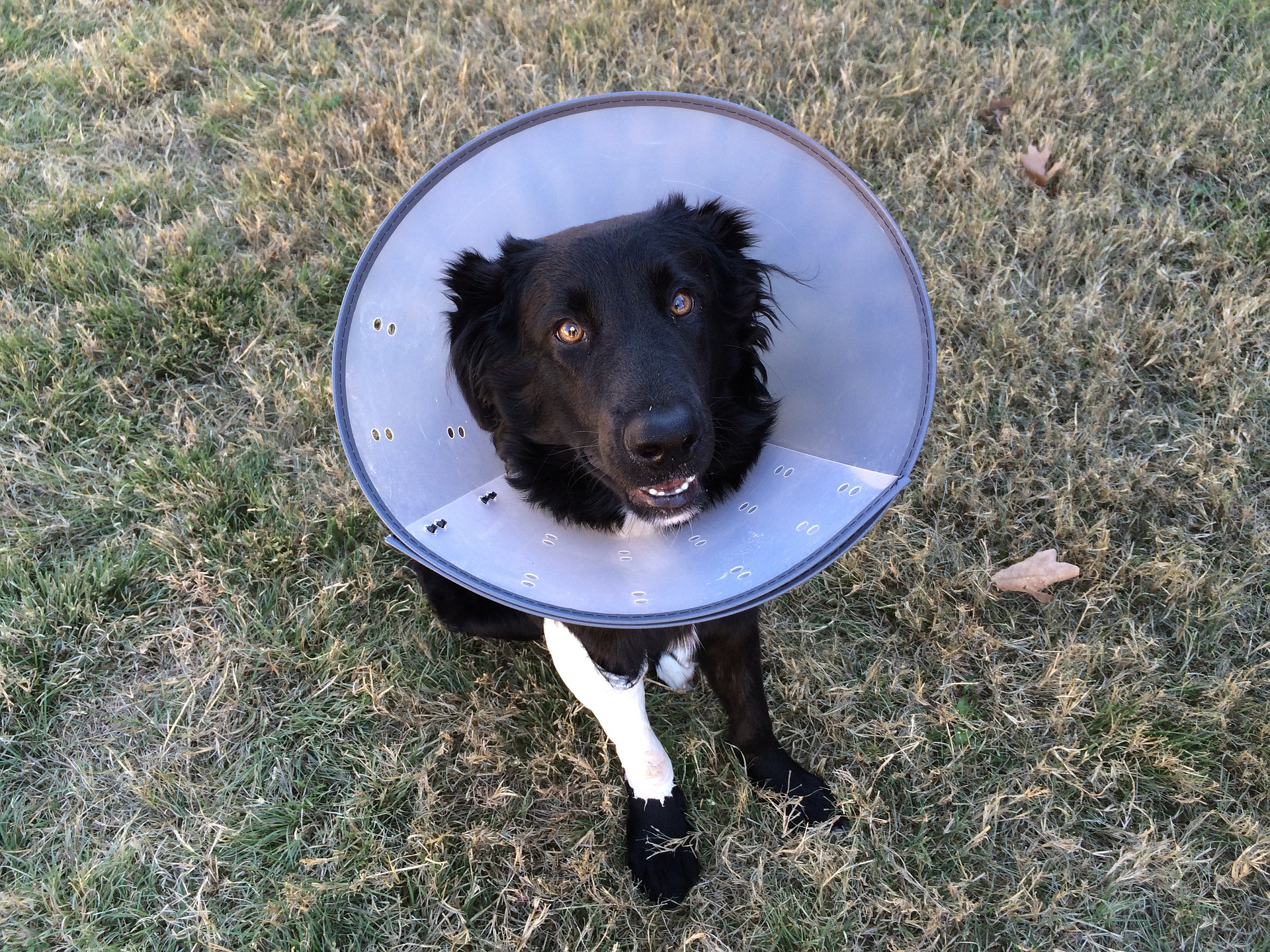
What about waiting to spay?
You may hear conflicting guidance, especially for large and giant breeds, because spay timing can also affect orthopedic development and, potentially, risk for certain other conditions. This is why there is no single perfect answer for every dog.
Here is the balanced takeaway I share in clinic:
- Earlier spay is strongly associated with lower mammary tumor risk.
- Later spay may have orthopedic or other considerations depending on breed and individual risk factors.
- The “best” timing is a personalized decision you make with your vet, weighing cancer risk, lifestyle, breed tendencies, and your ability to prevent accidental pregnancy.
If mammary tumor prevention is your top priority, earlier spay is generally more protective. If your dog is a breed where delayed spay is being considered for other reasons, ask your vet to walk you through the tradeoffs using breed-specific evidence where possible. Internet generalizations can miss the details that matter for your dog.
What to do if you find a lump
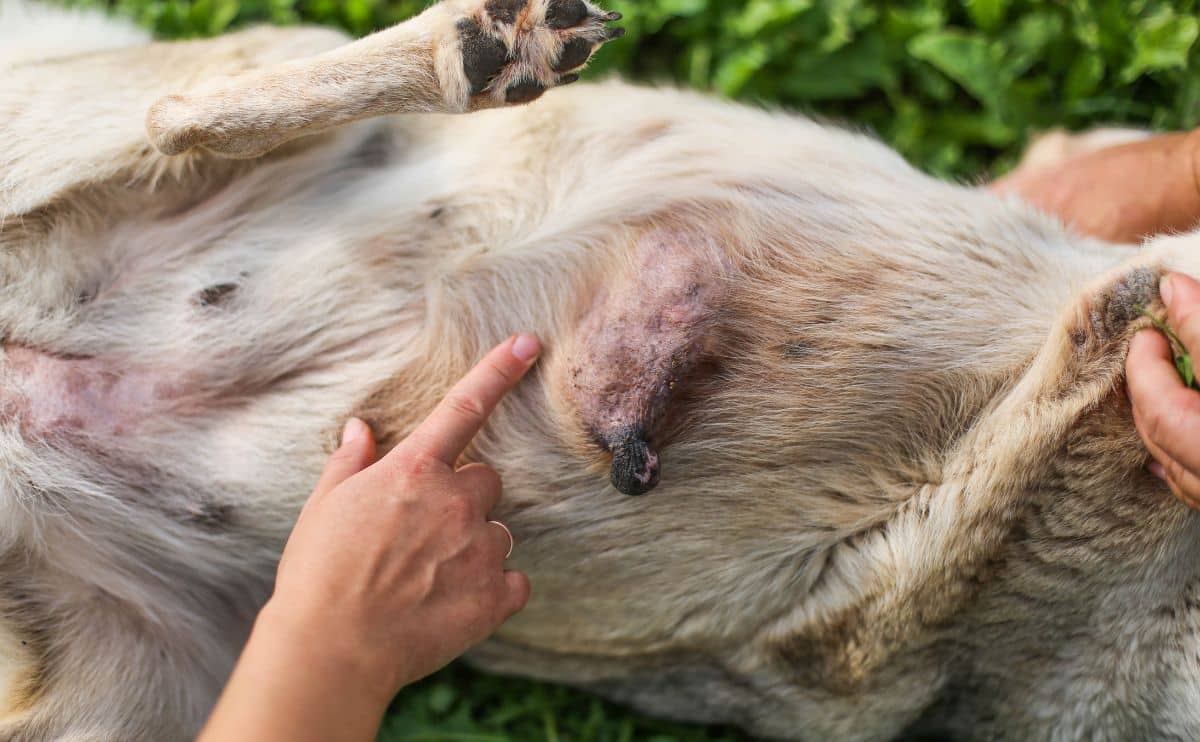
If you find a new lump anywhere along your dog’s mammary chain, the most important next step is to schedule a veterinary appointment soon. Even if your dog seems fine, do not assume it will go away on its own.
Here is what I recommend doing at home before the visit:
- Note the location (for example, “second nipple on the left” or “near the groin on the right”).
- Measure it with a ruler if your dog will allow it calmly. Write down the size.
- Take a clear photo so you can track changes over time.
- Do not squeeze, poke, or try to drain it. That can traumatize or inflame tissue and complicate a clean assessment.
At the clinic, your veterinarian may recommend:
- Fine needle aspirate (FNA) to collect cells for evaluation. This can be quick and done awake, but it is not always definitive for mammary tumors.
- Surgical biopsy or removal followed by histopathology (lab testing of the tissue). This is often the gold standard for diagnosis and for guiding next steps.
- Staging tests if cancer is suspected or confirmed, such as chest radiographs to look for spread and sometimes lymph node evaluation and bloodwork.
Even if the lump is small and your dog acts totally normal, please take it seriously. Early evaluation gives you the best chance at a straightforward plan.
When to go sooner
Any new mammary lump deserves a vet visit, but I consider these reasons to ask for the earliest available appointment:
- The lump is growing quickly over days to weeks
- The skin over it looks red, bruised, scabbed, or ulcerated
- There is discharge or bleeding
- The lump feels fixed (not movable) or the area is painful
- You feel multiple lumps along the chain
- Your dog seems unwell: low appetite, lethargy, weight loss
If your dog is already spayed
Spayed dogs can still develop mammary tumors, especially if they were spayed after experiencing heat cycles. So the rule stays the same: any new mammary lump should be checked by a veterinarian.
Also, not every lump near a nipple is a mammary tumor. It could be a benign fatty mass (lipoma), a cyst, an infection, or another type of skin or subcutaneous growth. The only safe way to know is to have it evaluated.
What treatment and prognosis depend on
If a mammary tumor is suspected or confirmed, treatment commonly starts with surgical removal. What happens next depends on what the lab finds.
In general, prognosis is influenced by factors like:
- Tumor size at the time of removal
- Whether lymph nodes are involved
- Whether there is spread to the lungs
- Histologic type and grade (what the tumor cells look like under the microscope)
Some malignant tumors are cured with surgery if caught early. Others may need additional treatment, such as oncology consultation and, in select cases, chemotherapy. This is another reason I push for early evaluation. It keeps more doors open.
How to monitor at home
I know it can feel scary once you have felt one lump. Some owners start checking constantly, and that anxiety is real.
A practical approach:
- Do a gentle monthly “nose to tail” check when your dog is relaxed.
- Feel along both mammary chains using light pressure, looking for new bumps.
- Keep notes on anything you find: size, location, and whether it is changing.
And please remember: finding a lump is not the same thing as a diagnosis. Your job is to notice and act. Your veterinarian’s job is to identify what it is and guide next steps.
Bottom line
Spaying is one of the most effective tools we have to reduce mammary tumor risk in female dogs, and spaying before the first heat offers the greatest protective benefit. Spaying after the first and second heats can still reduce risk, but that protection generally decreases with each heat cycle.
If you find a new lump along your dog’s mammary chain, treat it as a “make an appointment soon” moment. Early evaluation and, when needed, early removal can make a major difference in outcome and peace of mind.
Quick FAQ
Are mammary tumors always cancer?
No. Some are benign, and some are malignant. Because it is hard to tell by feel alone, veterinary testing is important.
Should a mammary lump be an emergency?
Usually it is not a same-hour emergency, but it is worth scheduling a visit soon, especially if it is growing, painful, or ulcerated.
If my dog is older, is spaying still worth it?
Often, yes, but the “why” may change. Mammary tumor risk reduction may be smaller later in life, but there can be other benefits. This is a decision to make with your veterinarian based on your dog’s health and risk factors.