A clear day-by-day guide to dog neuter recovery: anesthesia grogginess, appetite and potty changes, incision swelling, cone use, activity restrictions, and r...
Article
•
Designer Mixes
Male Dog Neuter Recovery Time

Shari Shidate
Designer Mixes contributor
Neutering is one of the most common surgeries in veterinary medicine, and for most healthy dogs, recovery is very manageable with a little planning and a lot of supervision. As a veterinary assistant, I like to remind families of two things: healing is usually quick, and most setbacks happen because dogs feel better before their incision is truly ready for normal life.
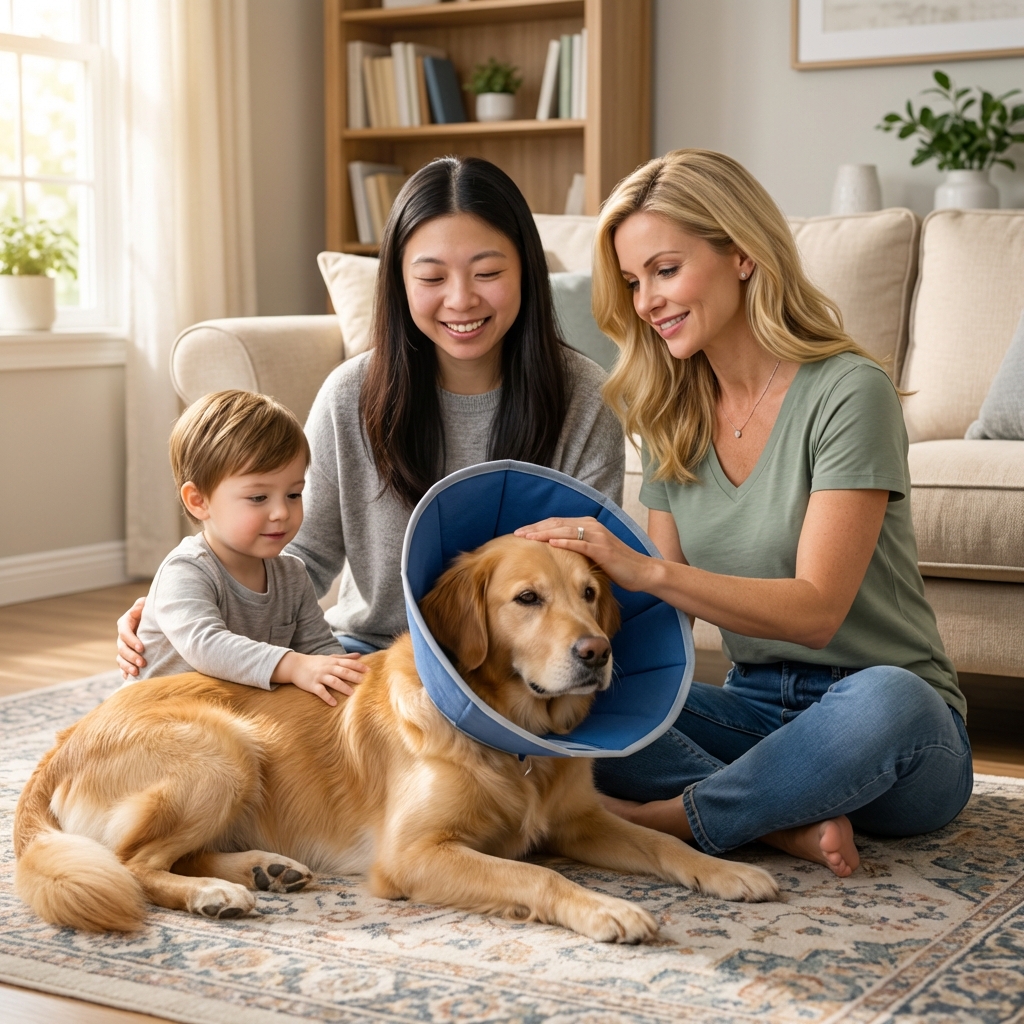
This guide will walk you through typical male dog neuter recovery time, what “normal” looks like day by day, and how to keep kids, other pets, and your newly neutered pup safe and comfortable. This is general guidance, so your veterinarian’s discharge instructions should always be your primary roadmap.
How long does recovery take?
Most male dogs need 10 to 14 days of restricted activity for the skin incision to heal. Many clinics treat 14 days as the safer minimum, especially for large, very active dogs. Some dogs bounce back in energy within 24 to 72 hours, but the incision and deeper tissues still need time to seal and strengthen.
- First 24 hours: Sleepy, a little wobbly, decreased appetite is common.
- Days 2 to 3: Energy often returns. This is the “danger zone” when dogs want to run and jump.
- Days 4 to 10: Incision should look steadily calmer and less puffy.
- Days 10 to 14: Many clinics clear dogs for a gradual return to normal activity, but only if healing looks good and your veterinarian says it is time.
Your veterinarian’s instructions always win, especially if your dog had a scrotal incision, a retained testicle (cryptorchid) surgery that required a longer procedure (sometimes even abdominal), or any complication that requires extended restrictions.
What to expect: a simple timeline
Day 0 (surgery day)
- Grogginess from anesthesia is normal. Some dogs whine, pace, or seem “off” as they wake up.
- Offer small amounts of water first. If that stays down, offer a small meal later unless your vet instructed otherwise.
- Keep him warm, quiet, and supervised. No stairs if you can help it.
- A mild cough or throat-clearing can happen after anesthesia in some dogs. Persistent coughing, labored breathing, blue or pale gums, or obvious breathing trouble is not normal and should be addressed urgently.
Days 1 to 3
- Mild swelling at the incision and mild bruising can be normal.
- Very short, controlled leash potty breaks only. The goal is bathroom breaks, not exercise.
- No off-leash backyard time if it leads to sprinting, zoomies, or rough play.
- Most dogs start acting more like themselves. That does not mean they are healed.
- Bathroom habits can be a little off. Some dogs have a delayed bowel movement or mild constipation after anesthesia or pain meds. That can be normal for a day or so, but straining, crying, vomiting, a hard swollen belly, or no stool for more than 48 hours should prompt a call to your vet.
Days 4 to 7
- The incision should be dry, closed, and minimally pink.
- Itching can start as healing progresses. This is when cones and recovery suits really earn their keep.
- Continue strict activity restriction.
- In general, you want the incision to look a little better each day. Redness and swelling should trend down, not up.
Days 8 to 14
- Many incisions look nearly “done,” but the deeper layers are still strengthening.
- If your vet used skin sutures that need removal, this is typically the window for that appointment.
- When cleared, return to play gradually, not all at once.
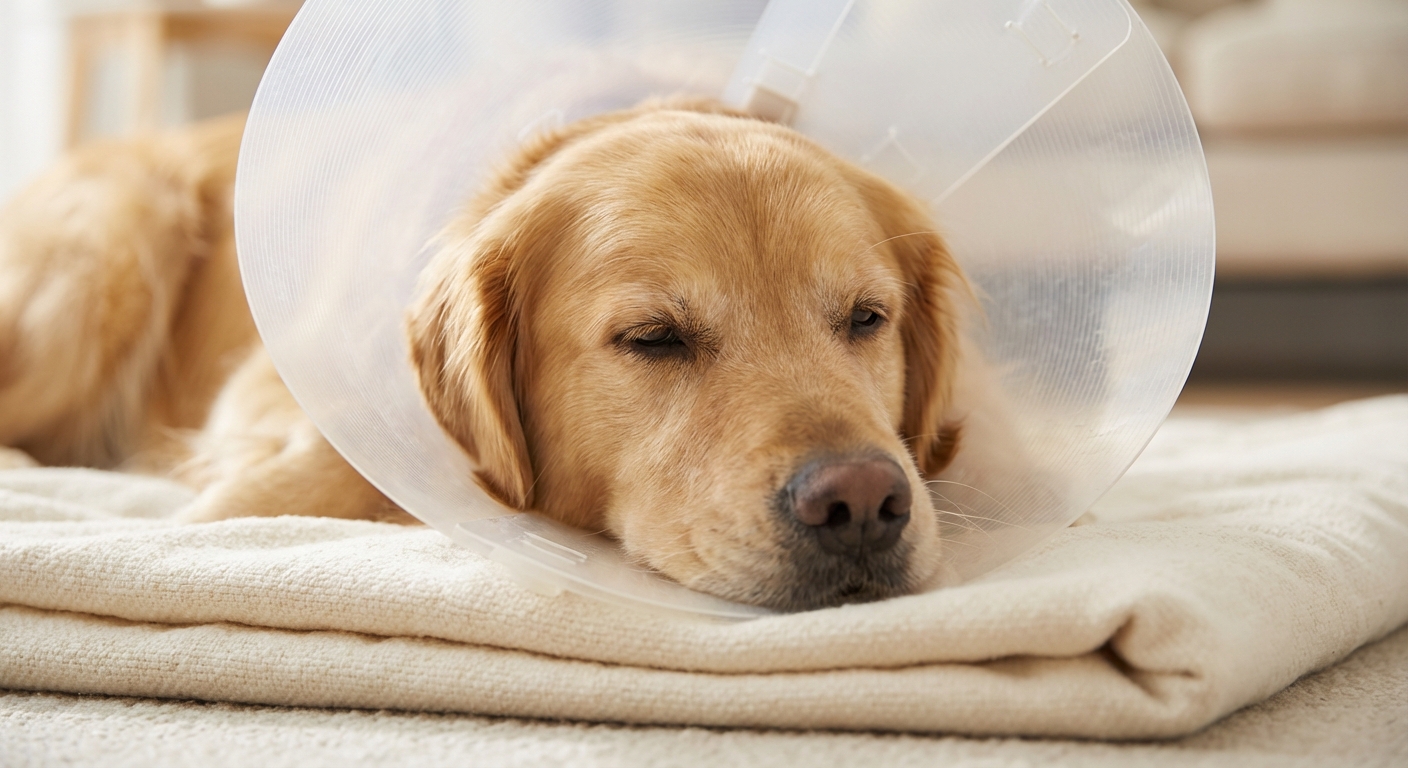
- Most dogs need their cone or recovery suit the full restriction period, unless your veterinarian specifically tells you it can come off sooner.
Home setup: making recovery family-friendly
For busy households, the goal is simple: create a small, calm space where your dog can rest and you can easily prevent jumping, rough play, and licking.
Pick a recovery zone
- Crate or exercise pen: Best option for many dogs, especially when you cannot watch them.
- Small room: A bathroom or laundry room can work if it is escape-proof and has non-slip flooring.
- Baby gates: Great for blocking stairs and limiting zoomies to one safe area.
Kid rules
- Make it a “two-feet-on-the-floor” week for your dog. No hugs, no wrestling, no piggybacking.
- Teach kids to pet the chest or shoulders gently while the dog is lying down.
- Assign one adult as the “recovery captain” for meds and incision checks.
- Offer kids a job: refill the water bowl, bring a soft blanket, or help with calm enrichment toys.
Other pets
Even friendly siblings can trigger play. Separate pets during the first week unless your dog is fully calm and supervised. If your dog and another pet tend to roughhouse, plan on separation for the full 10 to 14 days (or longer if your vet advises).
Activity restriction
After a neuter, “restricted activity” typically means:
- Very short, controlled leash potty breaks, especially early on. Follow your clinic’s specific guidance on timing and duration.
- No running, jumping on furniture, wrestling, stairs, or dog parks.
- No bathing or swimming until cleared. Moisture can soften skin and increase infection risk.
If your dog is high-energy, ask your veterinarian about safe calming options. Do not use leftover sedatives or human medications. There are veterinary-approved strategies and, when needed, prescriptions that are much safer.
Incision care basics
Most neuter incisions heal beautifully when kept clean, dry, and untouched.
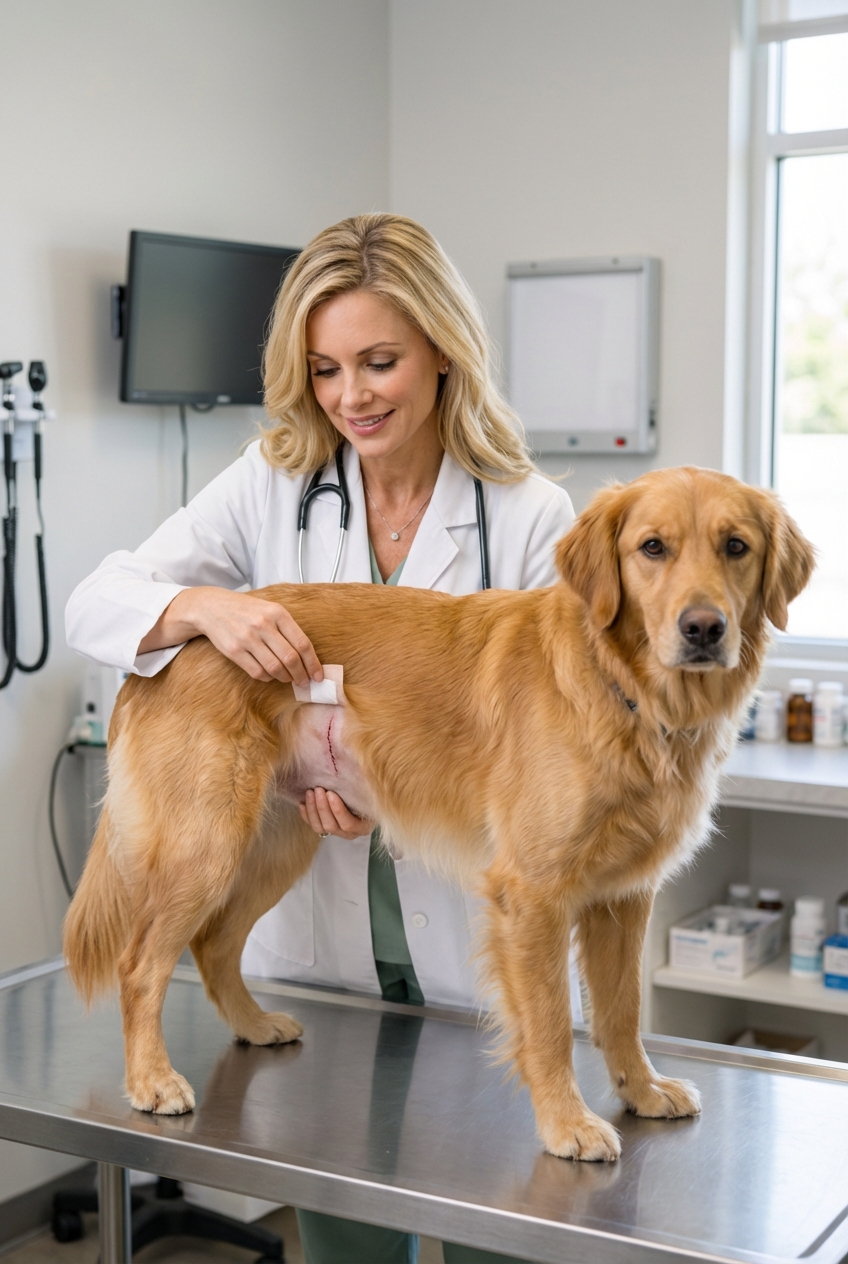
- Look once or twice daily: You want a closed incision, minimal redness, and no discharge.
- Do not apply ointments unless your vet specifically instructed you to. Many dogs lick ointment, and that can lead to irritation or GI upset.
- No licking: Licking is one of the top reasons incisions open. Use the e-collar or a recovery suit 24/7 if your dog can reach the incision.
Pain control and medications
Your clinic may send home an anti-inflammatory, pain medication, or both. Give medications exactly as directed. Do not extend or share medications, and do not give extra doses unless your veterinarian tells you to.
- Call your vet if your dog vomits, has diarrhea, stops eating, seems extremely lethargic, or seems painful even with medication.
- Never give ibuprofen, naproxen, acetaminophen, or aspirin unless a veterinarian has specifically instructed you. Many human pain relievers are dangerous for dogs.
Normal vs not normal
Often normal
- Sleepiness the first day
- Mild swelling or bruising near the incision
- Reduced appetite for 12 to 24 hours
- A small, brief amount of clear or light pink seepage the first day (if your vet said this can be expected)
- A delayed bowel movement for a day or so
Call your veterinarian promptly
- Bleeding that does not stop or is soaking bedding
- Thick yellow, green, or foul-smelling discharge
- Incision gaps, widening, or visible tissue
- Redness, heat, swelling, or pain that is getting worse instead of better
- Rapidly increasing swelling, especially a firm, enlarging scrotal swelling
- Fever, shaking, severe lethargy, repeated vomiting, or refusal to eat beyond 24 hours
Go to emergency care now
- Trouble breathing, collapse, or extreme weakness
- Uncontrolled bleeding
- Pale or blue-tinged gums
- Severe, sudden swelling or pain that is rapidly worsening
When in doubt, send your clinic a clear photo of the incision and describe your dog’s energy level, appetite, and bathroom habits. Early questions prevent late-night emergencies.
Keeping your dog calm
Recovery does not have to mean boredom. Calm mental enrichment is your best friend.
- Food puzzles: Use a snuffle mat or slow feeder with his regular diet.
- Frozen lick treats: Vet-approved, dog-safe frozen options can soothe and occupy. Keep it simple if his stomach is sensitive post-op.
- Training games: Practice “touch,” “wait,” and “place” with tiny treats while he stays mostly still.
- Chews: Choose safe chews appropriate for your dog’s size and chewing style, and supervise.
If your dog is trying to sprint the hallways by day three, you are not alone. This is incredibly common, especially in young, athletic mixes. Tight management is not being mean. It is how you protect the incision and prevent complications.
Frequently asked questions
When can my dog take a real walk again?
Many dogs can resume longer, calm leash walks after the 10 to 14 day mark (often closer to 14 days), but only if the incision is closed, dry, and your veterinarian has cleared him. Start with short, slow walks and increase gradually over several days.
Will neutering change my dog’s personality?
Most dogs remain themselves. Some hormone-driven behaviors, like roaming and certain marking behaviors, may decrease over time. Training, enrichment, and routine still matter a lot.
Is swelling in the scrotum normal?
Mild swelling can happen, but noticeable scrotal swelling should be discussed with your vet, especially if it is growing, warm, firm, painful, or your dog seems uncomfortable. Activity restriction and preventing licking are key.
My dog hates the cone. Are there alternatives?
Sometimes a soft e-collar, inflatable collar, or recovery suit works. The best option is the one that your dog cannot bypass. If he can lick the incision even once, you risk irritation and infection. Most dogs need lick-prevention for the full recovery period.
Takeaway
For most male dogs, neuter recovery is straightforward: 10 to 14 days (often closer to 14) of calm, clean incision care, strict activity restriction, and consistent lick prevention. If your family plans ahead and treats recovery like a short-term safety project, your dog can heal quickly and comfortably, then get back to being his happy, playful self.