Indoor marking isn’t spite—it’s communication. Learn how to tell marking from accidents, rule out medical causes, clean properly, manage freedom, and r...
Article
•
Designer Mixes
Male Dog Marking Inside the House

Shari Shidate
Designer Mixes contributor
Why dogs mark indoors
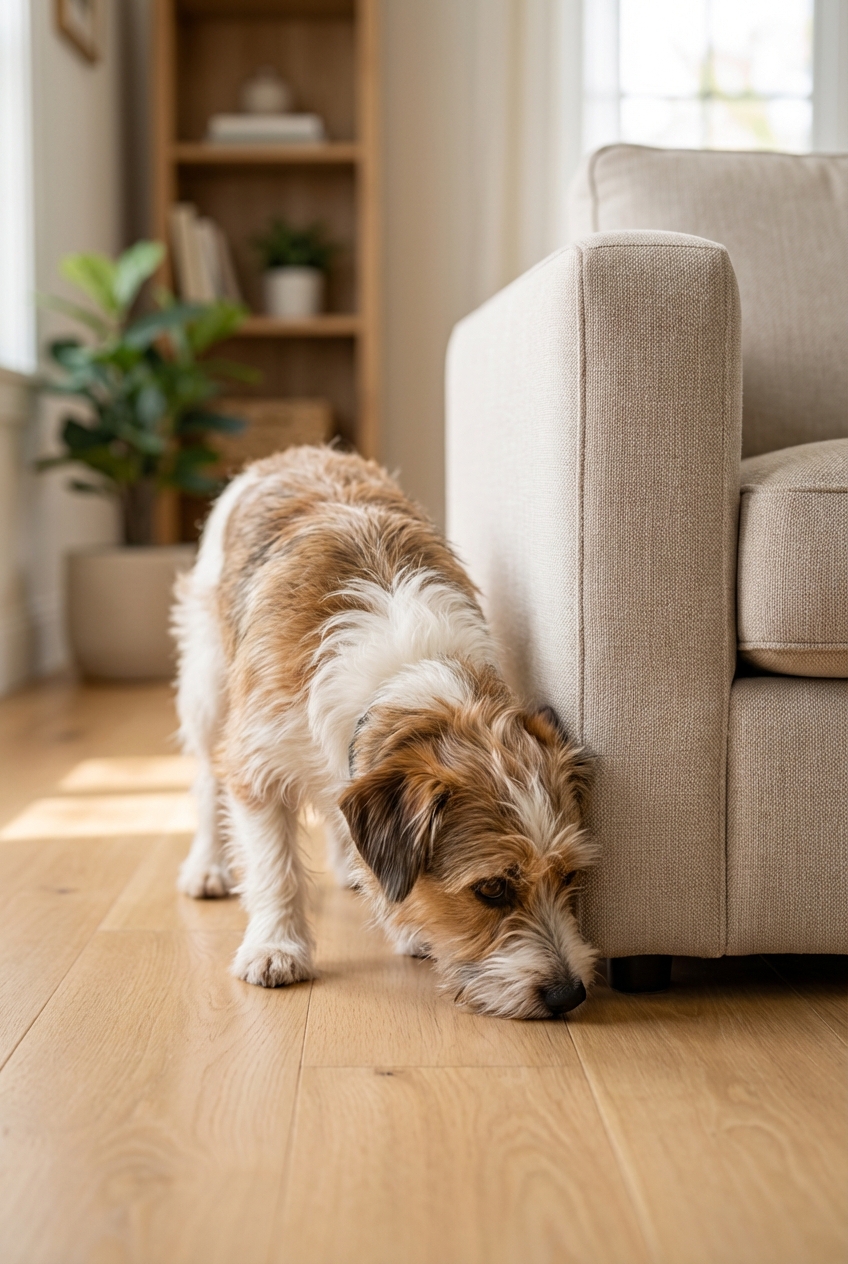
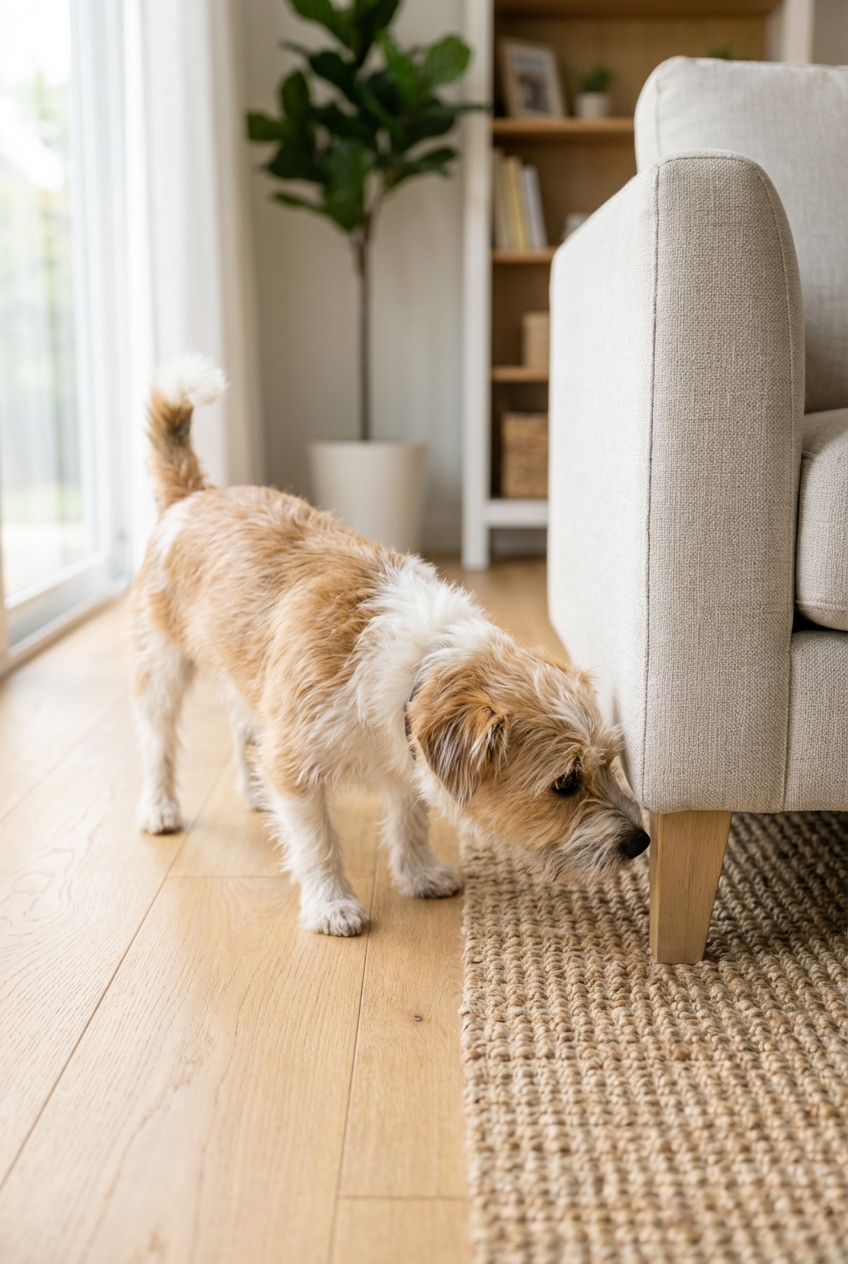
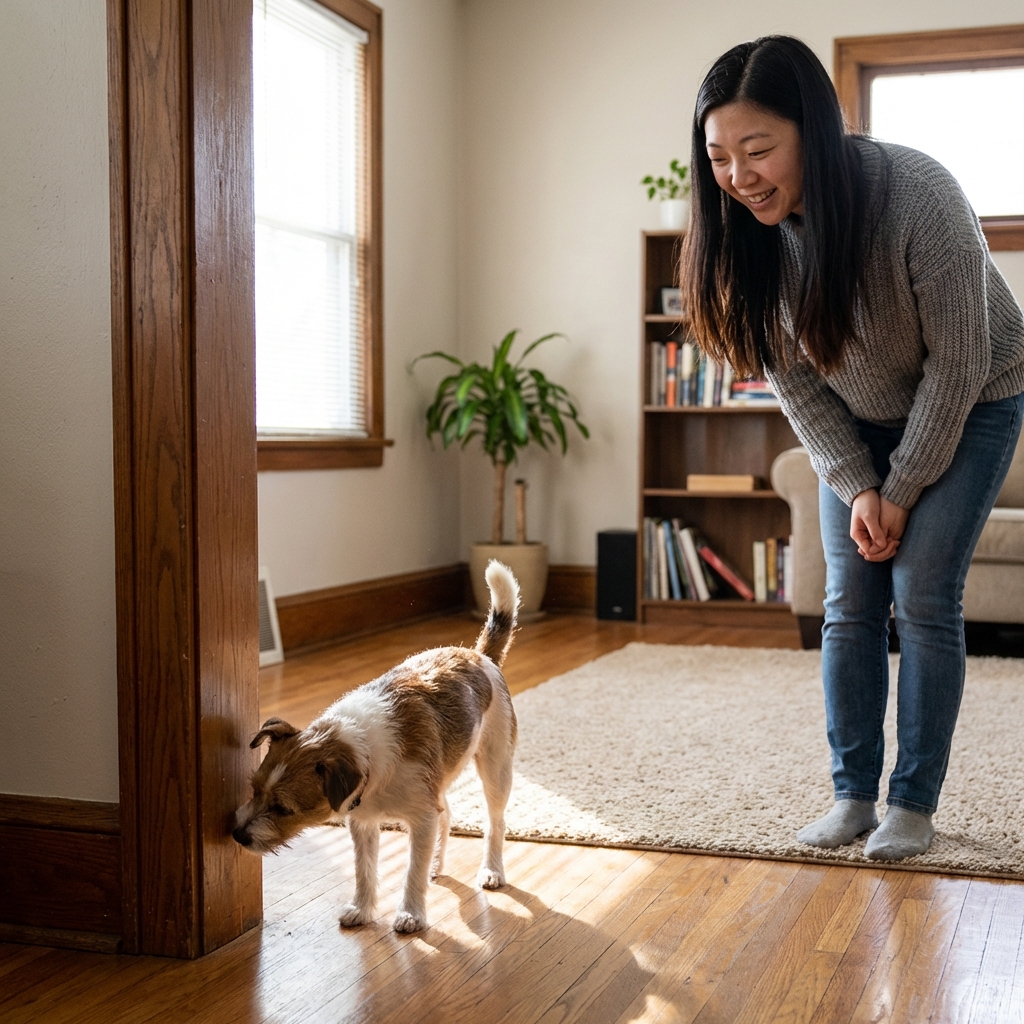
If your male dog is peeing small amounts on furniture legs, walls, curtains, or door frames, you are likely dealing with marking, not a housetraining failure. Marking is a normal canine communication behavior that can pop up in busy human households.
(Quick note: female dogs can mark too. This guide focuses on common male-dog patterns, but the same basics often apply.)
Common reasons include:
- Social signaling: Your dog is leaving scent messages, especially in high-traffic spots like entryways and windows.
- Hormones and maturity: Intact dogs mark more often, and marking often starts as adolescence hits.
- Stress or change: Moving, visitors, a new baby, construction noise, or schedule changes can trigger marking.
- New animal scents: Another dog visiting, wildlife outside, or even neighborhood dogs near windows can spark indoor marking.
- Medical issues: Urinary tract infection, bladder stones, pain, or increased thirst can lead to accidents that look like marking.
Marking vs peeing
This matters because the fix changes depending on the cause.
- Marking: Small amounts, often on vertical surfaces, in a few repeated locations, frequently after smelling.
- Urination accident: A larger puddle, often on horizontal surfaces, may happen when your dog could not hold it.
If you are seeing frequent attempts, straining, blood, sudden urgency, or your dog seems uncomfortable, please call your veterinarian first. Also consider a prompt vet check if this is sudden in an older dog, or if it is happening in many new contexts.
First step: remove the scent
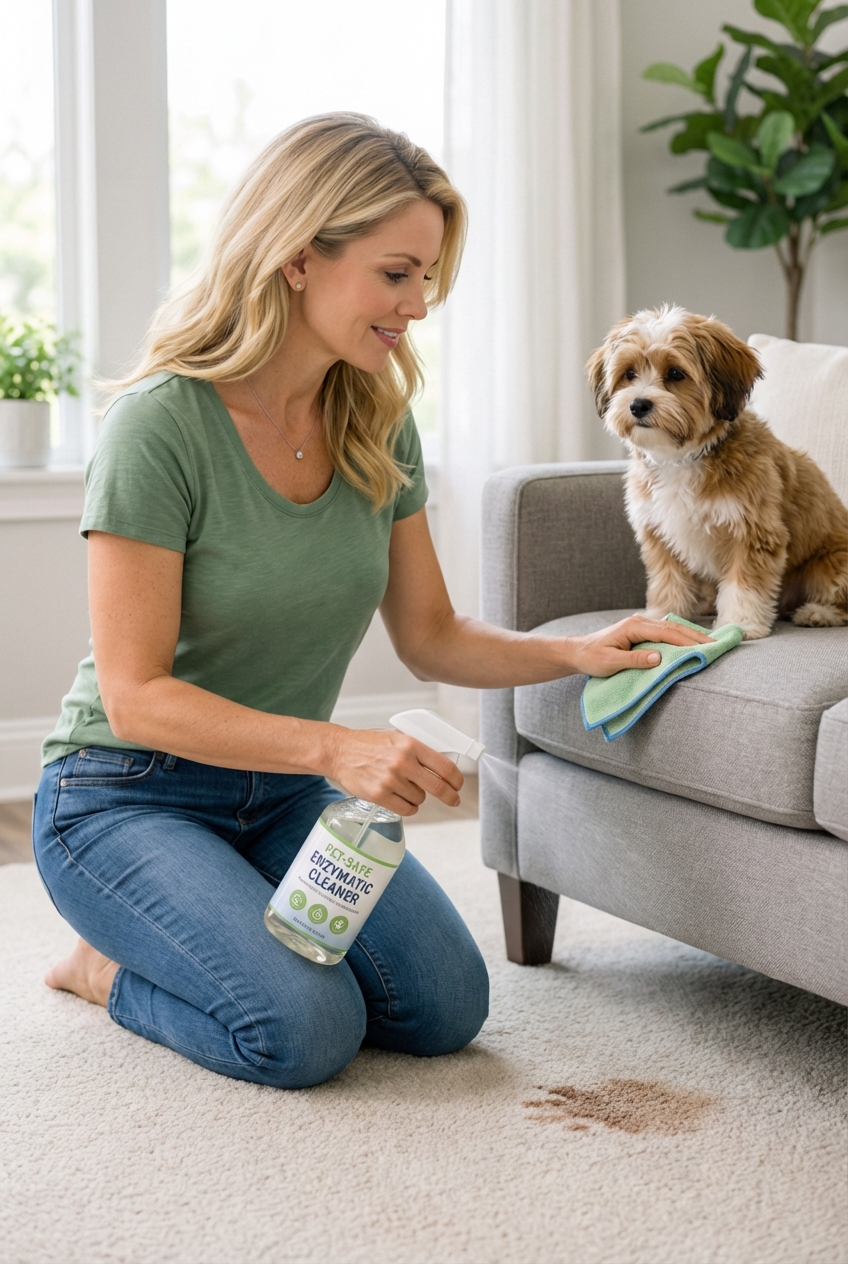
Dogs return to places that smell like urine. Regular household cleaners often do not fully remove urine residue and odor-causing compounds, especially from carpet pad, grout, and wood seams. Use an enzymatic cleaner made for pet urine and follow the label exactly.
- Blot fresh urine with paper towels first. Do not scrub.
- Soak the area thoroughly with enzyme cleaner, not just a light spray.
- Let it sit the full contact time recommended on the bottle, then air dry.
- For older spots, you may need multiple treatments.
If you keep finding “mystery spots,” a pet urine blacklight can help you locate areas to treat. It is not perfect (some materials fluoresce), but it can be a useful starting point.
Management: stop the habit loop
Marking can become a habit loop. The more your dog practices it, the stronger it becomes. While you work on training, set up the home so he cannot keep succeeding.
- Supervise: If you cannot watch him, use a crate, pen, or a safe dog-proof room.
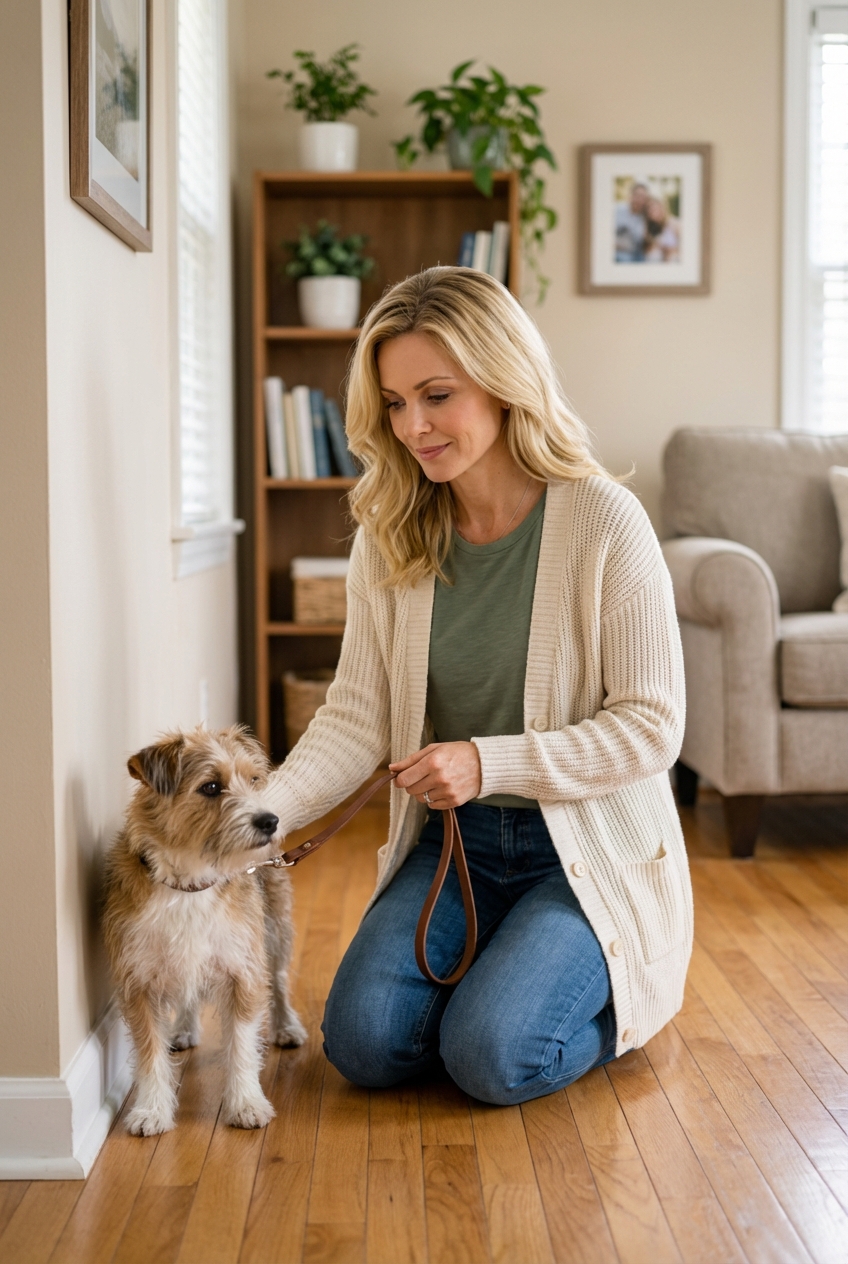
- Leash indoors: A lightweight leash helps you interrupt sniffing and circling before a leg lift.
- Block problem areas: Use baby gates, close doors, or move furniture away from favorite corners.
- Belly bands: These can help prevent soiling, but they do not address the underlying motivation. Use only for short periods, change frequently, and monitor skin closely for dampness or irritation.
Training plan
1) Add structured potty breaks
Go outside more often than you think you need to for a couple of weeks. Markers benefit from frequent chances to empty and from predictable routines.
- First thing in the morning
- After meals
- After naps
- After play or excitement
- Right before bedtime
To make these breaks more “structured,” go out on leash, head to one consistent potty spot, stand still and wait quietly, then reward right after your dog finishes.
2) Reward what you want
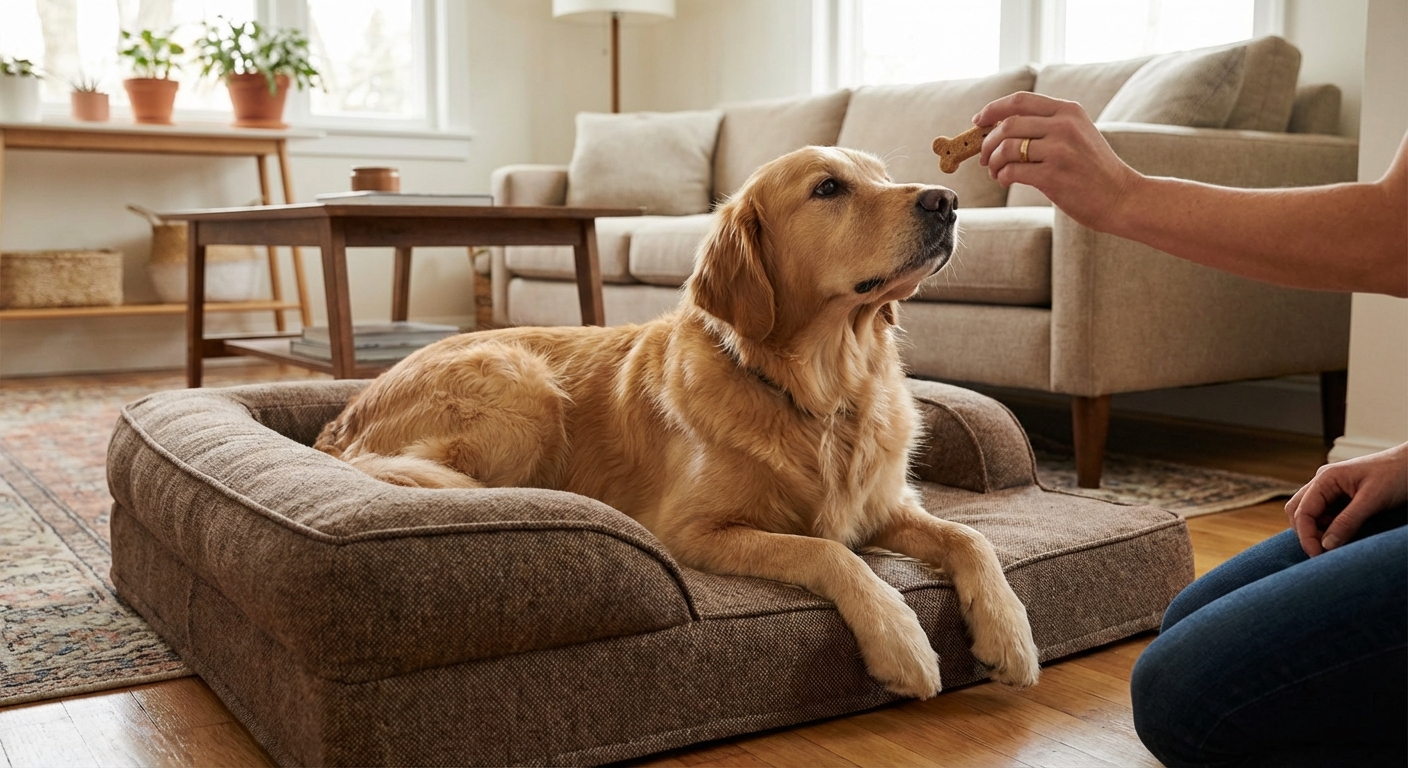
Bring high-value treats outside. The moment your dog finishes peeing outdoors, calmly say “yes” and reward. This is evidence-based behavior change: we reinforce the behavior that pays.
3) Interrupt, do not punish
If you catch him mid-mark, interrupt with a neutral sound like “oops,” then immediately take him outside. If he finishes outdoors, reward. Punishment can increase anxiety, which can increase marking.
4) Teach a calm station
Many dogs mark when guests arrive or when they get over-stimulated. A simple stationing behavior (go to mat, settle) gives your dog an alternative job.
Common triggers
Visitors
Excitement plus unfamiliar scents can trigger marking. Before guests come in, take your dog outside. When they arrive, keep him leashed and reward calm behavior. If he is very stimulated, a short break in a crate or quiet room can help him reset.
New pets
Even a friend’s dog visiting for a few hours can change the scent map of your home. Clean thoroughly and consider separating dogs at first, then slowly reintroduce shared spaces.
Windows and doors
These are canine “bulletin boards.” If neighborhood dogs walk past, your dog may mark inside near that area. Frosted window film, closing curtains, or blocking access can reduce the trigger while training catches up.
Does neutering help?
Neutering may reduce urine marking in some male dogs, especially when marking is hormonally motivated and the dog is neutered soon after the behavior begins. It is not a guaranteed fix, and some dogs continue to mark out of habit, stress, or learned behavior. If you are deciding, talk with your veterinarian about timing, health factors, and what you are seeing at home.
When to get help
Please seek professional help if you notice any red flags, or if you are not improving with consistent management and training.
- Vet visit soon: Straining, frequent tiny pees, blood, licking genitals, sudden change in thirst, pain, or accidents that are new.
- Behavior help: Marking tied to fear, conflict between pets, separation anxiety, or repeated marking despite thorough cleaning and routine changes. A certified trainer, a veterinary behaviorist, and in some cases vet-directed medication can make a big difference.
You are not failing as a pet parent. Indoor marking is common, and with a plan that combines cleaning, management, and reinforcement, most dogs improve significantly.
Safety note: This advice is general education and is not a substitute for veterinary diagnosis or individualized behavior care.
14-day reset plan
If you like structure, here is a realistic reset you can start today.
Days 1 to 3
- Vet check if symptoms suggest a urinary problem (especially for older dogs with sudden changes).
- Deep clean with enzyme cleaner.
- Supervise or confine 100% of the time.
- Potty breaks every 2 to 3 hours, plus after meals and naps.
Days 4 to 10
- Keep leash indoors during high-risk times (guest arrival, evenings, high activity).
- Reward every outdoor pee.
- Block window or doorway triggers if needed.
Days 11 to 14
- Gradually give more freedom only if there have been zero marking incidents.
- If marking returns, reduce freedom again and tighten the schedule for a week.
Quick FAQ
Will vinegar stop marking?
Vinegar may reduce odor to humans, but it often does not remove the urine residue dogs can smell. Enzymatic cleaners are usually more effective.
Should I use pee pads?
Pee pads can confuse some dogs by teaching that indoor surfaces are acceptable. If you need them for medical reasons or apartment living, place them in one consistent area and still keep outdoor potty routines strong.
My dog only marks one spot. Why?
That spot is likely a high-value scent location or a place that still smells like urine to your dog. Treat it like a hotspot: deep clean, block access, and reinforce outdoor toileting.