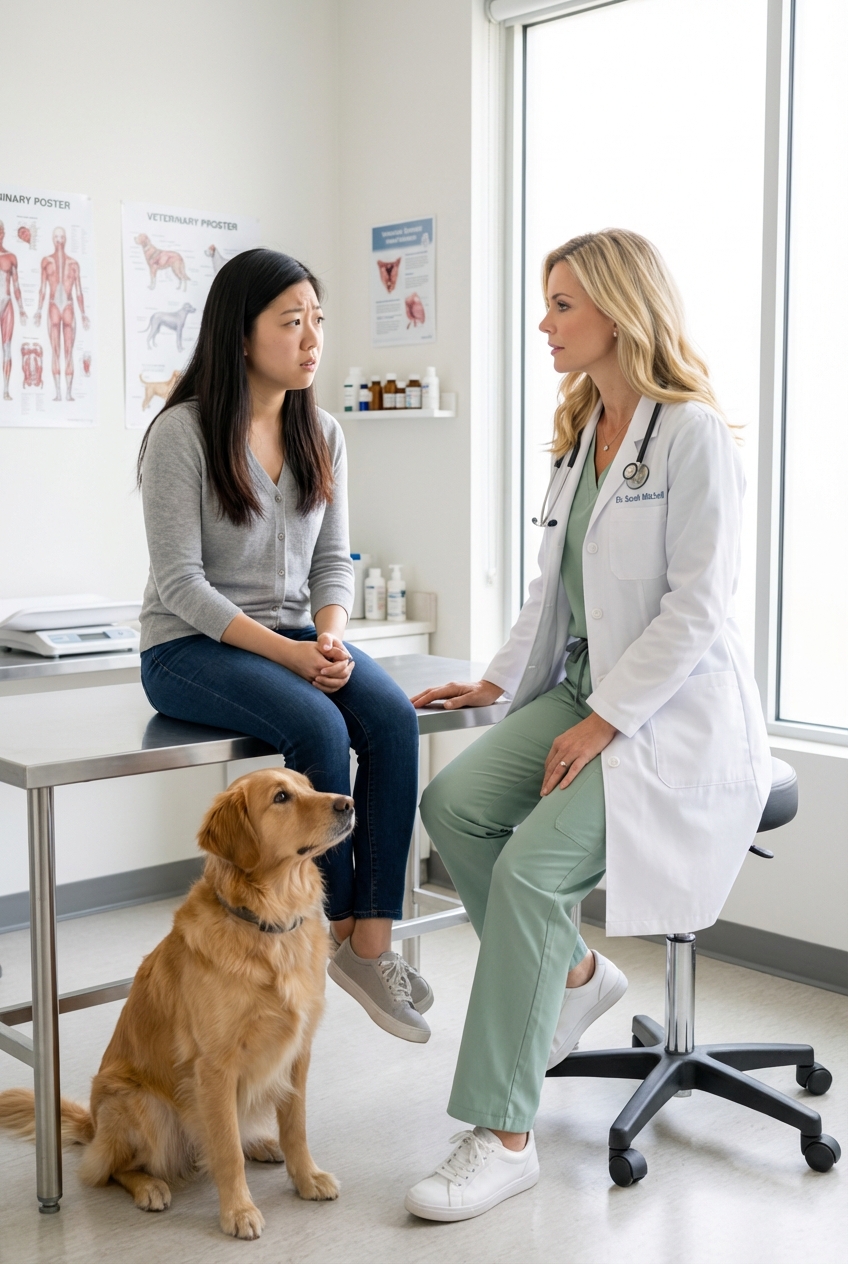
A clear timeline of the 4 heat stages (proestrus, estrus, diestrus, anestrus), what bleeding looks like, common behavior shifts, home care tips, and urgent w...
Article
•
Designer Mixes
Male Dog Behavior Around a Female in Heat

Shari Shidate
Designer Mixes contributor
As a veterinary assistant here in Frisco, Texas, I can tell you this is one of the most common calls we get: “My female is in heat and my male is acting totally different, what is going on?” The short answer is that your male dog is reacting to powerful reproductive hormones and scent cues. The good news is that most of the behaviors are normal, predictable, and manageable with the right plan.
This article will help you understand what you are seeing, what is normal, what is risky, and how to keep everyone safe until her heat cycle is over.
What “in heat” means
Most owners use “in heat” to describe the whole heat cycle, not just the fertile window. Clinically, the cycle has stages:
- Proestrus: often the start of vulvar swelling and bleeding or spotting. Many females are not ready to breed yet, but they are already attracting males.
- Estrus (standing heat): the fertile stage when a female may allow mating. Bleeding may lighten or look different, and some dogs barely bleed at all.
- Diestrus: hormones shift again and she is no longer receptive, whether she is pregnant or not.
Even before she is ready to mate, she releases pheromones in her urine and from her vulva. Male dogs can detect these scents from impressive distances, and it flips on instinctive behaviors that can feel sudden and intense.
Heat cycles are variable. Many last around 2 to 3 weeks, but some are shorter or can run longer. Because timing varies by dog, it is safest to treat the entire heat period as high risk for an accidental breeding.
When is she most fertile?
In many dogs, fertility peaks in the later part of the cycle, often roughly around days 9 to 14 from the first signs (like swelling or bleeding). That is a common guideline, not a guarantee. Some females ovulate earlier or later, and males can be highly motivated from day one until the cycle is fully over.
Also, a female in heat can attract multiple males from the neighborhood. Even if your male is gentle, outside dogs may show up and create fights or fence-running chaos.
Common male behaviors
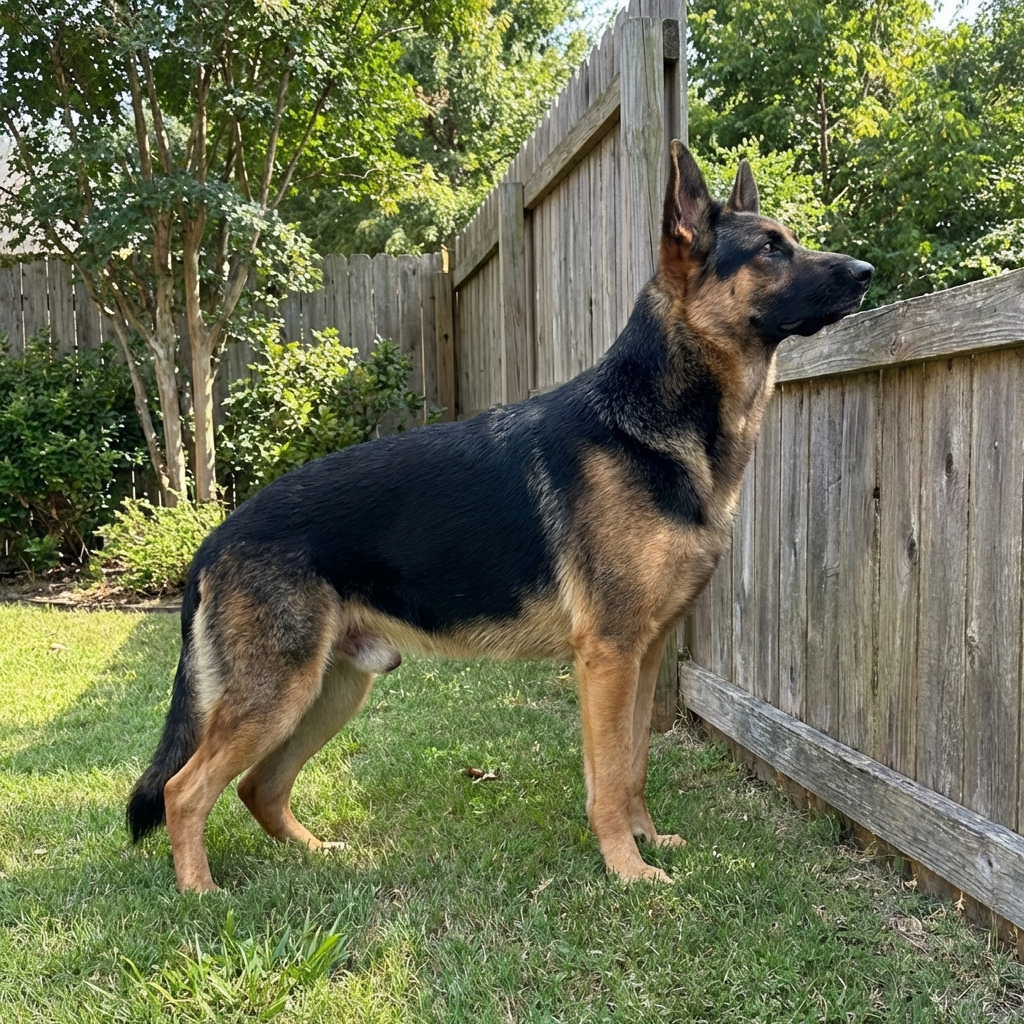
These changes can be dramatic, especially in intact males. You may notice one behavior or several at once.
- Restlessness and pacing: He may struggle to settle, circle, whine, or seem “on patrol.”
- Increased vocalizing: Whining, barking, howling, and crying can happen, especially if he can smell her but cannot reach her.
- Loss of appetite: Some males eat less while highly focused on the scent of a female in heat.
- Marking indoors or more frequent marking outside: This is territorial and hormonally driven.
- Mounting behavior: He may mount the female, other dogs, people, or objects. This can be driven by arousal, excitement, stress, or habit.
- Clinginess or attention-seeking: Some males become unusually needy and want to stay close to you or the female.
- Escape attempts: Digging, chewing, pushing through doors, jumping fences, and bolting are very common and very dangerous.
- Fixation: He may stare at doors, windows, or the female, and seem unable to focus on anything else.
- Increased male-to-male tension: Intact males may become more reactive or aggressive toward other males due to competition.
These behaviors are not your dog “being bad.” They are driven by biology. That said, you still have to manage them, because accidents and injuries can happen quickly.
Normal vs red flags
Most heat-related behavior changes are manageable at home. The key is knowing when “normal and annoying” becomes “unsafe or potentially medical.”
Usually normal
- Restlessness, whining, and extra sniffing
- Reduced appetite for a few days
- Increased marking
- Persistent interest in the female
Call your veterinarian if you see
- Not eating at all for more than 24 to 48 hours or refusing water. Call sooner for puppies, seniors, toy breeds, and dogs with medical conditions (for example diabetes or kidney disease).
- Vomiting, diarrhea, weakness, collapse, or signs of pain
- Sudden aggression that is escalating or difficult to interrupt safely
- Self-injury from frantic escaping (bloody paws, broken nails, limping) or chewing barriers
- Heat illness signs in warm weather: heavy panting that does not improve with rest, drooling, vomiting, weakness, stumbling, or abnormal gum color (bright red, pale, or gray). If you suspect heat stroke, treat it as an emergency.
If your male becomes unmanageable, it is not a failure. It is a sign you need stronger management, more separation, and possibly a conversation with your vet about short-term calming strategies.
Prevent accidental mating
If you only take one thing from this article, take this: separation needs to be physical, reliable, and redundant. Hormones make dogs creative.
- Use two barriers: For example, a closed door plus a baby gate, or a crate in a closed room.
- No shared yard time: Not even “just for a minute.” That minute is when it happens.
- Leash control outside: Your male should be leashed, even in your own yard if there is any chance he could climb, dig, or bolt.
- Supervise transitions: Doorways are high-risk moments. Make a routine so only one dog moves at a time.
- Secure fences and gates: Check for loose boards, dig spots, and latches that do not close perfectly.
- Protect both dogs: Females can escape too. Keep her contained, and do not assume she will “stay put” because she is the one in heat.
- Notify family members: Accidents often happen when someone forgets and opens a door.
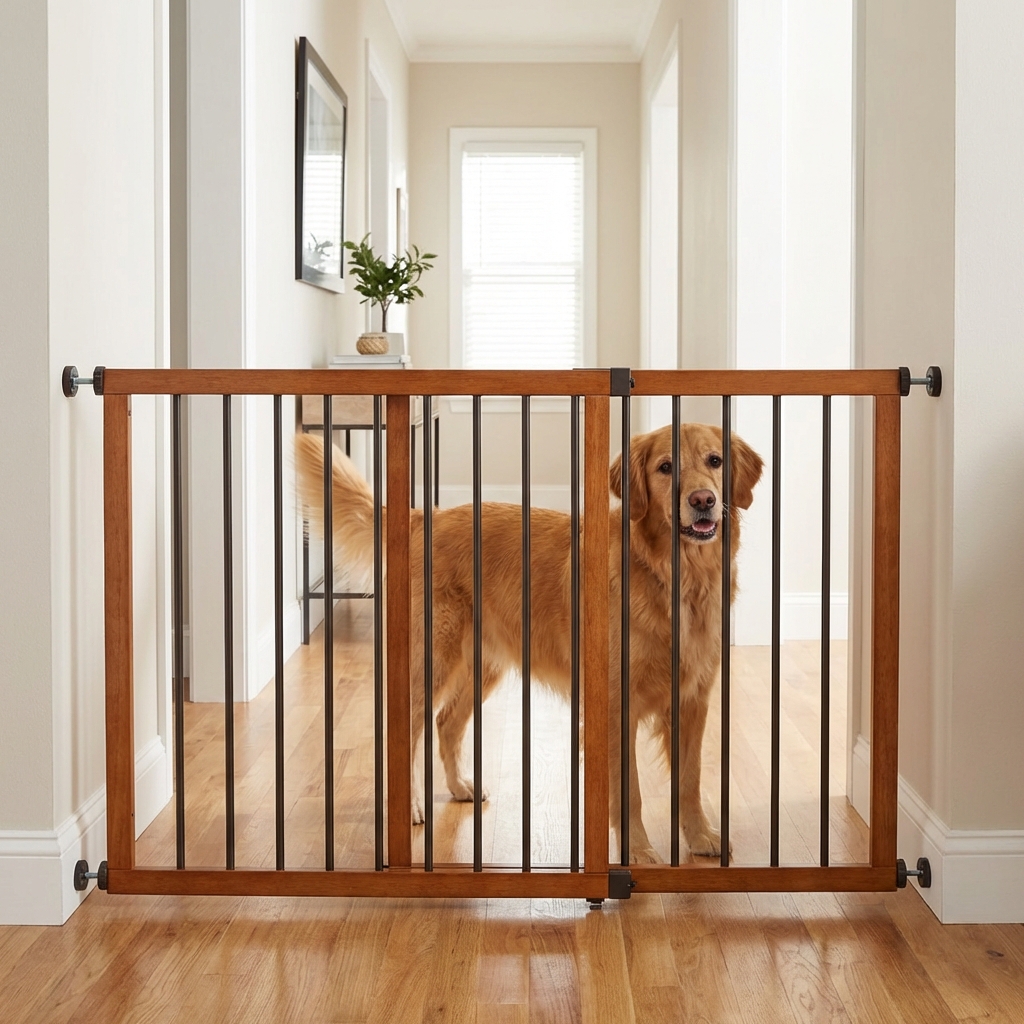
In clinic, we see surprise pregnancies most often when owners assumed a fence, a screen door, or “they are usually good” would be enough. During heat, it often is not.
Extra outdoor precautions
This is a time to be more cautious than usual on walks and outings.
- Skip dog parks and daycare: The risk of fights, escape attempts, and accidental breeding is simply too high.
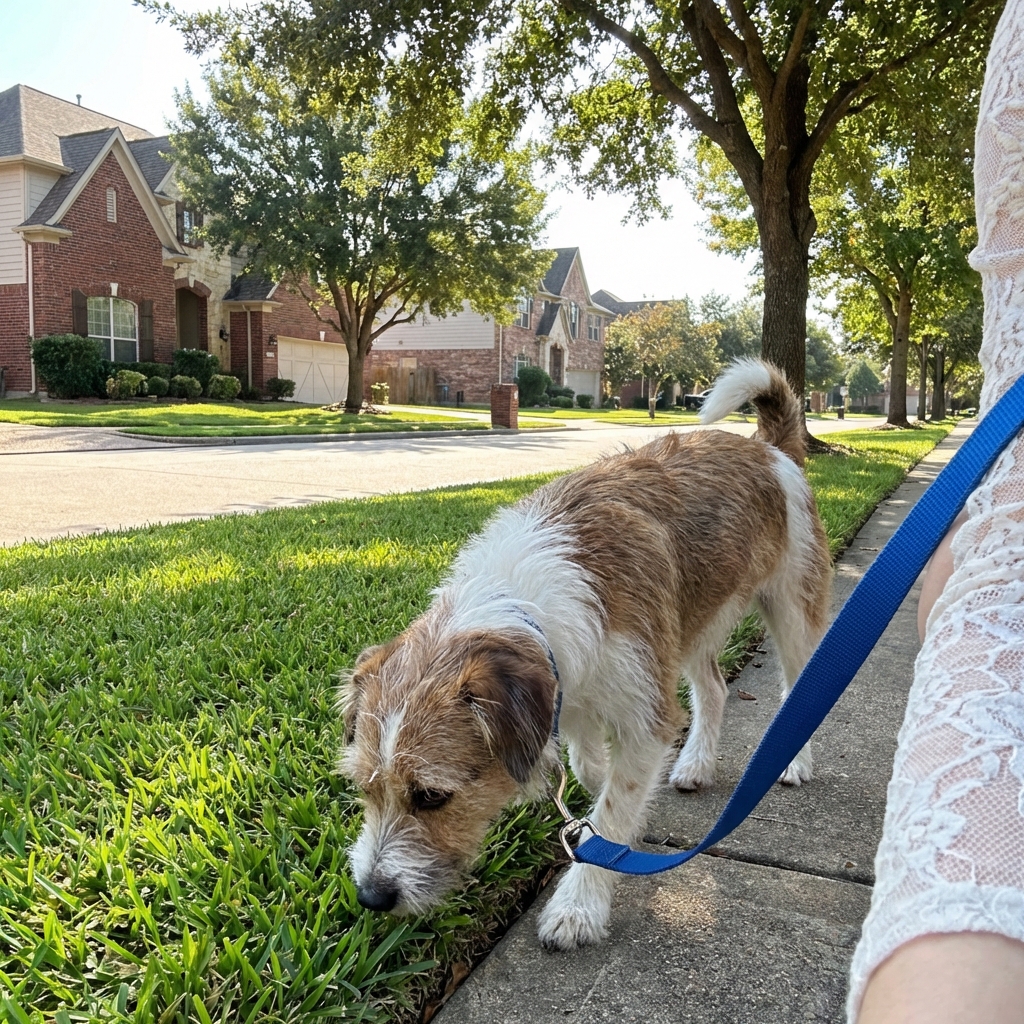
- Expect sudden lunging or pulling: Males may try to follow scent trails. Use secure gear (well-fitted collar or harness) and keep the leash short in high-distraction areas.
- Watch for barrier frustration injuries: Dogs can scrape noses, break nails, or injure paws trying to get through fences, crates, or doors.
Help your male cope
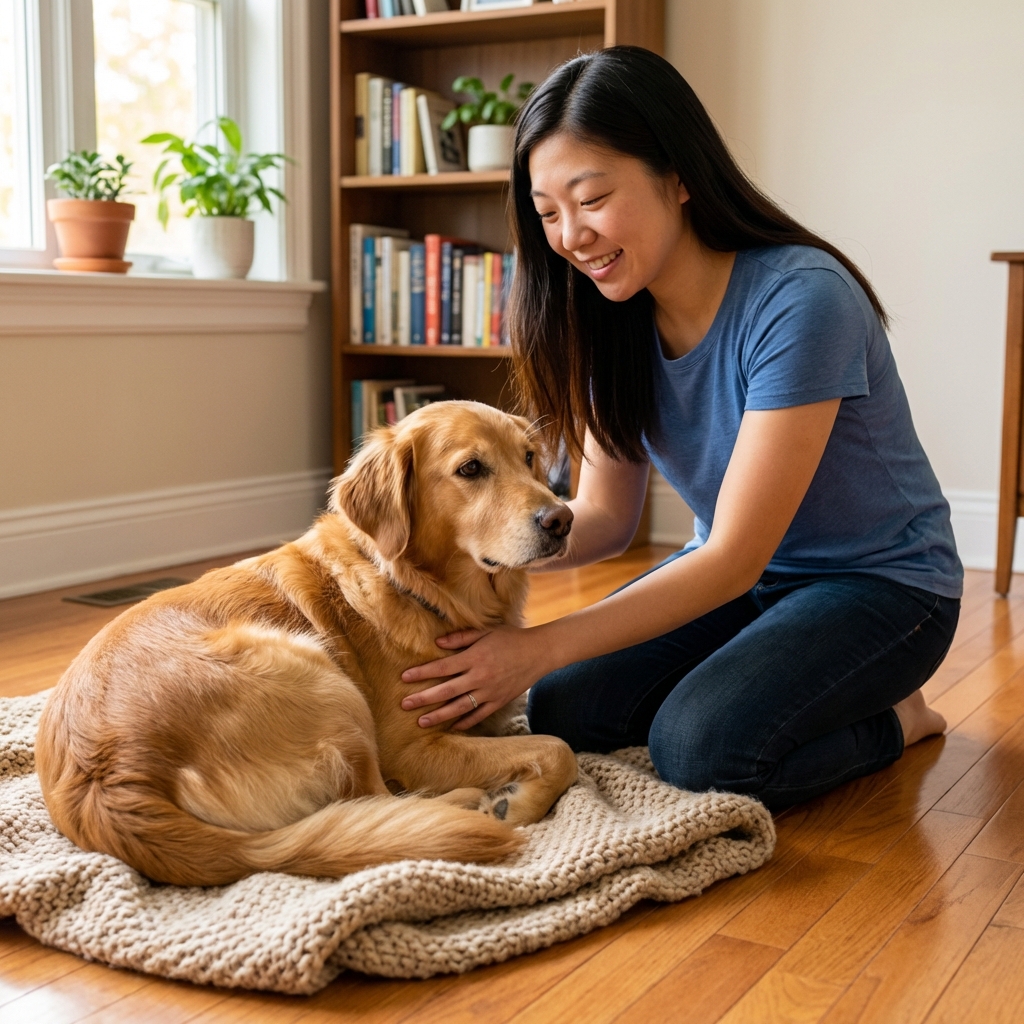
Once safety is handled, focus on comfort and stress reduction. Your goal is to lower arousal and give his brain something else to do.
1) Add structure and enrichment
- Food puzzles and lick mats to keep him busy and calm (licking can be soothing).
- Scent games: Hide treats around one room and let him “hunt.” This uses his nose in a healthy way.
- Training sessions: Short, upbeat sessions for cues like sit, down, place, and leash walking.
- Chews: Choose appropriate size and supervise, especially if he is stress-chewing.
2) Use controlled exercise
A tired dog is not a perfect dog, but he is usually easier to manage. Aim for extra leash walks or play sessions that do not put him near the female.
3) Reduce scent and sound triggers
- Keep the female in a separate area of the home with her own bedding.
- Clean urine spots promptly with an enzymatic cleaner.
- Consider visual barriers (closing curtains, blocking sight lines) and white noise to reduce fixation on doors or hallways.
- Wash hands and change clothing if you have been handling the female and then interact with the male.
4) Rotate fairly
If you are separating dogs, make sure both still get bathroom breaks, attention, and enrichment. Many households do best with a simple rotation schedule so nobody gets shorted.
5) Stay calm and avoid punishment
Yelling or harsh corrections often increase stress and arousal. Instead, redirect to a chew, a crate with a stuffed food toy, or a simple training routine with rewards.

Diapers and pheromones
Doggy diapers and heat pants can help manage mess and protect surfaces, but they are not a reliable way to prevent breeding. Determined dogs can move them, chew them, or still achieve mating.
Pheromone diffusers (like dog-appeasing pheromone products) may help some dogs feel calmer, especially if anxiety is part of the picture. They will not “turn off” sexual behavior, but they can be one helpful layer.
If your dog is extremely distressed, talk with your veterinarian. In some cases, short-term medication may be considered based on your dog’s health history and the severity of the problem.
If they mate
Even with great management, accidents can happen. If they tie (get stuck together), do not try to pull them apart. That can cause serious injury to both dogs.
- Keep them as calm and still as possible.
- Prevent other dogs from approaching.
- Call your veterinarian for immediate guidance.
If mating occurred and pregnancy is not desired, contact your veterinarian the same day if possible to discuss time-sensitive options.
Female safety after heat
One more safety note I like to share: in the weeks after a heat cycle, intact females are at risk for pyometra, a serious uterine infection. It is treatable, but it can become life-threatening quickly.
Call your veterinarian right away if your female has any of the following after heat:
- Lethargy or weakness
- Vomiting or poor appetite
- Increased thirst or urination
- Fever or seeming painful
- Foul-smelling vaginal discharge (note: discharge is not always present)
Will neutering help?
Neutering often reduces mating-related behaviors like roaming, marking, and fixation, but results vary. Some learned habits can persist, and behavior change may take weeks to months as hormones decrease.
Neutering is a personal decision that should be made with your veterinarian, considering age, breed, health, and lifestyle. If your household regularly includes intact females, it can make long-term management much easier.
Quick checklist
- Two layers of separation between male and female
- No unsupervised yard time for either dog
- Leash control and secure doors and fences
- Avoid dog parks and daycare during heat
- Daily enrichment: puzzles, scent games, training
- Extra exercise, away from the female’s space
- Call your vet if stress, aggression, injury, or appetite loss becomes significant
Heat cycles are temporary, but an accidental breeding can change everything. With clear boundaries, a little creativity, and a calm routine, most families get through this period smoothly.