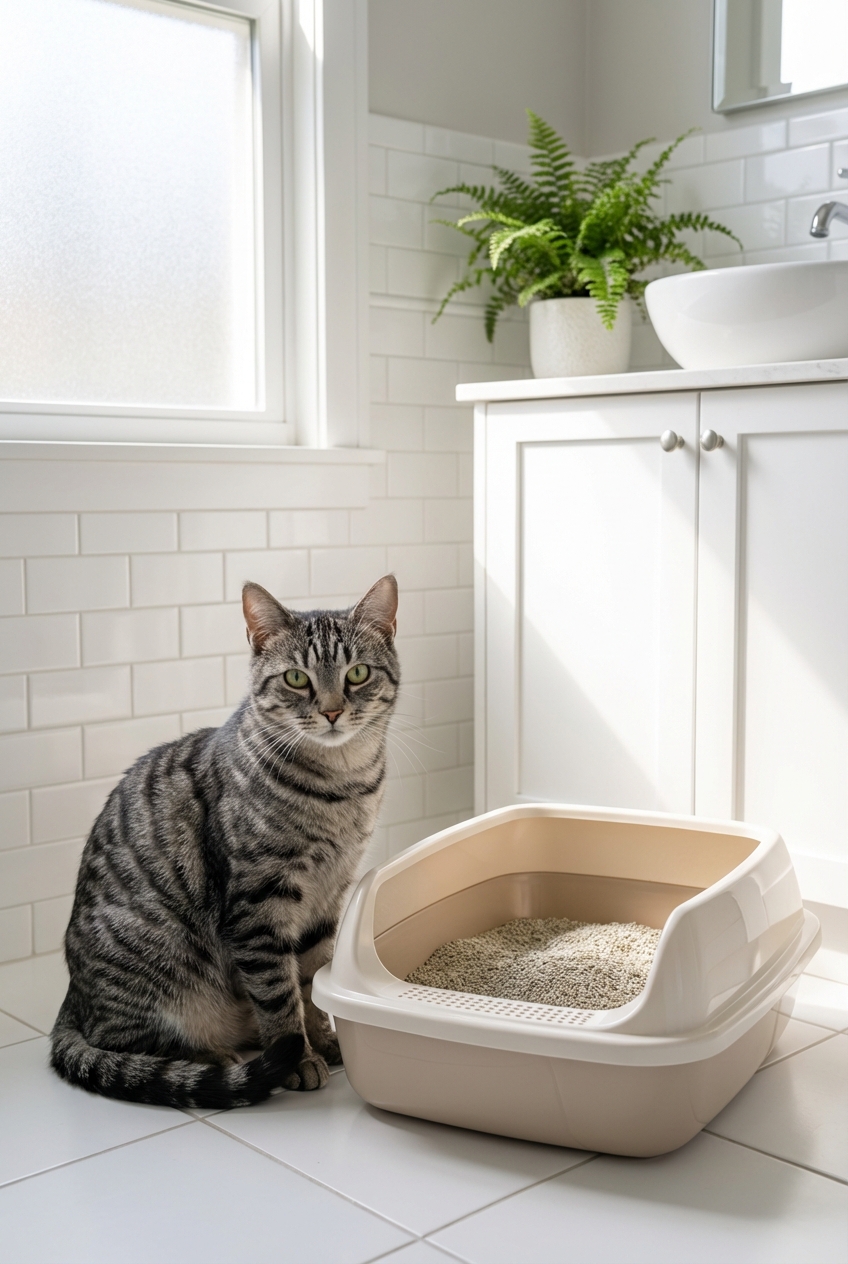
Cat spraying is usually communication, not spite. Learn how to tell spraying vs accidents, rule out medical issues, improve litter boxes, reduce stress, and ...
Article
•
Designer Mixes
Male Cats Spraying in the House

Shari Shidate
Designer Mixes contributor
As a veterinary assistant, I hear this all the time: “My male cat is peeing on everything.” First, take a deep breath. Spraying is common, it is usually fixable, and it is not your cat being “spiteful.” Spraying is communication, and your job is to figure out what message your cat is trying to send.
A quick note before we dive in: this article cannot replace an exam. If the behavior is new, suddenly worse, or your cat seems uncomfortable, loop your veterinarian in early.
The most important first step is also the least glamorous: rule out a medical problem. Cats can look like they are “marking” when they are actually dealing with pain, urgency, or bladder inflammation.
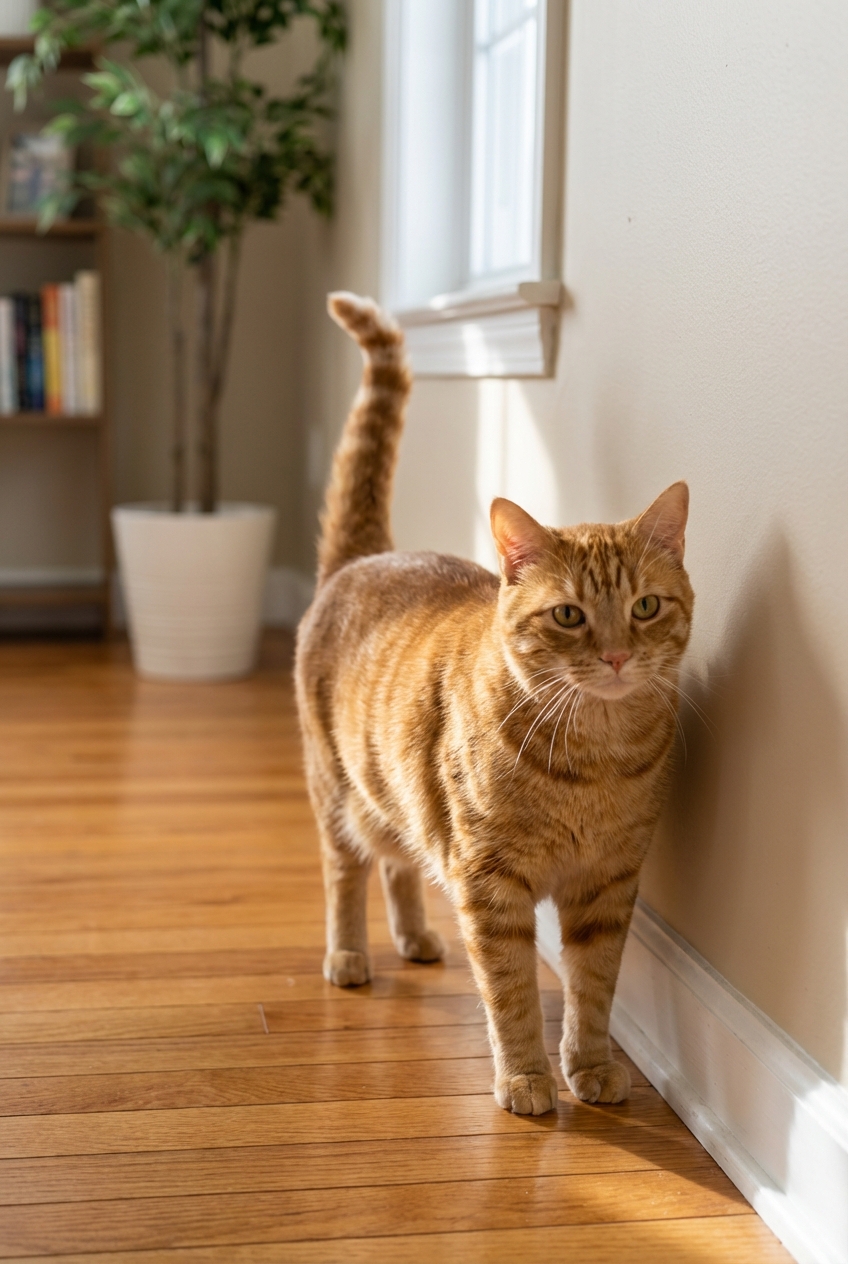
Spraying vs. peeing outside the box
Knowing what you are dealing with helps you choose the right solution.
- Spraying (urine marking): Usually on vertical surfaces like walls, furniture, doors, or curtains. The cat often stands, tail up, and may quiver the tail.
- Inappropriate urination: More often on horizontal surfaces like rugs, bedding, laundry piles, or the bathtub. The cat typically squats and leaves a larger puddle.
Both can happen in the same home, and both deserve a vet check if the behavior is new or suddenly worse.
Why male cats spray
1) Hormones and sexual maturity
Intact male cats are much more likely to spray because testosterone drives territorial and mating behaviors. Neutering often reduces spraying, especially if it is done early, but even adult cats can improve after surgery.
2) Stress and anxiety
Cats thrive on routine. A move, remodeling, a new baby, visitors, loud noises, schedule changes, or even new furniture can make a cat feel insecure. Spraying is a way of saying, “This is my safe place.”
3) Territory and other cats
If your cat sees outdoor cats through the window, hears them at night, or smells them near doors, it can trigger marking. Multi-cat households can also create quiet social tension that humans miss.
4) Litter box problems
Dirty boxes, the wrong litter texture, a covered box that feels “trapped,” a box placed near a noisy appliance, or too few boxes can lead to inappropriate urination and sometimes spraying.
5) Tension between cats at home
Some cats block hallways, doorways, or litter box access. The cat on the losing end may start avoiding the box and marking areas that feel safer.
Medical causes first
If your cat is suddenly spraying, straining, licking the genital area, acting painful, visiting the litter box repeatedly, or crying out, treat it as urgent. Male cats are at risk for urinary obstruction, which can be life-threatening.
Ask your veterinarian about checking for:
- Feline idiopathic cystitis (FIC): Stress-related bladder inflammation and a very common cause of urinary signs.
- Urinary crystals or stones
- Urinary tract infection: Possible, but true bacterial UTIs are less common in young, otherwise healthy cats than sterile inflammation like FIC.
- Arthritis (pain getting into a box can lead to accidents)
- Kidney disease or diabetes (increased urination can overwhelm litter habits)
Most clinics will recommend a urinalysis, and sometimes bloodwork or imaging, depending on symptoms.
Solutions (step by step)
Step 1: Vet check, then a plan
If this is new, worsening, or paired with any signs of discomfort, start with a medical visit. If medical causes are ruled out, you and your vet can focus on behavior and environment with a lot more confidence.
Step 2: Neuter if he is not already
If your male cat is intact, neutering is often the most effective first step for hormonally driven spraying. Many cats reduce spraying within weeks. Some stop entirely, and others improve but still need litter, cleaning, and stress support, especially if the habit has been going on for a while.
If your cat is already neutered (or if a female cat is marking), spraying is more likely tied to stress, territory, or conflict between cats, so jump hard into the environment steps below.
Step 3: Clean the right way, every time
Regular cleaners can leave odor behind that your cat can still detect. Use an enzymatic cleaner made for pet urine and follow the label directions for soak time. If you can still smell it, your cat probably can too.
- Blot first, do not scrub.
- Test fabrics in an inconspicuous area.
- Avoid ammonia-based cleaners, since ammonia can smell “urine-like” to cats.
Step 4: Tighten up the litter box setup
This is where many homes turn the corner.
- Number of boxes: Aim for one per cat, plus one extra.
- Placement: Quiet, easy-to-access areas. Avoid forcing a cat to pass another cat to reach the box.
- Box size: Bigger is usually better. A good rule of thumb is about 1.5 times your cat’s nose-to-base-of-tail length.
- Box style: Many cats prefer large, uncovered boxes with low to moderate sides. Senior cats may need a lower entry.
- Litter: Unscented clumping litter is often best tolerated. Many cats like a litter depth of about 2 to 3 inches, but preferences vary.
- Cleanliness: Scoop daily. Full dump and wash about every 1 to 4 weeks depending on the number of cats, boxes, and litter type.
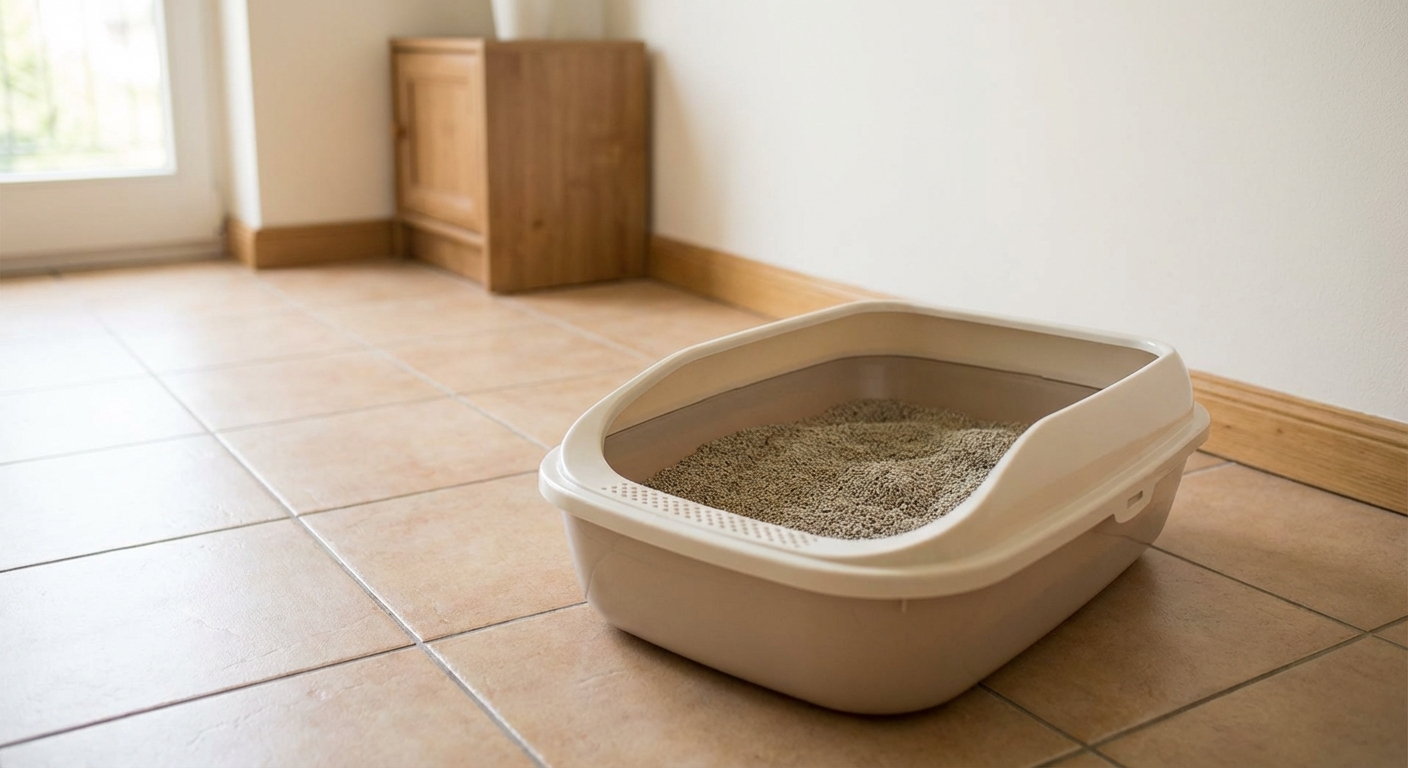
Step 5: Reduce triggers from outside cats
- Block visual access to windows where outdoor cats appear. Try frosted window film on lower panes.
- Use motion-activated sprinklers or other humane deterrents outside if neighborhood cats are visiting your porch.
- Avoid poisons, glue traps, or anything that could injure an animal. Follow local rules and consider contacting local animal control or rescue resources if the issue is ongoing.
- Clean outdoor areas near doors where cats may be marking.
Step 6: Address stress like it is a health issue
Because it is. Stress can directly affect the bladder and behavior. Your vet may also talk with you about FIC support, pain control, or diet changes if bladder inflammation is part of the picture.
- Daily play: 10 to 15 minutes of interactive play (wand toys) once or twice a day.
- Vertical space: Cat trees and shelves reduce tension in multi-cat homes.
- Safe zones: Provide quiet resting areas, especially for shy cats.
- Routine: Feed, play, and clean boxes on a predictable schedule.
- Hydration support: Encourage water intake with multiple water stations, a fountain, and wet food if it fits your vet’s guidance.
Step 7: Consider pheromones
Veterinary behaviorists commonly recommend synthetic facial pheromone diffusers or sprays as part of a plan. These can help some cats feel more secure, especially during changes.
Step 8: Rebuild good litter habits
If your cat has a “favorite” spot to spray, you can gently change what that area means.
- After thoroughly cleaning, block access temporarily (furniture, pet gates, closed doors).
- Place a litter box near the spot short-term, then slowly move it to the preferred location.
- Use feeding or play in that area after it is cleaned. Cats are often less likely to mark where they eat and play.
Step 9: For persistent cases, ask about meds
If you have tried the environmental and litter steps and medical causes are ruled out, medications can be life-changing for some cats. Common options include anti-anxiety medications prescribed by your veterinarian. This is not a “last resort” failure. It is treatment for a real underlying issue.
Multi-cat homes
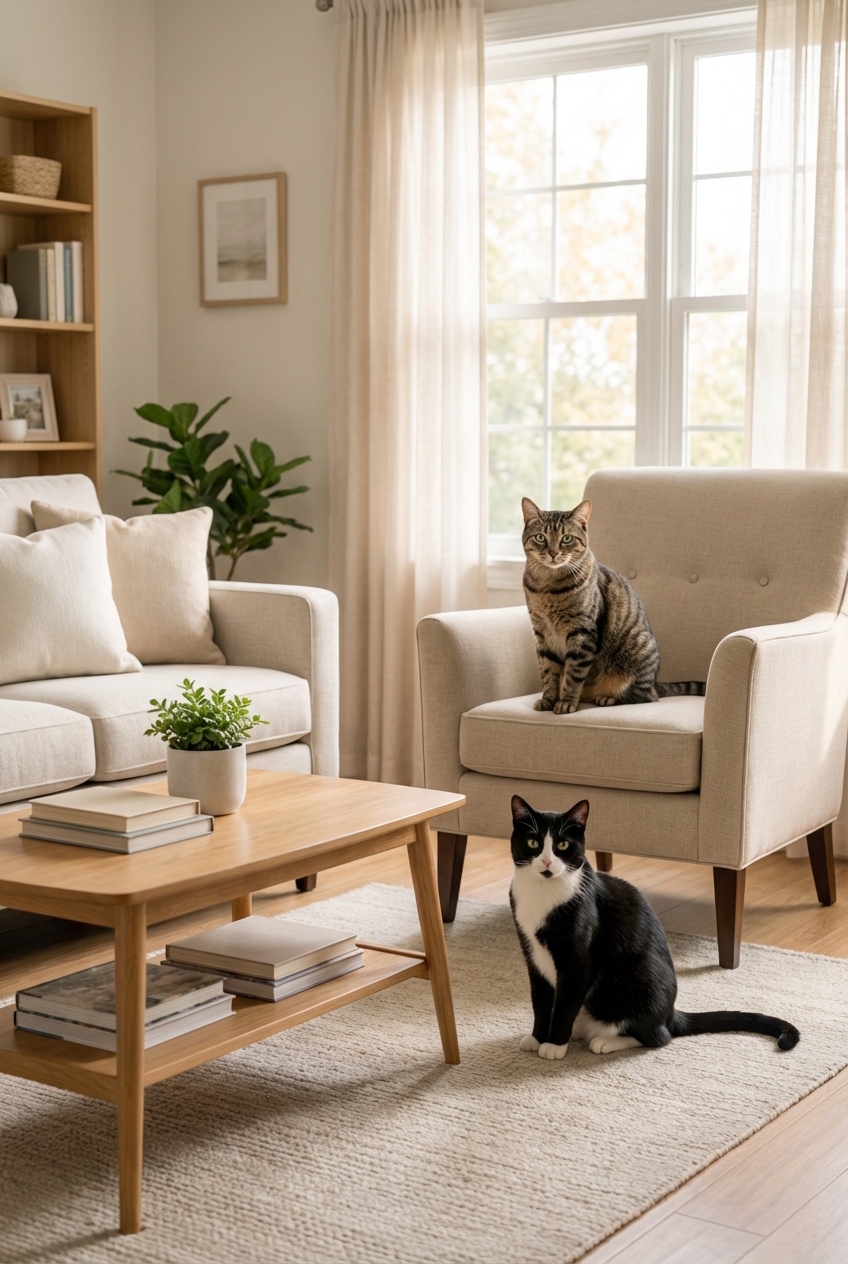
In homes with more than one cat, spraying can be a symptom of tension, even when there is no obvious fighting.
Helpful strategies include:
- Separate resources: multiple feeding stations, water bowls, scratching posts, and resting areas.
- Spread out litter boxes: multiple locations, not all lined up in one room.
- Give cats options: more than one path through the home (vertical routes help).
- Slow introductions: especially if you recently added a cat.
- Watch for subtle bullying: staring, blocking, chasing, and one cat always “owning” the hallway.
What not to do
- Do not punish. Yelling, hitting, or rubbing a cat’s nose in urine increases stress and usually makes the problem worse.
- Do not use strong-smelling cleaners (especially ammonia) and assume the smell is gone just because you cannot detect it.
- Do not make abrupt litter changes if your cat is picky. If you need to switch, do it gradually over 1 to 2 weeks.
- Do not “fix” it by isolation unless your cat has everything he needs (multiple resources) and your veterinarian recommends it for a specific reason.
Call the vet right away
Please do not wait if you notice any of the following:
- Straining to urinate or producing only tiny drops
- Crying out in the litter box
- Lethargy, vomiting, hiding, or refusing food
- Blood in urine
- Frequent trips to the litter box with little output
Urinary blockage in male cats is an emergency.
7-day action plan
- Day 1: Schedule a vet visit if this is new or worsening. Start enzyme cleaning routine.
- Day 2: Add a litter box or improve box size and placement.
- Day 3: Switch to unscented clumping litter if needed, keep depth consistent, and scoop daily.
- Day 4: Increase enrichment: play session plus a new scratching post or perch.
- Day 5: Reduce outside-cat triggers at windows and doors.
- Day 6: Add pheromone support if appropriate.
- Day 7: Review progress and patterns. Note locations, times, and triggers to share with your vet.
Most cats improve when you combine medical oversight with environmental changes and consistent cleanup.
Bottom line
Spraying is your cat’s way of coping, not misbehaving. Start with a medical check, then build a calm, cat-friendly environment with the right litter box setup, stress reduction, and targeted cleaning. With patience and a clear plan, many families get their peaceful home back and their cat gets relief too.