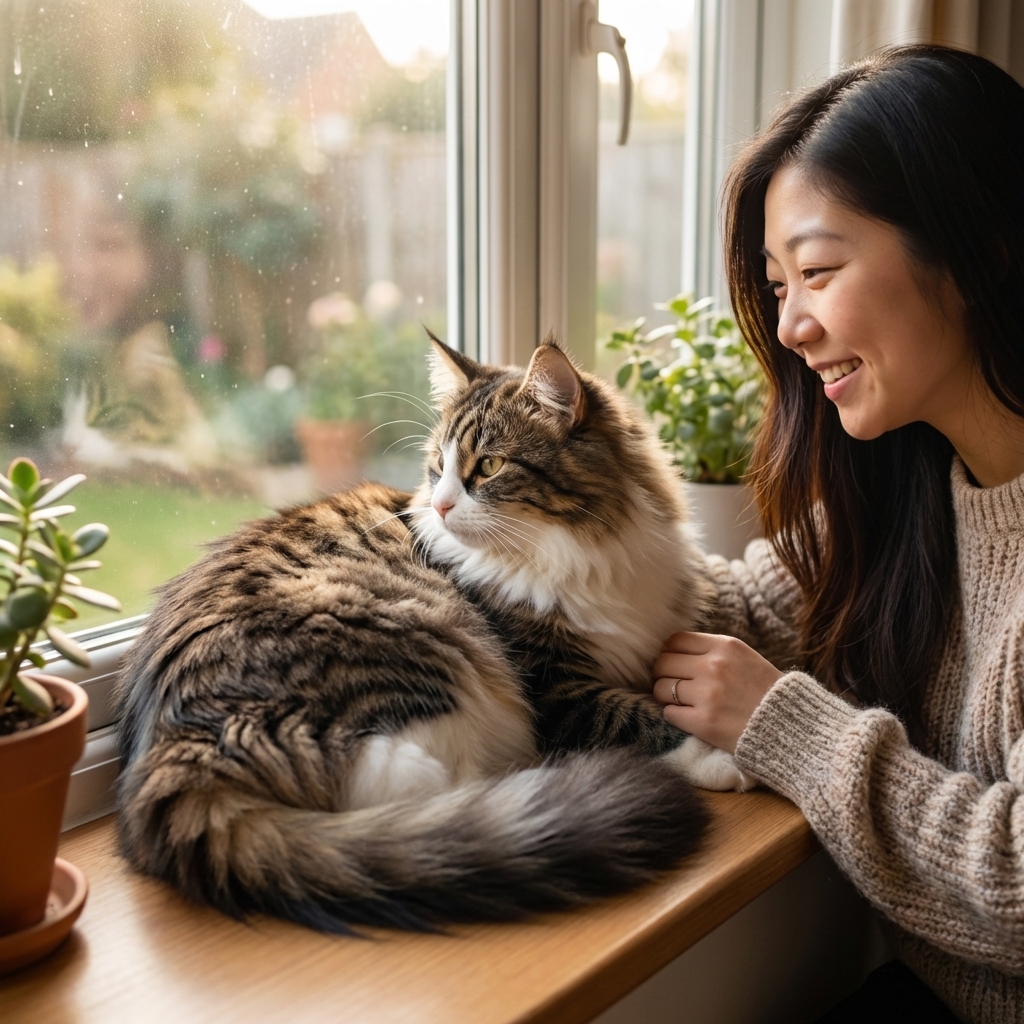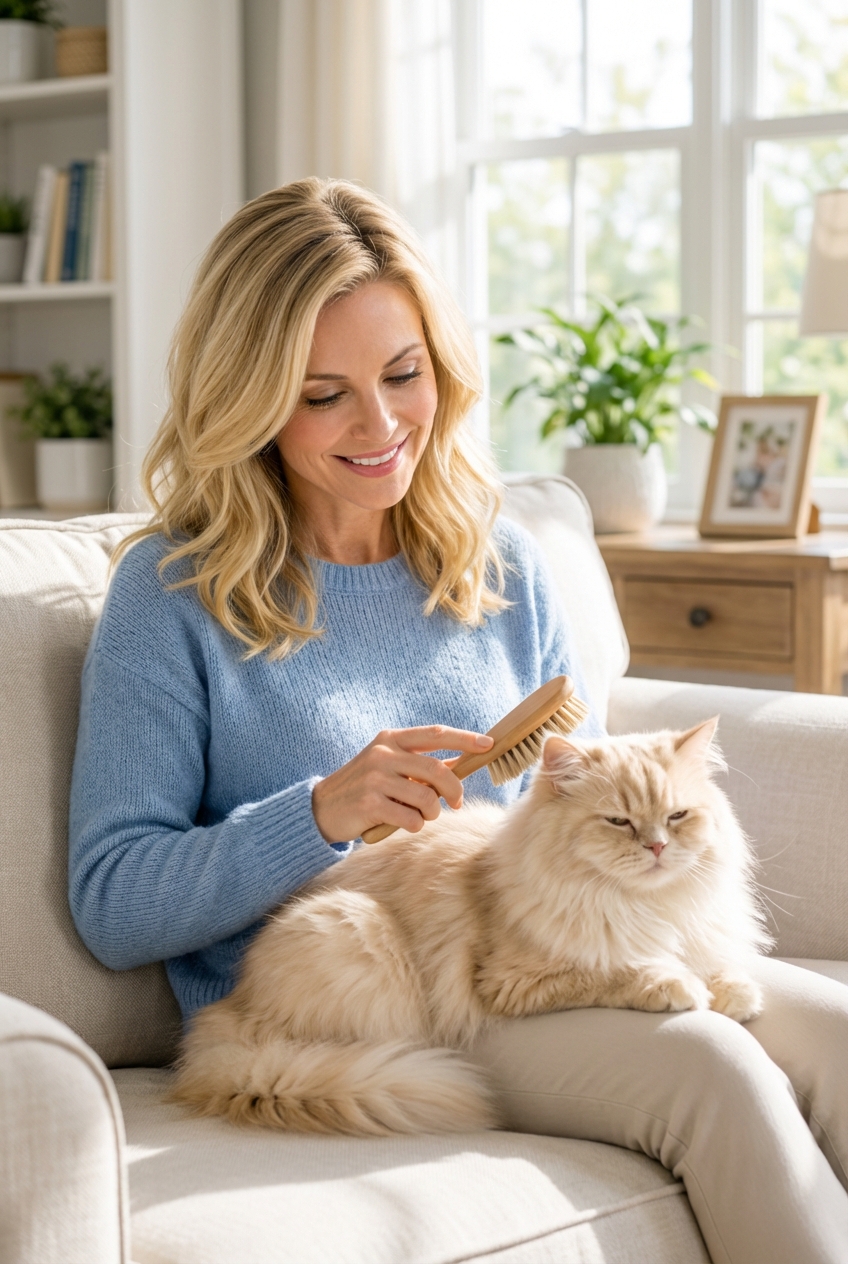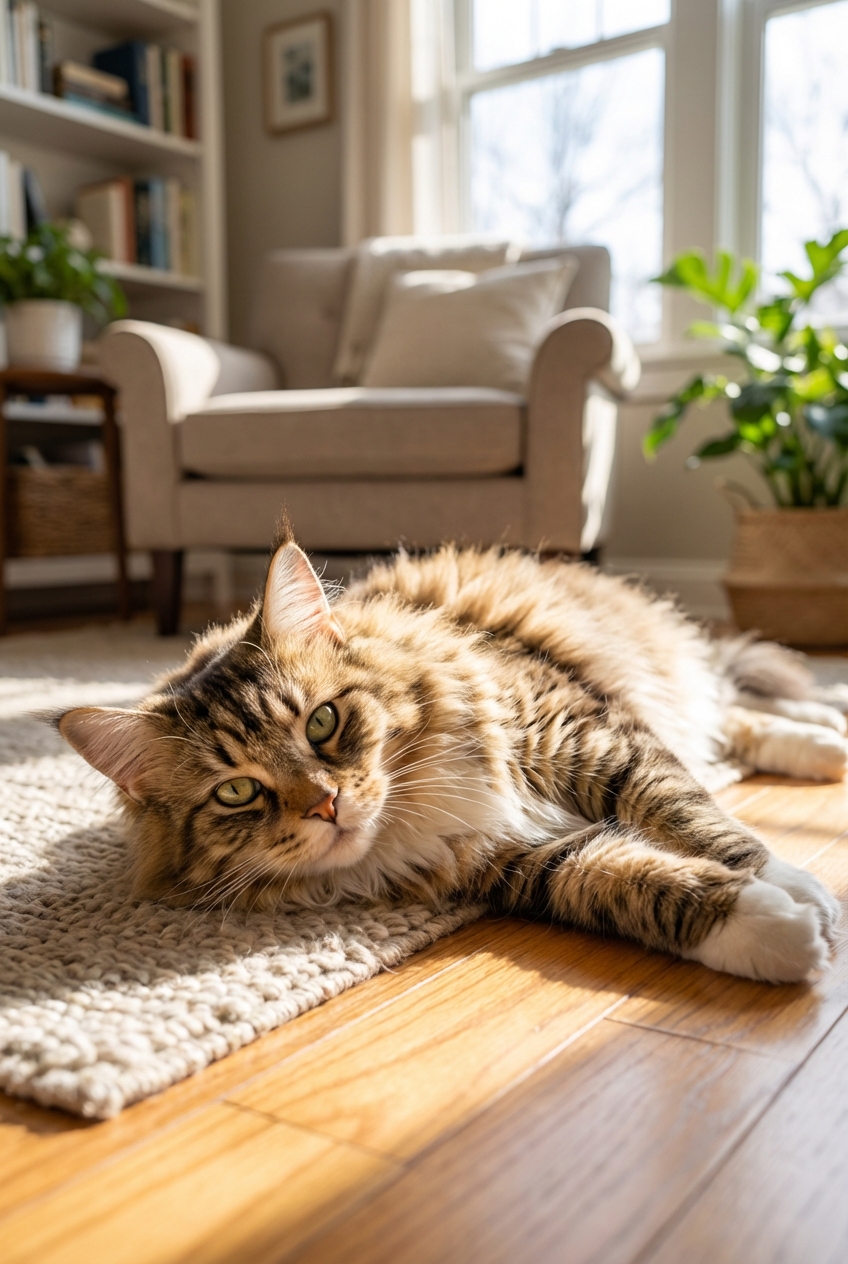
A practical daily routine for Maine Coon cats—nutrition, hydration, grooming to prevent mats, litter box tips, play for joints, dental care, and health red...
Article
•
Designer Mixes
Maine Coon vs Norwegian Forest Cat

Shari Shidate
Designer Mixes contributor
If you are trying to decide between a Maine Coon and a Norwegian Forest Cat, you are not alone. These are two of the most-loved large, fluffy breeds, and they are also two of the most frequently confused. The good news is that once you know what to look for, the differences in body shape, coat, and personality become much easier to spot.
Quick overview
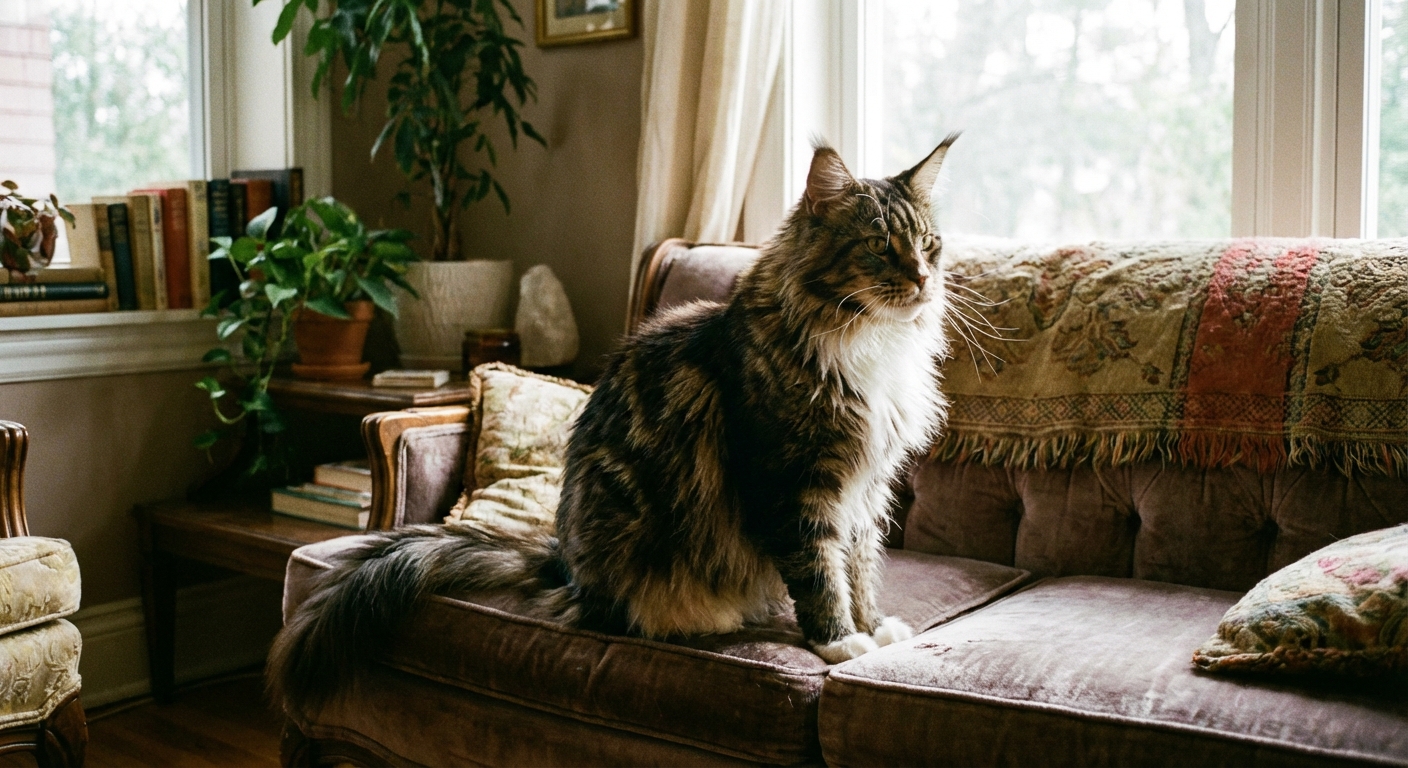
- Maine Coon: Big, people-oriented, playful, sometimes described as dog-like. Long, shaggy coat with a prominent ruff and a long rectangular body.
- Norwegian Forest Cat: Sturdy, athletic climber with a dense double coat. Often a bit more independent, with a more triangular head and a coat designed for colder climates.
Origins
If you love natural breeds, the history is part of the fun.
- Maine Coon: Developed in the United States, especially in Maine, where longhaired working cats were valued as hardy mousers on farms and sometimes on ships. Their size and coat are often linked to thriving in cold, snowy winters.
- Norwegian Forest Cat: A Scandinavian natural breed (often called a “Wegie”) shaped by Norway’s climate. Breed lore commonly ties them to Viking-era life and rural farms, where strong climbing skills and weather-ready coats were useful.
Size and build
Both breeds are large, but their build and overall silhouette tend to differ.
Maine Coon size
- Overall build: Long, rectangular body with substantial bone and a long, plumed tail.
- Typical adult weight: Many females are roughly 8 to 12 pounds and many males are roughly 12 to 18 pounds, though individuals can fall outside these ranges depending on genetics, diet, and overall frame size.
- Maturity: Slow to mature. Many Maine Coons keep filling out until 3 to 5 years.
Norwegian Forest Cat size
- Overall build: Solid and athletic with strong hindquarters. The body can look more compact than a Maine Coon, even when weight is similar.
- Typical adult weight: Many females are roughly 8 to 12 pounds and many males are roughly 12 to 16 pounds, with similar caveats about individual variation.
- Maturity: Also slow to mature. Many take 3 to 5 years to fully develop.
Helpful tip: A Maine Coon often looks long and “stretched out.” A Norwegian Forest Cat often looks like a powerful climber with a sturdy, balanced frame.
Personality and temperament
As a veterinary assistant, I always remind families that breed traits are real, but the individual cat in front of you matters most. Meet the parents if you can, and ask the breeder or rescue what the cat is like at home.
Maine Coon personality
- Social and involved: Many follow their people from room to room and want to be part of the action.
- Playful and curious: Many enjoy interactive toys, food puzzles, and games of fetch.
- Communication style: They are frequently described as “chirpy” or “trilly,” though every cat has their own voice.
Norwegian Forest Cat personality
- Calm confidence: Often affectionate, but not always as “in your pocket” as a Maine Coon.
- Independent streak: Many enjoy companionship while still valuing personal space.
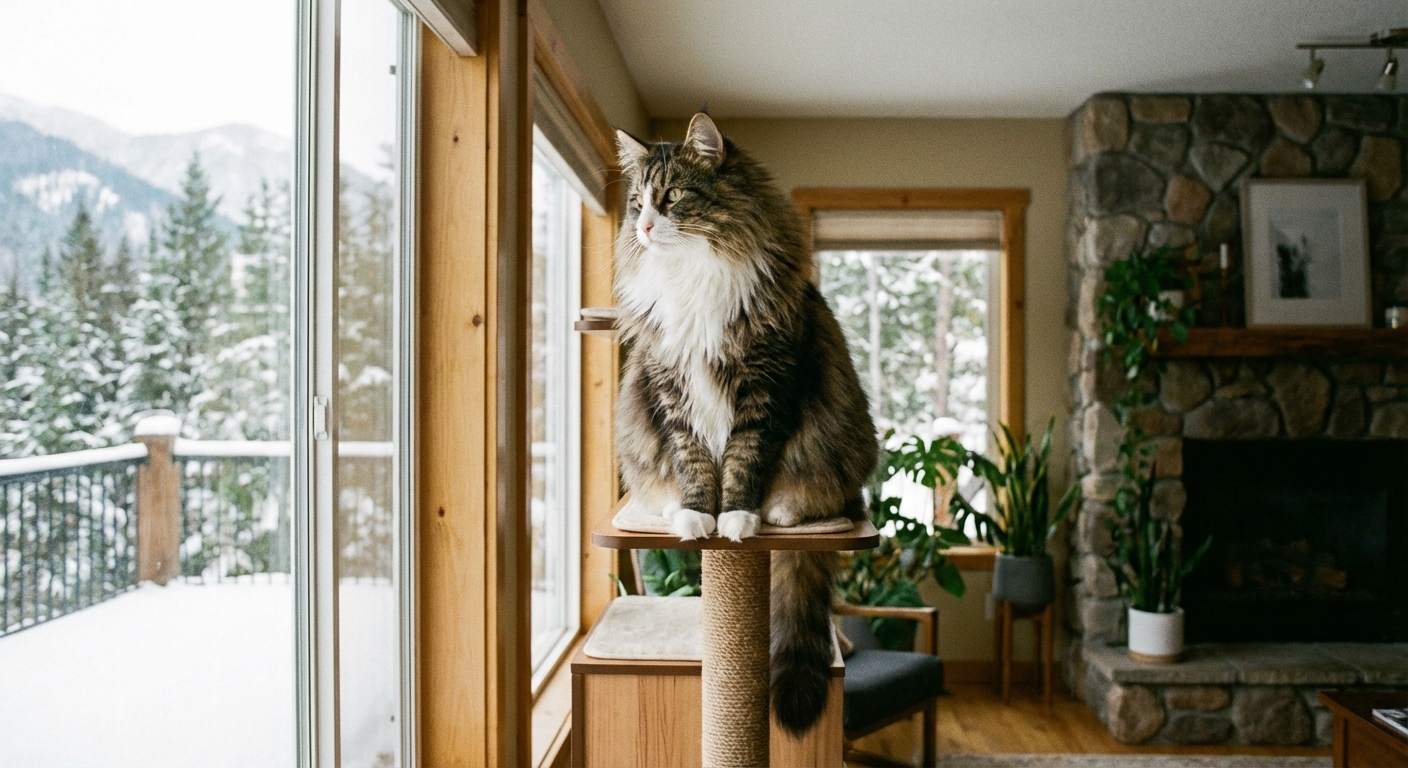
- Climber at heart: Frequently happiest when they have vertical territory, like tall cat trees and wall shelves. Many also have a well-known knack for climbing down head-first, thanks to their strong climbing instincts and physical adaptations.
If you want a cat who tends to actively engage with the family, the Maine Coon often fits that role. If you love a slightly more self-directed, athletic companion, the Norwegian Forest Cat may be your match.
Coat and grooming
Both breeds are fluffy, but their coats behave differently. Knowing this helps you choose the right grooming routine and avoids mats, hairballs, and skin irritation.
Maine Coon coat
- Texture: Shaggy, with longer hair on the belly and britches. Less “woolly” than some longhaired cats.
- Shedding: Moderate to heavy, with seasonal changes.
- Grooming routine: Aim for 2 to 4 brushing sessions per week, more during shedding season. Focus on armpits, belly, and behind the legs where mats form.
Norwegian Forest Cat coat
- Texture: Dense double coat with a water-repellent outer layer, built to handle cold, damp weather.
- Shedding: Often heavy seasonally, especially during a seasonal shed (sometimes called a “coat blow”).
- Grooming routine: Many do well with 2 to 3 brushing sessions per week, but during seasonal shedding, daily brushing can prevent clumps and matting.
Practical grooming tips that help both breeds:
- Use a metal comb after brushing to check for hidden tangles near the skin.
- Keep nails trimmed. Long hair can hide overgrown nails until they cause discomfort.
- Hairballs are common in longhaired cats. Ask your vet about fiber support, hydration strategies, and safe hairball products if vomiting becomes frequent.
Allergy note: Neither breed is hypoallergenic. If you are allergy-prone, spend time around adult cats (not just kittens) before committing.
Health issues
No breed is “guaranteed healthy,” but responsible breeding and smart preventive care make a big difference. If you are buying from a breeder, ask for documentation of health screening for the parents.
Maine Coon health considerations
- Hypertrophic cardiomyopathy (HCM): A heart disease seen in many breeds, including Maine Coons. Some lines have known genetic risk. Screening may include echocardiograms and genetic testing.
- Hip dysplasia: Can occur in large-framed cats. Watch for stiffness, reluctance to jump, or reduced activity, and ask your vet whether an orthopedic exam and imaging make sense.
- Spinal muscular atrophy (SMA): A genetic condition reported in the breed. Good breeders test breeding cats.
Norwegian Forest Cat health considerations
- HCM: Also reported in this breed, so cardiac screening is valuable here too.
- Glycogen storage disease type IV (GSD IV): A rare inherited disorder historically associated with the breed. Testing and careful breeding practices reduce risk.
- Dental disease and obesity: Not breed-exclusive, but common “real life” issues that impact longevity and comfort.
From the clinic side: the most helpful “everyday” health move for either breed is keeping them lean. Extra weight is one of the biggest drivers of arthritis and mobility pain in large cats.
Evidence-based prevention that helps either breed: keep your cat lean, schedule routine veterinary exams, keep vaccines and parasite prevention current based on lifestyle, and prioritize dental care.
Lifespan
With good genetics, indoor living, and consistent veterinary care, both breeds commonly live into the early to mid-teens. Some cats live longer. Lifespan is influenced by heart health, weight, dental health, stress levels, and how quickly medical issues are caught and treated.
Indoor setup
Both Maine Coons and Norwegian Forest Cats can thrive indoors. Indoor living is generally safer for long-term health due to reduced risk from cars, toxins, infectious disease exposure, and wildlife encounters.
What Maine Coons tend to love indoors
- Interactive play: Wand toys, fetch-style toys, puzzle feeders.
- Family time: Many choose to be near their people.
- Big comfy spaces: Large beds, sturdy perches, and wide window sills.
What Norwegian Forest Cats tend to love indoors
- Vertical territory: Tall cat trees, wall-mounted steps, secure shelving.
- Observation spots: Quiet window time and high perches.
- Enrichment variety: Rotating toys and climbing routes can prevent boredom.
Safety note: Because these are larger cats, choose cat trees rated for heavier weights and place them on stable flooring. Wobbly furniture can lead to falls, fear, and fewer healthy jumps.
Costs and upkeep
Big, longhaired cats can be a little pricier to keep comfortable.
- Food: Larger bodies usually mean higher food costs, especially if you prioritize higher-protein diets.
- Grooming tools: A quality brush, a metal comb, and occasional detangling tools can be worthwhile investments.
- Vet budgeting: Consider pet insurance or a dedicated savings fund. In some lines, ongoing cardiac screening (like an echocardiogram) may be recommended by your veterinarian, and it is helpful to plan for that possibility.
How to tell them apart
If you only remember a few things, remember these.
Maine Coon visual clues
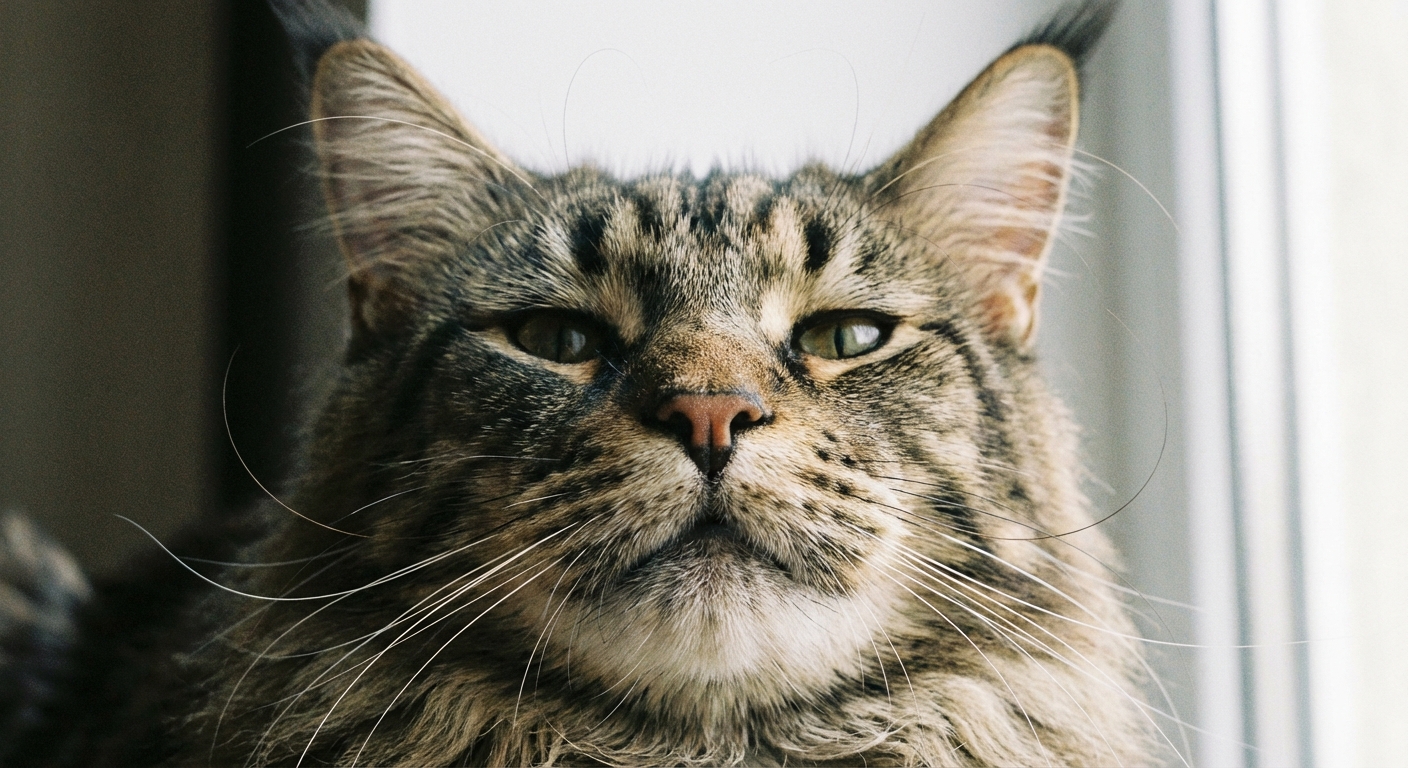
- Head and muzzle: Often a more squared muzzle with a strong chin.
- Body shape: Long, rectangular “big cat” outline.
- Coat look: Shaggy, uneven lengths with a noticeable ruff.
- Ears: Large ears, often with lynx-like tufts.
Norwegian Forest Cat visual clues
- Head shape: More triangular head with a straighter-looking profile.
- Eyes and legs: Almond-shaped eyes are common, and the rear legs often appear slightly longer, supporting that climbing build.
- Coat function: Thick double coat that can look very plush, especially in winter.
- Tail: Full and fluffy, often carried proudly.
One important caveat: Many mixed-breed cats can resemble either breed. Papers and breeder transparency matter if you are specifically looking for a purebred cat.
Breeder and rescue tips
If you are set on a kitten, take your time. A responsible source will welcome questions and provide documentation.
- Ask for health screening proof: For example, cardiac screening documentation for the parents, and genetic testing where appropriate for the breed.
- Watch for red flags: No medical records, pressure to pay quickly, unwillingness to show living conditions, or kittens sent home too young.
- Consider adoption: Breed-specific rescues and shelters sometimes have Maine Coon or Norwegian Forest Cat mixes with the same “big fluffy cat” charm.
Which breed is right for you?
Here is a simple way to decide based on lifestyle and expectations.
- Choose a Maine Coon if: you want a highly social cat that tends to engage, play, and “hang out” with you throughout the day.
- Choose a Norwegian Forest Cat if: you love a calm, sturdy, climbing-focused cat that may show affection in a more independent, steady way.
My best advice: whichever breed you choose, set them up for success with routine play, predictable feeding, plenty of vertical space, and grooming that becomes a calm habit. Consistency is what keeps these big, beautiful cats comfortable and thriving.