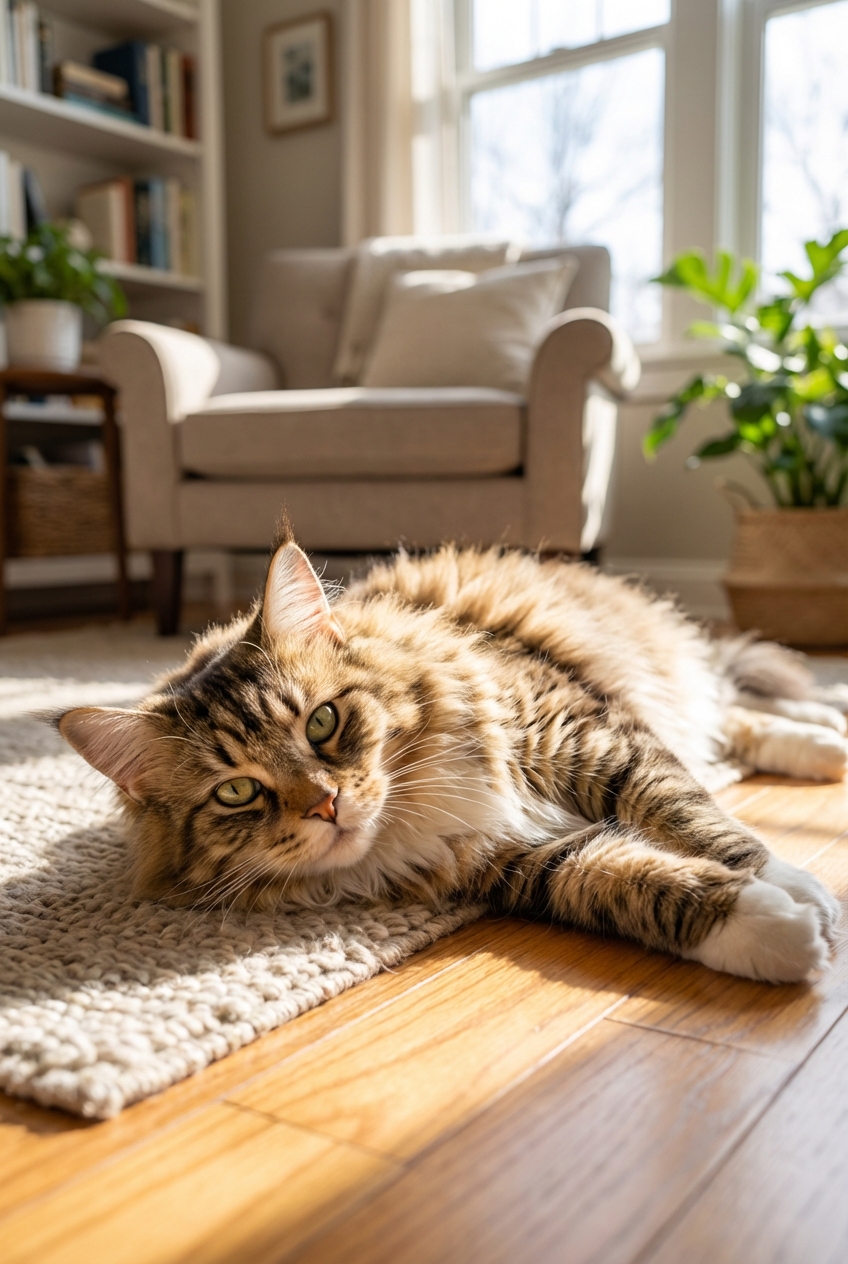
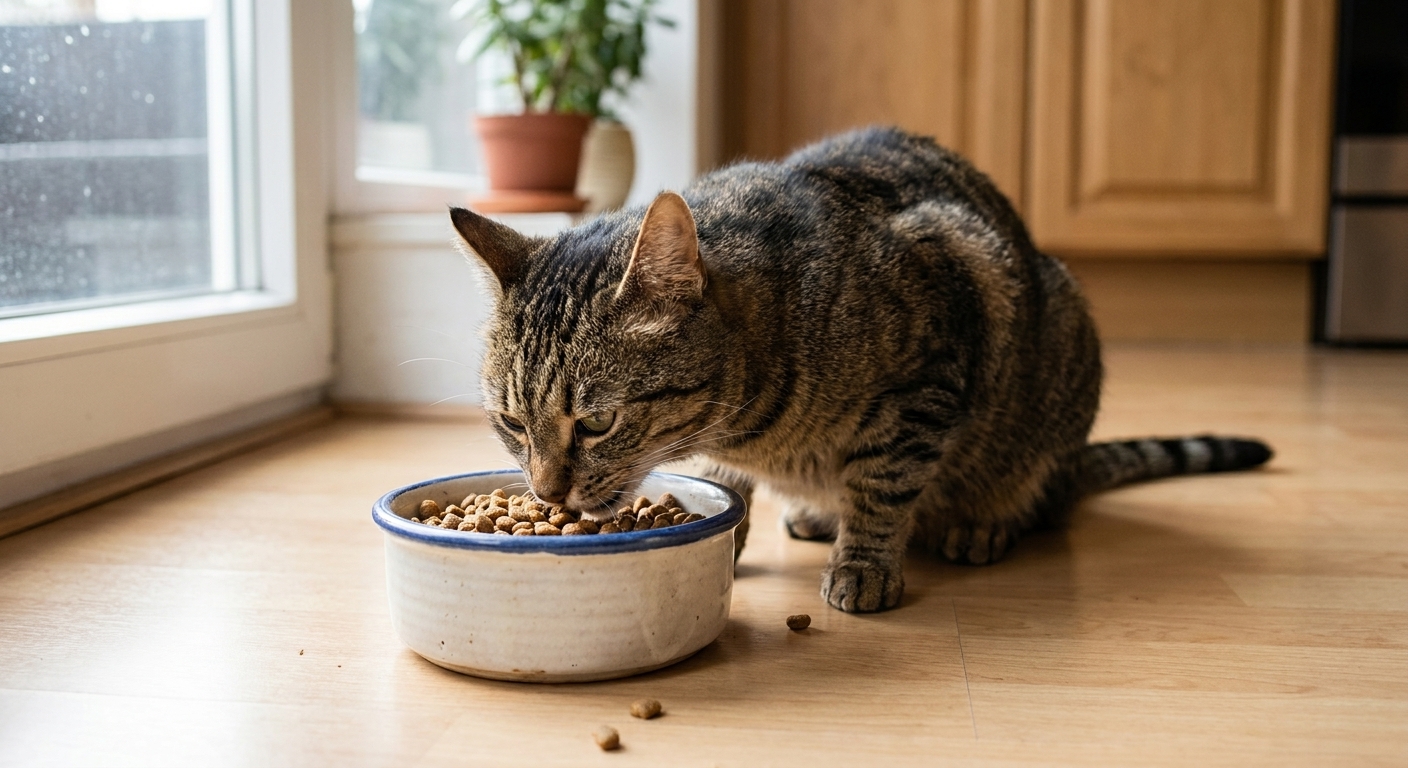
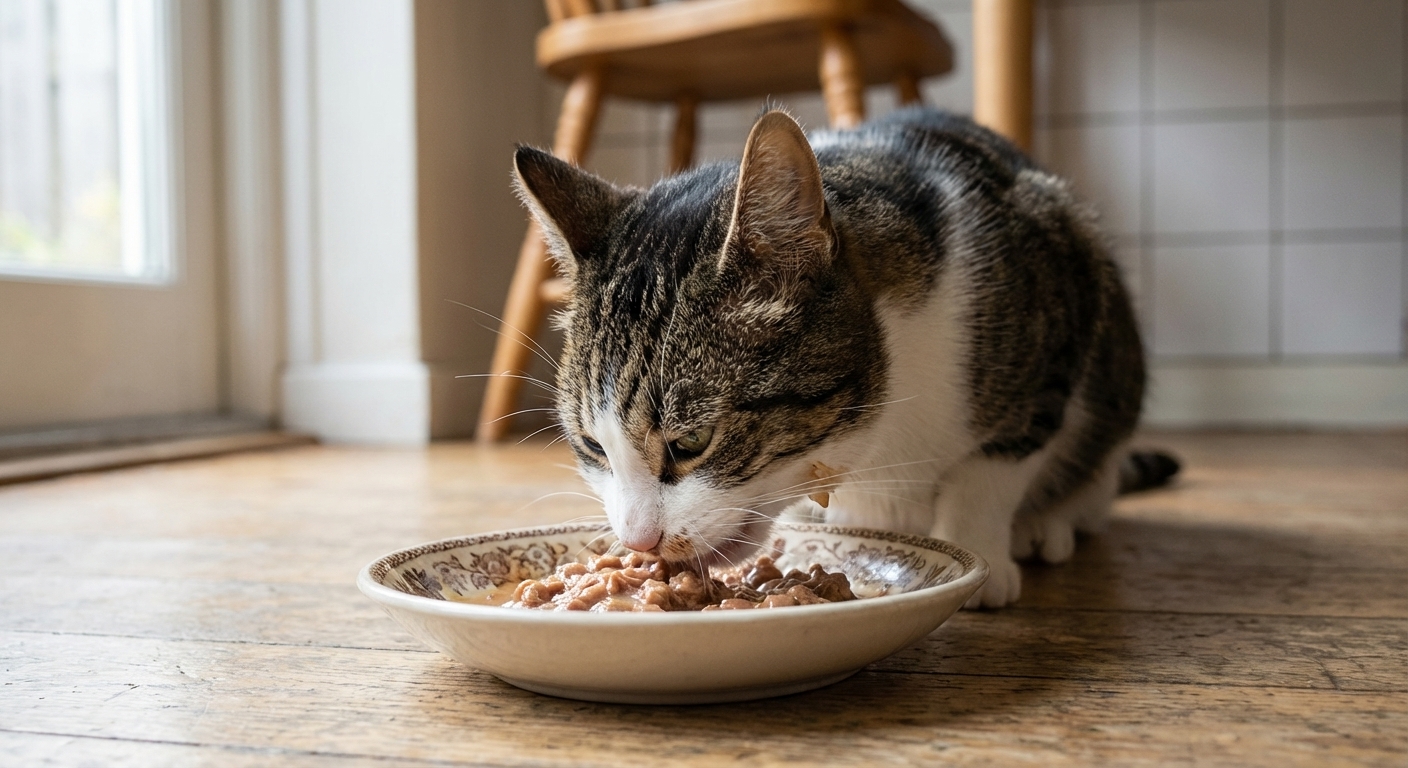
Maine Coons are not just “big cats.” They are large, long-bodied, slow-maturing athletes with a reputation for hearty appetites. That combo can be tricky: feed too little and you risk poor muscle development; feed too much and you can quietly add joint stress that shows up later as stiffness and reluctance to jump.
This guide will help you choose calorie starting points, prioritize protein, and keep hydration and body condition on track from kittenhood through adulthood.
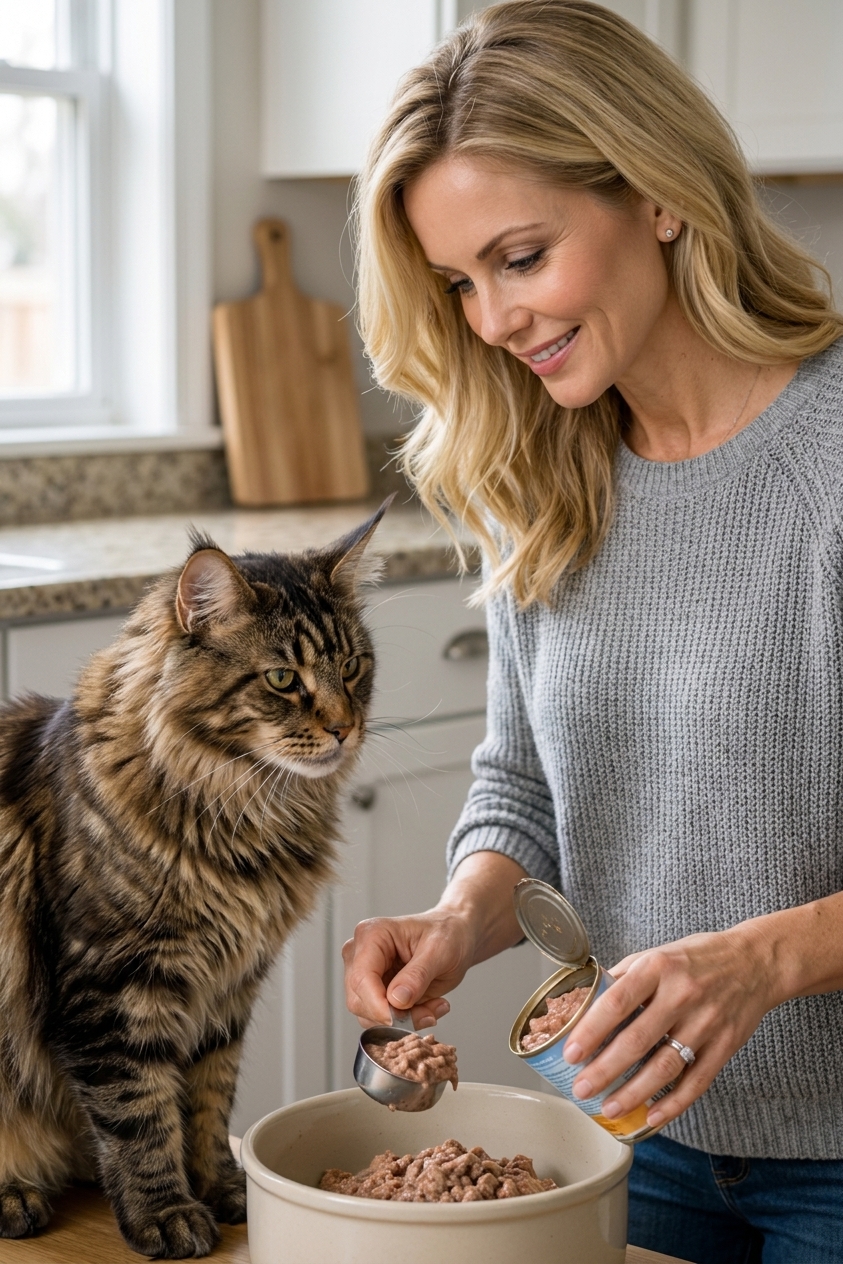
Why Maine Coon feeding is different
Many house cats reach their mature size around 12 to 18 months, then keep “filling out” a bit after that. Maine Coons typically mature more slowly, often taking 3 to 5 years to fully fill out (a widely reported breed trait). They also carry more lean mass when kept fit, which can mean higher calorie needs than a smaller cat, but their joints can pay the price if extra fat accumulates.
Think of feeding a Maine Coon like fueling a big, growing frame:
- Protein first to support muscle and a healthy coat.
- Enough calories to match growth and activity, without pushing rapid weight gain.
- Moisture support because cats are naturally low drinkers, and chronic under-hydration can contribute to urinary tract problems.
- Joint-friendly weight control because extra pounds add leverage and stress to hips, knees, and spine.
Calorie starting points (baseline)
Calories are not one-size-fits-all. Age, neuter status, activity level, and whether your cat is naturally lanky or stocky all matter. It also comes down to size: a 12 lb (5.4 kg) Maine Coon and a 20 lb (9.1 kg) Maine Coon are playing different math games.
If you like a simple starting framework, use this:
- RER (resting energy requirement) = 70 × (body weight in kg)0.75
- DER (daily calories) = RER × a life-stage factor (your vet can help pick the right factor)
Example: A 7 kg Maine Coon has an RER of roughly 300 kcal/day. An average neutered adult might land around 1.2 to 1.4 × RER, or about 360 to 420 kcal/day, then you adjust based on results.
Use the ranges below as a starting point, then adjust every 2 to 3 weeks based on body condition and weight trend.
Kittens (up to 12 months)
Maine Coon kittens are growing fast, even if they will not be “done” for years. Many do best with frequent meals and a growth-formulated diet.
- Typical range: about 250 to 450 kcal/day, sometimes higher during growth spurts (especially in larger kittens).
- Feeding style: 3 to 5 meals per day, or meal feeding with limited, monitored free-choice if your kitten self-regulates.
Kitten caution: Do not restrict calories for a “round” kitten without veterinary guidance. Focus on a proper growth diet, steady growth, and body condition checks.
Adolescents (12 to 24 months)
This is where many Maine Coons look adult-sized but are still building muscle and frame. Appetite can stay high.
- Typical range: about 280 to 420 kcal/day.
- Goal: steady growth and lean body condition, not a round belly.
Adults (2 to 7 years)
Healthy adult Maine Coons often land in a surprisingly wide range. Use weight and body condition to fine-tune.
- Typical range: about 240 to 380 kcal/day.
- Very active, large-framed cats: may need 350 to 450 kcal/day.
Seniors (7+ years)
Some seniors slow down and need fewer calories. Others lose muscle and may need more protein and careful calorie support to maintain weight.
- Typical range: about 220 to 340 kcal/day, adjusted to maintain lean mass.
Practical note: Your most useful “calculator” is your cat’s trend over time. For adult cats, if weight is creeping up week after week, trim calories by about 5 to 10% and reassess in 2 to 3 weeks. If your cat is losing weight unintentionally, increase calories and check in with your vet. For kittens and adolescents, rapid changes can be normal during growth spurts, so focus more on body condition and overall growth pattern, and ask your veterinarian before making big cuts.
Protein targets
For Maine Coons, protein is not a buzzword. It is the foundation for strong muscle, a healthy immune system, and that iconic coat.
Practical label targets
Pet food labels list protein as a percentage, but moisture changes everything. So treat the numbers below as practical, label-friendly context, not a perfect comparison across wet and dry foods.
- Adults: choose foods where protein is high and clearly animal-based. Many quality wet foods are roughly 8 to 12% protein as-fed (often much higher on a dry-matter basis). Many dry foods are 30 to 45% protein as-fed.
- Kittens and adolescents: prioritize growth-formulated diets with robust protein and appropriate minerals.
- Seniors: do not automatically lower protein. Many seniors do better with higher protein to protect muscle, unless your veterinarian has diagnosed kidney disease and recommends a therapeutic plan.
Quick dry-matter reminder: If you want to compare wet to dry, convert to dry matter. A simple shortcut is: dry matter % ≈ as-fed % ÷ (100 − moisture %) × 100.
Ingredient cues
- Look for named animal proteins like chicken, turkey, salmon, beef.
- Be cautious with foods that lean heavily on vague “meat” terms or rely on lots of plant protein boosters.
- Aim for a diet your cat tolerates well: good stool quality, a glossy coat, and steady energy.
Hydration
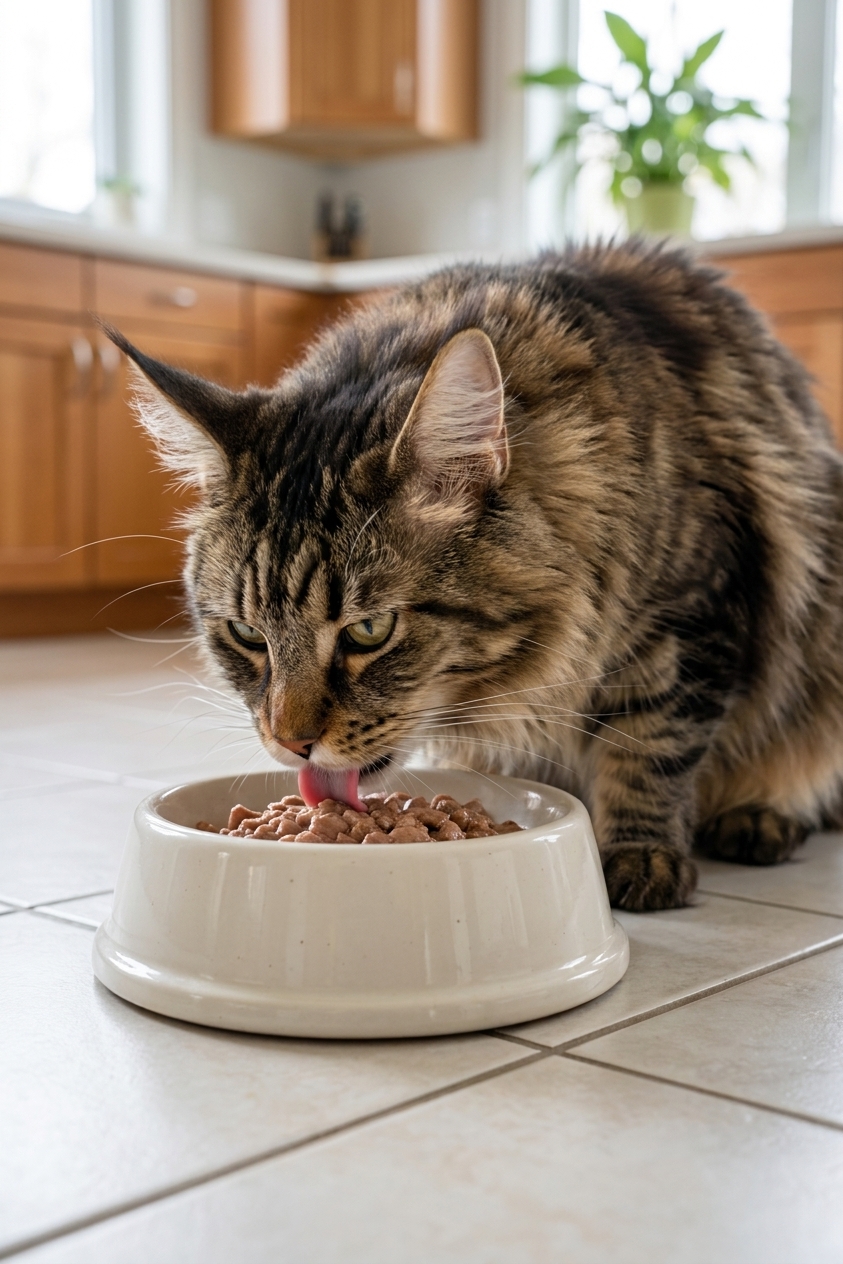
Cats evolved to get much of their water from prey. Even big, confident Maine Coons often do not drink enough from a bowl to match their needs, especially if they eat mostly dry food.
Simple hydration upgrades
- Make wet food the main event if your budget and your cat’s digestion allow it.
- Add water to wet food to create a stew consistency. Start with 1 to 2 teaspoons and work up.
- Use a cat water fountain and place it away from the food bowl.
- Offer broth thoughtfully: only pet-safe broths with no onion or garlic, and low sodium.
When to call your vet
Hydration is also a health signal. Increased thirst, very large urine clumps, straining to urinate, or peeing outside the box deserve prompt veterinary attention.
Healthy weight for a “giant” cat
Maine Coons are supposed to be large, but “large” is not the same as “overweight.” Extra fat can shorten comfortable mobility over time and can worsen arthritis, especially in big-boned breeds.
What “healthy” often looks like
Adult Maine Coons vary a lot by sex, frame, and lineage. Many healthy adults land somewhere around 12 to 18 lb (5.4 to 8.2 kg), and some healthy cats fall outside that. The more reliable target is body condition, not a single number.
If you want a visual reference, ask your vet for a 9-point body condition score (BCS) chart and aim for the middle range (often called “ideal”).
How to check body condition at home
- Ribs: you should feel ribs with light pressure, like feeling the knuckles on the back of your hand.
- Waist: from above, your cat should have a visible waist behind the ribs, even with fluffy fur.
- Abdominal tuck: from the side, the belly should not swing low.
Portion control that works
- Measure meals instead of free-feeding, especially after neutering.
- Use a kitchen scale for dry food and treats. It is more accurate than a cup.
- Keep treats under 10% of daily calories.
- Re-check monthly weight and adjust portions by 5 to 10% at a time.
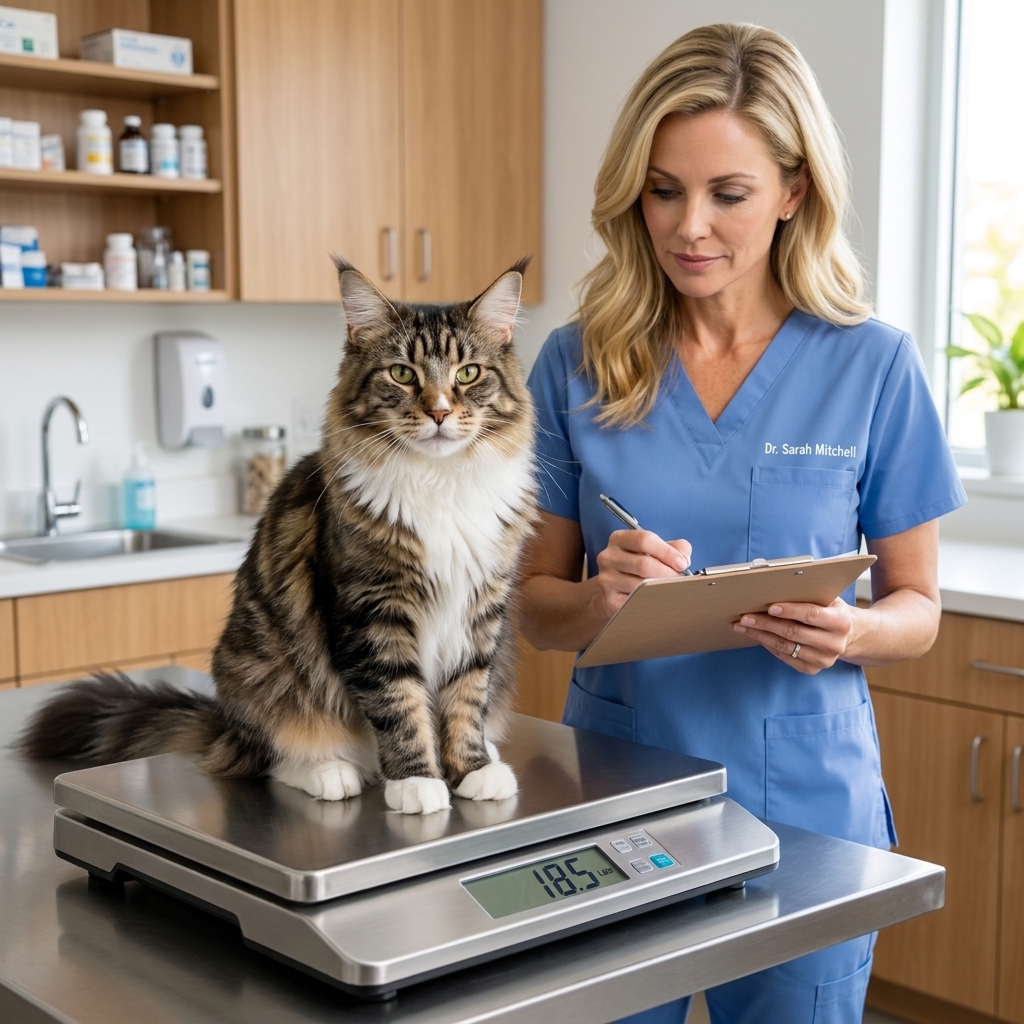
If your Maine Coon is getting heavy, think joint protection, not just aesthetics. Keeping them lean is one of the kindest long-term health choices you can make.
Joint-friendly weight control
Because Maine Coons are long-framed, even modest weight gain can increase stress on hips, knees, and the spine. The goal is a lean, muscular cat, not a skinny one.
Strategies that protect muscle
- Prioritize protein while reducing calories gradually.
- Choose moderate-fat diets rather than very low protein foods.
- Encourage daily movement with wand toys, “hunt the kibble” games, or food puzzles.
- Consider joint-support nutrition with your veterinarian if your cat has stiffness or early arthritis signs. Supplements like omega-3 fatty acids (EPA and DHA) can help with inflammation, but dosing should be vet-guided.
Slow growth is normal
People sometimes overfeed Maine Coons because they expect them to be huge quickly. Slow, steady growth is typical. Rapid weight gain is not the same as healthy development.
Wet, dry, or mixed feeding
There is no single “perfect” format. The best diet is one that meets nutritional standards, supports hydration, and keeps your cat at a healthy weight.
Wet food
- Pros: hydration support, often more filling per calorie.
- Cons: cost, dental plaque still possible, needs safe storage and timely cleanup.
Dry food
- Pros: convenient, works well with puzzles and timed feeders.
- Cons: calorie dense, easy to overfeed, lower moisture.
Mixed feeding
For many Maine Coons, a mixed approach is realistic and effective: wet meals for hydration and fullness, plus a measured amount of dry food for enrichment.
Tip: Whatever you choose, look for a statement that the food is “complete and balanced” for your cat’s life stage using AAFCO (or equivalent) feeding trials and nutrient profiles.
How often to feed
Meal frequency can help appetite control and cut down on begging.
- Kittens: 3 to 5 meals per day.
- Adults: 2 to 3 meals per day is a great target for most homes.
- Cats with big appetites: split calories into 3 to 4 smaller meals, and add puzzle feeders.
Switching foods safely
If you are changing diets, go slowly. A gradual transition helps prevent diarrhea and food refusal, especially in cats with sensitive stomachs.
- Days 1 to 3: 75% old food, 25% new
- Days 4 to 6: 50% old, 50% new
- Days 7 to 10: 25% old, 75% new, then fully new
If your cat gets vomiting, diarrhea, or constipation during the switch, pause at the current mix for a few days. If signs are persistent or severe, call your veterinarian.
Common feeding questions
How do I know if my Maine Coon is underfed?
Signs can include visible ribs or hip bones, poor coat quality, low energy, or persistent hunger with weight loss. Confirm with a weight check and body condition score at your vet.
My Maine Coon is hungry all the time. Is that normal?
Some Maine Coons are very food-motivated. Before assuming it is just personality, rule out parasites, dental pain, and medical causes. Then focus on measured portions, higher-protein meals, hydration, and enrichment.
Do Maine Coons need grain-free food?
Not automatically. Many cats do fine with grains, and grain-free is not inherently higher quality. The better question is whether the diet is complete and balanced, digestible for your cat, and supporting a healthy weight.
Breed health notes
Maine Coons can be prone to issues like dental disease and heart disease (including HCM). Diet will not prevent every condition, but keeping your cat lean and well-muscled supports overall resilience and comfort. If your cat has a diagnosed condition, ask your veterinarian whether a therapeutic diet is appropriate.
When to involve your veterinarian
Please check in with your veterinarian if your Maine Coon:
- Is gaining weight despite measured feeding
- Loses weight unintentionally
- Has vomiting, diarrhea, or constipation lasting more than 24 to 48 hours
- Shows urinary signs like straining, blood in urine, or frequent trips to the box
- Seems stiff, reluctant to jump, or painful when handled
Maine Coons are wonderfully resilient, but early nutrition and weight management can make a huge difference in long-term comfort and longevity.