A practical daily routine for Maine Coon cats—nutrition, hydration, grooming to prevent mats, litter box tips, play for joints, dental care, and health red...
Article
•
Designer Mixes
Maine Coon Cats

Shari Shidate
Designer Mixes contributor
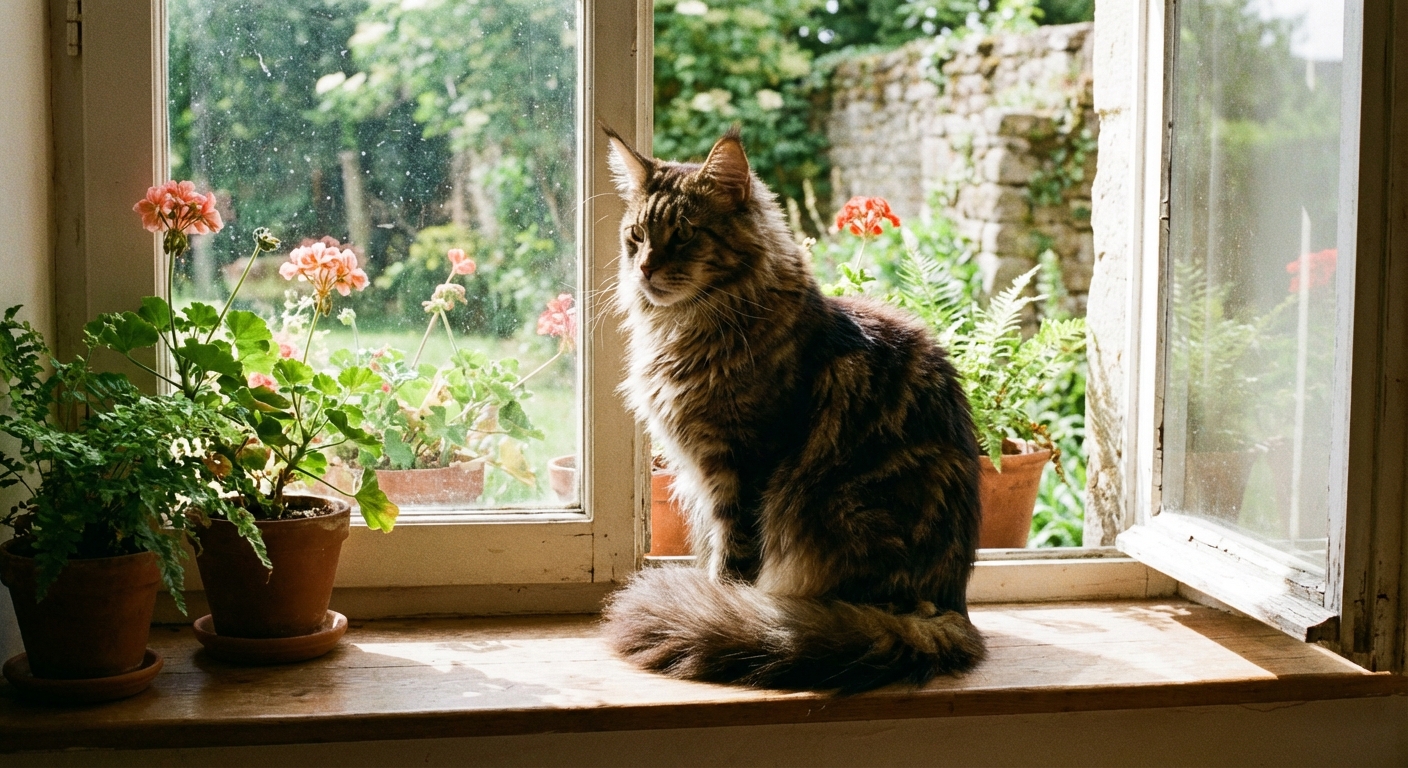
Maine Coons are the cats people tend to remember. They are big, fluffy, and famously friendly, with a “gentle giant” reputation that is actually well earned in many homes. But size is only part of the story. These cats are intelligent, slow to mature, and often surprisingly dog-like in the way they follow their people from room to room.
As a veterinary assistant, I love when families research a breed before bringing one home. It sets everyone up for success, especially with a cat as large as the Maine Coon , and one you will likely share your life with for many years.
What makes them gentle giants
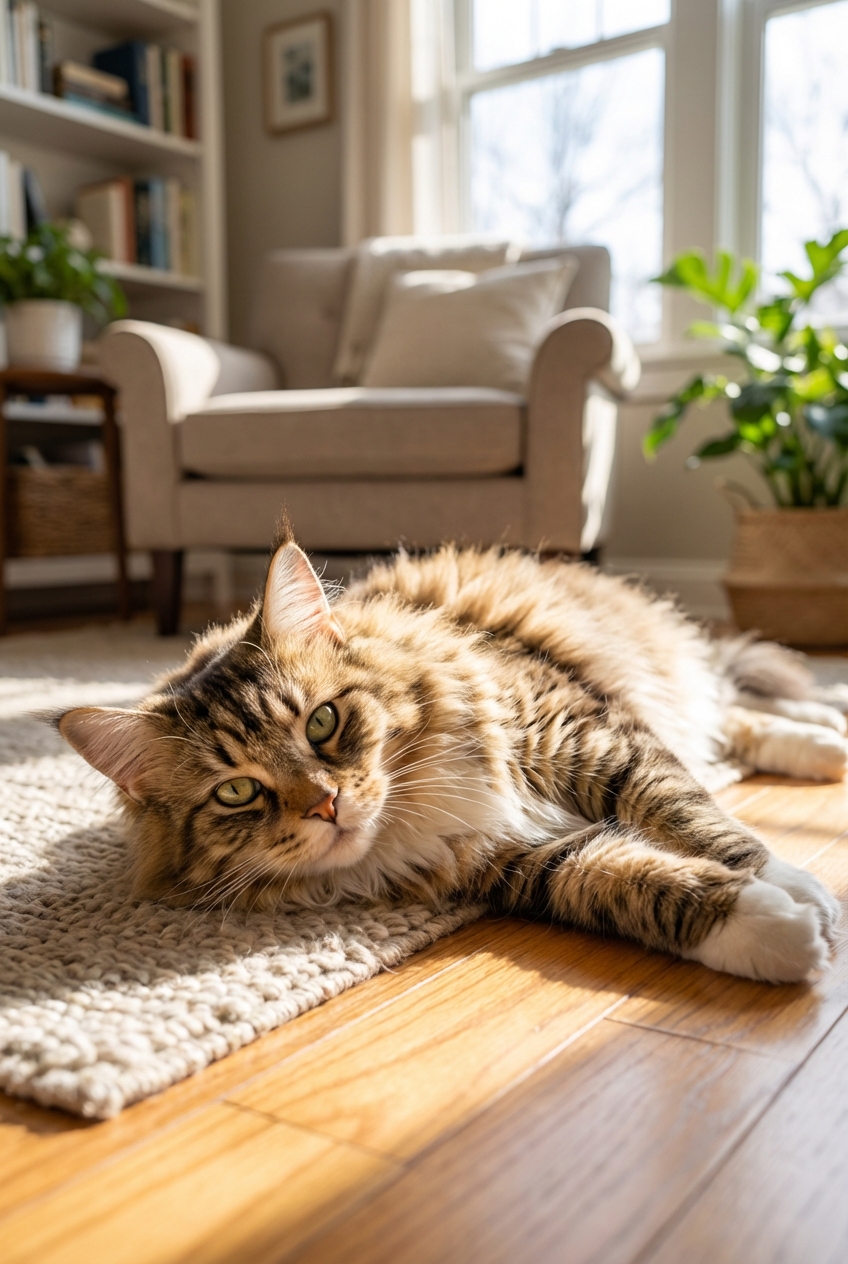
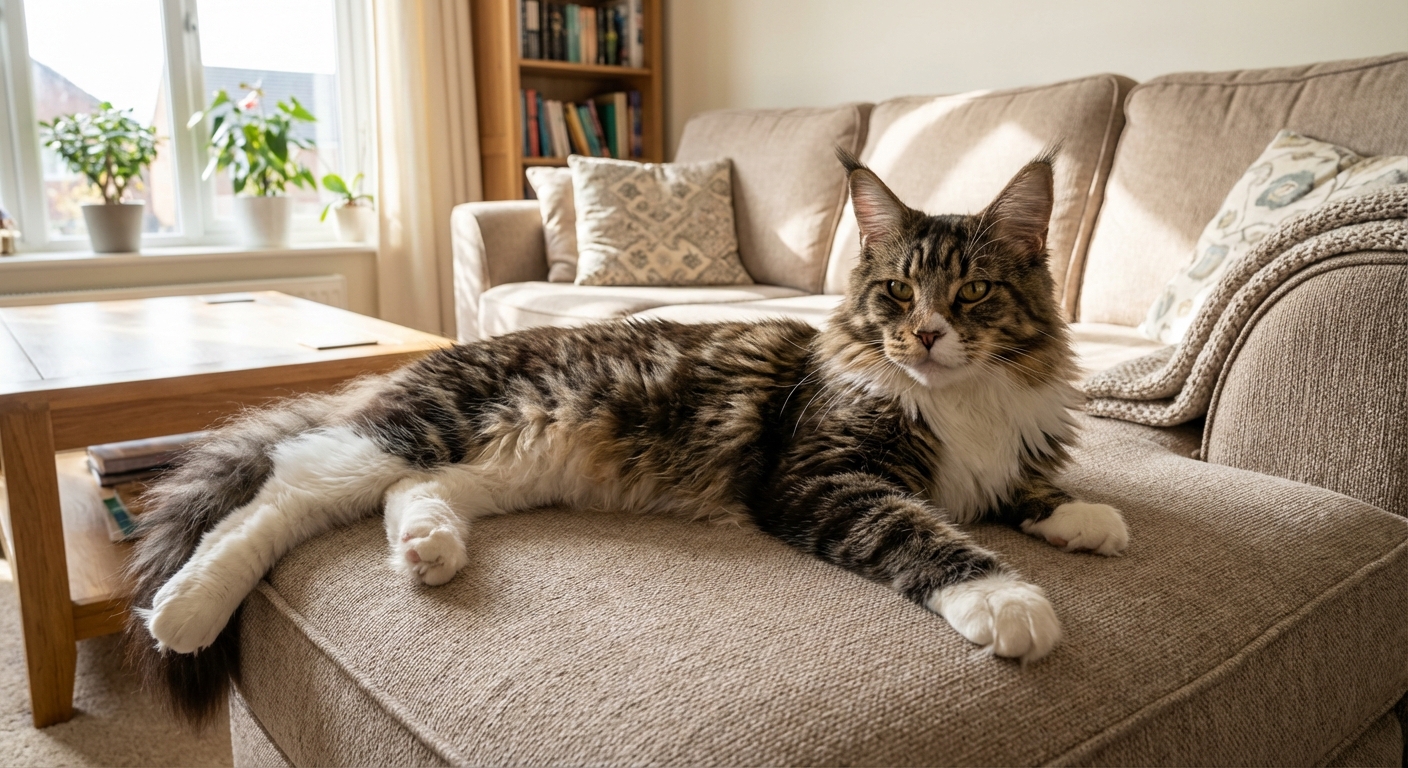
Maine Coons are one of the largest domesticated cat breeds. Adult size varies by sex, lineage, and lifestyle. Many males fall in the 13 to 18+ pound range, while many females are closer to about 8 to 12 pounds. Some healthy cats are outside those ranges. They can look even bigger because of their long bodies, heavy bone structure, and thick coat.
Temperament-wise, they are often described as:
- Social but not clingy: They often prefer being near you over being held.
- Playful and curious: They can keep kitten-like habits longer than many breeds.
- Patient with respectful kids and pets: Proper introductions still matter, but they are typically adaptable.
Every cat is an individual, of course. Genetics, early socialization, and the home environment all shape personality.
Origins and history
Maine Coons are considered a natural breed from the Northeastern United States, especially Maine. Their thick coat and tufted paws are commonly thought to have helped them handle cold winters. While there are plenty of legends about their origin, the most evidence-based view is that they developed from long-haired cats brought by settlers and sailors, then adapted over generations.
They became popular in early American cat shows and later saw a resurgence with formal breeding programs focused on health and temperament.
Coat and grooming
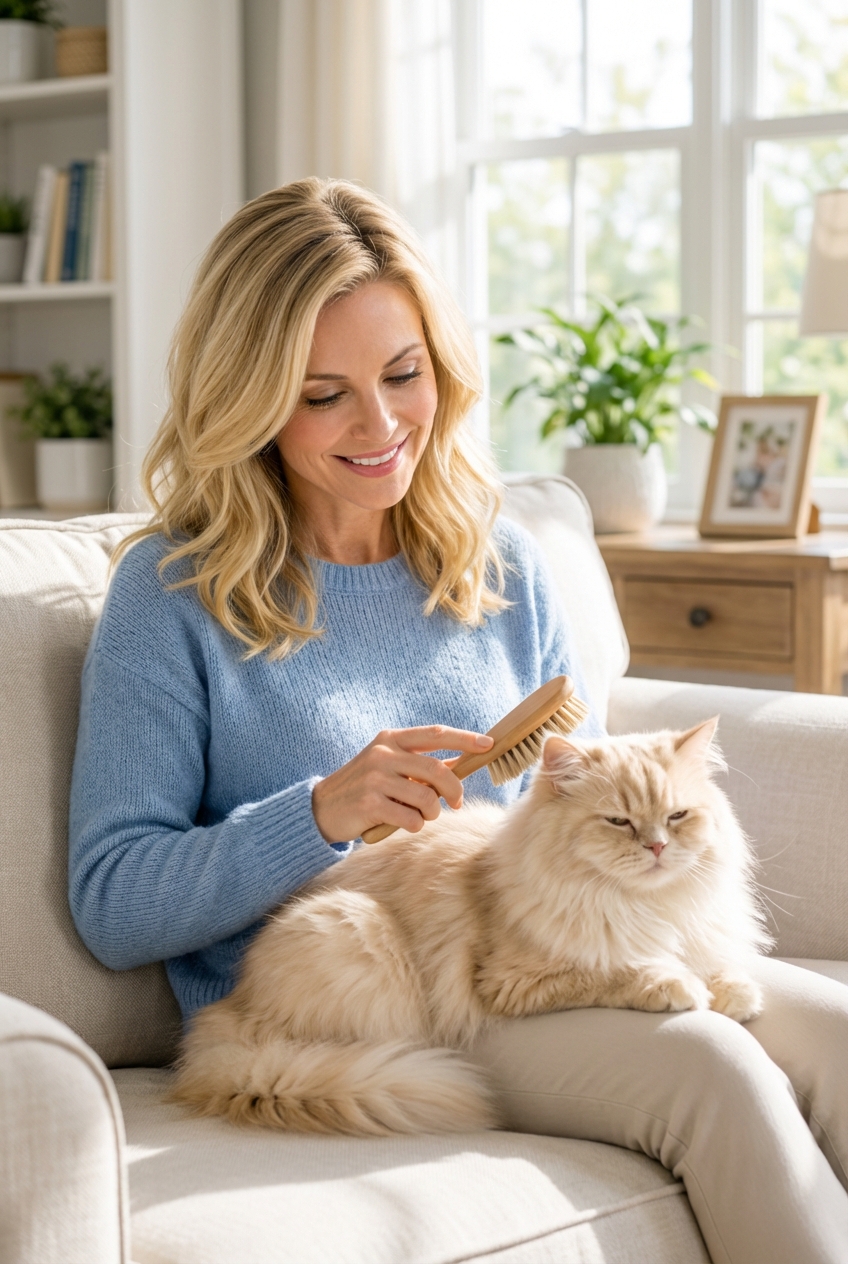
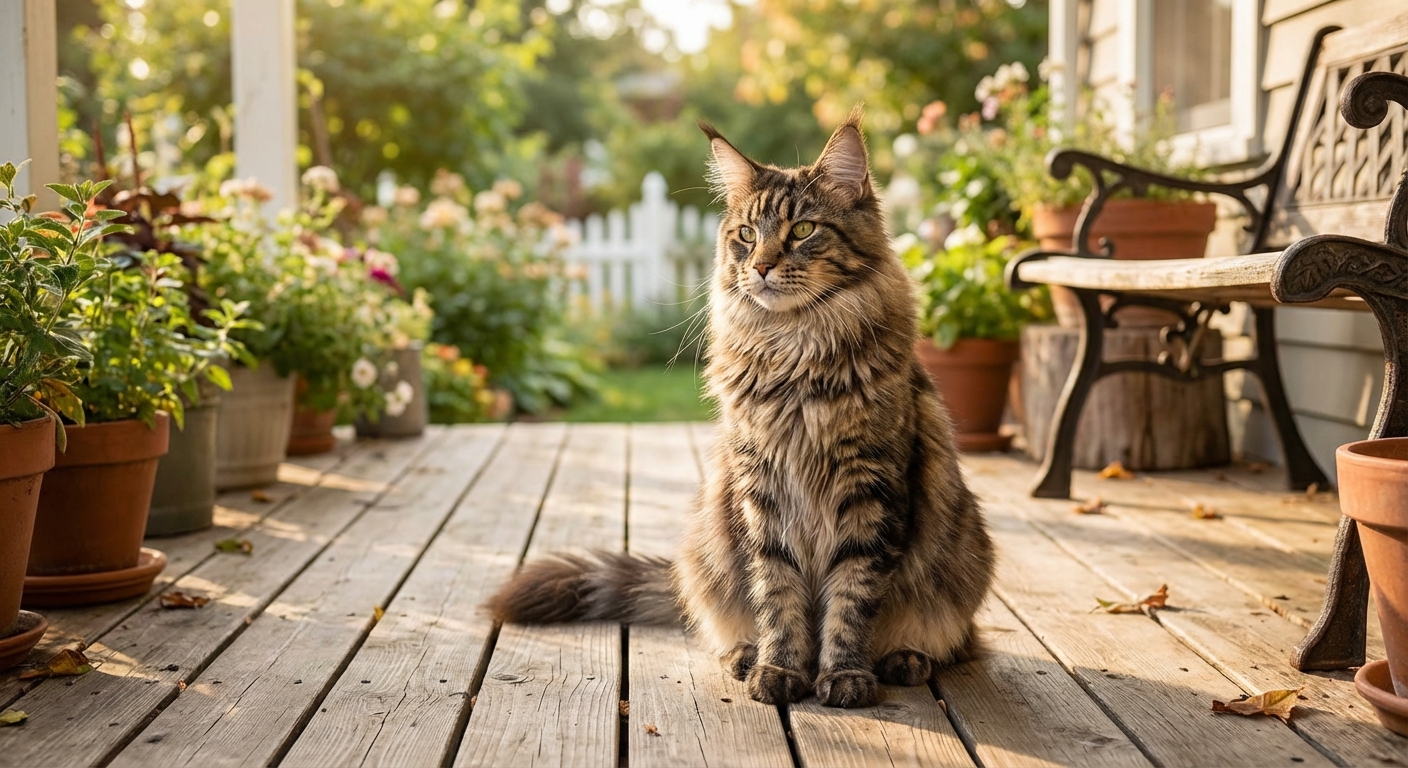
That beautiful coat is not “set it and forget it.” Maine Coons have a shaggy, medium to long coat with a thicker ruff around the neck and longer hair on the belly and britches. Their fur is often less prone to matting than some long-haired breeds, but it still needs regular care.
Expect seasonal shedding, too. Many owners notice heavier shedding in spring and fall, with more brushing needed during those times.
Simple routine
- Brush 2 to 3 times per week with a slicker brush and a stainless steel comb to catch tangles close to the skin.
- Check friction zones where mats start: behind the front legs, at the neck and collar line, and around the hindquarters.
- Trim nails every 2 to 4 weeks and look at ears weekly for wax buildup.
- Consider sanitary trims if litter sticks to the fur, especially for seniors or cats with mobility issues.
If you find a mat, avoid scissors close to the skin. Cat skin tears easily. A groomer or veterinary team can help remove mats safely.
Hairballs: Regular brushing, good hydration (many do well with a fountain), and a vet-approved diet plan can help. If you notice frequent vomiting, constipation, or a sudden spike in hairballs, check in with your clinic.
How big and when they mature
Maine Coons are slow growers. Many do not fully mature until 3 to 5 years of age. That longer growth window is one reason nutrition and weight management matter.
Instead of focusing only on pounds, look at body condition:
- You should be able to feel ribs with gentle pressure.
- They should have a visible waist when viewed from above.
- From the side, there should be a slight abdominal tuck.
Because they are naturally large, Maine Coons can become overweight without it being obvious, especially under all that fluff. One practical habit that helps is a monthly weigh-in at home (or at the clinic) so you can spot trends early.
Personality and home life
Maine Coons tend to do best in homes that enjoy interaction. Many are “helpers” who supervise cooking, computer work, and bedtime routines. They are often good candidates for puzzle feeders, clicker training, and gentle leash training if started early.
Enrichment that works
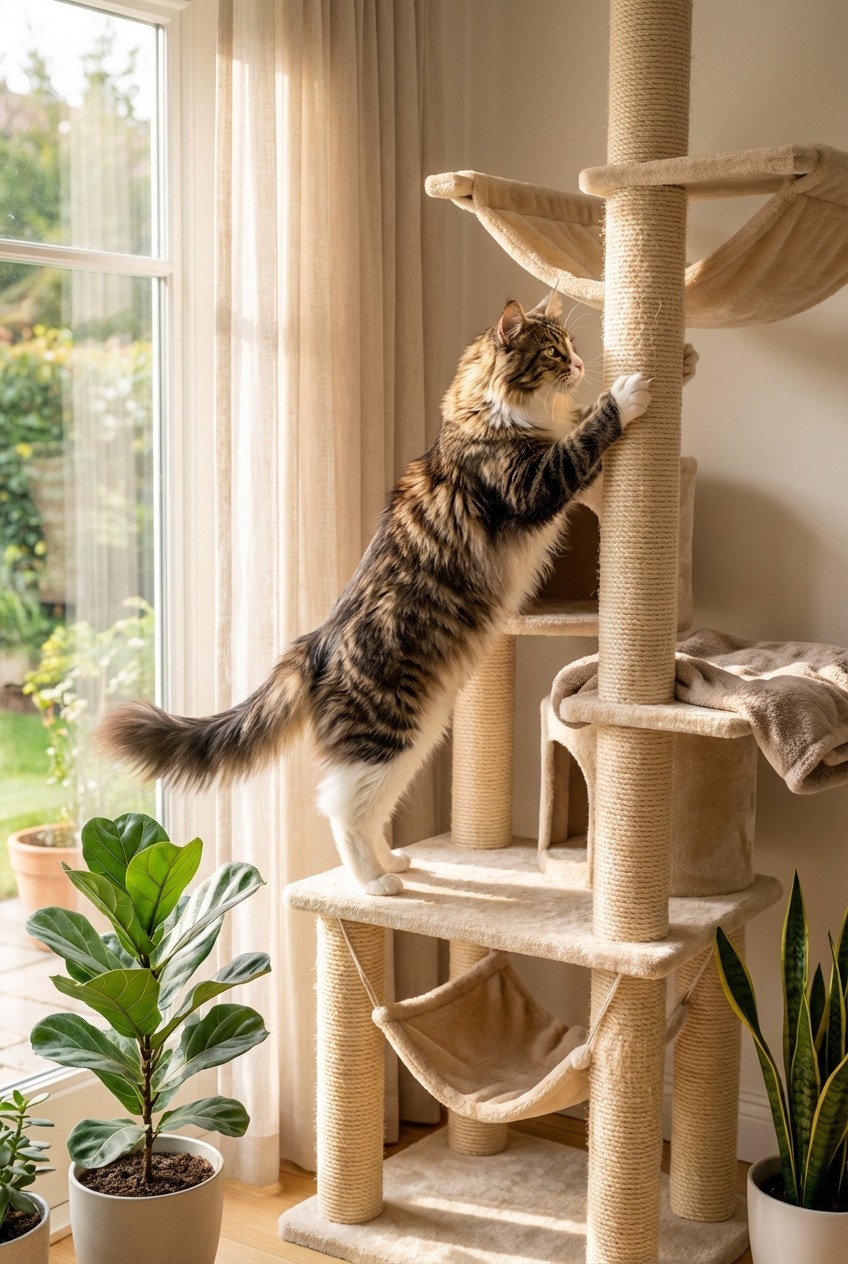
- Tall, sturdy cat trees with wide platforms that support their size.
- Interactive play once or twice daily using wand toys to mimic hunting.
- Water options like dripping faucets or a pet fountain, since many Maine Coons love running water.
- Scratching surfaces both vertical and horizontal, placed near resting areas.
Lifespan and real-world costs
Maine Coons often live around 10 to 15+ years , with longevity influenced by genetics, preventive care, indoor lifestyle, and luck. Planning ahead makes life easier with a cat this large.
- Bigger gear: Many need an oversized carrier, a wide cat tree, and sturdy scratching posts.
- Litter box sizing: A large, high-sided box helps. Some families use under-bed storage bins (cleaned and dedicated for pets) as budget-friendly “jumbo” boxes.
- Ongoing costs: Larger cats tend to go through more food and litter. Some families also budget for heart screening, especially if their line has HCM risk.
Health: what to watch for
Most Maine Coons are healthy, but like many purebred cats, they have a few conditions that are important to know about. If you choose a breeder, ask what health testing they perform and request documentation.
Common concerns
- Hypertrophic cardiomyopathy (HCM): A form of heart disease seen in cats. Some lines have genetic risk. Genetic testing exists for certain known mutations, but it does not rule out HCM in all cats. Echocardiograms remain an important screening tool, especially for breeding cats or cats with a concerning history.
- Hip dysplasia: Less common in cats than dogs, but it can be seen, particularly in larger breeds. Watch for stiffness, reluctance to jump, or changes in gait.
- Spinal muscular atrophy (SMA): A genetic condition reported in the breed. Many cats with SMA can still have a good quality of life, but it should be disclosed and tested for in breeding programs.
- Dental disease: Like all cats, they benefit from dental-friendly routines and professional cleanings when recommended.
Clinic note: I always tell families not to wait on subtle changes. Maine Coons are tough and can hide discomfort well.
When to call your veterinarian: open-mouth breathing, sudden hiding, decreased appetite, weight loss, fainting, or a noticeable drop in activity are never “just aging.”
Nutrition tips
Maine Coons do well on a complete and balanced diet that supports lean muscle. Because they are large and slow to mature, avoiding overfeeding during the long “teen” phase is key.
Practical guidance
- Prioritize protein from reputable cat foods that meet AAFCO (or equivalent) nutritional standards for your region.
- Use a kitchen scale for portioning. Measuring cups can creep upward over time.
- Wet food can help hydration, which supports urinary health in many cats.
- Limit treats to under 10 percent of daily calories.
If you are considering homemade diets for your cat, please talk with a veterinarian or a board-certified veterinary nutritionist first. Cats have specific needs for nutrients like taurine, and deficiencies can become serious.
Getting one: breeder or rescue
You can find Maine Coons through responsible breeders, breed-specific rescues, and sometimes shelters. No route is automatically perfect. What matters is transparency, health support, and appropriate care.
Signs of a responsible source
- They discuss known breed health risks openly.
- They provide veterinary records and clear contracts.
- Kittens are well-socialized in a home environment, not raised in isolation.
- They do not rush you or avoid questions about health testing.
Red flags
- Multiple litters always available with no waiting list.
- No questions asked about your home or experience.
- Refusal to share health testing information.
- Kittens leaving very young. Most should stay with mom and littermates until at least 12 weeks, and often longer is better for social development.
Is this breed right for you?
A Maine Coon can be an amazing companion if you enjoy a social, playful cat and are ready for the grooming, space, and long-term veterinary care that can come with a larger breed.
If you want a cat that is often friendly with visitors, loves interactive play, and has that unmistakable “luxury coat” look, the Maine Coon is absolutely worth considering. Just go in with your eyes open, plan for preventive care, and choose your source carefully.
Tip from the clinic: bring your Maine Coon kitten in early for “happy visits.” Short, positive trips to the vet for treats and gentle handling can make a huge difference when they are full-grown and strong.