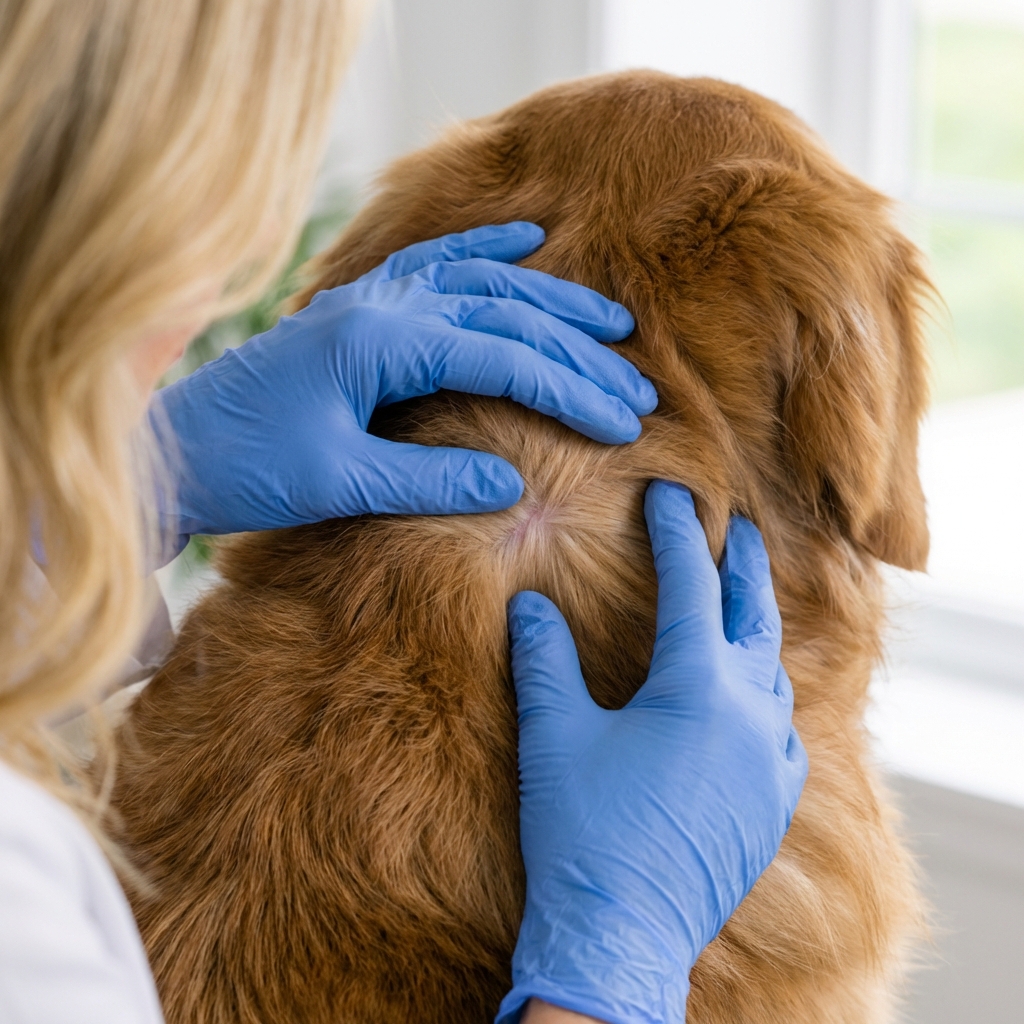
Spot the most supported Lyme disease signs in dogs—shifting-leg lameness, joint swelling, fever, fatigue, and appetite loss—plus what to do, testing, tre...
Article
•
Designer Mixes
Lyme Disease Symptoms in Dogs: Key Facts and Tips

Shari Shidate
Designer Mixes contributor
As a veterinary assistant here in Frisco, Texas, I see a lot of tick worries, especially when the weather warms up and our dogs are out exploring trails, parks, and backyards. Lyme disease can feel confusing because symptoms can be subtle, come and go, or look like other common issues. The good news is that with a little know-how, you can spot red flags early, talk with your veterinarian sooner, and keep your pup protected.
What Lyme disease is
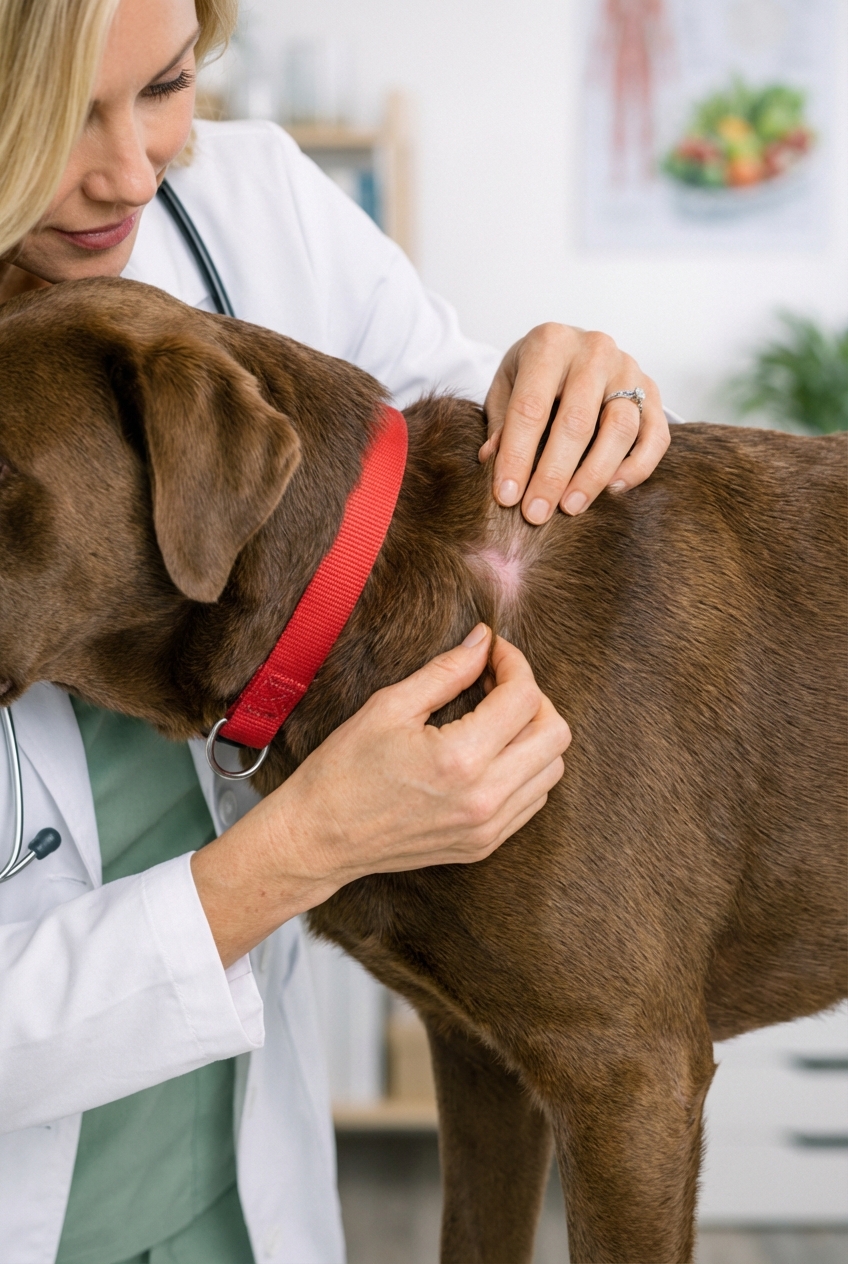
Lyme disease is an infection caused by the bacterium Borrelia burgdorferi. In the U.S., dogs usually get exposed through the bite of an infected black-legged tick (often called a deer tick). In many cases, meaningful transmission requires the tick to be attached for about 24 to 48 hours, which is why daily tick checks and prompt removal matter so much.
One important note: not every dog exposed to Lyme will get sick. Some dogs test positive and never develop symptoms. Others can develop painful joints or, more rarely, serious kidney complications.
Lyme symptoms in dogs
Lyme signs can start weeks to months after a tick bite, which is one reason it can be easy to miss. Here are the most common symptoms veterinarians see:
- Lameness that shifts from leg to leg (limping that seems to “move”)
- Stiffness or reluctance to move, especially after rest
- Swollen, painful joints
- Fever
- Low energy or acting “not quite right”
- Decreased appetite
- Enlarged lymph nodes (sometimes)
Because these signs overlap with other issues (sprains, arthritis, other tick-borne diseases), it is always worth a vet visit if symptoms last more than a day or two, repeat, or worsen.
When it is urgent
Most symptomatic Lyme cases respond well to antibiotics when caught early. But a small percentage of dogs can develop kidney involvement sometimes called Lyme nephritis. This can be associated with protein loss through the kidneys and can be life-threatening. Seek veterinary care right away if you notice:
- Vomiting or ongoing nausea
- Diarrhea
- Significant lethargy (your dog is hard to rouse or unusually weak)
- Increased thirst and urination
- Weight loss
- Swelling of legs or face (fluid retention can be a red flag)
If your dog has known tick exposure and these symptoms show up, do not wait it out at home.
Key facts to know
1) A positive test does not always mean illness
Common in-clinic screening tests (like a SNAP 4Dx) often detect antibodies, which tells us a dog was exposed, not necessarily that Lyme is causing today’s limp or fever. Your veterinarian may recommend additional testing and will interpret results alongside symptoms and risk factors. If a dog is sick or the Lyme result is a concern, your vet may also suggest labwork and a urine check to look for signs of kidney involvement, including protein loss.
2) Ticks can be in your neighborhood
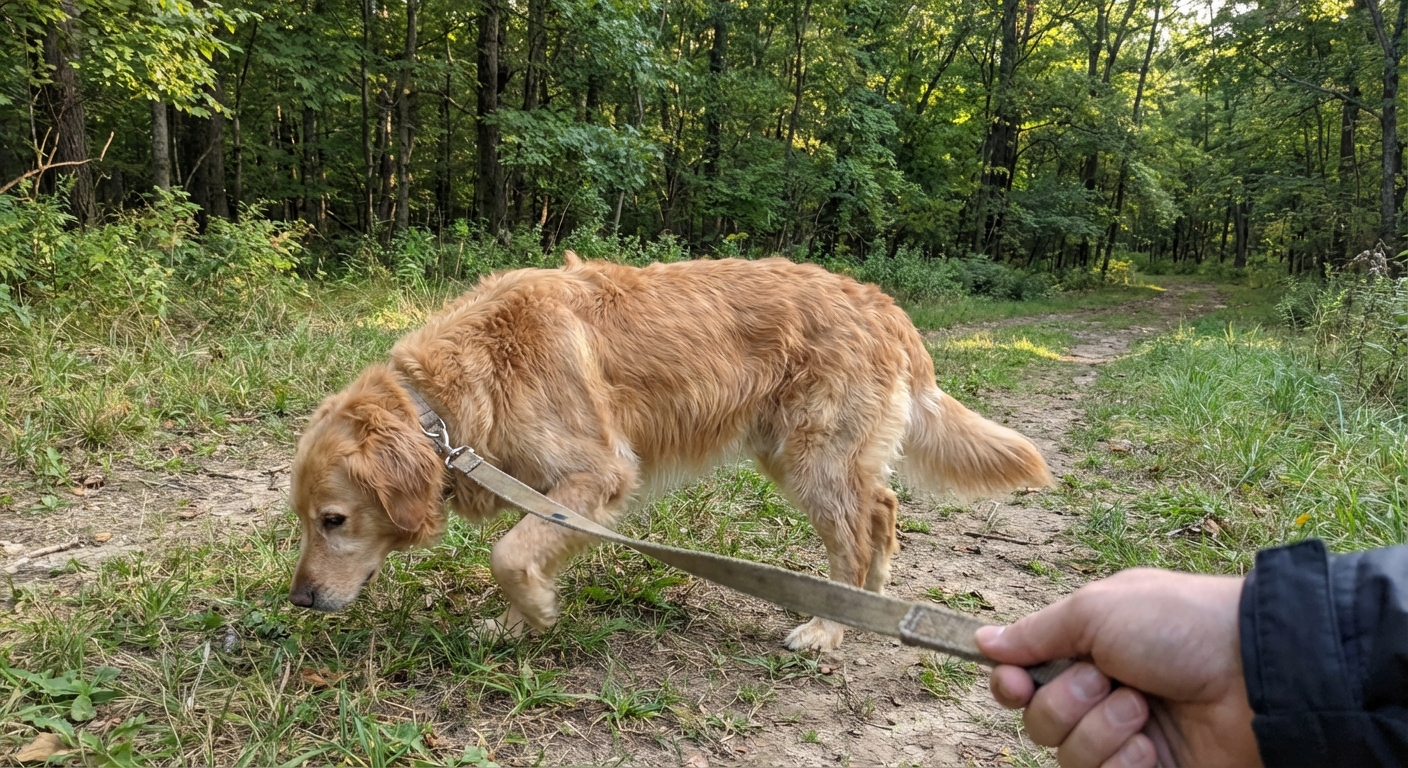
Many ticks thrive in grassy edges, leaf litter, and landscaping. That means neighborhood walks, fenced yards, and dog parks can still be risk zones.
3) Tick season can feel year-round in North Texas
In North Texas, we can get long stretches of mild weather where ticks stay active. Prevention is typically an all-year conversation here, not just a summer one.
4) Texas nuance matters
Lyme disease is generally more common in the Northeast and Upper Midwest than it is here. That said, risk in Texas is not zero, especially with travel, changing tick ranges, and dogs that spend a lot of time outdoors. Locally, we also see other tick-borne diseases like Ehrlichia, Anaplasma, and RMSF, which can look similar at first.
5) Lyme is not spread directly from dog to you
Dogs do not pass Lyme disease directly to people through casual contact. The practical household risk is that ticks can hitch a ride into your home on pets, so tick prevention and tick checks protect everyone.
At-home tips
Do a daily tick check
Focus on the warm, hidden spots ticks love:
- Inside and around ears
- Under the collar
- Armpits and groin
- Between toes
- Under the tail
- Along the belly and chest
Remove ticks safely
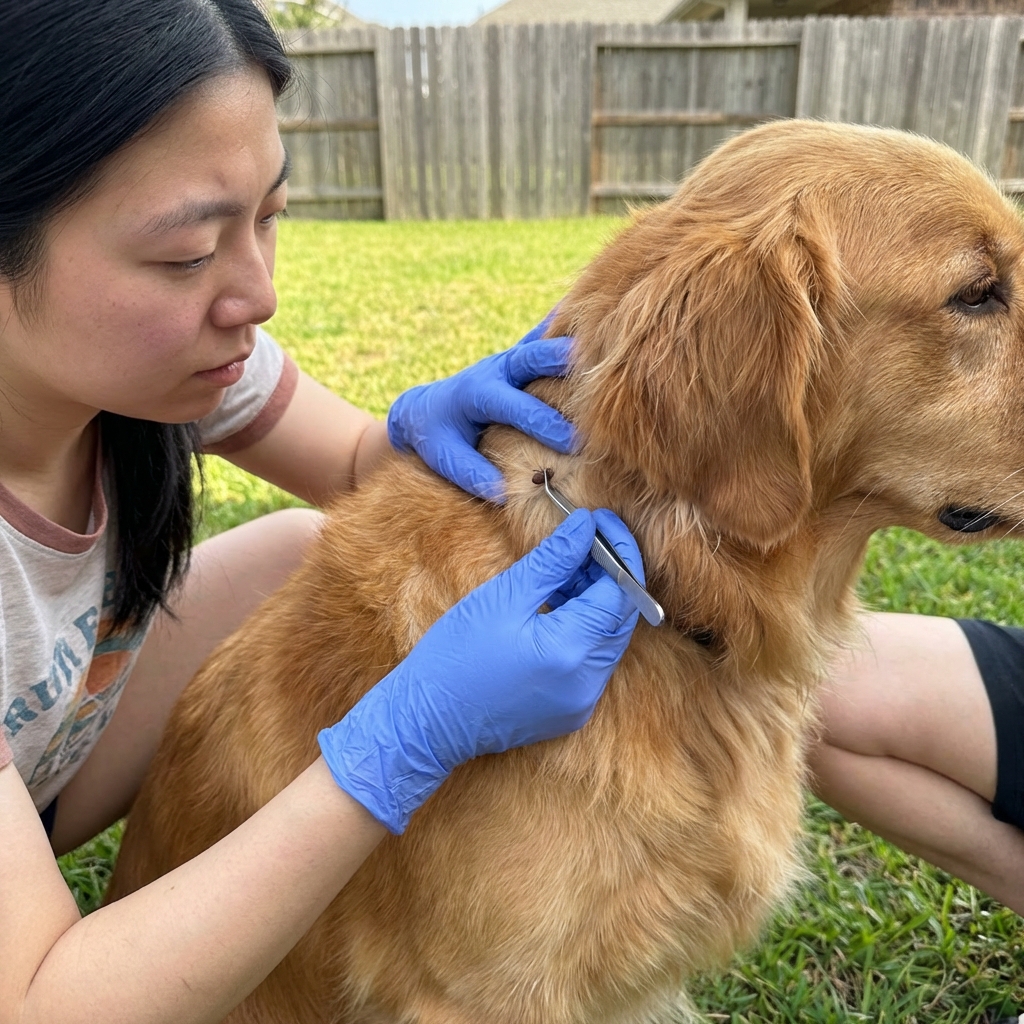
Use fine-tipped tweezers or a tick removal tool. Grasp close to the skin and pull straight out with steady pressure. Avoid twisting, crushing, or using home remedies like oil, petroleum jelly, or heat, since these can irritate the tick and may increase the risk of pathogen transmission.
After removal, clean the bite area with soap and water (or pet-safe antiseptic), wash your hands, and jot down the date and where on your dog you found the tick. If you can, save the tick in a sealed container or bag with a little rubbing alcohol in case your veterinarian wants to identify it later.
Keep a simple symptom journal
If your dog is limping or seems “off,” jot down:
- Which leg is affected and when it started
- Energy level and appetite changes
- Any fever (if your clinic has shown you how to check)
- Recent hikes, travel, grooming visits, or daycare days
This little record can be surprisingly helpful when your veterinarian is narrowing down causes.
When to ask about testing
Consider a veterinary visit and tick-borne screening if your dog:
- Has a new limp or joint pain with no clear injury
- Has fever and low energy after tick exposure
- Lives in or travels to an area with higher tick activity
- Has a known tick bite and develops symptoms weeks later
Your veterinarian may also recommend routine screening as part of annual wellness care, especially for dogs with frequent outdoor exposure.
What treatment can look like
If your veterinarian suspects Lyme disease based on symptoms, exposure risk, and testing, treatment often involves an antibiotic such as doxycycline. Many dogs with joint pain start feeling better quickly, but it is still important to give medication exactly as prescribed and finish the full course. Your vet may also recommend pain relief and follow-up testing depending on your dog’s signs and overall health.
Prevention basics
1) Veterinary tick prevention
Use a vet-recommended tick preventive consistently. There are excellent options in oral and topical forms, plus tick collars for certain situations. What is best depends on your dog’s lifestyle, age, and health history.
Quick safety reminder: only use products labeled for dogs, and be extra cautious if you have cats at home. Some dog tick products (especially those containing permethrin) can be dangerous to cats.
2) Lyme vaccine when appropriate
Lyme vaccination can be a helpful layer of protection for dogs in higher-risk areas or dogs that travel. It is not a replacement for tick prevention. Talk with your veterinarian about your dog’s personal risk.
3) Yard and routine habits
- Keep grass trimmed and remove leaf piles
- Create a simple barrier between wooded edges and play areas (like gravel or mulch)
- Check your dog after outdoor time, especially after tall grass or brush
Quick reassurance
If you are worried your dog might have Lyme disease, you are not overreacting. Early action can make a big difference, and many dogs respond very well to treatment when diagnosed promptly. Start with a call to your veterinarian, keep up with tick prevention, and make tick checks part of your daily cuddle routine.
Tip from the clinic: if your dog suddenly seems stiff, painful, or reluctant to jump into the car, treat it like a real symptom. “Just getting older” should never be the only explanation without a quick check-in.