
Chicken and rice can soothe mild stomach upset and help dogs transition back to normal food. Learn safe recipes, portions, how long to feed it, and when to c...
Article
•
Designer Mixes
Lyme Disease In Dogs: Symptoms Explained

Shari Shidate
Designer Mixes contributor
As a veterinary assistant here in Frisco, Texas, I can tell you that Lyme disease is one of those illnesses that can sneak up on even the most attentive pet parents. Some dogs show obvious signs, while others look mostly fine until a flare-up hits. The good news is that when you know what to watch for, you can get help quickly and protect your dog’s long-term health.

What Lyme disease is (and how dogs get it)
Lyme disease is caused by a spiral-shaped bacterium called Borrelia burgdorferi. Dogs typically get infected after a bite from an infected black-legged tick (also called a deer tick). In the U.S., the main vectors are Ixodes species (especially Ixodes scapularis in the East and Ixodes pacificus in the West).
Important detail: transmission often requires the tick to be attached for many hours, commonly cited as about 24 to 48 hours. However, earlier transmission is possible depending on the tick and feeding stage. That is why fast tick checks and prompt removal matter so much.
Lyme is most common in the Northeast and Upper Midwest. It is reported in Texas, but risk varies a lot by location. Around DFW, we often think about exposure through travel, boarding, and hikes in higher-risk regions, along with the fact that ticks can hitch rides on people, pets, and gear.
One more reassurance: Lyme is not spread directly from dog to dog or dog to human. Ticks are the route of transmission.
Lyme disease symptoms in dogs
One of the most confusing parts of Lyme disease is timing. Symptoms can show up weeks to months after a tick bite, and many dogs never show noticeable signs at all. When symptoms do appear, they often come and go.
Most common signs veterinarians see
- Lameness that shifts from leg to leg (your dog seems sore in one leg, then a different one later)
- Joint swelling and stiffness, especially after rest
- Decreased energy or reluctance to play, jump, or go on walks
- Fever
- Reduced appetite
- General discomfort such as trembling, sensitivity to touch, or acting off
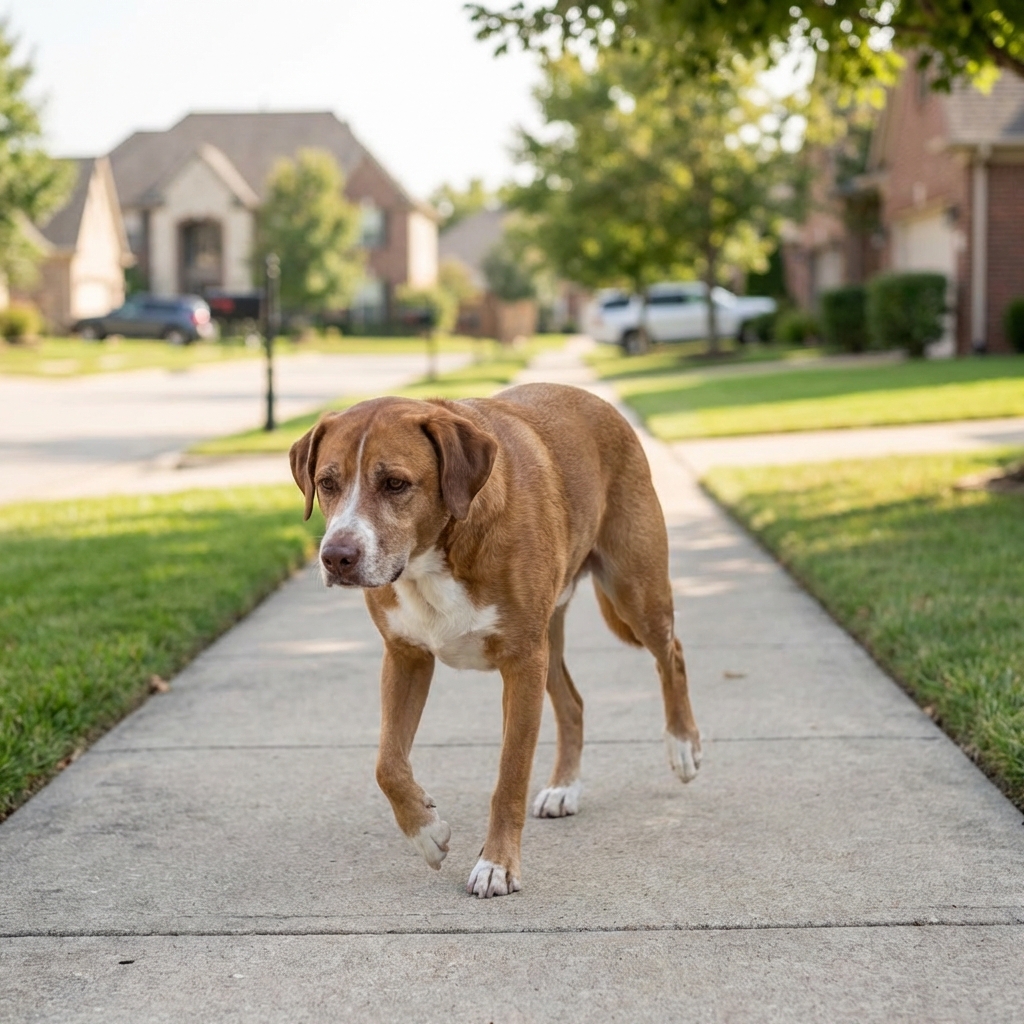
Less obvious symptoms that still matter
- Back or neck pain (crying when turning, reluctance to climb stairs)
- Enlarged lymph nodes (you might notice swelling under the jaw or in front of the shoulders)
- Behavior changes like irritability or wanting to be alone
A serious complication: Lyme kidney disease
A small percentage of infected dogs can develop kidney involvement, sometimes called Lyme nephritis. This is a medical emergency. Contact your veterinarian right away if you notice:
- Vomiting or persistent nausea
- Diarrhea
- Marked lethargy
- Increased thirst and urination
- Weight loss
- Loss of appetite
- Swollen limbs (fluid buildup)
Trust your instincts. If your dog suddenly seems painful, tired, or not themselves, it is always worth a call to your vet, even if you never saw a tick.
Lyme vs. other tick-borne diseases
Lyme disease symptoms can look like arthritis, an injury, or other tick-borne illnesses such as ehrlichiosis, anaplasmosis, and Rocky Mountain spotted fever. It is also possible for dogs to be exposed to more than one tick-borne disease at the same time.
That is why diagnosis is not based on symptoms alone. Your veterinarian will consider:
- Your dog’s tick exposure risk (yard, trails, travel history)
- Physical exam findings (joint pain, fever, swelling)
- Bloodwork and urine testing
- Tick-borne disease screening tests

How veterinarians test for Lyme
Many clinics use an in-house screening test that checks for antibodies to Lyme (often a C6-based test). A positive result means your dog has been exposed at some point, but it does not always prove Lyme is the cause of today’s symptoms.
To get the full picture, vets may recommend additional testing, such as:
- Quantitative C6 or other lab-based antibody testing (your clinic may call this a QC6 or a Lyme titer) to better assess antibody levels
- Baseline bloodwork to look for inflammation and overall organ function
- Urinalysis and sometimes a urine protein test to evaluate kidney health
If your dog tests positive but feels great, some veterinarians recommend monitoring, prevention, and periodic kidney checks rather than automatically treating. Other veterinarians prefer treatment based on individual risk. The best plan depends on symptoms, overall health, current guidance, and especially kidney risk factors, so this is a great place to ask your vet what they recommend and why.
Treatment: what to expect
When Lyme disease is causing clinical signs, veterinarians commonly treat with antibiotics (often doxycycline). Many dogs start feeling better within a few days, especially when joint pain and fever are the main issues.
Your veterinarian may also recommend pain control and rest while inflammation calms down. Finish the full medication course even if your dog seems back to normal.
If kidney involvement is suspected, treatment becomes more urgent and intensive and may involve hospitalization and supportive care.
What to do if you find a tick
- Remove it promptly with fine-tipped tweezers. Grasp close to the skin and pull straight out with steady pressure.
- Clean the area with pet-safe antiseptic, and wash your hands.
- Save the tick or take a photo if you can. A clear picture can help with identification.
- Watch for symptoms over the next several weeks, especially limping, fever, and fatigue.
- Check everyone after outdoor time. If a tick is on your dog, it may have hitched a ride on a person too.
Avoid twisting, crushing the tick, or using home remedies like oils or heat. Those methods can make removal harder.
When to call your vet right away
Please call your veterinarian promptly if your dog has any of the following:
- Sudden limping or reluctance to walk
- Fever, lethargy, or not eating for more than a day
- Swollen joints or obvious pain
- Vomiting, diarrhea, or signs of dehydration
- Increased drinking and urinating, especially with a positive Lyme test history
If your dog is struggling to stand, has repeated vomiting, or seems severely weak, treat it as urgent.
Prevention: a vet-recommended plan
Prevention is where you can make the biggest difference. Here is what I recommend to families I talk with in clinic, based on common veterinary guidance. The bonus is that these steps help protect against multiple tick-borne diseases, not just Lyme.
1) Use a vet-recommended tick preventive
Talk with your veterinarian about the best option for your dog, including chewables, topicals, and tick collars. The best product is the one your dog will reliably receive on schedule.
2) Do regular tick checks after outdoor time
Risk can be seasonal in many regions, but in warmer climates ticks can be active for long stretches of the year. Make tick checks a routine, especially after time in brush, tall grass, or wooded areas.
Focus on warm hiding spots:
- Inside and around the ears
- Under collars and harnesses
- Armpits, groin, and between toes
- Along the tail base

3) Remove ticks quickly and correctly
Use fine-tipped tweezers, grasp close to the skin, and pull straight out with steady pressure. Avoid twisting, crushing the tick, or using home remedies like oils or heat.
4) Ask your vet about the Lyme vaccine
The Lyme vaccine can be a helpful layer of protection for dogs with higher exposure risk, especially those who travel or spend time in known higher-risk areas. It is not a replacement for tick prevention, but it can be part of a smart plan depending on where you live and your dog’s lifestyle.
Supporting your dog during recovery
Along with veterinary treatment, you can help your dog heal comfortably:
- Keep activity gentle for a bit, especially if joints are painful
- Maintain a healthy weight to reduce stress on sore joints
- Offer plenty of fresh water and encourage rest
- Give medications exactly as prescribed and report side effects quickly
Nutrition matters, too. A balanced diet supports the immune system and helps maintain lean muscle, which protects joints. If you want to add whole foods or switch diets, go slowly and run changes by your vet, especially if kidney concerns are on the table.
Quick symptom checklist
If you want a simple way to remember the most common signs, keep this list handy:
- Shifting leg lameness
- Stiffness or swollen joints
- Fatigue and less interest in play
- Fever
- Not eating like normal
- Vomiting or increased thirst and urination (urgent)
The bottom line is that Lyme disease can look like simple soreness at first, but it deserves attention. With quick veterinary care and consistent tick prevention, most dogs do very well.