Know the real-world signs of Lyme disease in dogs—shifting lameness, stiffness, fever, swollen joints, and kidney red flags—plus vet testing, treatment, ...
Article
•
Designer Mixes
Lyme Disease in Dogs: Symptoms and What to Do

Shari Shidate
Designer Mixes contributor
As a veterinary assistant here in Frisco, Texas, I can tell you this: when Lyme disease shows up in dogs, it often looks like something else at first. A little limp. A “quiet” day. A dog that just isn’t quite themselves. The good news is that when you know the well-supported signs to watch for and you act quickly, many dogs do very well with prompt veterinary care.
Let’s walk through what Lyme disease is, the symptoms that are most supported by evidence, and what you can do today to protect your dog.
What Lyme disease is (and how dogs get it)
Lyme disease is an infection caused by the bacterium Borrelia burgdorferi. Dogs typically get infected after a bite from an infected black-legged tick (often called a deer tick). In many cases, transmission requires prolonged tick attachment, often around 24 to 48 hours, which is why fast tick removal still matters.
Not every dog exposed to Lyme will become ill. Some dogs test positive and never show outward symptoms. Others develop signs weeks to months after infection, which can make the connection to a tick bite easy to miss.
One more Texas-specific note: North Texas is not considered a classic Lyme hotspot like parts of the Northeast and Upper Midwest. That said, Lyme can still occur, and I see exposure risk go up for dogs that travel, hike, camp, or spend time in tick-heavy areas. Ticks do not respect state lines, and dogs can be exposed while traveling and bring ticks home.
Lyme symptoms in dogs
Lyme disease can affect multiple body systems, but the most common, well-documented clinical signs in dogs tend to center around joints, energy level, and appetite.
Most common signs
- Lameness that shifts from leg to leg (often called shifting-leg lameness)
- Joint swelling or stiffness, especially after resting
- Reluctance to move, jump, climb stairs, or go on walks they normally enjoy
- Fever
- Low energy or noticeable fatigue
- Decreased appetite
Less common but serious signs
Some dogs develop complications that are more urgent and can be life-altering if missed.
- Kidney involvement (Lyme nephritis): increased thirst and urination, vomiting, decreased appetite, weight loss, lethargy, weakness, or fluid buildup. These can be signs of kidney disease in general, which is exactly why prompt testing matters.
- Generalized pain that makes your dog sensitive to touch
- Enlarged lymph nodes in some cases
Important note: Unlike humans, dogs do not reliably develop a classic “bullseye rash.” The lack of a rash does not rule Lyme disease out.
When symptoms show up
Timing varies. Some dogs show signs within a few weeks, while others may not show problems for months. Many dogs also have days where they seem fine and then suddenly look sore again. That up-and-down pattern is one reason Lyme can be mistaken for a simple sprain or “overdoing it” at the dog park.
What to do if you suspect Lyme
If your dog has sudden lameness, fever, or unusual fatigue, call your veterinarian. Early treatment can reduce discomfort quickly and may help prevent complications.
Before your appointment
- Write down symptoms: when they started, which leg is affected, whether it shifts, and any appetite or energy changes.
- Track the basics: temperature if you know how to do it safely, drinking and urination changes, and any vomiting or diarrhea.
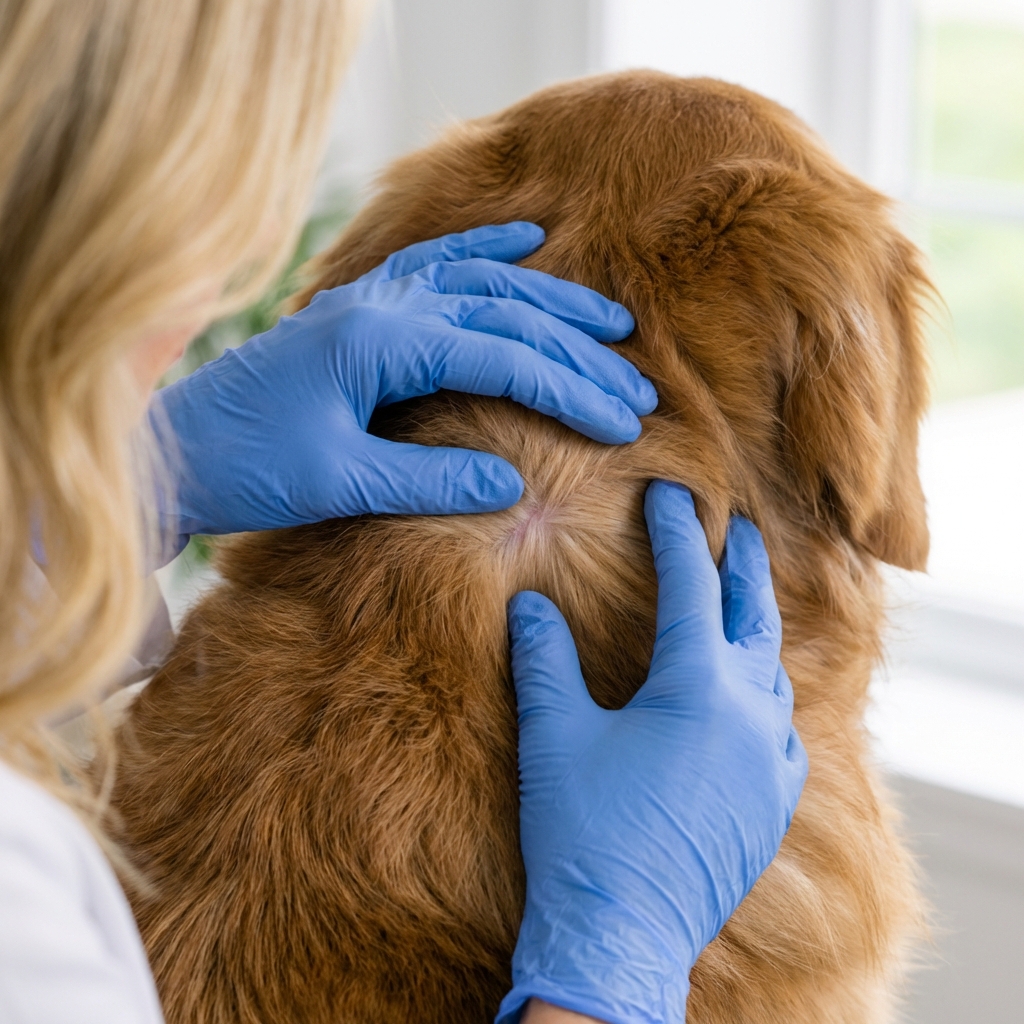
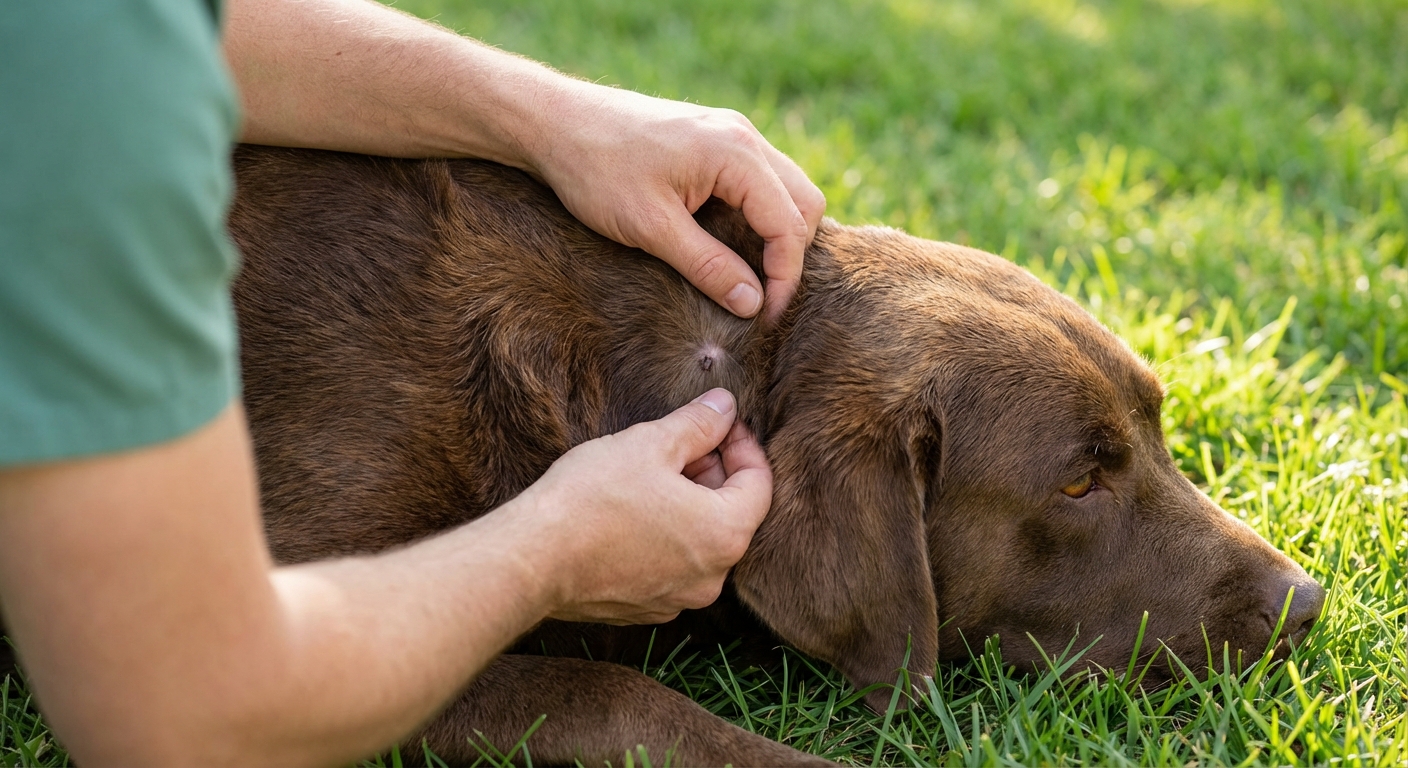
- Check for ticks and remove any you find with fine-tipped tweezers (grasp close to the skin, pull straight out). Save the tick in a sealed container if your vet wants to see it.
- Avoid giving human pain meds. Many are toxic to dogs. Ask your vet what is safe.
What your vet may ask
- Any recent travel (even a weekend trip) to more tick-dense areas
- Which tick prevention your dog is on, and whether any doses were late
- When the symptoms started and whether the limping is shifting
- Whether your dog has had a Lyme vaccine
At the vet
Your veterinarian may recommend:
- Lyme testing (often a screening blood test). Many clinics use SNAP 4Dx-type tests that detect antibodies to specific Lyme-related targets. A positive result often indicates exposure and immune response, not always active disease.
- Testing nuance: vaccination can affect some antibody tests, depending on the test type. Your vet will interpret results in context.
- Additional lab work if symptoms suggest kidney involvement (urinalysis, urine protein checks, kidney values).
- Treatment, commonly an antibiotic like doxycycline. Treatment is often given for multiple weeks. Many dogs improve quickly in terms of fever and joint pain, but follow-up may still be recommended.
Also, because ticks can carry more than one illness, your vet may consider other tick-borne diseases such as anaplasmosis or ehrlichiosis, and non-tick causes like orthopedic injuries. The symptoms can overlap, so the exam and testing help us avoid guessing.
Positive test but no symptoms
This is a very real situation. A positive antibody test can mean your dog was exposed at some point. Whether to treat an asymptomatic dog depends on risk factors, region, history, and your veterinarian’s guidance.
In our clinic, we often look at the whole picture: symptoms, physical exam, and lab work, especially urine testing to screen for early kidney changes.
How to protect your dog
Lyme prevention is about reducing tick bites and catching ticks early. In Texas, ticks are a year-round concern in many areas, with spikes during warmer months. Even with great prevention, the risk is not zero, so staying consistent and doing tick checks still matters.
1) Use vet-recommended tick prevention
Tick preventives reduce the chance a tick can stay attached long enough to transmit disease. Your vet can help you choose between oral and topical options based on your dog’s age, size, health history, and lifestyle.
2) Do daily tick checks
After walks, yard time, or hiking, check:
- Around the ears and under the collar
- Armpits and groin
- Between toes
- Under the tail
- Along the belly and chest
3) Ask about the Lyme vaccine
The Lyme vaccine can be appropriate for dogs at higher risk of exposure, especially those who travel, hike, camp, or spend time in tick-heavy environments. The decision should be individualized, and the vaccine does not replace tick prevention. Think of it as an added layer.
4) Make your yard less tick-friendly
- Keep grass trimmed and remove leaf litter
- Create a barrier (like gravel or mulch) between wooded edges and play areas
- Discourage wildlife that carry ticks (secure trash, consider fencing solutions where appropriate)
Support during recovery
Lyme disease is not something to “treat with food” alone, but supportive care matters. While your dog is recovering, focus on the basics that help the body heal.
- Hydration: fresh water available at all times. Some dogs drink more with a little low-sodium broth added.
- Gentle movement: short, controlled leash walks may be recommended once pain is under control.
- High-quality protein: supports muscle and immune function. If your dog’s appetite is low, ask your vet about enticing, bland options.
- Omega-3 fatty acids: may support joint comfort for some dogs. Ask your veterinarian for dosing guidance, especially if your dog has any bleeding risks or is on medications.
If you are feeding homemade meals, make sure they are balanced for the long term. An unbalanced diet can make recovery harder by creating nutrient gaps.
When to seek urgent care
Call your veterinarian or an emergency clinic promptly if your dog has:
- Severe lethargy or collapse
- Repeated vomiting, refusal to eat for more than 24 hours, or signs of dehydration
- Swollen limbs, difficulty breathing, or significant pain
- Signs that could indicate kidney trouble: increased thirst and urination, sudden weight loss, vomiting, weakness, or fluid buildup
Key takeaways
Lyme disease in dogs most often shows up as shifting lameness, joint pain, fever, low energy, and decreased appetite. Trust your instincts, document symptoms, and get your vet involved early.
You do not need to catch every tick to protect your dog. Consistent prevention, quick tick checks, and prompt veterinary care when symptoms appear can make a big difference in comfort and long-term health.