
Luxating Patella in Dogs

If your dog suddenly “skips” a step, then goes right back to normal like nothing happened, you are not imagining things. That classic skip or hop can be a clue to patellar luxation, a condition where the kneecap (patella) slips out of its normal groove (track). I see this a lot with small and toy breeds (and many small-breed mixes), and it can range from a mild nuisance to a painful problem that can contribute to arthritis over time.
This article focuses on medial patellar luxation (MPL), the most common type in dogs. We will walk through grading, lameness patterns, who is at risk, what conservative care really looks like, and when it is time to ask for an orthopedic referral.
One important safeguard: patellar luxation is not something you can accurately grade at home. Only a hands-on exam can determine grade and check whether other structures (like the cruciate ligament) are involved.
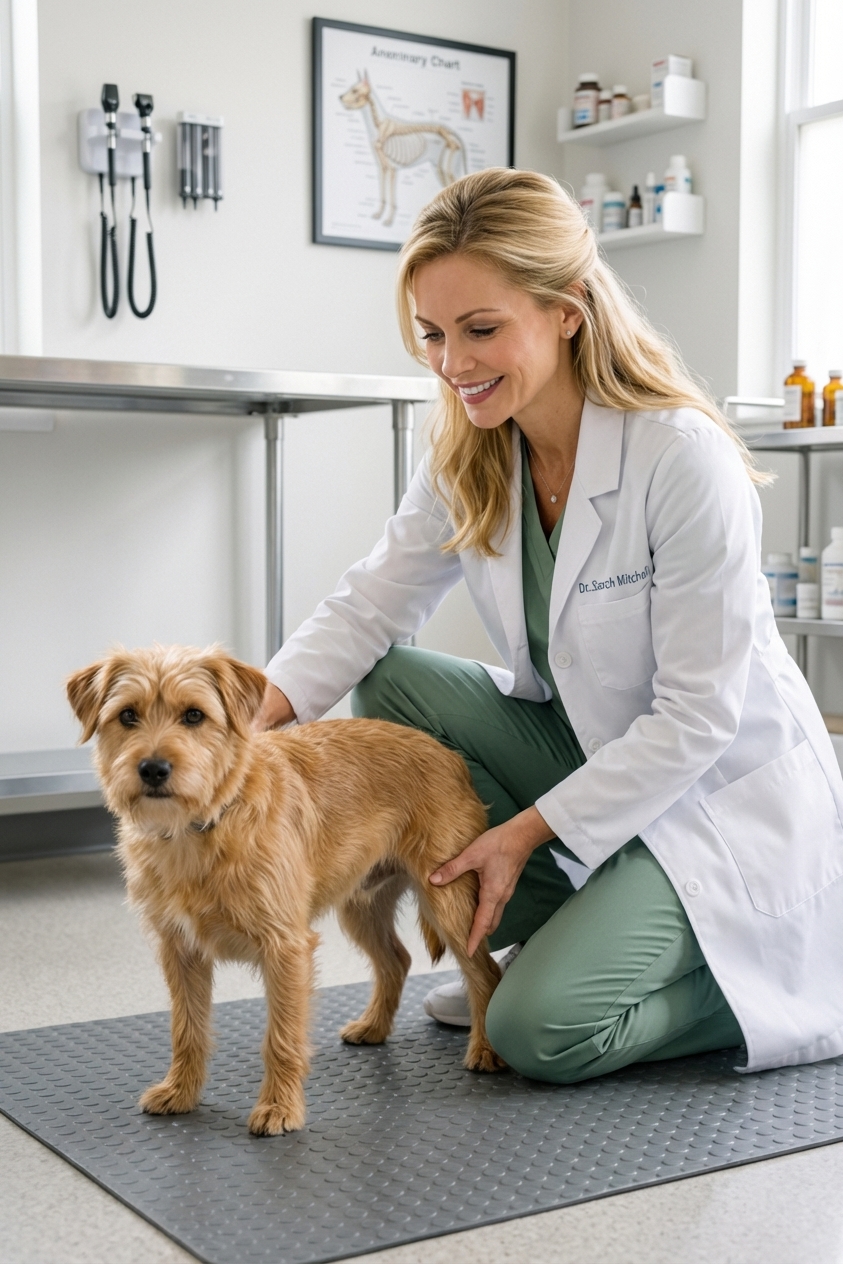
What a luxating patella is
The patella is a small bone embedded in the tendon of the quadriceps muscle group. It is designed to glide smoothly in a groove at the end of the femur called the trochlear groove. When the patella “luxates,” it moves out of that groove.
Medial vs. lateral
- Medial patellar luxation (MPL): the patella slips toward the inside of the leg. This is the most common pattern, especially in toy and small breeds.
- Lateral patellar luxation (LPL): the patella slips toward the outside of the leg. This is more often reported in larger-breed cases, though any dog can be affected.
Luxation can be developmental (related to how the limb forms as a puppy) or traumatic (after an injury). Developmental MPL is the common scenario in small breed dogs and many mixes.
Luxating patella grades (1 to 4)
Most veterinarians use a 4-grade system. The grade is based on how easily the patella can be moved out of place and how often it stays out. The grade helps guide treatment, but it is not the only factor. Pain, function, cartilage wear, and other orthopedic issues matter too.
Quick note: grading language can vary a bit by clinician and by how relaxed your dog is during the exam. If you get slightly different wording between clinics, that is common. The practical takeaway is how often it luxates, whether it stays out, and whether your dog is painful or limited.
Grade 1
- Patella is usually in place.
- It can be manually luxated during an exam, but it returns to the groove on its own.
- Many dogs have minimal signs, or occasional skipping.
Grade 2
- Patella luxates more easily and may pop out on its own.
- It may stay out briefly, then return spontaneously or with leg extension.
- Intermittent lameness is common.
Grade 3
- Patella is out of the groove most of the time.
- It can often be pushed back into place, but it will luxate again.
- Dogs may have a more consistent limp, limb “carrying,” and visible limb alignment changes.
Grade 4
- Patella is permanently luxated.
- It often cannot be manually reduced or cannot be maintained in the groove (it reluxates immediately).
- Significant skeletal deformity can be present.
- Dogs often have persistent lameness, difficulty extending the knee, and a higher risk of arthritis and other complications.
Important note: the grade is assessed during a hands-on orthopedic exam. A dog can look “fine” at home and still have a higher grade, especially if they are compensating well or if luxation is more apparent when relaxed.
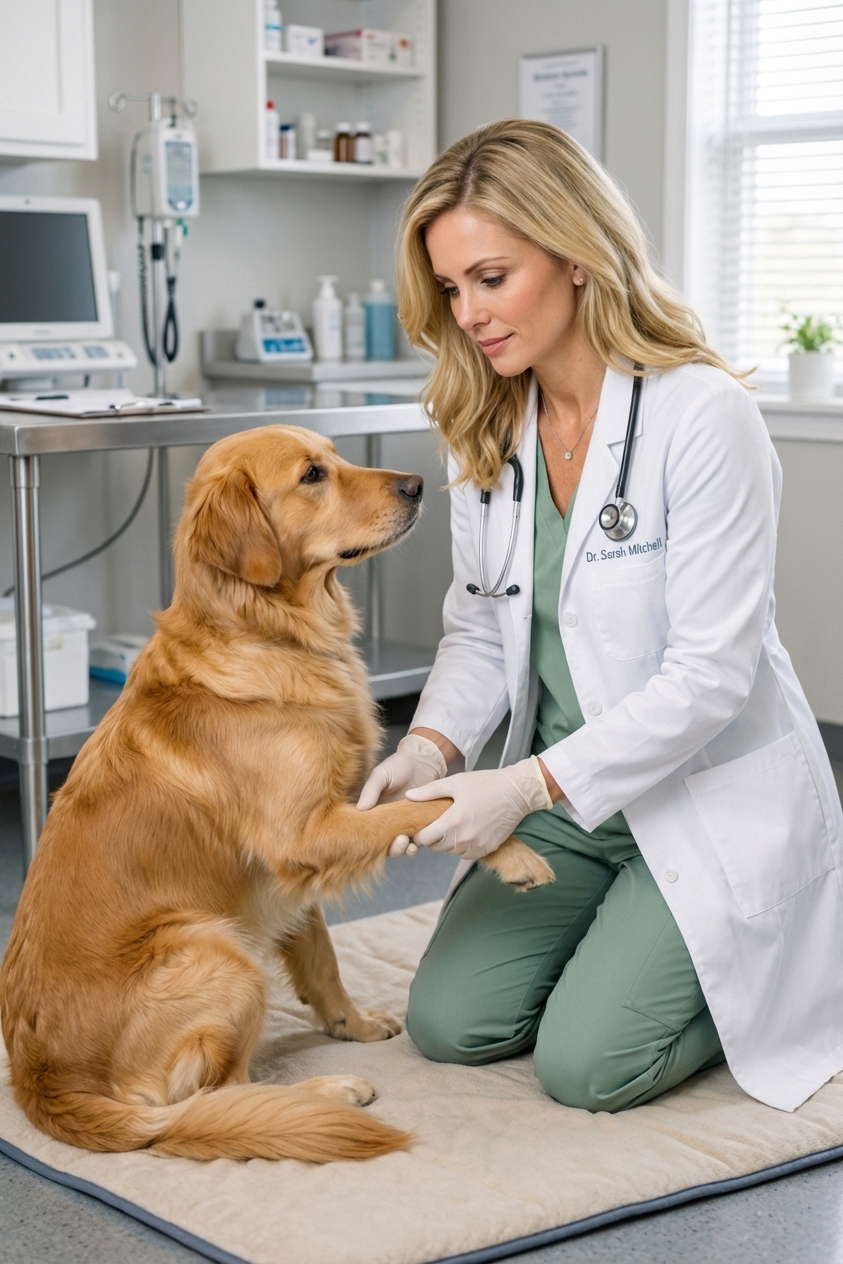
The skip or hop
Owners describe patellar luxation lameness in a few very recognizable ways. While no gait pattern is diagnostic on its own, these clues can help you know when to schedule an orthopedic evaluation.
Common patterns
- The classic “skip”: a dog runs, briefly holds up a back leg for 1 to 3 steps, then resumes normal gait. This can happen when the patella pops out and then pops back in.
- Intermittent toe-touching: the dog lightly taps the foot without fully weight-bearing, then normalizes.
- Sudden yelp then normal: some dogs vocalize when the kneecap shifts, then act fine again.
- Persistent limp: more common with higher grades, arthritis, or concurrent injuries.
- Bunny hopping: can occur with several orthopedic conditions, including bilateral (both sides) issues. Patellar luxation is one possibility, especially if the hop is inconsistent and mixed with skipping.
What can trigger more episodes
- Slippery floors
- Jumping off furniture
- High-speed turns and fast “zoomies”
- Fatigue after longer play sessions
These tend to increase twisting forces (torque), traction loss, and sudden loading through the knee. They do not necessarily “raise the grade,” but they can make skipping more frequent or more noticeable.
If you see frequent skipping, worsening lameness, or any sign of pain, it is worth getting a proper knee exam. Earlier management may help reduce wear and slow arthritis progression, especially when combined with good weight control and a smart strengthening plan.
Who is at risk
Luxating patella is commonly diagnosed in small and toy breeds, but it is not limited to them. Risk is influenced by limb conformation, genetics, activity, body condition, and whether the dog has other orthopedic conditions.
Higher risk groups
- Toy and small breeds: Pomeranian, Chihuahua, Yorkshire Terrier, Toy Poodle, Papillon, Maltese, and similar.
- Small-breed mixes: companion mixes with small-breed lineage.
- Some larger breeds: patellar luxation happens in larger dogs too, and lateral luxation is reported more often in large-breed cases.
Why size matters
In many small dogs, MPL is tied to a collection of alignment factors: a shallower trochlear groove, tibial tuberosity positioning, femoral angulation, and soft tissue tension that pulls the patella inward. Over time, repeated slipping can irritate cartilage and contribute to arthritis.
Common partners
- Cranial cruciate ligament (CCL) disease: a partial or complete CCL tear can occur alongside patellar luxation and can dramatically change pain level, stability, and treatment recommendations.
- Hip issues: especially in dogs with broader orthopedic conformation challenges.
- Generalized joint laxity: some dogs are simply more “loose” in their joints.
Also common: many small dogs have issues in both knees. Even if only one side is obvious today, your veterinarian may keep an eye on the other knee over time.
How it is diagnosed
Diagnosis starts with a full history and orthopedic exam. Your veterinarian will assess patellar tracking, range of motion, pain, and stability of other knee structures.
What tests might be recommended
- Orthopedic exam and grading
- Radiographs (X-rays) to evaluate bony alignment and arthritis, and to support surgical planning when indicated
- Advanced imaging is not always needed, but may be used in complex cases or when multiple conditions are suspected
If your dog is very tense or painful, exam findings can be harder to interpret. In some cases, a veterinarian may recommend mild sedation for a more accurate assessment and less stress for your dog.
Other causes of skipping
A skipping gait is a great reason to schedule an exam, but it is not exclusive to patellar luxation. Depending on your dog’s age, activity, and comfort, your vet may also consider:
- CCL injury (partial or complete tear)
- Iliopsoas strain or other muscle strains
- Hip dysplasia or hip pain
- Arthritis in the knee, hip, or spine
- Neurologic causes (less common, but important when weakness or knuckling is present)
This is why an in-person orthopedic assessment matters, even if the “skip” looks classic.
Surgery vs. conservative care
There is no one-size-fits-all plan. Some Grade 1 dogs do great with strengthening and lifestyle adjustments. Some Grade 2 dogs need surgery because they luxate constantly and are uncomfortable. And Grades 3 and 4 often benefit from surgical correction, especially if function is limited or deformity is significant.
When conservative care is often reasonable
- Grade 1, or mild Grade 2 with infrequent skipping
- Minimal pain on exam
- No or mild arthritis on imaging
- Good function and willingness to use the leg
- Owners able to commit to weight management and a structured strengthening plan
When a surgical referral is commonly recommended
- Grades 3 to 4 in many cases
- Frequent luxation episodes with repeated skipping
- Persistent lameness or clear pain
- Progressive arthritis or declining function
- Concurrent issues like CCL injury, significant limb deformity, or bilateral disease that is limiting mobility
Quality of life matters most
As a veterinary assistant, I always encourage families to focus on what their dog is telling them: Can they squat to potty comfortably? Are they avoiding stairs they used to do easily? Are they less playful? Those day-to-day changes often matter more than the grade alone.
If the kneecap is slipping often enough to change how your dog moves, it is worth discussing an orthopedic consult. The goal is comfortable movement for years, not just “getting by” this month.
What conservative care includes
Conservative management is not just “rest and hope.” Done well, it combines weight management, activity modification, targeted strengthening, and pain control when needed.
1) Weight and body condition
Extra pounds increase joint load. Even modest weight loss can reduce stress through the knee and improve comfort. If you are not sure about your dog’s body condition score, your veterinary team can help you set a safe target.
2) Smart activity changes
- Use ramps or steps for furniture to reduce jumping impact.
- Limit high-speed sharp turns on slick flooring.
- Add rugs or runners for traction in common pathways.
- Prefer leash walks over repeated fetch sprints if skipping is frequent.
3) Pain control and joint support
Your veterinarian may recommend anti-inflammatory medication, other analgesics, or adjuncts depending on your dog’s age and arthritis status. Some dogs also benefit from a joint supplement plan. Evidence varies by product, so it is best to choose brands your veterinarian trusts and to track measurable outcomes like willingness to play, ease of rising, and frequency of lameness.
Medication safety reminder: do not give human pain medications unless your veterinarian specifically instructs you to. Some are dangerous or even fatal to dogs.
4) Physical rehabilitation and strengthening
Rehab aims to build muscle support around the hip and knee, improve proprioception (body awareness), and reduce the “slip and catch” cycle. A rehab-trained veterinarian or canine physical therapist can tailor a plan to your dog’s grade and comfort.
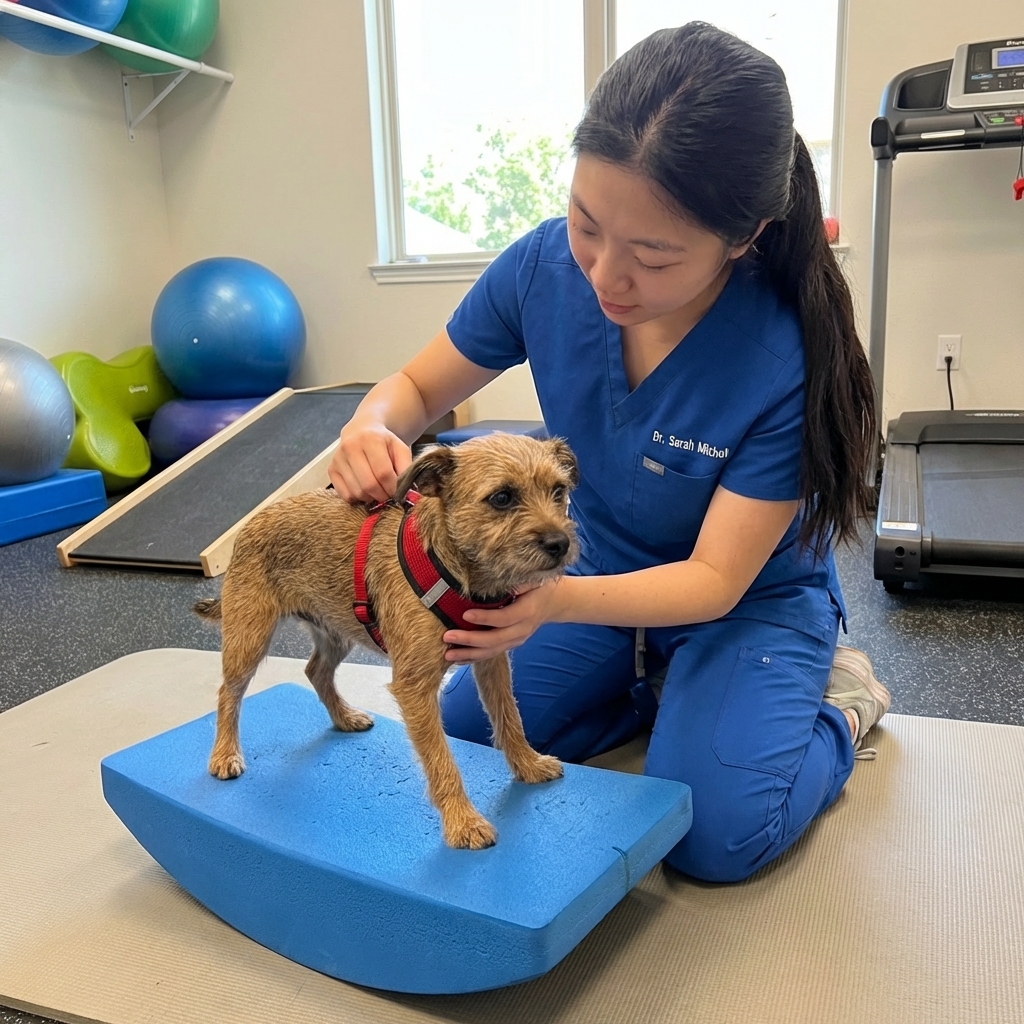
Rehab exercises overview
Always get clearance from your veterinarian before starting exercises, especially if your dog is painful, has a suspected ligament injury, or has had recent surgery.
Foundational goals
- Strengthen quadriceps, hamstrings, glutes, and core
- Improve stability and controlled knee alignment
- Increase confidence on different surfaces and during transitions
Common early-stage exercises
- Controlled leash walks: short, frequent walks are often better than one long one. Focus on steady pace and good traction.
- Sit-to-stand: slow, straight sits and stands can strengthen hindquarters. Avoid if your dog “kicks out” a leg or shows pain.
- Weight shifts: gentle side-to-side shifts while standing can activate stabilizers.
- Cavaletti poles (very low): encourages controlled stepping and proprioception when set at an appropriate height and spacing.
- Backing up a few steps: can help engage hind limb muscles, but should be taught gradually.
Therapies used in clinics
- Underwater treadmill for controlled strengthening with reduced joint load
- Therapeutic laser, manual therapy, and targeted stretching when appropriate (evidence varies by condition and protocol)
- Balance and stability equipment progression
Safety tip: exercise should not increase limping. A little muscle fatigue is okay, but worsening skipping, toe-touching, or soreness later that day means you likely need to scale back and recheck the plan.
What surgery corrects
Surgery is designed to keep the patella tracking in the groove and reduce abnormal forces that drive pain and arthritis. The exact procedure depends on the dog’s anatomy, grade, and surgeon preference.
Common surgical components
- Trochlear deepening: creates a more secure groove for the patella to ride in.
- Tibial tuberosity transposition (TTT): repositions the attachment point of the patellar tendon to improve alignment.
- Soft tissue balancing: tightening on one side and releasing on the other to center the patella.
It is normal to feel overwhelmed by surgical terms. A good orthopedic team will explain what your dog needs and why, plus expected recovery timeline and rehab requirements.
Typical recovery timeline (general)
- First 2 weeks: strict rest and controlled leash potty breaks only, with incision checks and pain control as directed.
- Weeks 2 to 8: gradual increase in short leash walks and guided rehab exercises, plus one or more rechecks to ensure healing and safe progression.
- After 8 weeks: many dogs transition to longer walks and more strengthening, but full conditioning can take a few months depending on the procedures performed and whether both knees are involved.
Your surgeon’s timeline always wins. Age, body condition, procedure choice, and whether there is concurrent CCL disease can all change the plan.
Possible risks (high level)
Every surgery has potential complications. With patellar luxation repair, risks can include infection, delayed healing, implant issues, stiffness, reluxation, and the need for closely guided rehab. Your surgeon can tell you what is most likely for your dog’s specific grade and anatomy.
Prognosis
Many dogs do very well with appropriate management. Mild cases can often be managed comfortably with weight control, traction changes at home, and strengthening. When surgery is recommended and rehab is followed closely, many dogs see improved comfort and function. Arthritis risk does not disappear completely, but good alignment, muscle support, and long-term weight control can make a meaningful difference.
Questions to ask your vet
- What grade is it, and is it medial or lateral?
- Is my dog painful on exam, or is it mainly mechanical skipping?
- Are there signs of arthritis already?
- Do you suspect a cruciate ligament problem too?
- Is the other knee affected or at risk?
- What would a conservative plan look like for the next 6 to 8 weeks?
- What changes would make you recommend surgery?
- If surgery is recommended, what procedures are planned and what is the rehab schedule?
When to seek care quickly
Patellar luxation is often chronic and intermittent, but some signs deserve prompt veterinary attention:
- Sudden non-weight-bearing lameness that does not improve within 24 hours
- Swelling around the knee
- Repeated yelping or obvious pain when touched
- New weakness in both back legs or difficulty standing
- Any concern for injury after a fall or collision
If you are unsure, it is always okay to call your veterinary clinic. Catching a secondary issue early, like a CCL injury, can change the whole plan.
The bottom line
Luxating patella is common, especially in small dogs and many mixes, and it often shows up as that unmistakable skip or hop. The grading system is helpful, but your dog’s comfort, function, and progression over time are the true north for treatment decisions.
If your dog is skipping occasionally and comfortable, conservative care with strengthening and smart lifestyle changes may be enough. If skipping is frequent, pain is present, or grades are higher, an orthopedic referral can be a very kind next step that protects long-term mobility.